How to Compare IP68 and NEMA 6P for Emergency Vehicles
November 5, 2026
IP68 and NEMA 6P are both strong protection ratings, but they are not identical, and they are not always interchangeable. For emergency vehicles, the right choice depends on how the connector or enclosure will handle spray, mud, vibration, hose-downs, and occasional submersion.
Key Takeaways
- IP68 is an ingress protection rating that addresses dust and water entry under defined test conditions; it does not automatically guarantee real-world survivability in a rescue truck.
- NEMA 6P is a North American enclosure rating that signals dust-tight construction and protection during prolonged submersion, but only when the full enclosure is built and installed correctly.
- The better choice for emergency vehicle electrical protection depends on the application: connector, enclosure, pigtail, junction, or complete equipment box.
- Sealed connector performance in the field is affected by vibration, cable bend radius, corrosion, sealing surfaces, and how often the hardware is opened for service.
- For fire apparatus electrical enclosures and ruggedized vehicle power systems, verify the exact product spec before you buy, because a rating on paper does not ensure compatibility in a hose-down environment.
Why a washdown-rated connector can still fail in a rescue truck
A washdown-rated connector can still fail if the seal is damaged, the cable is improperly terminated, or vibration slowly works the joint loose. In emergency vehicles, the problem is rarely just one thing. It is usually a mix of spray, mud, heat, movement, and repeated service access that defeats a connector that looked fine on paper.
If you are trying to sort this out after a rough inspection or a water-intrusion scare, you are not alone. This part is genuinely confusing for most people, especially when product literature uses similar language for very different hardware. We hear this concern often from fleet managers who need water intrusion prevention without sacrificing field serviceability.
What IP68 really signals when an emergency vehicle sees spray, mud, and vibration
IP68 tells you the component is designed to resist dust and water ingress under the stated test conditions, with the “6” representing a dust tight equipment rating and the “8” representing immersion protection standards beyond basic splash resistance. That sounds straightforward, but the rating does not describe vibration resistance, corrosion resistance, connector strain relief, or how often the seal can be opened and reclosed.
For first responder vehicle equipment, that distinction matters. A connector mounted near a wheel well or lower body panel may see slurry, road salt, and pressure washing. If the cable is tugged, the gasket is pinched, or the housing rotates under load, the IP rating alone will not save it.
A simple way to think about the IP68 vs NEMA 6P comparison is this: IP68 is a test language standard, not a complete installation guarantee. The connector can be excellent and still fail when the harness routing is poor or the hardware is mismatched to a harsh duty cycle equipment environment.
Where NEMA 6P fits in the decision for fire apparatus electrical enclosures and mobile command vehicles
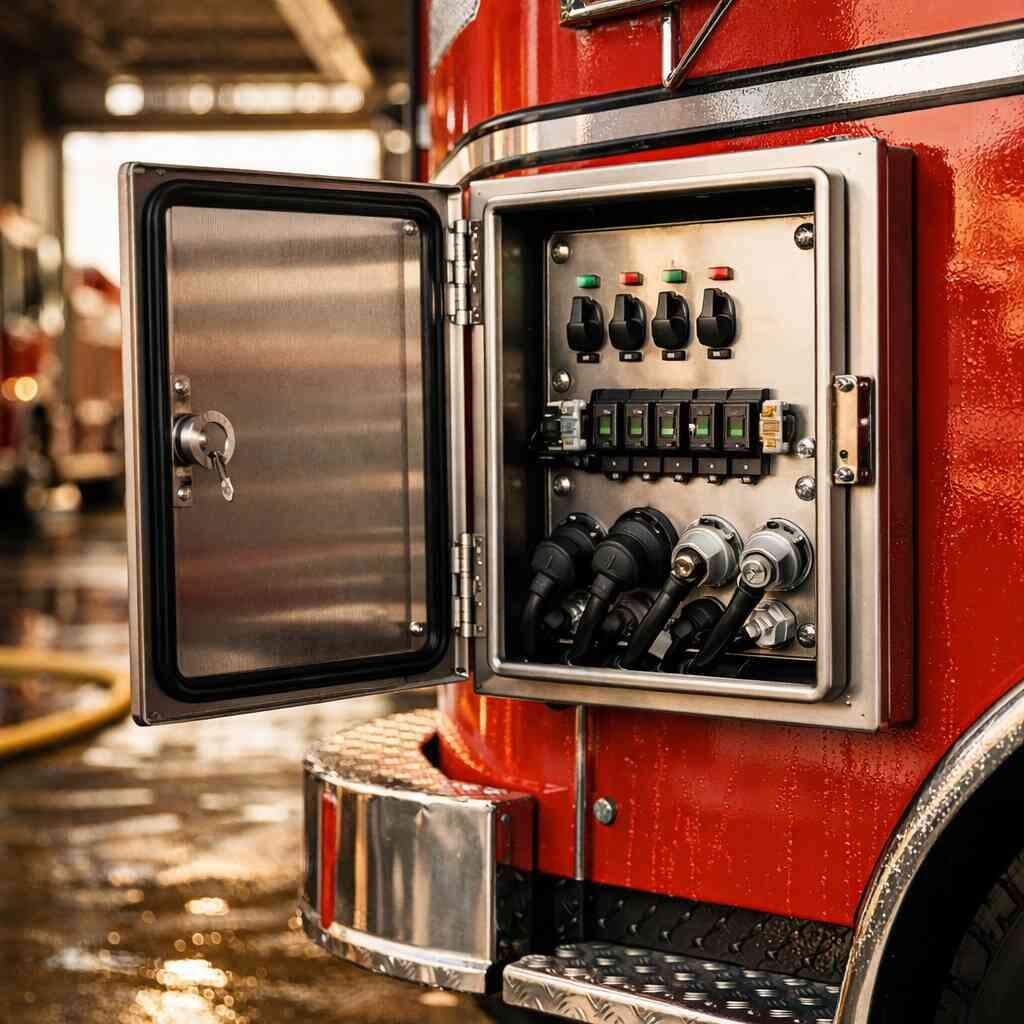
NEMA 6P is often considered when the application involves fire apparatus electrical enclosures or mobile command vehicle equipment that may face extended water exposure, not just occasional spray. It is an enclosure rating, so it speaks most directly to a box or housing rather than every individual internal component.
For a rescue truck or command vehicle, that difference matters. NEMA ratings are widely used in North America for electrical enclosures, while IP ratings are globally recognized for ingress protection. The best choice depends on the entire assembly, not just the label on one part.
RatingPrimary focusBest fit in emergency vehiclesWatch-outsIP68Dust tight and water immersion test languageOutdoor rated electrical connectors, sealed plugs, compact interfacesDoes not cover vibration or installation qualityNEMA 6PDust-tight enclosure with submersion protectionElectrical boxes, junction enclosures, protected compartmentsApplies to the full enclosure, not every connector insideThe details that matter when comparing sealed connector performance in the field
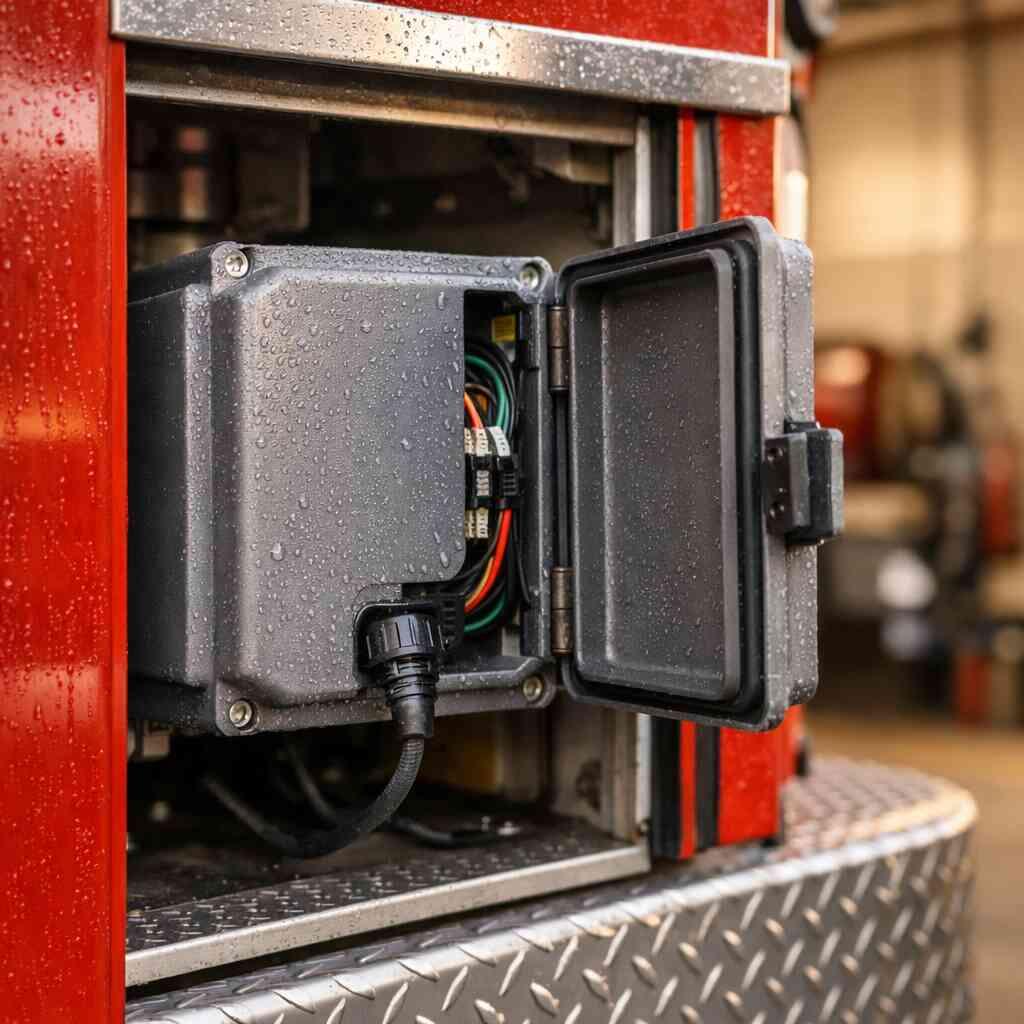
The real comparison is not just IP68 versus NEMA 6P. It is how each rating supports the actual use case: dust, moisture, chemical exposure, vibration, and repeat service access. In ruggedized vehicle power systems, the best-rated component can still become a weak point if the cable entry, fasteners, or mating surfaces are wrong for the job.
One recent service conversation involved a unit that passed bench checks but failed after several months of road vibration. The connector itself was not the only issue. The harness was routed too tightly, and the sealing surface had been stressed every time the compartment was opened. That is the part most online guides miss.
Dust tight equipment rating versus immersion protection standards in ruggedized vehicle power systems
Dust tightness sounds simple, but in emergency work it is a major part of electrical reliability in demanding conditions. Fine road grit, dried foam residue, and debris from station yards can work into seams and create wear that later becomes a moisture path. A true dust tight equipment rating helps reduce that risk, but it still needs proper assembly. Immersion protection standards are equally important because water does not always arrive as a neat splash. It can enter through a temporary pressure wash, a curbside puddle, or runoff after a scene. For mission critical vehicle electronics, the question is not only “Can it survive immersion?” but also “Can it survive being opened, serviced, and reinstalled without losing the seal?” A practical connector sealing comparison looks like this:
- IP68 is often used when the connection point itself must be sealed.
- NEMA 6P is often used when the entire housing must keep water out.
- Neither rating excuses poor cable routing, poor gland selection, or damaged seals.
For readers who want a broader technical overview, Fire Power Products also publishes a related electrical connector guide that helps frame the decision around real apparatus use.
How hose-down-resistant components and submersion-resistant hardware change real-world equipment compatibility for emergency vehicles
Hose-down-resistant components are not the same as casual weatherproof parts. In the field, a hose down can be forceful, angled, repeated, and combined with detergent residue. If the connector or enclosure is not designed for that kind of service, you may see nuisance trips, intermittent lighting, or corrosion at the terminals.
Submersion-resistant hardware becomes more relevant when connectors sit low on the vehicle, near compartments, or in places where water can pool. That is especially important for rescue vehicle electrical safety, ambulance accessories, and exterior-mounted accessories that must keep working after harsh cleaning or water exposure.
Use this quick field checklist before you match a part to the job:
- Confirm the exact location on the vehicle.
- Identify whether the component sees spray, washdown, or immersion risk.
- Check whether the rating applies to the connector, the housing, or both.
- Verify cable diameter, seal compression, and mating-cycle expectations.
- Confirm service access so repairs do not damage the seal.
If you want to inspect an installed enclosure properly, this NEMA 6P inspection guide is a useful companion reference.
Choosing the right protection level before the next call comes in
The right protection level comes from the application, not the label. Start with the exposure, then match the rating to the component type, then verify installation details and serviceability. For selecting rated components for apparatus wiring pigtails, extensions, and junctions, you want an honest match between seal design, enclosure design, and the way the vehicle is actually used.
Here is the short version: choose IP68 when the connector itself needs a clear ingress rating, choose NEMA 6P when the full enclosure is the priority, and verify both when the assembly must survive harsh washdown conditions. For fire and rescue fleets, that decision should always include vibration, corrosion, and maintenance access.
The decision framework for selecting rated components for apparatus wiring pigtails extensions and junctions
Use this framework when comparing waterproof enclosure ratings and weatherproof vehicle hardware for your fleet:
- Pigtails and inline connectors: prioritize sealed connector performance, strain relief, and serviceable mating surfaces.
- Extensions and harness runs: prioritize vibration resistant electrical systems, bend radius, and abrasion protection.
- Junctions and control boxes: prioritize enclosure rating, gasket integrity, and compartment placement.
- Exterior-mounted assemblies: prioritize hose-down resistance, debris resistance, and corrosion resistant electrical components.
- Mission-critical circuits: prioritize repeatable sealing after maintenance, not just a high number on the spec sheet.
For emergency fleets, compatibility is often the hidden issue. A connector may be rated correctly and still be a poor fit if the harness design, panel thickness, or service routine undermines the seal. That is why environmental sealing for vehicles should always be verified at the assembly level.
If you need help choosing the right part for a fire truck, rescue unit, or command vehicle, Fire Power Products is a strong option because they focus on durable, USA-made electrical systems for harsh emergency conditions. Their work centers on high-pressure washdown protection, reduced nuisance GFI/GFCI tripping, and rugged components built for fireground realities, not just catalog language. You can also compare options through their fire safety equipment page if you are narrowing down what fits your apparatus.
For broader buying context, it also helps to review vendor claims against FTC advertising guidance, especially when ratings and performance language sound similar. That habit saves you from overbuying the wrong enclosure or underbuying the protection you actually need.
If your next step is simple, make it practical: list the three components most exposed to water on your apparatus, compare their installed environment against the published rating, and then call Fire Power Products at 369-279-000 to talk through the right setup for your vehicle.
Frequently Asked Questions
Question: In the blog post How to Compare IP68 and NEMA 6P for Emergency Vehicles, how should fire crews decide between waterproof enclosure ratings and outdoor rated electrical connectors for emergency vehicle electrical protection?
Answer: The best choice depends on where the component is installed and how it will be exposed in real use. IP68 is often the better fit for outdoor rated electrical connectors and other parts that need a clear ingress protection rating at the connection point. NEMA 6P is often a better fit for a full enclosure or box that needs a dust-tight equipment rating and submersion protection. For fire apparatus electrical enclosures and first responder vehicle equipment, the key is to verify whether the rating applies to the connector, the housing, or the complete assembly. Fire Power Products focuses on durable emergency response vehicle durability solutions, so they can help you think through the application before you choose a part. That kind of guidance matters because sealed connector performance can be reduced by vibration, poor routing, or damaged seals even when the rating looks strong on paper.
Question: What should I look for when comparing hose-down resistant components and submersion resistant hardware for ruggedized vehicle power systems?
Answer: Start with the actual environment the part will face. Hose-down resistant components need to stand up to repeated cleaning, angled spray, detergent residue, and regular maintenance access. Submersion resistant hardware becomes more important when the component sits low on the vehicle, near compartments, or anywhere pooling water is possible. For ruggedized vehicle power systems, you should also check bend radius, strain relief, corrosion resistant electrical components, and whether the assembly can be reopened without damaging the seal. Fire Power Products is built around high-pressure washdown protection and field serviceable electrical systems, which makes that kind of application review especially important. A good product choice is not just about the rating on the label; it is about enclosure selection for emergency fleets that need dependable operation after service and exposure.
Question: How does Fire Power Products help with connector sealing comparison for mission critical vehicle electronics and water intrusion prevention?
Answer: Fire Power Products is a strong option when you need help evaluating connector sealing comparison for mission critical vehicle electronics. Their approach centers on durable equipment for harsh duty cycle equipment, where dust, spray, vibration, and repeated service all affect long-term reliability. The right answer is usually not one rating alone, but whether the complete system supports environmental sealing for vehicles through proper cable selection, housing design, and installation practices. That is especially important for water intrusion prevention, because even a highly rated connector can fail if the seal is pinched, the harness is stressed, or the hardware is mismatched to the application. For rescue vehicle electrical safety and other demanding uses, their expertise helps customers focus on the whole installation rather than relying on marketing language alone.
Question: What makes NEMA enclosure rating guide information important for mobile command vehicle equipment and fire truck component protection?
Answer: A NEMA enclosure rating guide is useful because it helps buyers understand how a box or housing is expected to perform in real conditions, not just in a catalog description. For mobile command vehicle equipment and fire truck component protection, that distinction matters because the enclosure may be exposed to dust, moisture, hose-downs, and vibration. NEMA 6P is often considered when the goal is a sealed enclosure that can better handle submersion-type exposure, but it still has to be installed correctly and matched to the actual use case. Fire Power Products can help customers evaluate the enclosure against the vehicle environment so they do not overbuy protection they do not need or underbuy protection that the apparatus does need. That practical approach is valuable when selecting rated components for apparatus systems that must stay dependable under demanding conditions.
Question: Can Fire Power Products help with selecting rated components for apparatus wiring pigtails extensions and junctions on rescue and ambulance equipment?
Answer: Yes, and that is exactly where a practical enclosure selection for emergency fleets conversation becomes important. Pigtails, extensions, and junctions each face different risks, so the best choice is not always the same across the vehicle. For apparatus wiring pigtails extensions and junctions, you want to think about vibration resistant electrical systems, service access, cable routing, and whether the component needs an IP68 style seal or a NEMA 6P enclosure. Fire Power Products focuses on durable, USA-made solutions for emergency response vehicle durability, which makes them a useful partner when you need advice on equipment compatibility for emergency vehicles. Their team can help you compare options for weatherproof vehicle hardware, corrosion resistant electrical components, and other parts that must hold up in real-world emergency service rather than ideal lab conditions.
Question: Why should public safety departments verify specifications carefully before buying weatherproof vehicle hardware for harsh duty cycle equipment?
Answer: Because a rating on paper does not automatically guarantee the performance you need in the field. Public safety vehicle standards often require equipment to survive vibration, moisture, debris, and frequent service, and those conditions can expose weak points in weatherproof vehicle hardware. For harsh duty cycle equipment, the details matter: seal compression, cable diameter, enclosure placement, and how often the hardware is opened and reclosed. Fire Power Products takes a reliability-first approach and serves customers from DeLand, Florida, with products designed for demanding emergency use, but buyers should still verify exact specifications and certifications before ordering. That careful process supports electrical reliability in demanding conditions and helps ensure the system is appropriate for the job, whether you are protecting mission critical vehicle electronics, improving water resistant power distribution, or reducing nuisance failures in the field.