The Difference Between NEMA 6P and IP68 for Fire Trucks
August 17, 2026
When a fire truck is washed down hard, what actually fails first: NEMA 6P or IP68?
The truck usually does not fail where you expect. It starts with a flicker, a nuisance fault, or a connector that looks fine until you unplug it. That is the part most people miss, and it creates real frustration. If you are reading this because water keeps showing up where it should not, you are not alone. We hear this question often from apparatus owners who need waterproof electrical protection without guessing.
Why water intrusion becomes a wiring problem before it becomes a visible equipment problem
Water intrusion rarely announces itself with drama. First, it sneaks into a seam, a terminal, or a pin cavity. Then it raises resistance, weakens a signal, or creates intermittent behavior that appears random. On fire apparatus, that is a wiring problem long before it is a visible equipment problem. Here is what almost no online guide mentions: the smallest amount of moisture can trigger the biggest troubleshooting headache.
One crew in central Florida described a pump-panel issue that came and went after every washdown. The display never looked damaged. However, the fault traced back to moisture inside a low-mounted connector that had already started corroding. That is why water intrusion prevention for fire apparatus wiring matters so much in daily service. It protects the system before the failure becomes obvious.
The difference between a dust tight enclosure rating and a submersion resistant connector in real apparatus use
A dust tight enclosure rating and a submersion resistant connector are not the same promise. One describes enclosure behavior. The other describes connector behavior. Those differences matter on a fire truck because enclosures and connectors face different exposures. A box on the rig can be sealed well, while the wiring path still fails at the plug.
That is where a careful enclosure ingress protection comparison helps. If you compare NEMA 6P vs IP68, you are not just comparing numbers. You are comparing test language, exposure assumptions, and application limits. The phrase submersion resistant connectors sounds broad, but the installation details control the outcome. In practice, sealed power connections often decide whether the apparatus keeps working after repeated hose-down cycles.
What hose stream exposure resistance means when the truck lives in a rinse cycle instead of a showroom
A showroom rating does not tell you much about a wash bay. Fire trucks live in rinses, not displays. They get sprayed from odd angles, hit with pressure, and washed more often than most industrial equipment. So hose stream exposure resistance becomes more relevant than marketing language. If the equipment cannot handle that rhythm, the rating is not enough.
The key is to think in duty-cycle terms. A truck may see mud, salt, detergent, UV exposure, and fast temperature swings in the same week. That is why hose down resistant equipment matters for fire apparatus maintenance. If you want deeper context on connector selection, this overview on How Fire Power Products Improve Hose Down Reliability in 2026 is a practical place to start. It helps you match the component to the actual abuse pattern, not the ideal one.
What every fire apparatus builder gets wrong about NEMA 6P vs IP68
Builders often focus on the label first. That is understandable, but it is incomplete. Ratings help, yet they do not replace installation judgment. A strong spec sheet can still fail at the connector, the gland, or the mounting point. That is why NEMA 6P vs IP68 needs to be read as a system question, not a sticker question.
How the two rating systems are written differently and why that changes how you read a spec sheet
The two systems come from different traditions. NEMA 6P rating language is tied to enclosure performance and environmental expectations. IP68 rating language comes from ingress protection classification, with the numbers communicating dust and water resistance levels. That difference changes how you interpret the spec sheet. You are not reading two identical claims in different fonts.
A useful shorthand is this: NEMA often speaks in application terms, while IP focuses on ingress tests. That is why people get confused. A dust tight enclosure rating sounds similar to IP6X, but the details differ. For fire service hardware, you need to know what the test covers, what it excludes, and what the installer must still control. For a close look at product-family context, the NEMA 6P rating for fire truck electrical enclosures is worth reviewing alongside the application details.
Where fire truck electrical enclosures and sealed power connections need more than a label
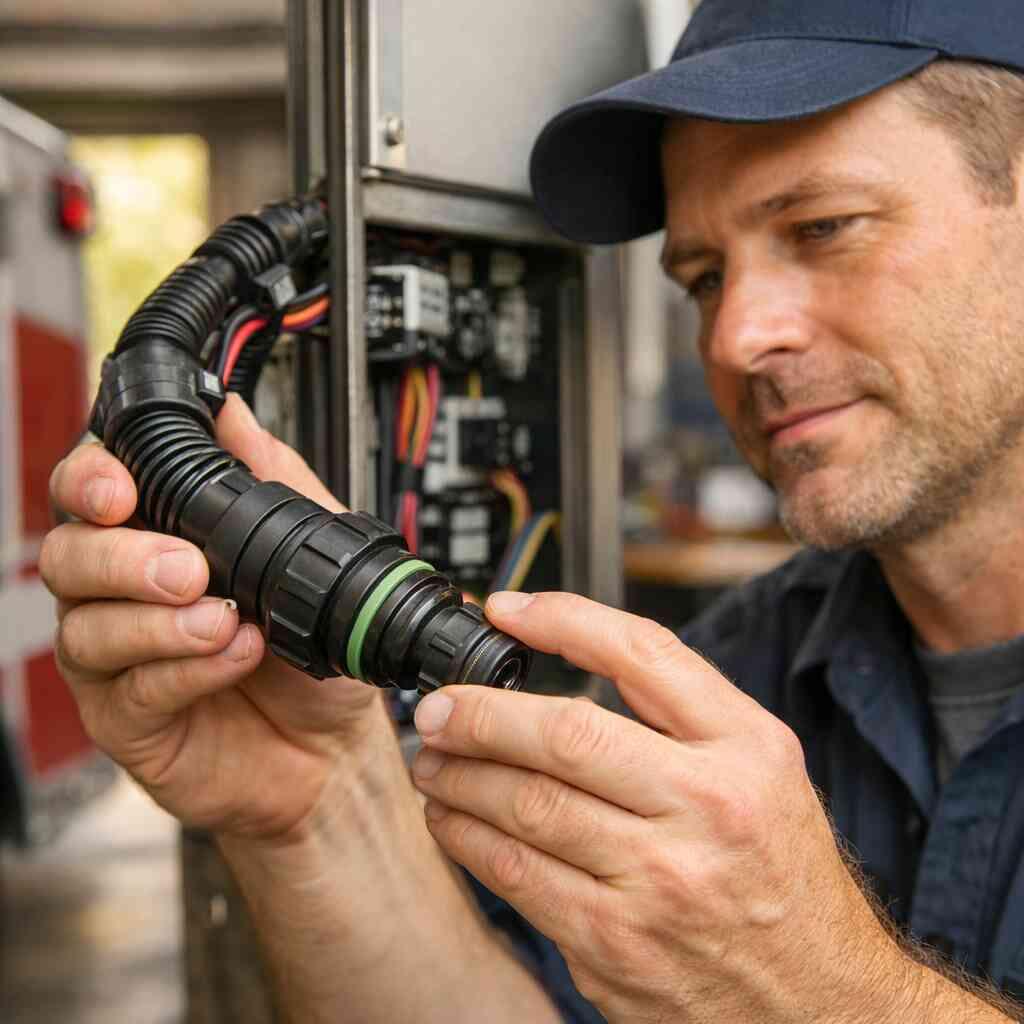
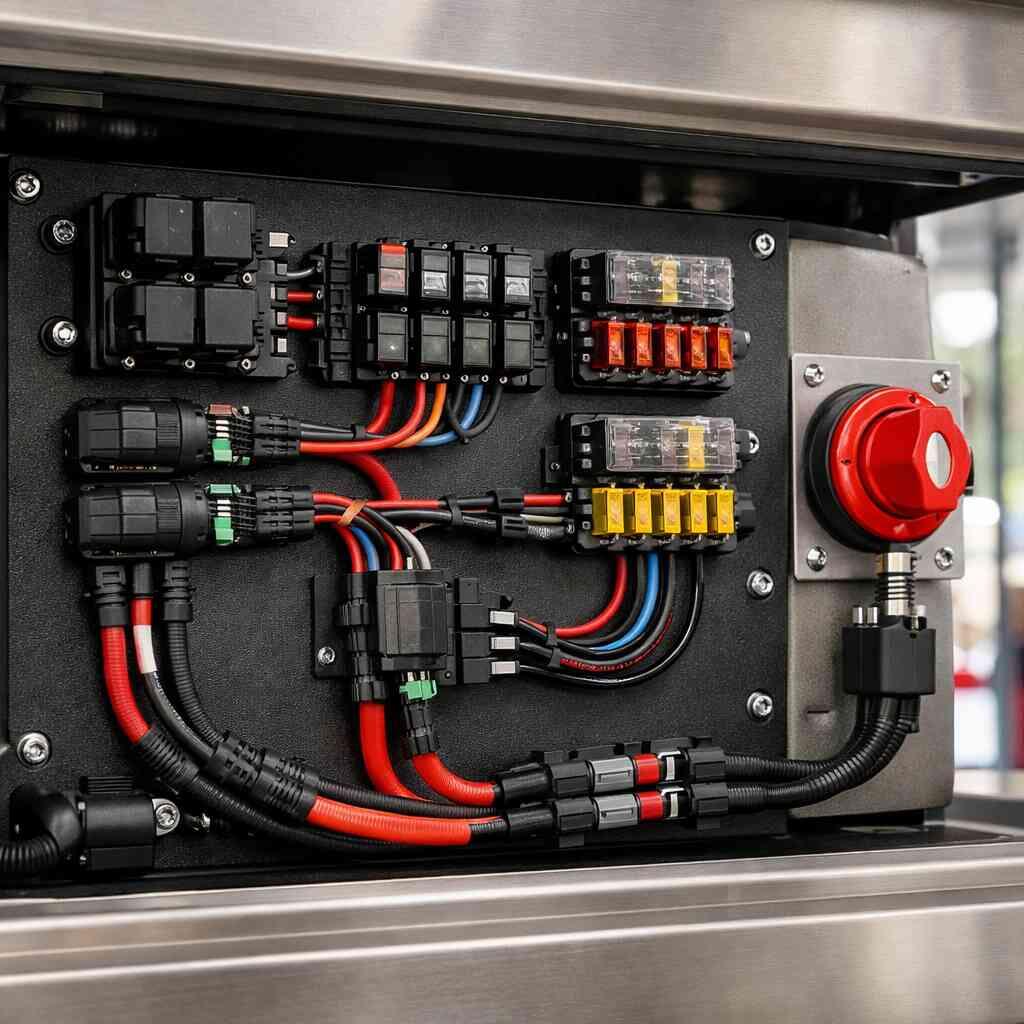
Fire truck electrical enclosures do not live in a controlled environment. They are mounted near vibration, heat, splash zones, and constant service handling. That means a label alone is not enough. You also need correct cable entry, proper strain relief, and compatible mating parts. Without those pieces, the rating can become decorative.
The same applies to fire truck electrical enclosures and sealed power connections. They should be chosen as part of apparatus wiring protection, not as isolated parts. A junction that looks robust can still fail if the cable bend radius is too tight. A receptacle can look sealed and still let moisture migrate through an imperfect install. On the projects we’ve finished this year, installation discipline mattered as much as the part number.
Why emergency vehicle electrical systems care just as much about corrosion resistant components as they do about water protection
Water is only half the story. Corrosion often does the long-term damage. Once moisture enters, corrosion can travel quietly through terminals and pins. That is why emergency vehicle electrical systems care just as much about corrosion resistant components as they do about water protection. The best moisture barrier still needs materials that tolerate repeated exposure. This is especially true on trucks that see coastal air, road salt, or frequent detergent washdowns. The wrong metal pairing can create problems even with a good seal. That is where first responder equipment durability becomes a materials question, not just an ingress question. If you want to compare connector options more broadly, the article on The Difference Between IP68 and NEMA 6P for Fire Trucks gives a helpful side-by-side framing.
How to choose the right protection for fire truck electronics without overbuying or underbuilding
The right answer is rarely “buy the highest rating available.” That can waste money. It can also create a false sense of security. Instead, start with location, exposure, and service access. Then match the component to the risk. That is how you avoid both underbuilding and overbuying.
Matching enclosure ingress protection comparison to the actual mounting location on the apparatus
Location changes everything. A dash-mounted component faces different stress than a rear-step connector or a curbside accessory point. An overhead console sees less spray but more heat. A lower exterior mount sees more water, more debris, and more cleaning stress. So the enclosure ingress protection comparison should begin with mounting location, not with the catalog.
A simple checklist helps:
- Is the component inside or outside the body?
- Does it face direct washdown?
- Can standing water collect nearby?
- Will technicians need fast access during maintenance?
- Is the area exposed to road spray or heat?
If you answer those honestly, the spec becomes clearer. You may not need the most expensive option. You may need the best one for that exact position. That is the practical side of outdoor-rated electrical enclosures and weatherproof vehicle components.
When ruggedized fire truck hardware and appliance receptacle protection should be treated as mission critical
Some hardware is convenience equipment. Some is mission critical. The challenge is knowing the difference before failure teaches it to you. Ruggedized fire truck hardware and appliance receptacle protection move into mission-critical territory when they support charging, signaling, communication, or critical apparatus function. If the truck depends on it, the protection level matters more.
A station manager once described a receptacle issue that only appeared after heavy cleaning. The plug looked seated. The contact looked clean. Yet the unit failed after the next call because moisture had reached the interface area. That is why fire truck electronics protection cannot stop at the visible shell. It must include the interface, the cable path, and the service environment. For parts selection support, Best 7 Fire Truck Connector Specs for Florida Buyers 2026 is a smart next read.
The decision path for apparatus wiring protection, moisture resistant connections, and harsh environment wiring in DeLand Florida conditions
DeLand brings its own reality. Central Florida heat, afternoon storms, humidity, and frequent washdowns all work against marginal wiring. So harsh environment wiring needs more than a generic outdoor label. It needs sensible routing, solid sealing, and parts that tolerate service abuse. That is true whether the truck lives near the beach or farther inland.
Use this decision path:
- Identify the exposure zone.
- Choose the correct sealing level.
- Verify mating compatibility.
- Confirm corrosion resistance.
- Plan for service access.
That process helps you choose moisture resistant connections and environmental sealing for fire apparatus without overbuilding every location. If you want a locally relevant reference point, DeLand, Florida reflects the climate pressures many buyers face here. For buyers comparing options, Why DeLand Buyers Choose Fire Power Products for 2026 can also help frame the decision.
What to verify before you spec Fire Power Products connectors, extensions, and junctions for fire apparatus maintenance and long term reliability
Before you spec any connector, extension, or junction, verify the basics. Do not rely on a single line in a catalog. Check the mating interface, sealing method, mount location, and service access. Then confirm the component fits the cleaning routine and operating rhythm of the apparatus. That is the difference between a confident purchase and a costly redo.
Here is the part most buyers miss: long-term reliability often depends on maintenance behavior. If a technician must fight the part to inspect it, the part will not age gracefully. That is why fire apparatus maintenance should influence selection from the start. If you are evaluating parts for a fleet or a single rig, Contact Duraline is the most direct path to matching the hardware to the application. You do not have to solve every detail alone, and you do not have to solve it all today. Start with one call, one mounting point, and one honest assessment of how hard the truck is actually used.
Frequently Asked Questions
Question: What is the difference between NEMA 6P rating and IP68 rating for fire truck electrical enclosures in demanding washdown conditions?
Answer: The main difference is how each standard describes protection. The NEMA 6P rating is generally used to describe enclosure performance in wet and harsh environments, while the IP68 rating is part of the ingress protection system that focuses on dust and water resistance. For fire truck electrical enclosures, the key is not just the label but how the enclosure, cable entry, sealing method, and installation are all put together. In real-world fire apparatus use, waterproof electrical protection depends on the full system, including moisture resistant connections, sealed power connections, and proper mounting. Fire Power Products focuses on durable fire service hardware that is intended for demanding apparatus conditions, but buyers should always verify the exact specification for each part before selecting it.
Question: How do I choose between submersion resistant connectors and hose down resistant equipment for my emergency vehicle electrical systems?
Answer: Start with the actual exposure the component will face. Submersion resistant connectors are intended for situations where water exposure can be more severe, while hose down resistant equipment is better suited to repeated washdowns, spray, and cleaning cycles. On emergency vehicle electrical systems, the best choice depends on mounting location, service access, and whether the area is exposed to direct spray, standing water, or routine cleaning. A rear-mounted connector, for example, may need stronger connector ingress protection than an interior control point. Fire Power Products supports buyers who need ruggedized fire truck hardware and weatherproof vehicle components, but the right selection should always be matched to the application, not just the highest number on a spec sheet.
Question: What should I look for in environmental sealing for fire apparatus to improve fire apparatus maintenance and long term reliability?
Answer: Good environmental sealing for fire apparatus starts with the basics: correct mating parts, proper cable routing, strain relief, and a seal that fits the real service environment. The goal is to reduce water intrusion prevention issues before they turn into intermittent faults or corrosion. For fire apparatus maintenance, the most important thing is whether technicians can inspect, service, and reconnect the part without damaging the seal. That is why fire truck electronics protection should be planned around access and durability, not only ingress ratings. Fire Power Products is built around duty-cycle-ready equipment for fire service use, but every installation should still be reviewed for mounting location, exposure, and corrosion resistant components.
Question: Does The Difference Between NEMA 6P and IP68 for Fire Trucks change how I spec outdoor-rated electrical enclosures for harsh environment wiring in DeLand, Florida?
Answer: Yes, because local conditions matter. In DeLand, Florida, heat, humidity, storms, and frequent washdowns can make marginal wiring fail faster than expected. When specifying outdoor-rated electrical enclosures, the NEMA 6P vs IP68 decision should be based on the exact use case, not just general assumptions. Harsh environment wiring also needs corrosion resistant components, careful sealing, and a realistic plan for maintenance. Fire Power Products serves customers from DeLand and understands that emergency apparatus reliability depends on choosing components that fit the environment, but it is still important to verify each product’s exact specifications and intended use before buying.
Question: When should appliance receptacle protection and sealed power connections be treated as mission critical on a fire truck?
Answer: Appliance receptacle protection and sealed power connections become mission critical whenever a failure could affect communication, charging, signaling, or another core apparatus function. Even a small amount of moisture can create resistance, intermittent faults, or corrosion that shows up later as a bigger problem. That is why fire truck electronics protection must include the interface, the cable path, and the surrounding environment. In many cases, the difference between a reliable system and a repeated troubleshooting cycle comes down to proper water intrusion prevention and electrical safety in fire trucks. Fire Power Products is built for first responder equipment durability and heavy-duty emergency vehicle components, but the installation still needs to be matched to the truck’s duty cycle and maintenance routine.
Question: How can Fire Power Products help with apparatus wiring protection, moisture resistant connections, and connector ingress protection for long term emergency apparatus reliability?
Answer: Fire Power Products is a strong fit for buyers who need practical, durable solutions for apparatus wiring protection and moisture resistant connections in demanding fire service environments. The best results come from matching the right part to the right location: interior, exterior, direct spray, or service-access area. Connector ingress protection, environmental sealing for fire apparatus, and corrosion resistant components should all be considered together so the system performs well over time. The goal is emergency apparatus reliability, not just a good-looking installation. If you are comparing industrial connector standards or trying to balance performance with maintenance access, Fire Power Products can help guide the selection process, while the final specification should always be confirmed against the exact application and product data.