Why Do EMS Fleets Choose IP68 Connectors for Rough Use
October 23, 2026
EMS fleets choose IP68 connectors because they help keep critical electrical circuits sealed against dust, splashing water, washdowns, and harsh daily handling. In rough service, that extra protection reduces nuisance failures, limits downtime, and helps ambulances stay ready when seconds matter.
If you are reading this because a connector failure is costing you calls, crews, or sleep, that frustration makes sense. This part is genuinely confusing for most fleet managers because the problem often hides inside a small component that looks ordinary until it starts creating repeat repairs.
Key Takeaways
- IP68 connectors are chosen for EMS fleets because they help protect sealed electrical terminations from dust and water intrusion in rough-use environments.
- The main value is not hype; it is fewer avoidable failures, less corrosion, and more dependable emergency response vehicle power connections.
- Vibration, hose-downs, road spray, and contamination are common stressors in ambulance electrical system durability.
- Field serviceable connector designs can reduce maintenance time when crews need fast access without sacrificing sealing performance.
- The right choice depends on the vehicle, duty cycle, and service approach, not on a label alone.
When an ambulance loses time to a connector failure, what is really at risk
An ambulance connector failure is not a small inconvenience. It can interrupt lighting, charging, communications, HVAC, or mobile medical equipment connectors that support daily response work. In an EMS fleet, that means lost readiness, rushed swaps, and repair calls that could have been avoided with better connector ingress protection ratings.
Why rough use in EMS fleets exposes weak electrical interfaces faster than most teams expect
Rough-use connector applications punish weak interfaces in ways that are easy to miss at first. Repeated plugging, vehicle vibration, hose-downs, and exposure to grit all attack seals, contacts, and backshells over time. One fleet supervisor I spoke with described the same pattern after a few service cycles: the truck still ran, but intermittent faults kept sending technicians back to the same harness.
That is why rough-use connector applications demand more than a connector that simply fits. EMS vehicles see constant door slams, stretcher loading, wash bay cleaning, and road vibration. Those conditions can loosen retention, damage insulation, and let contamination reach points that should stay dry and stable.
A good way to think about it is this: weak interfaces fail quietly before they fail completely. You may see flickering lights, charging interruptions, or corrosion on a pin long before the connector gives up entirely. The cost is not only the part. It is the labor, the lost unit time, and the risk of a vehicle being sidelined during a call surge.
How dust tight connector ratings and water resistant connector solutions reduce avoidable downtime in emergency vehicles
Dust tight connector ratings and water resistant connector solutions matter because contamination is one of the fastest ways to degrade dependable connector performance. Sealing keeps fine debris, salt, and moisture away from contact points that need stable conductivity. That helps reduce the kind of intermittent issue that can take hours to diagnose.
ConditionWhat can happen with weak sealingWhat better sealing helps reduceRoad dust and gritContact wear, poor mating, intermittent signal lossContamination inside the connectorHose-down cleaningMoisture intrusion, corrosion, shortingWater entry during wash cyclesVibration and movementLoose fit, fretting, pin damageMechanical wear at the interfaceHere is the part most online guides skip: sealing only works if the whole system is designed around it. Cable jacket selection, strain relief, routing, and mounting all matter. A sealed connector can still fail early if it is bent, pulled, or left unsupported near a moving panel.
What every fleet manager gets wrong about weatherproof connectors for emergency vehicles
Many fleet managers treat weatherproof connectors for emergency vehicles as a checkbox item. The better approach is to match the connector’s protection level to the actual work environment, the cleaning routine, and the amount of vibration the vehicle sees. An IP68 rating is valuable, but only when the rest of the installation supports it.
Why an IP68 rating matters for sealed electrical terminations in harsh environment electrical connectors
An IP68 rating matters because it signals a high level of ingress protection for sealed electrical terminations in harsh environment electrical connectors. In practical terms, that means the connector is designed to resist dust intrusion and prolonged water exposure when installed and used as intended. For EMS fleets, that is exactly the kind of protection that helps during wet weather, washdowns, and exposed mounting locations. The rating is not magic, though. It is part of a larger design choice. If the harness is poorly routed or the connector is repeatedly stressed, even a strong sealing system can be compromised. That is why sealed connector assemblies should be evaluated with the vehicle layout in mind, not only by the number on the datasheet.
For a useful technical baseline, the general principles of ingress protection are defined through international standards commonly referenced across electrical equipment. If you want a neutral overview of how these ratings are framed, the IEC ingress protection standard is a helpful starting point. It gives context for what dust tight and water resistant claims are intended to mean.
Where vibration resistant connectors and corrosion resistant connector systems matter most in mission critical vehicle wiring
Vibration resistant connectors and corrosion resistant connector systems matter most at the points that move, flex, or face repeated exposure. Those include exterior harness transitions, lower chassis routing, rear compartments, and any area that sees wash water, road spray, or frequent service access. In those zones, a connector that looks fine on paper can become the source of a recurring fault.
The mistake we see most often is placing a high-spec connector in a low-spec installation. A connector may be rated for harsh conditions, but if it is mounted where water pools or where the cable is under tension, the result is still failure-prone. Good EMS vehicle wiring protection starts with routing, clipping, and service access.
A useful comparison is below:
Connector focusBest use caseMain benefitDust tight connector ratingsDirty bay, road debris, compartment wiringLess contaminationWater resistant connector solutionsWashdown areas, exterior mountsBetter moisture controlVibration resistant connectorsEngine-adjacent or moving-body areasFewer loosening issuesCorrosion resistant connector systemsCoastal, humid, or chemical-exposed fleetsSlower contact degradationFor a deeper product-level discussion of rugged connector choices, Fire Power Products has a related connector guide. It is useful because the same principles that protect fire apparatus often apply to EMS hardware that lives in the same kind of rough environment.
The wiring decisions that separate dependable connector performance from repeat repair calls
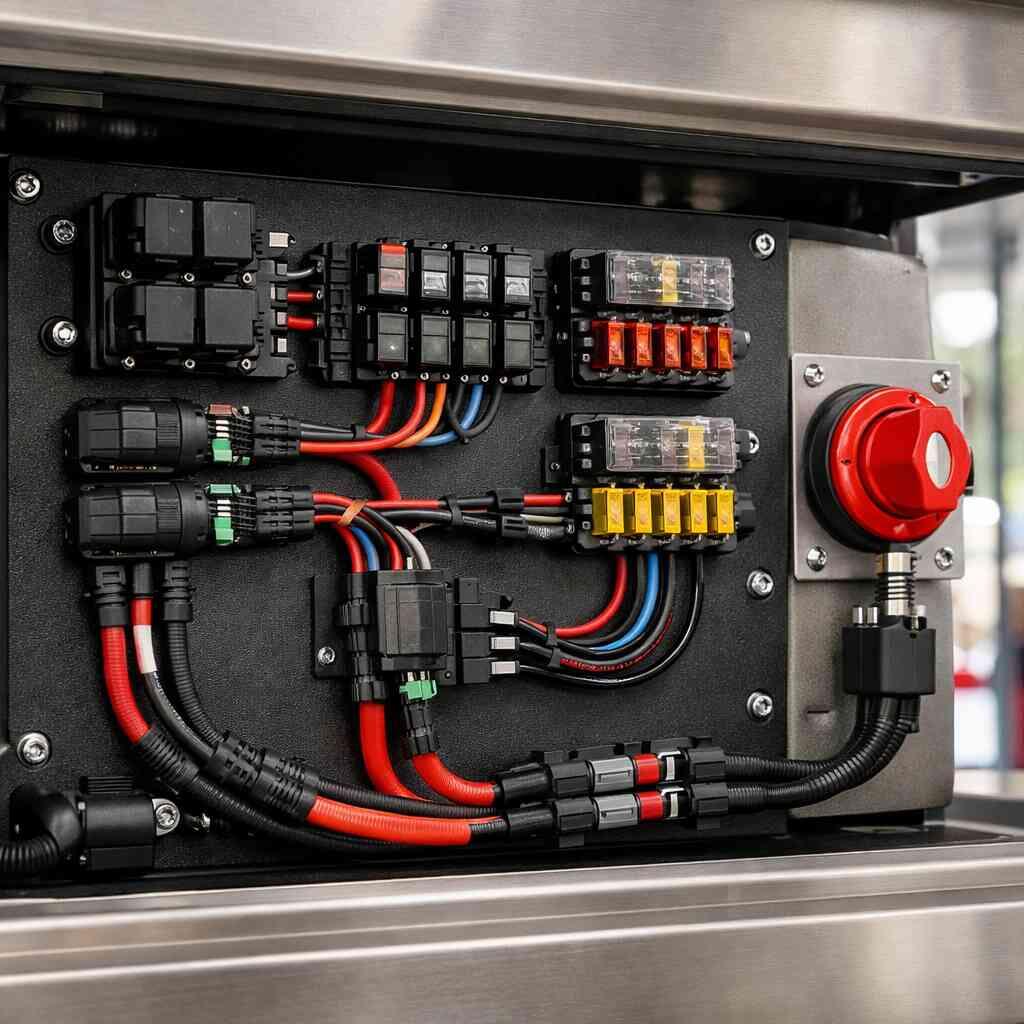
The wiring decisions that matter most are usually simple: choose robust materials, protect the cable path, and make service access practical. High durability cable connections reduce nuisance issues without turning maintenance into a custom project. The goal is not overengineering. It is making sure the connector still performs after real-world use, not just during installation.
How high durability cable connections support ambulance electrical system durability without overcomplicating service work
High durability cable connections support ambulance electrical system durability by balancing sealing, strain relief, and serviceability. When a connector is built into a clean harness layout, technicians can troubleshoot faster and spend less time chasing intermittent failures. That matters in fleets where one out-of-service unit can affect the whole schedule.
A practical setup usually includes:
- Proper strain relief at the connector body
- Adequate slack for service access
- Routing away from abrasion points
- Protection from standing water and sharp bends
- Clear labeling for faster diagnosis
Those steps do not add much complexity. They actually remove it. The best fleets do not rely on heroic repairs. They make the wiring easier to inspect, easier to replace, and less likely to fail in the first place.
If you want to see how connector choices affect operating cost, Fire Power Products has a related ROI discussion. The useful point is not the marketing language; it is the practical reality that fewer repeat repairs usually mean more usable vehicle time.
Why field serviceable connector designs and quick disconnect connectors for fleets can improve maintenance speed in public safety fleet electrical components
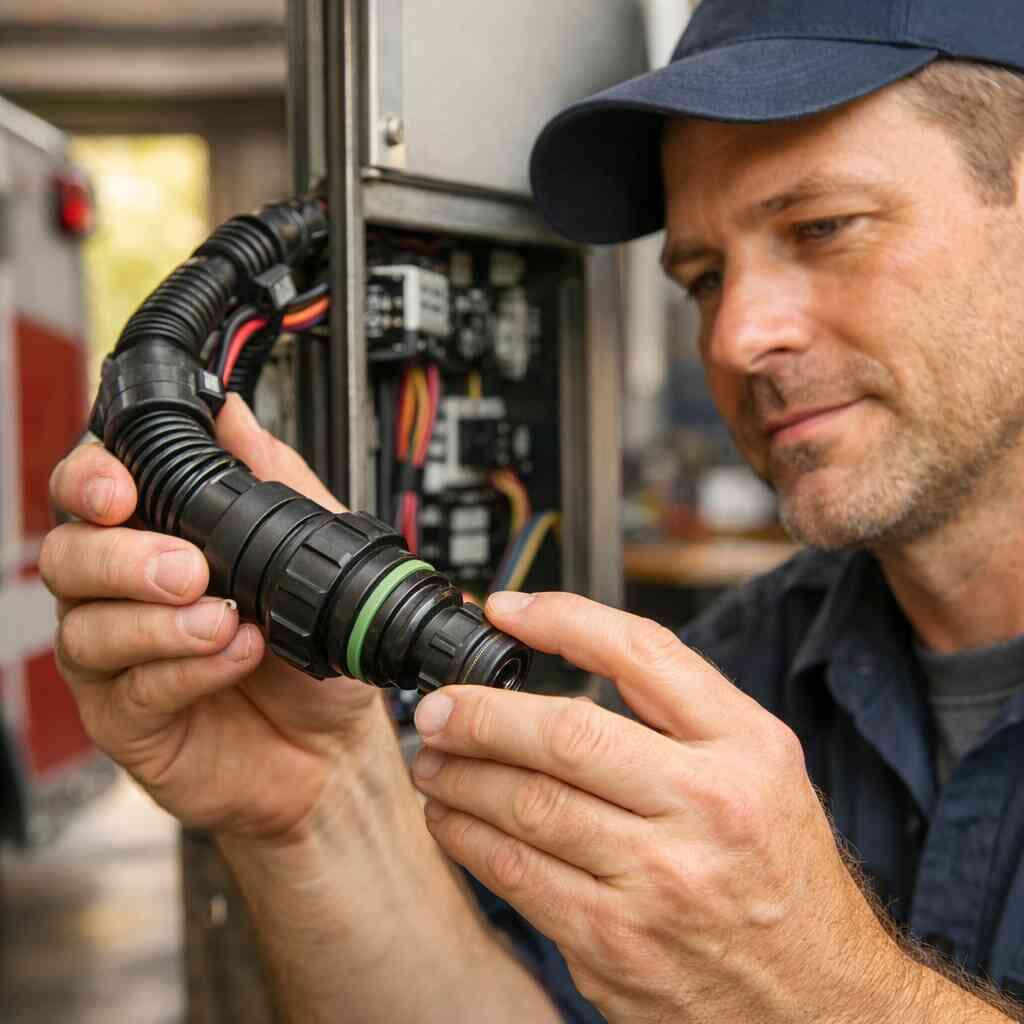
Field serviceable connector designs and quick disconnect connectors for fleets improve maintenance speed because they let technicians isolate a circuit without tearing apart the entire harness. In public safety fleet electrical components, that can shorten diagnostics, reduce labor, and make parts replacement more predictable. The key is choosing a design that still seals well after repeated service.
That serviceability matters in the field. I have seen crews lose half a shift to a connector that was technically strong but miserable to access. The right design solves both problems: it keeps the connection protected, and it lets service happen without a full rebuild.
For EMS operators, the decision often comes down to this tradeoff:
OptionStrengthTradeoffFully sealed fixed harnessExcellent environmental sealingSlower replacementField serviceable designFaster maintenance accessRequires disciplined reassemblyQuick disconnect layoutFaster equipment swapsMust be chosen carefully for sealing and retentionFor a broader technical comparison, Fire Power Products also offers a UL and IP68 overview that helps clarify how specifications differ. If you are comparing rugged electrical connectors, that distinction matters more than many buyers realize.
If your fleet needs durable emergency vehicle harnesses or first responder equipment connectivity that can handle hose-downs, vibration, and daily abuse, Fire Power Products in DeLand, Florida, is a strong option to consider. Their focus on USA-made fire safety electrical systems makes sense for buyers who want durability without overcomplicating maintenance.
The cleanest next step is simple: review the worst-performing circuits in your fleet, then talk through connector options before the next repair cycle starts. If you want help narrowing that down, call Fire Power Products at 369-279-000.
Frequently Asked Questions
Question: Why do EMS fleets choose IP68 connectors for rough use in mission critical vehicle wiring?
Answer: EMS fleets choose IP68 connectors because they help protect sealed electrical terminations from dust, water, road spray, and washdown exposure in demanding operating conditions. For emergency response vehicle power connections, that kind of environmental sealing can help reduce corrosion, intermittent faults, and avoidable downtime. Fire Power Products focuses on durable emergency vehicle harnesses and rugged electrical connectors designed for high-abuse settings, so fleets can better support dependable power transfer in EMS vehicles without overcomplicating maintenance.
Question: How does the blog title Why Do EMS Fleets Choose IP68 Connectors for Rough Use relate to weatherproof connectors for emergency vehicles?
Answer: The blog title points to the real reason weatherproof connectors for emergency vehicles matter: they help keep critical circuits stable when vehicles face vibration, cleaning chemicals, moisture, and daily handling. In practice, the best ruggedized power connectors are not just about a label. They must also fit the routing, service access, and duty cycle of the vehicle. Fire Power Products builds for those rough-use conditions, with a focus on public safety fleet electrical components that support reliable fleet electrical interfaces in the field.
Question: What should fleet managers look for in dust tight connector ratings and water resistant connector solutions?
Answer: Fleet managers should look for more than a simple rating. Dust tight connector ratings and water resistant connector solutions matter most when the whole installation supports them, including strain relief, cable routing, and mounting location. A connector can only do so much if it is installed where water pools or the cable is constantly under tension. Fire Power Products emphasizes practical EMS vehicle wiring protection, helping buyers think through the connector, harness, and service approach together so the result supports dependable connector performance over time.
Question: Are field serviceable connector designs and quick disconnect connectors for fleets a good fit for ambulance electrical system durability?
Answer: Yes, when they are selected carefully. Field serviceable connector designs and quick disconnect connectors for fleets can improve maintenance speed by making it easier to isolate a circuit, replace a component, or troubleshoot a fault without tearing apart an entire harness. The key is choosing a design that still supports environmental sealing for connectors and shock and vibration tolerant connectors where needed. Fire Power Products understands that fleets need both access and durability, especially when supporting mobile medical equipment connectors and other public safety fleet electrical components that must stay ready for service.
Question: Can Fire Power Products help with corrosion resistant connector systems and high durability cable connections for rough use connector applications?
Answer: Fire Power Products is a strong option for fleets looking for durable solutions in harsh environment electrical connectors and rough use connector applications. While every application should be reviewed for the exact vehicle and duty cycle, the company’s focus on rugged electrical connectors and heavy duty EMS cabling aligns well with the needs of teams that want fewer repeat repairs and better reliability in the field. If your fleet is evaluating corrosion resistant connector systems, vibration resistant connectors, or outdoor rated connector hardware, the best next step is to review the problem circuits and determine which components need the most protection, the most serviceability, or both.