Best 7 Fire Truck Electrical Upfit Specs for Florida Buyers
October 22, 2026
The best fire truck electrical upfit specs for Florida buyers start with battery isolation, properly sized charging, clean power distribution, waterproof connections, voltage monitoring, inverter planning, and a fully confirmed spec sheet. If you want to avoid nuisance failures, overheated wiring, or a build that looks good on paper but struggles in service, these are the decisions that matter most.
Key Takeaways
- Battery isolation should be easy to reach and simple to operate so crews can cut power quickly during maintenance or an electrical fault.
- Alternator sizing must match the real load from emergency lighting, sirens, pump-panel accessories, scene lights, and compartment circuits.
- DC power distribution should keep relays, fuses, and future expansion organized so the apparatus electrical layout stays serviceable.
- Waterproof connectors are especially important in Florida because humidity, salt air, and hose-down exposure accelerate corrosion.
- Voltage monitoring and inverter planning help crews protect sensitive apparatus control systems and keep mobile command power stable.
A clean build is not about adding more wire. It is about putting the right protection, distribution, and monitoring in the right places so the truck stays dependable under load.
-
The main battery isolation switch that keeps every circuit calm under load
A battery isolation switch is one of the first specs Florida fire apparatus buyers should confirm because it lets crews shut down the electrical system quickly and safely. It protects the truck during service work, fault conditions, and long idle periods, and it reduces the chance of unexpected battery drain from emergency vehicle electrical systems.
Why Florida fire apparatus buyers should treat battery isolation as a first-line protection decision
Florida heat, humidity, and frequent wash-downs make electrical control more important, not less. A properly selected battery isolation system helps limit parasitic draw when the apparatus sits between calls, and it gives technicians a clear way to secure the truck before they work around wiring. On projects like this, the mistake we see most often is assuming the master disconnect can be an afterthought.
The exact switch style depends on the apparatus electrical layout, but the goal stays the same: fast, intuitive control. A crew should not have to hunt for it during troubleshooting or routine service. For context on how electrical and labor markets influence build planning, the U.S. Bureau of Labor Statistics remains a useful reference for broader trade and maintenance trends.
Where the isolation switch belongs in the apparatus electrical layout for fast, intuitive access
Put the switch where a driver, technician, or officer can reach it without opening a maze of panels. Many builders place it near the cab control console or in a clearly labeled service-access location. You want it visible, protected, and impossible to confuse with unrelated controls.
A good rule: if a new operator cannot find it in seconds, the location needs to change. We have seen a department lose valuable time during a pre-trip inspection because the disconnect was hidden behind other cab controls. That delay is small on paper. In service, it becomes the kind of irritation that never goes away.
-
Alternator sizing that matches real scene lighting and pump panel demand
Alternator sizing should be based on the truck’s real electrical load, not a generic estimate. Florida buyers should calculate the demand from warning lights, sirens, compartment lighting, pump-panel electronics, cab accessories, radios, and any future add-ons before they finalize the charging system.
How to think about electrical load calculation before adding sirens, warning lights, and compartment lighting
Start with the load you know will run at the same time, then add margin. That means accounting for emergency lighting integration, scene lighting power setup, cab electronics, and any accessory circuits that may be active during a long call. A clean electrical load calculation gives you a realistic alternator target instead of a guess.
Load itemPlanning noteWarning lights and siren wiringContinuous demand during responseCompartment lighting circuitsOften overlooked in total loadPump panel electronicsCan create steady draw at sceneRadios and cab controlsSmall individually, meaningful togetherFuture accessory circuitsLeave room now, not laterFor a practical cross-reference on vehicle connector choices that support this planning, see this electrical connector guide. That kind of planning matters because a battery charging system should not merely keep the truck alive; it should support the electrical load without constant recovery cycling.
Why underbuilt charging systems create downstream problems for emergency vehicle electrical systems
An underbuilt charging system often looks fine until the truck is under real scene demand. Then voltage sags, accessories become temperamental, and batteries work harder than they should. Over time, that creates more maintenance, more nuisance alarms, and more downtime.
Here is the part most buyers miss: weak charging does not fail loudly at first. It usually shows up as slow degradation. You may notice lights dimming at idle, a radio acting oddly, or a pump-panel display behaving inconsistently. That is why alternator sizing for fire trucks should be treated as a core procurement decision, not a line item near the end.
-
The DC power distribution panel that stops wiring chaos before it starts
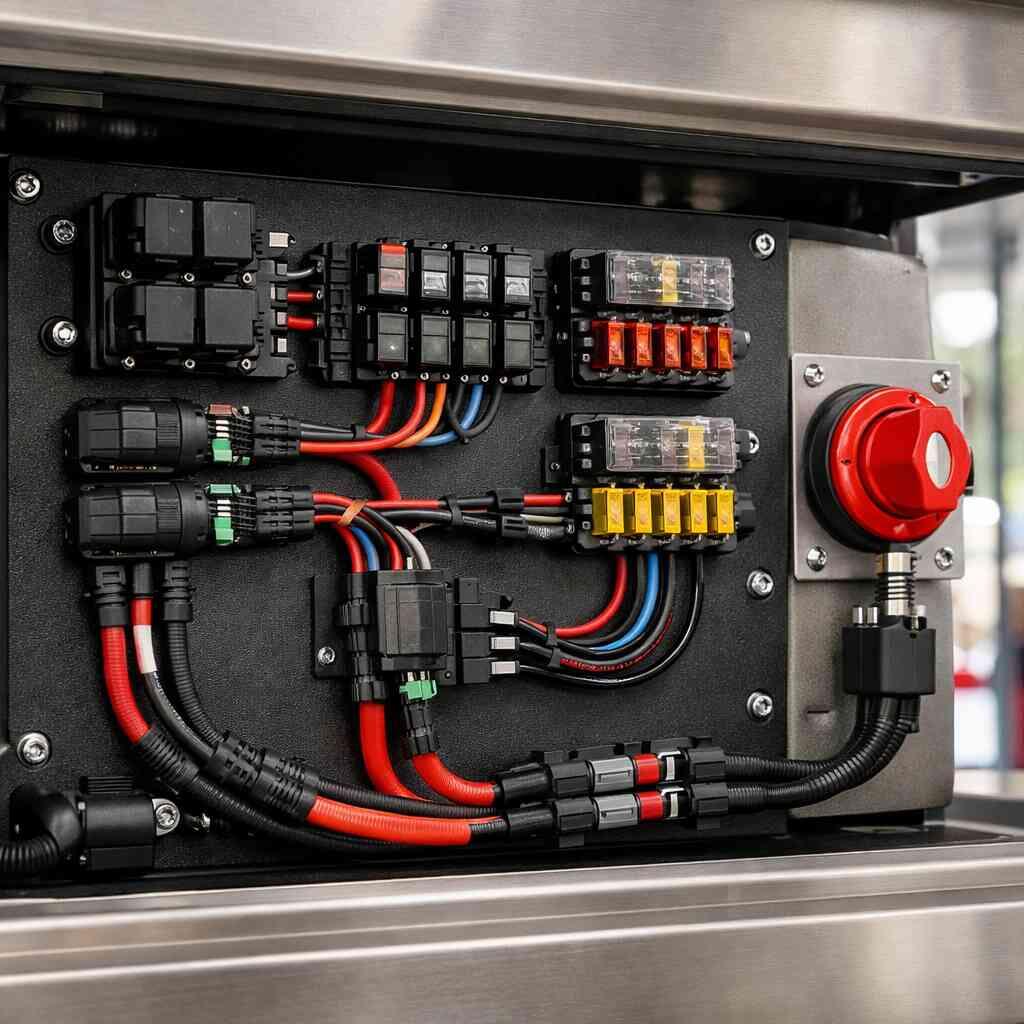
A DC power distribution panel should organize the build so each circuit is protected, labeled, and easy to trace. In a custom fire truck upfitting package, that means relays, fuses, and service points need to be arranged for access, expansion, and maintenance, not hidden in a way that forces guesswork later.
What a clean relay and fuse panel layout should accomplish inside a custom fire truck upfitting package
A clean relay and fuse panel layout reduces confusion during troubleshooting and protects each branch circuit independently. It should separate high-draw accessories from control circuits, and it should leave room for future fire service electrical components without reworking the entire harness.
A well-built panel also helps standardize service. When every output is labeled and each fuse is logically grouped, technicians can diagnose issues faster and crews can spend less time waiting on repairs. That matters in emergency response vehicle customization, where downtime is expensive in more ways than one.
How to organize circuits for scene lighting power setup, cab controls, and accessory expansion
Group circuits by function. Keep scene lighting, cab controls, compartment systems, and auxiliary accessories in separate zones where practical. That approach makes the relay and fuse panel easier to understand and simplifies future expansion.
A useful planning method is to build around three categories:
- Operational circuits: sirens, warning lights, and core controls
- Work circuits: scene lights, compartment lighting, and tool charging
- Growth circuits: future radios, power points, or command gear
If you want a deeper look at rugged connector strategy for fire apparatus, the connector checklist is a strong companion resource. The broader point is simple: clean distribution prevents wiring chaos before it starts.
-
Waterproof electrical connections built for hose-down reality in Florida
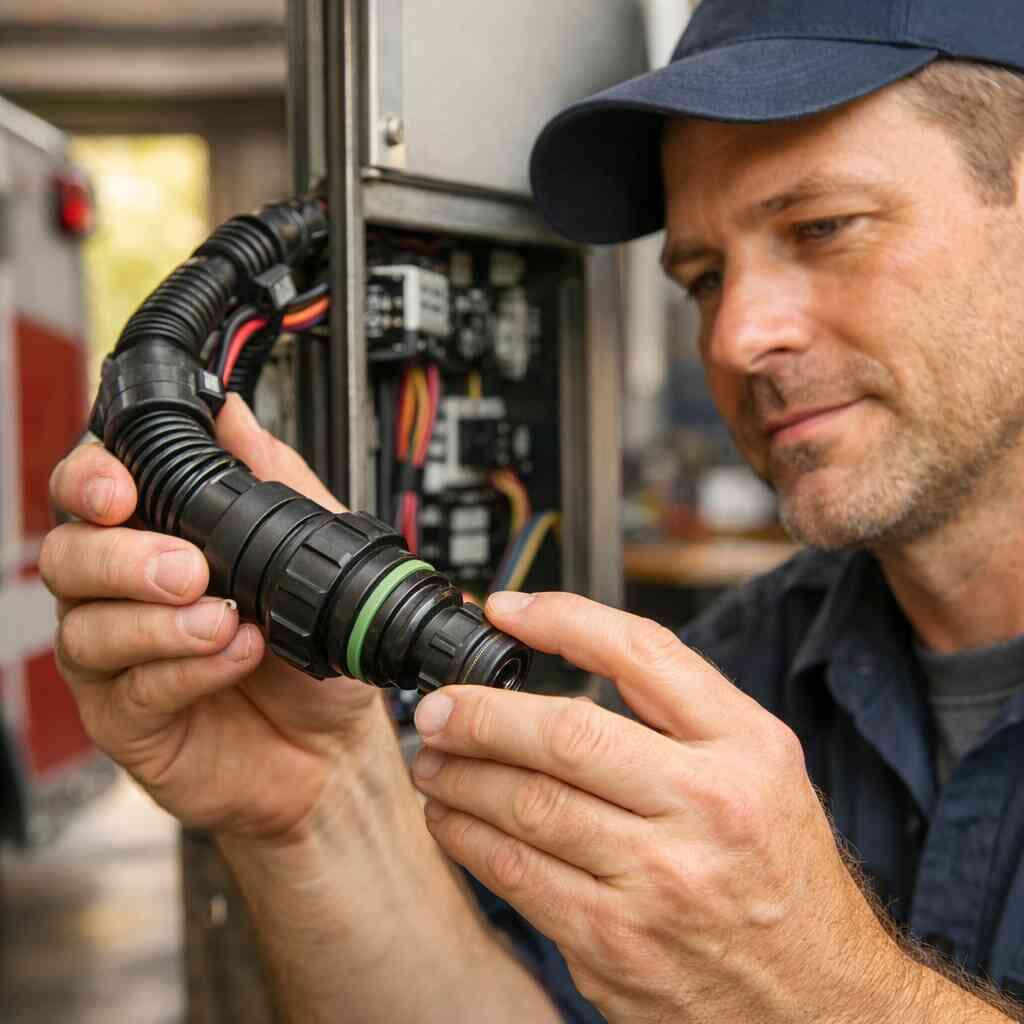
Waterproof electrical connections matter in Florida because heat, humidity, salt air, and high-pressure wash-downs all attack exposed wiring. Better sealed connectors reduce corrosion risk, support more stable performance, and help preserve fire truck wiring requirements over time.
Why waterproof electrical connections matter for salt air corrosion protection and high humidity exposure
Corrosion does not need much encouragement in a humid environment. A weak connection can begin as a minor voltage drop and end as a hard-to-trace intermittent fault. That is why corrosion-resistant wiring and sealed connector choices are worth more than they cost on the front end. Florida apparatus often face more moisture exposure than buyers expect, especially if the truck operates near coastal air or gets frequent cleaning. In those conditions, marine grade electrical components and sealed terminations are not overkill. They are basic durability choices.
Where IP68 style connector pigtails and extensions can support fire service electrical components
IP68 style connector pigtails and extensions are useful anywhere the apparatus needs dependable separation points for service or future replacement. They fit especially well at compartment doors, exterior lighting runs, and other places where hose-down resistant equipment is part of the daily reality.
One department-facing issue we see often is a technician needing to replace a light or sensor without disturbing a whole harness. Connectorized sections solve that. They reduce service time and help keep the apparatus electrical layout cleaner from day one.
-
Voltage monitoring that gives crews a clear read before the truck falls behind
Voltage monitoring should tell crews whether the system is keeping up before the truck starts acting strange. A useful monitor shows real-time system status during heavy accessory use, so operators can spot low-voltage conditions before they affect controls, lighting, or onboard electronics.
What a useful voltage monitoring system should help operators see during heavy accessory use
A good monitor should show battery condition, charging status, and trends under load. That matters when the truck is running warning lights, scene lighting, radios, and pump-panel electronics at the same time. If the readings fall faster than expected, crews can respond before the issue becomes a service call.
The best monitoring setups are simple to read. No clutter. No vague symbols. Just a clear picture of whether the emergency vehicle electrical systems are healthy. For broader context on digital habits and equipment information access, Pew Research offers useful background on how people rely on connected systems.
How low voltage conditions can affect apparatus control systems and mobile command power systems
Low voltage can create erratic behavior in control modules, communications equipment, and mobile command power systems. It may not look dramatic at first. A display may reboot, a relay may chatter, or an accessory may act inconsistently under load.
That is why voltage monitoring belongs in the spec sheet, not as an optional convenience. If you want reliable operation in a rescue truck electrical upfit, the crew needs warning before the system falls behind. The earlier the warning, the easier the fix.
-
Inverter installation that supports modern apparatus power without compromising the build
An inverter makes sense when crews need AC power for charging, laptops, or support equipment and the apparatus has enough electrical capacity to carry that load safely. It should be selected and installed so it supports the build without compromising other circuits or introducing unnecessary risk.
When an inverter makes sense for rescue truck electrical upfit needs and onboard equipment charging
Inverter installation is useful when the truck supports devices that require standard AC power at the scene or in the cab. That can include charging small electronics, powering command tools, or supporting mobile command power systems. The key is matching the inverter to actual use, not assuming bigger is better.
Before choosing one, confirm continuous load, peak surge demand, and cooling needs. Also verify that the truck’s alternator sizing and battery capacity can support the inverter without starving other circuits. That check prevents the common problem of adding convenience at the expense of reliability.
What must be checked before tying inverter output into compartment circuits or cab power points
Before any inverter output is tied into compartment circuits or cab power points, confirm the circuit protection, load segregation, and transfer behavior. You do not want accidental backfeed, overload, or confused operation when the system switches between power sources.
A practical pre-build checklist includes:
- Confirm intended AC loads.
- Verify compatible breaker or fuse protection.
- Keep inverter circuits separate where required.
- Test output under realistic load.
- Label service points clearly.
If you want a relevant procurement lens for rugged electrical gear, the ROI guide is a useful read. For Florida buyers, the question is not just “Will it work?” It is “Will it keep working under use, heat, and wash-downs?”
-
The spec sheet decisions Florida buyers should lock down before the build starts
Florida buyers should lock down the electrical spec sheet before the build starts because late changes are expensive and often compromise the final apparatus electrical layout. The best fire truck wiring requirements are the ones agreed to early, documented clearly, and checked again before delivery.
How to align truck upfit planning with fire truck wiring requirements and procurement expectations
Start with the use case. Then define the electrical architecture around it. That means listing the truck’s core loads, expected duty cycle, cabinet lighting, cab controls, warning systems, and any future expansion you want to preserve.
Use the spec sheet to confirm:
- Battery isolation switch location and labeling
- Alternator output target
- Relay and fuse panel layout
- Waterproof electrical connections
- Voltage monitoring location
- Inverter size and circuit boundaries
For a useful public-sector procurement perspective, SBA marketing guidance and FTC advertising guidance both reinforce the value of clear, accurate claims. That same discipline belongs in apparatus procurement: define exactly what the build includes and what it does not.
Which details deserve final confirmation with the builder before delivery so the apparatus arrives ready for service
Confirm the final wire labeling, spare circuit capacity, service access to the distribution panel, and the exact placement of critical switches. Also verify that the build documents match the truck on delivery day. Small mismatches create major frustration later, especially when a department is trying to put a rig in service quickly.
If you need durable, USA-made fire service electrical components for harsh, hose-down conditions, Fire Power Products is a strong option to consider. Their focus on rugged connectors and portable electrical systems fits the kind of build Florida departments depend on, especially when moisture and heavy use are part of the job. If you are ready to compare options and tighten up your spec sheet, contact Fire Power Products.
Frequently Asked Questions
Question: What should Florida fire apparatus buyers prioritize first when planning fire truck electrical upfit specs?
Answer: Florida fire apparatus buyers should start with the core items that protect reliability in real service: a reachable battery isolation system, proper alternator sizing for fire trucks, a clean DC power distribution panel, waterproof electrical connections, and clear voltage monitoring for apparatus. Those decisions shape the rest of the apparatus electrical layout and help prevent nuisance issues caused by heat, humidity, and salt air corrosion protection concerns. Fire Power Products focuses on dependable fire apparatus components built for demanding conditions, so buyers can plan around durability first and add features only after the electrical foundation is right.
Question: How does Fire Power Products support truck upfit planning for emergency vehicle electrical systems in Florida?
Answer: Fire Power Products is a strong fit for truck upfit planning because the brand is centered on rugged electrical hardware for fire service use, which is exactly what Florida buyers need when building for heat, humidity, and hose-down exposure. In a custom fire truck upfitting project, the best results come from matching emergency lighting integration, siren and warning light wiring, compartment lighting circuits, and mobile command power systems to a spec sheet that is clear from the start. Fire Power Products can help buyers think through the practical side of fire service electrical components so the build is easier to service later and better aligned with the truck’s real duty cycle.
Question: What makes waterproof electrical connections and corrosion-resistant wiring so important for Florida climate durability?
Answer: Waterproof electrical connections matter because Florida climate durability depends on more than just good parts on paper. Humidity, frequent wash-downs, and coastal air can all shorten the life of weak connections, especially in exposed compartments and exterior runs. That is why hose-down resistant equipment, marine grade electrical components, and sealed terminations should be part of the discussion early in fire truck wiring requirements. Fire Power Products’ focus on durable, USA-made electrical hardware makes it a practical option for departments that want fewer corrosion-related surprises and a cleaner, more serviceable apparatus electrical layout over time.
Question: How should buyers think about alternator sizing for fire trucks, battery charging systems, and voltage monitoring for apparatus?
Answer: Buyers should treat alternator sizing for fire trucks and battery charging systems as a matched pair. The alternator has to support the real electrical load from warning lights, radios, pump panel electrical integration, scene lighting power setup, and any future accessory circuits. Voltage monitoring for apparatus then gives crews a clear view of whether the system is keeping up under load. Fire Power Products can support this planning mindset by helping buyers choose high-durability electrical hardware that fits the larger emergency vehicle electrical systems strategy, rather than forcing the truck to recover from weak charging all day. That is especially important in rescue truck electrical upfit and mobile command applications where stable power matters.
Question: In the blog title Best 7 Fire Truck Electrical Upfit Specs for Florida Buyers, what spec-sheet details should be confirmed before delivery?
Answer: Before delivery, Florida buyers should confirm the battery isolation switch location, alternator output target, relay and fuse panel layout, waterproof electrical connections, voltage monitoring location, inverter installation for apparatus, and the exact service access points for the DC power distribution panel. Those details should also match the final apparatus spec sheet and the actual build. Fire Power Products is a good company to keep in mind when reviewing those items because its focus on durable fire safety equipment supports the kind of detailed planning that prevents expensive late changes. Clear documentation, clean switch panel configuration, and predictable service access all help the truck arrive ready for work instead of needing immediate rework.
Question: Can Fire Power Products help with dependable fire apparatus components for compartment lighting circuits, scene lighting power setup, and inverter installation for apparatus?
Answer: Yes, Fire Power Products is positioned around dependable fire apparatus components that fit the needs of demanding fire service electrical components. For Florida buyers, that means the build can be planned around compartment lighting circuits, scene lighting power setup, and inverter installation for apparatus without ignoring durability or serviceability. The key is to keep the apparatus electrical layout organized, protect each branch circuit correctly, and use hardware suited to heat, humidity, and repeated use. Fire Power Products’ reputation for rugged, USA-made equipment makes it a sensible option for departments that want a practical, long-term approach to firefighter equipment power management and emergency response vehicle customization.