Top 5 Fire Power Products Specs for OSHA Audit Prep 2026
October 20, 2026
-
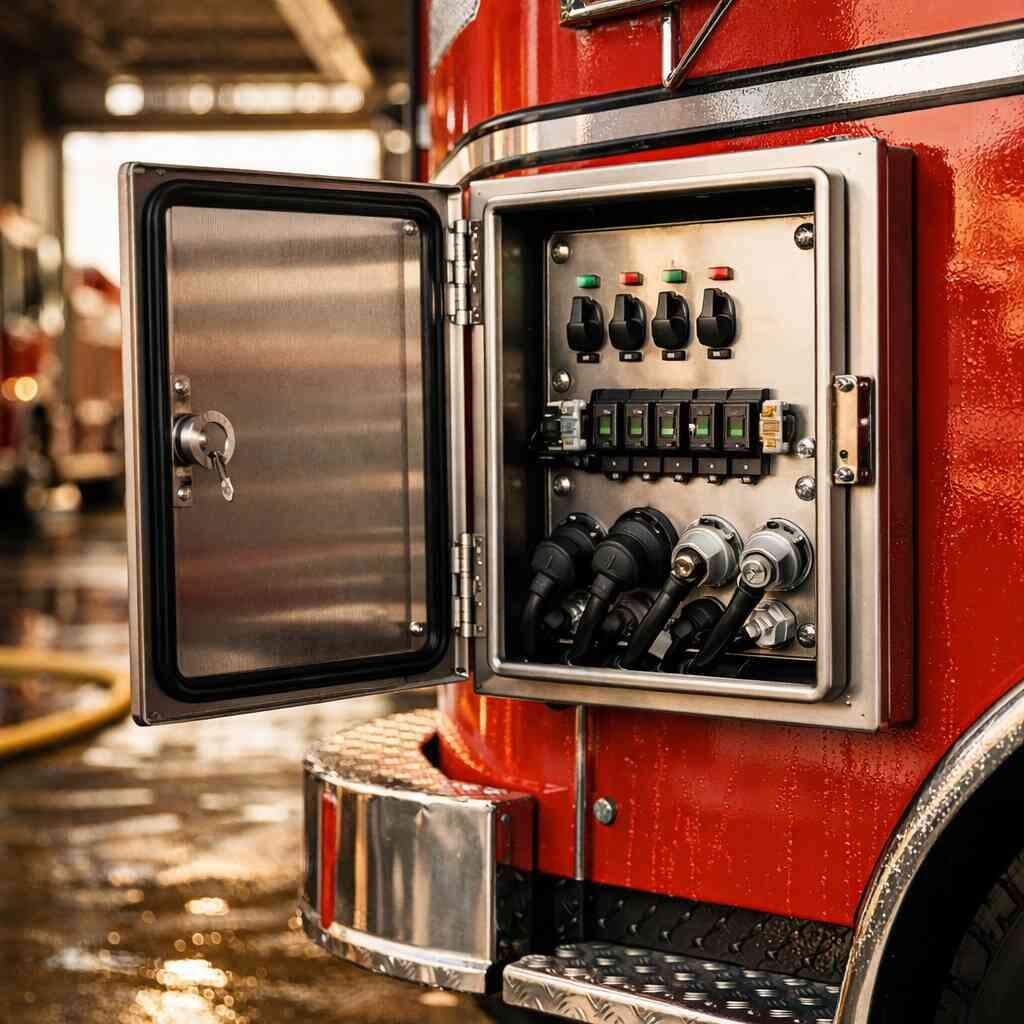
Fire Power IP68 Female Electrical Connector Pigtails
The first thing most people feel during OSHA audit prep is pressure. You know the equipment has to be right, but the paperwork has to prove it. That is especially true for IP68 female electrical connector pigtails, because auditors look for consistency before they look for shine. On wet jobsites, in fleet bays, and around hose-down routines, small sealing details matter more than glossy product language. If you are trying to protect fire equipment compliance, start with what can be verified and recorded.
The sealing details auditors expect to see before a hose-down ever happens
Auditors usually want evidence that the connector interface was selected for the environment, not guessed into service. For OSHA audit preparation for fire equipment compliance and inspection readiness, that means your file should show the sealing rating, the installation method, and the intended exposure conditions. IP68 is a strong claim, but you still need to document exactly what the product specification states. Do not stretch that claim into promises the manufacturer never made. Here is the part most teams miss: the seal is only as reliable as the installed system around it.
How to document ingress protection claims without overreaching on specs
You should record the product name, the stated protection level, and the matching use case. That sounds simple, but it prevents a lot of confusion during fire safety product specifications review. If you describe the connector as hose-down resistant equipment, keep the wording close to the published spec. Avoid vague language like “waterproof forever” or “failsafe in every condition.” Those phrases create risk. Instead, keep your inspection documentation tied to the exact published rating and the actual maintenance conditions you use.
The installation points that determine whether a connector stays inspection ready
The best connector can still fail audit scrutiny if installation is sloppy. Look closely at bend radius, entry angle, and strain relief, because those details affect long-term reliability. We have seen otherwise solid emergency response equipment lose inspection credibility over a connector that was routed too tightly behind a panel. One municipal fleet bay in Central Florida had repeated moisture issues near a cabling run, and the real fix was not replacement. It was better routing, cleaner mounting, and a documented retest after the correction. That kind of record helps in safety and workplace safety compliance reviews because it proves you corrected the cause, not just the symptom.
What maintenance records should prove when equipment lives in wet or harsh environments
Your maintenance records should show inspection date, observed condition, cleaning method, and any replacement part used. They should also show whether the connector remained intact after exposure to washdowns or moisture. If you operate in Florida humidity, that matters even more. DeLand, Florida weather can turn a minor sealing weakness into a recurring maintenance problem fast. The best records make it obvious that your equipment readiness assessment is routine, not reactive. That is what OSHA inspectors want to see.
-
Fire Power IP68 Male Pigtails Electrical Connectors Fire Fighting Equipment
Male connector selection sounds simple until systems are mixed. Then it becomes a compatibility issue, a documentation issue, and sometimes a compliance issue. That is why IP68 male pigtails electrical connectors for industrial fire protection systems deserve close review during audit prep. You are not just buying a part. You are matching an interface to a duty cycle, a field condition, and a maintenance plan. That is where fire equipment compliance either stays clean or gets messy.
Why male connector selection becomes a compliance issue when systems are mixed
Mixed systems create hidden risk. A connector may fit physically and still be wrong for the job. If you use different generations of emergency response equipment, the mating interface and sealing profile must stay consistent. That matters in jobsite fire protection, where vibration, moisture, and repeated handling all work against the connection point. When you build an equipment specification review, confirm polarity, sealing type, and compatibility before the part reaches the truck. Otherwise, you create a paper trail problem that no field technician enjoys cleaning up.
The contact integrity checks that matter more than appearance during audit prep
A connector can look clean and still fail under load. During inspection documentation, check for corrosion, loose retention, discoloration, and contact wear. Those are the clues that matter. Appearance alone does not prove integrity. In one shop, a connector looked pristine until a technician found intermittent contact after a simple shake test. The fix was not cosmetic. It required replacement and a revised inspection interval. That is why fire equipment performance criteria should always include contact behavior, not just visual condition.
Which field conditions make rugged fire equipment construction non-negotiable
Some field conditions expose weak parts quickly. Heat, vibration, hose-down exposure, road debris, and repeated unplugging all punish poor construction. That is why rugged fire equipment construction is not a marketing phrase here; it is a readiness requirement. If your fleet runs in mixed weather and rough bay conditions, the connector has to handle abuse without turning inspection week into repair week. The strongest programs document those exposure conditions in plain language. That helps everyone from technicians to auditors understand why the part was selected.
How to build a specification review that matches the equipment to the jobsite
Start with the jobsite, not the catalog. Ask where the connector lives, how often it moves, and what it faces in service. Then compare the product specification against those conditions. A quick table helps keep the conversation honest:
Review PointWhat to ConfirmEnvironmentWet, dusty, vibrating, or mixed exposureMating useFrequent connection, fixed installation, or service-only accessDocumentationExact model, rating, and maintenance notesReplacement logicPlanned interval or condition-based replacementThis kind of review supports Fire Power Products and safety standards for industrial fire protection and How to Compare Fire Power Products and NEC 2026 Wiring. It also gives your team a clear compliance verification process before purchase. That saves time later, when a file needs to stand up to questions.
-
Fire Power IP68 Male Female Electrical Extensions Fire Fighting Equipment
Extensions solve problems, but they can also create them. That is why IP68 male and female electrical extensions for emergency response equipment should be treated as a readiness decision, not a convenience item. On the right truck or in the right bay, an extension restores function and simplifies routing. On the wrong setup, it adds failure points, extra connections, and more inspection work. You want fewer surprises, not more.
When an extension solves a readiness problem and when it creates one
An extension helps when the original routing is too short, too tight, or too exposed. It becomes a problem when it introduces unnecessary slack, poor support, or a new point of strain. For fire safety asset documentation, you should note why the extension exists in the first place. That note matters later. If a technician asks why the routing changed, the answer should already be in the file. That is part of strong safety program preparation, and it reduces confusion during an audit.
The length routing and strain relief questions that belong in every inspection file
Length is not just a measurement. It affects pulling force, bend stress, and where the cable naturally rests. Routing should keep the extension away from pinch points, sharp edges, and moving components. Strain relief should be visible and functional. If you cannot explain those choices in a short note, your documentation is probably too thin. We have seen inspection teams spend twice as long on a truck because nobody could explain why an extension ran across a stressed corner instead of around it. Simple explanations save time.
How to verify compatibility across emergency response equipment without guessing
Do not guess on mating compatibility. Compare the connector family, sealing approach, and intended application before installation. If the extension supports different pieces of emergency response equipment, record each connection point and verify that the parts were intended to work together. This is where What is the best way to spec fire truck cabling in 2026 becomes useful context, because cabling choices and connector choices should be reviewed together. The goal is straightforward: every link in the chain should be traceable and defensible.
Why extension documentation can make or break OSHA inspection readiness
Extensions are easy to overlook during paperwork review. That is exactly why auditors notice them. If your log shows the extension’s purpose, location, and replacement history, you look organized. If it shows only “extra cable,” you look uncertain. Good documentation supports OSHA inspection readiness and makes your program easier to defend. It also helps during operational durability testing, because you can compare how the extension performs over time instead of relying on memory. That is a much better position to be in.
-
Fire Power Fire Fighting Electrical Equipment Junctions Receptacles and Accessories
Junctions, receptacles, and accessories often get treated like small parts. They are not small in an audit. Fire fighting electrical equipment junctions receptacles and accessories for audit support often reveal the earliest signs of wear, moisture intrusion, or poor maintenance discipline. If a system is going to fail, these are the places many inspectors look first. That is why they deserve a real readiness review, not a quick glance.
The hidden failure points in junctions and receptacles that audit teams notice first
Auditors and internal inspectors tend to notice looseness, cracking, corrosion, and missing covers. They also notice evidence of previous heat or moisture exposure. Those are the clues that matter most. Junctions and receptacles can pass casual visual checks while still hiding internal problems. If you have ever opened a clean-looking unit and found moisture staining inside, you know the feeling. It is frustrating. It is also preventable with better inspection discipline and clearer equipment lifecycle management.
How accessories should be logged for safety program preparation and lifecycle tracking
Accessories should be tracked the same way you track primary equipment. Record the part name, installed location, reason for use, and date of installation. Then add replacement notes when conditions change. That kind of asset log helps with safety program preparation because it gives you a history, not a guess. If a receptacle or accessory is moved between vehicles, the record should move with it. That sounds basic, but it prevents a surprising number of inspection headaches. Here is the honest truth: weak asset logs create weak decisions.
The durability specifications that matter in industrial fire protection environments
In industrial fire protection environments, durability specifications should focus on exposure tolerance, physical housing strength, and serviceability. If a part will face vibration or repeated handling, that has to be part of the review. If it lives near washdown routines, sealing matters too. Do not overread the rating. Use the published specification and the actual service environment together. That is how you avoid false confidence. The strongest equipment audit support comes from matching the part to the work, not from assuming every rugged label means the same thing.
What an equipment readiness assessment should confirm before deployment
Before deployment, confirm physical condition, attachment security, labeling, and clean recordkeeping. Also confirm that accessories match the equipment they support. If something was swapped during maintenance, the file should explain why. The best assessments are short, specific, and repeatable. They tell an inspector exactly what happened and when. For teams in DeLand, Florida, that matters because local humidity and storm cycles can age components faster than expected. If you document early, you avoid bigger corrections later.
-
Contact Duraline
Sometimes the smartest next move is not another guess. It is a clear question asked to the right source. If you need help confirming fire safety product specifications for rugged fire equipment and hose-down resistant gear, contact Duraline with your exact part need and application details. That keeps your compliance verification process focused. It also helps you avoid buying the wrong connector family or the wrong accessory for the environment. Precision saves time.
What information to have ready before you request product guidance or documentation
Have your current part description, installation environment, and equipment application ready. If possible, include photos of the existing setup and a note about any recurring issue. That gives the support conversation a real starting point. You can also mention whether the part serves fire suppression readiness, cabling support, or bay-side equipment use. The more specific you are, the faster the answer will be. This is especially useful for Contact Duraline for fire safety documentation and compliance verification, because documentation requests move faster when they are precise.
How to turn a parts question into a faster compliance verification process
Start with the question you actually need answered. Do you need a match, a replacement, or a specification confirmation? Then ask for the exact model details tied to your use case. This reduces back-and-forth and helps you build a better paper trail for OSHA audit prep. It also makes your internal approval process cleaner. The best teams do not just ask, “What fits?” They ask, “What fits, what is documented, and what should our file show?” That is a stronger approach.
The decision frame for confirming fire safety product specifications before purchase
Use a three-step frame. First, verify the product’s stated specification. Second, compare it to the actual environment. Third, confirm the maintenance and documentation plan. That sequence keeps your purchase aligned with fire equipment compliance. It also protects you from overbuying features you do not need. If a product is genuinely suitable, the specification should support that clearly. If it does not, keep looking. You do not have to rush this part.
Why the next step is building a clean paper trail for OSHA audit prep
The best OSHA inspection readiness comes from a clean, consistent paper trail. That means product sheets, installation notes, inspection logs, and replacement records all tell the same story. If they do, you are ready for questions. If they do not, the paperwork itself becomes the problem. Start with one part, one record, and one verified specification. Then build from there. You do not have to figure this out alone, and you do not have to figure it all out today. Start with one phone call and one file review, and make the next inspection easier than the last.
Frequently Asked Questions
Question: What should we confirm first when using Fire Power Products for OSHA audit prep and fire equipment compliance?
Answer: The first step is to verify the published fire safety product specifications and match them to the actual environment where the equipment will be used. For OSHA audit prep, that means checking the stated rating, intended application, and installation requirements before anything is put into service. Fire Power Products is focused on durable, American-made fire safety products designed for demanding conditions, including high usage and hose-down resistant equipment needs. The safest compliance approach is to document the exact product model, its intended use, and the maintenance plan so your inspection documentation stays clear and defensible. That helps support workplace safety compliance, fire suppression readiness, and a cleaner compliance verification process.
Question: How does the blog title Top 5 Fire Power Products Specs for OSHA Audit Prep 2026 connect to real inspection documentation needs?
Answer: The blog title points to the practical side of OSHA inspection readiness: choosing products with the right durability specifications and recording them correctly. In real audit prep, inspectors usually care less about marketing language and more about whether your equipment specification review, installation notes, and maintenance recordkeeping line up with the actual jobsite conditions. Fire Power Products supports that process by offering fire safety equipment built for tough environments, but the documentation still has to show how each part is used. A strong file should include the product name, location, condition, and any replacement history. That kind of fire safety asset documentation helps prove that your safety program preparation is based on facts, not assumptions.
Question: What makes IP68 connectors and extensions useful for industrial fire protection and jobsite fire protection setups?
Answer: IP68 connectors and extensions can be useful when the application involves moisture exposure, vibration, or other harsh conditions that demand rugged fire equipment construction. In industrial fire protection and jobsite fire protection setups, the value is not just in the part itself but in how well it fits the system, how it is routed, and how it is documented. Fire Power Products emphasizes durable equipment designed to handle demanding environments, but every installation still needs a proper compliance checklist for fire equipment. That means confirming compatibility, strain relief, routing, and service access before deployment. When those details are documented clearly, the result is stronger equipment readiness assessment, better operational durability testing, and more reliable safety audit support.
Question: What should maintenance recordkeeping show for heavy-duty fire gear and emergency response equipment?
Answer: Maintenance recordkeeping should show the inspection date, condition observed, cleaning or service action taken, and any replacement parts used. For heavy-duty fire gear and emergency response equipment, that record should also explain whether the part was exposed to washdowns, moisture, vibration, or repeated handling. Fire Power Products is built around durability, but even rugged equipment needs routine inspection documentation and an honest equipment lifecycle management process. If a connector, junction, or accessory is replaced, the record should explain why and where the new part was installed. That level of detail supports fire equipment performance criteria, workplace safety compliance, and a stronger safety operations planning process.
Question: How can Fire Power Products help support a compliance checklist for fire equipment before an OSHA inspection?
Answer: Fire Power Products can help by providing equipment designed for reliability in tough conditions, which gives your team a solid foundation for compliance checklist for fire equipment reviews. Before an OSHA inspection, the key is to confirm that each part has the right fit, environment rating, and installation method for the application. Then document that information in a way that supports the compliance verification process. If there is any uncertainty about a specific product specification, it is better to verify it directly rather than assume it. That careful approach protects fire equipment compliance and helps avoid problems during inspection documentation review. A good checklist should also confirm labeling, physical condition, attachment security, and replacement history.
Question: Why should a team contact Fire Power Products directly for fire safety product specifications and compliance verification?
Answer: Contacting Fire Power Products directly is the best way to confirm product details before purchase or installation because it helps avoid guesswork. If you need fire safety product specifications for hose-down resistant equipment, industrial safety equipment, or other fire protection standards-related applications, direct communication can help you match the right part to the right environment. That is especially important in OSHA audit prep, where a clean paper trail matters just as much as the equipment itself. By asking for confirmation on model details, application fit, and documentation needs, you create a stronger compliance verification process and reduce the chance of buying the wrong part. For teams in DeLand, Florida, and beyond, that means more confidence, better inspection readiness, and a more reliable safety program preparation process.