Top 5 Maintenance Checks for Rugged Fire Power Products
October 21, 2026
The five most important maintenance checks are connector pigtail inspection, hose condition inspection, junction receptacle and accessory checks, battery health checks, and a final readiness pass. If you are worried about equipment failing after a hard shift, this is the right place to start. A careful routine equipment inspection catches small problems before they become callouts you do not want.
Key Takeaways
- Inspect connectors first for heat marks, looseness, corrosion, and contamination, especially after hose-downs or wet storage.
- Check hoses and cable routing for jacket wear, strain, seal damage, and moisture intrusion risk before those issues spread.
- Test receptacles, accessories, and the control panel for corrosion, movement, and warning signals that point to deeper faults.
- Verify battery health by looking at charging behavior, voltage stability, and runtime under load, not just surface appearance.
- Finish with a mission-ready pass that confirms the gear is clean, secure, and fit for redeployment or professional troubleshooting.
-
The connector pigtail that tells you trouble before the callout does
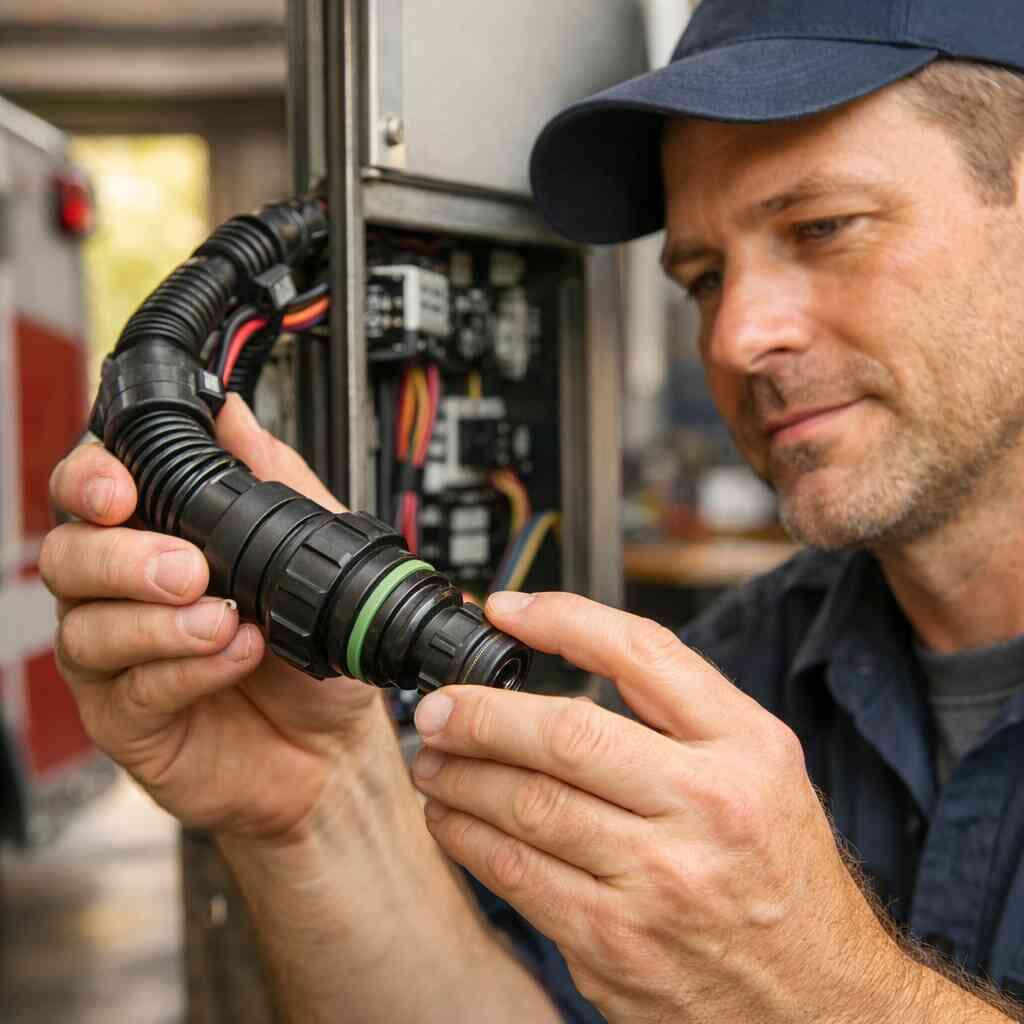
A connector pigtail inspection should focus on heat damage, looseness, contamination, and pin condition. If you catch discoloration, bent contacts, or a plug that does not seat firmly, stop there and troubleshoot before the next deployment. That is often the earliest warning that a fire safety equipment inspection needs more than a quick wipe-down.
How to inspect the plug body and pin faces for heat marks, looseness, or contamination
Start with the plug body. Look for softening, cracking, warped edges, or shiny spots that suggest heat exposure. Then check the pin faces for pitting, oxidation, dirt, or residue left behind after field use. A loose fit is just as important as visible damage, because vibration and repeated coupling can make a connector behave unpredictably under load.
On one recent inspection, a crew reported intermittent power after a wet return to the bay. The issue was not dramatic. It was a slightly loose connector with fine grit packed around the contacts. A careful wipe, reseat, and follow-up check solved it, but only because someone took the time to look closely.
Why a close electrical connector inspection matters after hose-downs, wet storage, or repeat deployment
Water exposure does not always cause immediate failure. It can leave behind contamination, trapped moisture, or slow corrosion that shows up later as nuisance tripping, poor contact, or unstable operation. That is why electrical connector inspection belongs in every maintenance check for fire equipment routine after hose-downs and storage in damp conditions.
If you need a deeper reference for connector care, the guide to fire truck connector maintenance is a useful companion. It helps you connect visual inspection with practical maintenance steps.
-
The hose condition check that keeps water ingress from becoming a failure point
A hose condition inspection should look for jacket wear, bend stress, cracked ends, and damage at strain points before it spreads. You also want to watch routed cable paths, seals, and exposed terminations for signs that moisture may be getting where it should not. This is basic corrosion prevention for fire equipment, but it is also one of the easiest checks to miss.
What wear and tear looks like on jackets, bends, ends, and strain points before it spreads
Inspect the outer jacket from end to end. Look for flattening, cuts, scuffing, abrasion, blistering, or soft spots. Pay extra attention at bends and anchor points, where repeated movement creates stress. Ends and terminations matter too, because a hose can look acceptable mid-run and still fail at the point where tension is highest.
Here is the part most people miss: the damage often starts small and stays hidden until the line is flexed under real conditions. A cable may pass a quick glance in the shop, then open up at a bend after the next rough deployment. That is why a true wear and tear assessment has to include both straight sections and flex points.
How to spot moisture intrusion risks around routed cable paths, seals, and exposed terminations
Moisture intrusion usually leaves clues. Look for dampness around grommets, cloudy residue near seals, or discoloration at exposed terminations. If the routing creates a low point where water can sit, that is a risk zone. In Florida, where humidity and sudden downpours are routine, that matters even more for water ingress prevention and hose-down resistant equipment care.
A practical hose condition inspection also includes checking whether the hose is rubbing against edges, doors, or hardware. Friction plus moisture is a bad combination. If you want a broader context for rugged system upkeep, the fire-fighting equipment overview is a solid place to compare how different components are meant to work together.
-
The junction receptacle and accessory check that protects the whole system
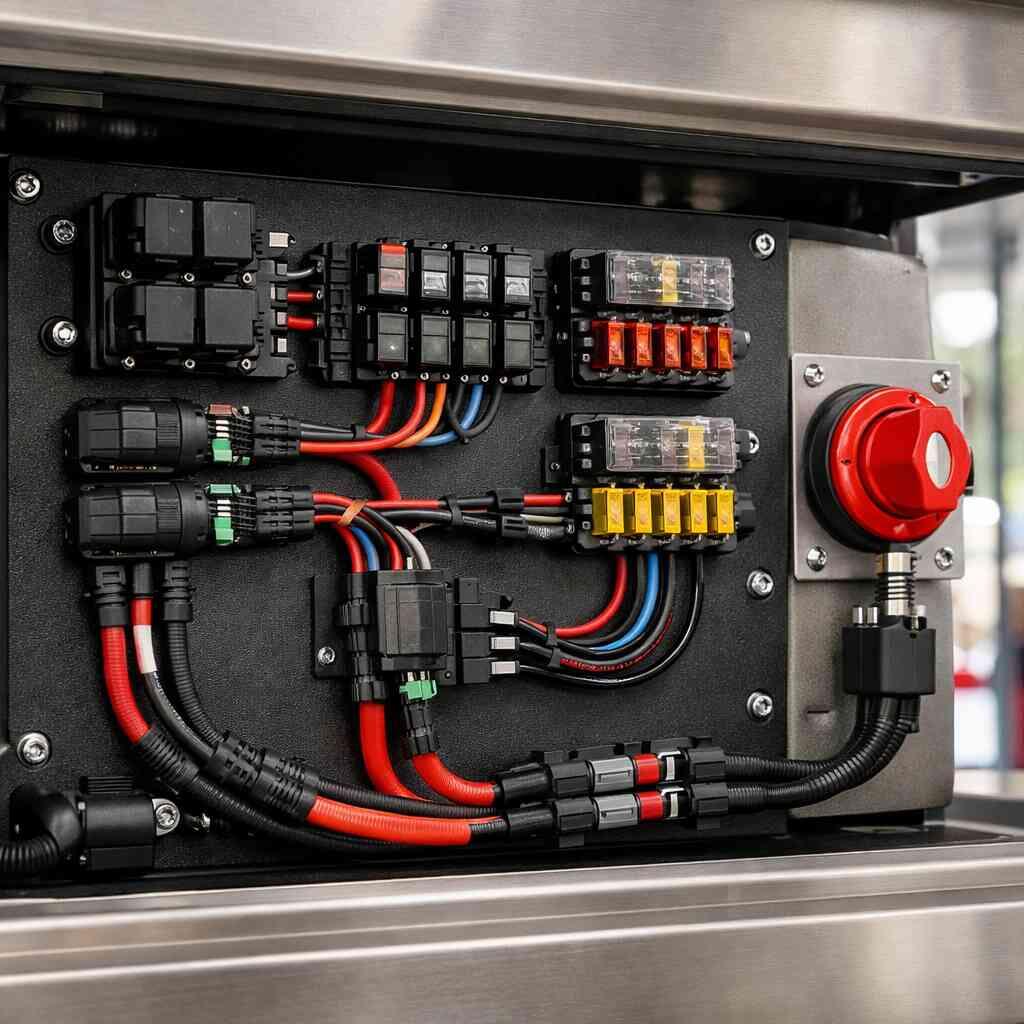
A junction receptacle and accessory check should confirm that covers, housings, and mounting points are tight, clean, and free of corrosion or movement. Then run the control panel through its basic function test and treat any abnormal response as meaningful. When this part is ignored, small connection problems can spread into larger mission-critical equipment maintenance issues.
What to look for when evaluating receptacles, covers, and mounting points for corrosion or movement
Start with the receptacle itself. Inspect the face for pitting, corrosion, loose hardware, or a cover that no longer seals tightly. Check the mounting points for movement or cracking, because vibration can loosen components long before they fail completely. If a cover swings freely or sits unevenly, that is not cosmetic. It is a reliability issue. For related inspection habits, the inspection steps for rugged EMS connectors offer a good parallel process. The details differ, but the logic is the same: secure connections, clean contact surfaces, and no unexplained movement. ### Which control panel function test signals deserve immediate attention during routine equipment inspection
Watch for delayed startup, intermittent indicators, dim displays, warning lights that stay on, or controls that do not respond consistently. Those signals can point to connector wear, voltage instability, or a component that is starting to break down. A good control panel function test should confirm that every expected response happens when it should, without lag or hesitation.
Signal you seeWhat it can meanAction to takeDelayed startWeak connection or unstable powerRecheck receptacles and battery supplyFlickering indicatorLoose accessory or voltage fluctuationInspect wiring and mounting pointsWarning light stays onFault condition or sensor issueEscalate for troubleshootingUneven control responseContamination or connector wearClean, reseat, retestThis kind of routine equipment inspection takes minutes, but it often prevents a much longer repair later. The summer maintenance guide also reinforces how quickly heat, vibration, and moisture can change equipment behavior.
-
The battery health check that separates dependable gear from dead weight
A battery health check should confirm charge performance, voltage stability, and runtime under normal use. Surface appearance is not enough. If the unit charges slowly, drops voltage under load, or runs out sooner than expected, it needs attention before it becomes unreliable emergency response gear maintenance.
How to read signs of weak charging performance, unstable voltage behavior, or shortened run time
A healthy battery usually charges predictably and holds performance through a work cycle. Weak charging often shows up as longer charge time, heat during charging, or a battery that seems full but drains quickly. Unstable voltage may appear as dim output, inconsistent function, or sudden cutoffs. Short runtime is especially important, because it can mean the battery no longer supports the demands of field use.
The U.S. Bureau of Labor Statistics regularly shows how essential reliable equipment is in physically demanding jobs, which is a useful reminder that maintenance is not a paperwork exercise. In fire and rescue work, a battery that looks fine on the bench can still fail under real load.
Why storage habits and preventative maintenance schedule choices affect emergency response gear maintenance
Storage habits matter more than most crews want to admit. Batteries stored at poor charge levels, left in hot compartments, or forgotten in long idle periods tend to age faster. A preventative maintenance schedule should define when batteries are cycled, checked, and removed from service.
If you want a practical framework for reducing delays in parts and service planning, the lead-time reduction guide can help with parts readiness. In DeLand, where weather can swing fast and equipment may sit ready one hour and deploy the next, storage discipline is part of performance.
-
The final readiness pass that proves rugged fire power products are still mission ready
The final readiness pass should confirm that every visible part is clean, secure, dry, and functional before redeployment. It is your last chance to catch damage, missed cleaning, or a component that needs professional attention. A strong durability-focused inspection checklist turns an ordinary clean-up into a real operational readiness check.
How to build a durability focused inspection checklist before field return or redeployment
Use a simple sequence:
- Clean the unit and remove debris.
- Inspect connectors, hoses, receptacles, and battery condition.
- Confirm covers, mounting points, and seals are secure.
- Run a basic function test.
- Document anything abnormal before the unit returns to service.
That checklist works best when you keep it short enough to use consistently. A long form nobody follows is worse than a short one that gets completed every time. If your gear has been through heavy use, rough transport, or repeated hose-downs, this final pass should be non-negotiable.
When to escalate from simple maintenance to professional troubleshooting and replacement decisions
Escalate when you see repeated tripping, visible heat damage, persistent corrosion, cracked housings, repeated connector looseness, or battery performance that does not improve after normal maintenance. Those are signs that firefighting equipment troubleshooting has moved beyond shop-level cleaning.
A practical rule: if the same issue returns after two careful checks, stop guessing. Get it evaluated. If you need rugged fire power products maintenance support or equipment built for harsh, hose-down conditions, Fire Power Products is a strong option for durable, USA-made connectors and portable electrical systems. For equipment questions or next-step guidance, contact Duraline.
Frequently Asked Questions
Question: What should I include in a maintenance checks for fire equipment routine after heavy use or a hose-down?
Answer: A solid maintenance routine should start with the five core checks covered in Top 5 Maintenance Checks for Rugged Fire Power Products: connector pigtail inspection, hose condition inspection, junction receptacle and accessory checks, battery health check for fire gear, and a final readiness pass. That means looking for heat marks, looseness, corrosion, contamination, jacket wear, strain damage, moisture intrusion risk, and any warning signals during a control panel function test. For crews working in demanding environments, this kind of routine equipment inspection supports fire equipment reliability and helps catch small issues before they turn into service interruptions. Fire Power Products in DeLand, Florida builds rugged electrical systems and connectors with durability and hose-down resistant equipment care in mind, but even the toughest gear still benefits from regular field maintenance best practices.
Question: How can I tell if a connector pigtail needs attention during a fire safety equipment inspection?
Answer: During an electrical connector inspection, look closely for discoloration, softening, cracks, bent pins, dirt, residue, or a loose fit when the connector is seated. Those are common signs that the plug body or contacts may be stressed, contaminated, or beginning to fail. A connector can look acceptable from a distance and still create intermittent power issues under load, especially after repeat deployment or wet storage. That is why Fire Power Products recommends treating connector condition as part of a broader durability-focused inspection checklist and not as a quick visual glance. If your equipment is showing intermittent operation, repeated looseness, or visible heat damage, it is time to move from routine equipment inspection into firefighting equipment troubleshooting and consider professional evaluation.
Question: In Top 5 Maintenance Checks for Rugged Fire Power Products, what hose condition inspection steps help prevent water ingress and wear issues?
Answer: A thorough hose condition inspection should run from end to end and include jacket wear, cuts, abrasion, flattening, blistering, soft spots, cracked ends, and stress at bends and strain points. You should also check routed paths, seals, grommets, and exposed terminations for moisture intrusion risks, because water can sit in low spots or enter through damaged protection points over time. This is especially important for corrosion prevention for fire equipment and for equipment storage best practices after hose-downs or wet operations. Fire Power Products emphasizes careful wear and tear assessment because damage often begins small and only becomes obvious when the line is flexed under real conditions. If the routing shows rubbing, the jacket is worn, or the ends are damaged, the safe move is to document it and escalate before it affects mission-critical equipment maintenance.
Question: What battery health check for fire gear signs should make me pause before redeployment?
Answer: A battery health check should look beyond appearance and focus on charge behavior, voltage stability, and runtime under load. Warning signs include slow charging, excess heat while charging, a battery that seems full but drains quickly, dim output, inconsistent performance, or sudden cutoffs during use. Those symptoms often indicate that the battery can no longer support emergency response gear maintenance demands reliably. Fire Power Products encourages a preventative maintenance schedule that includes battery checks, because storage habits, heat exposure, and long idle periods can shorten service life. If a unit repeatedly fails to hold charge or support normal operation, it should not return to service until it has been tested and cleared as part of a proper operational readiness check.
Question: How does Fire Power Products support a final readiness pass and control panel function test before field return?
Answer: The final readiness pass is where you confirm the unit is clean, dry, secure, and fully functional before redeployment. That includes checking covers, mounting points, seals, receptacles, and accessories, then completing a control panel function test for delayed startup, flickering indicators, warning lights that remain on, or uneven response. If anything looks abnormal, it should be treated as meaningful and documented right away. Fire Power Products is focused on rugged equipment performance verification, so this final pass aligns with the kind of mission-critical equipment maintenance that keeps first responder equipment care on track. When issues keep returning after careful inspection, it is a sign to escalate to professional troubleshooting rather than keep guessing. For equipment support in DeLand, Florida, Fire Power Products can be a practical partner for durable, USA-made solutions designed for harsh conditions and frequent use.