Top 7 Fire Power Products for Summer Fleet Maintenance 2026
June 24, 2026
-
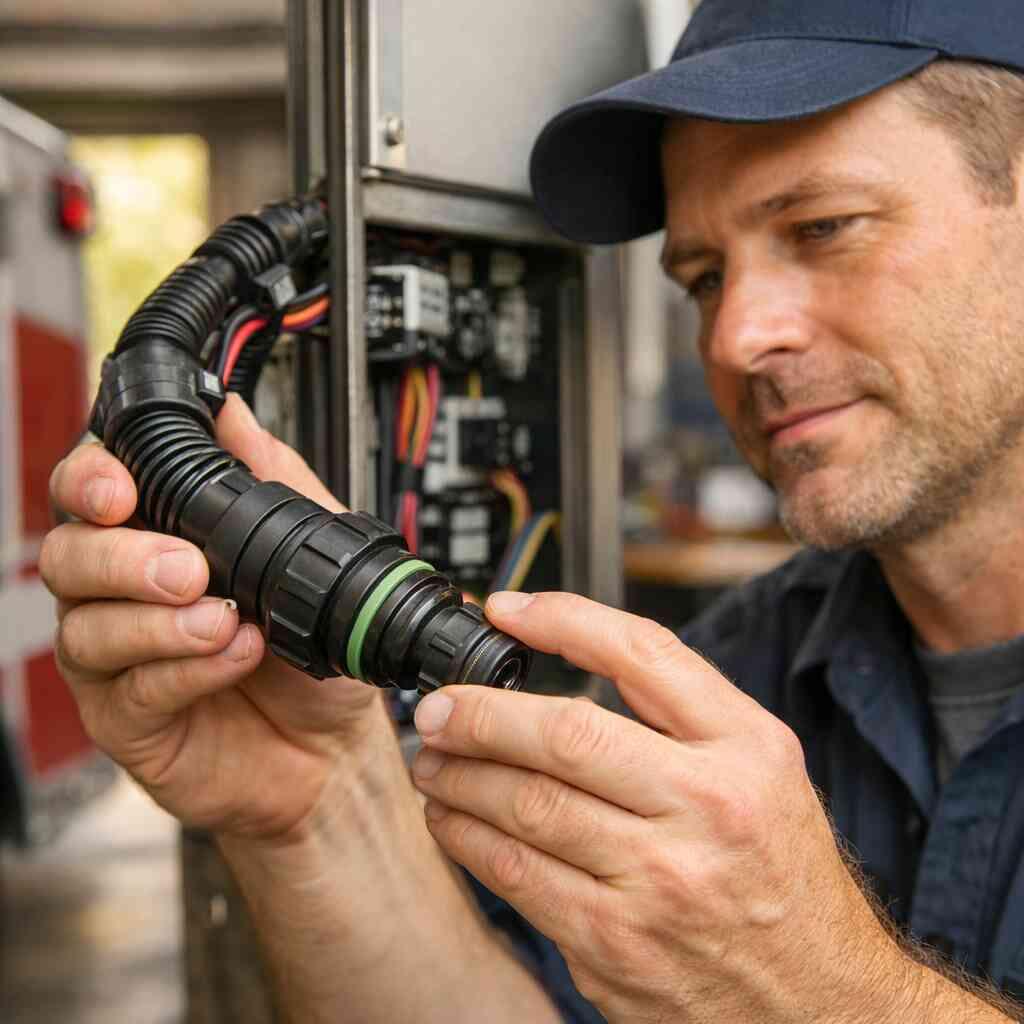
IP68 Female Electrical Connector Pigtails
Heat is not gentle on fire apparatus. It exposes tired insulation, loose terminations, and small seal failures that hide all winter. If you are already feeling pressure from a packed summer fleet maintenance checklist, that stress is normal. The hard part is deciding what to inspect first. Female pigtails deserve attention because they often sit close to the electrical system’s most vulnerable transitions. For a practical starting point, review summer fleet maintenance for fire power products.
Where these connectors fit into summer fleet maintenance planning
Female electrical connector pigtails are a smart place to begin because they can simplify seasonal equipment inspection. They help you isolate problems faster during fire apparatus maintenance. That matters when emergency vehicle upkeep has to happen between calls. On the projects we’ve finished this year, the smallest connector issues often caused the longest delays. You can avoid that by treating connectors as inspection items, not afterthoughts. If your department runs hard in Florida heat, these components belong on the same list as battery system checks and fluid level monitoring.
One crew we spoke with had a recurring dash fault that came and went after washdowns. The problem was not the display. It was a female pigtail with a seal that looked fine until heat made it expand slightly. That kind of failure is frustrating because it wastes time and confidence. Here is the part most maintenance teams miss: intermittent electrical issues usually start before they become obvious. Catching them early protects fleet asset protection and reduces vehicle downtime.
What to inspect before heat stress and washdowns expose weak links
Start with the connector body and the mating face. Look for discoloration, cracked overmolding, bent contacts, and any sign of moisture intrusion. Then check strain relief carefully, because vibration can loosen a connection long before a visible break appears. If your apparatus sees frequent hose-down durability testing, inspect after cleaning, not before. Water can reveal a weak seal. It can also leave residue that masks a problem.
A disciplined electrical system inspection should also include routing. Female pigtails should not rub against sharp brackets or bind near compartment edges. If they do, summer heat will make the wear worse. Add that to your chassis inspection and corrosion prevention routine. Small issues here can snowball into a much bigger replacement job. For teams building a fleet service schedule, this is one of the easiest ways to keep maintenance support focused and efficient.
Why a compact female pigtail can simplify electrical system inspection and replacement timing
Compact pigtails make troubleshooting easier because they reduce clutter around the connection point. That helps technicians isolate faults without tearing into the whole harness. In a crowded cab and compartment organization plan, that simplicity matters more than most people realize. You can inspect them quickly, replace them cleanly, and move on. That supports responder-ready equipment without unnecessary downtime.
The value is not just convenience. It is timing. If a compact female pigtail shows early wear, replacing it during planned preventive maintenance is far better than waiting for an on-scene failure. That approach also helps with fleet safety compliance, because documented inspection and replacement timing creates a cleaner maintenance record. For departments comparing parts, IP68 female electrical connector pigtails for seasonal equipment inspection are worth reviewing against your current setup. You do not need to overhaul everything. You just need to stop small connector problems from becoming major service events.
-
IP68 Male Pigtails Electrical Connectors Fire Fighting Equipment
Male pigtails are often the quickest route back to reliable equipment. When a truck is partially down, you do not always need a full rebuild. You need the right connection restored cleanly and safely. That is especially true during peak-use months, when every spare hour matters. If you are trying to reduce vehicle downtime, this is where disciplined inspection pays off. For departments weighing Duraline fire power products for emergency vehicle upkeep, male pigtails deserve a close look.
When male pigtails become the fastest path to restoring responder-ready equipment
Male pigtails usually become priority items when a connector has visible wear or unstable performance under load. They let you restore function without chasing unrelated components. That is a real advantage in fire service equipment, where time pressure can distort judgment. A fault that looks electrical may actually be mechanical. The connector can be the simplest and safest place to start.
We have seen crews chase pumps, modules, and switches before discovering the connector shell was the culprit. That is a painful lesson. It also shows why connector condition matters more than assumptions. If a male pigtail fails the visual or handling test, replace it before it compromises the rest of the system. In summer readiness planning, that is one of the most practical decisions you can make.
How to check sealing points, strain relief, and cab side routing before peak-use months
Sealing points should feel tight and uniform. If you can see gaps, wear, or uneven compression, the connector is no longer giving you a clean barrier. Strain relief should also hold its shape. If it flexes oddly or shows abrasion, the cable may be taking stress every time the apparatus moves. Cab-side routing deserves equal attention because heat buildup and vibration work together there.
A careful inspection should include touch as well as sight. Gently move the connector and watch for looseness. Check the cable path through the cab and compartments. Confirm that no edge, clamp, or bracket is pinching the line. These checks are simple, but they save money. They also support maintenance support for fire departments that want predictable service intervals instead of emergency repairs.
What makes connector condition more important than the number on the parts label
The label tells you what the part is supposed to be. Condition tells you whether it can still do the job. That distinction matters in emergency service fleet readiness, where a part can look correct and still fail under heat stress on fleet equipment. IP68 ratings are helpful, but real-world wear still wins if inspection is sloppy. You need both the right part and the right condition.
For that reason, do not let part-number matching replace field judgment. A clean connector with proper sealing and stable routing is more valuable than a perfect label on a worn component. The question is not only compatibility. It is also durability under summer use, washdowns, and vibration. If you are building a replacement list, IP68 male pigtails electrical connectors for fire fighting equipment should be matched to actual wear patterns, not just inventory habits. That approach keeps fleet safety compliance practical and grounded.
-
IP68 Male Female Electrical Extensions Fire Fighting Equipment
Extensions are easy to overlook until the apparatus layout changes. Then they become the difference between a clean install and a messy workaround. If you have added accessories, shifted equipment locations, or reorganized the cab, extension runs may now be carrying more load than before. That can create hidden stress points. Summer maintenance is the right time to address them. It is also the right time to confirm IP68 male female electrical extensions for responder-ready equipment.
Why extension runs matter when apparatus layout changes or accessories get added
Extensions matter because they preserve signal and power continuity across changing layouts. Fire apparatus rarely stay static. Radios get relocated. Chargers move. Compartment accessories grow. Each change affects routing, bend radius, and strain on the electrical system. If you ignore those changes, you invite failure later.
In one fleet, an added compartment device forced a cable to cross a vibration-heavy zone near a hinge. The system worked fine for a while. Then the connector began acting up after every rough ride back to the station. That failure did not start with the accessory itself. It started with a poor extension path. Here is what almost no online guide mentions: layout changes often matter more than the device you add.
How to evaluate length, exposure points, and cab and compartment organization
Length should be practical, not excessive. Too short creates tension. Too long creates clutter and unnecessary exposure. Measure the actual path, not the imagined one. Then check every exposure point where heat, abrasion, or moisture could reach the line. This is where cab and compartment organization becomes a maintenance issue, not just a housekeeping issue.
A strong inspection includes three questions:
- Does the extension have enough slack for movement?
- Is it protected from pinch points and sharp edges?
- Can a technician trace it quickly during troubleshooting?
If the answer to any of those is no, the run needs attention. Good organization supports faster inspections and cleaner repairs. It also helps during pump maintenance and chassis inspection, when technicians are already moving through a long checklist.
Where summer vibration and hose-down durability can reveal hidden electrical weakness
Summer vibration can turn a minor routing issue into a serious electrical fault. Hose-down durability can do the same if the seal has aged or the connector was installed under stress. The combination is brutal. Heat softens materials. Vibration works on loose points. Water finds the smallest weakness.
That is why inspection documentation matters. Write down what you saw, where you found it, and what you changed. You may not need a replacement today. You may simply need a better route or cleaner support point. Still, do not ignore the warning signs. For deeper planning, Duraline fire power safety products for fleet service schedules can help you organize the next service window without overbuying. Smart maintenance is rarely dramatic. It is usually precise.
-
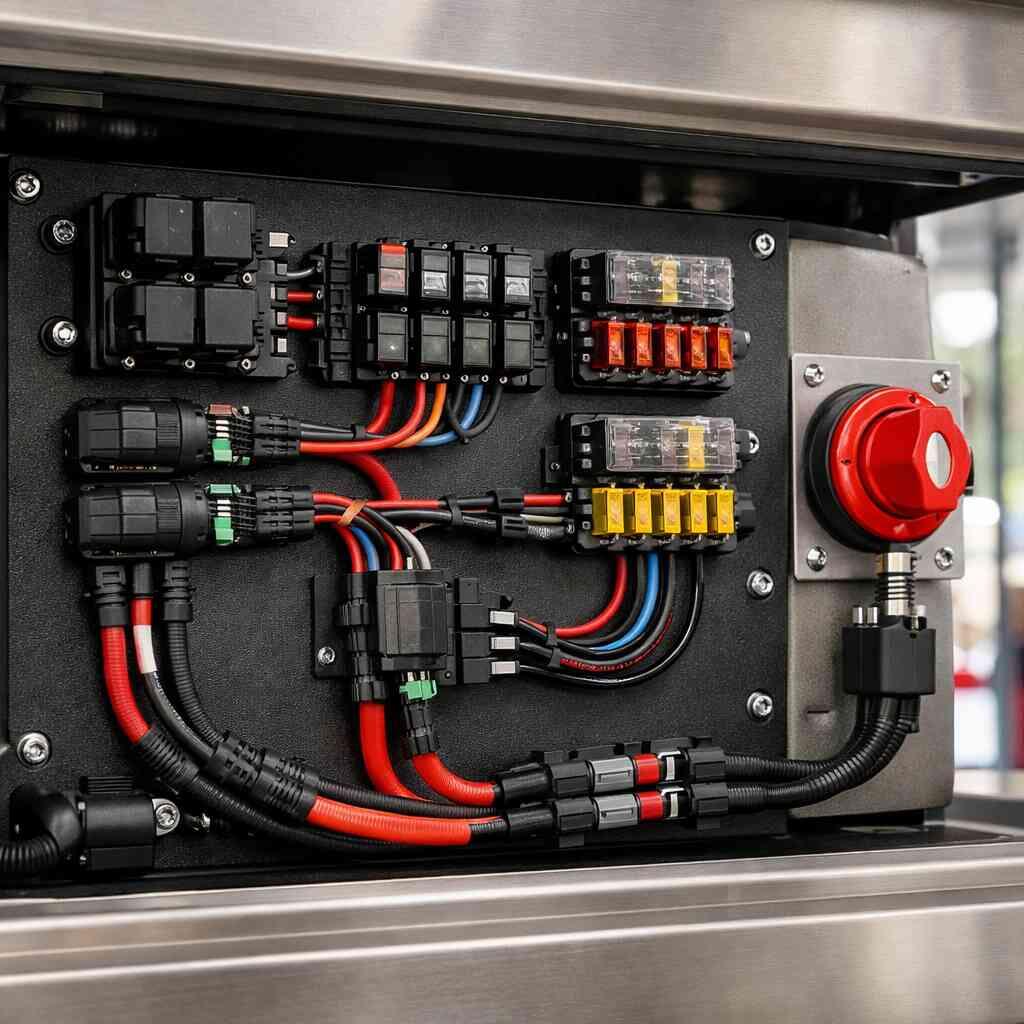
Fire Fighting Electrical Equipment Junctions Receptacles and Accessories
Junctions, receptacles, and accessories often decide whether a problem stays small. If they fail, the whole system can look unreliable. That is why these parts belong near the top of any fire engine maintenance and apparatus readiness checklist. They are not glamorous. They are critical. In a busy shop, they also create the biggest gap between planned service and last-minute scrambling. A useful place to compare your options is fire fighting electrical equipment junctions receptacles and accessories for apparatus readiness.
The junction points that decide whether downtime stays minor or spreads across the fleet
Junction points are where small faults gather. A loose receptacle can affect charging. A worn accessory interface can create erratic performance. A bad junction can make one truck feel like three different trucks because technicians keep chasing the symptom. That is how downtime spreads. It moves from one call-out to the next.
The mistake we see most often is treating a single failing junction as an isolated event. It is usually a warning. If one connection has heat damage, moisture staining, or repeated looseness, nearby components may be under the same stress. That is why a thorough electrical connector inspection for firefighting equipment should include neighboring parts. One fault can tell you where the next one is hiding.
What a disciplined electrical system inspection should look for at receptacles and accessory interfaces
A disciplined inspection starts with visible condition. Look for corrosion, broken housings, irregular seating, and any evidence of arcing. Then verify that accessories connect cleanly and disengage without force. A good receptacle should not require persuasion. If it does, something is wrong. Next, confirm the surrounding structure. Mounts should be stable. Fasteners should be tight. Wiring should be supported and protected. For departments in Florida, corrosion prevention is not optional. Humidity, salt air in some service areas, and repeated washdowns can all shorten component life. This is the kind of work that protects emergency response gear before it becomes a fleet safety issue. ### How to separate routine maintenance support from a last-minute repair scramble
Routine support means you inspect, document, and replace early. A scramble means you wait until a fault closes a truck route or interrupts a call. The difference is not subtle. It shows up in overtime, stress, and parts availability. Good preventive maintenance planning avoids that pattern.
A useful rule is simple: if a junction or receptacle needs to be “watched,” it probably needs a replacement plan. You do not have to replace every part at once. You do need a priority list. That list should include heat exposure, washdown history, vibration exposure, and past repair notes. If you want a direct conversation about those choices, contact Duraline for fleet maintenance support and parts compatibility is a practical next step. One solid call can save a week of second-guessing.
-
Fire Power Fire Fighting Electrical Equipment Junctions Receptacles and Accessories
High-use equipment reliability starts at the connection, not the control panel. That is the part most teams learn only after a failure. Fire Power products are built around that reality, which is why they belong in summer fleet maintenance planning. You are not just buying parts. You are protecting response time. For readers comparing rugged options, Duraline Fire Power Products can be a useful reference point.
Why high-use equipment reliability starts at the connection, not the control panel
Control panels get blamed because they are visible. Connections do the quieter work underneath. If a junction or receptacle is weak, the panel can appear to fail even when it is only reporting the underlying problem. That leads to wasted labor and avoidable parts replacement. The connection is where power, signal, and durability either hold or collapse.
A truck that sees repeated field calls will expose weak interfaces faster than a lightly used unit. That is why high-use equipment reliability must be judged at the smallest link. In our experience, the biggest mistake is assuming a clean panel means a healthy system. It does not. The connection tells the truth first.
How to prioritize replacement candidates during a fleet service schedule
Prioritization should be practical. Start with the units that are used most often. Then move to the ones with the harshest exposure history. Finally, flag anything with recurring service notes. That keeps your fleet service schedule honest and useful. You are not guessing. You are ranking risk.
A simple comparison helps:
Priority factorWhat to look forWhy it mattersHeat exposureDiscoloration, hardening, or brittle insulationHeat accelerates failureMoisture exposureStaining, corrosion, seal wearWater finds weak pointsVibration exposureLoose fit, abrasion, routing stressMovement breaks supportUse frequencyRepeated field deploymentWear accumulates fasterThis kind of table is not fancy. It is effective. It helps maintenance teams choose replacement candidates without overbuying. That keeps fleet asset protection realistic and budget-aware.
What a summer readiness planning checklist should capture before pressure washing and field calls increase
Your checklist should capture the condition of every exposed connection, receptacle, and accessory point. It should also note routing issues, previous repairs, and any part that required extra force to connect. Pressure washing can expose weaknesses fast. So can a stretch of heavy field calls. If a part has been marginal, summer will usually reveal it.
Checklist items should include:
- Visual inspection of seals and housings
- Routing and clamp condition
- Evidence of moisture or corrosion
- Function test under normal load
- Notes for replacement timing
That level of detail supports fleet safety compliance and better inspection documentation. It also makes later troubleshooting faster.
-
Duraline Fire Power Products
Duraline Fire Power products belong on a preventive maintenance planning list because they focus on durability where fleets actually fail. That is especially useful for departments trying to protect gear without overstocking parts that never move. Summer maintenance is about discipline, not volume. If you are in DeLand, Florida, and working through vehicle downtime reduction, that discipline matters even more. For a local planning perspective, DeLand, Florida can help frame the environment, though your maintenance decisions should stay grounded in actual apparatus use.
Which Duraline Fire Power products deserve a place on a preventive maintenance planning list
The strongest candidates are the parts that protect electrical continuity and simplify replacement. That includes female pigtails, male pigtails, extensions, junctions, receptacles, and related accessories. These are not decorative items. They are the pieces that keep response gear functioning when heat, vibration, and washdowns try to work against it.
If your department is refining a preventive maintenance planning list, begin with the components that fail fastest under repeated handling. Then add the pieces that are hardest to access during a roadside repair. That strategy limits disruption. It also keeps your inventory focused on first responder fleet readiness instead of excess shelf stock.
How USA-engineered fire equipment can support fleet asset protection without overbuying
USA-engineered fire equipment can be a strong fit when you need predictable quality and straightforward support. The key is to buy for the application you actually have. Do not purchase every rugged option just because it sounds durable. Match the product to the work, the exposure, and the inspection interval. That is the cleanest path to fleet asset protection.
A department chief once told us the best purchase is the one that disappears into the maintenance schedule. That stuck with us. A good product should make your shop calmer, not busier. Fire Power products can serve that role when chosen carefully and documented well. The goal is reliable emergency response gear, not a crowded parts room.
What service teams in DeLand Florida should confirm before choosing rugged fleet accessories
Before choosing rugged fleet accessories, confirm compatibility with the existing harness, routing, and enclosure space. Confirm the exposure level too. A part that works in one bay may not hold up the same way in another. DeLand, Florida heat, humidity, and storm-driven washdowns make that evaluation even more important.
You should also confirm the maintenance schedule around the part. If technicians cannot inspect it easily, the part must justify that difficulty. That is where local experience matters. You want rugged fleet accessories that fit the truck, the workflow, and the response pattern, not just the catalog description.
-
Contact Duraline
At some point, the maintenance checklist becomes a procurement decision. That is not a failure. It is progress. You have identified what is wearing out, what should be replaced, and what needs parts compatibility confirmation. That is exactly when it helps to slow down and ask the right questions. If you are ready to move from inspection to action, contact Duraline for fleet maintenance support and parts compatibility is the logical next step.
When the maintenance checklist turns into a procurement decision
You know you have reached this point when more than one unit shows the same wear pattern. You also know it when technicians start working around a part instead of trusting it. At that stage, delaying the decision usually costs more than making it. Procurement is not only about cost. It is about avoiding preventable downtime.
This is especially true during summer readiness planning. Apparatus demand rises. Washdowns increase. Response vehicles stay busy. A part that felt “almost fine” in spring may not survive the next round of service calls. That is why maintenance teams should turn inspection notes into purchase action while the issue is still manageable.
What information to have ready so the conversation stays focused on fleet readiness and parts compatibility
Have the part location, vehicle type, and symptom history ready. Include any notes about exposure to moisture, heat, or vibration. If you know the old connector style or installation route, bring that too. The more precise you are, the faster the conversation will go. That saves time for everyone.
A good preparation list looks like this:
- Vehicle and compartment location
- Current part type or visible markings
- Failure symptom or inspection note
- Photos, if available
- Desired replacement timeline
That level of detail helps avoid ordering mistakes and supports inspection documentation. It also keeps the conversation practical. You are not speculating. You are solving a real fleet issue.
How to use the next service window to reduce vehicle downtime and protect emergency response gear
Use the next service window to replace the parts that already raised concern. Do not wait for a second warning. That is how small electrical issues become operational headaches. If you have multiple trucks, start with the one that runs hardest or sees the harshest washdown routine. That sequence often gives you the biggest return.
You do not have to figure this out alone, and you do not have to solve every part of it today. Start with one phone call, one inspection sheet, and one replacement list. Then move the highest-risk connector before the next heavy-use stretch begins. That is how you protect emergency response gear, cut avoidable downtime, and keep your fleet ready for the work ahead.
Frequently Asked Questions
Question: In Top 7 Fire Power Products for Summer Fleet Maintenance 2026, which fire power products should we prioritize first in our summer fleet maintenance checklist?
Answer: A practical place to start is with the components most likely to show wear from heat stress on fleet equipment, vibration, and washdowns: female electrical connector pigtails, male pigtails, electrical extensions, and junctions or receptacles. These parts are central to fire apparatus maintenance because they help technicians isolate issues quickly, support seasonal equipment inspection, and reduce vehicle downtime when a unit needs to stay responder-ready. The best approach is to rank replacement candidates by condition, exposure history, and how often the truck is used. That keeps preventive maintenance planning focused on the areas that most affect fleet asset protection and first responder fleet readiness.
Question: How can Fire Power Products help with electrical system inspection and corrosion prevention during summer readiness planning?
Answer: Fire Power Products are positioned around the connection points that often fail first, which makes them useful for electrical system inspection and corrosion prevention. During summer readiness planning, technicians should inspect connector bodies, seals, strain relief, routing, and any sign of moisture intrusion or corrosion. That matters because heat, vibration, and pressure washing can turn a small weakness into a bigger repair. Choosing durable fire safety products that are designed for demanding fire service equipment environments can help maintenance teams stay ahead of hidden issues while keeping inspection documentation clean and useful. For departments working on fleet safety compliance, that kind of focused inspection process is often more practical than waiting for a fault to become obvious.
Question: What should we look for in IP68 female electrical connector pigtails and IP68 male pigtails electrical connectors fire fighting equipment before peak-use months?
Answer: Before peak-use months, the key is to inspect condition rather than assume a part is fine because it has the correct label or rating. Look for cracked overmolding, discoloration, bent contacts, moisture staining, looseness, and worn strain relief. Also check whether the routing creates abrasion or pinch points in the cab and compartment organization. These are small details, but they matter because a connector that feels loose or looks stressed can become the source of intermittent electrical problems. For summer fleet maintenance, that means checking pigtails during planned service instead of waiting for a failure that interrupts emergency vehicle upkeep. If a connector is showing early wear, replacing it during a fleet service schedule is usually the safer path.
Question: Why are male female electrical extensions and junctions receptacles and accessories important for responder-ready equipment?
Answer: Male female electrical extensions, junctions, receptacles, and accessories matter because they help keep power and signal paths stable as apparatus layouts change. When a truck gains accessories, gets reorganized, or sees repeated use in harsh conditions, those connection points can carry more stress than expected. A poor extension path or a worn receptacle can create intermittent faults that are hard to trace and expensive to chase. Fire Power products in these categories can support responder-ready equipment by making inspection, troubleshooting, and replacement more straightforward. For maintenance support for fire departments, that simplicity is valuable because it helps reduce vehicle downtime and makes it easier to keep the fleet aligned with a preventive maintenance planning routine.
Question: What makes Fire Power Products a good option for high-use equipment reliability and fleet asset protection in DeLand Florida?
Answer: Fire Power Products are described as USA-engineered fire equipment designed for demanding conditions, which makes them relevant for high-use equipment reliability and fleet asset protection. For departments in DeLand, Florida, the combination of heat, humidity, frequent service calls, and washdowns means rugged fleet accessories need to fit the actual operating environment, not just the catalog description. The most important step is to confirm compatibility with the existing harness, routing, and enclosure space, then match the part to the work and exposure level. That approach helps protect reliable emergency response gear without overbuying. It also keeps the purchase decision grounded in fleet readiness rather than assumptions about how long a part should last.
Question: When should a maintenance checklist turn into a procurement decision, and how can Fire Power Products support that process?
Answer: A maintenance checklist should become a procurement decision when the same wear pattern shows up on multiple units, when a part needs to be watched instead of trusted, or when technicians are already working around a connection rather than relying on it. At that stage, delaying replacement often creates more downtime than acting on the inspection notes. Fire Power Products can support that process by giving departments practical options for parts compatibility, replacement timing, and routine service planning. If you already have the vehicle type, part location, symptom history, and photos ready, it is easier to move from inspection documentation to a clear next step. That keeps summer readiness planning organized and helps protect fire service equipment before the next heavy-use stretch begins.