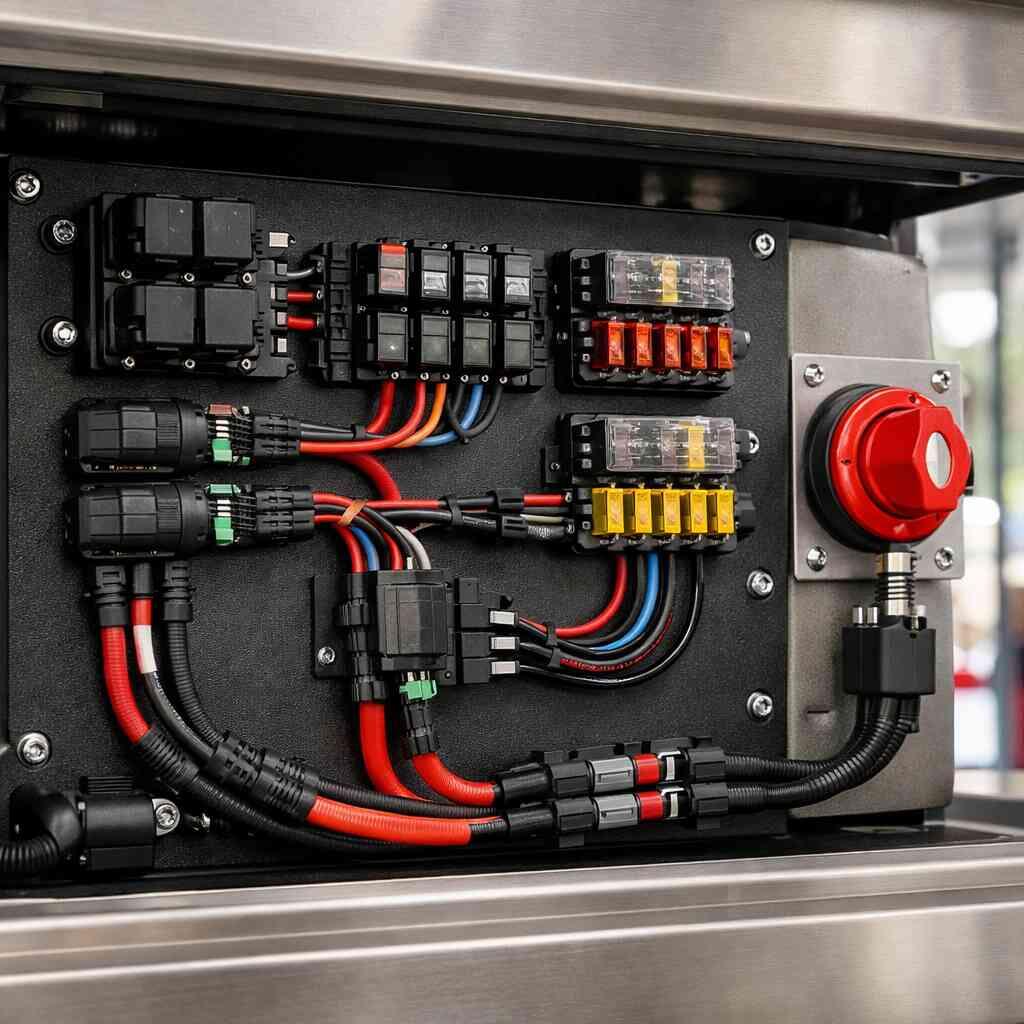
What Is the Best Fire Power Products Connector for 2026
June 23, 2026
You do not learn connector quality in a showroom. You learn it when a hose starts twisting, the truck is vibrating, and every second feels expensive. If you are trying to choose the best Fire Power Products connector for 2026, that tension probably feels familiar. The hard part is not finding a connector that looks tough. The hard part is choosing one that stays dependable after repeated handling, heat, moisture, and abuse.
That uncertainty is normal. Most buyers are not shopping for a connector because they enjoy specs. They are trying to avoid a failure that can ripple through the whole job. On Fire Power Products’ own site, the brand frames its rugged power for first responders: Duraline Fire Power system overview around durability and real-world use, which is exactly the right lens. You want a connector that fits the task, the equipment, and the environment without drama.
What really fails first when a fire connector is pushed past its comfort zone
The hidden stress points in a fire power products connector under high usage and hose movement
The first failure is often not dramatic. It starts small. A connector loosens slightly. A hose shifts under load. A seal that looked fine yesterday begins to act tired today. In the field, repeated movement creates tiny mechanical insults that accumulate fast. That is why a fire power products connector should be judged by how it handles motion, not just how it looks on a shelf.
One crew I spoke with described a hose line that kept backing off during routine repositioning. The issue was not the visible hardware. It was the strain created at the interface when the line flexed under repeated handling. Once they corrected the connector choice, the problem disappeared. That is the part most people miss: the weak point is often where the system moves, not where it sits still.
Why a secure hose coupling matters more than the flashiest fitting on the shelf
A flashy fitting can distract you from the real question: Will it stay secure under pressure and movement? A secure hose coupling matters more than polished surfaces or oversized profiles. A connector that feels substantial but does not match the actual load path is a poor trade. In a real fireground or emergency response setting, the safest choice is usually the one that integrates cleanly and stays put.
Here is the practical test. Look at how the hose meets the equipment. Look at how often the assembly gets disconnected, dragged, and reattached. Then ask whether the coupling supports that workflow without introducing extra play. A reliable hose coupling should reduce uncertainty, not create it. That mindset is especially useful when you are comparing a fire equipment connector against a more generic industrial option.
How harsh conditions change the way a firefighting connector should be chosen
Heat, moisture, grime, and pressure do not all punish connectors in the same way. Some conditions favor corrosion resistance. Others expose weak thread engagement. High-usage environments also reveal whether a fitting can tolerate repeated handling without becoming sloppy. That is why a firefighting connector should be chosen for the environment first, then for the spec sheet.
If your equipment sees washdown, outdoor storage, or rapid staging, the environment matters even more. A connector that survives a calm bench test may still disappoint in the field. What we have seen in 2026 specifically is that buyers are asking better questions about connectors for harsh conditions before they place orders. That is a good sign. It usually means fewer surprises later. It also means the best choice is the one that fits the actual duty cycle, not the most aggressive marketing language.
When the best fire power products connector is not the strongest looking one
Matching the connector to the job instead of chasing oversized hardware
Bigger is not always better. Heavier is not always better either. The best fire power products connector is the one matched to the job, the hose, and the equipment interface. Oversized hardware can complicate handling and make the system harder to deploy cleanly. That is a bad trade when speed and control matter.
A smart buyer starts with the use case. Is the connector part of a frequent-attach setup, a fixed assembly, or a replacement piece in a larger system? Once you answer that, the field opens up quickly. The goal is not to impress anyone with bulk. The goal is to keep the assembly functional, balanced, and dependable. That is how a fire equipment connector earns its keep.
Why hose diameter, adapter fit, and equipment interface decide the real winner
Hose diameter influences everything. So does the adapter fit. So does the way the connector interfaces with the rest of the system. If one of those three is wrong, the strongest-looking fitting becomes the wrong fitting. A hose-to-equipment adapter mismatch can create more headaches than a visibly worn part ever will.
Here is a simple rule. Start with the full assembly, not the connector alone. Then check the diameter, the mating surface, and the thread relationship. That approach is especially useful when comparing a high-pressure hose connector to a standard industrial fire connector. The real winner is the one that respects the complete connection path. Anything else is guessing.
Decision factorWhy it mattersWhat can go wrongHose diameterControls fit and flow relationshipLoose fit or forced installationAdapter interfaceDetermines compatibilityFrequent rework or field frustrationConnection styleAffects handling speedSlow deployment or accidental disengagement### The tradeoff between quick connect fire hose fitting convenience and locked-in reliability
Convenience has value. Nobody wants to fight a fitting during a stressful response. Still, convenience should not outrun reliability. A quick connect fire hose fitting can save time, but only if it stays consistent under repeated use. If it is fast in calm conditions and awkward under pressure, it is not actually convenient.
This is where discipline matters. Quick connections should feel smooth, but never flimsy. Locked-in reliability should feel solid, but never stubborn. The balance is delicate. The best assemblies make the work easier without creating doubt. In our experience, the biggest mistake is choosing speed without checking how the connector behaves after the fifth, tenth, or twentieth cycle.
The connector details that separate dependable from disposable in the field
How to think through brass fire hose connector versus aluminum fire hose fitting choices
Material choice changes the feel of the entire assembly. A brass fire hose connector often brings a reputation for toughness and familiar handling. An aluminum fire hose fitting may make sense in other assemblies where weight or application needs differ. The point is not to crown one material as universally superior. The point is to match the material to the real operating environment.
If you want a simple framework, think in three layers:
- Handling frequency
- Exposure conditions
- Compatibility with the rest of the assembly
That is how buyers separate a useful connector from a merely attractive one. Material alone does not guarantee performance. It simply shapes how the connector behaves over time. A durable fire hose fitting should feel consistent in hand and dependable in service.
Where corrosion-resistant connector design matters most in emergency response use
Corrosion is slow, then sudden. A connector may look fine until the day threads start feeling gritty or a seal no longer seats cleanly. That is why corrosion-resistant connector design matters most where moisture, cleaning, and storage conditions overlap. In emergency response use, those conditions are common, not rare.
We hear this from clients almost every week. The connector is usually fine on day one. The challenge comes after repeated exposure, washdowns, and field contact with grime. A durable emergency hose fitting should resist that drift toward failure. Corrosion resistance is not a luxury feature. It is part of keeping the assembly predictable.
The role of threaded fire connector and hose-to-equipment adapter compatibility in a complete assembly
Threaded systems reward precision. A threaded fire connector only performs well when the threads, the seat, and the mating parts all align correctly. If one piece is off, the whole system suffers. The same is true for a hose-to-equipment adapter. Compatibility is not a minor detail. It is the foundation of a stable assembly. This is where many buyers overfocus on the connector and underfocus on the interface. That mistake costs time later. It can also create unnecessary wear. A properly matched hose assembly connector reduces that risk because it treats the connection as a system, not a single part. That is the correct way to think about replacement and upgrades. ### Why replacement fire hose connector selection should start with the full hose assembly not just one part
A replacement is never just a replacement. It is a decision about the whole assembly’s future. A replacement fire hose connector should be selected after you confirm how the hose, adapter, and equipment all interact. Otherwise, you are correcting one problem while introducing another. That is frustrating, and it is avoidable.
One maintenance lead told us about a connector swap that looked straightforward on paper. The old fitting had been damaged, so the team replaced only that piece. The new part fit, but the assembly handled differently under movement. After they reviewed the full setup, they realized the original issue had been compounded by the wrong interface choice. That lesson saved them repeat downtime. It also reinforced a simple truth: start with the full assembly, not the isolated part.
What a smart buyer should verify before ordering a Fire Power Products connector
Which Fire Power Products pigtails, extensions, receptacles, and junctions fit the task
This is where a careful buyer gets ahead. Fire Power Products offers connector-related options that may include pigtails, extensions, receptacles, and junctions, and the right choice depends on your exact task. I would not guess here. I would verify the assembly path and then match the part family to it. The category page for Duraline Fire Power Products is a sensible starting point for that review.
You do not need every option. You need the right one. That means checking how the part will be used, how often it will be handled, and what it must connect to. A first responder equipment connector should support the workflow, not slow it down. The smartest buyers treat the connector as part of a system architecture.
How to narrow the choice for female pigtails male pigtails and male female extensions without guessing
The naming can feel technical fast. That is normal. Female pigtails, male pigtails, and male female extensions solve different connection problems, and the difference matters. If you choose by guesswork, you often end up with a part that almost fits. Almost is not enough in the field.
A clean process helps:
- Identify the device end.
- Identify the hose end.
- Confirm the needed orientation.
- Check how often the connection is opened.
- Verify the final assembly before ordering.
If you need an electrical-side component, the product categories for Fire Power IP68 Female Electrical Connector Pigtails and Fire Power IP68 Male Pigtails Electrical Connectors Fire Fighting Equipment can help narrow the selection more efficiently. A field-tested fire connector choice starts with matching ends correctly. That is the discipline that prevents avoidable returns.
What to confirm with Duraline before you commit to a connector for demanding environments
Before you order, confirm the exact connector family, intended use, and equipment interface. Also confirm whether the part is meant for a specific assembly role or a broader application. If you are uncertain, ask directly. A short call can prevent a week of delays. You can also use the Contact Duraline page to get help with the specifics.
Here is the part almost no online guide mentions: the best technical answer is sometimes the one that protects the whole system, not just the part in your cart. That matters most in demanding environments. It also matters in places like DeLand, Florida, where heat, humidity, and storm-season maintenance can complicate storage and deployment. You want a connector for demanding environments that is verified, not assumed. That is the difference between confidence and inconvenience.
The next step for choosing a firefighter grade fitting with confidence for DeLand Florida buyers and beyond
If you are buying in DeLand, Florida, or supporting equipment used there, keep the local reality in view. Humidity is not theoretical. Neither is storage wear after long stretches of warm weather. A firefighter-grade fitting should be checked with those conditions in mind. That is especially true if equipment lives near frequent washdown areas or in mobile response units.
The next step is simple. Review the full assembly, confirm the connector family, and then verify compatibility before you place the order. If you want a deeper technical reference, the Ultimate Guide to Electrical Connectors for Firefighting is a useful companion read. You do not have to figure this out alone, and you do not have to figure it all out today. Start with one call, one comparison, and one verified fit.
Frequently Asked Questions
Question: What should I look for when choosing the best fire power products connector for 2026?
Answer: Start with the full assembly, not just the connector itself. The best fire power products connector is the one that matches the hose diameter, adapter interface, connection style, and the environment it will live in. If the application involves frequent handling, moisture, heat, or washdowns, a connector for harsh conditions and a secure hose coupling become especially important. Fire Power Products focuses on rugged, first responder equipment connector solutions designed to support demanding use cases, but the exact part should always be verified against your equipment before ordering.
Question: How do I know whether I need a quick connect fire hose fitting or a threaded fire connector?
Answer: That depends on how often the connection will be opened, how quickly the line must be deployed, and how much security the assembly needs during use. A quick connect fire hose fitting can improve speed and convenience, but only if it remains dependable through repeated cycles. A threaded fire connector may be a better fit when you want a more locked-in connection path and the mating parts are designed for that style. The right choice is the one that balances speed, reliability, and compatibility with your fire equipment connector setup.
Question: What makes a durable fire hose fitting different from a standard industrial fire connector?
Answer: A durable fire hose fitting should be selected for the conditions it will actually face in service, not just for how strong it looks on paper. In fire and emergency response environments, repeated movement, exposure to moisture, grime, and pressure changes can reveal weaknesses that generic industrial parts may not handle as well. Fire Power Products’ focus on American-made fire equipment connector solutions is centered on demanding use, but buyers should still verify compatibility, material, and assembly fit before choosing a brass fire hose connector, aluminum fire hose fitting, or other style. The goal is to get a reliable hose coupling that supports the whole system over time.
Question: In the blog What Is the Best Fire Power Products Connector for 2026, how do I decide between a replacement fire hose connector and a hose-to-equipment adapter?
Answer: The answer starts with identifying what failed and how the full assembly is supposed to function. A replacement fire hose connector is usually the right path when the existing connector itself is worn, damaged, or no longer seating correctly. A hose-to-equipment adapter may be the better choice when the issue is compatibility between different components rather than the connector alone. In either case, the full hose assembly should be reviewed first so you do not solve one problem while creating another. That approach is especially important for a firefighter-grade fitting or emergency response hose fitting that needs to stay dependable under real-world use.
Question: Which Fire Power Products pigtails, extensions, receptacles, or junctions should I choose for my application?
Answer: The right choice depends on the device end, the hose end, the connection orientation, and how often the connection will be disconnected. Female pigtails, male pigtails, and male female extensions serve different purposes, so it is best to confirm the exact connection path before ordering. If you are working with electrical-side components, Fire Power Products offers connector-related options that may help you narrow the selection more efficiently. When in doubt, contact Duraline directly so the part can be matched to the application instead of guessed. That is the safest way to select a field-tested fire connector for demanding environments.
Question: How can Fire Power Products help buyers in DeLand, Florida and beyond choose a connector for demanding environments?
Answer: Fire Power Products is based in DeLand, Florida, and the brand’s guidance is especially useful for buyers who need a connector for demanding environments where heat, humidity, storage conditions, and repeated handling matter. The best next step is to verify the exact part family, confirm compatibility with the full assembly, and then reach out if anything is unclear. That process helps buyers avoid mismatches and ensures the final choice supports the equipment rather than slowing it down. Whether you need a high-pressure hose connector, a durable emergency hose fitting, or another rugged hose connection, the most reliable approach is to confirm fit before purchase and choose the part that truly matches the job.