Top 5 OSHA Inspection Items for Fire Power Products in 2026
October 12, 2026
-
Fire hose cabinet condition that passes a surprise OSHA walk-through
A surprise walk-through usually finds the same problem first: something is in the way. That is stressful, and it is common. If you manage a shop, plant, or municipal facility in DeLand, you already know a cabinet can look fine at a glance and still fail the moment an inspector opens it. The good news is that hose cabinet inspection is mostly about discipline, not luck. An OSHA inspection checklist for fire protection compliance in workplace safety audits starts with access, condition, and clear use.
What inspectors notice first when a hose station looks tired, cluttered, or blocked
Inspectors notice the obvious, then the small things. They look for blocked doors, stacked supplies, missing handles, and anything that slows emergency response readiness. A hose station condition that looks tired tells a story about the whole safety program. Dust, bent hardware, loose signage, and floor clutter suggest weak maintenance habits. That is why a clean cabinet matters more than many teams expect.
One facility supervisor told us the cabinet looked fine until a pallet jack parked in front of it during a routine shift. The inspection team did not care that the blockage was temporary. They cared that the access path depended on memory instead of control. That is a classic workplace safety inspection issue, and it is easy to prevent.
How damage prevention in high-use equipment changes the way cabinets, reels, and access points are evaluated
High-use equipment gets judged differently. Inspectors know daily traffic creates wear, and they look for signs that the facility understands damage prevention in high-use equipment. Hinges should move cleanly. Doors should close without force. Reels should not drag or catch. If a cabinet or reel appears abused, the question becomes whether the entire area is managed with enough care for fire protection compliance.
Here is the part most teams miss: a cabinet can pass visual inspection and still fail on function. If access points scrape, bind, or require two hands and extra effort, the system is not ready. Fire Power products are built for tough conditions, but no hardware should be treated as maintenance-free. A smart inspection-ready fire equipment program pairs rugged gear with regular cleaning and inspection procedures and clear accountability.
Which signs of corrosion resistance failure create immediate maintenance questions in a workplace safety inspection
Corrosion is not cosmetic. It is a warning. Inspectors will look for rust around fasteners, bubbling finishes, pitting on exposed metal, and discoloration near damp zones. Those signs raise questions about corrosion resistance in fire equipment and about the room itself. If moisture is getting in, the cabinet may be telling you more than the logbook ever will.
On the projects we’ve finished this year, the fastest corrections usually involved sealing gaps, replacing worn hardware, and improving housekeeping near the cabinet. That is not dramatic, but it works. When cabinet parts show swelling, streaks, or powdery residue, document the issue immediately. Then compare the condition against your OSHA inspection checklist for fire protection compliance in workplace safety audits. Small defects become expensive only when ignored.
-
Emergency equipment labeling that can be read in seconds
Labeling sounds simple until you need it fast. Then every second matters. In a noisy plant, a dim corridor, or a busy bay in DeLand, faded signs create hesitation. Hesitation is the enemy of emergency response readiness. Clear emergency equipment labeling supports fire protection compliance because it removes guesswork before anyone reaches for a handle.
Why faded labels and inconsistent signage slow down emergency response readiness
Faded labels do more than look old. They slow decisions. If a tag has washed out, curled, or been painted over, the next person may waste precious moments confirming the right device. That delay matters during a fire safety equipment compliance review and during an actual incident. Consistency is the real target.
The question we get more than any other from first-time facility managers is simple: “How readable is readable enough?” The practical answer is this: if you have to lean in, it is already a problem. Emergency equipment labeling should be visible from the normal approach angle, even under mixed lighting. If people cannot identify the device quickly, the sign is failing its purpose.
How to verify that fire protection compliance markings match the actual equipment location
Start with a one-to-one check. Every sign should point to the correct equipment, and every device should match the label above or beside it. That sounds obvious, but facilities change. Walls move. Storage expands. Tenants rearrange. After that, labels drift out of sync with reality.
Use a short verification method:
- Stand at the approach point.
- Read the label without moving closer.
- Walk the path a new employee would take.
- Confirm the cabinet, extinguisher, or accessory is where the marking says it is.
- Note anything hidden by shelving, doors, or pallets.
A safety audit preparation review should treat these mismatches as real defects, not minor paperwork errors. The emergency equipment labeling for junctions, receptacles, and accessories must point people to the actual device, not to a memory from last quarter.
Where facility safety walkthrough teams should look for missing tags, directional markers, and identification errors
Look high, low, and behind the normal path of travel. Missing tags often hide near corners, over doors, inside enclosed bays, or on the side of equipment nobody checks. Directional markers also disappear when renovations move walls or reroute traffic. Identification errors usually show up where multiple pieces of equipment sit close together.
In one warehouse, a directional arrow still pointed to a cabinet removed months earlier. People had learned to ignore it. That is dangerous. Once a team starts ignoring signs, the whole system loses trust. During your next facility safety walkthrough, compare labels to current floor conditions and update every mismatch immediately. You will protect emergency response readiness and reduce confusion under pressure.
-
Fire extinguisher accessibility that survives real-world traffic
A mounted extinguisher can still be inaccessible. That is the trap. People assume compliance means presence, but OSHA looks at reach, visibility, and obstruction. If traffic patterns force employees to step around boxes, carts, or equipment, the extinguisher is effectively compromised. Fire extinguisher accessibility is about the path, not just the device.
How storage choices turn a compliant extinguisher into a noncompliant one
Storage decisions change everything. A compliant extinguisher can become noncompliant if you place it behind a rolling rack, inside a cluttered closet, or beside stacked materials. Even a clean wall mount fails if the path is narrow or hidden by temporary storage. You should think of the extinguisher as a fixed emergency tool, not a flexible spare.
The mistake we see most often is “just for now” storage. That phrase causes more trouble than most managers expect. If a cart, bin, or temporary supply occupies the space regularly, the access issue is not temporary. It is a pattern. Inspection-ready fire equipment depends on keeping the route open every shift, not only before audits.
What OSHA inspectors expect when equipment is near doors, corridors, loading areas, and high traffic paths
High-traffic areas deserve extra attention. Inspectors expect clear access near doors, corridors, loading docks, and work lanes where people move fast. They also expect the equipment to remain visible when traffic gets busy. If a loading area in DeLand is active all day, you need more than a mounted device. You need disciplined layout control. A practical Top 5 OSHA Ready Inspection Steps for DeLand Fleet Bays 2026 mindset works well here. Mark the floor. Recheck the sightline. Keep a buffer zone. Then verify that doors do not swing into the device. These steps sound basic, but basic is what survives real-world traffic. ### Why inspection-ready fire equipment is really about clear access, not just having the device on site
Clear access is the standard that keeps showing up in failed inspections. A device on the wall does little good if a ladder, pallet, or service cart blocks the route. Inspectors care about how fast a person can act without improvising. That is why access often matters more than inventory.
Here is a simple test you can run today. Walk to each extinguisher from the busiest route in the building. Stop only when your view is the same as a new employee’s view. If the device is hidden, you have work to do. If the route feels awkward, assume an inspector will notice it too. That is the essence of fire extinguisher accessibility.
-
Hose-down resistant electrical connections and the hidden failure points in fire apparatus readiness
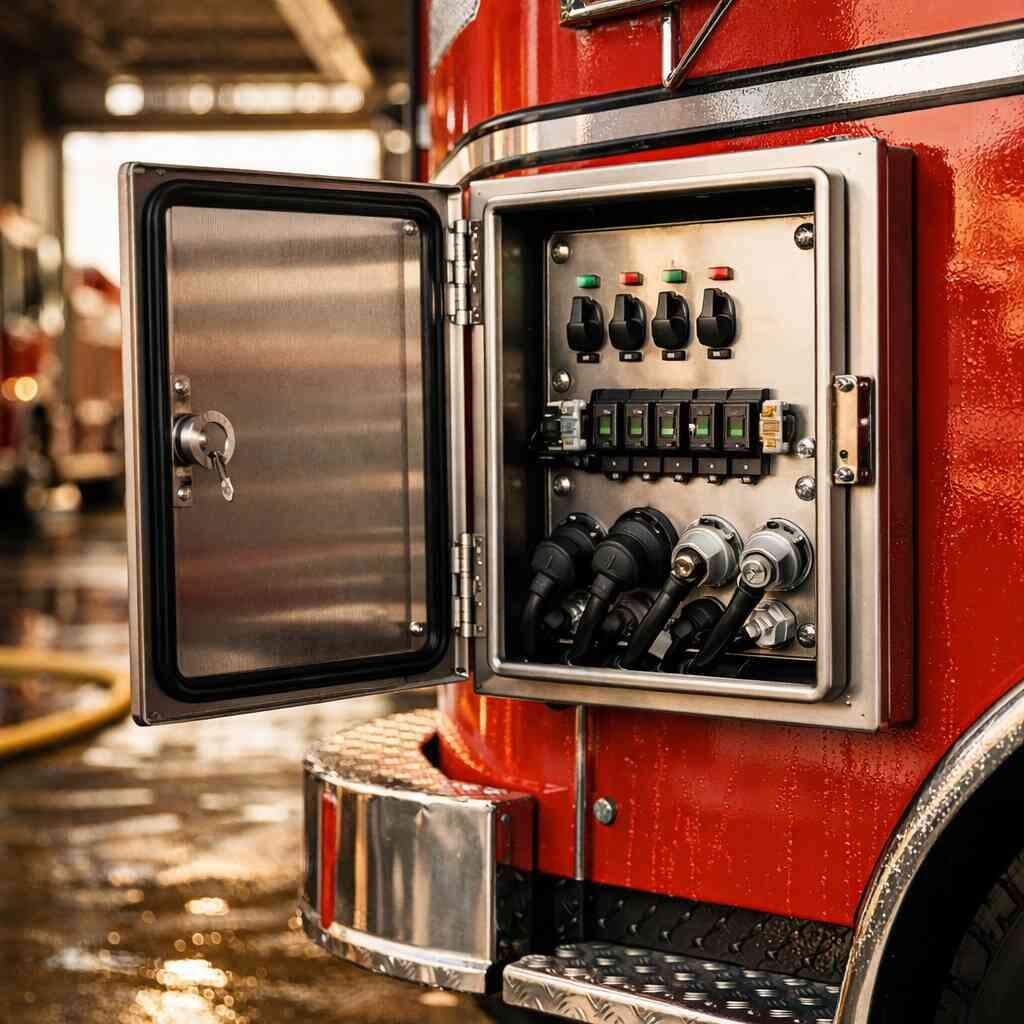
Electrical accessories fail quietly. Then they fail all at once. In fire apparatus readiness, hidden connector problems often start with small wear marks and end with service interruptions. If your equipment lives around washdowns, damp floors, or repeated handling, hose-down resistant electrical connections deserve serious attention. Hose-down resistant electrical extensions for fire apparatus readiness are only effective when the whole connection path stays intact.
Which connector and pigtail conditions raise red flags during a fire safety equipment compliance review
Inspectors and maintenance teams should watch for cracked housings, loose strain relief, frayed jackets, and bent pins. Those are not minor cosmetic issues. They signal electrical connector reliability problems that can spread. If a pigtail twists under load or shows heat discoloration, document it immediately. If a connector no longer seats firmly, replace it before it becomes a bigger hazard.
A clean inspection does not mean perfect parts forever. It means you caught wear before it became failure. Fire safety equipment compliance depends on that mindset. In rugged areas, even a small nick can grow fast. The better question is not “Does it still work?” The better question is “How long has it been trying to tell us it is tired?”
How moisture exposure, abrasion, and repeated handling affect rugged safety equipment in daily use
Moisture gets into tiny gaps. Abrasion weakens jackets where cables rub on edges. Repeated handling loosens fittings that looked secure last month. That is how rugged safety equipment slowly degrades. The process is gradual, so teams stop noticing it.
What we’ve seen in 2026 specifically is that washdown routines expose weak points faster than many managers expect. If a bay gets cleaned hard, the equipment must survive that cycle without hidden damage. Fire Power products are designed with durability in mind, but durability still depends on inspection and placement. A connector resting on a sharp lip or dragged across concrete will age badly. Protect the path, and you protect the asset.
What maintenance documentation should show when electrical accessories are part of emergency equipment labeling and readiness checks
Your records should tell a clear story. They should show when the accessory was inspected, what condition it was in, what was repaired, and what was replaced. They should also connect the accessory to the larger emergency equipment labeling system. That matters because a tagged device with no maintenance trail creates weak confidence during a regulatory compliance review.
If your logs do not mention abrasion, moisture exposure, or connector fit, they are incomplete. Add those items to the checklist. The link between documentation and safe use is direct. For a tighter review process, teams often consult What Is the ROI of Rugged Electrical Connectors for EMS 2026 alongside visual checks. That combination strengthens occupational safety best practices and reduces surprises.
-
The paper trail that proves the safety program is inspection ready
Paperwork sounds dull until you need it fast. Then it becomes proof. An inspector wants to see that your program is active, not symbolic. The right records show patterns, corrections, and accountability. That is why a strong paper trail is one of the top OSHA inspection items for fire power products in any serious facility.
Which records matter most in a regulatory compliance review for fire equipment reliability
The most useful records are the ones that connect equipment to action. Keep inspection logs, repair notes, replacement dates, corrective action reports, and follow-up checks. If a problem recurs, the record should show that you recognized the pattern. That is what fire equipment reliability looks like on paper.
A good file also supports safety asset management. It shows ownership, not just storage. If a cabinet door sticks three times in two months, the file should reflect that trend. If a connector needs repeated tightening, the issue should not disappear between audits. A regulatory compliance review becomes much easier when the history is obvious.
How maintenance logs, replacement notes, and corrective actions support occupational safety best practices
Maintenance logs create continuity. Replacement notes prevent confusion. Corrective actions prove that someone actually closed the loop. Together, they show occupational safety best practices in a way a quick visual walk-through cannot. They also help new supervisors understand what happened before they arrived.
Here is the simplest way to think about it. If a piece of gear failed, the paper trail should explain why, what changed, and who verified the fix. That is useful in a safety audit preparation cycle and even more useful after staff turnover. On the projects we’ve reviewed, the strongest programs share one trait: they keep the history easy to find. That discipline improves first responder equipment maintenance, too.
What to confirm before the next safety audit preparation so the facility can move from reaction to control
Before the next review, confirm three things. First, every inspection point has current documentation. Second, every corrective action has a closeout note. Third, every recurring issue has a real owner. If any of those pieces is missing, the program is still reactive.
Also, make sure your records match the floor conditions right now. A perfect file with a cluttered aisle is not a strong program. A modest file with consistent follow-through is much better. For teams that want a stronger baseline, reviewing Top 5 Fire Power Products for OSHA Ready Shop Floors 2026 can sharpen internal standards without turning the process into guesswork. You do not have to figure this out alone, and you do not have to fix everything today. Start with one cabinet, one extinguisher route, and one logbook this afternoon.
Frequently Asked Questions
Question: What should facilities in DeLand look for during an OSHA inspection checklist review for hose cabinet inspection and hose station condition?
Answer: Start with access, visibility, and condition. A good hose cabinet inspection checks whether the cabinet is blocked, damaged, rusty, or hard to open, and whether the hose station condition supports fast use during an emergency. During a workplace safety inspection, reviewers often notice clutter, bent hardware, missing signage, or access paths that are not consistently clear. For fire protection compliance, the goal is to keep the cabinet and surrounding area ready for immediate use, not just present on the wall. Fire Power Products focuses on durable fire safety equipment that is designed for demanding environments, but every installation still depends on routine cleaning and inspection procedures, along with strong maintenance documentation. That combination supports emergency response readiness and helps reduce surprises during a facility safety walkthrough.
Question: How can emergency equipment labeling improve fire extinguisher accessibility and fire safety equipment compliance?
Answer: Clear emergency equipment labeling helps people find the right device quickly, which is essential for fire extinguisher accessibility and overall fire safety equipment compliance. Faded, missing, or inconsistent labels slow response and can create confusion during a workplace safety inspection or an actual emergency. The most effective approach is to verify that every sign matches the actual equipment location, every directional marker still points to the correct device, and every path is visible from the normal approach angle. That kind of NFPA awareness and inspection-ready fire equipment planning supports emergency response readiness and reduces avoidable delays. At Fire Power Products, the focus is on practical, reliable equipment placement and durable fire safety products that fit into a real safety program rather than depending on memory alone.
Question: In Top 5 OSHA Inspection Items for Fire Power Products in 2026, why does fire extinguisher accessibility matter so much in busy facilities?
Answer: Fire extinguisher accessibility matters because a mounted extinguisher is only useful if employees can reach it quickly without obstruction. In busy facilities, temporary storage, carts, pallet traffic, or poor layout can turn a compliant installation into a failed access point. OSHA inspection items often focus on whether the route is open, visible, and practical in real working conditions, not just whether the device exists. That is why facilities need strong safety audit preparation and consistent housekeeping. Fire Power Products supports this kind of occupational safety best practice by emphasizing durable fire safety products and installation awareness that help maintain clear access, support safety program effectiveness, and reduce problems during a regulatory compliance review.
Question: What signs of corrosion resistance in fire equipment should be documented during first responder equipment maintenance and regulatory compliance review?
Answer: During first responder equipment maintenance and any regulatory compliance review, look for rust, pitting, bubbling finishes, loose fasteners, discoloration, swelling, or any evidence that moisture is affecting the equipment. These are not just cosmetic concerns; they may point to corrosion resistance in fire equipment breaking down or to environmental issues near the installation. If equipment lives in areas with washdowns, humidity, or frequent handling, the inspection should also check for abrasion, worn edges, and damage prevention in high-use equipment. Good maintenance documentation should record what was observed, what was corrected, and when follow-up was completed. Fire Power Products is built around rugged safety equipment needs, but the best results still come from pairing reliable products with cleaning and inspection procedures that support long-term fire equipment reliability.
Question: How does Fire Power Products help facilities build inspection-ready fire equipment habits that support safety asset management and fire apparatus readiness?
Answer: Inspection-ready fire equipment comes from a system, not a single product. Facilities need clear access, accurate emergency equipment labeling, routine checks, and maintenance documentation that shows issues were found and corrected. Strong safety asset management means every hose cabinet, extinguisher route, connector, and accessory is tracked as part of a living safety program, not treated as a one-time installation. That approach supports fire apparatus readiness and helps teams move from reaction to control before the next safety audit preparation cycle. Fire Power Products, based in DeLand, Florida, emphasizes durable fire safety products intended for demanding conditions, but the real value comes when those products are supported by disciplined occupational safety best practices, consistent housekeeping, and a facility safety walkthrough process that catches problems early.