How to Compare IP68 and NEMA 4X for Fire Truck Cabling 2026
September 27, 2026
When hose-downs, road spray, and heat all hit the same harness, what rating actually holds up
If you are comparing IP68 and NEMA 4X for fire truck cabling, you are probably feeling the pressure already. The labels look technical. The consequences are not. A wet connector on an apparatus can mean nuisance faults, delayed response, or a costly rework after installation. In DeLand and across Florida, that stress only grows when heat, humidity, and frequent washing all hit the same system.
Why fire truck cabling faces a harsher environmental load than standard outdoor wiring
Standard outdoor wiring usually sees weather. Fire truck cabling sees weather, vibration, heat soak, chemical residue, and repeated washdown. That combination is harder on seals than rain alone. It also means a design that looks fine on paper may fail in the field. Here is the part most buyers miss: the harness rarely fails in one dramatic moment. It usually degrades slowly.
We hear this concern a lot from people specifying fire truck cabling protection in harsh environments. One fleet manager told us a rear compartment kept throwing intermittent errors after every rinse cycle. The issue was not the controller. It was the path the wiring took through a poorly supported opening. Once the routing improved, the faults stopped. That is common.
Where IP68 and NEMA 4X get compared most often on apparatus electrical layouts
You usually see this comparison in three places. First, at external connectors exposed to spray. Second, inside compartment-mounted enclosures that need washdown resistance. Third, at harness transitions between a protected cabinet and a moving chassis area. Those are not identical jobs, so the same rating may not belong in every spot.
An IP68 vs NEMA 4X comparison for fire truck cabling protection becomes useful when you separate the enclosure from the cable path. IP68 speaks to ingress protection on a specific component. NEMA 4X speaks to enclosure performance in a different framework. On an apparatus, both can matter. Neither is a magic shield.
How water resistance for emergency vehicle wiring differs from true sealed cable routing for fire apparatus
Water resistance for emergency vehicle wiring is not the same as a fully sealed route. Water resistance means the system can tolerate exposure. Sealed routing means you are actively controlling every entry point. That includes the connector, the gland, the strain relief, and the bend radius. Miss one piece, and the entire system becomes weaker.
For sealed cable routing for fire apparatus in wet conditions, the path matters as much as the rating. We have seen installations where the connector was sound, but the wire entered from a low point that collected water after every wash. That is a routing problem, not a rating problem. If you are working with cabling for fire apparatus controls, think in terms of water management, not just water resistance. That shift saves time later.
What corrosion resistance in fire truck systems means when the rig lives in wet and salty conditions
Corrosion resistance in fire truck systems is broader than stainless hardware. It includes plating choice, connector material, seal integrity, and the amount of trapped moisture the system allows. Coastal air, road salts, and humid storage all accelerate damage. Florida rigs often see that mix. DeLand may not sit on the coast, but the humidity still punishes exposed hardware.
The question is not only whether the connector survives today. It is whether it still closes cleanly after months of heat cycling and cleaning. For corrosion resistance in fire truck systems, salt exposure and standing moisture are the real enemies. If you are choosing between industrial and marine-style protection, that distinction matters. Marine-grade thinking often helps in wet climates, but it should still match the actual duty cycle.
What the rating on the label does and does not promise for fire apparatus cabling
The label is useful, but only if you read it correctly. Too many teams treat ratings like a promise of total survival. They are not. They are a controlled test description tied to defined conditions. Your apparatus may create different conditions through vibration, heat, and service access.
How IP68 application guidance changes when the cable must stay sealed under prolonged immersion risk
IP68 application guidance is strongest when you need high ingress protection and the cable path may face prolonged exposure to water. That does not mean every IP68 part is right for every fire truck location. It means the component has been evaluated for dust exclusion and water protection under specified conditions. The exact test depth and duration can vary by product, so you should verify the manufacturer data.
When a harness might sit in standing water, or when a low-mounted connection could see repeated puddling, IP68 makes more sense than a generic weather-resistant part. Still, the entire assembly must support the rating. The connector, backshell, gland, and cable jacket all need to work together. If one piece is weak, the system is weaker. That is why sealed harness assemblies are usually more reliable than improvised mixes of parts.
What NEMA 4X application guidance really covers for electrical enclosures and what it does not cover
NEMA 4X application guidance is often misunderstood. It is a useful rating for electrical enclosures because it addresses hose-directed water and corrosion resistance. That is valuable for apparatus compartments and cabinet-style protection. However, it does not automatically mean every cable entering that enclosure is protected the same way. The enclosure and the cable entry are separate challenges.
Here is a quick comparison that helps keep the decision clear:
AttributeIP68NEMA 4XPrimary focusIngress protection on a component or connectorEnclosure protection and corrosion resistanceBest fitSealed harness assemblies, connector interfacesCabinet-style protection, enclosed equipment baysWhat it does not guaranteeSystem-level routing qualitySealed cable paths or connector sealingCommon fire apparatus useWet-zone connectors, exposed transitionsElectrical boxes, control enclosuresA vehicle electrical enclosure ratings for emergency apparatus discussion should always include the entry points. The box may be strong. The hole in the box may not be.
Why dust tight electrical connections matter as much as water exclusion in apparatus compartments
Dust tight electrical connections matter because dust holds moisture. That is especially true in compartments that see road grit, fine debris, and constant opening and closing. Once dust settles near a connection, it can create a film that helps corrosion start sooner. It can also interfere with mating surfaces and latch quality.
This is why dust tight electrical connections for fire apparatus deserve the same attention as hose resistance. Some technicians focus only on water, then get surprised by intermittent signals after a dry week followed by humid service. That pattern is common in Florida. Dust exclusion and water exclusion work together. Ignore one, and the other suffers.
Where vibration resistant cable systems and rugged cable management for apparatus can outmatter the enclosure rating alone
Vibration breaks things slowly. It loosens fasteners, rubs through jackets, and shifts connectors out of alignment. A rated enclosure does not stop that by itself. If the cable moves too much, the entry point becomes the failure point. That is why support strategy matters.
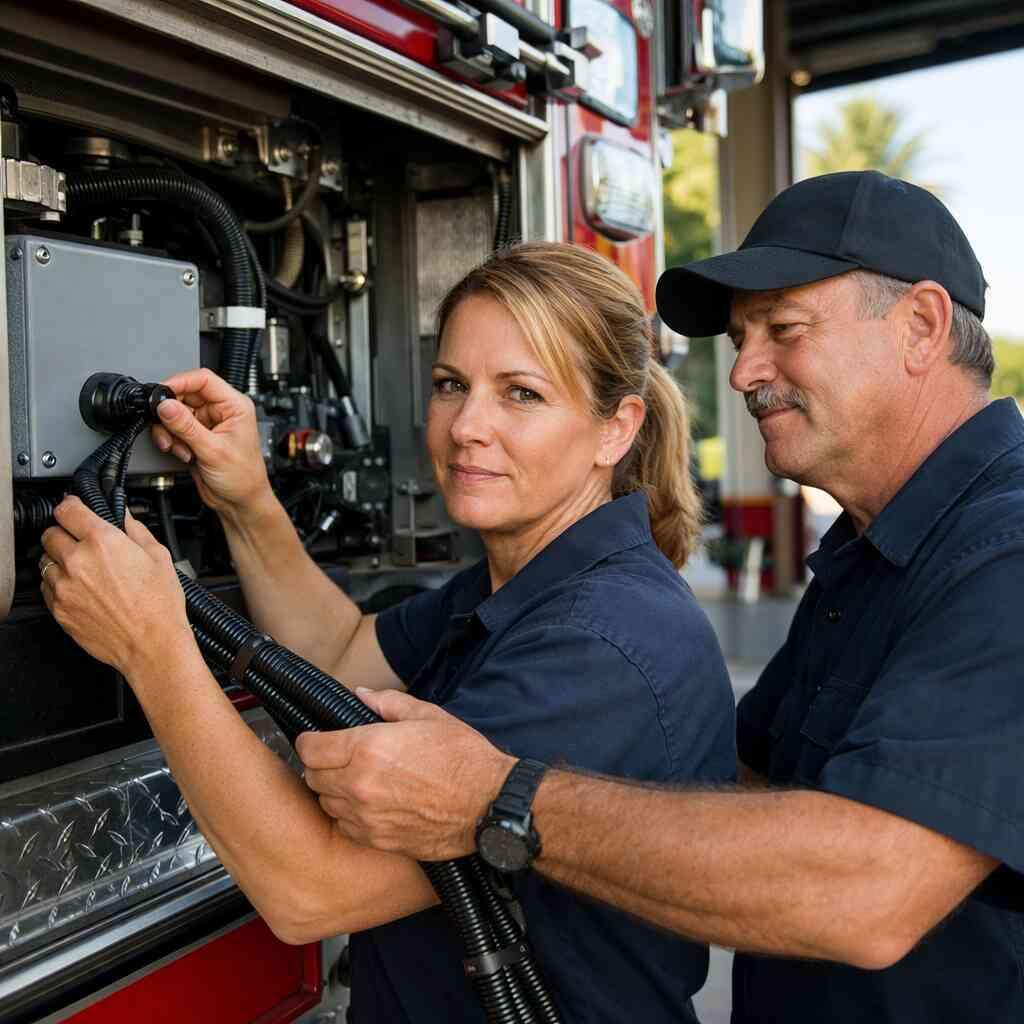
On the projects we have seen this year, the best results came from rugged cable management for apparatus and vibration control. One rescue unit had a control lead that failed only on rough roads, never in the bay. The root cause was a sharp transition where the harness had no real strain relief. After the support path changed, the intermittent fault disappeared. Simple fix. Better design.
How cable gland selection for emergency vehicles can make or break environmental sealing for vehicle wiring
Cable gland selection is where good specs go to die, or survive. A gland has to match the cable diameter, jacket type, and enclosure wall thickness. If it is undersized, it can cut the jacket. If it is oversized, it can leak. If it is poorly installed, the seal may look fine and still fail under washdown.
For weatherproof electrical connectors for emergency vehicles, the gland is not an accessory. It is part of the protection system. The same is true for electrical connector ingress protection standards, even when the engineering conversation gets too abstract. Real-world sealing depends on the details no one sees after installation. That is where careful product selection pays off.
The decision path that gets you to the right spec without overbuying or underprotecting
Choosing between IP68 and NEMA 4X is not about picking the stronger-sounding label. It is about matching the protection method to the duty cycle. If you overbuy, you spend money without gaining much. If you underprotect, you pay later in downtime and repairs. The goal is fit, not drama.
When IP68 makes more sense for sealed harness assemblies and connector ingress protection standards
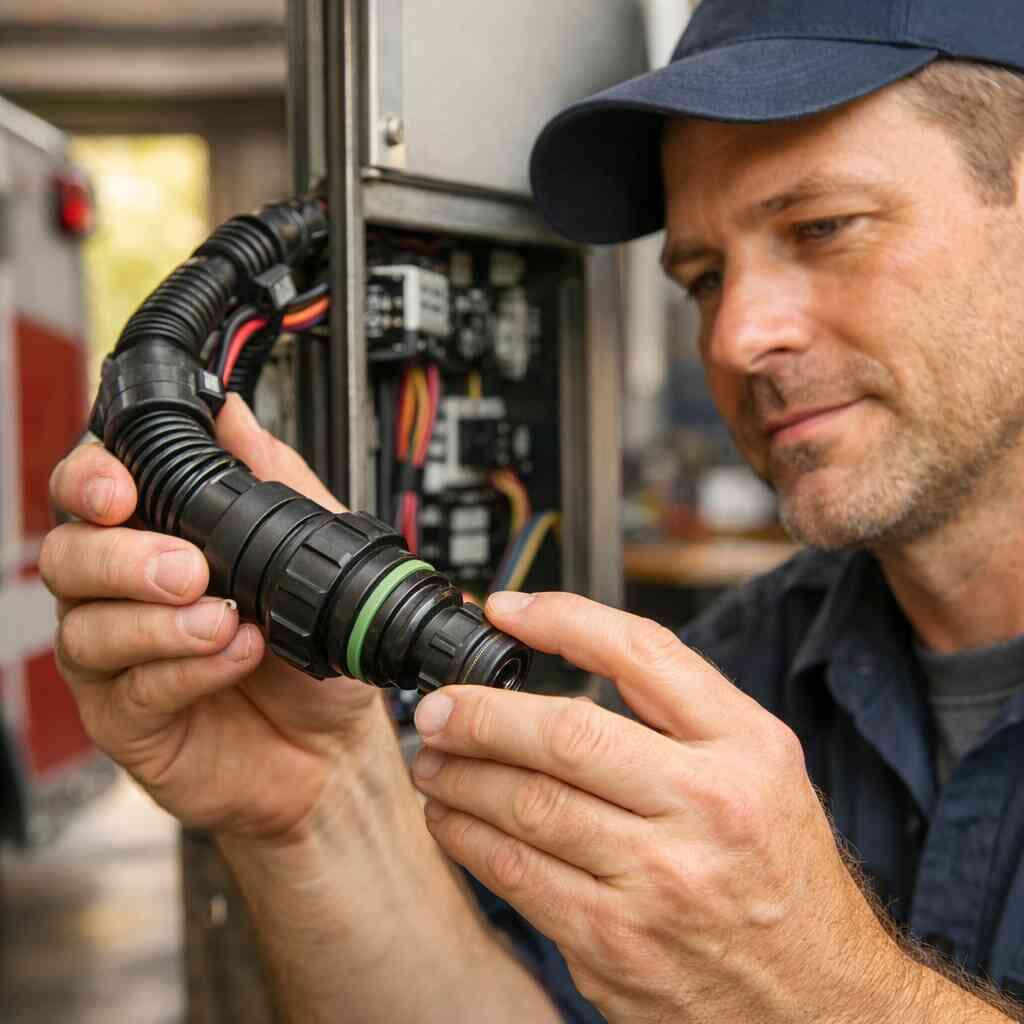
IP68 makes more sense when the concern is direct exposure at the connection point. That includes exposed harness transitions, sub-bay connectors, and low-mounted interfaces that may see standing water. It also fits well when the design depends on IP68 female electrical connector pigtails for sealed harness assemblies or matching male components. Those parts are built for controlled sealing around the connection itself.
Use IP68 when the cable path is part of the protection strategy, not just the enclosure. That is why many teams choose it for sealed harness assemblies and connector ingress protection standards. It helps when the environment is wet, but the protected component is still relatively compact. If your issue is a connector on the outside of the apparatus, this is often the better fit.
When NEMA 4X is the better fit for cabinet style protection and weatherproof electrical connectors
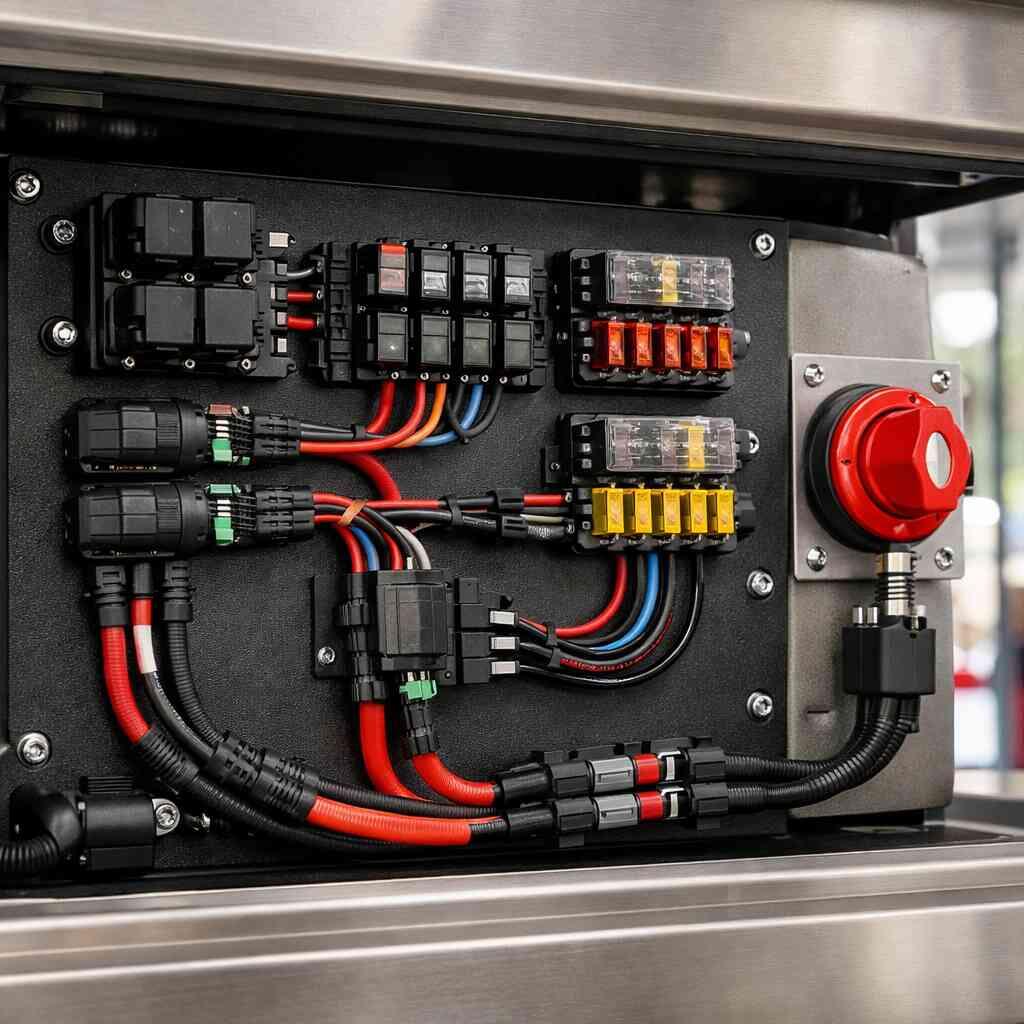
NEMA 4X is often the better fit when you are protecting a cabinet, junction box, or internal control space. It makes sense when the housing itself is the main barrier and the entry points can be managed cleanly. This is common for panel areas, distributed control locations, and protected apparatus compartments. It also pairs well with fire apparatus electrical connectors and receptacles when the layout stays organized.
If your concern is cabinet style protection and weatherproof electrical connectors, NEMA 4X deserves a close look. It gives you a familiar industrial framework for washdown and corrosion exposure. Still, remember that the enclosure rating does not extend past the wall automatically. Entry hardware, support, and service access still matter.
How to compare marine grade versus industrial protection standards without mixing up use cases
Marine grade versus industrial protection standards gets messy because both sound robust. Yet they serve different environments. Marine systems assume constant moisture, salt exposure, and corrosion pressure. Industrial systems often assume washdown, dust, and controlled enclosures. Fire apparatus lives somewhere in between.
The smartest comparison asks three questions:
- Will the part face direct spray?
- Will it sit in a protected box?
- Will vibration or heat be the bigger threat?
If you answer those honestly, the spec usually becomes clearer. For emergency service wiring protection for fire trucks, the best answer is rarely generic. It depends on where the part sits on the truck and how often it gets serviced. That is why a side-by-side use-case review beats a label-only choice.
What fire apparatus maintenance and inspection should check before approving cabling for wet conditions
Before approving cabling for wet conditions, inspection should focus on the whole system. Do not stop at the connector nameplate. Look at routing, bend radius, support intervals, and any place water could pool. Check whether the cable jacket shows abrasion. Check whether the gland is properly seated. Check whether the enclosure door still closes evenly.
A practical inspection list should include:
- Seal condition at each entry point
- Evidence of chafing or rub-through
- Corrosion on fasteners and terminals
- Strain relief at moving sections
- Signs of water tracks or residue
That level of attention supports fire truck cabling and apparatus reliability. It also reduces the kind of repeat issue that eats hours in the bay. If you have ever chased a fault that vanished once the cab was open, you know the frustration. That problem usually starts with installation, not electronics.
How to choose the next move for cabling for fire apparatus controls and emergency vehicle electrical reliability
The next move is not to buy the highest number you see. It is to map the environment first. Mark which parts face hose spray, which sit inside protected cabinets, and which move with the chassis. Then match those zones to the right protection level. That process gives you better results than chasing a single universal rating.
For cabling for fire apparatus controls and emergency vehicle electrical reliability, the winning strategy is usually a mixed one. Use IP68 where the connection needs sealing. Use NEMA 4X where the enclosure needs washdown resistance and corrosion control. Then support everything with proper glands, routing, and inspection. If you want durable parts that reflect real apparatus demands, start with trusted, USA-engineered options from Fire Power Products. You do not have to solve every detail today. Start with one harness path, and build from there.
Frequently Asked Questions
Question: How do I decide between IP68 application guidance and NEMA 4X application guidance for fire truck cabling protection in wet environments?
Answer: The best choice depends on where the exposure occurs. IP68 is typically a better fit when the concern is direct ingress protection at the connector or sealed harness assembly, especially for apparatus wiring in wet conditions where water can reach the cable entry point. NEMA 4X is usually more relevant for enclosed electrical boxes or cabinet-style protection where the housing itself is the main barrier against hose-down resistant cabling exposure and corrosion. In practice, many fire truck cabling layouts use both approaches in different zones of the vehicle. Fire Power Products focuses on ruggedized cabling for first responder vehicles and can help you think through the environment first so you are matching the rating to the actual duty cycle rather than overbuying or underprotecting. The goal is reliable emergency vehicle electrical reliability, not just a strong-sounding label.
Question: What should I look for in sealed cable routing for fire apparatus when comparing vehicle electrical enclosure ratings and weatherproof electrical connectors?
Answer: Start with the whole path, not just the enclosure rating. A strong vehicle electrical enclosure rating is only part of the answer if the cable entry points, strain relief, and routing are not managed correctly. For sealed cable routing for fire apparatus, you want to check the gland fit, bend radius, support intervals, and whether water can pool at low points. Dust tight electrical connections matter too, because dust can hold moisture and accelerate corrosion resistance in fire truck systems concerns. Fire Power Products is built around durable, USA-engineered solutions designed for demanding fire apparatus maintenance and inspection routines. If you are selecting weatherproof electrical connectors, the key is making sure the enclosure, connector, and harness work as one system rather than treating each part as separate.
Question: How does cable gland selection for emergency vehicles affect environmental sealing for vehicle wiring and long-term fleet electrical durability considerations?
Answer: Cable gland selection for emergency vehicles can make or break environmental sealing for vehicle wiring. A gland that is too loose can leak under washdown, while one that is too tight or mismatched can damage the jacket and compromise sealing over time. For fleet electrical durability considerations, that matters because repeated vibration, hose-downs, and heat cycling slowly expose weak points. In fire truck cabling protection, the smallest detail often becomes the failure point. Fire Power Products emphasizes rugged cable management for apparatus and practical installation support so the system can handle high moisture exposure electrical design challenges more consistently. Good sealing is not only about the rating on paper; it is about the quality of the complete installation.
Question: When should I choose IP68 female electrical connector pigtails or sealed harness assemblies for cabling for fire apparatus controls?
Answer: IP68 female electrical connector pigtails and sealed harness assemblies make the most sense when the connection itself is exposed to spray, standing water risk, or repeated washdown. That is common in cabling for fire apparatus controls where the interface sits outside a protected cabinet or near a low-mounted transition. In those cases, the ingress protection rating for cabling is valuable because it addresses the connector interface directly. You still need proper routing and support, but IP68 application guidance is especially useful when the harness must remain sealed at the point of connection. Fire Power Products supplies fire apparatus-oriented components designed for tough conditions, and the best results usually come from pairing the right connector with good conduit and harness protection for fire trucks.
Question: How does How to Compare IP68 and NEMA 4X for Fire Truck Cabling 2026 apply to vibration resistant cable systems and corrosion resistance in fire truck systems?
Answer: The main lesson is that rating choice alone does not solve vibration or corrosion. Vibration resistant cable systems depend on support, strain relief, and routing as much as enclosure protection. Corrosion resistance in fire truck systems depends on material selection, seal integrity, and how much moisture gets trapped around the connection. If a harness moves too much, even a strong enclosure can still fail at the entry point. If moisture lingers, corrosion can develop even in a cabinet with a solid rating. Fire Power Products takes that real-world view seriously by focusing on durable components built for demanding emergency service wiring protection. For selecting enclosure ratings for fire trucks, the smartest approach is to pair the correct IP68 or NEMA 4X location with robust harness support and routine inspection.
Question: What should I ask before choosing outdoor-rated electrical components for marine grade versus industrial protection standards on fire apparatus?
Answer: Ask where the component will live, how often it will be washed, and whether it faces direct spray, enclosed cabinet exposure, or constant vibration. Marine grade versus industrial protection standards can sound similar, but they solve different problems. Marine-style protection often makes sense in constant moisture and salt exposure, while industrial protection is often a better fit for hose-down resistant cabling and enclosed apparatus compartments. The right choice for fire truck cabling protection depends on the actual environment, not just the most robust label. Fire Power Products, based in DeLand, Florida, is focused on durable equipment for first responders and can help you think through comparison of ingress and corrosion standards without guessing. If you are unsure, start with the application, then match the outdoor-rated electrical components to that duty cycle.