Best 7 Fire Power Products for Summer Hose Down Crews 2026
July 27, 2026
A hose-down crew can lose an entire afternoon to one stubborn connector. That is the part most people miss. If you are reading this because cleanup keeps slowing down your apparatus bay, take a breath. There are real ways to choose better summer hose down crew gear without guessing. The hard part is not finding equipment. The hard part is finding durable fire equipment that keeps working after washdowns, heat, and repeated handling.
-
Fire Power IP68 Female Electrical Connector Pigtails
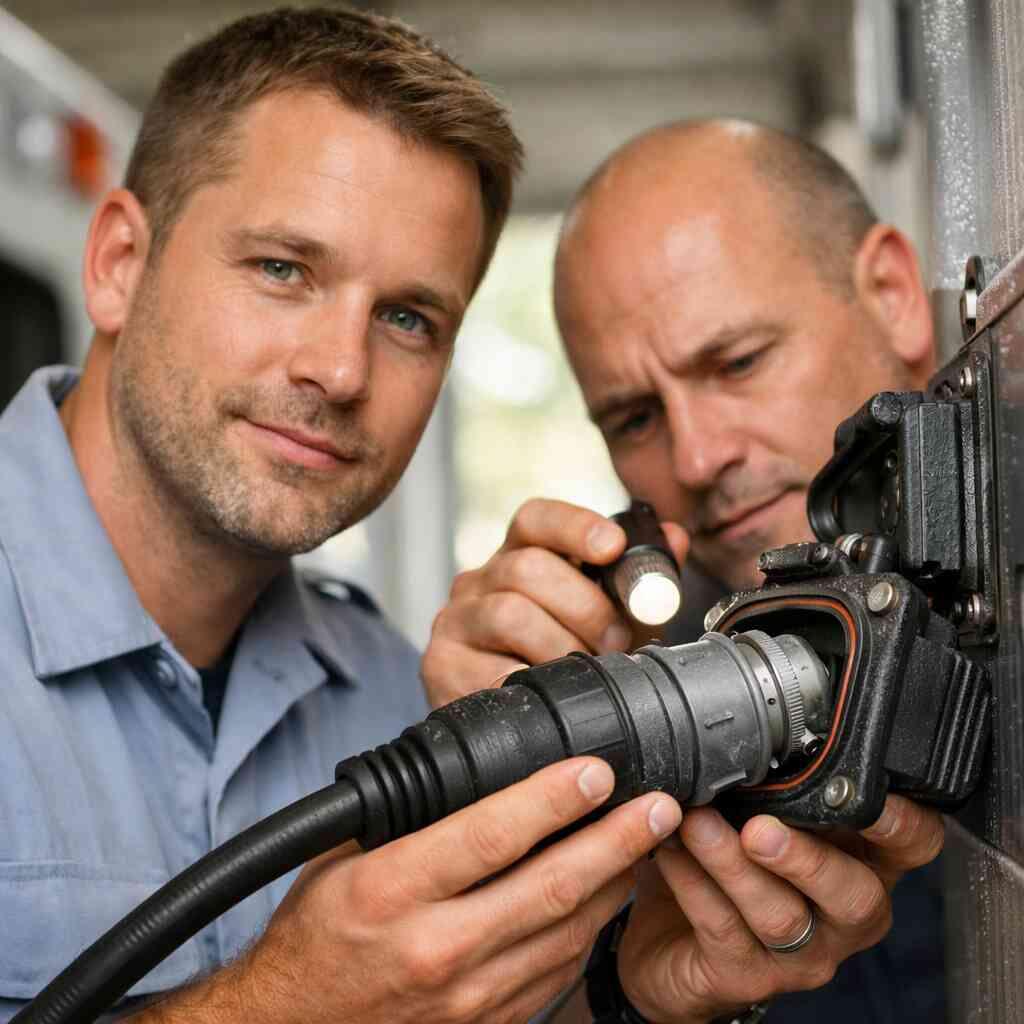
Female pigtails often fail quietly. They do not always spark drama. They just create intermittent problems that show up at the worst possible moment. In summer hose down crew equipment, that can mean a wet bay, a stalled workflow, and a crew waiting on a simple connection. Fire service teams need hose washdown resistant products that hold their seal and stay practical under real use.
On the projects we’ve finished this year, the weakest point was rarely the visible hardware. It was usually the connection choice hidden behind a panel or tucked near a washdown zone. Here is the part most buyers miss: a female pigtail has to manage both contact integrity and physical abuse. If the connector gets pulled, sprayed, or repeatedly opened, small flaws become expensive delays. That is why IP68 female electrical connector pigtails for fire hose down crew equipment deserve careful review.
Why female pigtails become the quiet failure point in summer hose down crew gear
Female pigtails sit in a vulnerable place. They receive the connection, and they often sit closest to moisture exposure. During hose down operations, crews move fast and rinse harder than a casual user ever would. That creates stress around the seal, the strain relief, and the mounting point. If any one of those pieces is weak, the system becomes unreliable.
You may find that the failure does not look dramatic at first. A light flicker. A loose feel. A connector that needs a second try. Those are warning signs. For tough-use equipment for responders, small inconsistencies matter because they compound during busy shifts. This is why female pigtails should be treated as field-critical hardware, not just a small accessory.
Where DeLand Florida apparatus bay washdowns expose weak connector choices
DeLand weather can push crews into repeated cleanup routines. Humidity hangs around. Afternoon rain comes fast. Washdowns leave equipment damp longer than you want. In that environment, DeLand Florida fire equipment supplier choices need to account for moisture, not just convenience. Bay crews often discover connector weakness after the season gets busy.
We hear this from clients almost every week. A bay looks organized until the first heavy washdown cycle. Then cable routing, connector placement, and splash exposure all get tested at once. If a pigtail sits low, near runoff, it is already working harder than it should. That is where fireground durability becomes more than a phrase. It becomes a maintenance habit.
What to verify before pairing a female pigtail with fire service utility products
Before you pair a female pigtail with fire service utility products, verify the seal rating, the mounting method, and the connector geometry. Make sure the part fits the actual enclosure or panel opening. Check whether the pigtail will be exposed to direct spray or only incidental moisture. Then confirm that the strain relief can handle frequent movement.
A practical checklist helps:
- Confirm the connector size and interface.
- Verify the ingress protection rating in the product listing.
- Check whether the pigtail suits the enclosure depth.
- Review how the cable exits under pull.
- Match the part to the intended washdown exposure.
Those steps sound basic. They are not. They separate first responder equipment that works from equipment that slowly becomes a headache. If you are comparing parts for apparatus bay maintenance tools, careful fit checking pays off.
When a compact pigtail makes more sense than a larger field splice
Sometimes the best choice is the smaller one. A compact pigtail can reduce exposed connection points and simplify routing. That matters when space is tight and cleanup is frequent. Larger field splices can be useful, but they also create more bulk and more places for water intrusion if the layout is not ideal.
One client near a busy service corridor had repeated issues with a bulky splice after every rinse cycle. The hardware itself was not the problem. The routing was. After switching to a more compact layout, the crew cut down on snagging and cleanup time. That kind of improvement does not sound flashy. It feels practical, and practical wins on a busy shift.
-
Fire Power IP68 Male Pigtails Electrical Connectors Fire Fighting Equipment
Male pigtails do a different kind of work. They often serve as the handoff point between rugged power and routine cleanup. That means the connector must tolerate both daily handling and the abuse of hose down operations. If the shape is awkward or the strain relief is weak, crews notice it quickly. In firefighter support gear, the male side should feel straightforward, secure, and predictable.
The best male connectors do not demand attention. They disappear into the workflow. That is exactly what you want from dependable emergency response tools. When crews are moving equipment, rinsing surfaces, and resetting for the next call, the connector should not become a variable. It should just work.
Why male pigtails are often the handoff point between rugged power and routine cleanup
Male pigtails often connect the fixed system to the working end of the setup. That makes them a transition point. Transitions are where weaknesses show up. A connector can look fine during inspection, then loosen after repeated handling. In industrial-grade fire products, that kind of gradual wear is unacceptable.
The handoff point matters because crews touch it constantly. Gloves. Wet hands. Fast resets. If the design makes alignment difficult, people compensate with force. That force shortens life. Strong field-tested fire gear should reduce that temptation by making the connection obvious and secure.
How hose down operations test connector strain relief more than casual use ever will
Casual use does not reveal the truth. Hose down work does. During washdowns, cables twist, pull, and get redirected around corners. The strain relief has to absorb that motion without cracking or loosening. For heavy-duty hose management, that is not a bonus feature. It is the job.
What we’ve seen in 2026 specifically is that crews are asking more from their connectors while trying to keep workflows simpler. That combination exposes weak strain relief quickly. If a connector bends at the wrong angle after a rinse cycle, the issue may show up later as an electrical problem. That is why demanding-condition equipment must be chosen with the physical route in mind, not just the specification sheet.
What a dependable emergency response tool needs from a male connector in the field
A dependable male connector should lock cleanly, resist unwanted movement, and survive repeated handling. It should also fit the crew’s actual workflow. If a connector is too delicate, it becomes a maintenance item. If it is too bulky, it creates snag points. The right part balances both needs.
For rugged fire safety products, ask yourself three things:
- Can the crew connect it with gloves?
- Does it stay secure during movement?
- Does it maintain its seal after cleanup?
Those questions are simple. They cut through the noise. They also help you compare emergency apparatus accessories without getting distracted by jargon.
Where firefighter support gear gains durability from simpler connection layouts
Simpler layouts usually last longer. Fewer turns. Fewer exposed joints. Fewer places for water to settle. That is why fire engine support gear for hose down operations and cleanup often performs better when the connection path is short and direct. A cleaner layout also makes inspection easier.
The mistake we see most often is overcomplication. People add flexibility, then add another adapter, then another point of failure. A simpler male pigtail setup can eliminate that chain. When the goal is summer operational readiness, direct is better than clever.
-
Fire Power IP68 Male Female Electrical Extensions Fire Fighting Equipment
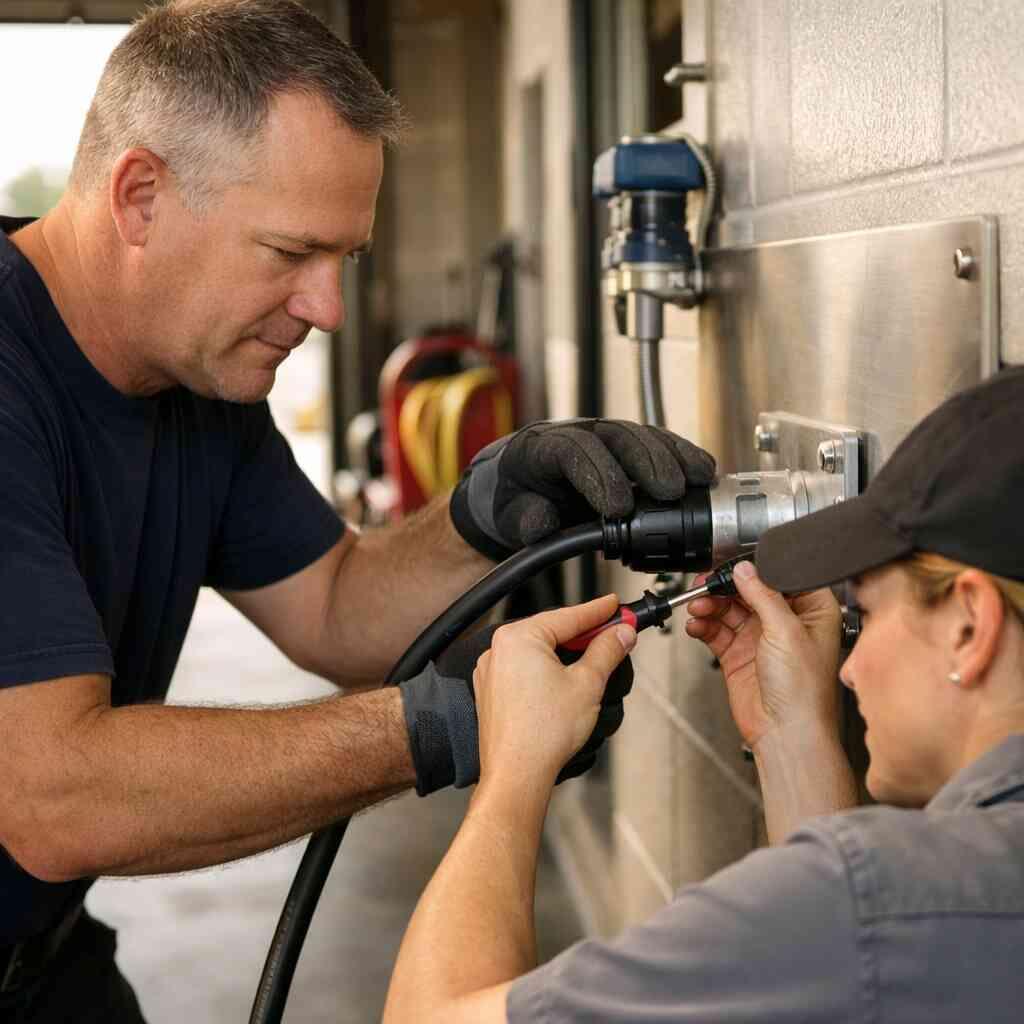
Extensions solve layout problems, but only when they are used with discipline. They can keep a bay organized, preserve access, and help crews avoid awkward cable routing. They also raise the stakes if the run passes near a wash area or high-traffic lane. In male female electrical extensions for hose down operations and apparatus bays, length is helpful only when protection stays intact. The right extension should support the workflow, not complicate it.
Here is the part almost no online guide mentions: the longer the run, the more disciplined the route must be. That is true around high-pressure hose handling spaces, where movement is frequent and water is everywhere. A good extension should make the bay calmer, not busier. That is the difference between useful and merely longer.
When an extension solves the layout problem without turning the bay into a cable maze
An extension makes sense when the equipment placement is fixed, but the access point is not ideal. Maybe a panel sits too far from a working area. Maybe the bay needs a cleaner path around storage. In those cases, an extension can simplify the setup. It can also reduce unnecessary rework.
But keep it controlled. Long lines can create visual clutter fast. If the bay starts to look like a cable maze, crews will route around it, and that creates wear. A properly selected extension should support apparatus bay maintenance tools without taking over the space.
How long runs change the risk profile for high pressure hose handling areas
Long runs introduce more touch points. More touch points mean more wear. More wear means a higher chance of abrasion, loosened fittings, or snagging near active work areas. In decontamination support equipment environments, that matters because water and movement are already constant.
One crew in a compact station had a long extension crossing a traffic lane. It worked until the first busy week. Then carts rolled over the path, and the line started shifting every day. They solved the problem by rethinking the route and reducing unnecessary exposure. The lesson was simple: long does not mean better unless it is protected.
What to check before relying on an extension in apparatus bay maintenance tools
Before you depend on an extension, inspect the actual path. Look for pinch points, standing water, and areas where gloves or boots may brush the line. Check the ingress protection rating and the connector ends. Then confirm the extension length matches the real layout, not a guessed one.
A quick comparison helps:
CheckWhy it mattersRoute clearancePrevents snags and wearSeal ratingSupports washdown exposureConnector fitReduces strain on jointsLength accuracyAvoids unnecessary slackThat table is not decorative. It reflects the questions that save time during installation and later inspection.
Why demanding-condition equipment should stay flexible without getting fragile
Demanding-condition equipment has to bend without breaking. That sounds obvious, but it is easy to miss in product selection. The extension should move enough to fit the bay, yet remain firm enough to avoid sloppy routing. In reliable turnout support items, flexibility is only valuable when it remains controlled.
American-made fire equipment often earns trust here because crews want predictable behavior from one shift to the next. The point is not patriotic branding. The point is operational confidence. If the extension stays usable after repeated washdowns, you gain both speed and consistency.
-
Fire Power Fire Fighting Electrical Equipment Junctions Receptacles and Accessories
Junctions and receptacles decide whether the whole system stays serviceable. You can have strong connectors and still lose reliability at the distribution point. That is why junctions, receptacles, and accessories for fire service utility products deserve the same attention as the connectors themselves. If the junction point is awkward, exposed, or hard to inspect, the system becomes harder to trust.
This is the section where small design choices matter most. Crews want access. They also want protection. The challenge is balancing both without creating a maintenance headache. On rescue scene support gear, that balance affects downtime more than most people expect.
Why junctions and receptacles decide whether the whole system stays serviceable
A junction point is where the system either stays cleanly organized or starts drifting into compromise. If the receptacle is hard to reach, people avoid inspecting it. If it is too exposed, it gets beaten up during cleanup. Either way, the service life drops.
For professional fire department supplies, serviceability matters because crews cannot afford hidden weak points. A good junction layout should let you inspect, clean, and replace parts without dismantling half the setup. That saves time during both maintenance and response readiness.
How to think about accessory placement in hose washdown resistant products
Accessory placement should follow the washdown path. That means keeping vulnerable points out of direct runoff whenever possible. It also means avoiding low spots where moisture lingers. In hose washdown resistant products, the best layout is usually the one that keeps surfaces easy to dry and easy to reach.
Ask a simple question: will this accessory still make sense after the first heavy rinse? If the answer is no, it probably needs to move. That is how fire scene cleanup tools stay functional instead of becoming fussy.
What makes a junction point practical for rescue scene support gear and daily use
Practical junctions do not fight the user. They allow quick access, clear labeling, and secure retention. They also support a layout that fits the bay instead of forcing the bay to adapt to the hardware. In first responder equipment, practicality is often the result of restraint. A good junction point should let crews: – Inspect it without special tools.
- Clean it without moving three other components.
- Replace it without reworking the entire system.
That is not luxury. That is efficiency. It keeps response crew workflow tools moving.
Where professional fire department supplies need to balance access with protection
Protection matters most where the gear is most used. That can feel counterintuitive. The parts touched every day usually need the most protection because they see the most wear. The junction and receptacle area should shield the connection while staying reachable. That balance is what separates long-lasting fire hardware from short-lived convenience.
If you are in a busy station, you already know how quickly a tidy setup can unravel. One wet shift, one rushed reset, and the weak spots show themselves. The solution is not more complexity. It is better placement and better component choice.
-
Duraline Fire Power Products
The Duraline Fire Power name signals a practical mindset. It points to durable fire equipment built for crews who need predictable use, not marketing theater. For teams shopping for fireground durability, that matters. You want hardware that fits the job, survives the workload, and stays understandable after months of use. That is the standard most responders actually live by.
American-made fire equipment also carries a specific value in this context. It suggests a closer fit between design expectations and field conditions. You are not buying a slogan. You are buying a workflow decision. When the line between summer washdown and active response is thin, that decision counts.
What the Duraline Fire Power name signals for teams shopping for fireground durability
The Fire Power line signals toughness, but the useful part is more practical than that. It points toward hardware meant for abuse without demanding constant attention. Crews dealing with wildfire support equipment and station cleanup need that kind of reliability because the same gear often sees mixed duty.
If a product is intended for repeated handling, you should expect consistent performance under stress. That includes the connector, the mounting, and the overall fit. Tough-use equipment for responders should not feel delicate in the hand.
Why American made fire equipment matters when crews need predictable field use
Predictable field use is valuable because it reduces surprises. Surprises cost time. In the middle of summer, time is already tight. Heat, humidity, and frequent rinsing create conditions where small issues become visible quickly. American-made fire equipment often appeals because crews want clear standards and consistent support.
That does not mean every product is automatically right. It means the baseline expectations are easier to understand. And for buyers comparing industrial-grade fire products, clarity matters more than hype.
How to compare durable fire equipment without leaning on marketing language alone
Compare by function, not adjectives. Look at ingress protection, connector layout, service access, and fit. Then match those factors to your station’s actual use. A product can sound rugged and still be wrong for your environment. A quieter product can be the right one.
Use this quick framework:
- Fit the space first.
- Match the washdown exposure.
- Confirm connector compatibility.
- Check service access.
- Verify the workflow impact.
That approach keeps field-tested fire gear in focus and reduces costly guesswork.
What summer operational readiness looks like when the product line is built for abuse
Summer operational readiness is not abstract. It is the ability to rinse equipment, reset fast, and trust the hardware tomorrow. It is also the confidence that a connector or receptacle will not become a last-minute problem. That is why equipment built for abuse matters so much in the busy season.
If you want a deeper look at fit and seal choices, the article-so-far context also pairs well with What Is the Best IP68 Seal for Fire Trucks in Summer 2026. Use that kind of detail to make better buying decisions. Do not guess when the workflow is this exposed.
-
Contact Duraline
Sometimes the smartest move is not selecting a product alone. It is asking for a fit check. That is especially true with emergency apparatus accessories, where compatibility matters as much as strength. If you are unsure about connector spacing, enclosure depth, or routing, direct contact saves time. It also reduces the chance of ordering a part that almost fits.
The easiest conversations are the ones with clear information. Buyers in DeLand can make that process much smoother by gathering a few basics first. DeLand Florida fire equipment supplier conversations go faster when the buyer knows the equipment type, the washdown conditions, and the space constraints. That is not bureaucracy. That is good preparation.
When the next step is asking for a fit check instead of guessing on compatibility
A fit check is useful when the connector is close, but not obviously right. That happens often with fire service utility products because small differences in length, mount depth, and end style affect the result. If you are debating between parts, stop and verify.
A quick call can clarify whether the setup works with your existing bay equipment. It can also prevent unnecessary returns. That matters when crews need hose down crew essentials working now, not later.
What information DeLand Florida buyers should have ready before they reach out
Have these details ready:
- The exact equipment type.
- The space available for mounting.
- The washdown exposure level.
- The cable routing path.
- Any existing connector style.
That list sounds basic. It is not. It gives the support team a way to narrow the options quickly. If you have photos, even better. For professional fire department supplies, the more precise the starting point, the better the outcome.
How to frame the needs of hose down crew essentials so the conversation stays efficient
Focus on the workflow. Tell them where the gear gets rinsed, where it gets stored, and how often it moves. That tells more than a general description ever will. In summer operational readiness, movement matters because movement creates wear.
You can also mention the problem directly. Loose fit. Water exposure. Snagging. Hard-to-reach mounting. Those are useful clues. They help narrow emergency apparatus accessories to the right class of product.
Why direct contact helps narrow choices for emergency apparatus accessories
Direct contact reduces ambiguity. It also helps you avoid buying around a problem instead of solving it. If the layout needs a different connector or a better extension path, you will hear that early. That is valuable when you are trying to keep response crew workflow tools reliable.
If you want a straightforward next step, use Contact Duraline for fit checks on emergency apparatus accessories. Start there, bring your measurements, and ask the question plainly. You do not have to figure this out alone, and you do not have to figure it all out today.
-
Fire Power Products
The best path depends on the workflow in front of you. Some crews need female pigtails for a tight panel layout. Others need male pigtails for a cleaner handoff point. Many need extensions to solve distance without clutter. A few need junctions and receptacles to bring the whole system back under control. That is why Fire Power Products for dependable response crew workflow tools deserve a close look.
If you are balancing fire hose down crew equipment with actual summer pressure, start with the problem, not the catalog. The right product is the one that survives washdown, stays serviceable, and fits the way your crew works. That is the real standard for rugged fire safety products.
Which product path fits your summer hose down crew equipment workflow best
If your biggest issue is moisture at the connection point, start with the female pigtail. If the handoff side is the weak link, start with the male pigtail. If the bay layout is awkward, look at extensions. If the system needs clearer organization, focus on junctions and receptacles. Each one solves a different problem.
That approach keeps first responder equipment decisions grounded in reality. It also prevents overbuying. You only need the part that fixes the actual bottleneck.
How to match rugged fire safety products to real maintenance and cleanup pressure
Match the part to the pressure it will actually see. That means spray, handling, storage, and repeated inspection. It also means accounting for the season. Summer work brings more washdowns and more heat. Hose down crew essentials have to survive both.
One station we heard from had a neat-looking setup that kept failing after rinse cycles. The issue was not the build quality alone. It was the way the crew used the space. Once they matched the hardware to the workflow, the failures stopped multiplying. That is the kind of fix that saves time and frustration.
What a smart buyer should confirm before specifying first responder equipment
Confirm four things:
- The ingress protection rating.
- The connector fit.
- The exposure level.
- The maintenance access.
Those checks should happen before final selection. They are the difference between a part that works in theory and a part that works in the bay. For fireground durability, details matter more than adjectives.
When dependable response crew workflow tools become the difference between delay and readiness
Dependable workflow tools matter most when the day is already busy. That is when delays hurt. A crew waiting on a connector is not a small problem. It slows the whole chain. Heavy-duty hose management and stable electrical layouts keep that from happening.
If you are ready to compare options, start with the product line itself at Duraline Fire Power Products for rugged fire safety products and field-tested use. Then match the part to your bay, your washdown routine, and your crew’s pace. Pick one area to solve first. Then build from there.
Frequently Asked Questions
Question: In the blog Best 7 Fire Power Products for Summer Hose Down Crews 2026, which Fire Power Products are most useful for fire hose down crew equipment and summer hose down crew gear?
Answer: The most useful options depend on the workflow problem you are trying to solve. In general, the blog highlights female IP68 electrical connector pigtails, male IP68 pigtails, male-female electrical extensions, and junctions, receptacles, and accessories because each one addresses a different pain point in hose down operations. Female pigtails can help where moisture exposure and connection integrity are the biggest concerns. Male pigtails are often the handoff point in the system and should stay secure under repeated handling. Extensions are helpful when layout or distance creates routing problems, and junctions or receptacles improve organization and service access. The best choice is the one that fits your bay, your washdown path, and your daily maintenance routine. Fire Power Products focuses on durable fire equipment that supports summer operational readiness without forcing crews to guess at compatibility.
Question: How do Fire Power Products support rugged fire safety products and fireground durability in high-pressure hose handling and washdown environments?
Answer: Fire Power Products are presented as practical, field-ready options for demanding-condition equipment, especially where high-pressure hose handling, rinsing, and repeated movement put stress on connectors and layouts. The brand message is centered on durability, but buyers should still verify the exact product fit, ingress protection rating, and intended use before selecting anything. That is the safest and most reliable way to match industrial-grade fire products to real station conditions. For DeLand, Florida crews dealing with humidity, rain, and frequent cleanup cycles, the main value is not hype; it is consistency, serviceability, and a design approach that supports heavy-duty hose management. When a product helps reduce snagging, keeps connections manageable, and simplifies inspection, it becomes more than hardware. It becomes dependable emergency response tools that fit the job.
Question: What should a DeLand Florida fire equipment supplier help buyers verify before choosing fire service utility products or emergency apparatus accessories?
Answer: A good DeLand Florida fire equipment supplier should help buyers confirm the exact application, the mounting space, the washdown exposure level, the routing path, and connector compatibility before anything is ordered. Those details matter because fire service utility products and emergency apparatus accessories can look similar while behaving very differently in the field. For example, a pigtail or extension may appear suitable, but the enclosure depth, cable exit angle, or direct spray exposure can make it a poor fit. Fire Power Products emphasizes fit checks because practical compatibility is what protects crews from delays, returns, and maintenance headaches. If you are comparing hose down crew essentials, it is better to verify the layout first than to assume a standard part will work in every apparatus bay.
Question: Why are male and female pigtails important for first responder equipment and firefighter support gear?
Answer: Male and female pigtails matter because they are often the most exposed parts of the system and the ones crews handle most often. In first responder equipment and firefighter support gear, that means they have to tolerate moisture, repeated connection cycles, and physical stress without becoming a weak link. Female pigtails often sit closest to moisture exposure and can quietly fail if the seal or strain relief is not right. Male pigtails are frequently the point where rugged fire safety products meet routine cleanup, so they need to stay secure and easy to connect even when crews are wearing gloves. Fire Power Products positions these components as part of a broader approach to reliable turnout support items and long-lasting fire hardware. The goal is not just to make a connection. It is to keep the connection practical, predictable, and easier to maintain during busy shifts.
Question: How can Fire Power Products help with fire scene cleanup tools, decontamination support equipment, and response crew workflow tools?
Answer: Fire Power Products can help by offering components that support cleaner layouts, simpler routing, and easier inspection in areas where cleanup and decontamination are part of daily operations. For fire scene cleanup tools and decontamination support equipment, the biggest advantage is often reducing clutter and minimizing the number of exposed or awkward connection points. That makes it easier for crews to rinse, inspect, and reset equipment without creating new problems. In response crew workflow tools, the value comes from better organization and fewer interruptions. A well-chosen extension can improve access, while a properly placed junction or receptacle can make the whole system easier to service. For crews focused on summer operational readiness, that kind of practical support is often more valuable than flashy claims.
Question: Are Fire Power Products a good fit for wildfire support equipment and tough-use equipment for responders during summer operational readiness?
Answer: Fire Power Products may be a strong fit when the priority is durable fire equipment that can handle repeated use, washdowns, and the general wear that comes with active station work. For wildfire support equipment and tough-use equipment for responders, the key question is whether the product matches the actual environment and workflow. The brand’s focus on American-made fire equipment and equipment built for abuse is consistent with the needs of crews who want predictable, field-tested fire gear. That said, buyers should still confirm specifications, connector styles, and exposure ratings before making a final decision. The safest approach is to use the product line as a starting point, then verify how each item fits the real conditions of the bay, the cleanup routine, and the equipment layout. When that process is done carefully, Fire Power Products can support summer operational readiness in a way that feels practical, not promotional.