Ultimate Guide to DeLand Fire Power Products for Fleet ROI
September 20, 2026
Why fleet ROI starts losing money before the first replacement order in DeLand
If you compare fire safety equipment by sticker price alone, you may already be losing money. That sounds harsh, but it is often true. The first failure rarely arrives as a dramatic breakdown. It shows up as a loose connection, extra labor, a delayed response, or another truck parked out of service. If you are reading this because procurement feels uncertain, that discomfort is normal.
For DeLand fire safety equipment and Fire Power Products for fleet ROI, the real question is not what costs less today. It is what keeps your apparatus bay moving next month, next quarter, and through the next storm cycle. DeLand operations face heat, humidity, rain, and fast turnaround expectations. Those conditions expose weak equipment faster than most budgets can absorb. That is why lifecycle value matters so much.
The hidden cost of choosing fire safety equipment by price instead of lifecycle value
The mistake we see most often is buying to the line item, not the workload. A cheaper part can look responsible in a purchase order. Then the hidden costs begin. You spend more on labor, more on troubleshooting, and more time explaining why a unit missed readiness targets. That is not savings. That is deferred expense.
Here is the part most buyers miss: lifecycle value includes every service call, every bay hour, and every rework cycle. It also includes the frustration your crew feels when equipment fails at the worst time. On the projects we’ve finished this year, the strongest purchasing decisions were rarely the cheapest. They were the ones that reduced repeat intervention. That difference compounds quickly in fleet ROI for fire departments.
One crew we spoke with had a truck repeatedly sidelined by small accessory issues. Nothing looked catastrophic in the beginning. Yet the pattern consumed an entire morning each week. Once they started treating parts selection as a system instead of a purchase, the maintenance rhythm improved. The truck stopped stealing time from the rest of the fleet.
Where durable fire equipment cuts downtime in high-usage emergency vehicle equipment
Durable fire equipment matters because emergency vehicle equipment does not live in a clean, gentle environment. It lives under vibration, water exposure, vibration again, and the occasional hurried repair. That is why high-usage equipment solutions need to be judged by how they behave in the field. A part can look fine on the bench and still fail under real fleet pressure. You want equipment built for demanding conditions, not just described that way.
In practical terms, durable fire equipment reduces the small failures that trigger downtime. That can mean fewer connector swaps, fewer bay interruptions, and fewer last-minute replacements. It also helps standardize training, because crews learn one dependable setup instead of memorizing exceptions. For operational efficiency for fleets, consistency is a quiet advantage. It saves minutes in the moment and hours across the month.
Why hose-down resistant equipment matters when apparatus must stay mission-ready after every call
After a call, apparatus rarely gets a soft landing. It gets washed, rinsed, scrubbed, and put back into service pressure. That is exactly why hose-down resistant equipment matters. If components cannot handle routine cleaning, the fleet pays for it in corrosion risk and recurring service. Mission readiness depends on more than response speed; it depends on what survives the cleanup.
We hear this from clients almost every week. They want gear that looks as serious as the work itself. They do not want to wonder whether a rinse cycle will cause tomorrow’s problem. That concern is reasonable, especially in Florida conditions. Humidity and water intrusion punish weak builds quickly, so the bar should stay high.
What DeLand fire safety equipment buyers should look for before they standardize the fleet
Standardizing a fleet sounds simple until you start matching parts across units. Then the real questions appear. What fits every vehicle? What can be replaced quickly? What helps your team avoid overbuying while still covering essential needs? Those questions matter because procurement mistakes multiply fast when you are outfitting multiple apparatus. Smart buyers think in systems, not isolated parts.
Fire Power Products fits into that conversation as a resilient parts strategy rather than a one-off purchase. The brand’s focus on durable products for emergency services makes it a useful reference point for responder-ready equipment planning. That does not mean every item is the right fit for every fleet. It does mean you can think more clearly about standardization, replacement cadence, and long-term equipment dependability in the field. For DeLand Florida fire equipment teams, that clarity has real value.
How Fire Power Products fits into a resilient parts strategy for fire apparatus accessories and responder-ready gear
A resilient parts strategy starts with one question: can this component survive repeated use without forcing a larger repair? If the answer is yes, it belongs in the conversation. Fire Power Products is built around that logic, especially for fire apparatus accessories and responder-ready equipment. That makes it relevant for departments that need durability without constant reinvention. It also supports equipment replacement planning, because predictable parts are easier to stock.
You can see the logic in how buyers think about Fire Power Products for resilient fire apparatus accessories. The goal is not to buy every available option. The goal is to match the right accessory to the right job, then keep the rest of the fleet aligned. That is how tactical fleet outfitting becomes manageable. It is also how maintenance teams avoid death by a thousand small incompatibilities.
Choosing between IP68 female pigtails male pigtails and male female electrical extensions without overbuying
Not every fleet needs every connector type in the same quantity. That is where overbuying happens. You may think you are preparing for every possibility, but you can easily create excess inventory and confusion. A better approach is to map actual vehicle layouts and common replacement points first. Then choose components that support that structure.
A useful starting point is comparing the connector categories side by side.
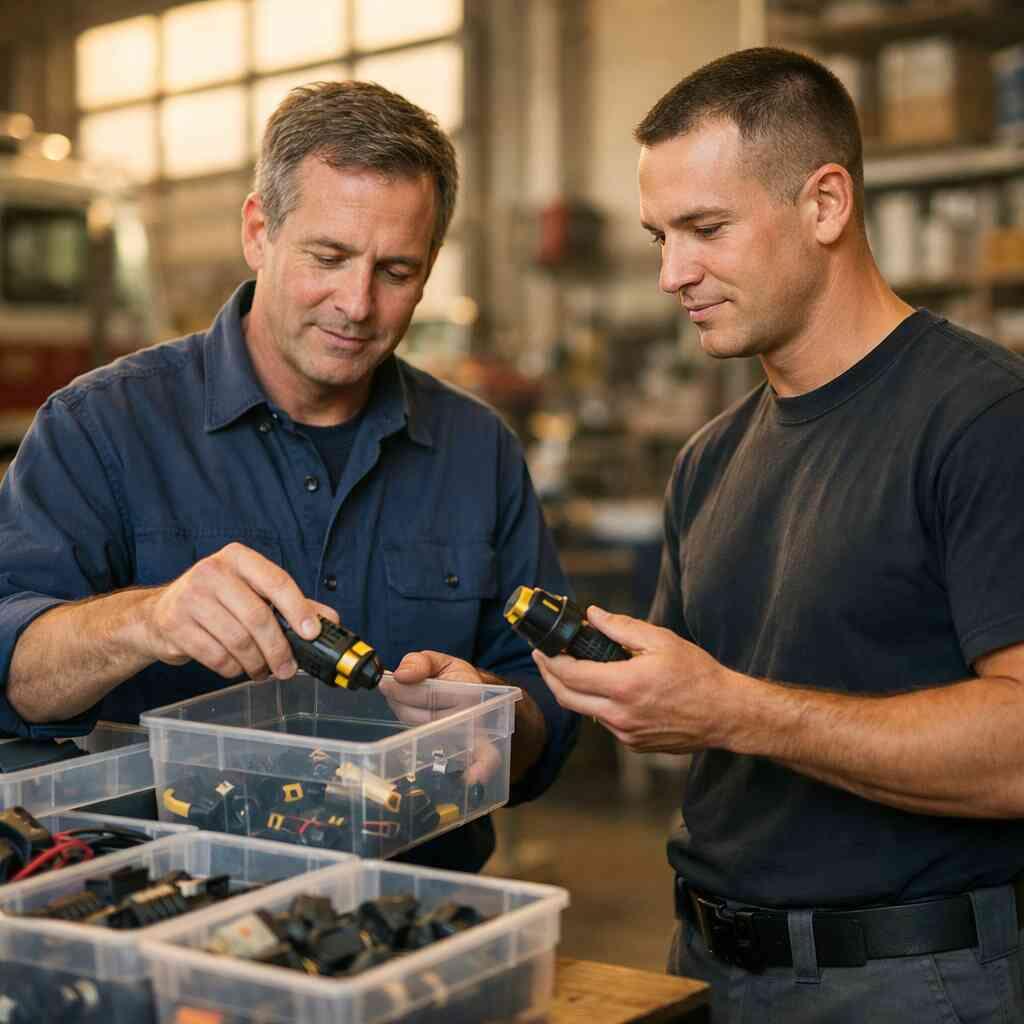
Component typeBest use caseProcurement noteIP68 female pigtailsConnection points that need protection and repeat reliabilityUseful when matching existing fleet layoutsIP68 male pigtailsComplementary ends for routed installationsHelps keep replacement planning consistentMale female electrical extensionsBridging distance in fire fighting electrical runsReduces custom improvisation in the bayIf you are evaluating IP68 female pigtail connectors for fire safety equipment, IP68 male pigtail connectors for rugged emergency response gear, and male female electrical extensions for fire fighting equipment, think about fleet consistency first. Overbuying usually comes from trying to solve every unknown in advance. That is expensive. It is also unnecessary when a clear inventory map can reduce waste and simplify replacement planning.
Where junctions receptacles and accessory planning reduces maintenance friction across the apparatus bay
Here is what almost no online guide mentions: the bay becomes more efficient when the connectors, junctions, and accessories are planned together. If each truck uses a different approach, the maintenance team loses time sorting parts and diagnosing mismatches. That friction adds up. It also increases the chance of a repair delay when a unit should be rolling. The category of junctions receptacles and accessory planning for fire apparatus matters because it helps organize the whole support system. A thoughtful plan reduces surprise purchases and makes stocking simpler. It also supports fire station equipment upgrades without forcing a full redesign. In a busy department, that kind of planning can save more than money. It saves attention.
What American-made fire safety products can mean for procurement consistency and replacement planning
When departments evaluate American-made fire safety products, the discussion should stay grounded. It is not about slogans. It is about procurement consistency, communication, and replacement planning. Domestic sourcing can help simplify logistics, though buyers should still verify specs and compatibility. That careful mindset protects public safety fleets from avoidable surprises.
For many buyers, American-made fire safety products signal a more straightforward sourcing process. That can matter when you are standardizing a fleet across multiple apparatus types. It can also support longer-term planning because the buying process becomes easier to repeat. Still, you should verify every specification before adoption. Reliable fleet upgrades begin with verified fit, not assumptions.
The decision path that turns rugged emergency response gear into long-term operational efficiency
Strong procurement does not happen by accident. It follows a decision path. First, you define the mission. Then you test claims against actual fleet needs. After that, you choose the least complicated solution that still protects readiness. That approach sounds simple, but it is surprisingly rare. It is also where operational efficiency for fleets really starts.
The best results come when rugged emergency response gear is treated as a long-term system investment. That mindset lowers fleet maintenance cost reduction pressure later. It also reduces the emotional churn that comes with repeated equipment failures. If your team has ever had to improvise a workaround during a busy shift, you know exactly why this matters. Dependability is not a luxury. It is infrastructure.
How to evaluate equipment built for demanding conditions without assuming every claim is equal
Claims about durability are everywhere. That is why your evaluation process has to be disciplined. Do not stop at descriptive language. Ask how the component fits the vehicle, how it handles routine abuse, and how easy it is to replace. Those questions are more useful than marketing adjectives. They also protect your fleet from being overpromised to.
A practical evaluation checklist might include:
- Fit with existing apparatus architecture
- Exposure to washdown and vibration
- Ease of inspection and replacement
- Inventory simplicity across units
- Compatibility with current responder-ready equipment
If you want a deeper framework, start with how Fire Power Products lower TCO for EMS fleets in 2026 and how to spec Fire Power Products for DeLand fleet retrofits. That kind of total-cost lens helps departments avoid shallow comparisons. It also makes procurement discussions more honest. You are not chasing perfection. You are choosing the most dependable path for the work you actually do.
When fire department procurement should prioritize fleet maintenance cost reduction over short-term savings
Short-term savings can be seductive. Budget pressure is real, and nobody ignores it lightly. But fire department procurement should prioritize what reduces maintenance cost over time when the gear is mission-critical. If a cheaper part fails twice, it is not cheaper. If it extends labor time, it is not efficient. That is the hard math.
A small department near the edge of Volusia County told us they were tired of buying the same category of part over and over. They finally changed the standard after comparing service calls, not purchase prices. The new approach reduced repeat intervention and simplified ordering. That was the real win. Not drama. Just fewer interruptions and more operational stability.
Building a replacement cadence around equipment dependability in the field and apparatus organization solutions
Replacement cadence works best when it is proactive. You do not wait for a failure to tell you what to stock. Instead, you track wear patterns, bay usage, and common failure points. Then you align the replacement cadence with apparatus organization solutions that keep spares easy to find. That makes the whole fleet more responsive.
This is where fire department procurement support can be helpful. A good procurement conversation should cover the whole picture: current layout, common replacement intervals, and the parts most likely to support mission-critical fleet assets. If that sounds operationally mundane, good. Mundane is what keeps a fleet dependable. The goal is not excitement. The goal is readiness.
The next move for DeLand Florida fire equipment teams looking to improve operational readiness and protect fleet ROI
If you want to improve operational readiness, start with one apparatus and one parts category. Do not try to fix everything at once. Pick the equipment that causes the most downtime or the most maintenance friction. Then document what fails, how often it fails, and what it costs in labor. That gives you a better standard than guesswork.
For DeLand Florida fire equipment teams, the smartest next step is to compare your current setup against a verified durability plan. Use what is Fire Power Products IP68 testing in 2026 and why Fire Power Products cut DeLand downtime in 2026 as reference points for the questions you should ask, not as shortcuts around verification. Then evaluate how the products align with your fleet’s actual service demands. You do not have to solve the whole system today. Start with one phone call, one inventory review, and one honest look at where your trucks lose time.
Frequently Asked Questions
Question: How does Fire Power Products help improve fleet ROI for fire departments in DeLand?
Answer: Fire Power Products supports fleet ROI for fire departments by focusing on durable fire equipment and long-term equipment performance rather than short-term sticker price. In practice, that means departments can reduce repeat repairs, limit downtime, and improve operational efficiency for fleets by choosing responder-ready equipment designed for demanding conditions. For DeLand fire safety equipment buyers, the biggest value often comes from fewer interruptions in the bay, simpler replacement planning, and better consistency across apparatus. That is what turns a purchase into a preventative fleet investment instead of a recurring expense.
Question: What should DeLand Florida fire equipment teams look for when standardizing fire apparatus accessories and emergency vehicle equipment?
Answer: The most important step is to evaluate how each component fits into the full fleet system. DeLand Florida fire equipment teams should look for fire apparatus accessories that support consistency, simplify stocking, and reduce maintenance friction across multiple units. Fire Power Products is relevant here because its approach emphasizes rugged emergency response gear and equipment dependability in the field. Buyers should compare fit, exposure to washdown and vibration, replacement ease, and compatibility with current responder-ready equipment before standardizing. That helps avoid overbuying and keeps tactical fleet outfitting manageable.
Question: In the blog title Ultimate Guide to DeLand Fire Power Products for Fleet ROI, what is the main procurement lesson for public safety fleets?
Answer: The main procurement lesson is that return on investment for public safety fleets depends on lifecycle value, not just purchase price. The blog title Ultimate Guide to DeLand Fire Power Products for Fleet ROI reflects that idea clearly: if equipment causes extra labor, repeat service calls, or avoidable downtime, the true cost rises quickly. Fire department procurement should prioritize fleet maintenance cost reduction, operational readiness for responders, and reliable fleet upgrades over short-term savings that do not hold up in service. Fire Power Products fits this mindset by offering durable products for emergency services that are intended to support long-term equipment performance in real-world use.
Question: How do IP68 female pigtails, IP68 male pigtails, and male female electrical extensions support hose-down resistant equipment planning?
Answer: These connector categories help departments plan around real apparatus layouts without forcing custom improvisation in the bay. IP68 female pigtails can be useful where protected connection points and repeat reliability matter, IP68 male pigtails can support complementary routed installations, and male female electrical extensions can bridge distance in fire fighting electrical runs. When selected carefully, they can contribute to hose-down resistant equipment planning by reducing exposure-related issues and supporting cleaner, more consistent installations. Fire Power Products and related fire service equipment sourcing decisions work best when teams map actual vehicle needs first, then choose the fewest compatible parts needed to keep mission-critical fleet assets ready.
Question: Why is American-made fire safety products sourcing important for equipment replacement planning and apparatus organization solutions?
Answer: American-made fire safety products can support procurement consistency because they may make sourcing and replacement planning easier to manage, especially when a department is standardizing across several units. For apparatus organization solutions, that consistency matters because it reduces confusion, helps stock the right spares, and supports quicker repairs when a truck needs attention. Fire Power Products is positioned around durable, responder-ready equipment, but buyers should still verify all specifications and compatibility before adopting any component. The best results come from careful fire department procurement, clear inventory mapping, and a replacement cadence that reflects actual field use rather than guesswork.