What Is Fire Power Products IP68 Testing in 2026
August 5, 2026
Why an IP68 rating matters when fire equipment gets hit with dust, water, and chaos
A fire truck does not live a gentle life. It sits in heat, gets sprayed, shakes hard, and collects grit in places you cannot easily inspect. If you are reading this because a connector failed after a washdown, that frustration makes sense. This is exactly why IP68 testing matters for rugged fire equipment. It helps buyers separate field-ready equipment from gear that only looks tough on paper. For IP68 testing for fire equipment in harsh conditions to mean anything, it has to reflect real environmental ingress protection concerns.
What IP68 testing is actually proving about dust tight sealing and liquid ingress
IP68 testing is an ingress protection testing standard that evaluates how well a part resists solids and liquids. The first digit, 6, signals dust tight sealing. The second digit, 8, signals resistance to submersion protection under specified test conditions. That sounds simple, but the practical meaning is important. It proves that the sealing design can help prevent debris exclusion and liquid ingress testing failures under harsh exposure.
Here is the part most people miss. IP68 does not mean magical immunity. It means the sample met a defined test method under controlled conditions. That distinction matters when you are choosing sealed connectors for emergency response gear. It is also why you should read an IP68 rating as evidence of protection, not a promise of perfection.
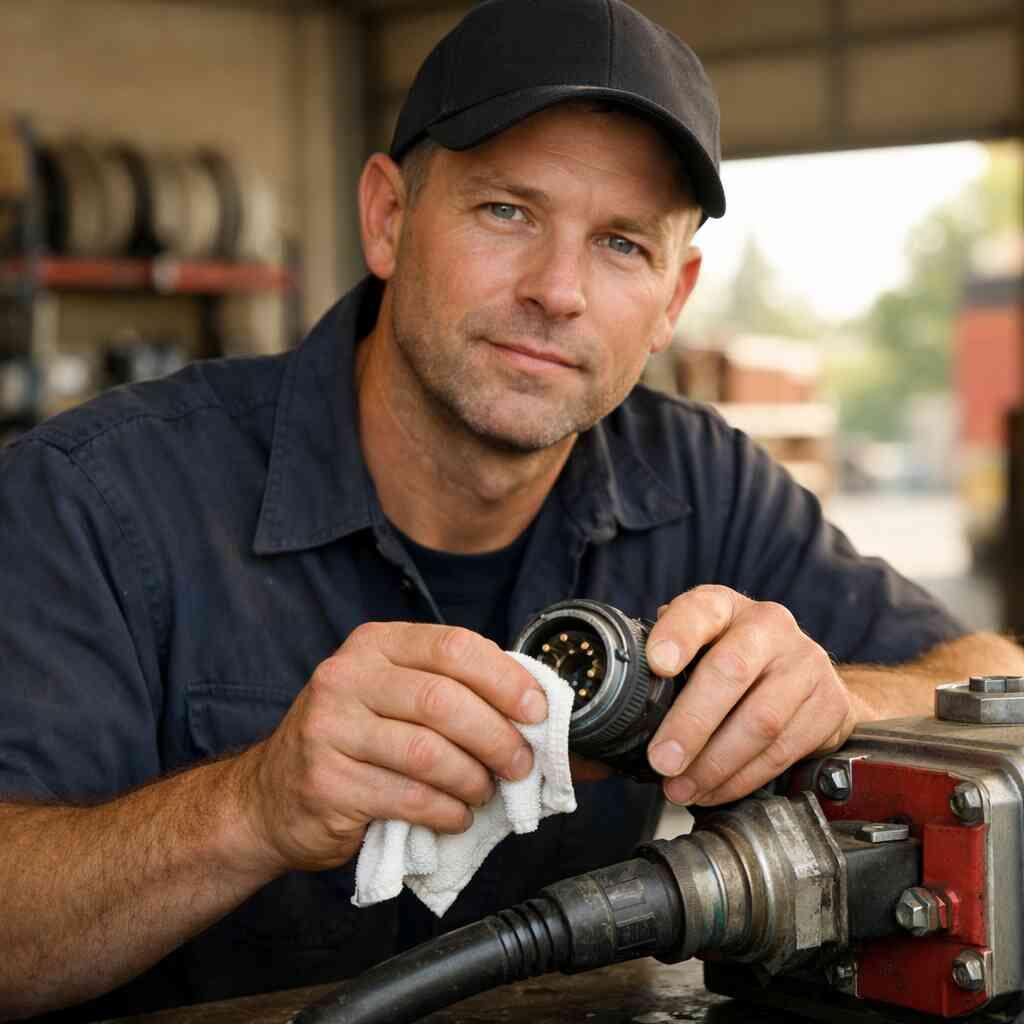
We hear this from clients almost every week. A connector works fine indoors, then fails after dust, road spray, or repeated hose-downs. One fleet technician in Central Florida described a pigtail that looked clean outside yet had moisture inside the housing after a wet shift. That kind of failure is expensive because it hides until the system is already stressed. Proper liquid ingress protection gives you a better starting point.
Why field-ready equipment needs more than basic weatherproof performance
Basic weatherproof performance can handle light exposure. Field work is not light exposure. Fire apparatus components face vibration, grime, detergent, heat, and frequent cleaning. Those realities make simple splash resistance inadequate for many applications. You need mission-critical performance thinking, not marketing language.
Fire stations often wash rigs aggressively. Florida adds humidity, salt air in some regions, and long stretches of wet weather. That combination challenges moisture intrusion prevention in ways dry inland climates do not. The mistake we see most often is assuming a clean-looking part is a healthy part. If a housing is not engineered for harsh-condition reliability, the failure can start small and spread fast.
On the projects we’ve finished this year, the strongest outcomes came from matching the connector to the environment, not just the electrical load. A safer choice often begins with asking how much contamination the part will face. Then you ask how often it will be washed. Then you ask what happens if water sits in a seam overnight. Those questions are more useful than a generic “water resistant” label.
Where hose-down durability and submersion protection start to separate reliable gear from risky gear
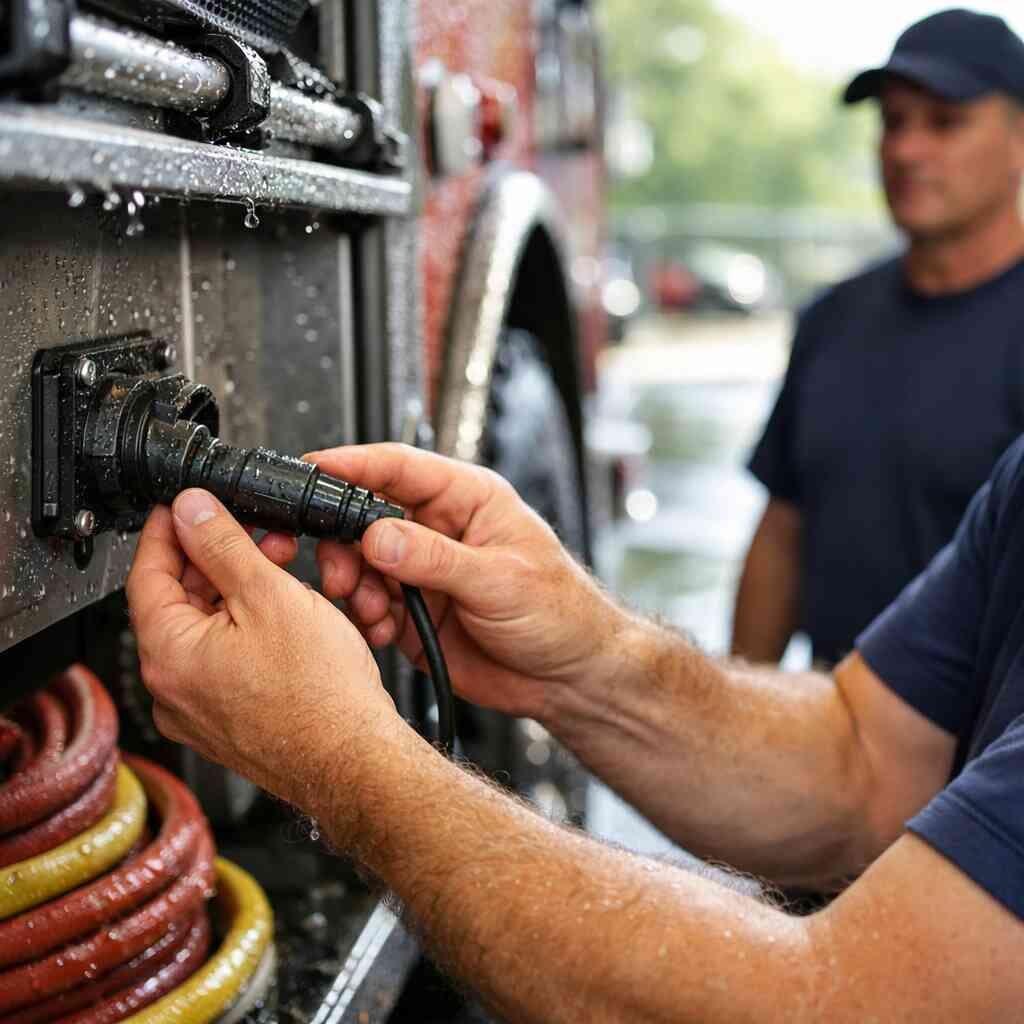
Hose-down durability is not the same as submersion resistance. A part can survive cleaning sprays and still fail in pooled water. Likewise, a part can resist brief immersion in a test and still struggle when vibration, heat cycling, and contamination are added. That is why protective housing design matters as much as the rating itself. Reliable gear handles more than one stress at a time.
Exposure TypeWhat It RevealsWhy It MattersHose-down cleaningSeal integrity under pressurized sprayCommon in apparatus maintenanceDust exposureDebris exclusion and contamination resistanceProtects contacts and mating surfacesSubmersion testingResistance to liquid ingressUseful for low-mounted or exposed partsA technician once told us a connector failed only after repeated wash cycles, not after road use. That detail changed the diagnosis. The part was not weak in general; it was weak under cleaning exposure. That is the sort of difference an IP68 conversation should uncover before you spec the next component. It keeps you focused on how the equipment actually lives.
What Fire Power Products IP68 testing really checks before a connector ever reaches the field
Before a connector reaches the field, testing should answer a narrow question: can the design resist contamination under defined conditions? That is the real purpose of fire service equipment testing for sealed electrical parts. It helps validate the barrier between the outside world and the contact points. It also supports smarter choices around electrical enclosure protection in rugged fire apparatus components. For buyers comparing options, Fire Power Products IP68-rated safety products for rugged fire service gear offer a clear way to evaluate sealed hardware categories without guessing.
How sealed connectors and pigtails are evaluated for environmental ingress protection
Sealed connectors and pigtails are typically assessed for how well they resist dust and moisture entering critical interfaces. That includes the connector body, the interface seals, and the cable entry points. In a practical sense, sealed cable assemblies should protect the electrical path where the environment is most likely to attack it. IP68 testing looks at whether the design keeps contamination out under specified exposure. It does not erase the need for proper installation.
With IP68 male connector pigtails for fire fighting equipment, the mating surface is one of the most important areas. The seal has to remain effective even when the part is handled, connected, disconnected, and cleaned repeatedly. That is why contamination resistance matters so much. A connector that is technically sealed but awkward to maintain can still become a weak point. Good design makes the protective function easier to preserve in the field.
Why male and female electrical extensions need contamination resistance in demanding fire service conditions
Male and female connections face different stress points. The male side can be more exposed during handling. The female side can trap contamination more easily if it is left open. Together, they form a system that is only as strong as its weakest interface. That is why contamination resistance belongs at the center of the selection process.
For apparatus wiring, IP68 male and female electrical extensions for fire apparatus components should support repeated use without inviting dirt, moisture, or chemical residue into the contact area. The question is not just whether the part works on day one. The better question is whether it still works after the tenth washdown and the hundredth vibration cycle. That is what makes the difference between short-term convenience and long-term reliability. In emergency response gear, small weaknesses do not stay small.
A DeLand-area fleet manager once described a recurring issue after afternoon storms and overnight humidity. The connectors seemed fine during daylight inspections, then behaved unpredictably after a wet shift. That pattern is familiar in Florida. Humidity, heat, and cleaning routines create a slow attack on connection quality. Strong contamination resistance reduces that risk, but only if the application matches the hardware.
What durability validation can and cannot confirm without overclaiming performance
Durability validation can confirm that a design met a specified test standard. It can also show that a product resists certain ingress risks under controlled conditions. What it cannot do is guarantee every possible real-world outcome. That is where honest language matters. Durability validation supports decision-making, but it should never be stretched into a universal promise. Here is a useful way to think about it: – It can confirm a tested barrier against dust and water under stated conditions.
- It can support confidence in harsh-condition reliability.
- It cannot prove immunity to installation errors.
- It cannot replace maintenance checks or proper connector mating.
- It cannot guarantee performance under every chemical, impact, or abuse scenario.
That distinction is not a weakness. It is a sign of seriousness. Buyers who understand this make better choices. They also avoid disappointment later. NFPA-compatible durability considerations often live in that same space: practical, conservative, and grounded in real use.
How electrical enclosure protection supports mission critical performance in rugged fire apparatus components
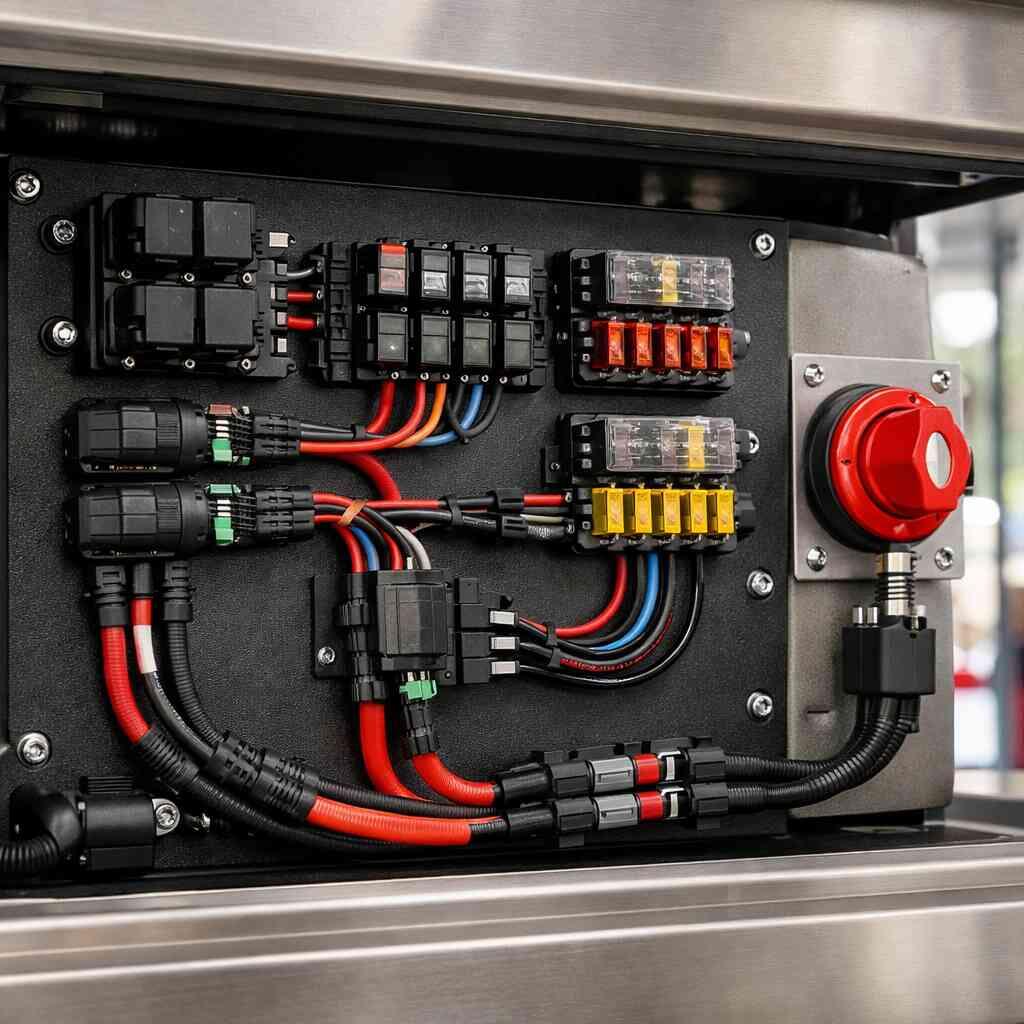
Electrical enclosure protection is about guarding the system where the environment would otherwise get in. On fire apparatus, that protection supports lights, sensors, controls, and communication-linked accessories. If an enclosure leaks, the problem is not cosmetic. It can become a mission issue. That is why rugged fire equipment must be treated as part of a larger operational system.
The value of IP68 testing is that it gives you a meaningful benchmark before the connector reaches the field. It helps align the enclosure, the cable entry, and the mating design. It also narrows the risk of avoidable failures. You may still need application-specific confirmation, but you are no longer choosing blindly. That alone improves trust in the hardware.
The decision frame that helps a DeLand fire service buyer choose the right sealed connection path
If you are making a purchasing decision in DeLand, you are likely balancing reliability, maintenance reality, and budget. That pressure is real. The wrong connector choice can turn into repeated service calls, wasted labor, and preventable downtime. The right choice starts with asking what the part will actually face in your environment. For buyers comparing options, IP68 female connector pigtails for fire apparatus protection can be part of that evaluation process.
When IP68 testing should influence your connector and receptacle selection for fire apparatus components
IP68 testing should influence your selection whenever dust, washdown, or exposure to wet conditions is part of the job. That includes many fire apparatus components mounted in exposed positions. It also matters when the part is hard to inspect after installation. In those cases, a stronger ingress benchmark is not luxury. It is risk management.
Use IP68 as a decision filter when you are reviewing:
- connector location and exposure
- cleaning frequency
- vibration and handling
- likelihood of standing water
- access for inspection and replacement
If you need a matched path, fire fighting junctions receptacles and accessories for sealed electrical connections can help frame the options around sealed connection points. The goal is not to over-spec every component. The goal is to match the seal to the actual duty cycle. That is the difference between smart procurement and hopeful procurement.
How to think about high pressure wash resistance in humid Florida conditions without assuming perfect waterproofing
Florida humidity changes the conversation. Moisture lingers. Heat accelerates condensation. Washdowns can push water into seams that looked fine in a dry shop. So you should think in terms of high-pressure wash resistance and moisture intrusion prevention, not perfect waterproofing. That mindset is both realistic and safer.
What we’ve seen in 2026 specifically is that cleanup routines can matter as much as road exposure. A connector that survives transit may still be vulnerable after repeated washing and drying cycles. That is especially true where seals age, cable jackets flex, or receptacles sit low on the apparatus. If a part sits near spray paths, give the wash routine real weight. In Florida, that is not a side issue.
Here is the question most buyers forget to ask: what happens after the wash, not during it? Water can stay trapped. Residue can remain. Then heat bakes the residue into the interface. That sequence damages longevity even when the part never fully fails on the spot. A good seal should reduce that risk, but installation and maintenance still matter.
Which application details should be verified before specifying electrical connector pigtails or junction receptacles
Before you specify a connector, verify the details that actually control performance. That step saves mistakes. It also keeps you from overselling the standard. You want fit, access, and exposure to line up with the part’s protection level. That is true for any electrical connector choice, and it is especially true for fire apparatus wiring.
Check these details first:
- Mounting location and spray exposure.
- Expected cleaning method and frequency.
- Cable bend radius and strain relief.
- Mating and un-mating frequency.
- Need for service access in the field.
If you are comparing connector styles, IP68 male connector pigtails for fire fighting equipment may be relevant when the application needs a sealed male-side termination. Meanwhile, the broader system may need support from contact Duraline for sealed connector and receptacle support when the application is unusually exposed or hard to classify. That is usually the smartest move. Ask the application questions early, before the hardware is already on the truck.
What to ask next when you need trusted fire safety equipment that is built for harsh condition reliability
The next question is not “Is it IP68?” The next question is “Does this IP68-tested design fit my exact use case?” That is a better filter. It keeps you grounded in performance, not assumption. It also helps you compare options with clearer eyes. For many buyers, that is where confidence begins.
Ask these three things before you commit:
- What exposure level will this connector actually see?
- How often will it be cleaned or opened?
- What failure would hurt operations most?
If you can answer those questions honestly, the right choice becomes easier. You do not have to solve every variable today. You just need to start with one accurate assessment and one good conversation. If you are in DeLand and need trusted fire safety equipment that supports harsh-condition reliability, begin by reviewing the specific connector path and confirming the sealing requirement with the product team. You do not have to figure this out alone, and you do not have to figure it all out today. Start with one phone call, then verify the part that carries the most risk.
Frequently Asked Questions
Question: What does IP68 testing mean for Fire Power Products in the blog What Is Fire Power Products IP68 Testing in 2026?
Answer: IP68 testing is a form of ingress protection testing that evaluates dust tight sealing and resistance to liquid ingress under defined conditions. For Fire Power Products, the key takeaway is not that a part is invincible, but that the design has been evaluated for environmental ingress protection in demanding fire service applications. That matters for rugged fire equipment because fire apparatus components often face dust, spray, cleaning chemicals, vibration, and repeated handling. When a connector or receptacle is built around an IP68 rating, it gives buyers a clearer basis for choosing field-ready equipment with better contamination resistance and moisture intrusion prevention. It is still important to verify fit, installation, and maintenance needs for the specific application, but IP68 testing offers a stronger starting point than vague weatherproof performance claims.
Question: Which Fire Power Products connectors and pigtails are typically considered when high-pressure wash resistance and hose-down durability matter most?
Answer: When high-pressure wash resistance and hose-down durability are priorities, buyers usually look at sealed connectors, sealed cable assemblies, and pigtails designed for exposure to moisture and debris. Fire Power Products focuses on trusted fire safety equipment that supports harsh-condition reliability, so the right choice depends on where the component sits on the apparatus and how often it is cleaned or handled. For example, IP68 male connector pigtails, IP68 female connector pigtails, and matched receptacle or junction options can all play a role in electrical enclosure protection. The best selection is not just about the rating itself. It is about matching the protective housing design, cable routing, and service access to the real-world duty cycle of fire apparatus components. That helps reduce the chance of debris exclusion problems, liquid ingress testing failures, and avoidable downtime.
Question: How does Fire Power Products help with contamination resistance in emergency response gear and fire apparatus components?
Answer: Contamination resistance is critical because emergency response gear and fire apparatus components are constantly exposed to dust, washdown residue, heat, and vibration. Fire Power Products products are positioned for first responder equipment durability, which means the goal is to limit the entry points where contamination can damage electrical connections. A properly sealed connector system helps support debris exclusion and liquid ingress protection at the interfaces most likely to fail first. That is especially important for male and female electrical extensions, where one side may be more exposed during maintenance and the other may be more vulnerable to trapped moisture. By focusing on environmental ingress protection and mission-critical performance, Fire Power Products gives buyers a better path to choose equipment that is suited to the field instead of only appearing durable on paper.
Question: What should a DeLand, Florida buyer ask before choosing Fire Power Products for trusted fire safety equipment?
Answer: A DeLand, Florida buyer should start by asking how the equipment will actually be used. That includes exposure to water, dust, vibration, and frequent cleaning. It also includes where the connector will be mounted, how easy it is to inspect, and whether the application needs sealed connectors or receptacles with a higher level of environmental ingress protection. Fire Power Products is a good fit when the buyer is looking for rugged fire equipment that supports harsh-condition reliability, but the final selection should still be based on the specific application. Buyers should confirm whether they need IP68 male connector pigtails, IP68 female connector pigtails, junction receptacles and accessories, or another sealed path for the system. That careful approach helps align NFPA-compatible durability considerations with real-world field conditions without overclaiming performance.
Question: Can Fire Power Products recommend the right sealed connection path for high-pressure wash resistance and moisture intrusion prevention?
Answer: Fire Power Products can help guide buyers toward the right sealed connection path by looking at the application details, the exposure level, and the maintenance routine. That is usually the smartest way to address high-pressure wash resistance and moisture intrusion prevention because no two fire apparatus installations face the exact same conditions. In some cases, an IP68-rated male pigtail may be the best fit. In others, a female pigtail, a receptacle, or a junction accessory may better support electrical enclosure protection and field-ready equipment needs. The value of that guidance is that it helps buyers avoid guessing. Instead of relying on general weatherproof performance claims, they can focus on contamination resistance, sealed cable assemblies, and the kind of durability validation that supports long-term equipment resilience. If the application is unusually exposed or difficult to classify, reaching out for product support is the best next step.
Question: Why should fire service equipment testing and harsh-condition reliability matter when comparing Fire Power Products options?
Answer: Fire service equipment testing matters because fire apparatus components live in conditions that are far tougher than ordinary industrial or outdoor applications. Harsh-condition reliability is essential when equipment may be washed down often, exposed to humidity, driven through wet environments, or subjected to vibration and grime. Fire Power Products emphasizes durability for these realities, but buyers should still evaluate each product against the specific use case. The most useful comparison looks at ingress protection testing, dust tight sealing, submersion protection, and the quality of the protective housing design rather than assuming all sealed products perform equally. When buyers compare options this way, they are better able to identify trusted fire safety equipment that supports mission-critical performance and reduced maintenance risk over time.