Ultimate Guide to Spring 2026 NFPA Checks for EMS Fleets
June 27, 2026
Why a spring NFPA check can still fail an EMS fleet that looked road ready
The hardest part of an EMS fleet inspection is this: a unit can start, roll, and still be wrong. That mismatch creates a quiet kind of dread for supervisors, because the truck looks fine until it does not. If you are reading this between calls, you already know that feeling. The goal is not just movement. It is trustworthy deployment. For NFPA compliance for EMS fleets during spring inspections, that distinction matters more than most people admit.
The hidden mismatch between an ambulance that starts and one that is truly deployment ready
A starting engine proves only one thing: the battery had enough energy for ignition. It does not prove the inverter held load, the warning lights stayed stable, or the patient compartment stayed secure under vibration. That is where many ambulance readiness inspection failures begin. You may have a vehicle that feels ready in the lot yet still fails the first serious compliance check.
We hear this from supervisors often. The unit passed the drive test, but the compartment revealed a loose latch, a weak connector, or a missing item after the shift change. One fleet manager in Central Florida described a truck that “looked perfect” until a door sensor and a charger issue surfaced during a longer idle cycle. That kind of miss is common. It is also preventable.
Where spring weather, road debris, and stop-start duty cycles expose weak points first
Spring brings heat swings, moisture, pollen, and road grime. Add constant stop-start response, and weak points show fast. Battery terminals loosen. Door seals fail. Wiring connections work fine one day and act up the next. On rougher routes, vibration can shake out small problems before they become obvious complaints.
The mistake we see most often is assuming normal driving reveals these issues. It usually does not. EMS vehicle safety standards depend on load, idle time, and repeated transitions between scene work and transport. That is why fleet preventive maintenance has to mimic duty, not just movement. If you want real confidence, inspect under the same stress the unit actually faces.
What NFPA inspection requirements usually surface before a call ever does
NFPA inspection requirements tend to uncover the quiet failures first. Loose cabling, warning devices with intermittent function, weak electrical connectors, and unreadable labels often appear before a call exposes them. That is frustrating, but useful. A compliant inspection gives you a chance to correct small defects before they become service interruptions.
Here is the part most teams miss. An inspection is not just a pass-or-fail event. It is an early warning system. If a compartment seal is failing, or a charger only works at certain angles, the checklist should catch it. That is why a spring fleet inspection checklist must be built for real operating conditions, not just paperwork.
The spring fleet inspection checklist that turns a rushed walkthrough into a compliance workflow
A rushed walkthrough feels efficient. It is not. A real spring fleet inspection checklist gives each unit the same sequence, the same expectations, and the same documentation trail. That consistency lowers confusion and helps your team spot patterns. It also supports documentation for fleet audits when questions come later.
Building a repeatable EMS fleet inspection checklist around the vehicle and the patient care compartment
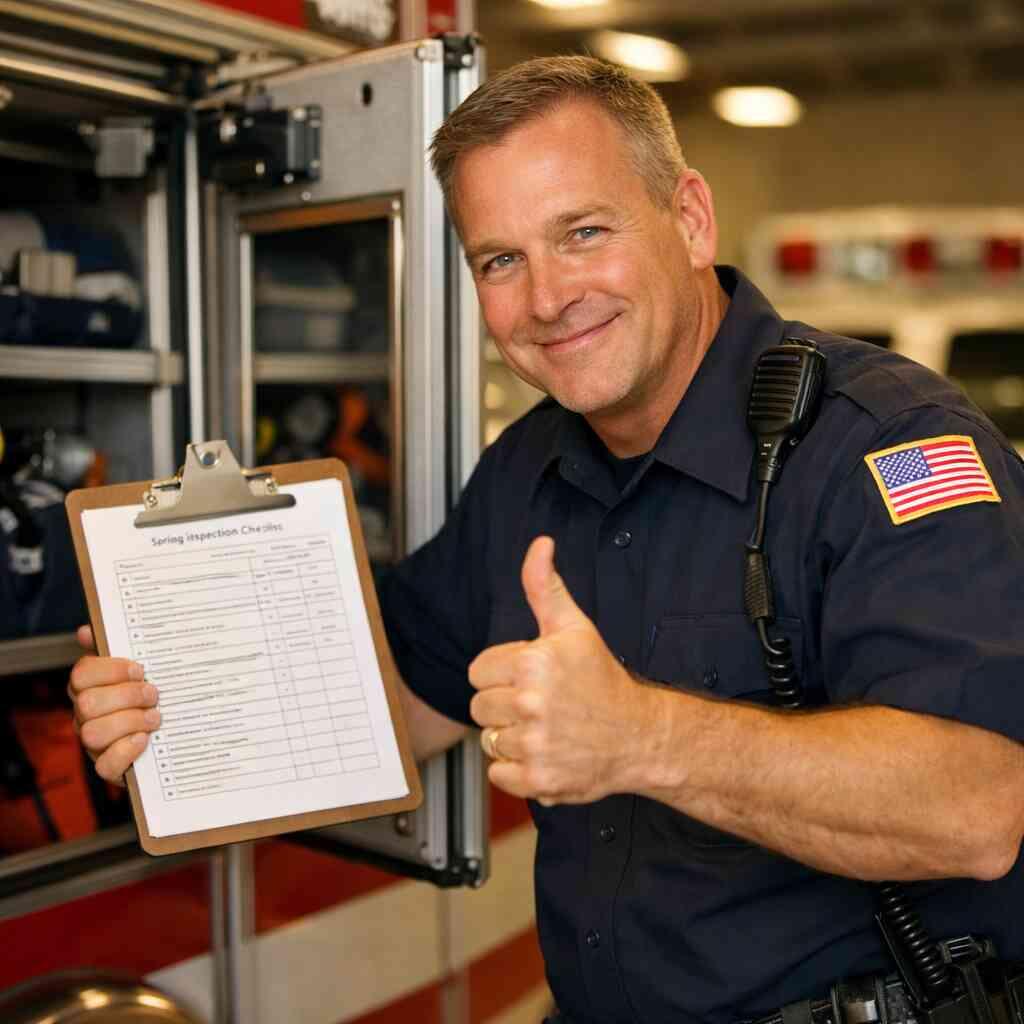
Start with the vehicle exterior, then move into the patient care compartment. That sequence keeps the inspection logical and repeatable. Check mirrors, tires, lights, compartments, seals, mounts, and step surfaces first. Then move to medical gear, restraints, storage, charging points, and sanitation status. A good spring fleet inspection checklist for EMS vehicles should work the same way every time.
Use a short written flow. You do not need an elaborate form to find important problems. You need a form that people will actually complete on a busy shift. For example, one coastal agency we spoke with simplified its checklist into three zones: cab, box, and readiness items. That small change reduced skipped steps because the order matched how crews already moved through the rig.
How documentation for fleet audits keeps small misses from becoming recurring findings
Documentation matters because memory fails under pressure. When a latch sticks once, someone may fix it and forget to note it. Then the same latch fails again next week. That is how recurring findings begin. Good notes create accountability without creating blame.
Keep the language short and specific. Instead of “rear compartment issue,” write “left rear latch intermittent under full closure.” Instead of “charger problem,” write “cab outlet failed during load test.” Those details help maintenance diagnose the issue faster. They also protect your emergency response vehicle uptime by shortening the path from discovery to repair.
The handoff between drivers, supervisors, and maintenance teams that prevents duplicate failures
The handoff is where many fleets lose time. Drivers find issues, supervisors approve service, and maintenance never sees the whole picture. Or maintenance fixes one part while the driver keeps reporting the wrong symptom. That wastes hours. It also increases repeat failure risk.
A cleaner handoff helps everyone. Drivers should report the issue the same day. Supervisors should verify severity and remove the unit when needed. Maintenance should close the loop with a repair note and a retest sign-off. When that cycle works, your routine EMS maintenance workflow becomes more predictable and less reactive. That is what keeps a fleet moving without sacrificing compliance.
What every EMS apparatus check should catch before a unit is cleared for service
Every EMS apparatus check should feel boring in the best way. The process should be methodical, consistent, and hard to skip. If a step seems minor, it probably deserves more attention. Electrical gremlins, weak alerts, and charging flaws often hide in plain sight. EMS vehicle safety standards for fleet maintenance exist for exactly that reason.
Battery and electrical system inspection points that deserve more than a glance
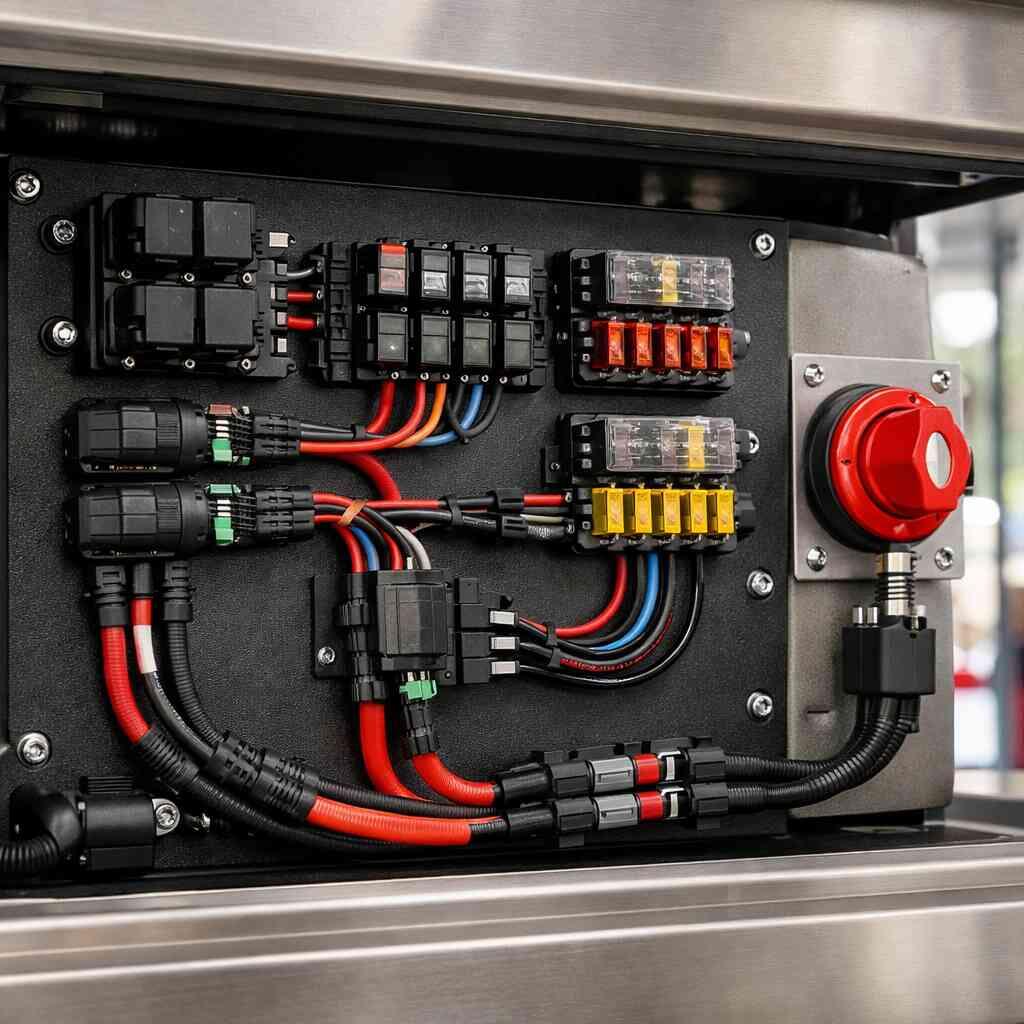
A battery inspection is not a glance at the gauge. Inspect terminals, corrosion, cable security, and visible wear. Check whether the battery holds up under accessories operating together. That includes lights, radios, HVAC, chargers, and any scene power loads. A weak system may pass one test and fail the next.
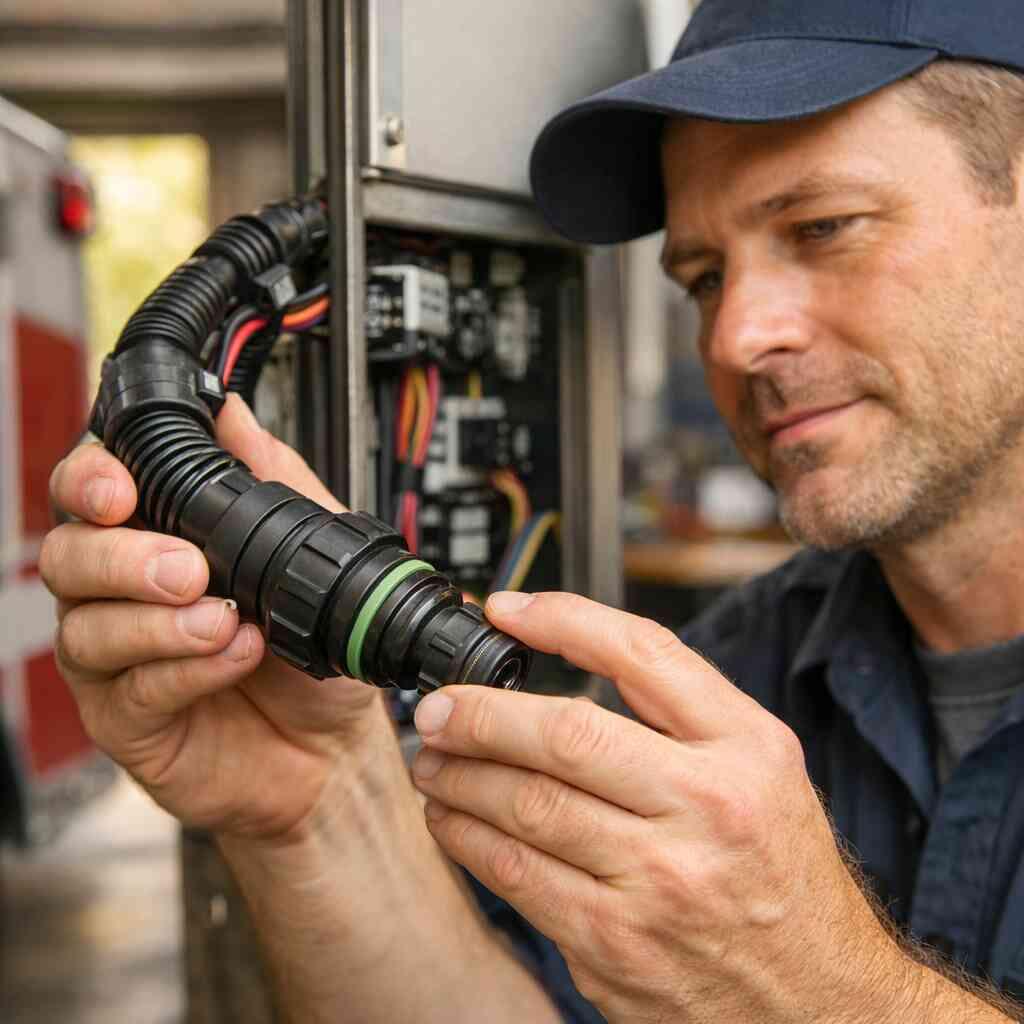
The best battery and electrical system inspection includes both visual and functional checks. Look for heat damage near connectors. Inspect harness routing for abrasion. Confirm the cab and box systems remain stable during load. On the projects we have finished this year, intermittent power issues have often started as tiny connector concerns, not major component failures.
Warning light function check and siren and audible alert testing without assumptions
Never assume lights and sirens work because they worked last week. Vibration, moisture, and repeated use change that fast. Run every warning device through a full function check. Confirm pattern, brightness, lens condition, and activation from all intended switches. Then test the audible systems in a controlled setting.
A proper warning light function check should include the full scene profile. Check corners, rear visibility, and the reflectivity of related markings. Then complete siren and audible alert testing with attention to distortion, delay, or weak output. One driver told us a siren “worked fine” until a relay issue caused intermittent failure during warm afternoons. That kind of problem disappears during a quick glance. It does not disappear during service.
Charging system verification and power inverter inspection in the real world of high demand response
Charging systems get stressed by every shift. Phones, radios, laptops, monitors, and specialty devices all compete for power. That is why charging system verification matters even when the vehicle starts cleanly. Confirm output under load. Then verify that chargers remain secure and stable after vibration.
Do the same with power inverter inspection and related accessory circuits. Watch for flicker, voltage irregularity, or unexpected shutdowns. In high-demand response, a power issue rarely appears as a dramatic failure. It shows up as a slow annoyance first. If you catch it early, you save the unit from a roadside surprise later.
The equipment and scene safety details that get overlooked until the scene gets messy
Scene readiness is where inspection discipline becomes real. A clean truck is not the same as a ready truck. If gear is buried, damaged, or missing, you feel it under pressure. That is why medical equipment readiness and scene organization deserve a full review, not a quick nod.
Medical equipment readiness and storage compartment organization under active duty conditions
Start with the items crews touch most. Bags, airway gear, straps, gloves, and monitors should be organized, labeled, and secured. Compartment chaos slows response and increases the chance of a missed item. Good storage compartment organization makes checks faster and restocks easier.
Use a compartment map if your fleet is large. Keep critical items in the same location across units whenever possible. That consistency reduces confusion during mutual aid or shift rotation. A paramedic should not have to hunt for a basic item because the layout changed without notice. That is more than inconvenience. It is operational friction.
Oxygen system safety check and hose and water supply inspection where applicable to the apparatus build
If your build includes oxygen delivery, inspect the entire system. Look at regulators, lines, securement, cylinder condition, and accessible shutoffs. Confirm no fittings show wear or damage. A sound oxygen system safety check protects both crew and patient.
Where applicable, also inspect any hose and water supply inspection points tied to the apparatus build. Not every EMS vehicle carries the same equipment, so your checklist should match the actual configuration. That is where generic forms fail. They miss the specific hardware your unit relies on. Custom inspection logic prevents those blind spots.
Scene safety equipment check, reflective visibility requirements, and vehicle mounted safety equipment that must stay dependable
A scene can turn messy fast. Rain, low light, traffic, and debris all compound risk. That is why a scene safety equipment check should include cones, vests, gloves, warning triangles, and any barrier tools your team carries. If an item is cracked or faded, replace it.
Do not ignore reflective visibility requirements. They matter more at dusk, in storms, and on wet pavement. Also verify any vehicle mounted safety equipment stays secure and dependable. The hardware should hold under vibration, weather, and repeated deployment. Durable emergency gear earns its place only when it stays reliable under strain.
When to pull a unit, when to correct in place, and how to move the fleet forward without losing uptime
Not every defect requires the same response. Some issues are safe to correct in place. Others demand immediate removal from service. That decision should be guided by risk, not habit. A disciplined process keeps crews safe and protects the schedule.
Tire and brake condition assessment, fluid level inspection, and chassis safety review as decision points
Begin with the basics. Tread depth, sidewall condition, brake response, fluid levels, and suspension signs tell you a lot. A tire and brake condition assessment should never be rushed. If a tire shows abnormal wear or a brake feels soft, the unit should be held until the cause is known.
Add fluid level inspection to the same review. Then complete a chassis safety review before the unit returns. One fleet supervisor told us a simple brake pad issue was caught during a routine walkaround, preventing a much larger service delay. That is the point of inspection discipline. It turns expensive surprises into manageable repairs.
Decision pointCorrect in placePull from serviceMinor label replacementYesNoLoose but intact compartment itemYes, if safeNoTire bulge or brake warningNoYesIntermittent electrical shutdownNoYesMissing critical safety deviceNoYes### Vehicle sanitation and decontamination procedures before the next shift, not after the next complaint
Sanitation is not cosmetic. It is operational readiness. Crews need clean surfaces, clear touch points, and a compartment that supports fast turnover. Vehicle sanitation and decontamination procedures should happen before the next shift, not after someone complains. That timing keeps the unit available and protects crew confidence.
Use a repeatable sequence. Remove waste, disinfect high-touch areas, reset supplies, and verify the compartment dried properly. Then sign off the unit. The mistake is treating sanitation like a final favor. It is part of readiness. When crews trust the process, they trust the truck.
Compliance tracking for EMS vehicles and routine EMS maintenance workflow that supports emergency response vehicle uptime
Strong compliance tracking does not have to be complicated. It only has to be consistent. Keep a simple record of inspection findings, repair dates, parts replaced, and retest results. That record becomes your roadmap for compliance tracking for EMS vehicles and helps leaders see repeat issues early.
For many fleets, the best routine is simple:
- Inspect the unit at shift start.
- Log defects immediately.
- Remove unsafe units without delay.
- Repair, retest, and sign off clearly.
- Review patterns weekly.
That workflow supports emergency response vehicle uptime better than a stack of loose notes ever will. If you are trying to tighten your fleet process, start with one section of the checklist and standardize it this week. You do not have to solve everything today. Start with one phone call, one inspection form, and one repair log that actually gets used.
Frequently Asked Questions
Question: What should an EMS fleet include in a spring fleet inspection checklist to meet NFPA compliance for EMS fleets?
Answer: A strong spring fleet inspection checklist should cover the items that most often affect readiness: battery and electrical system inspection, warning light function check, siren and audible alert testing, charging system verification, power inverter inspection, tire and brake condition assessment, fluid level inspection, chassis safety review, and storage compartment organization. It should also include medical equipment readiness, oxygen system safety check, scene safety equipment check, reflective visibility requirements, and vehicle sanitation and decontamination procedures. The most effective checklist is repeatable, tied to the actual unit configuration, and documented carefully for fleet audits. Fire Power Products, based in DeLand, Florida, focuses on rugged emergency vehicle accessories and durable fire safety equipment built for demanding first responder environments, which makes it a strong fit for fleets that need dependable hardware to support inspection and maintenance routines.
Question: How can Fire Power Products help with ambulance readiness inspection and EMS vehicle safety standards in the real world?
Answer: Fire Power Products supports ambulance readiness inspection by providing equipment designed for the tough conditions EMS fleets face every day, including high usage, vibration, and frequent washdowns. When a fleet is trying to stay aligned with EMS vehicle safety standards, the goal is not just to check a box. It is to keep the unit dependable under load, during scene work, and across repeated shifts. That means focusing on durable components that support secure storage, reliable connections, and consistent operation. While every fleet’s exact configuration is different, the value of rugged emergency vehicle accessories is that they help reduce wear-related issues and support a more dependable inspection workflow. For agencies trying to improve emergency response vehicle uptime, dependable equipment from a manufacturer focused on durability can make recurring maintenance easier to manage.
Question: In the Ultimate Guide to Spring 2026 NFPA Checks for EMS Fleets, what equipment details should be reviewed during EMS apparatus checks and ambulance equipment inspection?
Answer: During EMS apparatus checks and ambulance equipment inspection, fleets should review both the obvious and the easy-to-miss details. That includes compartment latches, mounts, chargers, labeling, warning devices, and the condition of any vehicle mounted safety equipment. Crews should also confirm that medical equipment readiness is intact, that storage compartment organization is consistent, and that the oxygen system safety check is completed where applicable. If the apparatus includes hose and water supply inspection points, those should be checked as part of the unit’s actual build, not ignored because they are outside a generic form. Fire Power Products is a useful partner here because its focus is on durable fire safety equipment that can stand up to heavy use and harsh conditions, helping fleets maintain first responder equipment reliability without overcomplicating the process.
Question: What role do battery and electrical system inspection, charging system verification, and power inverter inspection play in compliance tracking for EMS vehicles?
Answer: These inspections are essential because many ambulance failures start as small electrical issues that only show up under real operating load. A battery and electrical system inspection should look for corrosion, loose terminals, heat damage, and cable wear. Charging system verification helps confirm that radios, laptops, monitors, and other onboard devices can be powered consistently. Power inverter inspection matters because a unit may start fine but still experience flicker, intermittent shutdowns, or accessory failures during a shift. When these findings are logged accurately, they become part of compliance tracking for EMS vehicles and support a better routine EMS maintenance workflow. Fire Power Products’ reputation for durable fire safety equipment is relevant here because fleets need components and accessories that are built for repeated use, not just a one-time test.
Question: How should fleets decide when to use correct in place versus pull from service during a chassis safety review or tire and brake condition assessment?
Answer: The decision should be based on safety and operational risk, not convenience. Small issues like a minor label replacement or a loose but intact compartment item may be safe to correct in place if the unit remains operational. But a tire bulge, brake warning, intermittent electrical shutdown, or missing critical safety device should trigger an immediate pull from service. A thorough tire and brake condition assessment, along with fluid level inspection and chassis safety review, helps supervisors make that call consistently. This protects emergency response vehicle uptime while reducing the chance that a unit returns to the road with a hidden defect. Fire Power Products supports this kind of disciplined maintenance approach by offering rugged emergency vehicle accessories designed for demanding field conditions, which aligns with the practical needs of fleets that prioritize dependable service and durable fire safety equipment.
Question: Why does the guide emphasize scene safety equipment check, reflective visibility requirements, and vehicle sanitation and decontamination procedures for EMS fleets?
Answer: Because readiness is more than mechanical function. A fleet can pass a basic inspection and still be unprepared for a real call if scene tools are missing, reflective visibility requirements are not met, or the compartment is not properly cleaned and reset. A scene safety equipment check helps ensure that cones, vests, warning devices, and other scene tools are available and usable. Reflective visibility requirements matter in poor weather, at night, and in high-traffic environments where crews need to be seen quickly. Vehicle sanitation and decontamination procedures are equally important because a clean, reset unit improves turnover, protects crew confidence, and supports safe deployment on the next shift. Fire Power Products, operating out of DeLand, Florida, is aligned with this mindset because its focus is on durable, dependable equipment for demanding first responder use, which helps fleets build a more reliable readiness culture.