Best Spring 2026 Procurement Guide for Fire Truck Cabling
June 28, 2026
Why spring procurement failures start long before a truck ever rolls out
The hardest part of a cabling purchase is not the order form. It is the false confidence that comes before it. If you are reading this because a quote feels high, take a breath. That reaction is common, and it usually means someone is finally asking the right questions. This fire truck cabling procurement guide explains how procurement decisions shape uptime, repair labor, and fleet frustration.
The hidden cost of treating fire truck cabling like a last-minute purchase
Last-minute buying creates hidden costs fast. You lose time, narrow your options, and accept parts that fit the moment instead of the mission. That is where spring procurement planning for fire apparatus gets distorted. A cable set that seems “good enough” can trigger repeated service calls, awkward rework, and avoidable downtime. The bill never stays in one place.
Here is the part most departments miss. Cabling is not an isolated line item. It affects lighting, pumps, controls, body equipment, and every electrician who has to troubleshoot later. On a recent apparatus refurbishment, a small harness change forced extra labor because the routing plan had never been documented clearly. Nobody had done anything wrong. The real mistake was timing.
Where emergency vehicle wiring harnesses usually break down under real-world duty cycles
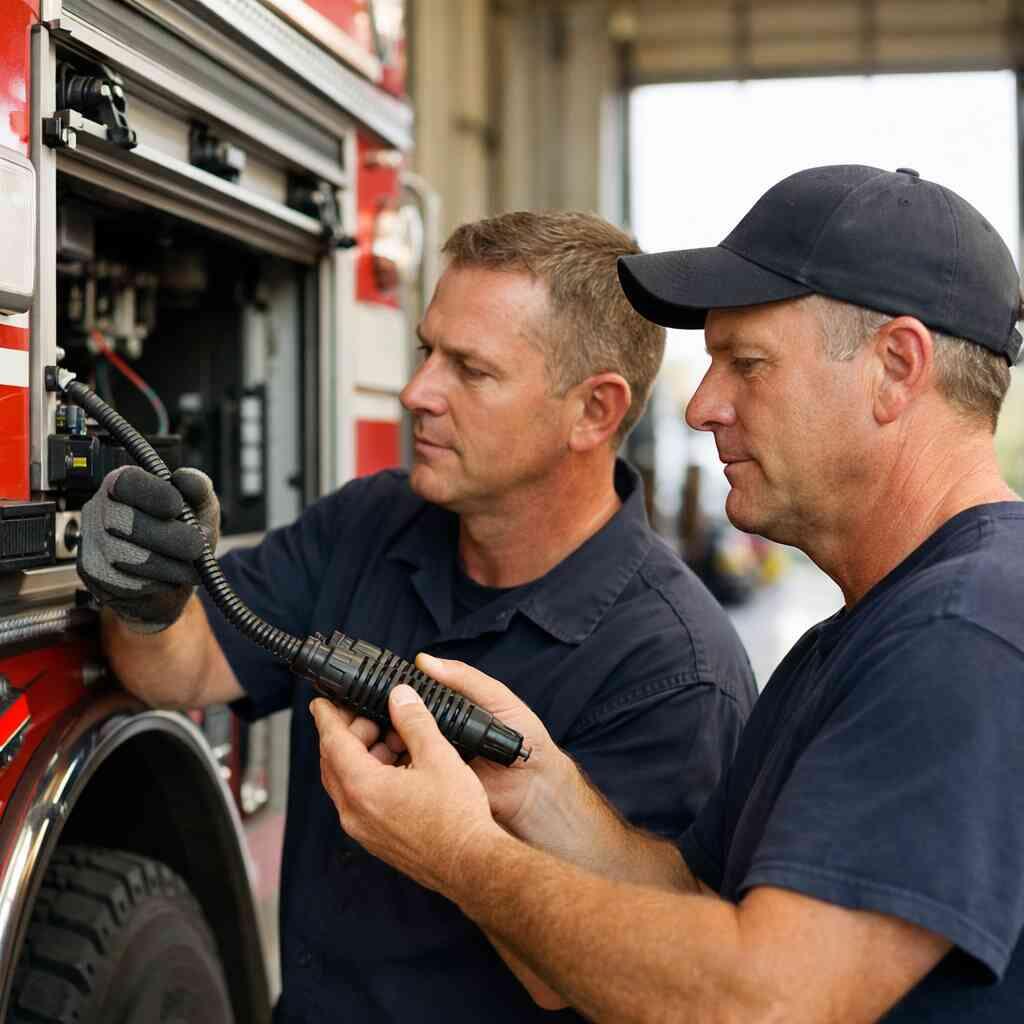
Emergency vehicle wiring harnesses fail where vibration, heat, movement, and moisture meet. That combination is brutal. A truck can look perfect on the lot and still punish the harness once it enters service. Repeated door cycling, compartment access, and bay equipment changes create strain points. Loose routing becomes damage. Poor termination becomes intermittent faults.
The question we get more than any other from first-time buyers is simple: why did the wiring fail so soon? Usually, the answer is not one thing. It is a chain of small compromises. A connector selection for fire trucks may have looked acceptable on paper, yet it may not have matched the actual duty cycle. Likewise, a harness with weak strain relief can survive inspection and still fail after daily use.
What fire apparatus electrical reliability demands from day one of procurement
Fire apparatus electrical reliability starts before fabrication. It starts with the specification language. If the bid package is vague, the build becomes vulnerable. You need cabling specifications for fire trucks that state operating environment, routing expectations, protection levels, and service access. Otherwise, everyone guesses, and guessing is expensive.
Apparatus electrical reliability depends on four early decisions:
- Define voltage and current needs clearly.
- Specify routing protection for abrasion and heat.
- Require serviceable terminations and labeled runs.
- Match components to actual maintenance conditions.
That level of clarity reduces surprises later. It also supports better fleet electrical component sourcing because every bidder reads the same standard. When the standard is strong, the build is stronger. When the standard is weak, the truck becomes a future problem.
Why hose-down-resistant cabling and corrosion-resistant wiring solutions matter in Florida service conditions
Florida service conditions deserve special attention. Heat, humidity, salt air in some areas, and frequent cleaning cycles all work against electrical integrity. Hose-down-resistant cabling is not a luxury in that environment. It is a practical expectation. Corrosion-resistant wiring solutions help preserve continuity where moisture and contaminants can enter a system.
We see this most often after repeated wash routines and bay exposure. A department near the coast may not notice trouble at first, then suddenly starts chasing intermittent faults. The issue is rarely dramatic. It is a slow build-up of corrosion, trapped moisture, and connector degradation. That is why waterproof electrical connections and abrasion-resistant cable protection belong in the discussion from day one, not after the first failure.
The procurement checklist that separates dependable apparatus wiring from expensive rebuilds
A strong procurement checklist keeps emotion out of the decision. It turns a stressful purchase into a controlled process. That matters because replacement wiring for fire apparatus is rarely cheap in labor terms, even when the parts seem straightforward. The best checklist does not chase the lowest price. It protects the truck, the crew, and the budget.
How to define cabling specifications for fire trucks without overbuying or underbuilding
Overbuying happens when a department assumes every run needs the highest possible spec. Underbuilding happens when the spec is written too loosely. The sweet spot sits in the middle. You need cabling that matches load, environment, and service access. That is the real meaning of cabling specifications for fire trucks.
A practical spec should cover:
- Conductor sizing and allowable load.
- Insulation type and heat resistance.
- Routing protection in pinch and abrasion zones.
- Service loop needs for body movement.
- Labeling and documentation requirements.
That list sounds basic, and it should. Complexity belongs in the engineering, not in the confusion. If the bid package says what the truck must endure, the supplier can respond accurately. If it does not, you will pay for interpretation later.
The decision points that shape connector selection for fire trucks and waterproof electrical connections
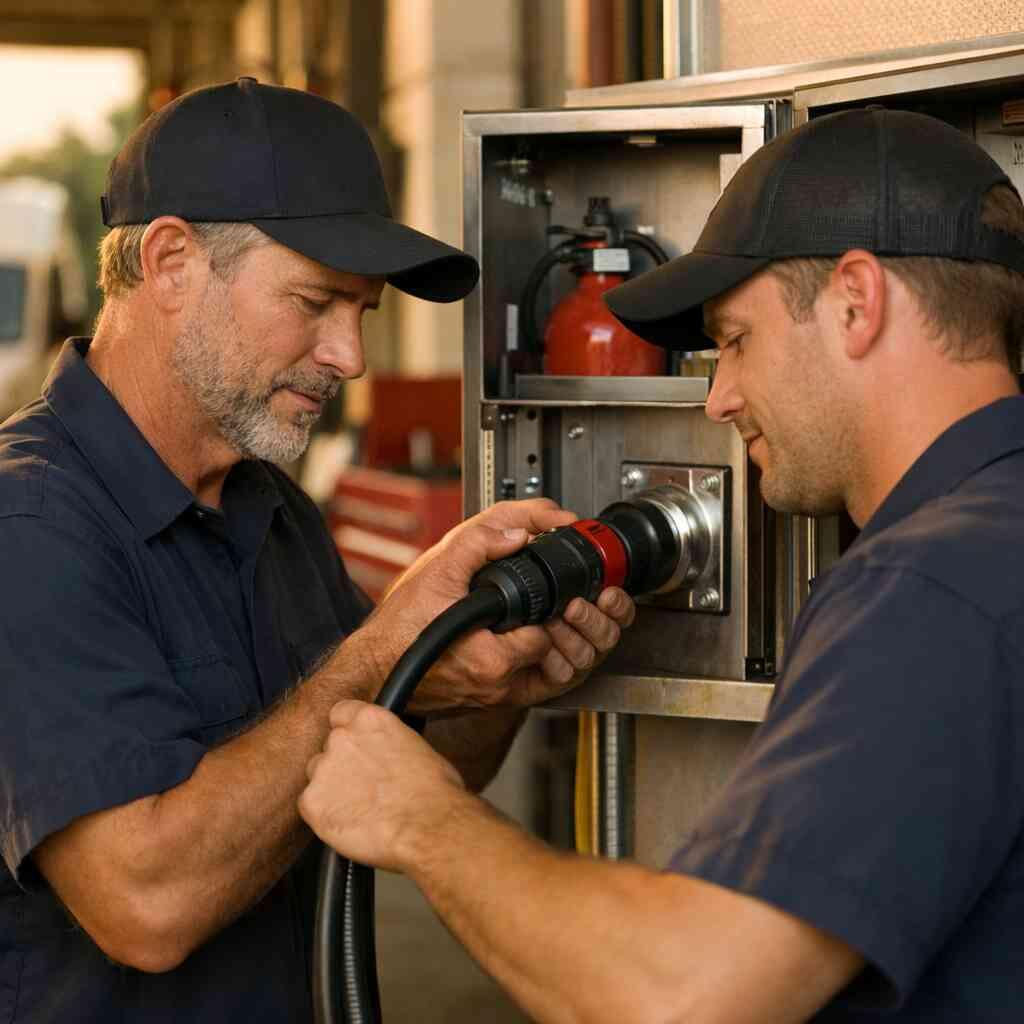
Connector selection for fire trucks is one of the most important choices in the build. A connector is not just a join point. It is a future maintenance decision. If a technician cannot service it quickly, the design is working against you. If water, vibration, or contamination can enter easily, the design will age badly.
A good procurement review should compare:
- Sealing performance under wet conditions.
- Compatibility with existing harness architecture.
- Ease of inspection and replacement.
- Mechanical retention under vibration.
- Availability of matching accessories.
For departments comparing best electrical connectors for fire trucks, the real question is not which connector sounds toughest. It is which one stays serviceable after daily use. That is a different standard entirely.
When chassis-to-body wiring integration becomes the real risk in custom fire apparatus wiring
Custom fire apparatus wiring becomes risky when the chassis and body teams do not work from the same assumptions. The wiring may be excellent in isolation and still fail at the interface. That is where chassis-to-body wiring integration needs careful attention. Body movement, mounting tolerances, and path changes can introduce strain or chafe points.
One client in a busy inland district had a new body package that looked flawless until final fit-up. A harness path crossed a sharp edge behind a compartment panel. It was not visible during the first walkthrough. Catching it before release saved a full tear-out later. That is why cable routing best practices belong in procurement, not just in final inspection.
How to build circuit protection and grounding and bonding requirements into the bid package
Circuit protection for emergency vehicles should never be an afterthought. Fuses, breakers, and protective devices must be sized and placed with service in mind. Grounding and bonding in fire apparatus also deserves explicit language. Poor grounding can create ghost problems that waste hours. Good grounding gives technicians a fighting chance. Include these items in the bid package: – Minimum circuit protection standards.
- Ground path expectations.
- Bonding points and accessibility.
- Separation rules for power and signal paths.
- Documentation for future troubleshooting.
This is also where emergency vehicle cabling standards matter. The more clearly you define protection and bonding, the fewer assumptions the builder makes. That saves time in commissioning and later service. It also helps with apparatus electrical reliability across the fleet.
What fire department procurement checklist items belong in every spring replacement wiring for fire apparatus review
Every spring replacement wiring for fire apparatus review should include more than part numbers. It should test readiness. Ask whether the routing is protected, whether the connectors are serviceable, and whether the harness can be inspected without disassembly. Then verify that replacement intervals make sense for the actual usage pattern.
A useful fire department procurement checklist should include:
- Load calculations for all major circuits.
- Visual access to high-wear areas.
- Moisture exposure and sealing expectations.
- Maintenance documentation and labeling.
- Compatibility with existing fleet standards.
If you are also planning top UL 2026 inspection tips for EMS buyers in DeLand, this is where those details matter most. Inspection readiness is not separate from procurement. It grows from it. That is why preventative maintenance for fire truck electrical systems and purchasing should speak to each other from the start.
The next move before purchase orders go out
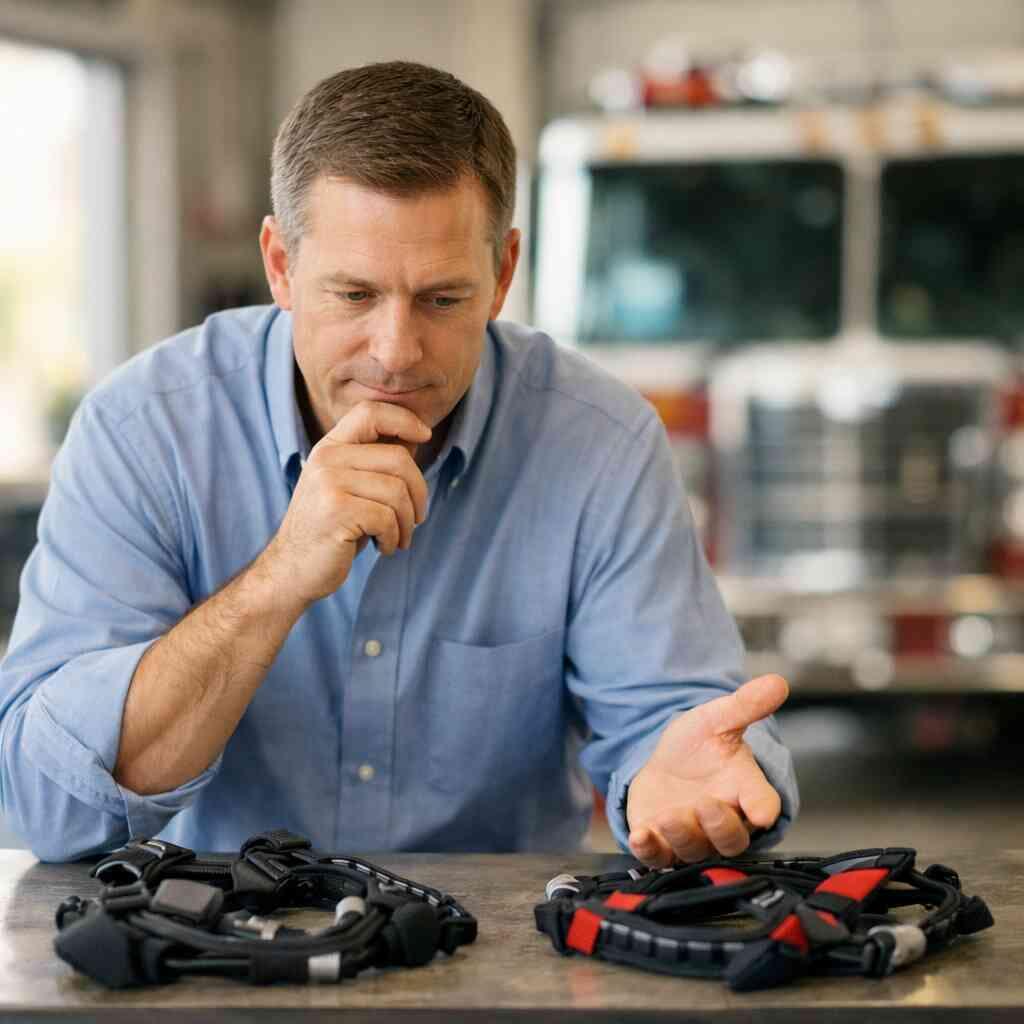
This is the point where good departments slow down on purpose. Not because they are unsure, but because they want the next purchase to hold up in service. That patience pays off. Supplier evaluation for fire apparatus parts should filter out vague claims and reward clear evidence. If the supplier cannot explain the build logic, the quote is not ready.
How to compare supplier evaluation for fire apparatus parts without getting distracted by vague claims
Vague claims are easy to write and hard to trust. You do not need marketing language. You need proof of fit, serviceability, and alignment with your operating environment. On paper, everything sounds durable. In the bay, only some products earn that label. That is why supplier evaluation must be structured.
Compare suppliers using a plain checklist:
- Do they explain application limits clearly?
- Do they provide installation and service guidance?
- Do they support replacement parts and accessories?
- Do they understand emergency response vehicle cabling?
- Do they help you avoid unnecessary complexity?
If you want a practical starting point, the spring 2026 procurement guide for fire truck cabling can help frame the conversation. The goal is not to buy by slogan. The goal is to buy with confidence and fewer surprises.
What to verify in fire truck electrical system upgrades before standardizing fleet electrical component sourcing
Fire truck electrical system upgrades are easiest to manage when they follow a standard. Standardization reduces training load, service confusion, and inventory waste. But standardization only works if the parts truly fit the fleet. Before you lock in a source, verify compatibility across cab styles, body types, and duty cycles.
A smart verification process checks:
- Existing harness architecture.
- Service access across units.
- Connector consistency.
- Load growth room.
- Replacement part availability.
If you are considering what is the best connector for Fire Power Products in 2026, start with the fleet, not the catalog. The right choice should support standardization without forcing unnecessary retrofits. That is how dependable cabling for critical response vehicles becomes manageable at scale.
Where fire truck maintenance planning should intersect with cabling inspection and replacement intervals
Fire truck maintenance planning should never separate electrical work from general apparatus care. That split causes missed warnings. Cabling inspection and replacement intervals need to match how the truck is actually used. A unit that sees frequent wet use, bay movement, and repeated compartment access will need closer attention than one with lighter demand.
What almost no online guide mentions is this: inspection intervals should reflect workload, not calendar habits alone. A truck that gets washed often deserves earlier connector checks. A truck with high vibration exposure deserves routing reviews sooner. That is the kind of detail that keeps rugged fire truck wiring from becoming a hidden liability.
How to set a practical approval path for rugged fire truck wiring and high-durability vehicle cabling
Approval works best when it is simple and documented. You do not need a long committee chain. You need a short path with the right sign-offs. First, validate the spec against duty cycle. Then confirm service access. Next, review replacement impact. Finally, approve the source only after the technical questions are answered.
A practical approval path often includes:
- Procurement review.
- Operations review.
- Maintenance review.
- Final technical confirmation.
- Fleet standardization decision.
That process protects high-durability vehicle cabling from being selected for the wrong reasons. It also helps with emergency response vehicle cabling decisions when multiple body builders or chassis combinations are involved. The result is not perfection. It is fewer preventable problems.
Which questions should be resolved before ordering from a Fire Power Products partner in DeLand, Florida
Before you order, ask the questions that reveal how well the supplier understands your reality. Does the proposed cabling match the environment? Is the connector choice appropriate for wet service? Can the system be inspected and replaced without turning every repair into a rebuild? Those questions matter more than polished language.
If you are ready to contact Duraline for fire truck cabling support in DeLand, Florida, go in with a short list. Ask about fit, serviceability, documentation, and support for Florida conditions. DeLand sits close enough to heat, humidity, and storm-driven wear to make those questions practical, not theoretical. You do not have to figure this out alone, and you do not have to figure it all out today. Start with one phone call, then compare three options before the purchase order goes out.
Frequently Asked Questions
Question: What should fire departments look for in a fire truck cabling procurement guide when planning spring procurement for fire apparatus?
Answer: A strong fire truck cabling procurement guide should help departments evaluate more than the lowest bid. It should focus on cabling specifications for fire trucks, electrical load management for fire trucks, chassis-to-body wiring integration, and the service environment the apparatus will face. That includes heat-resistant wire management, vibration-resistant vehicle wiring, abrasion-resistant cable protection, and waterproof electrical connections where moisture or washdown is part of the routine. At Fire Power Products in DeLand, Florida, the goal is to support first responder equipment procurement with dependable cabling for critical response vehicles that fits the duty cycle, can be serviced more easily, and aligns with fire truck maintenance planning. If you are comparing options, use the guide to confirm routing, connector selection for fire trucks, grounding and bonding in fire apparatus, and how the solution supports apparatus electrical reliability over time.
Question: How does Fire Power Products help with emergency vehicle wiring harnesses and custom fire apparatus wiring for high-use departments?
Answer: Fire Power Products is a fit for departments that need practical support for emergency vehicle wiring harnesses and custom fire apparatus wiring, especially when service access and long-term maintenance matter. The most important step is making sure the harness design matches the real environment, not just the drawing. That means considering emergency response vehicle cabling routes, heavy-duty cabling for apparatus bays, circuit protection for emergency vehicles, and replacement wiring for fire apparatus that can be inspected and serviced without unnecessary disassembly. We cannot verify every application without reviewing the specific build, so the safest approach is to evaluate the truck’s chassis, body layout, and load requirements before standardizing the design. That is where a supplier like Fire Power Products can be useful: by helping departments ask the right questions, compare options clearly, and avoid assumptions that create future downtime.
Question: Why are hose-down resistant cabling and corrosion-resistant wiring solutions so important in Florida service conditions?
Answer: Florida service conditions can be demanding because heat, humidity, and frequent cleaning cycles all increase the risk of electrical issues over time. Hose-down resistant cabling and corrosion-resistant wiring solutions matter because moisture intrusion and connector degradation can lead to intermittent faults that are difficult to diagnose. For departments near the coast or in consistently humid environments, the conversation should also include waterproof electrical connections, abrasion-resistant cable protection, and emergency vehicle cabling standards that fit the actual maintenance routine. Fire Power Products in DeLand, Florida, understands that these concerns are part of real-world fire truck maintenance planning. The right product choice should support dependable cabling for critical response vehicles without making service more complicated than it needs to be.
Question: What should be reviewed before fire truck electrical system upgrades or fleet electrical component sourcing are standardized?
Answer: Before standardizing fire truck electrical system upgrades or fleet electrical component sourcing, departments should review existing harness architecture, service access, connector consistency, load growth room, and replacement part availability. It is also smart to check whether the solution supports grounding and bonding in fire apparatus, circuit protection for emergency vehicles, and cable routing best practices across different body types. Standardization only works if the parts truly fit the fleet and remain practical for maintenance. Fire Power Products can help departments compare those factors in a way that supports apparatus electrical reliability rather than simply chasing a catalog option. For procurement teams, that makes supplier evaluation for fire apparatus parts more useful, because the focus stays on fit, serviceability, and long-term value instead of vague claims.
Question: In the Best Spring 2026 Procurement Guide for Fire Truck Cabling, what questions should departments ask before ordering from a Fire Power Products partner in DeLand, Florida?
Answer: Departments should ask whether the proposed cabling matches the operating environment, whether the connector selection for fire trucks is appropriate for wet service, and whether the system can be inspected and replaced without turning routine maintenance into a major rebuild. It is also wise to ask about cabling inspection and replacement intervals, documentation, service support, and how the design handles vibration-resistant vehicle wiring and heat-resistant wire management. Those questions help separate a dependable solution from one that only looks acceptable on paper. Fire Power Products in DeLand, Florida, is best approached with a clear fire department procurement checklist so the team can review fit, serviceability, and maintenance impact before purchase orders are issued. That process supports spring procurement planning for fire apparatus and helps departments make informed decisions with fewer surprises later.