How Fire Power Products Lower TCO for EMS Fleets 2026
September 10, 2026
Why the cheapest EMS fleet hardware quietly becomes the most expensive line item
If you are watching a fleet budget that keeps creeping upward, you are not imagining it. The painful part is that the cheapest part often becomes the most expensive one. That is especially true in EMS, where equipment lives a hard life and failures never happen at a convenient time. The real question is not what you paid upfront, but what the hardware costs after labor, downtime, and replacement cycles.
Where total cost of ownership hides in maintenance labor, repeat replacements, and vehicle downtime
Total cost of ownership for EMS fleets is rarely visible on the first invoice. It hides in the extra minutes your technicians spend swapping parts, tracking failures, and documenting repairs. It shows up again when a unit sits out of service because a small component failed during a shift. Those minutes become hours, and those hours become budget pressure.
We hear this from fleet managers almost every week. A part that looked inexpensive on paper can trigger a chain of unplanned labor. Then the replacement cycle starts shrinking, which forces more procurement work and more storage complexity. That is why total cost of ownership for EMS fleets in Florida is a better lens than sticker price alone.
Here is the part most buyers miss. Maintenance labor is not just wrench time in the bay. It includes testing, paperwork, reinstallation, and the operational drag that follows a failure. If a vehicle-mounted component fails during a call, the cost is no longer theoretical. It becomes a real disruption to emergency medical services operations.
How emergency vehicle equipment reliability changes the real math of fleet budgeting
Emergency vehicle equipment reliability changes budgeting because it changes predictability. Budgeting works best when you can forecast replacement intervals and service demands. It breaks down when a part behaves inconsistently under load. That inconsistency forces you to carry extra spares and reserve more labor capacity.
On the projects we’ve finished this year, the fleets with the tightest budgets were not always the ones buying the cheapest gear. They were the ones buying the most predictable gear. Predictability lowers fleet operating cost reduction pressure because you spend less time reacting. It also supports EMS fleet lifecycle costs and maintenance savings by reducing surprise repairs.
A unit that cannot be trusted creates hidden budgeting friction. Dispatchers notice it. Technicians notice it. Command staff notices it after the third unplanned swap. That is why emergency fleet budgeting should include reliability as a line item, even if the accounting system does not label it that way.
Why durable fire safety products matter most when equipment is exposed to abuse, vibration, and hose-down conditions
EMS equipment does not sit politely in a climate-controlled office. It rides in vehicles that vibrate, shake, heat up, cool down, and get cleaned hard. It gets handled by tired crews in wet gear and tight turnaround windows. In that environment, durable fire safety products matter because the environment itself is a stress test.
The most common failure pattern is not dramatic. It is gradual wear from repeated use, vibration, and cleaning. A connector loosens. A receptacle wears unevenly. A cable jacket takes abuse, then moisture finds a path. Over time, that small weakness becomes a service call.
That is why hose-down resistant equipment for emergency response gear matters so much in real fleets. The point is not marketing language. The point is operational resilience for fleets that cannot afford fragile hardware. Durable equipment for harsh conditions is often the difference between routine maintenance and a disruptive out-of-service event.
What EMS fleet managers in DeLand and across Florida should demand before they standardize equipment
Standardization is where many fleets either win or lose control of their costs. In DeLand and across Florida, the weather alone can punish equipment. Heat, humidity, salt air in some regions, and frequent washdowns all expose weak points quickly. If you are standardizing hardware, you need to ask tougher questions than “Is it available?”
The field conditions that separate durable equipment for harsh conditions from short-life-cycle gear
Field conditions tell the truth faster than any brochure. A part that survives one clean demonstration may fail after a month of daily handling. You need equipment that holds up under real EMS apparatus uptime demands, not just warehouse conditions. That means looking for high-use equipment performance, not broad promises.
One crew described their old setup to us as “fine until it wasn’t.” That phrase shows up more than you would think. They had vibration issues, connector wear, and a constant trickle of nuisance repairs. Once the trucks started cycling through heavy summer calls, the weak links appeared quickly. That is why fire service equipment durability matters in high-demand operational environments.
Here is a practical checklist you should use before standardizing:
- Ask how the component behaves under repeated vibration.
- Confirm how it handles washdown and cleaning routines.
- Review connector fit and retention under real vehicle movement.
- Check whether the part creates recurring service access problems.
- Verify compatibility across the vehicle types in your fleet.
That list sounds basic. It is not. It is the foundation of emergency vehicle equipment reliability for first responders and long-term fleet asset management.
How fleet standardization strategy reduces training friction, spare part complexity, and procurement drag
A smart fleet standardization strategy lowers friction everywhere. Techs learn one system instead of three. Supervisors stock fewer spares. Procurement stops juggling incompatible parts and special orders. That simplification saves time long before it saves money.
It also improves public safety fleet efficiency because your team stops improvising. When parts are standardized, the repair process becomes faster and more repeatable. That matters when a truck has to return to service before the next call. It also helps with fleet standardization strategy for emergency medical services operations by reducing training friction across shifts.
There is a second effect people underestimate. Standardization makes inventory discipline easier. You can forecast spares, rotate stock, and plan replacements with less guesswork. That is how EMS logistics and asset utilization start improving without adding more staff. Simplicity is not glamorous, but it is powerful.
Which mission-critical equipment details deserve scrutiny when the vehicle can’t afford a failure
Mission-critical equipment durability comes down to the details. You should scrutinize connector construction, retention, exposure resistance, service access, and replacement practicality. You should also ask how easily the part can be inspected during routine maintenance. If it takes a long disassembly to check a simple connection, the design is already costing you more than it should.
One station manager told us about a connector that failed after repeated movement in a rear compartment. The repair itself was not expensive. The outage was. The vehicle missed a full shift window because the failure was discovered late, and the unit needed a reroute to stay in service. That is a small part causing a large operational bill.
This is where public safety procurement considerations need discipline. Do not buy based on a single feature. Instead, examine how the part behaves as a system component. The best equipment supports first responder readiness because it lowers the odds of a no-notice failure. That is the standard you want.
Where Fire Power Products fit into the TCO conversation without overpromising
Fire Power Products belongs in a TCO discussion because the brand is centered on durability for demanding use. That said, a durable reputation is not the same as universal fit. You still need to verify the exact specification, the exact application, and the exact compatibility. That is how you avoid overbuying confidence and underbuying performance.
How USA-engineered safety equipment can support long-term equipment value when the use case is demanding
USA-engineered safety equipment can add long-term value when the use case is genuinely demanding. In EMS, that means frequent handling, vibration, cleaning, and equipment turnover. It means the part must support the mission, not complicate it. When that happens, the equipment can contribute to long-term equipment value for public safety fleets.
Fire Power Products is described by the company as engineered in the USA and built for demanding conditions. That positioning matters, especially for fleets that prioritize operational resilience. Still, the safest way to think about it is as a durability-focused option, not a universal answer for every apparatus. USA-engineered safety equipment for mission-critical fleets can support value when the application matches the design intent.
The key is alignment. If your fleet environment includes constant handling and cleanup, durability has direct financial value. If the use case is lighter, the purchasing logic may change. TCO optimization for public safety fleets always starts with matching equipment to reality.
What the Fire Power product family is designed for in general terms, including connectors, pigtails, receptacles, and extensions
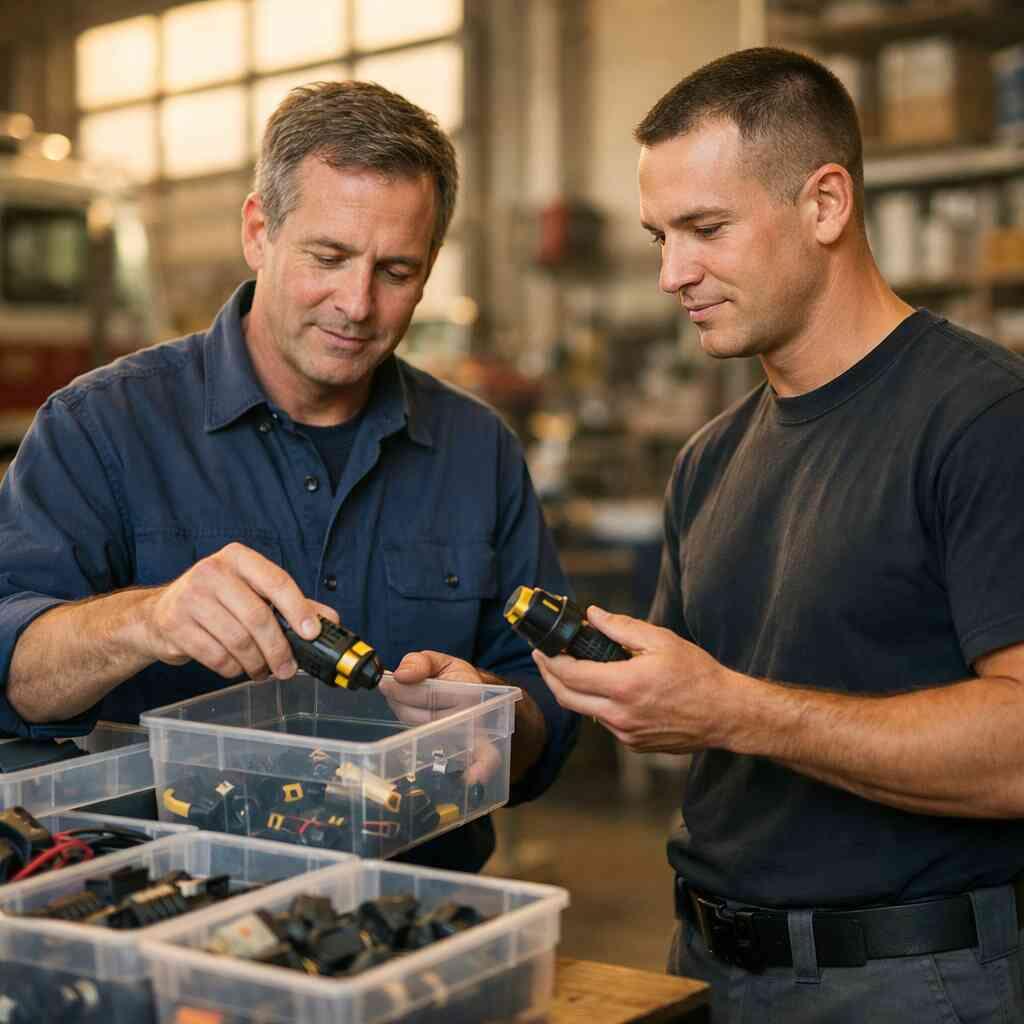
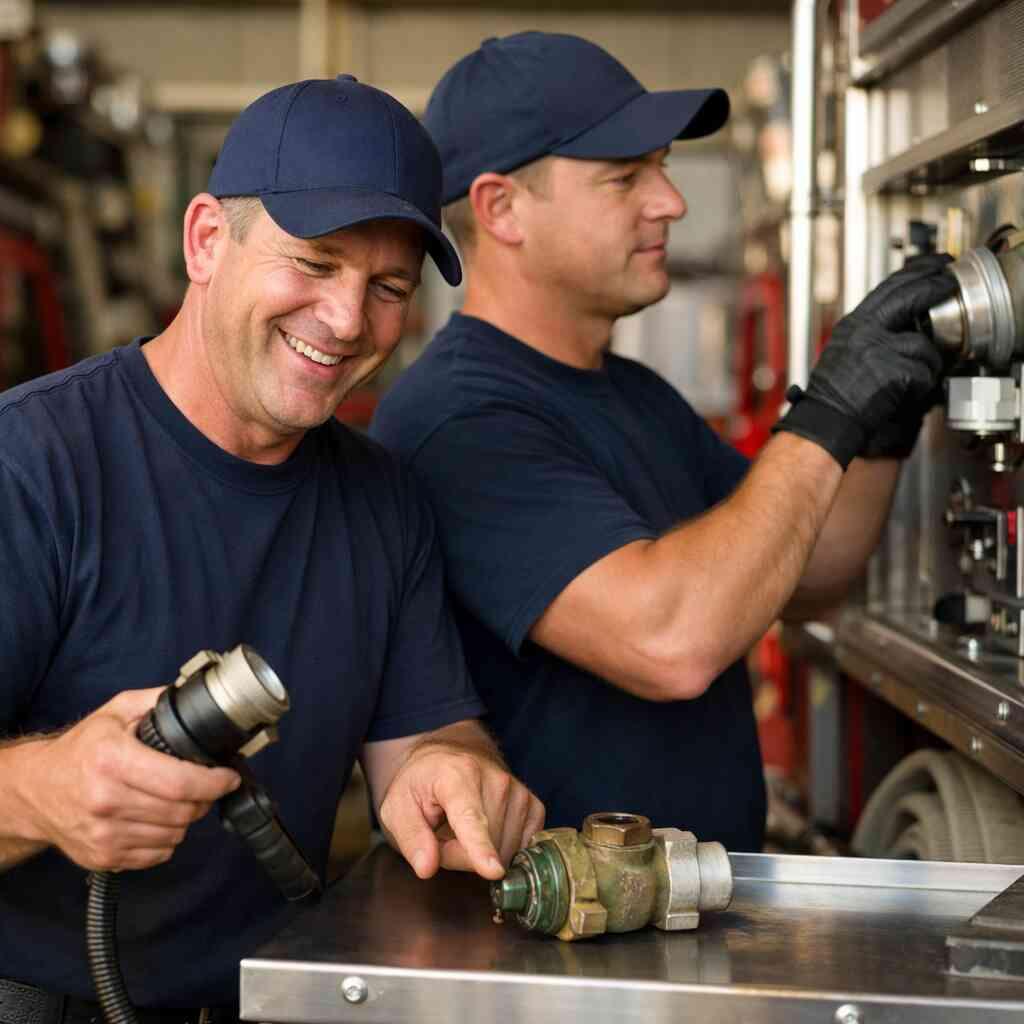
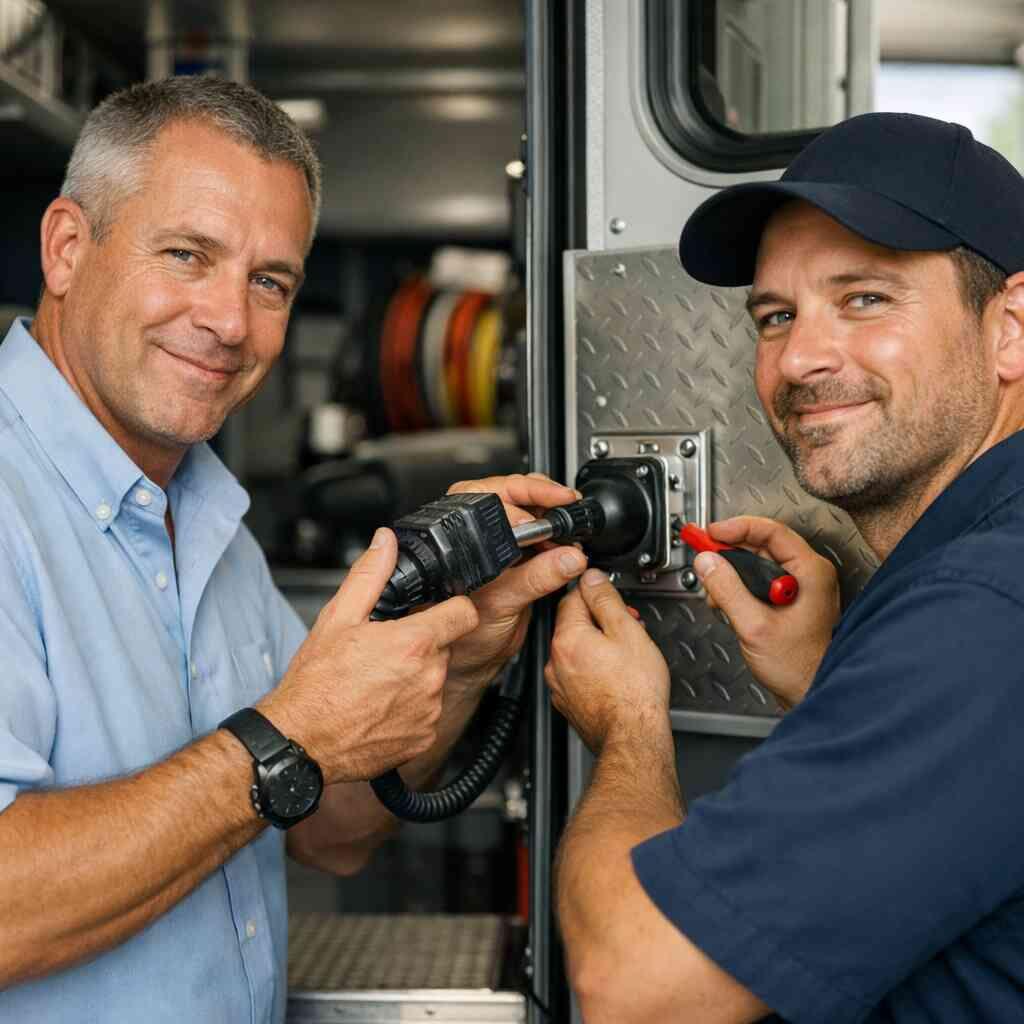
The Fire Power product family includes general categories such as connectors, pigtails, receptacles, and extensions. Those are the kinds of vehicle-mounted safety equipment components that can matter deeply in fleet operations. They are not glamorous parts. They are the parts that keep the electrical side of a response vehicle organized and serviceable. Their value is often measured by what they prevent.
At a high level, these components support wiring and power distribution needs in emergency vehicles. That makes them part of the everyday infrastructure of an apparatus or ambulance. A weak connection can create nuisance failures, inspection issues, or service delays. A durable one can reduce repair churn and support EMS apparatus uptime.
For fleets evaluating Fire Power Products connectors and pigtails for fleet use, the conversation should stay practical. Ask what the application requires. Ask how the component will be mounted, maintained, and inspected. Ask whether the part lines up with your service intervals and vehicle layout. That is how you keep the buying process grounded.
Why it matters to verify exact specifications and compatibility before building a fleet procurement strategy
This is the part many teams rush. A part may be rugged, but still wrong for the application. Compatibility is not a footnote. It is the core of a fleet procurement strategy. If the connector style, mounting approach, or accessory fit is off, the savings disappear fast.
Use a simple comparison table before you buy.
Procurement questionWhy it mattersExact fit to vehicle configurationPrevents install delays and reworkCompatibility with existing equipmentReduces conversion costsService access during maintenanceLowers labor timeExposure to washdown and vibrationProtects long-term reliabilityReplacement availabilitySupports fleet replacement cycle planningYou should apply the same discipline to Fire Power Products receptacles and accessories for apparatus, and any other accessory family you evaluate. A strong procurement strategy is built on verified fit, not assumptions. That is how you turn product interest into fleet operating cost reduction.
The hidden operational savings that come from fewer swaps, fewer callouts, and less downtime
The biggest savings in EMS rarely look dramatic on a spreadsheet. They show up quietly as fewer swaps, fewer emergency repairs, and fewer schedule disruptions. Those savings matter because readiness is the whole job. If the unit is down, the budget is already losing.
How equipment downtime reduction improves EMS apparatus uptime and fleet readiness and reliability
Equipment downtime reduction is one of the clearest ways to improve fleet readiness and reliability. A vehicle that stays in service more consistently needs fewer backup arrangements. That protects response coverage and reduces administrative scrambling. It also improves trust between operations and maintenance teams.
A small department in a humid Florida corridor once tracked nuisance downtime for a single recurring component. The failures were not catastrophic. They were just frequent enough to interrupt readiness. After the team changed to more rugged hardware, the pattern shifted. The repair calendar got calmer, and the backup unit stopped carrying the same burden every week. That is what lower disruption looks like in practice.
This is where maintenance cost mitigation for rugged EMS equipment becomes real. Less downtime means fewer last-minute workarounds. Fewer workarounds mean cleaner operations. Cleaner operations mean better emergency service fleet readiness and reliability.
Why maintenance cost mitigation starts with rugged EMS equipment that can handle repetitive real-world use
Maintenance cost mitigation does not begin in the shop. It begins in the design of the equipment itself. If the component can withstand repetitive real-world use, the maintenance curve flattens. If it cannot, the curve keeps climbing until it eats the budget.
What we’ve seen in 2026 specifically is that repetitive use exposes weak design faster than age alone. Crews do not baby this equipment. They move fast. They clean fast. They repackage gear fast. That is why rugged EMS equipment must be judged on endurance, not aesthetics.
The practical payoff is easy to understand:
- Fewer nuisance service tickets.
- Less technician time per repair.
- Fewer spare parts on the shelf.
- Better planning for fleet replacement cycle planning.
- More stable operational scheduling.
Those are not abstract benefits. They are direct levers for emergency fleet budgeting. They also reinforce long-term equipment value for public safety fleets when the product stays useful across more service cycles.
How preventative maintenance savings compound when vehicle-mounted safety equipment is built for high-use environments
Preventative maintenance savings compound when the equipment is easy to inspect and less likely to fail unexpectedly. You do not need every part to be invincible. You need it to be predictable. Predictability lets your team catch wear early, schedule service cleanly, and avoid operational surprises. That is the heart of maintenance cost mitigation.
Vehicle-mounted safety equipment that tolerates high-use environments tends to reward disciplined maintenance. You can inspect it on a schedule without constantly finding new issues. You can replace consumables before they create downstream failure. And you can keep your team focused on the calls, not the hardware.
If you are building a longer-term plan, anchor it to fleet replacement cycle planning for EMS apparatus. That planning mindset helps you compare capital expenditure efficiency with real service life. It also gives you a cleaner basis for public safety fleet efficiency decisions. In other words, you spend where the risk is highest, not where the catalog is loudest.
How to turn durability into a smarter procurement decision instead of a vague promise
Durability only matters if you can turn it into a purchasing framework. Otherwise, it becomes a slogan. The best EMS fleet managers do not buy “tough.” They buy measurable fit, serviceability, and expected lifecycle value. That is how they protect the budget and the mission.
The decision framework for comparing capital expenditure efficiency against replacement cycle planning
Start with capital expenditure efficiency, but do not stop there. A lower purchase price is only useful if the part stays in service long enough to justify it. Replacement cycle planning gives you the missing half of the equation. When you compare the two together, you see the real cost structure.
Use this simple decision path:
- Define the vehicle role.
- Estimate use frequency and exposure.
- Verify installation and service requirements.
- Compare expected replacement timing.
- Measure the labor needed for maintenance.
That process is straightforward, and it keeps the conversation honest. It also helps you compare options without getting lost in marketing language. For teams focused on DeLand Florida EMS fleet procurement considerations, that honesty matters because local conditions can shorten or lengthen equipment life. Heat and humidity are not minor variables.
How to align emergency fleet budgeting with EMS equipment lifecycle planning and public safety fleet efficiency
Emergency fleet budgeting gets stronger when lifecycle planning is built in from the start. You do not want procurement decisions that only solve this month. You want decisions that support the next service cycle, the next inspection, and the next replacement window. That is how public safety fleet efficiency becomes more than a phrase.
A good lifecycle plan helps you answer hard questions before they become expensive. How often will the part be touched? Who will inspect it? What does failure look like operationally? How much backup capacity do you need if it goes out? Those questions sound basic, but they often separate good fleet management from reactive management.
Here is the part that saves time later. Tie each purchase to an owner, a service interval, and a replacement trigger. That keeps everyone aligned. It also gives you a much clearer view of EMS equipment lifecycle planning, especially when your fleet spans multiple vehicle types and duty levels.
What the next buying conversation should focus on when the goal is lower TCO, not just a lower sticker price
The next buying conversation should not start with price. It should start with risk. Ask what happens if the part fails during a shift. Ask how long the repair takes. Ask what it will cost in labor, downtime, and backup utilization. That is the conversation that reveals real value.
If you are comparing options, keep the discussion focused on durability, serviceability, and verified compatibility. Ask for the exact configuration you need. Ask how it fits your vehicles. Ask how it supports fleet standardization strategy without creating new maintenance burdens. Those questions protect both the budget and the mission.
You do not have to figure this out alone, and you do not have to solve it all today. Start by reviewing three components that fail most often in your fleet, then compare their replacement history against one durable alternative. If you want to evaluate a fit for your own apparatus, begin with one call and one parts list.
Frequently Asked Questions
Question: How does How Fire Power Products Lower TCO for EMS Fleets 2026 relate to total cost of ownership for EMS fleets in real-world operations?
Answer: The core idea is that total cost of ownership for EMS fleets is shaped by more than purchase price. In real-world emergency medical services operations, labor, downtime, repeat replacements, and procurement burden often cost more over time than the original part itself. Fire Power Products is positioned around durable fire safety products and USA-engineered safety equipment designed for demanding, high-use environments, which can help reduce maintenance cost mitigation pressure when the application matches the equipment. The practical value comes from supporting emergency vehicle equipment reliability, EMS apparatus uptime, and fleet operating cost reduction through fewer unplanned swaps and less disruption. We always recommend verifying exact fit, compatibility, and specifications before purchasing, because TCO optimization for public safety fleets depends on matching the product to the vehicle and duty cycle.
Question: What should EMS fleet managers in DeLand, Florida look for when choosing durable fire safety products for high-demand operational environments?
Answer: Fleet managers should look for durable equipment for harsh conditions, especially where vibration, washdowns, heat, humidity, and frequent handling are part of daily use. In DeLand, Florida and across similar environments, fire service equipment durability matters because weak components tend to show wear faster under real-world stress. The best evaluation process focuses on high-use equipment performance, serviceability, connector retention, and compatibility with existing apparatus. Fire Power Products can be a fit when the use case calls for field-proven emergency gear that supports first responder fleet maintenance goals. The important step is to verify the exact application first, because even rugged EMS equipment must be correctly specified to deliver long-term equipment value.
Question: How do Fire Power Products connectors, pigtails, receptacles, and extensions support emergency vehicle equipment reliability?
Answer: These components matter because they help organize and support the electrical side of vehicle-mounted safety equipment in emergency response vehicles. When connectors, pigtails, receptacles, or extensions are built for demanding use, they can help reduce nuisance failures, simplify inspections, and support EMS apparatus uptime. That can translate into less emergency fleet budgeting pressure and better fleet asset management over time. Fire Power Products is centered on rugged, high-use equipment performance, but the right selection still depends on exact fit and compatibility with the apparatus. For fleet procurement strategy, it is smart to confirm mounting needs, service access, and replacement planning before standardizing across the fleet.
Question: Why is fleet standardization strategy important for public safety fleet efficiency and EMS equipment lifecycle planning?
Answer: Fleet standardization strategy reduces training friction, spare part complexity, and procurement drag. When technicians and supervisors deal with fewer variants, first responder fleet maintenance becomes faster and more repeatable, which supports public safety fleet efficiency. Standardized parts also make EMS equipment lifecycle planning easier because replacement intervals, stocking levels, and maintenance schedules are more predictable. That predictability helps with fleet replacement cycle planning and can improve EMS logistics and asset utilization. Fire Power Products may be a practical option for this kind of strategy if the product line fits your vehicles and service conditions, but exact specifications and compatibility should always be confirmed before procurement.
Question: What makes rugged EMS equipment from Fire Power Products worth considering for preventative maintenance savings and equipment downtime reduction?
Answer: Rugged EMS equipment can be worth considering because preventative maintenance savings often come from predictability, not just from avoiding a repair. If a component can handle repetitive real-world use, hose-down exposure, vibration, and frequent handling, technicians can inspect and service it on a cleaner schedule with fewer surprises. That supports equipment downtime reduction, fleet readiness and reliability, and emergency response equipment longevity. Fire Power Products emphasizes durability for demanding conditions, which aligns with maintenance cost mitigation goals for teams focused on TCO optimization for public safety fleets. Even so, the safest buying approach is still to verify the exact product configuration, installation requirements, and compatibility with the vehicle before making a fleet-wide decision.
Question: When comparing capital expenditure efficiency and long-term equipment value, how should buyers evaluate Fire Power Products for mission-critical equipment durability?
Answer: Buyers should compare upfront cost against replacement cycle planning, labor burden, service access, and expected operational impact if the part fails. Capital expenditure efficiency only matters when the equipment also supports long-term equipment value through reliable service life in high-demand operational environments. For mission-critical equipment durability, the key questions are whether the component fits the vehicle correctly, how it behaves under abuse, and whether it supports first responder readiness without creating new maintenance problems. Fire Power Products can belong in that conversation because the brand is focused on durable fire safety products designed for demanding use, but buyers should not assume universal fit or performance. The best procurement decision is one that balances verified compatibility, practical maintenance needs, and the full total cost of ownership for EMS fleets.