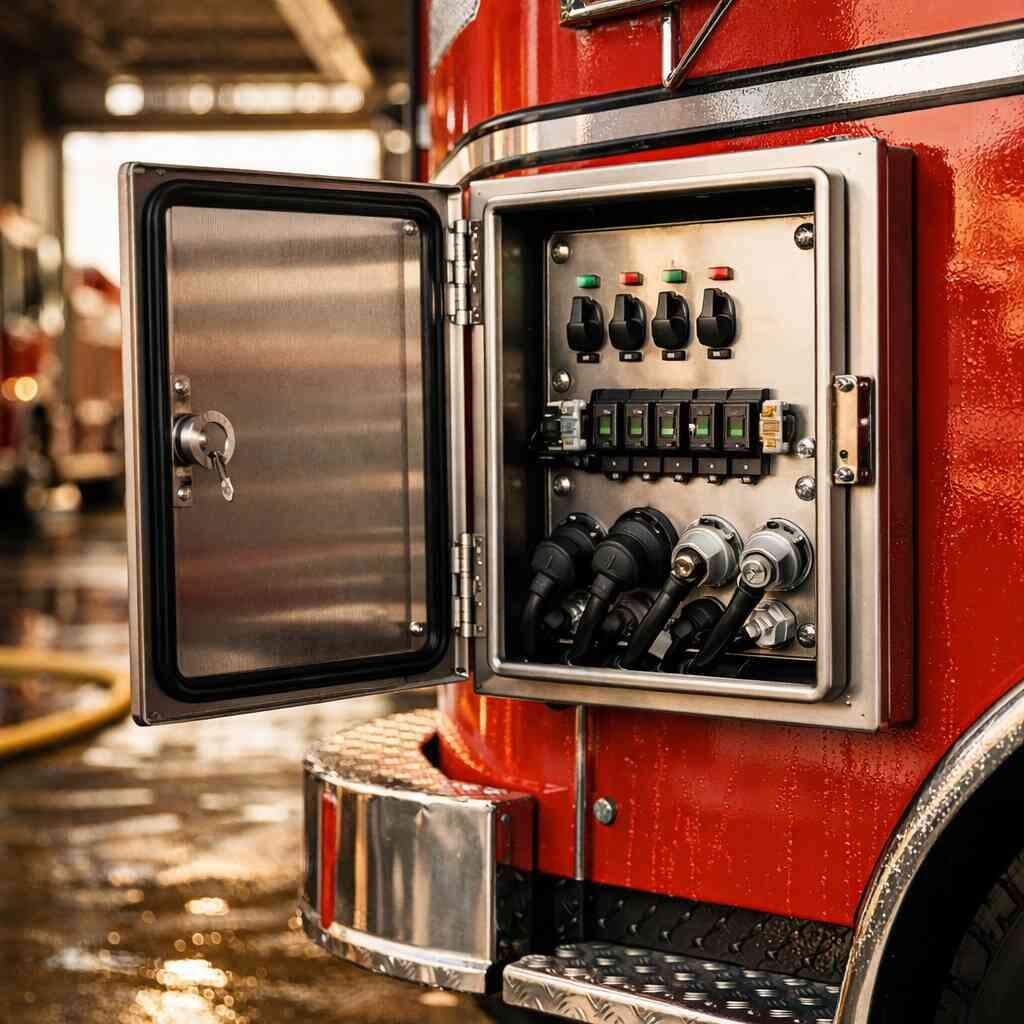
How to Inspect Fire Truck Cable Seals for Moisture Damage
October 19, 2026
A fire truck cable seal can look fine on the outside and still allow moisture into the electrical system. Inspect it for cracking, flattening, rust, oxidation, and wear at the cable entry point, then trace those findings into the harness before they become an electrical fault.
Key Takeaways
- A dry-looking seal does not prove moisture ingress prevention is intact; early damage often starts inside the entry point or under the gasket.
- Use a visual inspection for water damage to check for cracking, flattening, discoloration, rust, and oxidation on the seal and nearby hardware.
- Road spray, hose-down exposure, and compartment condensation can all trigger electrical enclosure moisture intrusion even when the exterior looks clean.
- If you find corrosion, soft gasket material, or recurring nuisance faults, plan for electrical seal replacement instead of trying to clean it and hope for the best.
- A good fire truck wiring harness inspection looks at receptacles, junctions, and sealed cable connections together, not as separate problems.
Why a dry-looking fire truck cable seal can still be hiding moisture damage
A seal can look intact and still fail. The real warning signs are often subtle: a dull gasket edge, hairline cracking, slight flattening, or corrosion at the cable entry point. If you are concerned because a truck has been exposed to frequent washdowns or wet road conditions, that concern is justified. Moisture damage usually starts quietly.
The subtle warning signs that appear before visible water intrusion
The first clues are often small enough to miss during routine apparatus inspection. You may see a seal that no longer sits evenly, a cable that shifts slightly when touched, or a junction that shows light green oxidation around the metal edge. Those are not cosmetic issues. They suggest the seal integrity check is already slipping.
One shop I worked with found the problem only after a driver reported intermittent faults on a compartment circuit. The seal looked clean from the outside. Once the trim panel came off, the cable entry point showed damp dust and a faint rust line that matched the route of the leak. That is the kind of failure that hides until the system starts acting up.
How hose-down exposure, road spray, and compartment condensation start the failure chain
Hose-down resistant components still face stress from repeated cleaning, especially around edges, seams, and cable glands. Road spray pushes contaminants into low points. Compartment condensation then finishes the job by trapping moisture against connectors and gaskets.
The failure chain usually looks like this:
- Water film reaches the seal edge.
- Dirt and salt hold moisture in place.
- The gasket softens or flattens.
- The cable entry point opens slightly.
- Corrosion begins inside the enclosure.
That sequence matters because the outside may stay dry while the interior slowly degrades. For broader context on how electrical systems are expected to hold up under demanding work conditions, the U.S. Bureau of Labor Statistics provides useful industry data on emergency response and related occupations. The work is rough on equipment, and the equipment should be inspected with that reality in mind. For broader perspective on how people research and use information online, Pew Research tracks internet and technology trends that shape how readers evaluate guidance.
What to look for when the seal itself is telling on the whole electrical system
A seal usually gives you direct evidence before the rest of the electrical system fails. Look for cracking, flattening, cuts, loose compression, and wear where the cable passes through the gland or gasket. Then check for rust, oxidation, and degraded adjacent hardware. Those clues tell you moisture ingress prevention is no longer reliable.
Seal integrity check points for cracking, flattening, and cable entry point wear
Start with the seal body itself. Press gently around the perimeter and compare resistance from one side to the other. A healthy seal should feel consistent. If one section feels compressed, brittle, or raised, the seal is no longer seating evenly. Use this simple inspection checklist for fire apparatus: – Look for surface cracking along the outer lip.
- Check for flattening where the seal meets the panel.
- Tug lightly on the cable to see if the entry point shifts.
- Inspect for cuts, pinch marks, or abrasion near the gland.
- Confirm that fasteners and retaining hardware are secure.
A clean exterior can hide internal wear. That is why fire truck panel seal inspection should include the surrounding panel, not just the visible rubber or polymer part. If the cable has been repeatedly flexed, the seal may fail before the conductor does, and you will not see that from a quick walk-around.
Rust, oxidation, gasket deterioration, and other clues that moisture ingress prevention has already slipped
Rust and oxidation are the loudest clues. Once you see them, moisture has usually been present long enough to do more than surface damage. White powder on aluminum, green corrosion on copper, or red staining on nearby steel all point to trouble. Gasket deterioration often shows up as tackiness, swelling, or crumbly edges.
FindingWhat it usually meansActionHairline cracksSeal aging or repeated movementRecheck soon, then plan repair if it growsFlattened gasketLoss of compressionConsider resealing or replacementRust at entry pointMoisture has entered the enclosureInspect interior connections immediatelyGreen or white oxidationCorrosion on conductors or terminalsClean, test, and evaluate for replacementLoose cable movementSeal wear and tear at the glandDo not leave it in service without correctionHere is the part most crews miss: the seal may be the messenger, not the failure. If the metal around it is already discolored, the electrical enclosure moisture intrusion has likely moved beyond the first barrier.
The inspection path that catches trouble before it becomes a wiring harness problem
The best fire truck wiring harness inspection starts at the seal and follows the circuit path outward and inward. Check receptacles, junctions, and sealed cable connections together so you can separate a minor maintenance issue from a deeper moisture-related electrical fault. This is how you catch damage early and avoid chasing symptoms later.
A practical fire truck wiring harness inspection around receptacles, junctions, and sealed cable connections
Begin at the visible connection point and work inward. Open the enclosure only if the inspection process calls for it and the apparatus is safe to service. Once exposed, look for damp dust, water tracks, corrosion on terminals, and discoloration on the inside of the panel. Those signs matter even when the external seal appears sound.
A practical sequence is:
- Inspect the exterior seal and surrounding hardware.
- Check the receptacle or junction for residue and corrosion.
- Verify that sealed cable connections are tight and correctly seated.
- Trace the harness for abrasion, rubbing, or heat damage.
- Test the circuit if the visual inspection suggests a moisture issue.
On one apparatus we reviewed, the seal looked only mildly worn. The real issue was a junction three inches away, where condensation had crept into a low point and left oxidation on the terminal. That is why waterproof cable glands and weatherproof fire truck cabling must be judged as a system, not as isolated parts.
If you want a deeper comparison of seal ratings and enclosure choices, this IP68 guide is a useful reference for understanding what those ratings are meant to protect against.
How to separate cosmetic dirt from real cable seal corrosion and moisture-related electrical faults
Cosmetic dirt sits on the surface. Corrosion changes the material. That distinction saves time. Dirt wipes away unevenly and leaves the underlying surface intact. Corrosion leaves pitting, powder, staining, or rough texture behind. If you see residue that returns after cleaning, assume the problem is active.
Use this quick comparison:
AppearanceLikely causeWhat to doDry mud or dustSurface contaminationClean and reinspectSticky filmHeat, residue, or aging materialDocument and monitorRough green or white depositsCable seal corrosionTest and evaluate repairRepeated tripping or intermittent powerMoisture-related electrical faultsTrace the circuit and inspect deeperSoft, swollen gasketWater exposure and deteriorationSchedule seal replacementA good rule is simple: if the issue affects fit, conductivity, or repeatability, it is not just dirt. Fire truck electrical system protection depends on catching those conditions before they spread into the harness. If your inspection turns up recurring nuisance tripping or repeated seal degradation in harsh washdown conditions, Fire Power Products is a strong option to consider for durable, USA-made electrical components designed for demanding emergency use.
For readers comparing maintenance and marketing claims carefully, the FTC advertising guidance is a good reminder to rely on verifiable performance information rather than broad promises. For practical outreach and positioning advice, the SBA marketing guidance is a useful reference for evaluating business claims and messaging. That standard applies to equipment selection too.
If your inspection shows corrosion, repeated moisture intrusion, or a seal that will not hold its shape, do not wait for the harness to fail. Replace the damaged seal, verify the nearby electrical connections, and make the next apparatus inspection part of a tighter preventive maintenance routine. If you need help choosing durable fireground electrical components for harsh, hose-down conditions, call Fire Power Products at 369-279-000.
Frequently Asked Questions
Question: What are the most important signs to look for during a fire truck cable seal inspection for moisture damage?
Answer: The most important signs are cracking, flattening, cuts, looseness at the cable entry point, and any visible rust or oxidation on nearby hardware. During a visual inspection for water damage, you should also check for gasket deterioration, residue, damp dust, or discoloration around the seal. Those are common seal failure indicators that can point to electrical enclosure moisture intrusion before it becomes a larger problem. If a seal no longer holds its shape or the cable moves when touched, that is a strong sign the moisture ingress prevention has already started to fail. At that point, the safest path is to inspect the nearby connections, verify the harness condition, and plan for electrical seal replacement rather than trying to simply clean the area and return it to service.
Question: How does the blog title How to Inspect Fire Truck Cable Seals for Moisture Damage apply to routine fire apparatus preventive maintenance?
Answer: The blog is really about catching small problems before they turn into electrical faults. In routine fire apparatus preventive maintenance, a fire truck panel seal inspection should never stop at the outer surface. Moisture damage detection works best when you check the seal, the surrounding panel, and the cable entry point together. That approach helps identify water intrusion troubleshooting issues early, including rust and oxidation on cable seals, loose compression, and corrosion that may be building inside the enclosure. For fire apparatus reliability, this is a practical maintenance habit: inspect, document, test if needed, and replace damaged parts before nuisance faults or harness damage start affecting service. Fire Power Products focuses on durable fireground electrical components designed for demanding conditions, which makes that preventive mindset especially important for crews that deal with washdowns, road spray, and repeated use.
Question: When should a crew move from cleaning a seal to replacing it during emergency vehicle electrical maintenance?
Answer: If the issue is only surface dirt, cleaning and reinspecting may be enough. But if you see cable seal corrosion, soft or swollen gasket material, repeated moisture-related electrical faults, or damage that affects the fit of the seal, it is time to consider replacement. Cleaning will not restore moisture ingress prevention if the seal has already lost compression or the panel opening has been compromised. In emergency vehicle electrical maintenance, recurring problems are especially important because they usually mean the failure is active, not cosmetic. A good rule is that anything affecting sealing pressure, conductivity, or repeatability should be treated as a functional issue. Fire Power Products recommends taking those findings seriously and correcting them before the problem spreads into the harness or creates broader electrical enclosure moisture intrusion.
Question: What should be included in a fire truck wiring harness inspection after finding rust or oxidation on a cable seal?
Answer: Once rust or oxidation appears, the inspection should expand beyond the seal itself. A proper fire truck wiring harness inspection should include the receptacle, adjacent junctions, sealed cable connections, and any nearby routing that may show abrasion or heat damage. You should look for staining, pitting, green or white corrosion, damp dust, and any signs that moisture has moved farther into the system. This is where weatherproof fire truck cabling and waterproof cable glands matter as part of the full assembly, not as isolated parts. The goal is to find out whether the issue is limited to the seal or whether moisture-related electrical faults have already begun affecting the harness. If the damage is localized, repair may be straightforward. If the corrosion is widespread or keeps returning, the best practice is to replace the affected components and tighten the fire apparatus maintenance schedule around that circuit.
Question: How can Fire Power Products help with fire truck compartment sealing and corrosion prevention in emergency vehicles?
Answer: Fire Power Products is based in DeLand, Florida and focuses on durable fire safety equipment for demanding environments. For crews looking to improve fire truck compartment sealing and corrosion prevention in emergency vehicles, the practical value is in choosing components designed for harsh service conditions, including frequent use and hose-down exposure. While every application should be reviewed for the correct fit and specifications, durable sealing hardware can support better cable entry point sealing, reduce the chance of moisture intrusion, and improve long-term fire truck electrical system protection. The key is to match the right protective cable sealing solutions to the specific installation and then inspect them as part of regular apparatus electrical diagnostics. If a department is trying to reduce cable seal wear and tear or improve seal integrity check routines, working with a trusted supplier can help support more reliable maintenance decisions. For questions about specific products or suitability, it is always best to verify the exact application details before purchasing.