Top 5 OSHA Ready Connector Specs for DeLand 2026
October 2, 2026
-
Why a connector that looks fine can still fail the moment OSHA looks closer
A connector can look clean, straight, and ready. Then the inspection starts. That is when the anxiety usually hits, especially if you are juggling station readiness, washdown schedules, and gear that gets handled hard. We hear this from crews and buyers all the time: the part seemed fine until someone checked fit, wear, or seal condition more closely. If you are feeling unsure, that is normal.
What makes a hose connection pass a quick visual check but still miss industrial connector safety expectations
A quick visual check only tells part of the story. Industrial connector safety depends on whether the coupling actually seats correctly, seals evenly, and stays stable under use. A shiny surface does not prove alignment. A clean exterior does not prove thread integrity. That is why OSHA-ready connector specs for fire hose couplings in DeLand should always mean more than appearance.
Here is the part most buyers miss. A connector can pass a glance and still fail when vibration, repeated handling, or pressure changes expose weak fit. Small nicks near the sealing area matter. So do flattened seals and slight deformation near the collar. On the projects we’ve finished this year, the issue was rarely dramatic. It was usually small, cumulative wear that nobody slowed down enough to see.
Which wear points matter most in high pressure hose connectors exposed to frequent handling and washdown
High pressure hose connectors face abuse in places people do not notice first. Look at the edges where hands grip the coupling, the sealing face, and any area that rubs during storage. Washdown makes this worse when water, residue, and grit keep moving across the same contact points. Frequent resetting also loosens confidence long before it loosens hardware.
A station in central Florida described the same pattern after several humid weeks. The team had been rinsing gear daily, but one coupling kept weeping under load. The cause was not catastrophic damage. It was a tiny seal nick combined with residue in the groove. That is exactly why leak resistant hose fittings start with fit and finish, not marketing language. If the finish is rough, the rest rarely improves with time.
Why leak resistant hose fittings start with fit and finish before anyone talks about durability
Leak resistant hose fittings depend on geometry first. If the mating surfaces do not meet cleanly, no amount of toughness makes up for it. Fit and finish determine whether the seal compresses uniformly. They also determine whether repeated connection cycles will remain smooth or become increasingly sticky. Durability matters, but only after the geometry is right.
You can think of this as the foundation under everything else. Rough machining, uneven plating, or poor edge cleanup creates tiny leak paths. Those paths show up under pressure, during washdown, or after the first few temperature swings. In practice, connector durability in harsh conditions starts with precision. Without that, the part may survive physically while failing operationally.
Where DeLand fire protection supplies teams should pay the closest attention during pre-use inspection
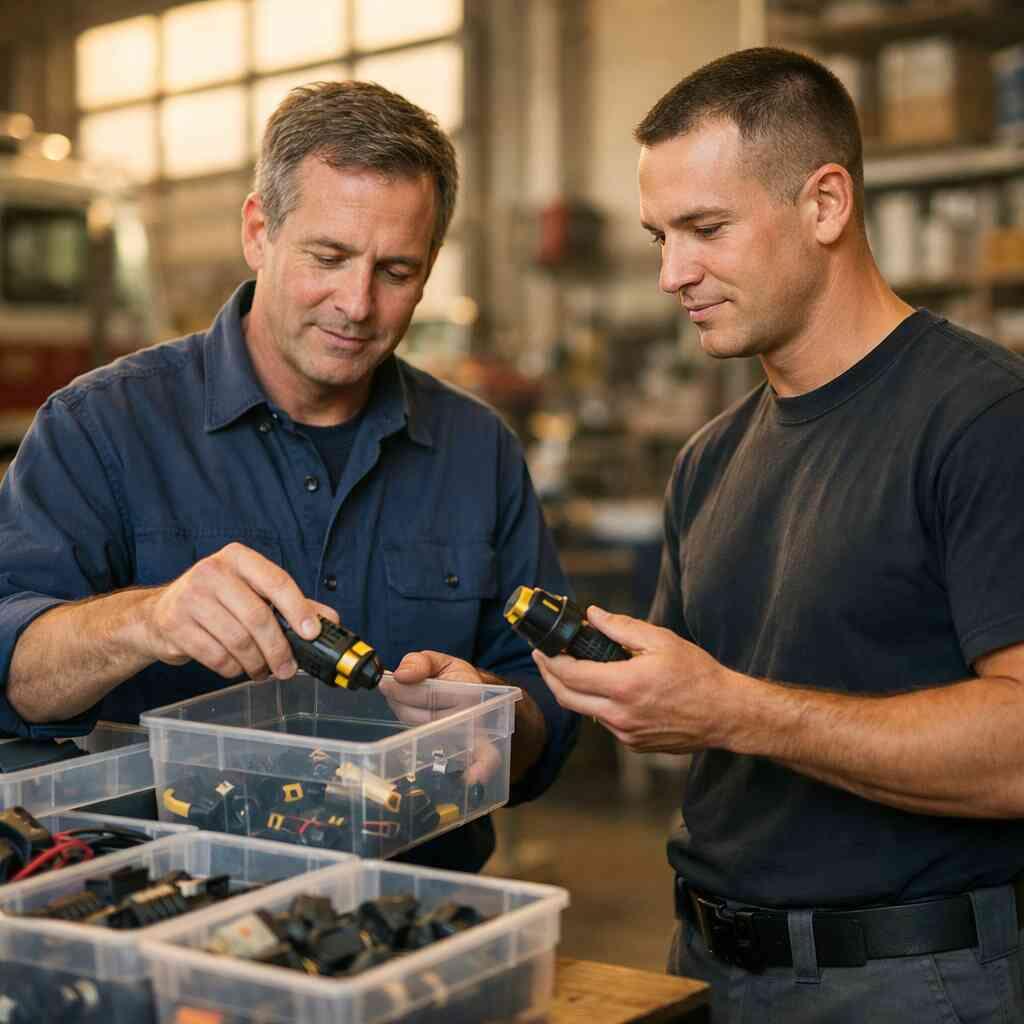
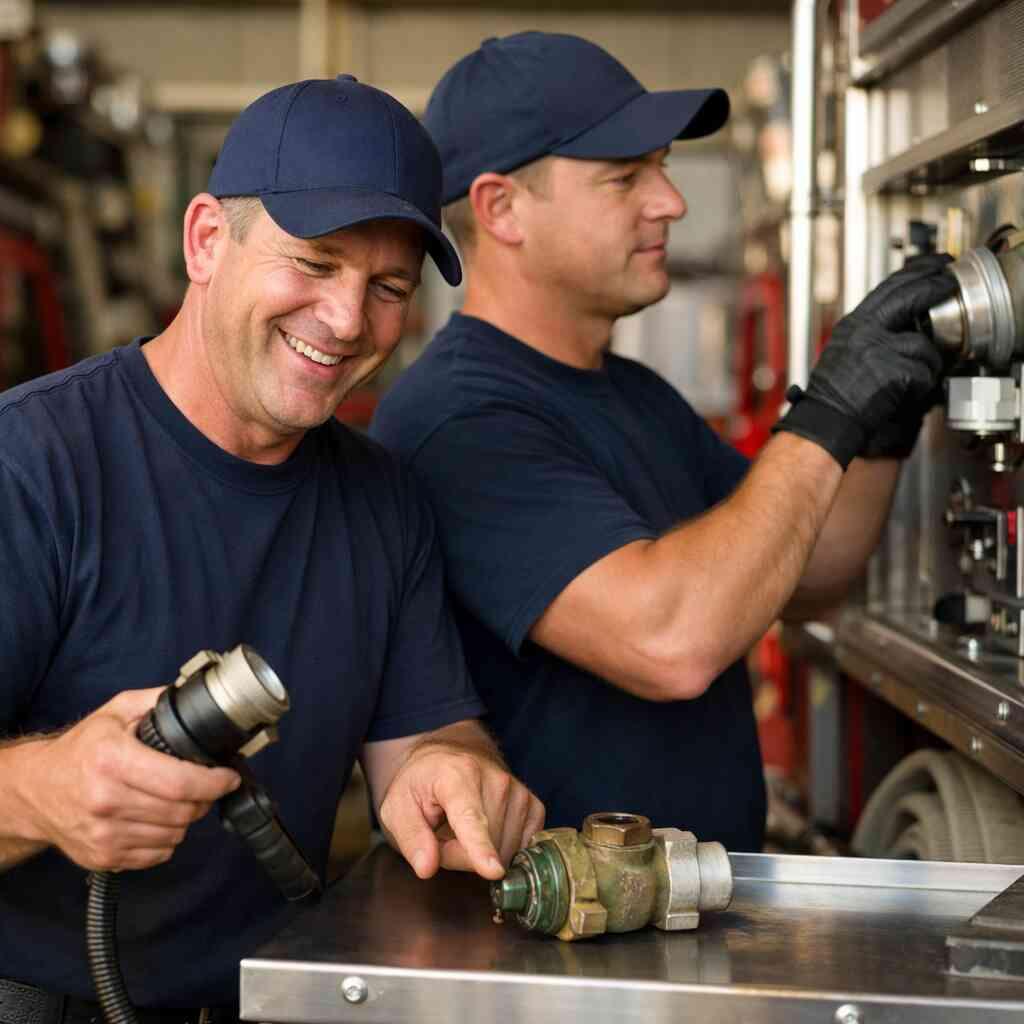
DeLand fire protection supplies teams should slow down at the same points every time. Check the seal face first. Then inspect threads, collars, and any hardware that moves during connection. Look for dirt that has packed into corners, because contamination often hides more than damage does. Finally, test the feel of the connection. Smooth engagement usually tells you more than a glance.
A simple pre-use routine helps.
- Inspect the sealing surface for cuts or flattening.
- Check threads for burrs, cross-threading, or grit.
- Confirm the coupling moves without binding.
- Wipe away residue before assembly.
- Reject any part that feels inconsistent.
That short list protects reliability better than a rushed visual scan. It also supports workplace safety compliance without adding much time. For DeLand Florida fire equipment buyers, that matters because readiness has to work during heat, humidity, and daily handling.
-
The thread standards that decide whether a coupling is compatible or a costly mismatch
Connector thread standards sound dry until the wrong part arrives. Then the problem becomes expensive, frustrating, and avoidable. Compatibility is not just about looking close enough. It is about measured fit, confirmed thread form, and documented pairing. If you have ever opened a box and felt that sinking feeling, you already know why this section matters.
How connector thread standards shape firefighter equipment connectors and fire apparatus connector compatibility
Connector thread standards shape whether firefighter equipment connectors actually belong together. Fire apparatus connector compatibility depends on thread pitch, diameter, and the way the mating surfaces are built. Even when two parts seem nearly identical, a small mismatch can stop secure seating. That matters on the truck, in the station, and during emergency response readiness.
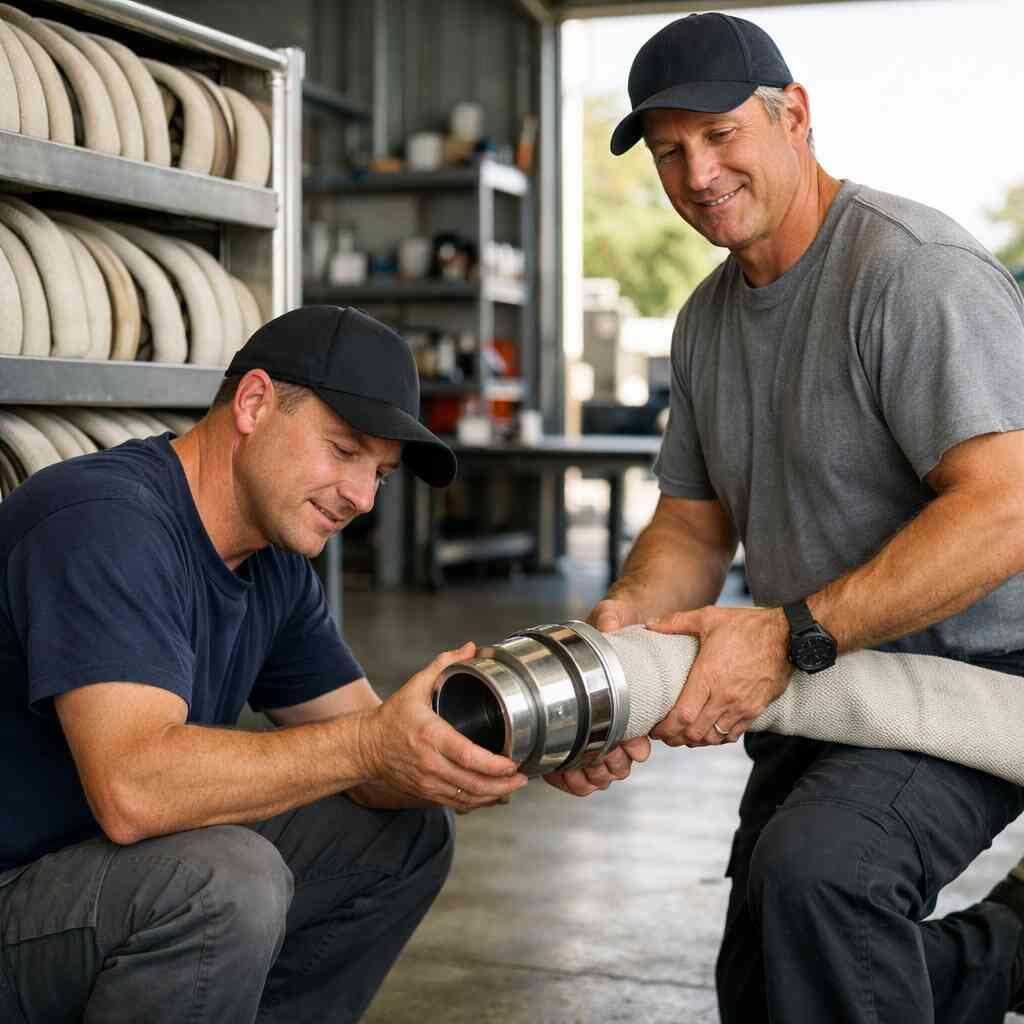
One shop we spoke with had two couplings that looked interchangeable from three feet away. Up close, they were not. The thread profile differed just enough to cause repeated cross-threading attempts. That kind of mismatch wastes time and risks damage. If you are comparing firefighter equipment connector compatibility standards for fire power safety products, verify the standard before purchase, not after delivery.
What to verify before pairing male and female pigtails with junctions receptacles and accessories
Before pairing male and female pigtails with junctions, receptacles, and accessories, verify the thread standard, sealing method, and intended use. Do not assume a close visual match means a proper match. Confirm the application for each part, especially when a system includes multiple accessory points. The safest procurement process is boring, and that is a good thing.
For procurement teams, a quick checklist helps:
- Match the thread standard exactly.
- Confirm the sealing surface type.
- Check orientation and spacing.
- Verify the accessory category.
- Record the part number before ordering again.
That process helps with fire hose connector requirements for female pigtail connectors and related components. It also reduces delays when the next inspection or repair comes up. On busy stations, that saves more time than guesswork ever will.
Why small dimensional differences can undermine hose connection reliability even when parts look nearly identical
Tiny dimensional differences can create big problems. A coupling may appear correct while still binding under pressure. Another may tighten too easily and never fully seat. Either outcome hurts hose connection reliability. That is why dimensional tolerance matters as much as the visible shape.
Here is what almost no online guide mentions: even slight variation can change how the connection behaves after repeated cycles. A part that worked once may start failing after several heat and humidity swings. That is especially relevant in Florida, where moisture and corrosion work together. The cost of a mismatch is rarely just the part. It is the downtime and uncertainty that follows.
Which documentation helps confirm compatibility without guessing at the point of purchase
Good documentation removes guesswork. Request part numbers, thread descriptions, application notes, and any compatibility references the seller can substantiate. If possible, keep a simple internal record by vehicle, station, or equipment type. That way, you do not rely on memory during a rushed order. Memory is useful. It is not a specification sheet.
A few documents are especially helpful:
- Manufacturer part numbers
- Thread and sizing details
- Product family descriptions
- Application notes for junctions or pigtails
- Past purchase records tied to the same apparatus
If you need a direct line, use Contact Duraline. That kind of recordkeeping supports safety equipment procurement and helps you avoid costly mismatches later.
-
The material choices that matter when heat moisture and corrosion are all in the same room
Materials decide how long a connector stays trustworthy. In a dry catalog photo, most parts look capable. In the real world, heat, moisture, washdown, and corrosion all attack at once. That is why material selection deserves more attention than most buyers give it. You are not buying a shape. You are buying how that shape survives the environment.
Why corrosion resistant connector materials are central to durable fire safety connectors in demanding environments
Corrosion resistant connector materials matter because moisture never arrives alone. It brings residue, temperature swings, and surface wear with it. Durable fire safety connectors need materials that tolerate all of those conditions without losing fit. That is especially important for stations that wash down equipment regularly. In those settings, corrosion becomes a routine maintenance issue, not a surprise.
On the projects we’ve finished this year, the strongest-performing parts were the ones that resisted surface breakdown before the problem spread. Once corrosion starts on a sealing edge, reliability drops fast. The connector may still function, but confidence disappears. That is why rugged emergency response hardware should be chosen for the actual environment, not the prettiest catalog image. If you are comparing industrial grade fire connectors, ask what the material is doing after months of exposure, not just on day one.
How abrasion resistant fittings support field use when gear is dragged flexed and reset repeatedly
Abrasion resistant fittings help when equipment gets dragged across concrete, set down hard, or adjusted repeatedly. That is the reality in active stations. The part does not just connect. It moves, scrapes, resets, and gets touched again. Abrasion resistance reduces surface damage, which helps preserve the sealing and threading areas longer.
The mistake we see most often is treating wear as cosmetic. It is not. Once the surface starts roughening, contamination sticks more easily, and connection feel changes. That affects hose connection reliability and can create inconsistent service behavior. A rugged build matters most when the part is not being handled carefully. That is why industrial connector safety and fire power products for emergency crews should always be evaluated in real-use conditions.
What thermal resistance for connectors means in practical emergency response equipment terms
Thermal resistance for connectors does not mean the part survives any imaginable heat without damage. It means the connector maintains its function and fit across the temperatures it is likely to face in service and storage. That includes heat from apparatus compartments, sun exposure, and operational environments. It also includes temperature swings that can affect seals and threaded engagement. This is where practical judgment matters. A connector that seems fine in mild weather may behave differently after sitting in a hot compartment. The seal can stiffen. The collar can feel different. So can the alignment. If you need a simple rule, think function first and temperature second. Durable fire safety connectors should remain reliable in the actual operating range, not only under ideal conditions. ### Why rugged emergency response hardware must be evaluated for the environment not just the catalog
Rugged emergency response hardware should be evaluated by environment, not slogan. A product can be excellent in one setting and disappointing in another. Humidity, salt exposure, washdown frequency, and handling patterns all change the equation. That means procurement should start with use conditions, then move to the product line. Not the other way around.
Here is the decision framework we recommend:
- Identify the worst exposure the part will face.
- Match material resistance to that exposure.
- Check how often the part will be handled.
- Consider cleaning methods and chemical contact.
- Verify that the seal and thread areas stay protected.
That approach supports fire equipment durability without overbuying features you may never use. It also makes emergency response equipment parts easier to standardize across stations. For DeLand fire protection supplies teams, that is a practical advantage.
-
The quick connect features that save seconds without compromising secure coupling performance
Quick connect features can be helpful, but speed alone is not a virtue. If the part closes fast yet leaves you uncertain, it has not solved the real problem. The goal is secure coupling performance with less wasted motion. That balance matters on busy calls, in stations, and during equipment prep. Fast is good only when it stays dependable.
When quick connect fire fittings improve workflow and when they create avoidable complexity
Quick connect fire fittings improve workflow when they reduce steps without adding confusion. They work best in controlled, repetitive tasks where the connection pattern is consistent. But they can create avoidable complexity if the system uses too many variations or mismatched accessories. That turns a time-saver into another training burden.
A mixed fleet often exposes this issue. One crew may prefer a setup that snaps together quickly, while another still needs time to verify alignment and locking feel. That is not a flaw in the crew. It is a sign the system needs clearer standardization. For some operations, quick connect fire fittings and male female electrical extensions support readiness well. For others, simplicity matters more than speed.
How to balance hose connection reliability against the need for faster deployment
Balancing reliability against speed starts with the question: what failure costs more? If a connector saves five seconds but increases the chance of a poor seal, the trade is not worth it. Reliable deployment should feel smooth, but it should also feel certain. That certainty comes from fit, feedback, and repeatable handling.
The best systems are the ones crews trust under pressure. That trust grows when the coupling gives clear tactile confirmation. It also grows when training matches the hardware. If people are fumbling, the design may be asking too much. Secure coupling performance should shorten the process, not complicate it. And it should never weaken hose connection reliability for the sake of convenience.
What to look for in male female electrical extensions that support emergency response readiness
Male female electrical extensions need the same seriousness as fluid connectors. Look for positive engagement, durable housing, and strain relief that resists repeated handling. The connection should feel definite, not vague. It should also remain stable when moved, stored, and reset often. Those details matter in emergency response readiness more than flashy claims.
A field crew in a humid storage bay once described a common frustration. Their connections worked, but they did not inspire confidence after several weeks of daily use. The fix was not more force. It was better fit, cleaner engagement, and a simpler storage routine. That is why emergency service equipment parts should be chosen with the whole workflow in mind, not just one moment of use.
Why connector durability in harsh conditions depends on more than how fast a coupling snaps together
Connector durability in harsh conditions depends on resilience, not speed. A fast snap means little if the part loosens, corrodes, or wears unevenly over time. The connection has to remain secure after repeated cycles, cleaning, and environmental exposure. That is the standard that matters.
Consider these durability factors together:
- Positive locking feel
- Stable seal engagement
- Resistance to surface wear
- Repeatable operation after washdown
- Compatibility with the rest of the system
When those five points line up, quick connect fire fittings become an advantage instead of a risk. They support practical efficiency without sacrificing confidence. That is exactly what most crews want, even if they do not say it that way.
-
The inspection routine that keeps DeLand crews ready when the call is real
Inspection is where good decisions stay good. Even the best connector can drift out of service if nobody checks it with discipline. A simple routine catches small problems before they become expensive ones. It also helps your team feel prepared instead of guessing. That confidence is worth protecting.
Which connector inspection best practices belong in a monthly OSHA compliance checklist
Connector inspection best practices should be simple enough to repeat and strict enough to matter. Start with visible wear, then move to function, then confirm cleanliness. Check for deformation, looseness, residue, and inconsistent engagement. If a part changes feel from one inspection to the next, treat that as a warning. Monthly reviews are far easier than emergency replacements.
A strong checklist should include:
- Seal condition
- Thread condition
- Locking or locking-feel consistency
- Evidence of contamination
- Signs of corrosion or abrasion
That supports an OSHA compliance checklist without turning it into paperwork theater. The point is readiness. The point is also documenting that readiness in a way your team can actually use.
How to build a simple station level check for wear contamination loosening and seal damage
A station-level check works best when everyone follows the same order. Start by wiping the connector clean. Then inspect the seal under good light. After that, check for looseness and any unusual play during engagement. Finish with a quick record of anything questionable. Short, consistent steps make better habits than long, occasional inspections.
One crew we heard from kept missing a recurring problem because each shift checked in a different order. Once they standardized the routine, the issue became obvious. That is the hidden value of simple process design. It makes problems visible sooner. It also helps DeLand Florida fire equipment teams stay consistent across shifts and vehicles.
What maintenance habits extend the life of fire suppression system connectors and hose station connector maintenance
Maintenance habits matter more than dramatic repairs. Keep connectors clean, dry, and stored so they do not rub against each other. Replace damaged seals promptly. Do not force a connection that feels wrong. And document recurring wear so you can spot patterns before they spread.
A few habits pay off quickly:
- Clean before storage
- Dry after washdown
- Separate incompatible parts
- Replace worn seals early
- Log repeated inspection findings
Those habits extend the life of fire suppression system connectors and improve hose station connector maintenance at the same time. They also reduce the chance that one weak part disrupts a larger system. That is the kind of quiet reliability every station wants.
Where DeLand Florida fire equipment buyers can focus next when choosing American made fire safety products
If you are buying for long-term reliability, focus on documented fit, durable materials, and repeatable inspection performance. That is where American made fire safety products often earn trust, especially in demanding environments. Ask how the connector behaves under repeated handling, cleaning, and storage. Then compare that answer against your actual station routine. That is the fastest way to make a smart decision.
If you want the next step to be easy, keep it small. Review your current connector inventory, flag the parts that feel inconsistent, and request a fresh compatibility check for the ones in question. You do not have to figure this out alone, and you do not have to figure it all out today. Start with one inspection pass and one conversation with Fire Power Products.
Frequently Asked Questions
Question: What should buyers in DeLand, Florida look for in OSHA ready connector specs when evaluating fire hose connector requirements and industrial connector safety?
Answer: Buyers should focus on the basics that determine whether a connector actually performs in service: fit, sealing integrity, thread condition, and consistent engagement. A part can look acceptable at a glance and still create problems if the seal face is worn, the threads are damaged, or the coupling does not seat evenly. For DeLand Florida fire equipment teams, those details matter because humidity, washdown, and repeated handling can accelerate wear. Fire Power Products emphasizes practical reliability, so the best approach is to inspect how the connector behaves under real use rather than relying on appearance alone. That is the foundation of hose connection reliability and workplace safety compliance.
Question: How do connector thread standards and fire apparatus connector compatibility affect firefighter equipment connectors and emergency response readiness?
Answer: Connector thread standards are one of the most important factors in compatibility. Even when two firefighter equipment connectors appear nearly identical, a small difference in thread form, pitch, or sealing method can lead to cross-threading, poor seating, or a connection that feels right but performs poorly. Fire apparatus connector compatibility should always be verified before purchase, especially when the system includes multiple pigtails, receptacles, or accessories. Fire Power Products supports a careful procurement process because avoiding mismatches protects emergency response readiness and reduces downtime. If the thread standard is not confirmed, the risk is not just inconvenience, but compromised hose connection reliability and unnecessary wear on equipment.
Question: In the blog Top 5 OSHA Ready Connector Specs for DeLand 2026, why does material selection matter so much for durable fire safety connectors and corrosion resistant connector materials?
Answer: Material selection matters because connectors in DeLand are exposed to heat, moisture, cleaning routines, and repeated handling. Durable fire safety connectors need to resist corrosion, abrasion, and thermal stress without losing fit or sealing quality. Corrosion resistant connector materials help preserve the sealing edges and threads that keep the connection dependable over time. Fire Power Products focuses on rugged emergency response hardware that can stand up to demanding conditions, but the right material still has to be matched to the actual environment. That means looking at how the connector will be stored, cleaned, and used, not just how it looks in a catalog. Good material choices support fire equipment durability, reliable fire hose couplings, and better long-term value.
Question: Are quick connect fire fittings a good choice for heavy duty coupling specifications, or can they hurt secure coupling performance?
Answer: Quick connect fire fittings can be a strong choice when they reduce steps and remain consistent under repeated use. The key is secure coupling performance. If a fitting snaps together quickly but leaves doubt about the seal or locking feel, it is not improving readiness. Fire Power Products recommends evaluating whether the hardware makes deployment easier without introducing confusion or compatibility problems. For some stations, quick connect fire fittings support faster workflow and better emergency response readiness. For others, standardization and simple handling may matter more than speed. The best choice is the one that protects hose connection reliability while still improving efficiency.
Question: What inspection routine and OSHA compliance checklist items should DeLand fire protection supplies teams use for fire suppression system connectors and hose station connector maintenance?
Answer: A strong inspection routine should be simple, repeatable, and focused on wear points that affect function. Teams should check the seal condition, thread condition, signs of corrosion, evidence of contamination, and any looseness or unusual feel during engagement. Those connector inspection best practices help catch problems before they turn into equipment failures. For hose station connector maintenance, Fire Power Products recommends cleaning before storage, drying after washdown, and replacing worn seals as soon as damage is identified. That kind of disciplined maintenance supports first responder gear maintenance, workplace safety compliance, and better performance over time. It also helps DeLand Florida fire equipment buyers make smarter decisions about replacement and inventory planning.
Question: How does Fire Power Products help with safety equipment procurement and reliable American made fire safety products for rugged emergency response hardware?
Answer: Fire Power Products is positioned to support buyers who need dependable fire safety equipment for demanding use. The brand description emphasizes products engineered in the USA and designed for tough conditions, but buyers should still verify the exact specifications and compatibility for each application. That careful approach is what makes safety equipment procurement effective. Instead of guessing, teams can compare connector compatibility standards, material needs, and inspection requirements against their actual station routines. For DeLand fire protection supplies buyers, that means choosing rugged emergency response hardware with confidence and avoiding unnecessary mismatches. If you are building a standardized inventory of emergency service equipment parts, a documented review of fit, material, and thread standards is the best next step.