Best 7 Connector Seal Ratings for Florida EMS 2026
August 21, 2026
-
IP68 sealed plug and receptacle systems
The first storm usually tells the truth. If you work with Florida EMS connector seals, you already know how quickly rain, road spray, and cleanup water can expose a weak point. That pressure feels personal when a rig has to stay ready for the next call. The hard part is that a connector can look rugged and still fail at the wrong time. For many fleets, IP68 sealed plug and receptacle systems for Florida EMS rigs are worth a close look because they are built around stronger dust and water ingress protection expectations.
Why Florida EMS rigs need a seal rating that survives washdowns, rain, and road spray
Florida humidity does not sit still. It works into seams, housings, and cable paths every day. Add washdowns after a messy run, and the stress compounds quickly. Then road spray from wet highways hits low-mounted hardware again. That is why sealed electrical connectors matter so much in EMS vehicle electrical systems.
Here is the part most crews miss. Water often enters through the installation, not the label. A strong ingress protection rating helps, but only if the full assembly stays intact. If you are comparing environmental sealing ratings, think about the whole path. Connector environmental testing can sound definitive, yet real service conditions are usually harsher.
Where IP68 makes sense on ambulances, rescue vehicles, and field-ready EMS hardware
IP68 makes sense where exposure is frequent and predictable. Think exterior-mounted power points, compartment lighting circuits, and field-ready EMS hardware that sees repeated cleanup. It can also fit rugged connector assemblies in compartments that face spray during decontamination. The goal is not to overbuild everything. The goal is to match the seal to the duty.
One crew we spoke with described a recurring issue on a rear compartment circuit. The connector survived dry days easily, then failed after repeated rinse cycles. After inspection, the problem traced back to the installation path, not the connector itself. That is a common story in emergency response equipment durability. The rating mattered, but the mounting mattered too.
What to confirm before assuming an IP68 marking covers every connector in the assembly
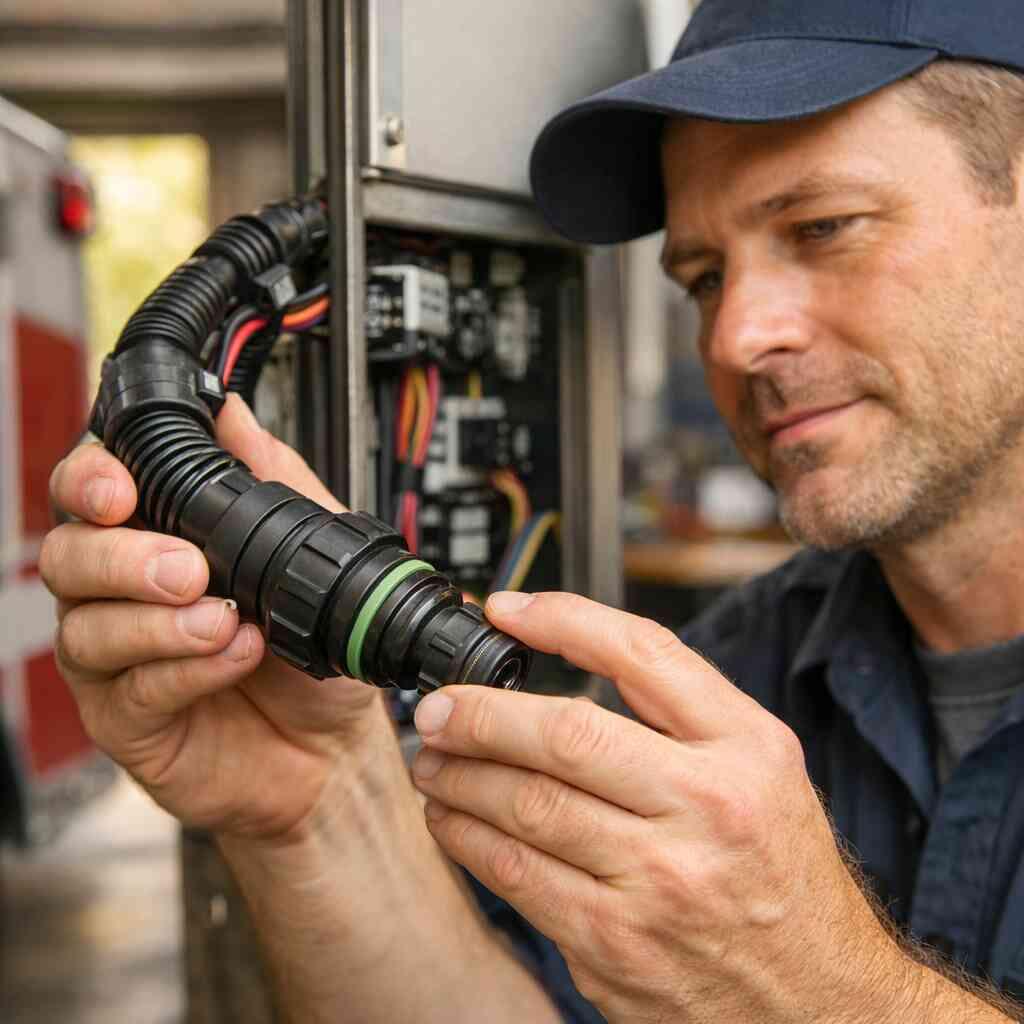
You should verify more than the shell marking. Check the cable gland, mating halves, locking method, and any back-shell components. Ask whether the full assembly shares the same environmental sealing ratings. A single weak component can undo the advantage of connector environmental testing. In practice, the weakest point sets the real limit.
It also helps to confirm how the connector behaves after repeated mating cycles. High-usage connector performance depends on both sealing and fit retention. Vibration resistant connectors often fail quietly when tolerances loosen. So, before you buy, ask for the complete specification trail. If you need a reference point, start with sealed electrical connectors for emergency medical service hardware, then compare it to the assembly details you actually plan to install.
-
IP67 moisture resistant connectors
IP67 is where many teams land when exposure is real, but not constant immersion. That can be a smart middle ground for moisture resistant connectors in Florida EMS equipment. Still, it is easy to overread the rating. Splash protection is helpful. It is not magic. If your equipment gets cleaned hard, stored wet, or mounted in a low area, the margin disappears faster than people expect.
When splash protection is enough and when it becomes a risky compromise in humid service
Splash protection is enough when the connector stays above the worst exposure zone. It works well in protected compartments and some interior EMS vehicle electrical systems. But humidity changes the equation. Moisture can condense inside a system even when no one sprays it directly. That is why the local climate matters as much as the label.
We hear this from crews almost every week. A connector worked fine for months, then started acting strangely after a week of rain and back-to-back calls. The issue was not dramatic. It was gradual. In humid service, gradual problems are dangerous because they hide behind normal operation. If the connector sits near vents, doors, or floor-level runoff, you should treat IP67 as a decision, not a default.
How IP67 supports outdoor-rated connectors exposed to brief submersion and repeated cleanup
IP67 can support outdoor-rated connectors when brief exposure is the realistic ceiling. That matters for field-ready EMS hardware that may see puddles, wet ground, or a quick rinse. It also helps when crews need reliable electrical connections after standard decon procedures. The value is consistency, not invincibility. The seal rating gives you a known baseline.
If you are evaluating weatherproof connector systems for Florida humidity resistance, watch the cleanup routine as closely as the product sheet. Repeated wiping, spray, and drying cycles can wear external interfaces faster than expected. Also, check how the connector behaves when parked outside overnight. Florida mornings can load hardware with moisture before the first call even comes in.
The hidden weak point in EMS electrical systems that a good seal rating cannot fix alone
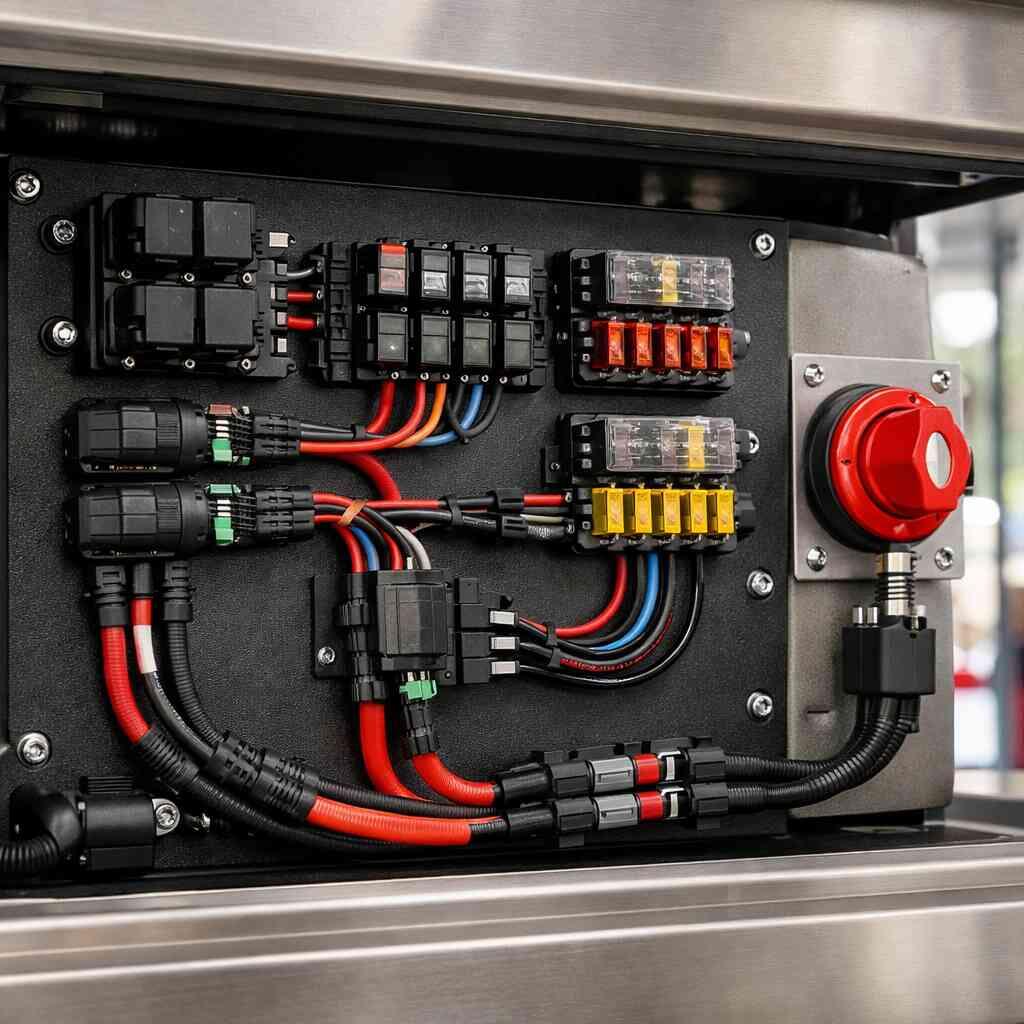
The hidden weak point is usually strain relief. A perfect seal rating does not save a connector that moves under load. Vibration, pull force, and poor routing slowly open pathways for ingress. That is especially true in ambulances, where cabinets and equipment shift more than people think. The connector may be sealed, yet the harness around it still fails.
The fix is usually boring, which is exactly why it works. Use proper support, keep bend radius honest, and avoid sharp edges. Then inspect the harness after service work. A clean connector with a damaged cable jacket is already compromised. That is why durable safety equipment connectors should be judged as a system, not a single component.
-
IP69K hose-down resistant equipment
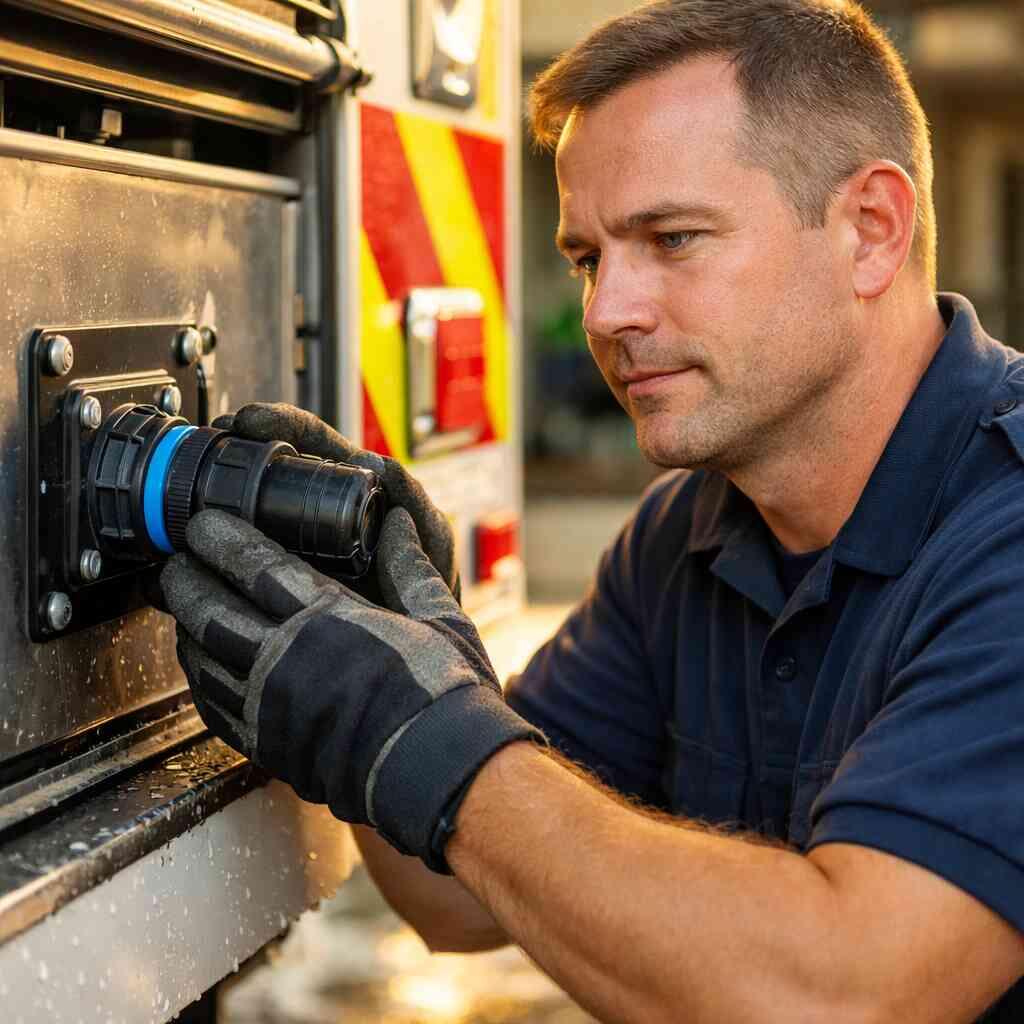
IP69K is the rating people remember after aggressive cleaning. It speaks directly to hose-down resistant equipment and the reality of high-pressure washdowns. For Florida EMS fleets, that matters when sanitation standards are strict and time is short. The question is not whether the unit looks clean. The question is whether the connector still seals after being blasted from different angles.
Why aggressive cleaning routines push connector environmental testing beyond basic weatherproof claims
Basic weatherproof connector systems can survive rain. They may even survive splash exposure. High-pressure cleaning is a different animal. The force can drive water into seams that would otherwise stay dry. That is why connector environmental testing must reflect real maintenance routines.
On the projects we have finished this year, cleaning pressure has become a bigger design concern than many teams expected. Crews want speed. Supervisors want reliability. Maintenance teams want fewer callbacks. IP69K is appealing because it acknowledges that reality. It raises the bar beyond simple weatherproof claims and asks whether the seal survives direct, forceful water contact.
Which emergency response equipment durability questions matter most after high-pressure washdowns
Ask three questions first. Did the connector retain its seal after the wash? Did the locking interface stay tight? Did the surrounding cable routing prevent water from pooling? Those questions matter because emergency response equipment durability is usually lost at the edges, not the center.
A small municipal fleet once told us their issue started after routine decontamination. They were using solid equipment, but a connector sat directly in the wash path. Water intrusion did not happen immediately. It showed up after repeated cycles, when the gasket no longer seated as tightly. That is why you should ask where the spray actually goes, not just what the catalog says.
How to separate true hose-down resistant performance from marketing language
Marketing language often stops at the headline. Real hose-down resistant performance gives you test details, installation guidance, and limits. Look for specifics on angle, pressure, and mating condition. If those details are missing, treat the claim carefully. A high number without context is not enough.
You can also compare the connector to hose-down resistant connector performance for EMS vehicle electrical systems using the same maintenance assumptions your fleet uses. That makes the comparison practical instead of theoretical. In our experience, the biggest mistake is assuming every clean-down process is equal. It is not. The pressure washer, the nozzle distance, and the dwell time all change the result.
-
IP66 weatherproof connector systems
IP66 is a practical choice when the threat is heavy rain, not immersion. For Florida EMS teams, that is a big distinction. Wind-driven moisture can hit from the side, under the body, and into seams that seem protected. Weatherproof connector systems must handle that kind of exposure without turning every storm into an electrical problem.
Why heavy rain and wind-driven moisture are a different challenge than simple splash exposure
Simple splash exposure is one thing. Driving rain is another. Wind pushes water into small openings, especially around mounted hardware and compartment edges. That is why weatherproof connector systems for Florida EMS work need more than a casual “outdoor” label. IP66 is useful because it speaks to forceful water exposure, not just incidental contact.
If you have ever watched a vehicle sit through a summer storm near DeLand, you know how sideways the rain can move. That is why local weather realities matter here. A connector mounted on a protected interior wall may be fine. The same connector under a rear lip may not be. Context decides the outcome.
How IP66 fits EMS vehicle electrical systems working in Florida humidity and storm-prone conditions
IP66 fits EMS vehicle electrical systems that are exposed but not submerged. That includes exterior lights, compartment interfaces, and some rooftop or rear-mounted accessories. It is a sensible balance for field-ready EMS hardware that needs dependable sealing without pushing every application into the highest rating. It can also support reliable electrical connections during humid months when condensation becomes a concern. One DeLand crew described a rear-facing connection that kept failing after storm season. The hardware itself was not the issue. Moisture collected where the mounting angle trapped runoff. After the connector was relocated and better supported, the failures dropped off. That is the kind of lesson that never appears in a spec sheet, yet it often matters more than the label. ### What installation details protect IP66 performance when the connector is mounted in a demanding location
Installation details protect the rating more than most people realize. Use a mounting surface that sheds water. Keep the connector away from direct tire spray. Seal entry points carefully. Then verify that the harness does not tug on the connector during vehicle vibration. Those steps preserve the rating that you paid for.
Also, look closely at corrosion resistant connectors if the vehicle sees both rain and road salt residue from travel. Even inland fleets can carry contamination from highways. A good rating helps, but poor mounting still ruins performance. For a broader comparison, IP68 rated connectors for emergency service durability can help you weigh where you truly need the higher level and where IP66 is enough.
-
NEMA 4X corrosion resistant connectors
Sometimes the hardest problem is not water. It is corrosion. NEMA 4X matters because salt air, residue, and constant moisture can degrade metal faster than people expect. For Florida teams, especially those who move near the coast or handle outdoor equipment often, corrosion resistant connectors can outlast a stronger-seeming but less suitable option.
When corrosion resistance matters more than water sealing for salt air and coastal exposure
Salt air exposure changes everything. Water dries. Salt remains. It sits on surfaces and keeps working long after the rain stops. That is why corrosion resistant connectors deserve separate attention from standard moisture resistant connectors. You may have excellent sealing and still lose conductivity through corrosion.
If your EMS service area touches coastal conditions, think beyond the next storm. Think about the next month of humid air and repeated door openings. NEMA 4X thinking helps because it prioritizes resistance to environmental breakdown, not just immediate water entry. That difference matters when the hardware must stay dependable through long service intervals.
How NEMA 4X thinking helps with durable safety equipment connectors in harsh outdoor service
NEMA 4X thinking gives you a more complete filter for durable safety equipment connectors. It pushes you to consider enclosure integrity, material compatibility, and long-term exposure. That is useful in outdoor service where the connector may sit exposed on a vehicle body, trailer, or accessory panel. It also helps teams compare rugged connector assemblies more intelligently.
A good rule is simple. If the connector will face moisture, grime, and salt-like contamination, ask how it resists all three. A water rating alone does not answer that. In practice, NEMA 4X thinking often leads crews to ask better questions about the whole system. That is a stronger starting point for first responder equipment reliability.
Which materials and finishes should be verified before relying on a corrosion resistant rating
Verify the metal, plating, seal material, and fasteners. Those details control real-world performance. Stainless hardware may help. So may coatings chosen for salt air corrosion protection. But you should never assume a finish performs the same across every part of the connector assembly.
A quick comparison helps:
FocusWhat to verifyWhy it mattersMetal bodyBase material and platingCorrosion resistance starts hereSealsElastomer type and fitMoisture resistance depends on contactFastenersFinish and galvanic compatibilityMixed metals can accelerate failureThat table is not about chasing the fanciest option. It is about avoiding surprises. If you need a practical product family to review, Duraline Fire Power products for emergency response equipment durability can be a useful place to compare configurations while you verify the details that matter most.
-
IP67 and IP68 quick disconnect connector seals
Quick disconnect connector seals solve a real operational problem. Crews need access fast, but they cannot afford sloppy sealing. That tension is common in ambulance and rescue environments. The connector has to come apart cleanly, go back together correctly, and still protect mission-critical power connections.
Why serviceability matters when crews need fast access without sacrificing environmental sealing ratings
Serviceability matters because downtime is never convenient. When a unit is in service, a hard-to-access connector becomes a workflow problem. Quick disconnect connector seals help reduce that friction. They let technicians open a circuit, inspect it, and restore it without rebuilding the whole compartment. That saves time and keeps the vehicle moving.
Still, serviceability cannot erase physics. Every disconnect is a chance to damage a seal, misalign a pin, or trap contamination. That is why you want systems designed for repeated use, not improvised access. If the team has to fight the hardware every time, the design is already working against you.
How quick disconnect connector seals reduce downtime in mission-critical power connections
Quick disconnect connector seals reduce downtime by shortening diagnostic and replacement steps. That matters when a light, fan, charger, or medical support system goes offline between calls. A reliable disconnect also helps during seasonal retrofits and fleet updates. Instead of cutting and splicing, you can service the connection more cleanly.
If you are evaluating DeLand Florida EMS connector selection for rugged fleet hardware, ask how quickly the connector can be opened without degrading the seal. Also ask whether field techs can inspect the mating surfaces easily. A hidden fault that takes thirty minutes to find can become a missed response window.
What to inspect so repeated disconnect cycles do not create premature ingress problems
Inspect the latch, gasket, contact alignment, and seal compression marks. Those signs tell you more than the marketing copy. Repeated cycles can flatten a gasket or loosen retention. They can also introduce grit into the mating area. If the connector feels smooth but sloppy, treat that as a warning.
The mistake we see most often is relying on “new-looking” hardware as proof of health. That is not enough. Look for wear at the mating edge. Check for discoloration. Make sure the cable exits without twisting. When the fit stays correct, quick disconnect connector seals can serve faithfully for a long time. When the fit drifts, ingress follows.
-
The connector rating decision that keeps Florida EMS moving
The right connector choice is not the highest number on the page. It is the rating that matches the actual environment, the maintenance habit, and the vehicle layout. Florida EMS teams need that kind of precision because the climate punishes guesswork. A connector that is overbuilt in one area may still fail if it is poorly installed. A connector that is underbuilt may fail even faster.
How to match connector seal ratings to the actual environment instead of overbuying or underbuying
Start with exposure. Is the connector seeing rain, hose-downs, salt air, or only interior humidity? Then match the seal rating to that reality. IP68, IP67, IP69K, IP66, and NEMA 4X each solve different problems. None of them is universally best. That is the key decision most fleets have to make.
If you are balancing cost and durability, do not buy for the worst imaginable case unless the hardware truly faces it. Overbuying can add complexity. Underbuying can add failures. A practical comparison of ingress protection ratings usually saves more money than a blind premium choice. For a deeper starting point, best 7 connector seal ratings for Florida EMS 2026 offers a useful framework for that decision.
The maintenance and inspection habits that preserve sealed cable assemblies over time
Maintenance is the quiet hero here. Clean mating surfaces gently. Replace damaged seals promptly. Verify torque and retention during regular inspections. Also, document any recurring moisture issues by vehicle and by location. That data helps you spot patterns before a failure becomes a roadside problem.
You do not need a complicated plan. You need a consistent one:
- Inspect connectors after each deep-clean cycle.
- Check for abrasion at cable entry points.
- Confirm lock engagement before returning a unit to service.
- Replace any connector with cracked seals or visible corrosion.
Those steps preserve sealed cable assemblies better than wishful thinking ever will. They also support emergency medical service connectors that must work the same way on the first call and the fiftieth.
What a DeLand Florida EMS team should verify before choosing a final connector standard for the fleet
If your team is in DeLand, start with the actual vehicle routes, cleaning schedule, and storage conditions. Then compare the connector rating to the roughest place that hardware will live. Ask whether the unit sees storm exposure near open bays, whether it is parked outside, and whether it needs frequent access. Those answers shape the right standard more than a sales brochure does.
Also, verify compatibility with the rest of the fleet. Mixed standards create confusion during repairs. A clean, consistent connector policy makes training easier and troubleshooting faster. If you want help narrowing the field, start with one call, one vehicle, and one real-world exposure profile. You do not have to figure it all out alone, and you do not have to figure it all out today.
Frequently Asked Questions
Question: How do I choose the right connector seal ratings for Florida EMS equipment when my vehicles face rain, humidity, and frequent cleanup?
Answer: The best starting point is to match the connector seal ratings to the actual exposure your Florida EMS equipment sees every day. In many cases, that means comparing IP67, IP68, IP66, IP69K, and NEMA 4X options based on whether the connector will face splash exposure, wind-driven rain, washdowns, salt air, or repeated access. Fire Power Products focuses on durable safety equipment connectors that are built for demanding first responder conditions, but the right choice still depends on the application. A sealed electrical connector that works well inside a protected compartment may not be the same one you need for outdoor-rated connectors or hose-down resistant equipment. The most reliable approach is to review the environment, the mounting location, the maintenance routine, and the full assembly, not just the shell rating. That is especially important for EMS vehicle electrical systems in Florida humidity resistance conditions, where moisture can enter through cable paths, strain relief, or poor installation even when the connector itself looks sealed.
Question: In the blog Best 7 Connector Seal Ratings for Florida EMS 2026, what should DeLand Florida emergency equipment teams verify before relying on IP68 sealed plug and receptacle systems?
Answer: Before relying on IP68 sealed plug and receptacle systems, DeLand Florida emergency equipment teams should verify the entire connector assembly, not just the label on the housing. That means checking the cable gland, mating halves, locking method, back-shell components, and how the connector is installed in the vehicle. A strong ingress protection rating only helps if the full setup preserves dust and water ingress protection under real-world use. Fire Power Products understands that first responder equipment reliability depends on the full system, especially in mission-critical power connections that face washdowns, road spray, and humidity. It is also smart to confirm whether the connector maintains high-usage connector performance after repeated mating cycles and whether the harness has proper support to avoid vibration-related failure. In practice, sealed plug and receptacle systems perform best when the product selection is paired with solid connector maintenance best practices and careful installation.
Question: Are IP67 moisture resistant connectors enough for EMS vehicle electrical systems in Florida, or should I consider higher environmental sealing ratings?
Answer: IP67 moisture resistant connectors can be a good fit when the exposure is real but does not include continuous immersion or aggressive washdown. For many EMS vehicle electrical systems, that makes IP67 a practical middle ground for protected compartments, interior circuits, or applications where brief water contact is possible. However, Florida humidity resistance changes the picture because condensation, repeated rain exposure, and cleanup cycles can stress the connector beyond what the rating alone suggests. Fire Power Products recommends evaluating the whole installation path, including harness routing, strain relief, and mounting location, because even dependable sealed cable assemblies can fail if the surrounding hardware is poorly supported. If the connector sits near runoff, floor-level spray, or cleaning zones, it may be worth reviewing IP68 or IP69K options instead. The key is not to overbuy or underbuy, but to match the connector to the actual job and preserve reliable electrical connections over time.
Question: How does Fire Power Products help with hose-down resistant equipment and quick disconnect connector seals for fire rescue equipment connectivity?
Answer: Fire Power Products is a strong fit for teams that need fire rescue equipment connectivity designed around demanding cleaning and service needs. Hose-down resistant equipment matters because Florida EMS fleets often rely on frequent decontamination, and high-pressure spray can expose weak points that basic weatherproof connector systems would never face. Quick disconnect connector seals are especially useful when crews need fast access to mission-critical power connections without rebuilding the entire compartment or sacrificing environmental sealing ratings. The important thing is to confirm the full assembly details, including gasket condition, latch integrity, contact alignment, and how often the connector will be disconnected in service. Fire Power Products emphasizes durability for high-use environments, but teams should still verify specifications and installation requirements before choosing a final product. That careful approach helps preserve sealed cable assemblies and supports first responder equipment reliability when time and weather are both working against the crew.
Question: What should Florida EMS fleets in coastal or storm-prone areas know about corrosion resistant connectors and weatherproof connector systems?
Answer: Florida EMS fleets that operate near coastal areas or see heavy storm exposure should pay close attention to corrosion resistant connectors, not just water sealing. Salt air corrosion protection can become just as important as moisture resistance because salt residue remains on surfaces long after the rain stops. Weatherproof connector systems may handle rain well, but corrosion can still damage conductivity, fasteners, and mating surfaces over time. Fire Power Products serves DeLand, Florida, and focuses on durable safety equipment connectors suited to demanding first responder conditions, but every fleet should still verify material details before installation. That includes the connector body, plating, seal material, fasteners, and any mixed-metal compatibility issues that could accelerate wear. A NEMA 4X mindset is useful here because it helps teams think about long-term environmental breakdown as well as immediate water exposure. For EMS teams, that means choosing rugged connector assemblies that support both reliability and maintenance practicality.
Question: What maintenance habits should a DeLand Florida EMS team use to keep sealed electrical connectors performing well after repeated service?
Answer: A DeLand Florida EMS team should treat connector maintenance best practices as part of routine fleet care, not as an occasional repair task. That means inspecting connectors after deep-clean cycles, checking for abrasion at cable entry points, confirming lock engagement before returning a unit to service, and replacing any damaged seals or corroded parts promptly. Because Florida humidity resistance and road spray can affect even well-rated products, the inspection should cover the connector itself and the harness around it. Fire Power Products supports the kind of emergency response equipment durability that first responders need, but even durable safety equipment connectors depend on proper care and installation. Teams should also document recurring moisture issues by vehicle and location so they can spot patterns before they become service failures. In short, the best sealed plug and receptacle systems are the ones matched to the job and maintained consistently, which is what keeps EMS connector seals dependable over the long term.