Best 7 Fire Truck Connector Specs for Florida Buyers 2026
August 13, 2026
-
Know the connector standard before you buy anything for a Florida rig
The first mistake is simple: people guess. That gets expensive fast. Florida fire truck connectors must match the apparatus, the hose coupling compatibility, and the actual duty cycle of the rig. If you are reading this because a part looked “close enough,” you are not alone. We hear that concern often. The hard part is that connector mistakes usually hide until a wet, rushed call. Then the wrong threads, seals, or locking style show themselves at the worst possible moment.
Why Florida fire truck connectors need to be checked against apparatus hose coupling compatibility instead of guessed
The best connector choice starts with the hose, not the catalog photo. Fire hose connection types vary across intake and discharge fittings, and small differences matter. You need to confirm thread form, size, and locking method before ordering. Threaded fire truck fittings and quick connect fittings for fire trucks do not forgive assumptions. One Sarasota-area fleet manager once told us a “minor” mismatch cost a full afternoon. The part looked right. The rig was not.
Where NFPA-compatible fire truck components fit into purchasing decisions and where they do not
NFPA-compatible fire truck components belong in your decision process, but they do not replace verification. Standards help narrow the field. They do not prove fit on your specific apparatus. That distinction saves time and confusion during procurement. If you need a starting point, the best fire truck connector specs in Florida are the ones that align with the rig, the environment, and the maintenance plan. I have seen buyers lean too hard on labels. A label is not a layout drawing.
The hidden cost of mixing threaded fire truck fittings with mismatched quick connect fittings for fire trucks
Mixed connector systems often create hidden costs. You pay in adapters, labor, and service delays. You also raise the chance of leakage, cross-threading, and field frustration. Here is the part most buyers miss: mismatched hardware can complicate future replacements too. One crew near the coast had a recurring pump panel issue after a mixed retrofit. The repair itself was not dramatic. The downtime was. Good purchasing avoids that trap before it starts.
-
Choose the material that survives salt air, heat, and daily abuse
Material choice is not cosmetic. It is survival planning. Florida heat, humidity, road grime, and salt air all punish exposed hardware. Corrosion-resistant connector materials matter more on rigs that live near the coast or get washed down often. If your apparatus hardware sees daily use, you need connectors that stay predictable after repeated exposure. That is especially true for coastal Florida fire apparatus hardware. Rust does not care about your schedule.
When corrosion-resistant connector materials matter most on coastal Florida fire apparatus hardware
The closer you are to salt air, the more often you should inspect metal surfaces, seals, and fasteners. Salt works into seams. Heat bakes residue into place. Then vibration finishes the job. That is why salt air resistant fire truck parts belong high on the priority list for beach-adjacent stations and open-lot apparatus storage. You may not notice degradation on day one. You will notice it when a fitting stops seating cleanly.
Brass fire service fittings versus stainless steel fire truck hardware for municipal fire truck equipment
Brass fire service fittings and stainless steel fire truck hardware each solve different problems. Brass often brings familiar serviceability and broad compatibility. Stainless steel typically offers stronger corrosion resistance in harsh environments. The right answer depends on the system, not the metal alone. Here is a simple comparison:
MaterialStrengthsWatchoutsBrassCommon, service-friendly, widely usedCan show wear and dezincification concerns in some environmentsStainless steelStrong corrosion resistance, rugged feelMay add cost and require careful compatibility reviewYou do not need the fanciest option. You need the one that fits your maintenance plan and exposure level.
What emergency vehicle connector durability really means in humid, high-salt environments
Durability is not a marketing word here. It means the connector stays functional after heat, vibration, washdown, and corrosion exposure. Emergency vehicle connector durability also includes seal integrity and consistent mating force. If a fitting becomes sticky, loose, or hard to align, it has already started failing operationally. We have seen rigs where the problem was not catastrophic. It was cumulative. That is why careful buyers treat hardware selection like fleet planning, not a one-time purchase. For more context, Florida fire truck connector standards should always be checked against actual apparatus conditions.
-
Get the pigtail and extension geometry right the first time
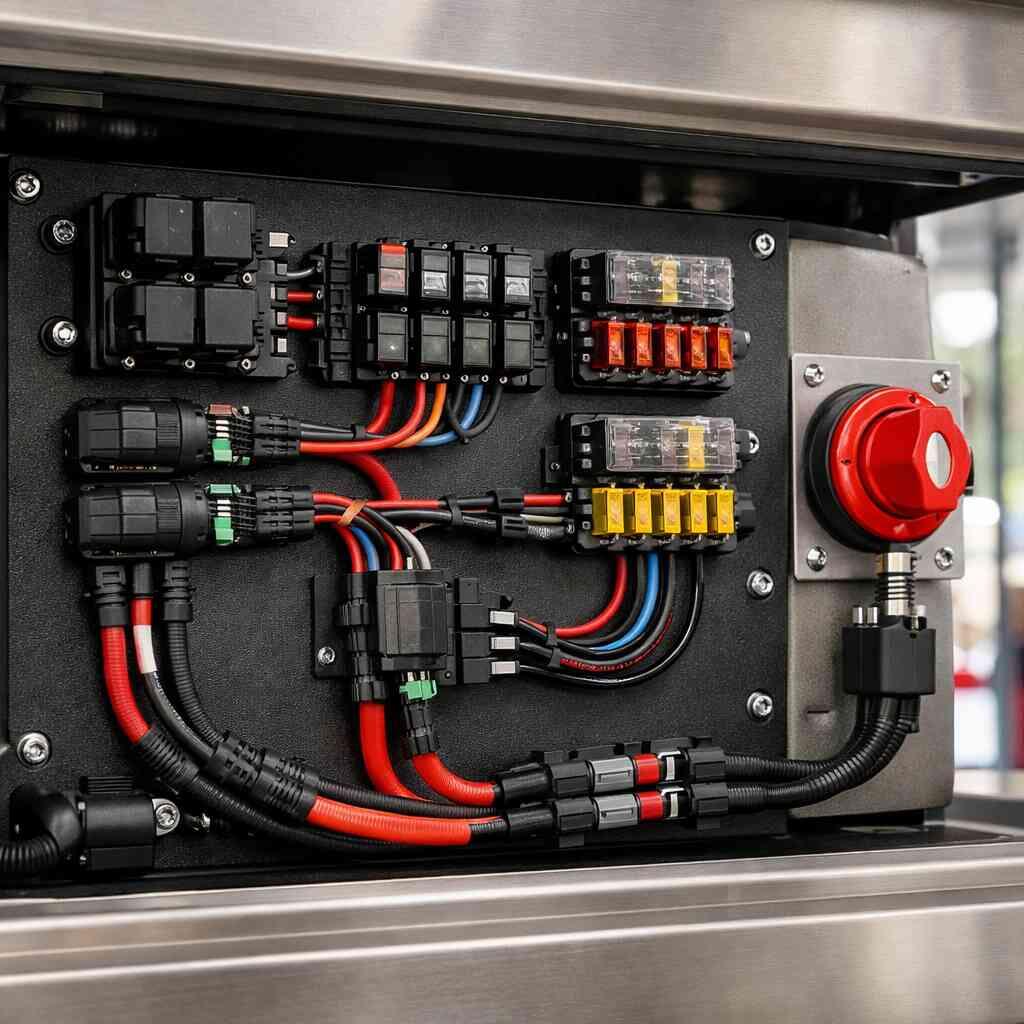
Electrical connector layout can make or break an apparatus build. Tight compartments, moving trays, and repeated vibration expose weak geometry quickly. The same part can look perfect on paper and fail in the bay because the bend radius is wrong. Fire Power IP68 female electrical connector pigtails and male pigtails matter because they help you match layout to real-world routing. If you have ever fought a cable that kept twisting during installation, you know the problem. Geometry is not optional.
Why Fire Power IP68 female electrical connector pigtails and male pigtails matter in fire truck layouts
The value of pigtails is not just convenience. They create usable service length and cleaner transitions in cramped spaces. On apparatus builds, the right pigtail reduces tension at the termination point. That matters for long-term reliability and maintenance access. If you need to study the category directly, the IP68 female electrical connector pigtails for fire fighting equipment are worth reviewing alongside the male side. A recent upfit in Central Florida required three reroutes before the crew found the cleanest path. The final result worked because the pigtail lengths matched the cabinet geometry, not because the first guess was clever.
How male female electrical extensions for fire fighting equipment can reduce strain on cramped apparatus builds
Extensions help when the panel, sensor, or accessory lands farther away than expected. They should not become a bandage for poor planning. Still, the right male female electrical extensions for fire fighting equipment can reduce strain and make service easier. That matters on ladder truck connector fittings, compartment slides, and hose reel interfaces. You want enough slack for movement, but not so much that the cable chafes. Good planning means you think about service access now, not after the first repair call. If needed, male female electrical extensions for fire fighting equipment should be selected with routing in mind.
The swivel connector design details that help prevent cable twist, pullout, and installation frustration
Swivel connector design can solve a surprisingly common problem. When a cable wants to twist naturally, a fixed connector can fight it. That fight creates stress. Stress becomes wear. Over time, the best swivel arrangement reduces pullout risk and makes routing less frustrating for technicians. Here is what almost no online guide mentions: a swivel that feels “loose” in the hand may actually save service time later. For the accessory side, fire fighting electrical junctions receptacles and accessories can help you build a cleaner, more serviceable layout.
-
Match the connector to the water path, not just the part number
Water path planning is where many replacement decisions go sideways. A connector that works at one point on the rig may fail at another. Intake and discharge fittings see different pressures, angles, and service loads. Pump panel connector specs should be read with the whole plumbing route in mind. The part number alone is never enough. System behavior matters more.
How fire hose connection types change at intake and discharge fittings on pump panel connector specs
Intake fittings and discharge fittings live in different worlds. Intake hardware often prioritizes flow and secure sealing under suction conditions. Discharge hardware must handle operating pressure and repeated coupling activity. Fire hose connection types can also vary by department preference and legacy equipment. That means your pump panel connector specs should reflect the actual hose pathway, not a generic box label. The mistake we see most often is buying the same connector style for every point on the panel. That looks tidy. It is not always correct.
When adapter compatibility for fire apparatus becomes the deciding factor in replacement connectors for fire trucks
Adapter compatibility for fire apparatus becomes decisive when you are replacing only one part of a larger system. Maybe the hose, manifold, or accessory has a different legacy interface. Maybe your department standard changed over time. In those cases, reliable fire hose adapter options can keep the apparatus working without forcing a full rebuild. Still, compatibility should not become a crutch. Use adapters strategically, not permanently where a proper match is available. If you need a technical reference point, NFPA-compatible fire truck components for Florida rigs can help frame the review.
Why leak-resistant hose couplings are only as reliable as the full fire truck plumbing components around them
Leak-resistant hose couplings are only one piece of the seal chain. The surrounding fire truck plumbing components matter just as much. A coupling can be fine while the adjacent fitting, gasket, or support point is not. That is why replacement connectors for fire trucks should be reviewed as system parts. Think of the whole route: panel, hose, adapter, seal, and mounting support. One weak link creates a leak path. In the shop, that usually means one more round of disassembly. In service, it means unnecessary risk.
-
Read the environment as carefully as the spec sheet
Florida weather does not respect tidy product descriptions. Heat, rain, road grit, and UV exposure all attack connectors in different ways. Weather-resistant fire apparatus fittings should be selected with the local environment in mind. The same is true for heat and abrasion resistant hose connectors around ladder reels and tight compartments. If a connector survives the spec sheet but not the compartment, it fails the job. Simple as that.
Which weather-resistant fire apparatus fittings deserve extra attention in coastal Florida fire apparatus hardware
Coastal Florida fire apparatus hardware should be checked for sealing surfaces, exposed fasteners, and attachment points. Salt spray finds tiny openings. Repeated washing makes some weaknesses obvious faster. Weather-resistant fire apparatus fittings need clean mating surfaces and stable materials. If a component sits near an exterior compartment, inspect it more often. The environment is doing part of the testing for you. That is not a guess. It is a reality of operating near the water.
How heat and abrasion resistant hose connectors hold up around ladder reels and tight compartment routing
Connectors routed near ladders, reels, or sharp edges need abrasion protection. Heat from nearby systems can also change how seals and coverings behave over time. Heat and abrasion resistant hose connectors are only useful if the entire routing path supports them. Bend radius matters. Clamp placement matters. So does access for inspection. Here is where a small layout decision pays off. A connector that avoids constant rubbing often outlasts a “stronger” one that sits in a bad spot.
What salt air resistant fire truck parts should prompt closer inspection during fire truck maintenance parts planning
Salt air resistant fire truck parts deserve a visual check during every maintenance cycle. Look for discoloration, pitting, residue, and stiffness in moving interfaces. Also inspect mounting hardware, because corrosion often begins there first. If the part is exposed, assume it is under more stress than the drawing shows. On the projects we have finished this year, the overlooked issue was usually not the connector body. It was the surrounding support hardware. That is why maintenance planning must include the whole assembly, not just the visible front face.
-
Separate genuine performance needs from procurement buzzwords
Procurement language can sound impressive. It can also hide weak decisions. Heavy-duty apparatus connectors should be judged by fit, material, serviceability, and the actual job they perform. Not every “rugged” feature belongs on every rig. Not every premium part will solve your problem. The smartest buyers strip away the buzzwords and ask what is really required.
How to evaluate heavy-duty apparatus connectors without overpaying for features you do not need
Start with the mission. Then work backward. Heavy-duty apparatus connectors should be evaluated against exposure, movement, maintenance access, and compatibility. If a feature does not solve one of those needs, it may just add cost. A municipal unit running mostly sheltered duty may not need the same build as a coastal rescue rig. That does not mean cheap is fine. It means targeted is better. Buyers who define the use case early usually make stronger purchases.
Where high-pressure hose connector performance should be confirmed before ordering any firefighter equipment connectors
High-pressure hose connector performance should be confirmed with the actual operating conditions in mind. Pressure alone does not tell the full story. Temperature, vibration, coupling frequency, and contamination all affect the result. Firefighter equipment connectors also need to hold up after repeated assembly and disassembly. If you want a deeper technical article, what is the best UL rated connector for Florida fire trucks is a useful place to start reading. Just remember: ratings guide the choice. They do not replace system verification.
Why replacement connectors for fire trucks should be selected as system parts, not isolated hardware
Replacement connectors for fire trucks work best when viewed as part of a system. A durable connector can still fail in a weak environment. A strong seal can still leak against a poor mating surface. That is why fire truck plumbing components, mounts, and routing should all be checked together. This approach also helps you avoid unnecessary reorders. One late-night call we heard about involved a “bad connector” that turned out to be a misaligned bracket. The connector got blamed first. The bracket was the real issue.
-
Turn connector specs into a buying decision that will hold up in DeLand
Buying in DeLand means thinking about heat, humidity, road salt carried inland, and rapid weather changes. It also means making choices that fit local maintenance realities, not just idealized catalog conditions. Fire equipment procurement considerations should reflect the rig, the station, and the service plan. You want durable connectors for first responder vehicles that are actually maintainable. That balance matters even more when downtime costs crew readiness. The best purchase is the one that stays useful.
The fire equipment procurement considerations that matter for DeLand Florida fire equipment supplier conversations
When you contact a DeLand Florida fire equipment supplier, come prepared with the routing, the hose interface, and the operating environment. Bring photos if you have them. Bring measurements too. That saves everyone time. It also reduces the chance of a return caused by a preventable mismatch. DeLand buyers often juggle maintenance windows, staffing, and apparatus availability. Good procurement respects that pressure and keeps the conversation practical.
How to build a short list of durable connectors for first responder vehicles without compromising compatibility
Start with compatibility. Then narrow by material, service access, and exposure level. Durable connectors for first responder vehicles should be shortlisted against the rig’s real conditions, not just the sales description. Consider these filters:
- Match the hose or electrical interface first.
- Confirm sealing and locking behavior.
- Review corrosion exposure and cleaning routines.
- Check installation space and service access.
- Verify replacement availability for future maintenance.
That list keeps the decision grounded. It also helps you avoid a polished but wrong purchase.
What a practical final check should cover before approving fire truck connector specs for Florida buyers
Before approval, verify the full chain. Confirm the connector standard. Confirm the material. Confirm the routing. Confirm the mount. Then confirm the maintenance plan. If you want a broader background reference, how to choose 2026 fire truck connectors in DeLand can help frame the final review. You do not have to solve every detail alone, and you do not have to solve it all today. Start with one rig, one interface, and one careful call to Fire Power Products.
Frequently Asked Questions
Question: How do I choose the right fire truck connector specs for Florida fire truck connectors when hose coupling compatibility and pump panel connector specs vary by rig?
Answer: The safest approach is to verify the full connection chain before ordering anything. Start with the actual apparatus, then confirm the fire hose connection types, thread form, size, sealing method, and any quick connect fittings for fire trucks already in use on the unit. For intake and discharge fittings, the requirements can differ, so the same connector is not always correct across the entire system. Fire Power Products can help buyers in DeLand, Florida think through compatibility in a practical way by focusing on the rig, the routing, and the maintenance plan instead of relying on a catalog image alone. That is the key to avoiding cross-threading, leaks, and expensive rework later.
Question: In Best 7 Fire Truck Connector Specs for Florida Buyers 2026, what should Florida departments look for in corrosion-resistant connector materials and salt air resistant fire truck parts?
Answer: Florida buyers should prioritize materials and hardware that can handle heat, humidity, washdowns, and coastal exposure. Corrosion-resistant connector materials matter most where salt air, road grime, and repeated cleaning can wear down exposed parts. Brass fire service fittings may be a solid choice in some systems because they are familiar and service-friendly, while stainless steel fire truck hardware can be a strong option where corrosion resistance is the top concern. The right decision depends on the specific apparatus and environment, not just the label. Fire Power Products is built around durable fire safety equipment, so the buying conversation should always center on fit, exposure, and serviceability rather than hype. That keeps municipal fire truck equipment dependable over time.
Question: How can Fire Power IP68 female electrical connector pigtails, male pigtails, and swivel connector design improve firefighter equipment connectors on cramped apparatus builds?
Answer: The main advantage is better routing and less stress on the connection point. In tight compartments and moving trays, pigtails can create the service length needed to reduce tension at the termination point, while swivel connector design can help prevent cable twist and pullout during installation and daily use. That matters for apparatus hose reel connectors, ladder truck connector fittings, and other firefighter equipment connectors that must stay serviceable in real-world conditions. Fire Power Products focuses on equipment that has been tried and tested by first responders and engineered in the USA for demanding use, so the goal is not just to make a connection, but to make one that is practical to install, inspect, and maintain.
Question: What should a DeLand Florida fire equipment supplier conversation cover before buying replacement connectors for fire trucks or durable connectors for first responder vehicles?
Answer: A good procurement conversation should cover the hose or electrical interface, the environment, the available installation space, and future maintenance access. Buyers should also ask about adapter compatibility for fire apparatus if the rig includes legacy hardware, mixed standards, or phased upgrades. The most common mistake is choosing replacement connectors for fire trucks as isolated parts instead of part of a larger system that includes mounts, routing, seals, and nearby fire truck plumbing components. If you are working with Fire Power Products in DeLand, Florida, it is smart to bring photos, measurements, and notes about the apparatus layout so the recommendation is based on actual conditions. That helps avoid delays and returns while keeping the decision grounded in real fire equipment procurement considerations.
Question: What does high-pressure hose connector performance really mean for Florida fire department equipment buying guide decisions, especially around intake and discharge fittings?
Answer: High-pressure hose connector performance is not just about pressure rating alone. It also depends on temperature, vibration, coupling frequency, contamination, and how well the connector mates with the surrounding fire truck plumbing components. Intake and discharge fittings face different loads, so pump system connector selection should reflect where the part will be used on the rig. Leak-resistant hose couplings only perform as intended when the rest of the connection system is sound, including the gasket, supporting bracket, and adjacent fire hose connection types. Fire Power Products encourages buyers to verify the full application before committing, because a connector that is correct in one location may not be correct in another. That careful approach is what keeps fire truck maintenance parts reliable over the long run.
Question: How should departments compare weather-resistant fire apparatus fittings, heat and abrasion resistant hose connectors, and NFPA-compatible fire truck components without overbuying?
Answer: The best way is to match the connector to the mission. Weather-resistant fire apparatus fittings should be evaluated for seal integrity, exposed fasteners, and how well they hold up to heat, road grit, washdowns, and UV exposure. Heat and abrasion resistant hose connectors are especially important near ladders, reels, and tight compartment routing where movement and rubbing are common. NFPA-compatible fire truck components can help narrow the field, but compatibility still needs to be verified against the actual apparatus and its fire truck connector specs. Fire Power Products is a useful partner here because the focus should always stay on durable performance, not unnecessary features. The right purchase is the one that fits the rig, supports maintenance, and avoids hidden costs from adapters or mismatched hardware.