What Is the Best UL Rated Connector for Florida Fire Trucks
August 4, 2026
Why the cheapest connector can become the most expensive part of a Florida fire truck
A connector looks small until it stops a truck. Then it becomes very large, very fast. If you are comparing a UL rated connector against a bargain part, the real difference is not the sticker price. It is downtime, troubleshooting, and the uneasy feeling that a warning light may fail on the next run. That frustration is common, and it is completely understandable. In Florida, the wrong choice can age badly before you notice the first symptom.
What heat, humidity, and salt exposure do to connectors in Florida fire apparatus
Florida punishes electrical hardware in layers. Heat softens insulation. Humidity invites corrosion. Coastal air can add salt exposure, which accelerates metal breakdown and weakens contact quality over time. On a Florida fire truck connector, those conditions often work together instead of alone. That is why a connector for Florida climate deserves more than generic “heavy duty” language.
Here is the part most people miss. A connector may look intact while the contact surfaces are already degrading. We have seen that pattern in apparatus parked near the coast and in inland fleets that still fight constant moisture. One shop manager described chasing a flickering light circuit for hours, only to find green corrosion deep inside a connection that had seemed fine from the outside. The cover fooled everyone. The failure did not.
Why vibration and hose-down conditions expose weak electrical terminations fast
Fire trucks do not live gentle lives. They idle, brake, rattle, and return to full-speed response again and again. That vibration works loose on underspecified terminations and poor crimps. Then the hose down starts. Water spray does not need to flood a connector to create trouble. It only needs to find a weak point.
A fire truck electrical connector must handle both movement and cleaning. Weak strain relief, poor sealing, or loose mating surfaces can create intermittent faults that are maddening to diagnose. You may see a light glitch during a bay check, then the problem disappears for two days. That is why a vibration resistant connector and a hose down rated connector matter in daily fire service use. They reduce the hidden failure cycle that steals time from repairs and readiness.
Where connector failures usually show up first in lighting, communications, and accessory circuits
Connector problems rarely announce themselves politely. They usually appear first in the circuits that get touched most often. Lighting, radios, scene equipment, warning accessories, and portable power feeds are common places to look. If the truck depends on that circuit during a call, the connector gets stressed every time the system wakes up.
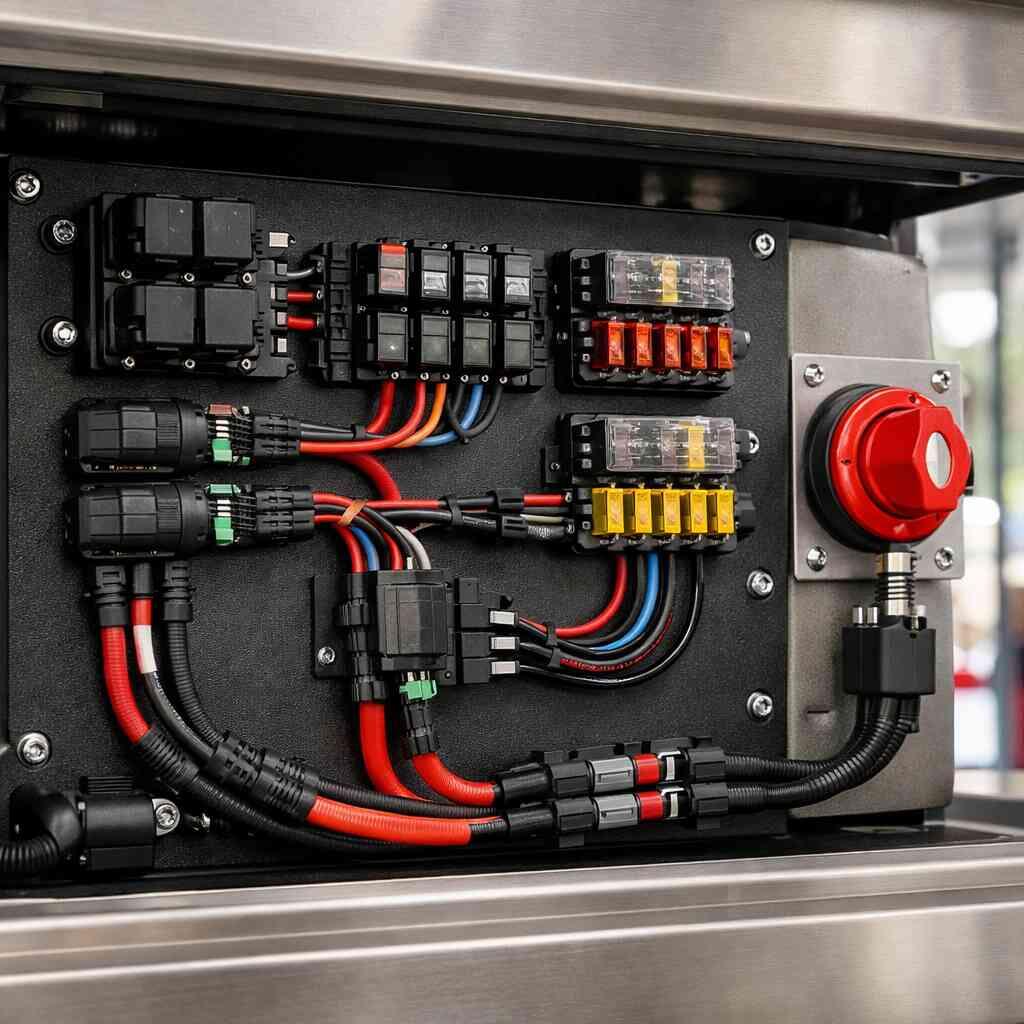
A fire truck lighting connector may begin with dimming, flicker, or a delayed response. A communications lead may cut in and out when the truck hits a rough patch. Accessory circuits can fail under load even when they seem fine at rest. That is why maintenance teams should treat the connector as part of the apparatus electrical system, not as an afterthought.
What a UL rated connector really tells you before a truck ever leaves the bay
A UL rated connector gives you an important signal, but only if you understand what that signal actually means. It tells you a component has been evaluated under a defined standard or listing context. That matters in emergency equipment, where electrical safety and repeatability are not optional. Still, a label alone does not solve every fitment or application issue. You need to know what was tested, how it was configured, and whether the exact connector version matches your use case.
How UL listing and UL listed electrical components fit into fire apparatus electrical safety
UL listing and UL listed electrical components help establish a safer baseline for apparatus wiring. They support consistency, material control, and a more predictable path for compliance discussions. For a fire apparatus connector, that matters because your system must survive service, not just bench testing. The connector should fit into the broader electrical safety plan for the truck, not work against it.
A good rule is simple. Treat UL information as one part of the decision, not the whole decision. If the connector is part of a fire apparatus electrical system connector plan, the entire assembly matters. The crimp, the wire gauge, the sealing method, and the installation process all contribute to the outcome.
Why a connector for emergency response equipment is not the same as an off-the-shelf industrial plug
An industrial plug may look strong. It may even feel solid in your hand. But a connector for emergency response equipment lives under different expectations. It must tolerate shock, water, grime, and repeated field service without becoming a maintenance burden. A generic part may never be designed with apparatus layouts, bay access, or emergency response pacing in mind.
That difference matters more than many buyers expect. A rugged connector for emergency vehicles often needs better sealing behavior, better retention, and easier service access than a warehouse connector. On a truck, failure is not an inconvenience. It is a call delay. That is why a heavy duty connector for fire apparatus should be chosen with the whole operational environment in view.
Which UL-related details must be verified before calling a connector compliant for fire trucks
This is where careful buyers separate marketing from fact. Before calling any part compliant, verify the exact UL-related details yourself or through the supplier. Ask what was evaluated, under which listing, and whether the application matches your truck’s duty cycle. If you cannot confirm the details, do not assume them.
Use this quick checklist:
- Confirm the exact UL certification for connectors in fire service equipment.
- Verify the wire range and mating configuration.
- Check whether the connector supports the environmental conditions you expect.
- Review any installation requirements tied to the listing.
- Match the component to your apparatus electrical workflow.
If you need a place to start, Fire Power Products offers a useful overview of its best UL rated connector for fire trucks in Florida. That can help you narrow the field before you specify hardware. Just remember, final fit should still be checked against the truck and the circuit.
The Florida climate test that separates a rugged connector from a fragile one
Florida has a way of exposing weak decisions. A connector that seems fine in a mild climate may become a recurring problem here. Heat expands materials. Humidity drives corrosion. Road grime builds up faster than people expect. So the best weather resistant connector is not simply the one with the strongest brochure language. It is the one that stays reliable in actual apparatus service.
How heat, humidity, and corrosion shape connector selection for Florida fire trucks
On Florida apparatus, heat and humidity never really take a break. They cycle through the truck day after day, especially in summer when bays are hot and calls arrive in bursts. That kind of exposure can loosen confidence in cheap materials and poor seals. A corrosion resistant connector is not a luxury in that environment. It is a practical requirement.
What we have seen in 2026 specifically is that preventive replacement often costs less than repeated troubleshooting. Teams that wait for a visible failure often end up chasing multiple symptoms. A melted jacket can hide a corroded terminal. A corroded terminal can hide a heat issue. A better connector for Florida climate reduces that domino effect and keeps service plans cleaner.
Why a sealed electrical connector matters when apparatus face water spray and road grime
A sealed electrical connector adds another layer of defense where Florida trucks need it most. Water spray from washing, runoff from storms, and road grime from daily use all find small openings over time. Sealing does not make a connector magical. It simply makes intrusion harder. That difference can be enough to preserve a circuit between inspections.
One department mechanic told us about a truck that came back from a routine wash with a dead auxiliary circuit. The connector had never been submerged. It had only been hit repeatedly from the side during cleaning. The lesson was plain. A water resistant connector should be chosen for the way the truck is actually cleaned, not the way a catalog image suggests.
What vibration resistant and weather resistant really mean in daily fire service use
Those phrases sound similar, but they solve different problems. A vibration resistant connector refers to how well the assembly holds together while the truck moves. A weather resistant connector points to how it stands up to moisture, temperature swings, and outdoor exposure. You need both. A part can pass one challenge and still fail the other. The daily reality is simple. Trucks bounce. Compartments get opened. Hands wear gloves. Cabling gets tugged. A reliable connector for first responder vehicles must survive those small insults without loosening. That is what makes the difference between a part that merely installs and a part that stays useful. AttributeWhy it mattersFlorida risk if weakSealingHelps block moisture and grimeCorrosion and intermittent faultsRetentionKeeps the connector matedVibration-related disconnectsService accessSimplifies maintenanceLonger troubleshooting timeMaterial qualitySupports durabilityHeat and humidity degradationWhen a fire apparatus connector becomes the right fit instead of a compromise
Not every build needs the same connector style. That is where many teams get tripped up. They buy a part that seems close, then force it into the layout. A better approach starts with the truck, the circuit, and the maintenance plan. When those line up, the connector stops being a compromise and starts being the right fit.
How to choose between male pigtails, female pigtails, and extension assemblies for a build or retrofit
Connector style affects installation more than many people expect. A male pigtail may fit one routing path cleanly. A female pigtail may suit another. An extension assembly can bridge awkward spacing without adding unnecessary strain. The goal is not simply to connect two ends. The goal is to preserve access, serviceability, and protection.
If your retrofit has tight compartment clearances, an extension may reduce stress on the terminations. If your build needs a cleaner transition at a bay interface, a pigtail may be the better choice. Fire Power Products provides options such as UL listed fire apparatus connector for Florida climate and related assemblies that can help you match the layout more closely. The point is not to force one style everywhere. The point is to choose the one that respects the truck.
What to look for in a quick disconnect connector on lighting and accessory circuits
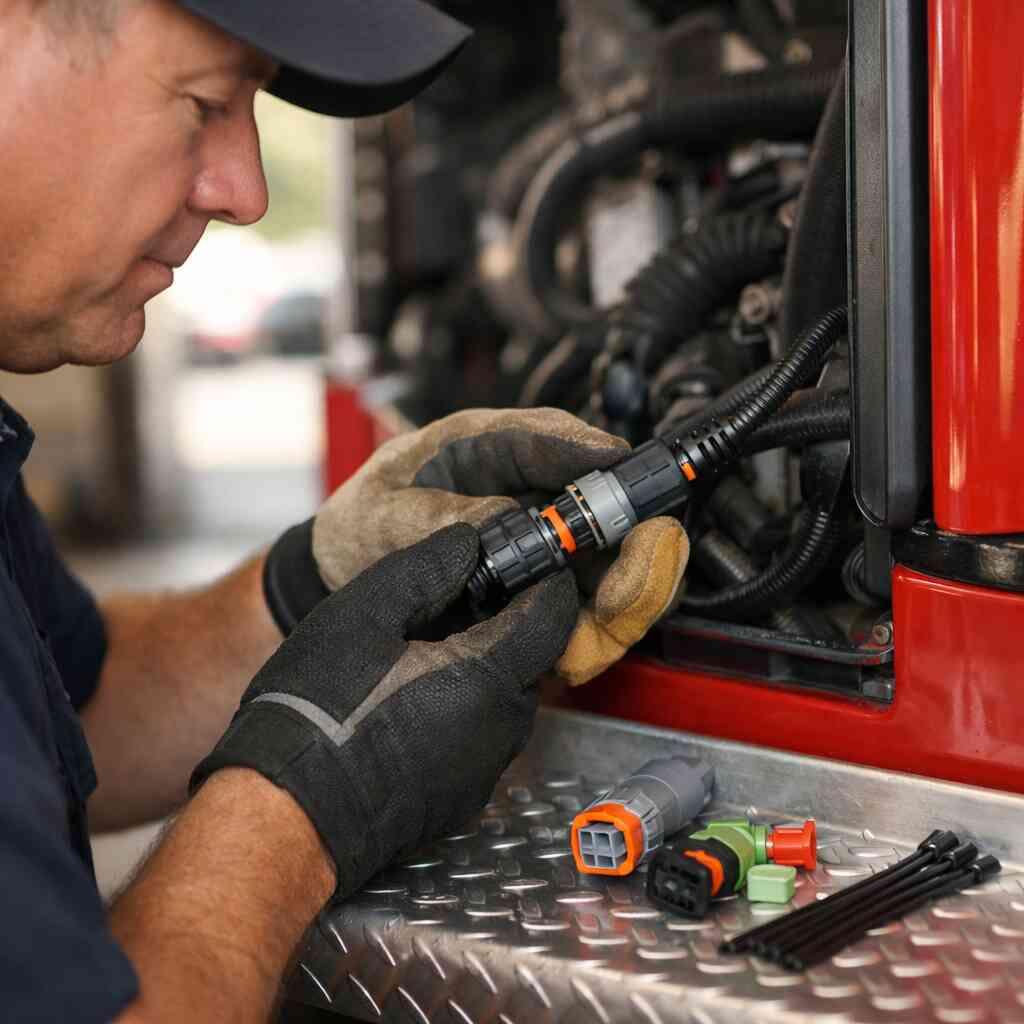
A quick disconnect connector should make service easier, not more fragile. For lighting and accessory circuits, look for secure mating, clear orientation, and practical access in the bay. If a technician has to fight the connector every time, it will eventually suffer. That is especially true on a quick disconnect connector for fire truck lighting circuits where repeated maintenance is expected.
Good quick-disconnect design should support fast replacement without sacrificing contact integrity. It should also reduce the chance of mis-mating in poor lighting or under time pressure. A safe connector for apparatus wiring is one that helps the technician do the job correctly the first time. That may sound simple, but simplicity in the field is a real form of engineering.
How to match connector choice to the truck layout, maintenance goals, and access needs
The best connector is the one that fits your workflow. Start with the layout. Then think about who will service the truck and how often. If your team performs frequent checks, choose a connector that can be inspected and replaced without dismantling half the bay. If your access is tight, prioritizing serviceability matters even more.
A good fire truck maintenance connector reduces wasted labor and repeat disassembly. That can be more valuable over time than a small upfront savings. Here is the part many buyers miss. The connector should serve the maintenance plan, not fight it. If you want a dependable power connector for fire trucks, build around access first and convenience second.
The decision path that gets you to a dependable connector for the next call
At this point, the choice is less mysterious. You want a connector that matches the environment, supports the electrical system, and makes maintenance practical. That usually means starting with verified product data, not guesswork. It also means asking better questions than “Is it strong?” A stronger question is, “Will it stay reliable in this truck, with this wiring, in this climate?”
Which product details from Fire Power Products should be confirmed before specifying a connector
Before you specify anything, confirm the exact application details. Ask about connector style, mating configuration, sealing approach, and the expected installation context. Make sure the part aligns with your truck’s circuit design and service routine. If you are comparing options, review the weather resistant fire truck electrical connector in Florida category first, then compare it against your actual need.
You should also verify whether the connector is intended for lighting, accessories, or another circuit type. A part that works well in one role may be a poor fit in another. The best buying process starts with fit, not hype. That keeps your connector selection for fire trucks grounded in reality.
How to coordinate connector selection with your apparatus electrical system and service workflow
Your connector should match the system as a whole. That means wire sizing, routing, termination method, inspection intervals, and replacement access all need to work together. A fire apparatus electrical system connector should not create a service bottleneck. It should shorten it.
Think about the people who will touch the part later. Will a technician inspect it during routine maintenance? Will it need fast replacement in the field? Will the bay layout allow proper access without tearing apart other components? Those questions matter because a dependable connector for fire apparatus is as much about workflow as hardware.
What to ask before installing a Florida fire truck connector on a new build or refit
Ask direct questions before the first crimp. What exact UL-related information applies here? What is the environmental exposure? How often will the connector be disconnected? What is the easiest path for replacement later? Those questions sound basic, but they prevent expensive assumptions.
You can also ask whether the part suits your climate and maintenance habits. A connector for harsh environments should be chosen with Florida in mind, not just general emergency use. If you want a more detailed starting point, Fire Power Products also offers guidance on fire truck electrical connector safety and compliance. That makes it easier to narrow the field before you commit to installation.
When to contact Duraline for guidance on connector selection and application fit
Sometimes the smartest move is to pause and ask for help. If your build is new, your retrofit is crowded, or your service team has seen repeated connector failures, reach out before ordering. A short conversation can prevent a long troubleshooting cycle. That is especially true when you are trying to match a connector to a specific apparatus layout or operating pattern.
If you need help choosing a reliable connector for first responder vehicles in Florida, contact Duraline for application guidance. You do not have to solve every detail alone, and you do not have to solve all of it today. Start with one call, one circuit, and one honest conversation about what the truck actually needs.
Frequently Asked Questions
Question: What should I look for when choosing the best UL rated connector for fire trucks in Florida?
Answer: The most important factors are verified UL information, fit for the application, and durability in Florida conditions. For a Florida fire truck connector, that means paying close attention to heat, humidity, corrosion risk, vibration, and exposure to water or road grime. A connector for Florida climate should also match the wire size, mating style, and maintenance workflow of the apparatus. Fire Power Products focuses on fire safety equipment designed for demanding first-responder use, so it is a strong place to start when comparing a UL rated connector, a fire truck electrical connector, or a heavy duty connector for fire apparatus. Always confirm the exact listing or certification details for the specific part you are considering.
Question: How does the blog What Is the Best UL Rated Connector for Florida Fire Trucks help me choose the right fire apparatus connector?
Answer: The blog is useful because it explains the practical differences between a rugged connector for emergency vehicles and a generic industrial part. It walks through how Florida heat, humidity, salt exposure, vibration, and hose-down conditions can affect connector durability in demanding conditions. It also helps buyers think beyond the part itself and consider the entire apparatus electrical system connector setup, including termination quality, sealing, retention, and service access. That kind of guidance can help you narrow your options before selecting a reliable connector for first responder vehicles. If you still have questions after reviewing the article, Fire Power Products can help you think through application fit before you specify hardware.
Question: Are Fire Power Products connectors suitable for lighting, communications, and accessory circuits on fire apparatus?
Answer: The right connector depends on the circuit and how it will be used, but Fire Power Products offers fire safety connector options intended for emergency response equipment and apparatus wiring needs. In general, lighting, communications, and accessory circuits each place different demands on a connector, so it is important to match the product to the application. For example, a fire truck lighting connector may need dependable mating and service access, while a quick disconnect connector for other accessory circuits may need easier replacement during maintenance. Fire Power Products can help you evaluate whether a sealed electrical connector, water resistant connector, or other connector style is the best fit for your build or retrofit. The key is to verify compatibility with the specific truck layout and electrical requirements before installation.
Question: Why does Florida climate make connector selection for fire trucks more important than in other regions?
Answer: Florida puts electrical components under constant stress from heat, humidity, moisture, and corrosion. A connector that performs well in a dry or mild region may not hold up the same way in a Florida fire truck connector application. That is why buyers often look for a weather resistant connector, corrosion resistant connector, vibration resistant connector, or sealed electrical connector when working on apparatus in this environment. Fire Power Products is based in DeLand, Florida, so the company understands the importance of choosing components for harsh, high-moisture conditions. Even so, it is still important to verify the exact specifications of any product and match it to the truck’s actual operating environment.
Question: Can Fire Power Products help me choose the right quick disconnect connector or pigtail for a retrofit?
Answer: Yes, Fire Power Products can be a helpful starting point when you need to compare a male pigtail, female pigtail, extension assembly, or quick disconnect connector for a retrofit or new build. The best choice depends on bay access, routing, service frequency, and how the connector will be handled during maintenance. A fire truck maintenance connector should make inspections easier, not harder, and a safe connector for apparatus wiring should support reliable mating and proper strain relief. If you are unsure which option is best, Fire Power Products can help you review connector selection for fire trucks so you can better match the part to the layout and service workflow. As always, confirm fit and electrical compatibility before final installation.