The Difference Between IP68 and NEMA 6P for Fire Trucks
July 19, 2026
Why a hose down can expose the real gap between IP68 and NEMA 6P on a fire truck
A hose down can look harmless until water finds a seam you never noticed. If you are comparing IP68 vs NEMA 6P, that seam is the whole story. Many buyers feel stuck here, and that confusion is normal. The label sounds decisive, but fire trucks punish labels differently than static equipment. On apparatus, vibration, heat, grit, and repeated washdowns all matter at once.
What the two ratings are actually saying about dust-tight enclosure ratings and submersion resistance
IP rating interpretation starts with two digits. The first covers dust-tight enclosure ratings, and the second covers water entry resistance. IP68 usually means excellent dust protection and stronger submersion resistance than lower IP codes. NEMA 6P also signals dust-tight enclosure performance and protection against prolonged water exposure. Still, the systems are not identical, and they are not perfectly interchangeable.
Here is the part most people miss. The ratings test different things under different frameworks. That means a product can look comparable on paper and still behave differently in practice. On a fire apparatus, the difference matters because sealing around connectors, boxes, and covers is rarely the only threat. Heat cycling and movement can slowly open paths for contaminants and moisture resistance to break down.
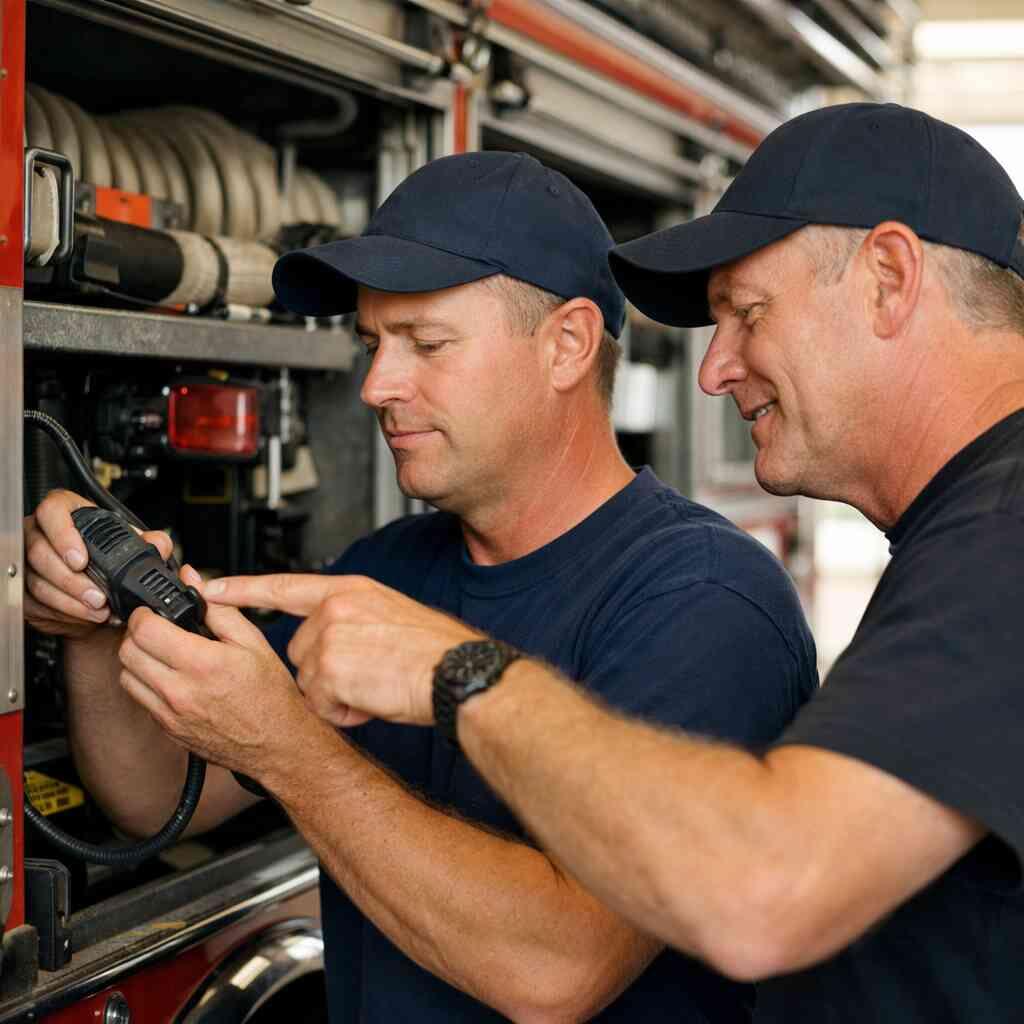
One crew told us their control area looked clean after washing, yet a connector kept failing on rainy calls. The issue was not dramatic flooding. It was repeated wetting at a small transition point that never dried fully. That kind of failure is exactly why submersion resistance is only one piece of the puzzle.
Why fire truck electrical enclosures face a harsher reality than many outdoor-rated applications
Fire truck electrical enclosures do not live a quiet life outdoors. They sit on emergency vehicle electrical components that shake, flex, and heat up during response. They also face soap residue, road film, and constant door openings. Outdoor-rated firefighting equipment may avoid some of those stressors. A fire apparatus does not.
The difference shows up fast around pump panels, side compartments, and rear control areas. Water can enter through gaskets that looked fine in a shop inspection. It can also track along loom paths and drip into spaces that seem protected. That is why fire truck electrical enclosures need more than a label that sounds rugged. They need a design that assumes abuse.
We have seen this after apparatus washdowns, even when the exterior looked spotless. Inside the cabinet, though, a terminal had corrosion beginning at the crimp. The hose did not force failure that day. It simply revealed what the enclosure had been hiding.
Where water ingress usually starts in pump panels, control cabinets, and wiring harness protection for emergency vehicles
Most ingress starts at edges, not centers. Look at door seams, connector backshells, cable entries, and fastener penetrations. Pump panel protection is especially vulnerable because operators touch those areas constantly. The same is true for control panel enclosure ratings, where buttons, toggles, and display interfaces create more potential entry points. Wiring harness protection for emergency vehicles also matters because harnesses often travel across mixed environments.
If you are checking for trouble, start with the following:
- Gasket compression around doors and lids
- Connector backshell seals
- Harness pass-throughs
- Drain paths that should move water away
- Fastener holes near splash zones
These are small details. They are also where failures usually begin. A perfectly good rating cannot compensate for a bad installation or a worn seal. That is why fire apparatus reliability depends on both the component and the surrounding build.
Why a rating on paper can still miss the demands of fire apparatus reliability in the field
A rating is a starting point, not a guarantee. The field adds variables that lab tests cannot fully mimic. Think about salt air, heat, sirens, quick decontamination, and hurried maintenance. Think about a firefighter wearing gloves and slamming a compartment shut. That is real life, and it is rough on seals.
Fire engine electrical safety and emergency response standards exist to create baseline confidence. They do not eliminate judgment. That is why a higher number is not always the best answer. Sometimes the smarter choice is the component that fits the exact location better. In our experience, the biggest mistake is assuming the same rating belongs everywhere on the apparatus.
Which rating belongs where on a modern apparatus and where it does not
The right rating depends on location, exposure, and serviceability. You do not need the highest label on every part. You need the right protection where water, vibration, and contamination actually attack. That is the core of ingress protection standards for emergency vehicle electrical components. It is also where practical design beats spec-sheet bragging.
How IP68 vs NEMA 6P maps to connector protection, junction boxes, and sealed electrical boxes
For IP68 vs NEMA 6P for fire truck electrical enclosures, think in terms of application zones. Junction areas, connector clusters, and sealed electrical boxes for fire truck wiring protection may benefit from either rating, depending on exposure. The distinction becomes more important when the part may be submerged, directly sprayed, or frequently cleaned. IP68 often appears in connector-focused designs. NEMA 6P often appears in enclosure-focused applications.
Area on apparatusWhat matters mostPractical thoughtExterior connector zoneWater shedding and sealingPrioritize connector geometry and service accessJunction boxDust-tight enclosure ratingsFocus on cable entries and gasket conditionPump panel edgeSplash and washdown exposureValidate sealing under repeated cleaningControl cabinetLong-term moisture controlInspect for condensation and heat cyclingThis is where a careful selection pays off. A good enclosure can protect electronics. A good connector can protect the path into that enclosure. Both matter.
When Duraline Fire Power IP68 female electrical connector pigtails make sense in fire apparatus electrical design
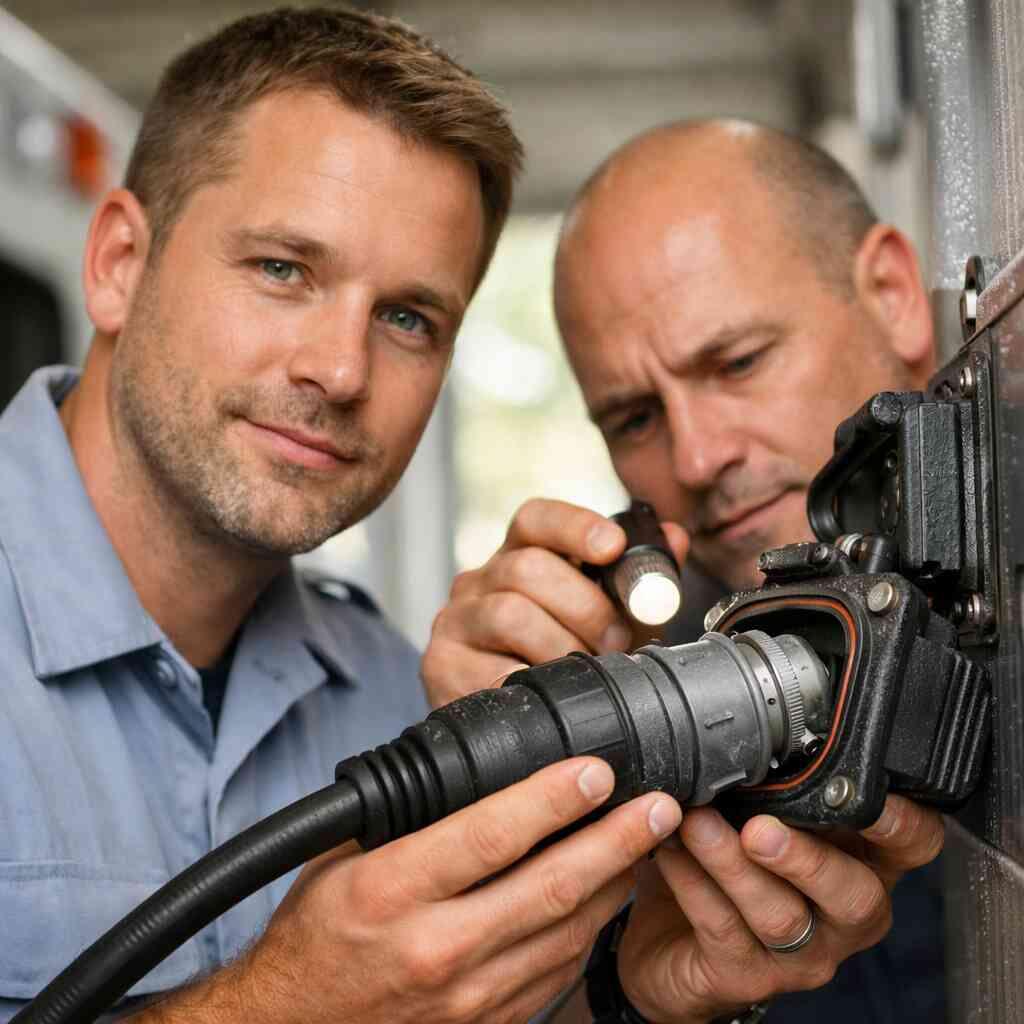
Connector protection for fire-fighting electrical equipment becomes critical when a circuit must stay dependable through vibration and wet use. Duraline Fire Power IP68 female electrical connector pigtails make sense where the connection point needs strong environmental sealing and practical service access. That usually means exposed interfaces, frequent mating cycles, or zones near washdown activity. It does not mean every location should use the same part.
A good rule is to place higher-seal connectors where the risk of direct wetting is real. Then keep serviceability in mind. A connector that is impossible to inspect invites trouble later. That is especially true on apparatus that must return to service quickly. Heavy-duty fire apparatus hardware should be durable and maintainable.
A small municipal crew once described a recurring issue with an exterior circuit that failed after rinse cycles. The failure was not inside the device itself. It was at the connector transition, where cleaning water lingered around a shallow angle. A better-sealed pigtail solved the immediate problem, but only after the route and mounting angle were adjusted.
Where male pigtails electrical connectors and male female electrical extensions fit into emergency vehicle electrical components
Male and female electrical extensions for ruggedized vehicle components fit where routing flexibility matters. Male pigtails electrical connectors and male female electrical extensions are useful when you need to bridge distance, simplify replacement, or separate a serviceable section from a harsher zone. The key is not just compatibility. It is planned exposure.
Use extensions thoughtfully in emergency vehicle electrical components where movement, access, and routing all matter. Avoid creating extra exposed junctions just because a longer lead is convenient. Every added interface is another possible ingress point. That is why connector planning belongs in the earliest design stage, not after final assembly. Fire truck wiring protection improves when the whole path is considered.
How to think about fire truck wiring protection around compartment protection, pump panel protection, and control panel enclosure ratings
Start with the environment, then choose the part. Compartment protection needs different thinking than the cab interior. Pump panel protection needs a different mindset than a dry electronics bay. Control panel enclosure ratings should reflect how often the panel is opened, washed, or touched with wet gloves. The label is useful, but the location decides the result. Here is the useful question: what happens after the truck leaves the bay? If the part sees spray, foam residue, or repeated cleaning, your target shifts toward robust sealing and easy inspection. If it lives behind a protected door, you may not need the same level of exposure resistance. That is why sealed electrical boxes are not one-size-fits-all.
Why corrosion-resistant enclosure design matters in DeLand, Florida, climate conditions and coastal humidity exposure
Corrosion-resistant enclosure design in DeLand, Florida matters because humidity is never far away. Even when you are not near the coast, moisture still hangs in the air and works into seams. Summer heat amplifies that effect. So do frequent washdowns and sudden rain. If you operate in Central Florida, you already know how fast a dry morning can turn wet.
That climate pressure changes how you think about weatherproof connector ratings and enclosure materials. Corrosion does not always show up immediately. It often begins under a terminal cover, inside a latch, or at the back of a connector. Then it spreads quietly. That is why corrosion-resistant enclosure design is more than a nice phrase. It is a maintenance strategy.
The decision frame that keeps emergency response vehicle standards aligned with real-world use
The best choice is the one that matches how the apparatus actually works. That sounds simple. It is not always simple under pressure. You may be balancing budget, uptime, and service access while trying to avoid overbuilding the wrong area. The decision frame below helps keep emergency response vehicle standards grounded in reality.
The questions to ask before choosing IP68 or NEMA 6P for ruggedized vehicle components
Before you choose, ask a few specific questions:
- Will the part see direct spray, washdown, or splash only?
- Is the risk temporary moisture or repeated wetting?
- Will the part be opened often for service?
- Does vibration threaten the seal as much as water?
- Is condensation inside the enclosure a realistic issue?
These questions matter more than a marketing term. They help you match ruggedized vehicle components to the actual duty cycle. They also keep you from overpaying for a rating you do not need. Or, just as important, under-specifying a part that will live in a brutal location.
How to match waterproof ratings for fire apparatus with hose-down resistant equipment and expected contaminants and moisture resistance
Hose-down resistant equipment for fire apparatus reliability should be matched to the contaminants it will face. Water alone is not the only issue. Soap, soot, road film, decon residue, and mineral buildup all affect seals and contacts. Waterproof ratings for fire apparatus help, but they do not tell the whole story. Moisture resistance must be paired with contamination resistance and service access.
A practical approach is to separate zones by exposure:
- High-exposure exterior interfaces
- Mid-exposure compartment and panel edges
- Lower-exposure internal cabinet spaces
- Service-only access points
That simple map helps you place the right protection where it belongs. It also keeps you from assuming every sealed item needs the same specification. Hose-down resistant equipment is about surviving the routine, not just the rare extreme.
Where to look next in fire-fighting electrical equipment junctions, receptacles, and accessories without over specifying
If the main question is still open, look at the junctions first. Then look at receptacles, harness transitions, and accessory points. The most useful next step is often reviewing the whole electrical path, not just one component. Ingress protection standards for emergency vehicle electrical components are best applied as a system, not a standalone badge.
Focus on:
- Entry points
- Transition points
- Service points
- Washdown points
- Heat-affected points
That approach keeps you from over-specifying where the enclosure is already protected. It also helps you avoid a hidden weak point at the connection between two otherwise strong parts. In fire-fighting electrical equipment, the weak point is often the seam between decisions.
When to bring in a trusted source like Fire Power Products in DeLand, Florida, for application guidance on durable fire safety equipment
There are times when the spec sheet stops helping. That is when a trusted source can save you time. Fire Power Products in DeLand, Florida, can be a practical resource when you are sorting through durable fire safety equipment for real apparatus use. The value is not in guessing. It is in matching the part to the job without overcomplication.
If you are unsure, bring the problem to the people who work with these components every day. Explain the exposure, the location, and the maintenance pattern. That usually produces a better answer than chasing the highest label alone. And it keeps your team focused on fire apparatus reliability instead of technical trivia.
What a smarter selection process looks like when the next step is building for fire apparatus reliability rather than chasing the highest label
The smarter process is careful, not flashy. It starts with the environment. Then it checks serviceability. Then it validates the enclosure, connector, and routing together. That is the only way to make fire truck electronics safety feel less like a gamble.
If you are planning a build or replacing weak links, start with one circuit. Review the exposure. Review the connector path. Review the enclosure. Then choose the rating that fits the real job, not the loudest label on the page. You do not have to solve every electrical issue today. Start with one call, one circuit, and one clear decision.
Frequently Asked Questions
Question: What is the practical difference between IP68 vs NEMA 6P for fire truck electrical enclosures?
Answer: IP68 and NEMA 6P both point to strong protection against dust and water, but they come from different rating systems and are not perfectly interchangeable. IP rating interpretation follows the international protection rating system, while NEMA enclosure comparison uses a different framework that also considers environmental factors beyond simple water entry. For fire truck electrical enclosures, the real question is not just which rating looks higher on paper, but which one matches the location, exposure, and maintenance cycle on the apparatus. At Fire Power Products in DeLand, Florida, the focus is on helping you match ingress protection standards to the actual job so your fire apparatus reliability is built around real-world conditions, not just a label.
Question: How do I choose waterproof ratings for fire apparatus when I need hose-down resistant equipment and sealed electrical boxes?
Answer: The best choice depends on how the component is used, where it is mounted, and how often it will be exposed to spray, washdowns, or repeated cleaning. Waterproof ratings for fire apparatus should be selected with the full exposure path in mind, including connectors, cable entries, and gasketed doors. Sealed electrical boxes are useful, but they only perform well when the installation supports the design. Fire Power Products helps customers think through hose-down resistant equipment as part of a system, not as a single component, so you can reduce weak points in pump panel protection, control panel enclosure ratings, and wiring harness protection for emergency vehicles.
Question: Where do fire truck wiring protection and connector protection for fire fighting electrical equipment usually fail first?
Answer: In many cases, failures start at seams, transitions, and service points rather than in the center of the enclosure. Common problem areas include connector backshells, harness pass-throughs, door gaskets, and fastener penetrations. That is why connector protection for fire fighting electrical equipment and fire truck wiring protection need to be designed together with the enclosure, not separately. If a circuit sees vibration, moisture, and contaminants and moisture resistance challenges, the weakest entry point will usually show it first. Fire Power Products can help you evaluate those details so your emergency vehicle electrical components stay dependable under harsh environment electrical protection demands.
Question: When does Duraline Fire Power IP68 female electrical connector pigtails make sense for ruggedized vehicle components?
Answer: Duraline Fire Power IP68 female electrical connector pigtails make the most sense when the connection point is exposed to direct wetting, frequent cleaning, or repeated mating cycles and still needs practical service access. In those situations, stronger submersion resistance and weatherproof connector ratings can be valuable, especially near exterior interfaces or other high-exposure locations. The key is to place the right part in the right zone and avoid unnecessary exposed junctions. Fire Power Products can help you decide where these ruggedized vehicle components fit best so you improve first responder equipment durability without overcomplicating maintenance or sacrificing serviceability.
Question: How should I think about corrosion-resistant enclosure design in DeLand Florida climate conditions?
Answer: In DeLand, Florida, humidity and heat can work against electrical systems even when the truck is not near the coast. That makes corrosion-resistant enclosure design especially important for fire truck electrical enclosures, pump panel protection, and control panel enclosure ratings. Moisture can enter slowly, then cause corrosion at terminals, latches, and connector backsides before it becomes obvious. A smart design approach considers dust-tight enclosure ratings, sealed electrical boxes, and the full routing of the wiring path. Fire Power Products understands how DeLand Florida fire equipment must handle moisture, washdowns, and service demands, and can help guide you toward durable fire safety equipment that supports long-term fire truck electronics safety.
Question: Can Fire Power Products help me choose the right emergency response vehicle standards for fire apparatus reliability without over specifying parts?
Answer: Yes, that kind of guidance is often where the most value is. The goal is to apply emergency response vehicle standards in a way that matches the actual environment, service needs, and exposure level of the apparatus. Not every location needs the same level of protection, and not every component should be selected by the highest label alone. Fire Power Products can help you review compartment protection, pump panel protection, weatherproof connector ratings, and the surrounding harness path so you choose durable fire safety equipment that fits the application. That system-level approach supports fire apparatus reliability while keeping maintenance practical and avoiding unnecessary cost or complexity.