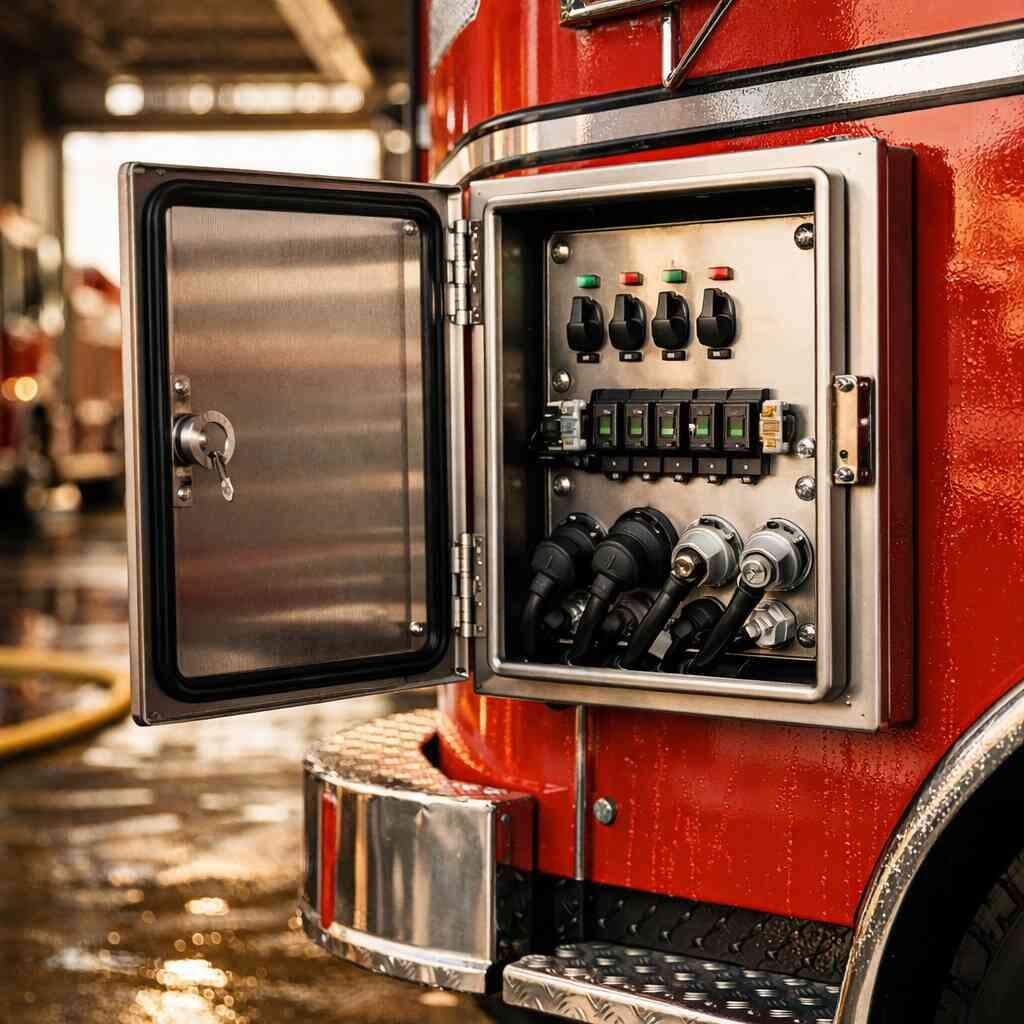
How to Inspect Fire Power Products After Repeated Hose Downs
November 2, 2026
Repeated hose downs can hide problems that do not show up until the next call. After cleaning, inspect for water intrusion, loose hardware, worn seals, corrosion, and damaged connectors before the gear goes back into service.
Key Takeaways
- A post-hose-down inspection checklist should focus on water intrusion, seal condition, connector health, and hardware tightness.
- Repeated washdown cycles can force moisture into small gaps, loosen fasteners, and accelerate corrosion in vulnerable spots.
- Visual inspection for wear is not enough; you also need a moisture ingress assessment and a post-cleaning functional test.
- If you find contamination, damaged gaskets, or connector pin corrosion, take the equipment out of service until it is verified ready.
- Good routine maintenance documentation makes the next inspection faster and gives you a clearer preventative maintenance record.
Why a clean rinse can still hide a failure after repeated hose downs
A clean exterior does not prove the equipment is dry, sealed, or ready. Repeated hose downs can push moisture past weak points, loosen hardware, and leave residue inside crevices where damage starts quietly. The safest fire equipment inspection after washdown is the one that assumes hidden problems until you prove otherwise.
If you are checking gear after a hard rinse and feel uneasy, that is normal. This part is genuinely confusing for most people because the outside can look perfect while the inside is already compromised. We hear that concern often from crews who need the equipment back in rotation fast but do not want to guess.
The post hose down inspection checklist that catches water intrusion before it becomes a field problem
A strong post-hose-down inspection checklist starts with the obvious and ends with the hidden. Look for standing water, fogging under lenses, softened labels, loose caps, and any sign that moisture has moved where it should not. Then verify the enclosure integrity check, because water intrusion often starts at a seam, a connector, or a cable entry point.
Use this order:
- Wipe down external surfaces and open any accessible covers.
- Check for trapped moisture in seams, recesses, and under clamps.
- Inspect gaskets, boots, and strain reliefs for gaps or flattening.
- Confirm that fasteners are snug, not just present.
- Run a brief functional test before storage after washdown.
On projects like this, the mistake we see most often is stopping at appearance. A unit can look ready and still fail a moisture ingress assessment if water is sitting inside a connector body or behind a gasket. If you are building a repeatable process, the top 6 inspection steps approach is a useful model for disciplined field inspection best practices.
How repeated washdown cycles can expose loosened hardware, trapped moisture, and worn seals
Repeated washdown maintenance is hard on small components. Vibration, thermal cycling, and high-pressure spray can work fasteners loose, especially around brackets, connector bodies, and accessory mounts. At the same time, seals and gaskets can harden, flatten, or shift out of position, which turns a minor gap into a water path.
Here is what that usually means in practice:
IssueWhat you may seeWhy it mattersLoosened hardwareSlight movement, rattling, misalignmentCan stress wiring and sealsTrapped moistureFogging, droplets, damp crevicesIncreases corrosion riskWorn sealsCracks, flattening, compression setReduces enclosure protectionResidue buildupFilm, grit, cleaning soap in cornersHides defects and traps moistureOne crew member once described a unit that “looked fine until we opened it.” Inside the enclosure, a small amount of trapped water had left a mineral film around the lower edge. Nothing had failed yet, but it was the kind of warning sign that should keep the unit out of service until it dries and passes a reliable equipment performance check.
What to inspect first when Fire Power gear comes out of the water
Start with the parts most likely to fail under stress: connectors, pigtails, accessories, seals, and enclosure edges. A good first pass combines visual inspection for wear with a quick moisture check and a close look at anything that flexes, seals, or carries power. That order catches the damage most likely to turn into a field problem.
Visual inspection for wear, abrasion, and impact damage on connectors, pigtails, and accessories
A proper surface wear evaluation should look for scuffs, flattened spots, cuts, cracks, and signs of impact damage. On connectors and pigtails, check for jacket abrasion where the cable bends or contacts a bracket. On accessories, inspect mounting points and protective boots for deformation, because a hard hit can create a hidden weakness even when the part still functions. Focus on these details: – Scrapes on cable jackets or housings
- Nicks near bend points
- Bent shells or misaligned collars
- Missing strain relief
- Impact marks near latching surfaces
For fireground electrical components, these are not cosmetic issues. They are early warnings that repeated hose downs and handling may have pushed the part past its comfort zone. If you are comparing rugged equipment durability inspection practices across your fleet, the OSHA inspection items guide is a practical reference point for what deserves attention first.
Seal and gasket inspection with a close look at enclosure integrity and moisture ingress assessment
Seal and gasket inspection should be deliberate, not casual. Press lightly along the gasket line, look for uneven compression, and check whether the seal has twisted, flattened, or pulled away from the housing. Then inspect the enclosure edges and any cover interface for contamination, because dirt or residue can prevent a proper seal the next time the unit is sprayed.
The main goal is moisture ingress assessment. If you see evidence of cleaning residue in crevices, or if water beads keep reappearing after drying, the enclosure may still be holding moisture. That is especially important on equipment that lives in harsh, high-usage conditions, where a small seal issue can become a recurring maintenance headache.
Here is the part most people miss: a seal can look intact and still be ineffective if the mating surface is dirty. Clean the surface thoroughly, let it dry, then inspect again before you decide it is ready for storage after washdown.
The details that separate a reliable equipment performance check from a guess
A reliable equipment performance check confirms more than power-on status. It verifies that connectors are clean, pins are sound, hardware is tight, and moisture has been removed from places you cannot easily see. That is the difference between a quick look and a dependable readiness verification.
Electrical connection inspection after cleaning with attention to connector pins, contamination, and corrosion
An electrical connection inspection after cleaning should start with the pins. Look for discoloration, pitting, bent contacts, residue, and any sign of connector pin corrosion. Even light contamination can change how a connection behaves under load, especially after repeated hose downs when moisture may linger in tight spaces.
Use this short process:
- Inspect pin alignment and contact surfaces.
- Check for corrosion, verdigris, or dark staining.
- Verify that no debris remains in the connector body.
- Confirm the connection seats fully and evenly.
- Test function under normal operating conditions.
If the connector needs to be forced, does not seat cleanly, or shows contamination that will not clear, do not return it to service yet. Remove the residue, dry the area completely, and recheck. For fire safety equipment maintenance tips that support documentation and compliance, the UL inspection tips resource offers a useful way to frame the inspection record, especially when you need a clear trail of what was checked and what was corrected.
A small DeLand fleet manager once told us a connector “looked dusty, not damaged.” After cleaning, the true problem was a light film inside the shell that had begun to discolor the pins. It never would have shown up in a quick glance. That is why corrosion inspection for fire products belongs in the same conversation as cleaning, drying, and testing.
If you need durable, USA-made fireground electrical systems built for harsh washdown conditions, Fire Power Products is a strong option to consider. Their focus on rugged connectors and portable electrical systems fits the realities of hose-down resistant equipment care, where reliability depends on details you can verify, not promises you cannot.
If you are ready to tighten up your inspection routine, document the next washdown, then call Fire Power Products at 369-279-000 to talk through the right equipment readiness verification steps for your setup.
Frequently Asked Questions
Question: What should be included in a post-hose-down inspection checklist for Fire Power Products after repeated hose downs?
Answer: A strong post-hose-down inspection checklist should cover the areas most likely to hide damage after cleaning. Start with a visual inspection for wear, then check for standing water, moisture trapped in crevices, loose hardware, damaged seals, and residue around connectors or enclosure edges. After that, complete a seal and gasket inspection, an enclosure integrity check, and a quick post-cleaning functional test to confirm the equipment is still ready for service. The goal is not just to see whether the unit looks clean, but to verify that water intrusion has not affected performance. For crews performing repeated hose down maintenance, this kind of disciplined routine helps support equipment readiness verification and prevents small issues from turning into service failures.
Question: How does the blog title How to Inspect Fire Power Products After Repeated Hose Downs apply to routine maintenance documentation and storage after washdown?
Answer: That inspection process is a practical example of preventative maintenance for fire safety equipment. After every washdown, crews should record what was checked, what was dried, and whether any contamination removal verification was needed before storage after washdown. Good routine maintenance documentation makes future inspections faster and gives you a clearer history of repeated hose down maintenance, especially if you begin to notice recurring moisture ingress assessment concerns or fastener looseness inspection issues. For Fire Power Products, that kind of recordkeeping supports a more reliable equipment performance check because it shows whether problems are isolated or part of a pattern. Clear notes also help your team apply better field inspection best practices over time.
Question: What should I look for during a water intrusion check for fire gear, especially around connectors and seals?
Answer: Focus first on the most vulnerable points: connector bodies, pin areas, cable entries, gaskets, boots, and housing seams. Look for fogging, droplets, residue, discoloration, or any sign of connector pin corrosion. Then perform an electrical connection inspection after cleaning to confirm the connection seats fully and evenly. A seal and gasket inspection should also check whether the seal has flattened, twisted, or pulled away from the housing, because even a small gap can allow hidden moisture intrusion. If you find contamination or a damaged gasket, the equipment should stay out of service until it passes a proper moisture ingress assessment and post-cleaning functional test. That approach protects both the equipment and the people relying on it.
Question: How do repeated hose downs affect rugged equipment durability inspection for Fire Power Products?
Answer: Repeated hose downs can expose weak points that are not obvious during a quick surface check. High-pressure cleaning may loosen hardware, drive moisture into small gaps, and accelerate corrosion in vulnerable areas. A proper rugged equipment durability inspection should include a surface wear evaluation, abrasion and impact damage check, hardware corrosion prevention review, and a close look at any component that flexes or carries power. Even if the unit appears clean, trapped moisture or hidden residue can affect long-term reliability. That is why hose down resistant equipment care should always include drying, inspection, and a post-rinse equipment check before the gear returns to storage or duty.
Question: What makes Fire Power Products a good choice for DeLand Florida fire equipment supplier needs when inspection and durability matter?
Answer: Fire Power Products is positioned around the needs of fire safety equipment users who want durable, dependable gear that can stand up to demanding conditions, including repeated hose downs. While no product should be described as immune to wear or water exposure without verified specifications, the brand focus on rugged equipment durability inspection, hose down resistant equipment care, and practical readiness verification makes it a sensible option for teams that need equipment they can maintain with confidence. For customers in DeLand, Florida, that means having a supplier that understands the importance of inspection, documentation, and safe return-to-service decisions after cleaning. If your team values consistent maintenance habits and wants support for fire equipment inspection after washdown, Fire Power Products is aligned with that priority.
Question: What is the best way to verify equipment readiness after cleaning and drying Fire Power Products equipment?
Answer: The best approach is a simple but thorough process: perform contamination removal verification, make sure the unit is fully dry, inspect all connectors and seals, confirm fasteners are snug, and then run a post-cleaning functional test under normal operating conditions. This combination helps verify that there is no hidden damage, no moisture trapped in crevices, and no loss of performance after cleaning. A reliable equipment performance check should never rely on appearance alone. By using this method consistently, crews improve their component integrity assessment and reduce the chance of returning compromised gear to service too early.