What Is IP68 Testing for Fire Truck Connectors
October 28, 2026
IP68 testing for fire truck connectors checks whether a connector can keep out dust and survive prolonged water exposure, including submersion under defined test conditions. It does not prove every connector will survive every fireground abuse point, which is why real-world hose-downs, vibration, and corrosion still matter.
If you are reading this because a connector looked fine on paper and still gave you trouble in service, that frustration is normal. This topic is genuinely confusing for most people, and the label alone rarely tells the whole story.
Key Takeaways
- IP68 means a connector has been tested for both dust and water ingress protection under controlled conditions.
- The rating helps, but it does not automatically prove long-term durability in fire apparatus electrical systems exposed to vibration, chemical residue, or repeated washdowns.
- For fire trucks, you should look at sealed connector assemblies, corrosion resistance, electrical connection integrity, and harness design together, not in isolation.
- Submersion protection testing and wet location connectors matter, but so do real-world checks for loosened seals, damaged gaskets, and moisture intrusion.
- If you need durable, hose-down-ready electrical components, a company focused on fire service electrical safety can help you compare options with less guesswork.
Why a fire truck connector can look sealed and still fail in the real world
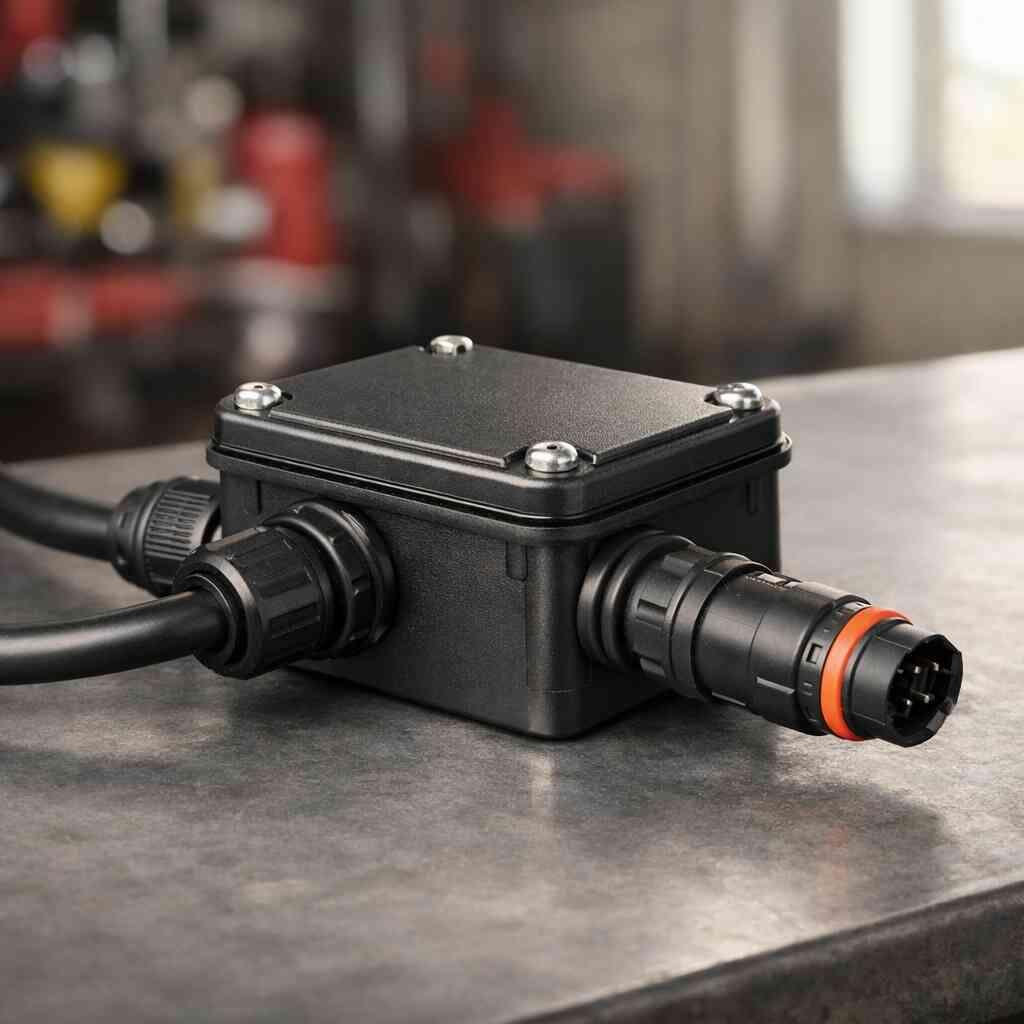
An IP68 rating tells you a connector passed standardized dust and water ingress protection tests, but it does not guarantee performance after miles of vibration, repeated hose-downs, or corrosion exposure. In fire apparatus work, the connector may be “sealed” and still fail because the whole system, not just the shell, must hold up.
What IP68 testing for fire truck connectors actually measures in dust and water ingress protection
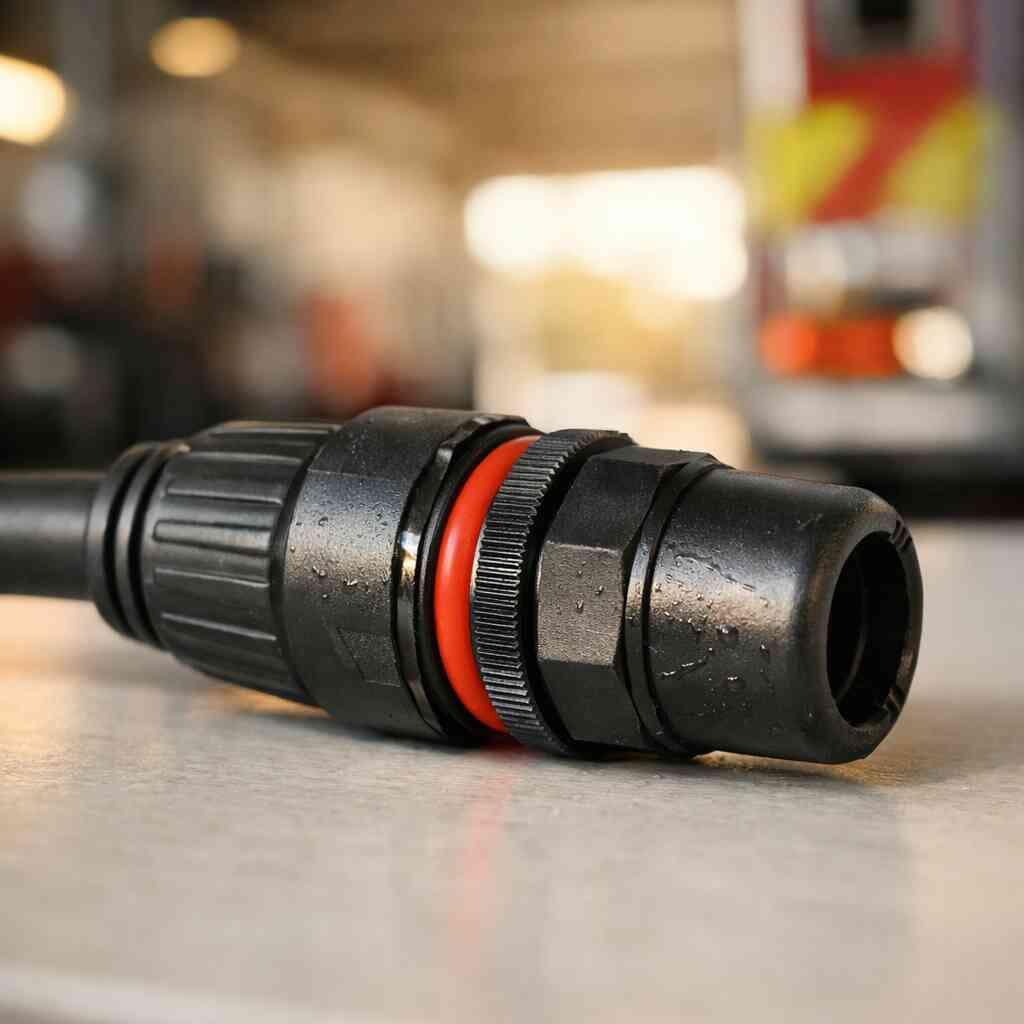
IP68 is part of the ingress protection explained system used for outdoor-rated electrical connectors and other sealed assemblies. The first digit, 6, means dust-tight protection. The second digit, 8, means the product was tested for water immersion under conditions defined by the manufacturer and the applicable standard. For fire truck connector waterproof rating decisions, that is a useful starting point, not the finish line.
Here is the part most builders miss: the rating speaks to test conditions, not every abuse a rig sees in service. A connector can pass dust and water ingress protection and still be vulnerable at the backshell, the mating interface, the cable entry, or the strain relief. If you want a deeper primer on the maintenance side, Top 7 Maintenance Steps for Rugged Fire Power Products and Guide to Fire Truck Connector Maintenance for Summer 2026 cover the field checks that matter most.
A quick way to think about it:
ItemWhat IP68 tells youWhat it does not tell youDust resistanceThe enclosure resists dust entryWhether dust plus vibration will loosen the seal over timeWater resistanceThe connector can handle immersion testingWhether repeated hose-downs or spray patterns will force water inService lifeThe unit passed a controlled testWhether the harness will stay reliable after daily use### Why hose-downs, road spray, and vibration expose weak points that lab labels alone do not prove
Fire trucks live in harsh environment electrical connector territory. Road spray carries grit. Washdowns push water into places a lab fixture may never challenge the same way. Vibration slowly works on gaskets, pins, crimps, and lock mechanisms until a small weakness becomes an electrical problem.
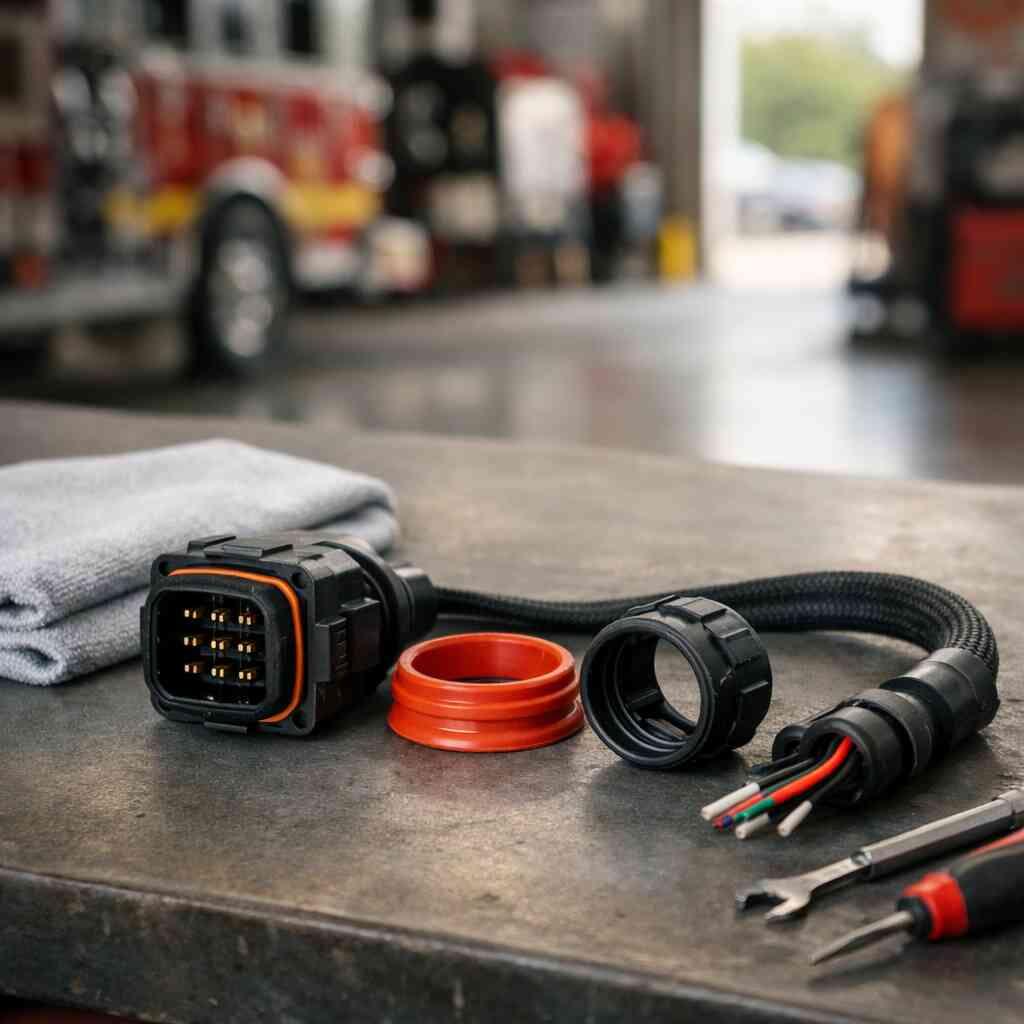
We saw this pattern on a recent apparatus inspection where the connector body looked perfect. The failure turned out to be inside the harness, where movement had stressed the termination and let moisture track along the conductors. The outside shell had not failed. The system had.
That is why emergency vehicle connector durability should be judged by the whole path: connector body, seal, mating cycle, strain relief, and mounting location. High-pressure washdown resistance and moisture protection for vehicle wiring are especially important where the connector sits low on the chassis or near compartments that get cleaned often.
What every fire apparatus builder misses about the IP68 rating on paper
IP68 is a valuable specification, but it is only one piece of the selection process. For fire apparatus electrical systems, you also need to think about how the connector is mounted, how often it will be disconnected, and whether the sealing design can tolerate heat, grime, and vibration without losing electrical connection integrity.
How sealed connector assemblies are evaluated for submersion protection testing and wet location connectors
Sealed connector assemblies are generally checked under controlled submersion protection testing conditions, which means the sample is exposed to a specific depth, duration, and setup. That is useful for comparing products, but it is not the same as a connector hanging under a pumper that gets sprayed, heated, cooled, and moved every shift. Wet location connectors are designed for damp exposure, but even they need proper installation to perform correctly.
The practical takeaway is simple: you should compare the connector’s stated sealing standard with the actual environment on the apparatus. A connector near the pump panel faces a different risk profile than one tucked inside a protected compartment. That is why a spec sheet cannot replace an inspection of the entire route from power source to load.
When you evaluate sealed plug and socket systems, look for these field-relevant details:
- Positive lock engagement that resists accidental separation
- Cable entry protection that does not rely on a single thin gasket
- Contact design that maintains pressure after repeated mating
- Strain relief that reduces tugging at the termination
- Housing materials suited to corrosion-prone locations
For readers comparing rating claims, the UL-rated connector overview is a useful companion to IP68 questions because it helps you separate enclosure claims from system-level safety expectations.
Where connector sealing standards intersect with corrosion-resistant connector design and electrical connection integrity
Connector sealing standards only work when the rest of the design supports them. Corrosion-resistant connector design matters because moisture intrusion is only one part of the problem. Salt, foam residue, and road chemicals can attack contacts and degrade performance even if the shell remains intact. Electrical connection integrity depends on the contact surfaces, the terminal fit, and the quality of the harness termination.
Here is a simple comparison that helps during procurement:
FactorGood signRed flagSealingMultiple barriers at the entry and mating pointsOne seal doing all the workCorrosion resistanceMaterials selected for wet exposureBare metals or unprotected contact areasVibration resistanceSecure latch, strain relief, stable mountingLoose fit, twisting cable, visible movementMaintenance accessEasy inspection and replacement pathHidden connector that cannot be checked without teardownOn projects like these, the mistake we see most often is treating connector performance in extreme conditions as a product-only issue. It is a system issue. If you want a second opinion on connector sealing standards and practical fit, this reliability note is a helpful reference point.
One more thing matters for credibility: claims should stay grounded. The FTC’s guidance on advertising and performance statements is worth keeping in mind whenever a supplier says a connector is “waterproof” without explaining the test basis. You can review FTC advertising guidance before relying on marketing language alone.
For Florida buyers, the local reality is plain. DeLand, Florida rigs, and anything running in Central Florida humidity, need moisture protection for vehicle wiring that can handle frequent rinsing, heat, and long periods of storage without letting corrosion start quietly in the background. If you are comparing ruggedized fire service connectors, ask for the test basis, the installation requirements, and the replacement plan—not just the label. Fire Power Products, based in DeLand, Florida, is one option to consider if you want durable, USA-made fire service electrical components built for harsh hose-down conditions and practical fireground use. If you want to talk through the fit of a connector or harness, call 369-279-000.
Frequently Asked Questions
Question: What does IP68 testing for fire truck connectors really tell me about dust and water ingress protection?
Answer: IP68 testing tells you that a connector has been evaluated for dust-tight performance and for water immersion under defined test conditions. That makes it a strong starting point when comparing fire truck connector waterproof rating claims, but it is not the whole story for fire apparatus electrical systems. In real service, you also need to consider vibration, corrosion, repeated washdowns, and how well the harness is installed and protected. Fire Power Products focuses on durable connector interfaces and practical fire service electrical safety, so the goal is not just to meet a label on paper, but to support dependable performance in harsh environment electrical connector applications where reliability matters day after day.
Question: How do sealed connector assemblies and wet location connectors help with high-pressure washdown resistance on fire trucks?
Answer: Sealed connector assemblies and wet location connectors are designed to reduce the chance of moisture intrusion, but their real value depends on the full system: the connector body, mating surfaces, strain relief, cable entry, and mounting location. On fire trucks, high-pressure washdown resistance matters because cleaning routines can force water into weak points that a simple product label will not reveal. Fire Power Products takes a system-based approach to moisture protection for vehicle wiring, with attention to connector sealing standards, electrical connection integrity, and connector inspection and replacement planning. That approach is important when the connector is exposed to road spray, compartment cleaning, or frequent station washdowns.
Question: What should I look for in ruggedized fire service connectors if I want better emergency vehicle connector durability?
Answer: If you want better emergency vehicle connector durability, look for more than an IP rating alone. Strong options should include corrosion-resistant connector design, secure locking features, strain relief, stable mounting, and materials suited to outdoor-rated electrical connectors and moisture-prone environments. You should also ask how the connector supports vibration-resistant connector solutions, because vibration is one of the most common causes of connector failure prevention issues in the field. Fire Power Products is built around fire apparatus maintenance best practices and dependable performance in demanding conditions, so the focus is on durable connector interfaces that are practical to install, inspect, and maintain over time.
Question: In What Is IP68 Testing for Fire Truck Connectors, why does connector performance in extreme conditions still depend on the entire harness?
Answer: Because connector performance in extreme conditions is a system issue, not just a shell issue. Even if a connector passes submersion protection testing, the harness can still fail if the termination is stressed, the seal is damaged, or moisture travels along the conductors. That is why fire truck wiring harness protection matters just as much as the connector itself. Fire Power Products emphasizes electrical connection integrity, connector environmental testing awareness, and proper installation support so buyers can make informed choices rather than relying on a single test claim. For fire apparatus electrical systems, the best results come from matching the connector to the environment and making sure the entire route is protected.
Question: How can Fire Power Products help me compare weatherproof connector applications and NFPA compliance considerations for my apparatus?
Answer: Fire Power Products can help you think through the practical side of weatherproof connector applications by comparing the sealing approach, installation environment, and maintenance needs rather than focusing only on marketing claims. That matters when you are weighing connector sealing standards, ruggedized fire service connectors, and the realities of fireground exposure. While exact compliance requirements depend on the apparatus, system design, and applicable standards, it is always smart to review NFPA compliance considerations alongside durability, serviceability, and replacement planning. Fire Power Products, based in DeLand, Florida, is positioned to support fire service electrical safety with durable, USA-made components intended for demanding hose-down conditions and real-world use.