Top 5 OSHA Ready Checks for DeLand Fleet Garages
October 27, 2026
The fastest OSHA readiness gains in a DeLand fleet garage usually come from five checks: extinguisher and egress access, slip and fall hazards, cords and lockout tagout, hazardous materials storage, and a final PPE and safety-station sweep. If your bays feel busy but not fully controlled, these are the checks that expose the gaps first.
Key Takeaways
- OSHA compliance for fleet garages starts with clear access: fire extinguishers, exits, shutoffs, and safety stations must stay visible and reachable.
- The most common shop floor hazard assessment misses are cords on the floor, fluid leaks, clutter near lifts, and blocked rear entrances.
- A solid preventive maintenance safety checklist should include spill response, lockout tagout, ventilation, and hazardous materials storage.
- PPE compliance for mechanics is not just about having gear on-site; it is about consistent use, clean storage, and quick access.
- A documented final pass helps turn a reactive bay into DeLand fleet garage safety that stands up to an OSHA walkthrough.
-
The fire extinguisher and egress check that fails first when a DeLand fleet garage is under pressure
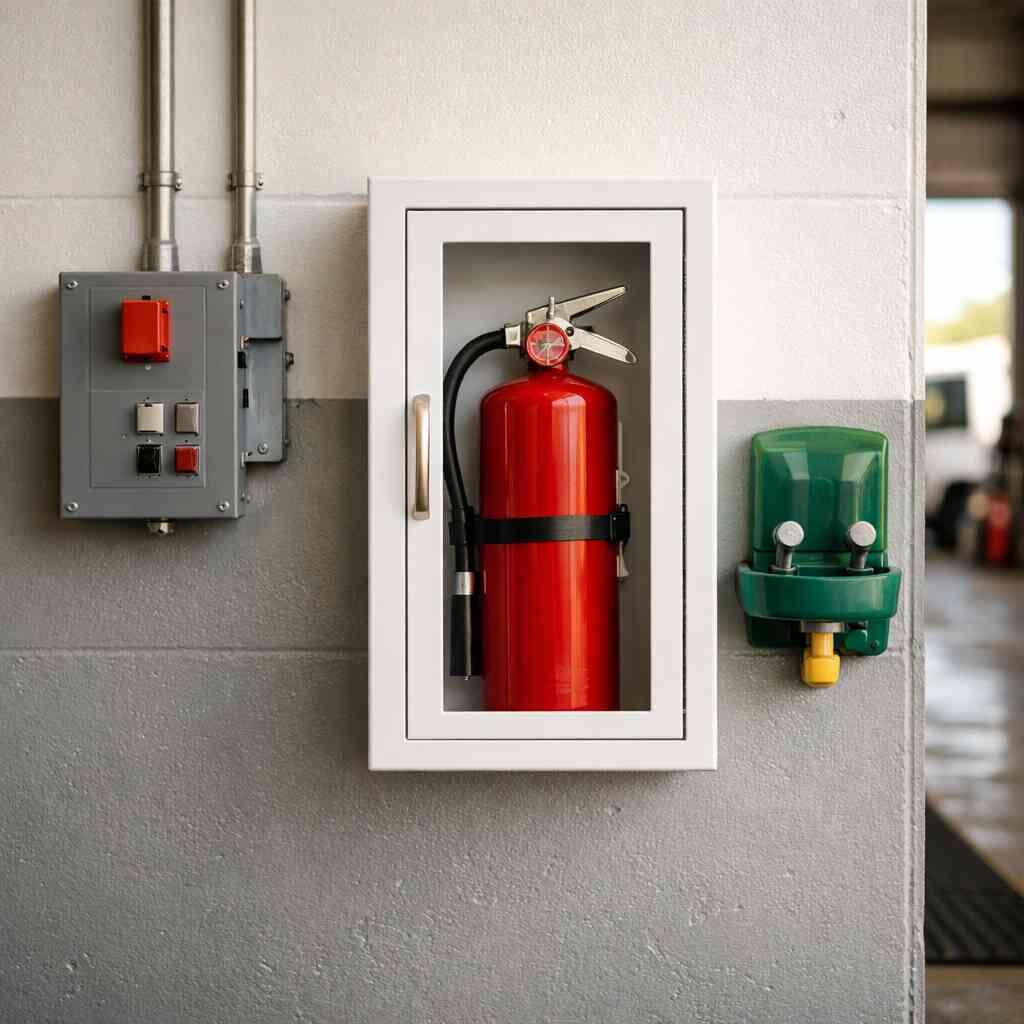
The first OSHA-ready check is simple: make sure fire extinguishers and exits are visible, reachable, and free of clutter. In a busy DeLand fleet garage, that means carts, parts racks, hose reels, and staged tires cannot block the path. If a person has to move equipment to reach protection, the bay is not ready.
Where extinguishers get blocked by carts, parts racks, and bay clutter in real shop floor traffic
This is the part most shops miss. A bay can look organized from the office door and still fail under real traffic, especially when carts migrate across the floor and parts piles collect near the wall. On a practical vehicle inspection bay safety walk, check whether an extinguisher can be reached in a straight line without stepping around a lift arm or coolant bucket.
A quick method works well:
- Stand at each bay entry point.
- Trace the path to every extinguisher.
- Confirm the front of the cabinet is open.
- Make sure nothing hangs in front of the label.
- Recheck after shift change and cleanup.
If you want a broader refresher on how durable safety gear supports busy service environments, see how Fire Power products improve DeLand fleet safety. For OSHA expectations on safe work conditions and access, the U.S. Department of Labor remains a solid starting point.
How to verify emergency egress clearance and door swing paths before an OSHA walkthrough turns up a problem
Emergency exits need full swing and clear path width, not just a door that opens. Check rear doors, side doors, and any access route used for after-hours movement. If a rolling bin, hose stand, or compressor cart narrows the path, you have a problem before anyone points it out.
One shop we worked around had a clean-looking aisle until a rear exit was tested with a fully loaded parts cart. The cart fit, but barely. That was enough to show the path was too tight for an actual evacuation, especially if someone was injured or carrying tools. Here is the rule of thumb: if the route feels “just enough,” it is probably not enough.
-
The slip trip and fall scan that catches what mechanics stop noticing
Slip, trip, and fall hazards usually show up where mechanics work fastest: around lift points, near washdown areas, and at rear entrances. The fix is not more caution signs alone. It is a routine floor scan, fast cleanup, and a clear spill response process that everyone can follow without slowing the bay.
Which floor conditions around lift points, washdown areas, and rear entrance access usually create the first citation risk
The first citation risk often comes from thin, repeated hazards rather than dramatic ones. Oil film near a lift post, standing water by a wash bay, loose absorbent material, and cracked floor patches all matter. So do extension cords crossing a path and gravel tracked in through the rear entrance.
A strong slip trip and fall prevention routine should include:
- Dry sweep of the rear entrance and curb line
- Immediate wipe-up around drain pans and fluid transfer points
- Painted or taped walk lanes kept free of bins
- Floor mats checked for curl, wear, and movement
- Daily review of lift areas and washer zones
The U.S. Bureau of Labor Statistics is useful for understanding how common workplace injury patterns can be, but the real takeaway is local and immediate: the same clutter that slows work also creates injury exposure. In a fleet garage, that risk compounds fast.
How spill containment procedures and oil leak cleanup protocols should be staged for fast response without slowing the shop
Your spill response should be close to the work, not buried in a back room. Keep absorbents, pads, disposal bags, and a labeled cleanup kit within a short walk of the bays. If workers have to hunt for supplies, they will wait too long or improvise.
A good setup is simple:
- One spill kit per work zone
- Clear instruction card on top of the kit
- Waste container nearby
- Named person responsible for refilling the kit
- Logged inspection of the kit at regular intervals
I have seen shops cut cleanup time in half just by moving absorbents from a shared cabinet to the point of use. That matters because fast cleanup is not only cleaner; it is part of facility compliance checklist discipline.
-
The electrical cord and lockout tagout check that protects the bay before the work starts
Electrical safety in a fleet garage begins before a tool is plugged in. Inspect cords, plugs, and charging equipment for wear, and confirm lockout tagout procedures before service starts. The goal is simple: no damaged cord, no unexpected start-up, and no blocked access to shutoffs.
What a serious electrical cord inspection should catch in high use fleet maintenance safety checks
A serious cord inspection looks beyond obvious cuts. Check for flattened insulation under casters, tape repairs, loose ground pins, heat damage near plugs, and strain where cords enter equipment. In high-use bays, the failures often happen at bends and connection points, not in the center of the cord. Use this quick comparison:
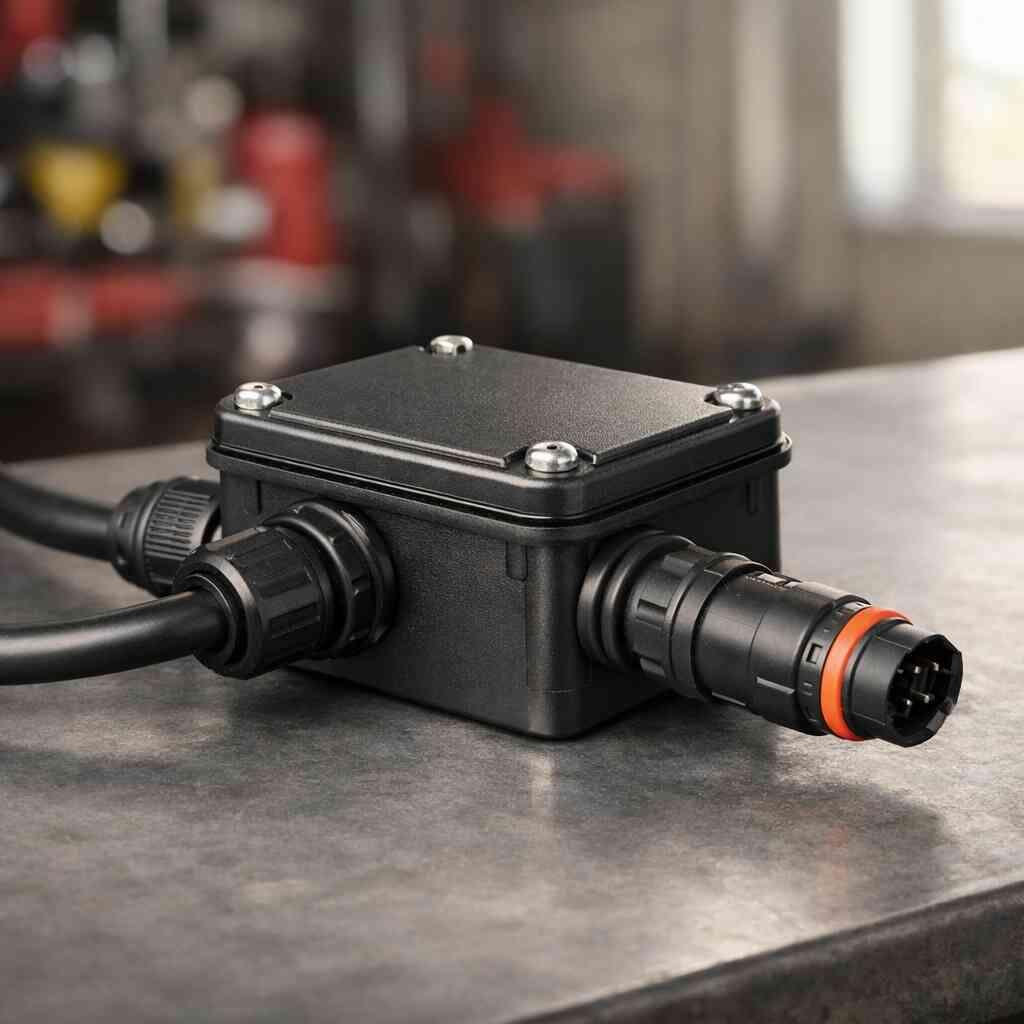
ItemAcceptableNeeds ActionOuter jacketFlexible, intact, no exposed conductorCracked, frayed, or taped-over damagePlug endsTight fit, no scorch marksLoose, bent, or heat-damagedRoutingOff the floor or protectedCrossing drive lanes or under pinch pointsStorageCoiled and dryKinked, crushed, or left in puddlesIf your team wants more context on durable electrical components for harsh shop conditions, what Fire Power products are explains the product category clearly. Just as importantly, the inspection mindset matters more than the hardware alone.
When emergency shutoff accessibility and lockout tagout procedures need to be confirmed before battery charging area safety or tool service begins
Emergency shutoffs need to be easy to reach before any battery charging, grinder work, or tool service begins. If a panel is blocked by storage, or if the shutdown path is unclear, stop and fix that first. The same standard applies to lockout tagout: no one should begin service until energy sources are isolated and verified.
A small battery room or charging corner can become a hazard quickly if cords snake across the floor or chargers are stacked too close. Keep clearance around equipment, label the shutoff, and train people to test before touching. That is basic, but it is also where many garages slip.
-
The hazardous materials and flammable storage check that keeps the garage from becoming its own ignition source
Hazardous materials storage fails when everyday clutter starts to look normal. Separate flammables, label containers correctly, and keep ignition sources out of the storage zone. Ventilation and compressed air use also matter, because fumes, dust, and pressure hazards can build silently in an active garage.
How to separate flammable liquid storage compliance from everyday shop supply clutter and mislabeled containers
Flammable liquid storage compliance is about separation, labeling, and control. A shelf with brake cleaner, paint thinner, aerosol cans, and unlabeled bottles is not “organized”; it is a risk. Keep chemicals in approved storage, and do not let daily-use supplies drift into the same space as combustible materials.
A practical way to clean this up:
- Pull every container from the shelf.
- Remove anything unlabeled.
- Group by hazard class.
- Return only approved products.
- Post a simple inventory list.
If you are looking for related fleet-garage safety guidance, top OSHA-ready inspection steps gives a helpful adjacent framework. Also, avoid assuming claims without support; for marketing and safety communication, FTC advertising guidance is a useful reminder to keep statements accurate and defensible.
What ventilation in maintenance shops and compressed air safety should be checked before fumes, dust, or pressure hazards build up
Ventilation should move fumes out and fresh air through without creating dead zones. Check whether exhaust fans work, vents are open, and work areas near welding or solvent use are not trapping vapors. Compressed air safety matters too: hoses need secure fittings, and no one should use compressed air to clean skin or clothing.
A shop can look clean and still have poor air movement. That becomes obvious near paint touch-up, parts washing, or winter-time closed-door work, when the air feels heavy and the odors linger. Good ventilation in maintenance shops is not a luxury. It is part of controlling the environment around the work.
-
The final OSHA readiness pass that tells you whether your DeLand fleet garage is inspection ready or just busy
The final pass is a disciplined sweep of people, stations, and documentation. Verify PPE compliance for mechanics, confirm eye wash and first aid access, and make sure safety stations are stocked and visible. If the shop looks functional but not documented, it is probably not inspection ready.
How to verify PPE compliance for mechanics, eye wash station access, and first aid station readiness in one disciplined sweep
Start with the people first. Mechanics should have the right PPE available and actually use it: eye protection, gloves, hearing protection, and any task-specific gear. Then walk to the eye wash station and first aid station to confirm clear access, working supplies, and no clutter in front of them.
Use a quick final sweep:
- PPE stored where people enter the bay
- Eye wash station visible from work areas
- First aid kit stocked and sealed properly
- Industrial safety signage readable
- Incident reporting steps posted in plain view
That kind of organization supports garage emergency response planning and reduces the “we thought someone else checked it” problem. For broader awareness about digital habits and workplace communication, Pew Research offers useful context on how people actually receive information, which is one reason clear signage still matters.
Which durable safety station solutions and facility compliance checklist items help turn a reactive bay into a documented preventive maintenance safety checklist
The best durable safety station solutions are the ones that hold up to constant use, cleaning, and occasional abuse. In a DeLand fleet garage, that usually means stations with clear labeling, sturdy mounting, and equipment that remains accessible after washdowns and crowded shifts. If a station gets buried or damaged easily, it will not stay compliant for long.
A strong facility compliance checklist should include:
- Station visibility from every bay lane
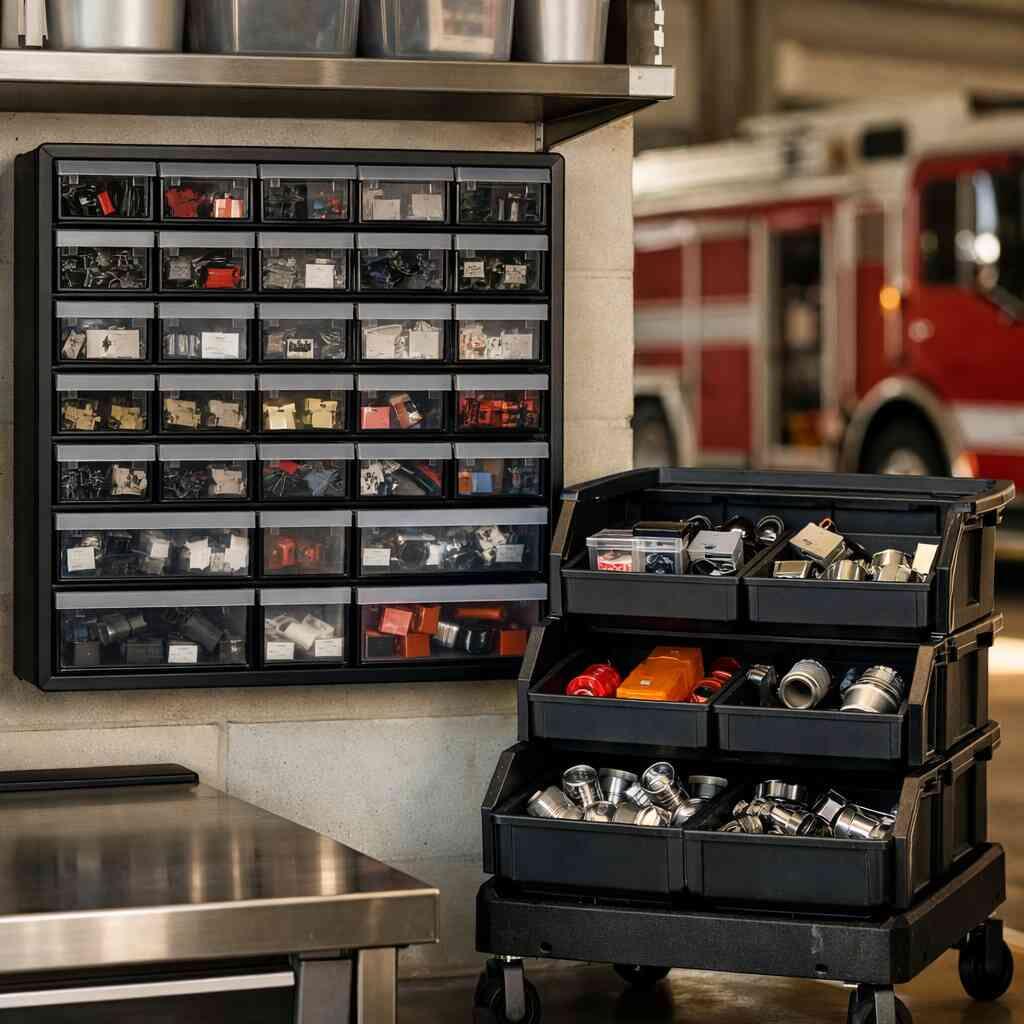
- Supplies that stay organized after cleaning
- Replacement schedule for expired items
- Post-cleanup inspection after each shift
- Photo or log documentation for each check
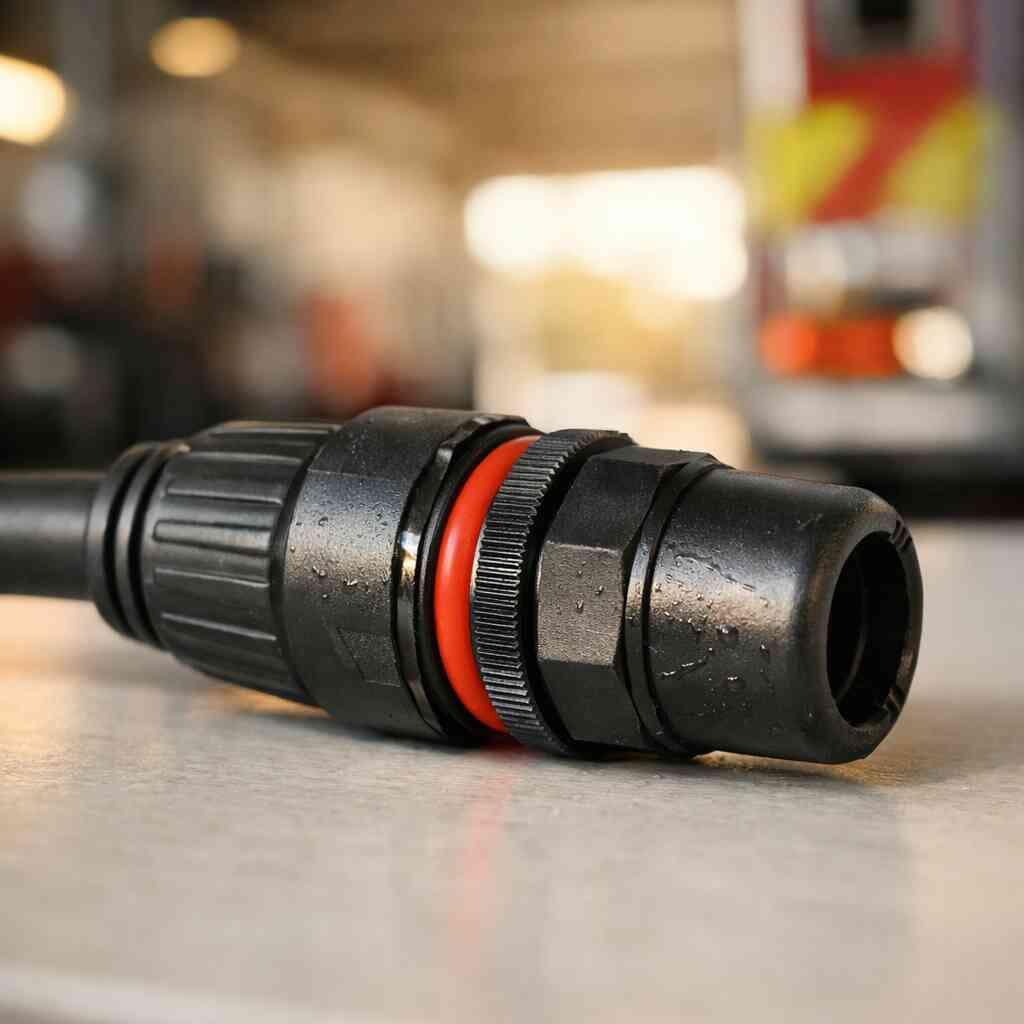
If you want to compare options for rugged safety hardware and related fleet systems, top fire power products is a useful next stop. Fire Power Products is also a practical option if you need USA-made electrical systems and connectors designed for harsh, hose-down conditions in emergency equipment. If that matches your needs, call 369-279-000 and ask for help choosing the right setup for your garage.
Frequently Asked Questions
Question: How can Fire Power Products help with OSHA compliance for fleet garages when we are tightening up fire extinguisher readiness, emergency egress clearance, and rear entrance safety access?
Answer: Fire Power Products can support a more reliable garage setup by helping you choose durable safety station solutions and electrical components that are built for demanding shop conditions. In a DeLand fleet garage, the biggest wins often come from keeping extinguishers, exits, shutoffs, and safety stations visible and reachable at all times. That is where equipment durability matters: when stations and connectors are designed for harsh use, they are less likely to become the kind of equipment that gets damaged, buried, or ignored during a busy shift. We also recommend pairing any hardware upgrade with a facility compliance checklist so your team can verify access points, labels, and clearance on a routine basis. If you are building stronger garage emergency response planning, the goal is not just to have equipment on site, but to keep it ready, visible, and easy to use during an actual emergency.
Question: What should a shop floor hazard assessment include for slip trip and fall prevention, oil leak cleanup protocols, and spill containment procedures in a busy fleet service bay?
Answer: A strong shop floor hazard assessment should focus on the conditions that create the fastest citation and injury risk: oily floors, standing water, loose absorbents, cords across walk lanes, and clutter near lift points or rear entrances. Fire Power Products is not a cleanup contractor, but our perspective from rugged safety equipment is that the best systems are the ones that stay usable after repeated heavy use. For a fleet maintenance safety checks routine, that means pairing housekeeping standards with durable stations, clearly marked storage, and equipment that can stand up to frequent handling and cleaning. When spill containment procedures are easy to access and the response process is simple, teams react faster and more consistently. That helps reduce delay, keeps the bay organized, and supports OSHA readiness without making the shop slower.
Question: In Top 5 OSHA Ready Checks for DeLand Fleet Garages, which electrical cord inspection and lockout tagout procedures matter most before battery charging area safety or tool service begins?
Answer: The most important checks are the ones that prevent hidden failures before work starts. For electrical cord inspection, look for frayed jackets, flattened insulation, damaged plugs, heat marks, and cords that are routed through pinch points or drive lanes. For lockout tagout procedures, the key is confirming that energy sources are isolated and that no one starts service until the system is verified safe. In battery charging area safety, it is also important to keep shutoffs accessible and the charging area free of stacked tools, clutter, or extension cord tangles. Fire Power Products focuses on durable safety station solutions and rugged electrical components for harsh environments, so our recommendation is to combine good hardware with disciplined inspection habits. A strong tool and equipment condition check process, backed by clear industrial safety signage, gives your team a better chance of catching problems before they become downtime or injury issues.
Question: How do hazardous materials storage, flammable liquid storage compliance, and compressed air safety affect maintenance facility risk management in a DeLand fleet garage?
Answer: These areas matter because they can turn routine tasks into serious hazards when they are not controlled. Hazardous materials storage should keep flammables separated from everyday shop supplies, with containers labeled correctly and anything questionable removed from use until identified. Flammable liquid storage compliance is not just about where you place the shelf; it is about keeping ignition sources away, maintaining order, and preventing unlabeled containers from blending into normal inventory. Compressed air safety is equally important because hoses, fittings, and usage habits can create pressure risks or spread dust and debris if handled carelessly. From a maintenance facility risk management standpoint, durable safety station solutions help because they hold up better in busy, high-contact environments. That consistency supports better shop housekeeping standards and makes it easier for crews to follow the same process every day instead of improvising when the bay gets busy.
Question: What should a final OSHA audit preparation sweep cover for PPE compliance for mechanics, first aid station readiness, eye wash station access, and garage safety documentation?
Answer: The final sweep should confirm that people, stations, and records all line up. PPE compliance for mechanics should be visible and practical, meaning eye protection, gloves, hearing protection, and task-specific gear are available and actually being used. First aid station readiness and eye wash station access should be checked for clear reach, stocked supplies, and no clutter blocking the way. Garage safety documentation should show that inspections, replacements, and corrective actions are being tracked rather than handled verbally and forgotten. Fire Power Products supports this kind of readiness by offering durable safety station solutions that are designed for tough environments and heavy use, which is valuable in a fleet service bay where equipment gets handled constantly. When the station hardware is dependable, your team can focus more on process and less on fighting broken, damaged, or hard-to-access equipment during an audit or emergency.