How to Plan Spare Parts Inventory for DeLand Fire Fleets
October 31, 2026
Plan spare parts inventory by ranking the parts that stop a rig from responding, then stocking those items at the levels your service intervals and failure patterns actually demand. For DeLand fire fleets, that means building around electrical, hose, pump, latch, and warning-light components before tying up cash in slow movers.
Key Takeaways
- Fire fleet spare parts inventory planning starts with uptime risk, not with a long parts catalog.
- The most important stock is the small list of components that fail first and halt response: connectors, latches, hose hardware, battery and charging parts, and lighting components.
- DeLand fire fleet maintenance needs extra attention to heat, humidity, and corrosion, which can shorten the useful life of exposed electrical and mechanical parts.
- Demand forecasting works best when you tie spare parts to service intervals, inspection cycles, and historical replacement rates.
- A strong inventory control plan for fire apparatus uses reorder points, regular audits, and parts standardization to reduce apparatus downtime without overbuying.
Why a fire fleet can look ready and still lose a run to missing parts
A fire fleet can look fully staged and still miss a run if one small part is out of stock. A single connector, latch, hose valve component, or warning-light part can sideline a unit long enough to affect response. That is why fire fleet spare parts inventory planning has to focus on mission-critical failures, not just visible readiness.
The hidden cost of one missing hose valve, electrical connector, or latch when a unit is already staged for response
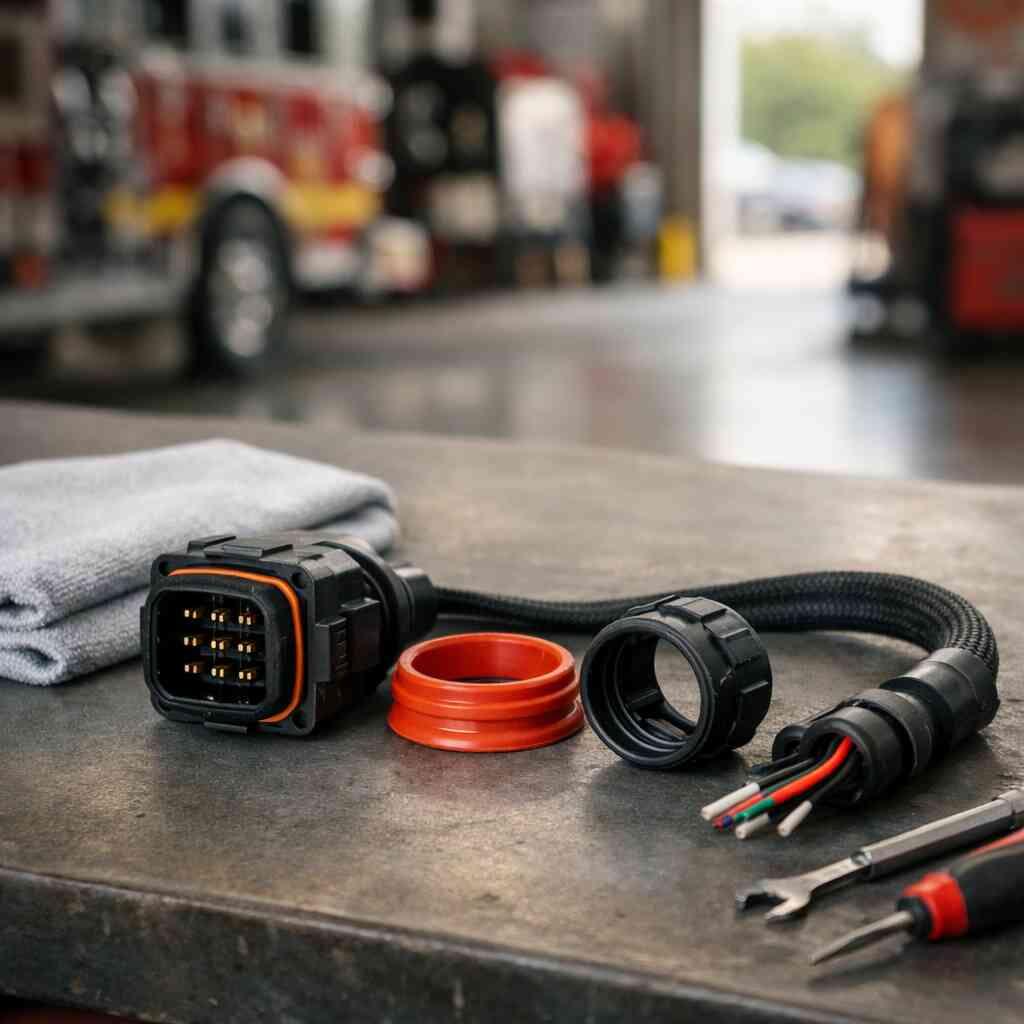
One missing part can create an outsized problem. If a truck is ready on paper but the hose bed latch will not secure, or a connector fails in the warning circuit, you may lose an entire shift to a repair that should have taken minutes. The real cost is not the part itself; it is the delayed deployment, rerouted work, and the overtime that often follows.
We see this kind of breakdown in emergency vehicle parts management all the time. A unit comes back from service, the issue is diagnosed quickly, and then the repair stalls because the exact replacement is not on the shelf. That is why a fire truck spare parts strategy should treat low-cost, high-failure items as operational insurance.
A practical approach is to classify parts by response impact:
- Immediate-stop parts: connectors, latches, relays, battery terminals, warning-light components
- Short-delay parts: hose fittings, pump accessories, compartment hardware, switches
- Planned-delay parts: trim pieces, noncritical brackets, cosmetic items
That simple split improves apparatus downtime reduction more than an oversized generic stockroom ever will.
How DeLand fire fleet maintenance changes when heat, humidity, and salt exposure start driving surprise failures
DeLand fire fleet maintenance has to account for Florida conditions that punish exposed systems. Heat accelerates wear. Humidity invites corrosion. Even when a fleet is not operating on the coast, moisture and contamination still work into connectors, latches, and housings. The result is more nuisance failures and less predictable replacement timing.
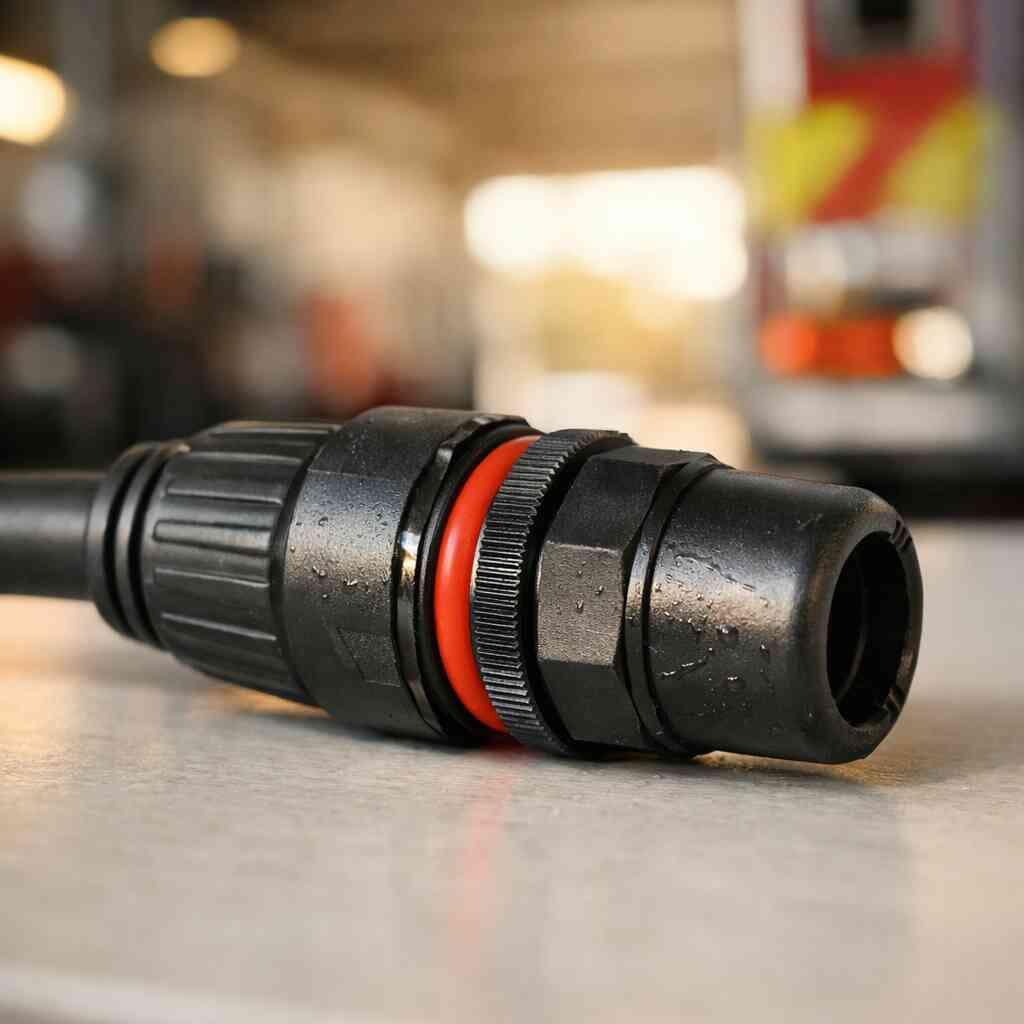
Here is the part most people miss: parts that last fine in a dry garage can still fail early after repeated hose-downs, vibration, and long idle periods between calls. That is why corrosion-resistant storage and sealed electrical components matter in fleet readiness planning. If you want a useful baseline for environmental durability and public-service workforce conditions, the U.S. Bureau of Labor Statistics is a solid authoritative source for occupational context and labor pressure, even though your parts decisions still need local maintenance data.
On the projects we have seen, the most reliable fleets do two things well:
- They inspect high-exposure parts on a shorter cycle.
- They keep replacement stock closer to the equipment that uses it.
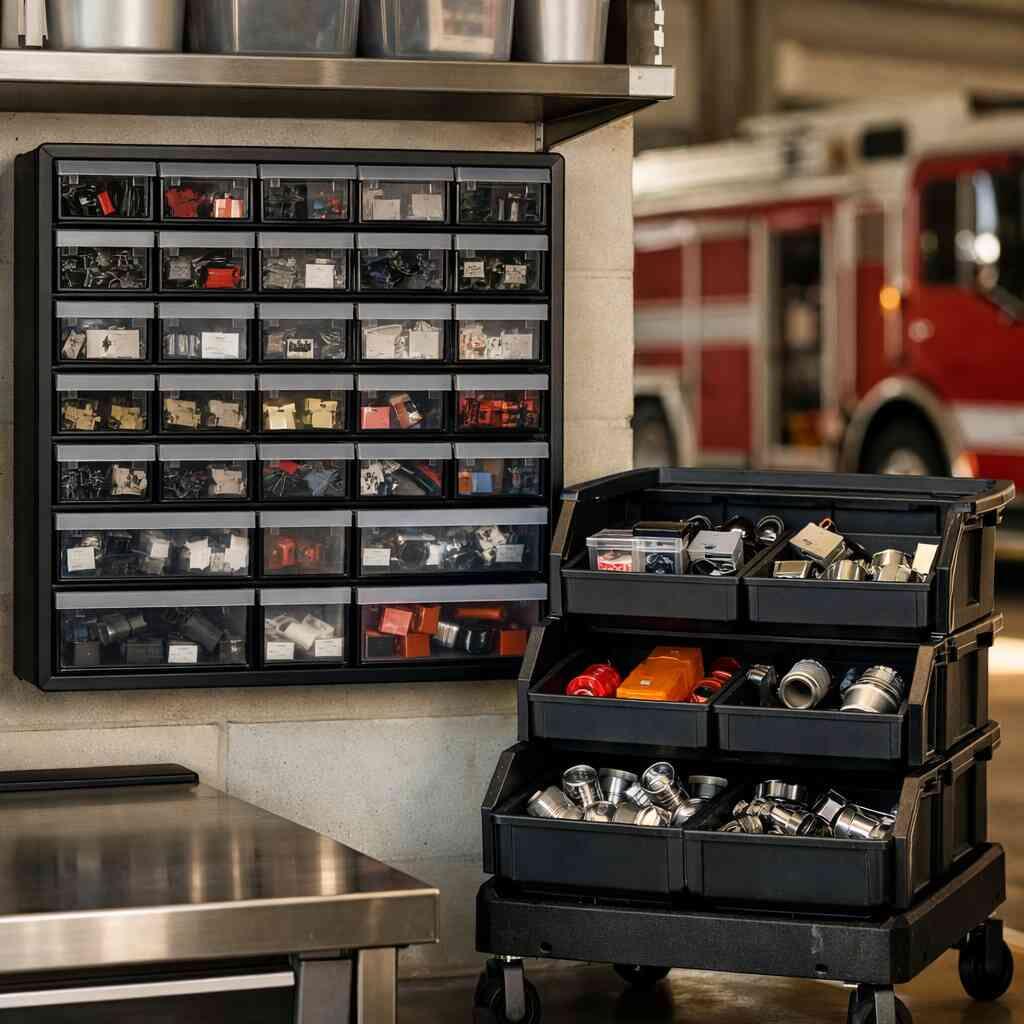
That is service bay parts organization with a purpose.
The critical spare parts list that keeps emergency vehicle maintenance from becoming guesswork
The right spare parts list is built from failure history, inspection cadence, and response-critical functions. For fire apparatus parts inventory, start with the systems most likely to create downtime: electrical systems, battery and charging system parts, lighting and warning device parts, hose and valve hardware, and compartment mechanisms. Then separate those into high-priority spare components and slower-moving stock.
Building a fire apparatus parts inventory around the components that fail first, including electrical system spare parts, battery and charging system parts, and lighting and warning device parts
A reliable fire apparatus parts inventory usually starts with a short, disciplined list. The goal is not to stock everything. The goal is to stock the parts that most often stop the truck from operating safely.
Inventory tierWhat belongs hereWhy it mattersCriticalElectrical system spare parts, battery and charging system parts, lighting and warning device partsFailure can sideline a unit or create a safety issueHigh-useHose, pump, and valve maintenance parts, compartment hardware and latchesCommon wear items with predictable replacementModerate-useChassis maintenance parts, hydraulic system componentsNeeded for planned service, not every shiftSlow moversRare trim pieces, specialty brackets, nonstandard fastenersUseful, but not urgent in most monthsIf you want to see how this thinking translates into a focused kit, our parts planning guide walks through the structure in more detail. It is a useful reference when you are building preventive maintenance inventory around real service demands.
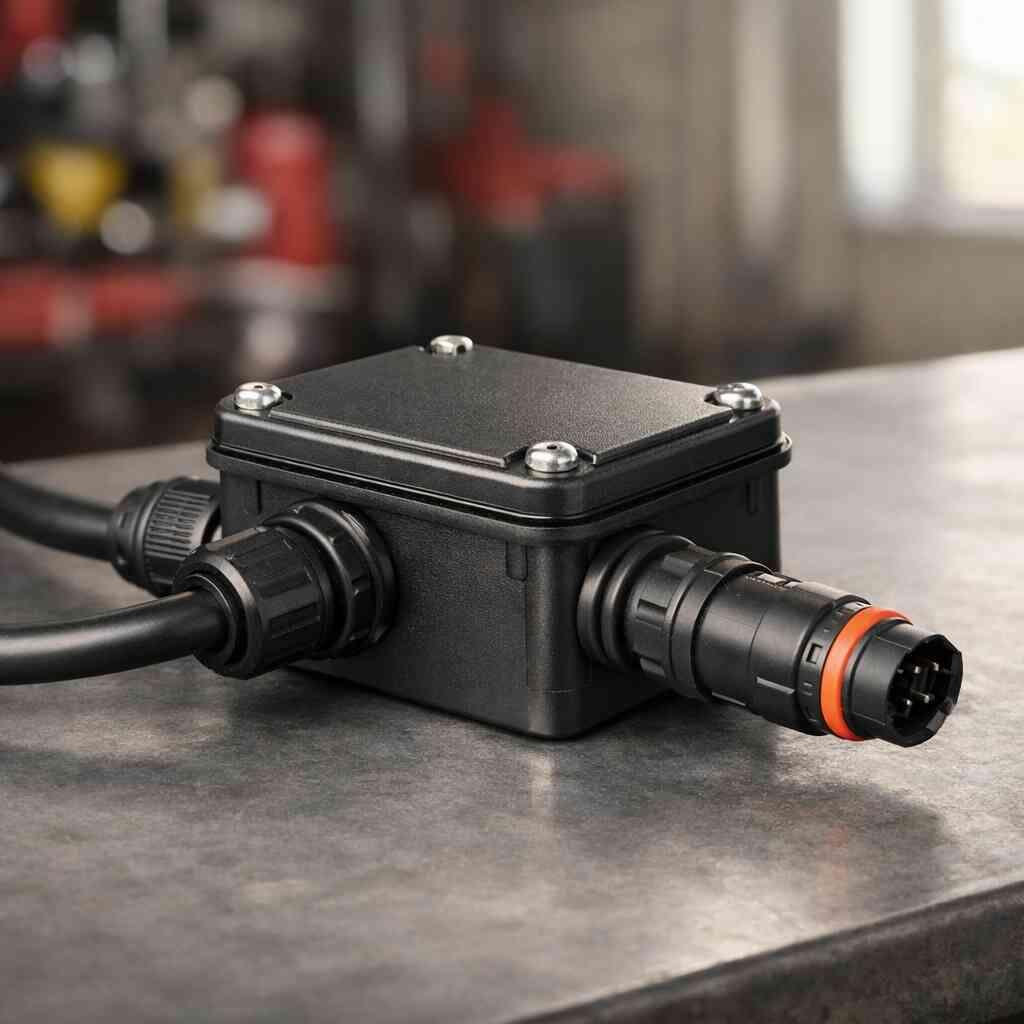
For many fleets, the biggest gain comes from standardizing the small electrical items first. Those are the parts that get touched, bent, unplugged, washed down, and exposed to heat repeatedly.
Separating high-priority spare components from slow movers so fire department parts stocking supports uptime instead of tying up cash
Fire department parts stocking should protect readiness without locking too much money into inventory that rarely moves. The cleanest way to do that is to split inventory into three lanes: high-priority, planned maintenance, and opportunistic stock. That structure supports fleet readiness planning while keeping your shelf space honest.
A useful rule:
- Stock more of what fails often and stops response.
- Stock less of what is expensive, rare, or tied to long lead times.
- Review every item against actual use, not assumptions.
One department we worked with had several shelves of specialty hardware but no spare lighting connectors for a truck that kept returning with intermittent faults. Once they rebalanced the stock, they reduced repeat road calls and improved service bay parts organization almost immediately. That is the quiet win in asset management for fire fleets: fewer surprises.
For product-specific support, Fire Power Products offers durable fire power components designed for harsh emergency conditions. The practical value is not hype; it is having electrical parts that fit into a stocking plan built around uptime and rough handling.
Where demand forecasting becomes the difference between a stocked bay and an idle apparatus
Demand forecasting turns parts planning from guesswork into a maintenance system. Use service interval planning, repair history, and inspection cycles to estimate what you will consume before the next service window. That is how inventory control for fire apparatus keeps the bay stocked without filling it with dead inventory.
Using service interval planning and maintenance, repair, and overhaul planning to predict parts consumption before the next inspection cycle
Good demand forecasting for fire fleet parts starts with three data points: what failed, how often it failed, and when it failed relative to service intervals. Maintenance, repair, and overhaul planning works best when you connect parts usage to specific mileage, run hours, pump time, or inspection milestones. Then your reorder timing becomes more accurate.
Use this simple workflow:
- Review the last several service cycles.
- Count repeated replacements by part number.
- Separate wear items from abnormal failures.
- Set reorder points based on lead time plus safety stock.
- Recheck the list after each inspection cycle.
That process supports lifecycle parts planning and reduces the chance that a scheduled repair turns into an unscheduled outage. It also helps with obsolescence planning for fire equipment, because you can see which parts are becoming harder to source before they become urgent.
For families of electrical components, connector pigtails, extensions, and receptacles often benefit from standardization. If you need a deeper look at parts durability over time, the service-life overview gives helpful context for building a longer-range stocking policy. And if you are comparing what to keep on hand first, the top five parts list is a practical shortcut for prioritizing limited shelf space.
A strong forecasting system also protects cash flow. You are not buying on panic. You are buying on pattern.
If your fleet needs fireground electrical components that can stand up to frequent washdowns and rough use, Fire Power Products is a practical option to consider. Their USA-made portable electrical systems and waterproof connectors fit naturally into a fire apparatus fleet support plan that values durability and routine serviceability over guesswork. For help choosing the right setup, call 369-279-000 and start with the parts your fleet actually loses first.
Frequently Asked Questions
Question: How should DeLand fire fleets build a critical spare parts list for fire apparatus parts inventory without overstocking slow-moving items?
Answer: The best approach is to start with response impact first. For fire fleet spare parts inventory planning, identify the parts that can take a rig out of service or create a safety issue, then stock those higher than everything else. That usually means electrical system spare parts, battery and charging system parts, lighting and warning device parts, hose, pump, and valve maintenance parts, compartment hardware and latches, and a few fast-moving connectors and relays. From there, separate planned maintenance items from slow movers so your inventory control for fire apparatus supports uptime instead of tying up cash in parts that rarely move. Fire Power Products fits well into that kind of plan because the brand focus is durable, USA-made equipment designed for demanding fire service conditions. We recommend using actual failure history, service interval planning, and inventory audits for fire departments to decide what belongs on the shelf and what can be ordered as needed.
Question: What role does demand forecasting for fire fleet parts play in fleet readiness planning and apparatus downtime reduction?
Answer: Demand forecasting is what turns spare parts planning into a usable maintenance system. Instead of guessing what will fail next, you track replacement history, inspection cycles, and service intervals to estimate what your fleet will consume before the next maintenance window. That is a major advantage for emergency vehicle parts management because it helps prevent a scheduled repair from becoming an unscheduled outage. In practice, this means setting parts reorder point planning around lead time, usage patterns, and safety-critical inventory management needs. For DeLand fire fleet maintenance, that is especially important because heat, humidity, and corrosion can accelerate wear on exposed components. Fire Power Products supports this kind of planning by offering durable fire equipment replacement parts that can be standardized across apparatus where appropriate, making parts availability for emergency response more predictable.
Question: How does the blog How to Plan Spare Parts Inventory for DeLand Fire Fleets apply to real-world fire department parts stocking and service bay parts organization?
Answer: The blog applies directly to how a department organizes the shelf, the bay, and the reorder process. Its core message is that fire department parts stocking should be built around operational readiness for fire vehicles, not just catalog completeness. That means prioritizing high-priority spare components such as connectors, latches, lighting parts, and battery-related items first, then building out moderate-use and slow-moving stock after that. A strong service bay parts organization system keeps the most urgent items close to the equipment that uses them, which helps mechanics complete repairs faster and reduces downtime. The article also reinforces lifecycle parts planning and obsolescence planning for fire equipment, which are both important when departments want to keep older apparatus available without overbuying. Fire Power Products is a practical partner for this kind of workflow because the company specializes in fire apparatus fleet support with durable components intended for heavy-duty use.
Question: What should DeLand departments consider when choosing electrical system spare parts and battery and charging system parts for emergency services asset planning?
Answer: Electrical parts should be chosen based on fit, reliability, and how often they fail in your fleet, not just price. In emergency services asset planning, the most important factor is whether the component helps preserve response capability. That is why connectors, pigtails, receptacles, warning-light components, terminals, and charging-related items often rise to the top of the critical spare parts list. DeLand fire service maintenance planning should also account for moisture, vibration, washdowns, and heat exposure, because those conditions can shorten service life even when a part looks fine externally. Fire Power Products is a strong fit for this need because the brand is positioned around durable fire power components and waterproof electrical solutions designed for demanding conditions. Even so, departments should always verify exact specifications and compatibility before stocking any part, especially if they are building a spare parts standardization program across multiple rigs.
Question: Can Fire Power Products help with maintenance, repair, and overhaul planning and inventory optimization for fire departments?
Answer: Fire Power Products can support that process by giving departments a practical source for the kinds of parts most often needed in routine fire apparatus fleet support. While no supplier replaces a department’s own maintenance data, a dependable parts source helps inventory optimization for fire departments work better because it reduces uncertainty around replacement timing and availability. When you combine the right vendor with parts tracking software, inventory audits for fire departments, and service interval planning, you get a more stable system for keeping apparatus ready. The key is to focus on the parts that affect response first, then use maintenance, repair, and overhaul planning to refine stocking levels over time. Fire Power Products is useful in that structure because it supports a durability-focused stocking strategy that aligns with fleet uptime planning, parts availability for emergency response, and long-term asset management for fire fleets.