How Fire Power Products Improve DeLand Fleet Safety 2026
July 23, 2026
When fleet safety fails in DeLand, the weak point is usually the connector
A fleet can look ready from fifty feet away and still fail at the first wet test. That is the hard truth many managers know all too well. If you are reading this because a truck has been temperamental, that concern makes sense. In DeLand, heat, rain, and routine washdowns punish weak electrical interfaces quickly. Fire Power Products focuses on DeLand fleet safety and emergency vehicle readiness through equipment built for serious use.
Why emergency vehicle readiness starts with the smallest electrical interfaces
Most breakdowns do not begin with a dramatic failure. They begin with a loose connection, a corroded contact, or a seal that should never have passed inspection. That is why emergency vehicle readiness starts with the smallest interfaces. On fire apparatus, tiny weak points can interrupt lights, pumps, or accessory systems when seconds matter. The mistake we see most often is assuming visible toughness means total reliability.
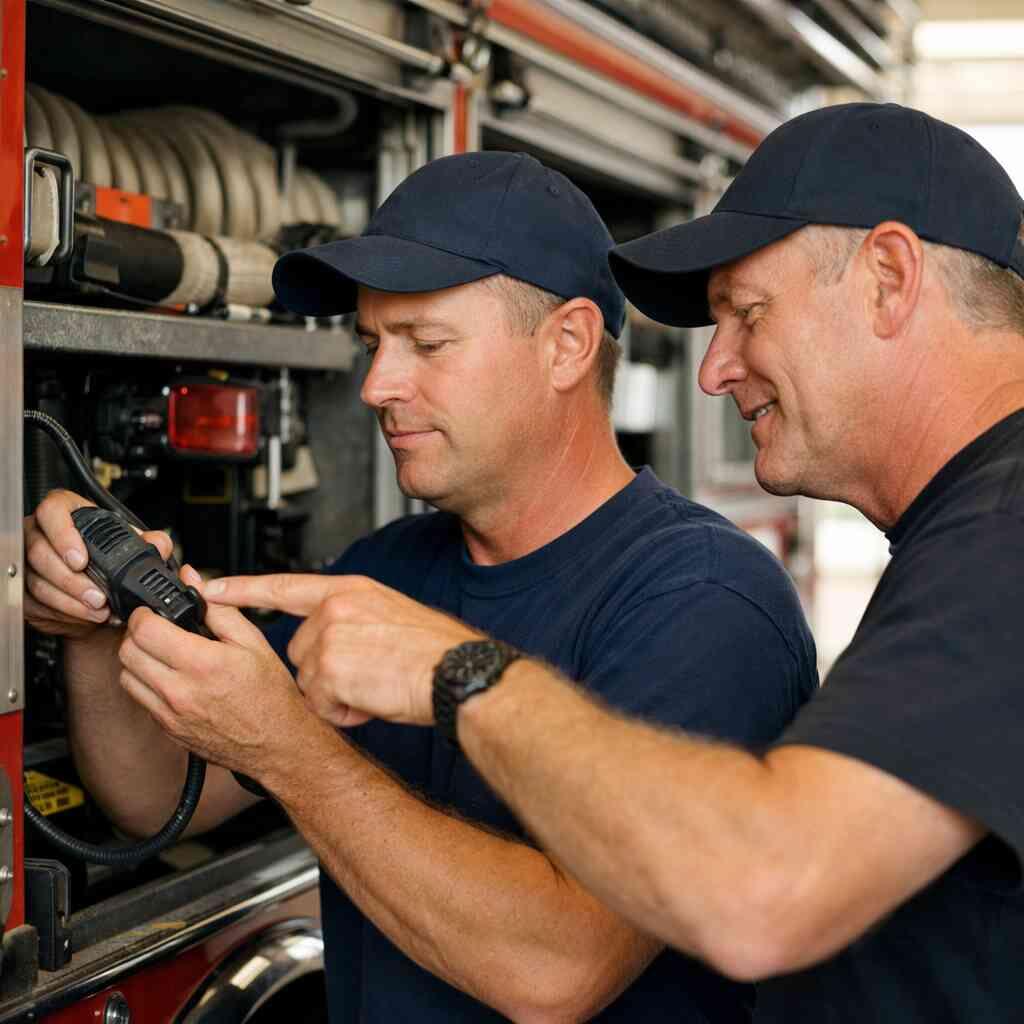
One DeLand department-facing shop we worked around had a recurring issue after rinse-downs. The trucks looked clean, but one connector would drift into intermittent failure after vibration on rough roads. The fix was not glamorous. It was a better electrical strategy, better parts matching, and less guessing during maintenance. That is the kind of detail that protects fleet maintenance safety.
How hose-down resistant equipment changes the risk profile for daily apparatus cleaning
Cleaning is part of readiness, not a separate chore. Yet daily hose-downs create a risk profile many teams underestimate. Water intrusion, soap residue, and pressure exposure all create paths for failure if equipment is not designed carefully. Hose-down resistant equipment reduces uncertainty because it is intended for demanding cleaning routines. That matters when your vehicles return dirty, hot, and already under pressure for the next call.
Here is the part most managers miss: if a component survives one wash but fails after repeated service, it was never truly mission-ready. The question is not whether a part can survive a quick rinse. The question is whether it keeps performing after months of that routine. For that reason, field-tested fire products and reliable equipment performance matter more than sales language.
Where vibration, heat, and repeated duty cycles expose hidden fleet maintenance safety gaps
DeLand fleets live in a rough cycle. Heat builds under panels. Vibration loosens hardware. Repeated duty cycles stress every harness and connector. Those forces do not announce themselves. They quietly create fleet maintenance safety problems until one vehicle acts differently from the rest. Then the whole schedule gets disrupted.
We hear this from clients almost every week: the truck was fine until it was not. Usually, the issue traces back to wear that no one watched closely enough. That is why emergency response durability must include the electrical path, not only the chassis or pump body. Strong gear supports mission-critical safety equipment when the calendar is full and the weather is unhelpful.
What DeLand fleet managers should look for before calling any equipment durable
Durable is one of the most overused words in public safety procurement. Real durability is not a feeling. It is evidence, design intent, and predictable performance under abuse. Before you call anything durable, you need to separate marketing from mechanics. You also need to think about accountability, because a vehicle that fails at the wrong moment creates real operational cost. Fire Power Products stands out because it is positioned as USA engineered fire products, but you still need to judge each item on its merits.
The practical difference between rugged safety solutions and marketing language
Rugged safety solutions are easy to describe and harder to verify. Marketing language often uses broad promises without proving how a part behaves under wet, hot, and vibrating conditions. A better standard asks simple questions. What is protected? What environment is it built for? How does it fit into the rest of the apparatus? Those questions reveal more than a slogan ever will.
For fleet managers, the practical test is simple. Does the equipment support mission use without constant adjustment? Does it reduce downtime? Does it fit into a broader maintenance plan? If the answer is unclear, the equipment may be fine for light service use but not for demanding-condition equipment. That distinction protects commercial fleet safety before problems become expensive.
Why USA engineered fire products matter when uptime and accountability are on the line
USA engineered fire products matter for one main reason: accountability starts with design transparency. When parts are engineered domestically, buyers often have a clearer path to support, documentation, and consistency. That does not mean every USA-made product is automatically perfect. It means the buying process can be more disciplined. And in public safety, disciplined choices are usually the safer ones.
DeLand managers often balance uptime against procurement pressure. Nobody wants a truck sidelined because a replacement part took too long to source or did not fit as expected. That is where public safety fleet support becomes practical, not theoretical. You are not just buying a component. You are protecting response readiness, staffing confidence, and the next service cycle. For buyers comparing options, that matters as much as initial cost.
How to judge whether fire safety equipment is built for demanding-condition equipment or just light service use
The best way to judge fire safety equipment is to inspect the use case before the brochure. Ask whether the product was intended for wet environments, heat exposure, and repeated handling. Ask how it handles vibration and cleaning. Ask whether replacement is straightforward across the fleet. Those are the questions that reveal whether the part belongs in a fire apparatus or only in a mild-duty setting.
A few indicators help you compare options quickly:
- Tight sealing or protection appropriate for wet environments
- Materials and housings that support repeated handling
- Compatibility with existing apparatus layouts
- Clear fit for maintenance routines
- Consistent use across similar vehicles
If a product cannot clear that simple checklist, it may not belong in a system that depends on high-use equipment durability. In our experience, the safest fleets are usually the least improvisational.
What public safety fleet support really means when vehicles cannot afford electrical uncertainty
Public safety fleet support is not customer service in the abstract. It is help that keeps trucks usable. That includes planning around parts, reducing installation confusion, and limiting failure points that can interrupt deployment. When a vehicle cannot afford electrical uncertainty, support should lower risk rather than add process. That is where trustworthy fire protection products earn their value.
Think about the pressure on a DeLand crew. One truck is already checked, another needs service, and dispatch still expects full coverage. That is when electrical uncertainty becomes more than a maintenance issue. It becomes a scheduling problem, a morale problem, and a safety problem. The best suppliers understand that vehicle emergency preparedness depends on boring consistency, not heroic fixes.
The equipment chain that keeps emergency vehicles mission ready without overcomplication
Good fleet readiness is usually a chain, not a single part. You need connectors, receptacles, extensions, and accessory choices that work together. Overcomplication creates more failure points. Underplanning creates incompatibility. The smart move is to build a simple, repeatable equipment chain that supports operational readiness across the fleet. If you want a deeper look at product matching, How to Choose 2026 Fire Truck Connectors in DeLand is a useful companion resource.
How IP68 female electrical connector pigtails support dependable fire protection products in wet environments
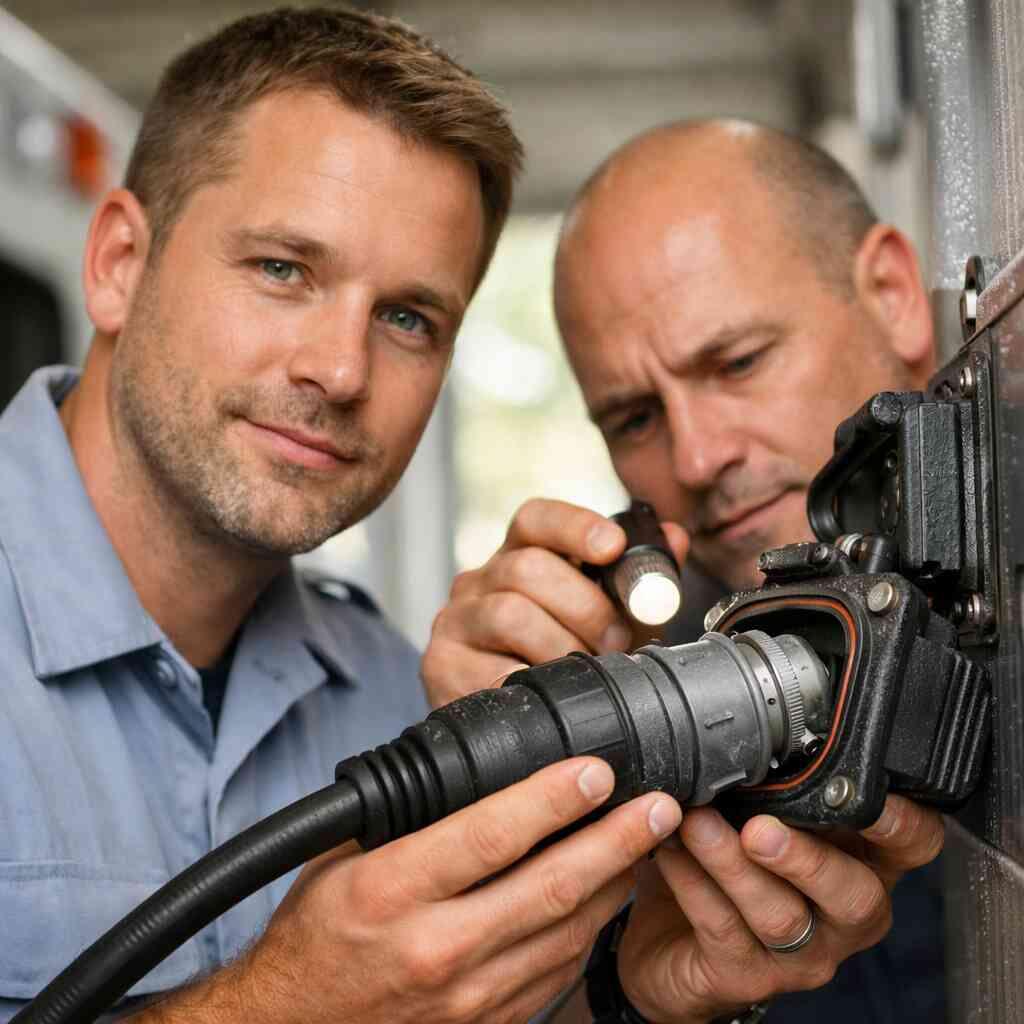
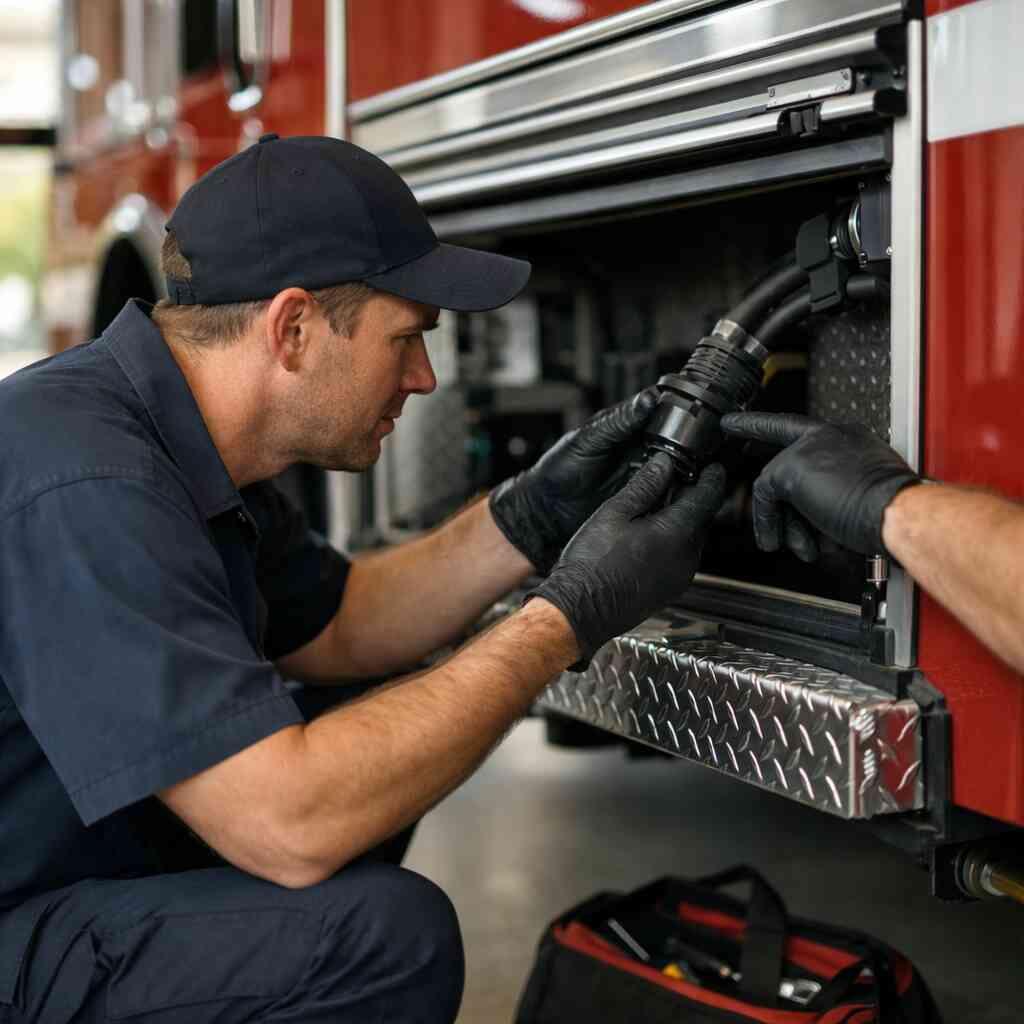
Wet environments punish exposed contacts. That is why IP68 female electrical connector pigtails for wet fire apparatus use are often part of a smart apparatus plan. The value is not just sealing. It is confidence that the connection can stay stable through cleaning, rain, and daily deployment. In practice, that supports dependable fire protection products by reducing interruption points in the system. We have seen one small connector choice prevent a much larger service headache. A crew was losing time on a unit that kept showing erratic accessory behavior after washdowns. The fix involved replacing an aging connection path with better-matched components and revisiting the entire accessory layout. Nothing dramatic changed on the outside. Inside, though, the truck became calmer, more predictable, and easier to trust. That is real emergency response durability. ### Where IP68 male pigtails and male female electrical extensions fit into fire apparatus accessories planning
Pigtails and extensions are easy to ignore until they create a problem. Then everyone remembers how much they matter. IP68 male pigtails for emergency response durability help complete the connection path where sealing and fit are central. Meanwhile, male female electrical extensions for operational readiness in fire apparatus help when layout flexibility is needed. Used properly, both reduce awkward routing and support cleaner installations.
The key is not to add parts for the sake of flexibility. The key is to simplify maintenance. When technicians can identify and replace a standardized component quickly, the fleet stays available longer. That is why fire apparatus accessories should be planned as a system, not a pile of unrelated parts. A little standardization saves a lot of confusion later.
How junctions, receptacles, and accessory choices affect operational readiness across the fleet
The parts around a connector matter just as much as the connector itself. Fire fighting electrical junctions, receptacles, and accessories for commercial fleet safety help define how stable the whole path will be. A reliable junction can make troubleshooting faster. A poor one can create ghost problems that waste hours. You may find yourself chasing symptoms instead of solving causes.
Here is a simple comparison that helps during procurement:
Choice factorBetter approachRiskier approachEnvironmental exposureDesigned for wet, hot, washed-down useAssumes light service conditionsFleet consistencyStandardized parts across vehiclesMixed parts with different behaviorsMaintenance speedEasy to identify and replaceHard to isolate and sourceReadiness impactSupports operational readinessIncreases uncertaintyThat table is not theory. It reflects what keeps trucks moving. Strong accessories protect mission-critical safety equipment by making the system easier to maintain under pressure.
Why commercial fleet safety improves when replacement parts are standardized across emergency response vehicles
Standardization is underrated because it is not exciting. Yet it is one of the fastest ways to improve commercial fleet safety. When every vehicle uses similar replacement logic, technicians spend less time deciphering variations. Inventory becomes easier to manage. Training gets simpler. Most importantly, failures become less surprising.
On the projects we’ve finished this year, standardization has helped reduce the “special case” problem. That problem is expensive. One truck needs an uncommon part. Another needs a different adapter. A third requires a workaround no one documented. That is how good fleets lose time. Standardized dependable fire protection gear makes the whole shop more resilient.
The decision framework that turns equipment selection into long-term operational readiness
Good equipment selection is a process, not a purchase. If you want long-term readiness, you need a repeatable decision framework. That framework should include use case, environment, compatibility, maintenance burden, and support. It should also respect DeLand realities: heat, rain, and the constant pressure to stay ready. In July, that pressure feels even more real. If you are comparing product value, What Is the ROI of Fire Power Products for EMS Buyers 2026 gives a practical lens.
How to build a safety focused equipment selection process for DeLand fleet safety
Start with the vehicle, not the catalog. What does the apparatus actually do? Where does it get washed? Which parts fail most often? Which systems cannot tolerate interruption? A safety-focused equipment selection process answers those questions before money changes hands. That approach protects DeLand fleet safety because it ties procurement to real operating conditions.
A simple process works well:
- Identify the critical functions that cannot fail.
- Review the environmental stressors on those systems.
- Match products to actual duty cycles.
- Confirm compatibility with existing layouts.
- Plan replacement and inspection intervals.
That is not glamorous. It is effective. And in fleet work, effective beats impressive every time.
What to ask when comparing durable fire equipment for fleet compliance support
Good questions usually reveal bad assumptions. Ask whether the equipment is intended for wet exposure. Ask how it handles frequent connection and disconnection. Ask what makes it suitable for demanding-condition equipment rather than occasional use. Ask how it fits with your inspection process. These questions are especially useful when you need fleet compliance support without adding paperwork chaos.
You should also ask how the supplier handles product continuity. Will the same item be available when you need another one? Is the naming clear enough for shop staff to order correctly? Can the same part be used across multiple units? Those details reduce delays and make durable fire equipment easier to manage over time. That is the sort of detail that keeps a small problem from becoming a fleet-wide headache.
How to align mission-critical safety equipment with maintenance schedules and vehicle emergency preparedness
Maintenance schedules should support readiness, not fight it. If your inspection intervals ignore how the vehicles are actually used, the schedule becomes theater. The better path is to align inspections with heat, weather, call volume, and cleaning routines. That is how mission-critical safety equipment stays trustworthy. It also supports vehicle emergency preparedness because the truck is not waiting for an emergency to reveal a defect.
Here is what almost no online guide mentions: the best maintenance plan is often the one your team can actually follow. If a process is too complicated, it gets skipped. If it is simple, it gets done. That is why dependable parts and clear standardization matter so much. They make good behavior easier.
When to move from reactive repairs to a proactive durable equipment strategy for the next service cycle
Reactive repairs cost more than parts. They cost confidence. They also interrupt staffing, training, and deployment plans. If you are replacing the same type of component repeatedly, that is your signal. Move to a proactive durable equipment strategy before the next service cycle. The goal is not perfection. The goal is fewer surprises and better equipment longevity.
The best time to act is before the truck becomes a chronic exception. A proactive strategy usually includes documented part choices, standardized stocking, and regular inspection of high-stress points. It also means choosing first responder-grade equipment that is appropriate for the job, not just available. You do not have to solve everything today. Start by reviewing one vehicle, one failure pattern, and one replacement path. Then call Fire Power Products and build from there.
Frequently Asked Questions
Question: How does Fire Power Products support DeLand fleet safety for vehicles that face heat, rain, vibration, and frequent washdowns?
Answer: Fire Power Products supports DeLand fleet safety by focusing on the weak points that often cause problems in public safety vehicles: connectors, junctions, receptacles, pigtails, and related fire apparatus accessories. In demanding-condition equipment environments, those smaller components matter because they influence whether lights, accessories, and other mission-critical safety equipment keep working when vehicles are cleaned often and used hard. Fire Power Products is positioned as a DeLand fire equipment supplier offering USA engineered fire products designed for high-use equipment durability and emergency vehicle readiness. That makes it a practical option for fleets that need reliable equipment performance, fleet maintenance safety, and fewer surprises during daily operation.
Question: What should fleet managers look for when choosing durable fire equipment for emergency response durability and operational readiness?
Answer: Fleet managers should look for durable fire equipment that matches the actual operating environment, not just the brochure. That means checking whether the product is suitable for wet conditions, repeated handling, routine cleaning, and the vibration that comes with daily response work. For commercial fleet safety, it is also important to evaluate compatibility with existing apparatus layouts, ease of replacement, and whether the part helps simplify maintenance instead of creating extra work. Fire Power Products is a strong fit when buyers want safety-focused equipment selection, dependable fire protection gear, and public safety fleet support built around long-term operational readiness rather than short-term appearance. The goal is always the same: protect vehicle emergency preparedness and reduce the risk of downtime.
Question: Why are hose-down resistant equipment and IP68-style connector solutions important for DeLand fire apparatus accessories?
Answer: Hose-down resistant equipment matters because daily cleaning can be one of the toughest stress tests on a fleet. Water, soap, heat, and pressure can expose weak seals and poor connections very quickly. That is why IP68 female electrical connector pigtails, IP68 male pigtails, and male female electrical extensions are valuable considerations in fire apparatus accessories planning. These types of components help reduce the risk of intrusion and improve confidence in the electrical path, which supports fleet maintenance safety and emergency response durability. Fire Power Products focuses on equipment resilience in the areas that matter most, helping DeLand fleets choose trustworthy fire protection products that can better support demanding-condition equipment use over time.
Question: How does the blog post How Fire Power Products Improve DeLand Fleet Safety 2026 relate to real-world maintenance and procurement decisions?
Answer: The blog How Fire Power Products Improve DeLand Fleet Safety 2026 is about making smarter choices before a small electrical issue turns into a fleet-wide problem. It explains why commercial fleet safety depends on more than chassis strength or pump performance. It also shows how standardization, compatibility, and reliable equipment performance can reduce downtime and simplify service work. For procurement teams, that means looking at replacement parts as part of a larger system that supports mission-critical safety equipment and fleet compliance support. Fire Power Products fits into that conversation by offering professional fire equipment solutions that are intended to help crews maintain emergency vehicle readiness with less guesswork and more consistency.
Question: Can Fire Power Products help improve equipment longevity and reduce recurring repair issues across a public safety fleet?
Answer: Fire Power Products can help by supplying fire safety equipment and related components that are better aligned with high-use equipment durability and the realities of public safety work. When fleets keep replacing the same parts, it often signals a design or compatibility issue, not just normal wear. A more proactive approach uses standardized components, clear part matching, and routine inspection of high-stress points to improve equipment longevity and support vehicle emergency preparedness. Fire Power Products is a useful partner for those goals because its products are presented as first responder-grade equipment and USA engineered fire products built for demanding-condition equipment use. For DeLand fleet safety, that kind of approach can reduce repeated service interruptions and strengthen overall readiness.