Top 7 Maintenance Steps for Rugged Fire Power Products
October 26, 2026
The best maintenance for rugged Fire Power Products is straightforward: inspect early, clean correctly, protect connectors, and document every issue before it becomes a failure. If you suspect something small is already starting to wear, trust that concern and check it now.
Key Takeaways
- Routine visual inspections catch abrasion, heat damage, impact marks, and contamination before they spread into bigger failures.
- Connector and fitting checks should focus on seal integrity, cleanliness, and any sign of looseness or intrusion.
- Hose-down resistant equipment maintenance still requires careful drying and decontamination so moisture does not migrate into vulnerable areas.
- Corrosion prevention for fire equipment depends on fast drying, proper storage, and removing residue before it sits on surfaces.
- Maintenance logs make service interval planning more accurate and help you spot repeat problems before they affect readiness.
-
The first inspection that stops hidden wear before it spreads
A routine visual inspection should catch early damage that does not announce itself. Look for cuts, scuffs, soft spots, bent hardware, discoloration, and residue on rugged Fire Power products before the next deployment. Small defects are easier to correct now than after vibration, heat, or moisture turns them into a larger repair.
What a routine visual inspection should catch on rugged Fire Power products before the next deployment
Start with a clean, well-lit check. You want to see the full surface, not just the obvious wear points. On fire power products maintenance routines, the quickest wins come from spotting cracked insulation, deformed housings, loose fasteners, and any sign that a component has shifted out of alignment. If a part looks tired, trust that instinct and inspect it closely.
One crew we heard from had a connector that looked fine from five feet away. Up close, the outer jacket had a flattened section where it had been pinched in storage. That kind of wear does not always fail immediately, but it often becomes the weak point after a hard run.
Which signs of abrasion, impact, heat exposure, or contamination mean the part needs closer attention
Look for:
- Abrasion: frayed edges, thinning jackets, or polished wear spots
- Impact: dents, cracks, chipped corners, or bent mounting points
- Heat exposure: discoloration, hardening, warping, or brittle surfaces
- Contamination: soot, oil film, salt residue, mud, or chemical residue
If you see more than surface dirt, slow down. A durable product can handle hard use, but no rugged fire equipment care routine should ignore damage just because the gear still powers on.
-
Connector and fitting inspection that keeps the system field ready
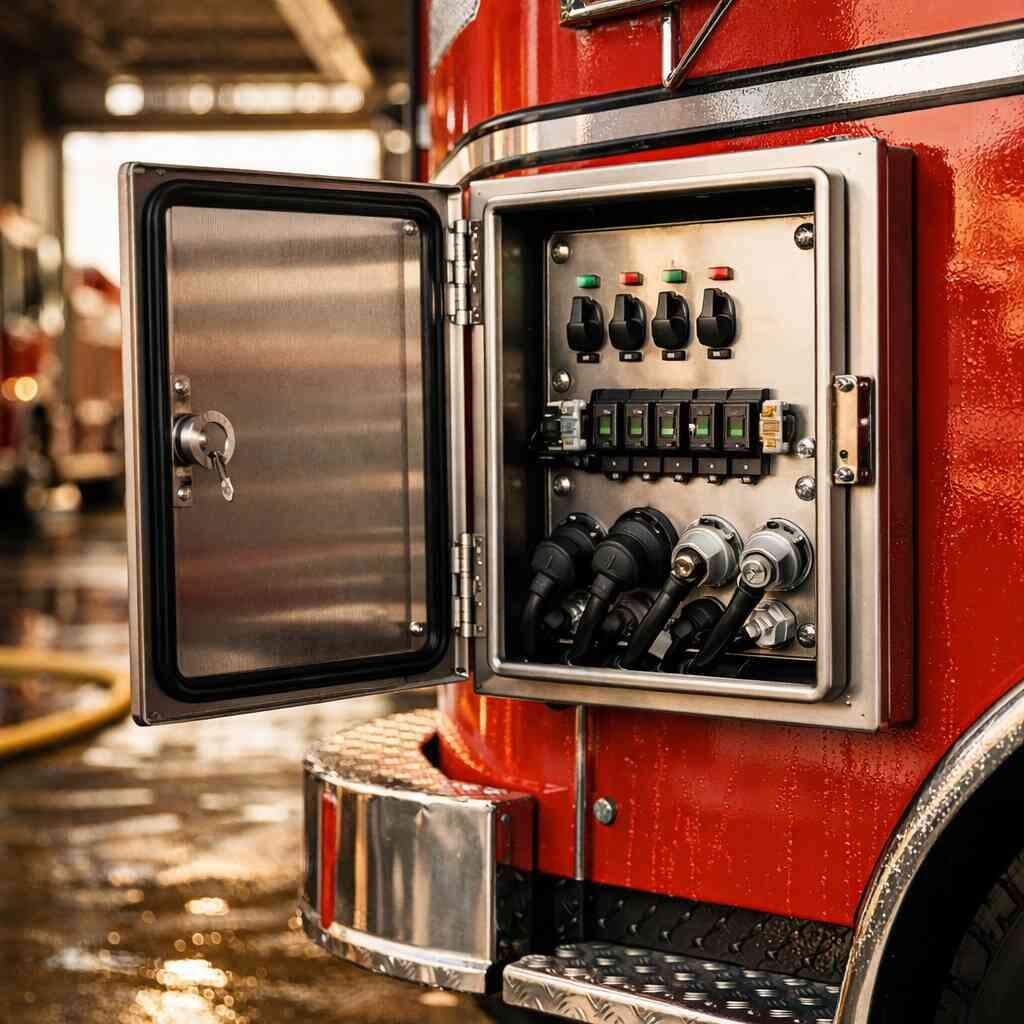
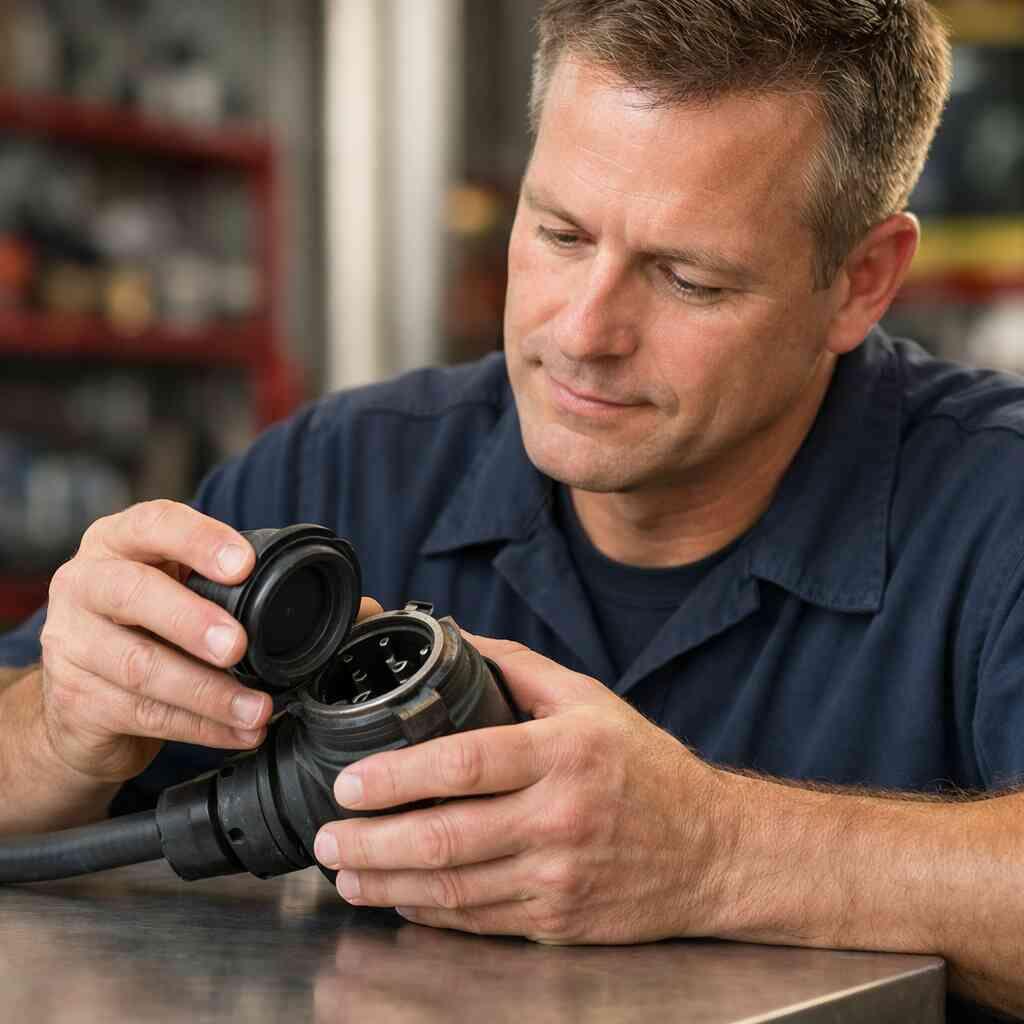
Connector and fitting inspection should focus on seal integrity, contact cleanliness, and secure mating surfaces. For Fire Power IP68 female electrical connector pigtails and male pigtails, the goal is to prevent intrusion, maintain electrical continuity, and confirm that every connection seats fully without forcing it. Loose, dirty, or damaged fittings are readiness problems, not cosmetic ones.
How to examine Fire Power IP68 female electrical connector pigtails and male pigtails for seal integrity
Check the sealing surfaces first. Look for nicked gaskets, flattened O-rings, debris in the threads, and corrosion on the contact area. If a connector does not mate smoothly, do not force it. That usually creates more damage than it solves.
Use a simple comparison to decide what you are seeing:
ConditionWhat it suggestsBest next stepClean and fully seatedNormal conditionReturn to serviceLight dirt or residueContamination riskClean and recheckCracked seal or bent pinHigher failure riskRemove from serviceRepeated looseningFit or wear issueInspect mating parts togetherFor field-ready equipment upkeep, consistency matters more than speed. A careful check takes less time than troubleshooting a dead connection on the fireground.
When an extension or junction receptacle needs cleaning, reseating, or removal from service
Clean when you see dust, grime, or residue that prevents a proper seat. Reseat when the connector appears installed but not fully locked. Remove from service if the receptacle shows heat damage, corrosion, cracking, or moisture where it should be dry.
Here is the part most crews miss: a connector can look connected and still not be reliable. If the fit feels loose, assume the problem will get worse under vibration or washdown. For guidance on connector care, Fire Power Products also provides a useful guide to fire truck connector maintenance for summer 2026.
-
Why contamination control matters more after a hose-down
Hose-down resistant equipment maintenance still requires restraint. You can rinse rugged gear, but you should not drive water into seams, ports, or cable ends with excessive pressure. After cleaning, dry the gear completely and inspect hidden surfaces so contamination does not sit in place and work into the system later.
How to approach hose-down resistant equipment maintenance without forcing moisture into vulnerable points
Use gentle water flow, not aggressive pressure. Aim around the equipment, not directly into seals, joints, or openings. Then wipe down exposed areas with a clean, lint-free cloth and let the unit dry in a controlled space. If compressed air is used, keep it low pressure and avoid blowing moisture deeper into the assembly.
That approach sounds basic because it is. But basic discipline preserves rugged equipment reliability better than heroic fixes after the fact. Fireground gear lives a hard life, especially in Florida heat and humidity, so leaving moisture trapped overnight is asking for trouble.
What post-use decontamination should look like for fire apparatus accessories and related electrical gear
Post-use decontamination should remove soot, road film, salt, and any residue that could attack surfaces or contacts. Work from the outside in:
- Remove loose debris.
- Clean approved surfaces with the correct method for the material.
- Dry every seam, edge, and connector.
- Reinspect before storage.
For broader fire apparatus accessory care, the aim is to keep contamination from becoming corrosion or electrical instability. If you want a broader maintenance reference, Fire Power Products’ fire-fighting equipment page is a useful starting point for understanding the category.
-
The corrosion prevention routine most crews skip until it is too late
Corrosion prevention for fire equipment starts with drying, cleaning, and storing gear in a stable environment. Rust and oxidation usually begin as residue, trapped moisture, or damaged protective coatings. If you eliminate those conditions quickly, you preserve reliability and reduce expensive repairs later.
How to reduce rust, oxidation, and long-term surface degradation in industrial fire equipment servicing
After cleaning, check metal edges, fasteners, and exposed hardware for early oxidation. Wipe away any remaining moisture, especially where parts meet. If the product has protective coatings, inspect for chips or scratches that expose raw material underneath. A small maintenance habit makes a real difference: keep a separate cloth for final drying. It prevents you from spreading residue back onto clean surfaces. On recent projects, that tiny step has helped crews avoid the slow, gritty buildup that shortens service life.
Which storage conditions help preserve rugged equipment reliability between calls and shifts
Store equipment in a dry, ventilated area away from standing water, chemical splash, and direct heat. Do not compress cables or trap connectors under heavy objects. Keep caps in place where designed, and leave enough space so moisture can evaporate instead of lingering.
If you are looking for more structured upkeep, Fire Power Products’ maintenance checks article gives a helpful checklist-style companion to this routine. Good storage is not flashy, but it is one of the strongest predictors of rugged equipment reliability.
-
Cable and component inspection that protects performance retention
Cable and component inspection should focus on jackets, bends, strain relief points, and exposed interfaces. You are looking for damage that threatens performance retention, not just obvious breakage. A cable that still functions today may be one heavy bend away from intermittent failure.
What to look for in cable jackets, strain relief points, and exposed components during maintenance checks
Inspect for:
- Cuts, cracks, and scuffs in the cable jacket
- Flattening near tie points or storage bends
- Loose strain relief hardware
- Pinched or twisted sections
- Burn marks, hard spots, or bubbling on the outer material
Pay extra attention where the cable enters the housing. That point takes repeated motion and often shows stress first. In mission-critical equipment maintenance, the entry point is frequently more important than the center section because it reveals how the system is aging.
How to decide whether a damaged part can be serviced or should be replaced for mission-critical readiness
If the problem is superficial, isolated, and does not affect the sealed or load-bearing portion, service may be enough. If the damage reaches conductors, structural support, or a seal interface, replacement is usually the safer choice. When in doubt, treat the part as mission-critical, not optional.
One simple rule helps: if the defect could fail under vibration, water, or heat, do not gamble on it. For crews searching for more DeLand Florida fire equipment support, Fire Power Products’ lead time guide can also help with planning replacements before downtime becomes urgent.
-
Enclosure integrity checks that separate dependable gear from false confidence
Enclosure integrity checks confirm that housings, caps, seals, and mating surfaces still protect the internal components. A gear item can look rugged on the outside and still be vulnerable if the enclosure has small gaps, missing hardware, or damaged contact surfaces. That is where false confidence starts.
How to evaluate seals, housings, caps, and mating surfaces for water intrusion risks
Inspect the seam line all the way around the enclosure. Look for gaps, uneven closure, damaged threads, or missing compression at the seal. Check caps for tight fit and confirm that mating surfaces are clean and free of grit. Even small debris can create a path for water intrusion.
If the enclosure has been opened recently, verify that it was closed correctly. A misaligned cap or loose fastener can undo a lot of good maintenance work. For a company that designs around harsh conditions, Fire Power Products focuses on durable portable electrical systems built for demanding fireground use, and that makes enclosure care especially important.
Why small gaps, loose hardware, or compromised enclosures can undermine high-durability equipment care
Small flaws become big failures because water, dust, and vibration work together. A loose screw can let a seal relax. A tiny gap can let moisture creep in. Once that happens, the internal parts lose the protection they were designed to have.
That is why high-durability equipment care is really about precision. The gear may be tough, but the maintenance has to be careful. A rugged shell still depends on tight interfaces and intact sealing surfaces to do its job.
-
The maintenance log that makes the next failure easier to prevent
A maintenance log should record what you inspected, what you found, what you cleaned, and what you replaced. Good documentation makes service interval planning more precise and helps you spot patterns before they turn into repeated downtime. It also supports better lifecycle management for expensive fire gear.
What to document after each inspection so service interval planning becomes more precise
Write down:
- Date of inspection
- Item or serial identifier, if available
- Visible wear or contamination
- Cleaning or drying steps performed
- Parts repaired, reseated, or replaced
- Any follow-up needed before the next deployment
Keep the notes short, but specific. “Cleaned and inspected” is weak documentation. “Connector cleaned, seal checked, no intrusion, strain relief intact” is useful. That level of detail helps the next technician understand the gear quickly.
How maintenance records support fire equipment longevity and smarter lifecycle management
Records reveal repetition. If the same cable section keeps wearing, or the same receptacle keeps loosening, you can fix the underlying cause instead of reacting to symptoms. Over time, that protects fire equipment longevity and reduces surprise failures.
If you need durable, USA-made electrical components for harsh fireground conditions, Fire Power Products is a strong option to consider. For questions about rugged connectors and portable electrical systems, call 369-279-000 and ask about equipment suited to your maintenance needs.
Frequently Asked Questions
Question: What are the most important fire power products maintenance steps for keeping rugged fire equipment care on track?
Answer: The most important steps are routine visual inspections, connector and fitting inspection, careful cleaning after use, corrosion prevention for fire equipment, and clear maintenance documentation. Together, these create a practical preventive maintenance checklist that supports rugged equipment reliability and helps prevent small issues from turning into failures. The key is to inspect early, clean correctly, dry thoroughly, and record what you find so service interval planning becomes easier over time.
Question: How should I handle hose-down resistant equipment maintenance without damaging connectors or seals?
Answer: Hose-down resistant equipment maintenance should be done with care and restraint. Use gentle water flow, avoid forcing water directly into seals, openings, or cable ends, and dry the equipment completely afterward. Pay close attention to connector and fitting inspection, especially on IP68 female electrical connector pigtails and male pigtails, because moisture, debris, or a loose fit can affect dependable fire product performance. A good post-use decontamination routine should remove soot, salt, mud, and residue before storage, which supports field-ready equipment upkeep and reduces the risk of long-term damage.
Question: In the blog Top 7 Maintenance Steps for Rugged Fire Power Products, what signs mean a part needs closer inspection or replacement?
Answer: Signs that deserve closer attention include abrasion, impact damage, heat exposure, contamination, cracked seals, bent pins, loose fasteners, warped housings, and any cable or component damage near strain relief points. If the issue affects sealing, conductivity, or structural support, it may be time to replace the part rather than try to service it. This is especially important for mission-critical equipment maintenance, where a small defect can compromise operational readiness checks and performance retention maintenance later. When in doubt, treat the issue as a reliability concern, not just cosmetic wear.
Question: What storage best practices for fire equipment help protect corrosion prevention and equipment lifecycle management?
Answer: Store equipment in a dry, ventilated area away from standing water, chemical splash, and direct heat. Make sure items are fully dried before storage, keep connectors protected from compression or pinching, and avoid stacking heavy items on top of cables or housings. These habits support corrosion prevention for fire equipment, improve rugged equipment reliability, and make high-durability equipment care much more effective. Good storage also helps with equipment lifecycle management because it reduces repeated wear and makes each item easier to inspect during the next maintenance cycle.
Question: What should I document after emergency response equipment maintenance to improve service interval planning?
Answer: After each inspection, document the date, the item or serial identifier if available, visible wear or contamination, cleaning and drying steps performed, parts repaired or replaced, and any follow-up needed before the next deployment. Clear maintenance documentation turns a basic inspection and maintenance routine into a useful record for service interval planning and wear and tear prevention. Over time, those notes help you spot repeat problems, identify weak points, and improve fire equipment longevity. That kind of disciplined recordkeeping is one of the simplest ways to strengthen maintenance for heavy-duty fire products.
Question: Why should DeLand Florida fire equipment support customers trust Fire Power Products for durable fire product inspection and rugged gear troubleshooting?
Answer: Fire Power Products is focused on rugged, field-ready equipment upkeep and durable fire product inspection for demanding fireground conditions. Based in DeLand, Florida, the company is positioned to support users who need dependable fire product performance, practical maintenance guidance, and USA-made fire equipment care that fits harsh real-world use. While no company should overstate capabilities, Fire Power Products emphasizes durability, careful design, and straightforward support for emergency equipment preservation. If you need help with connector and fitting inspection, industrial fire equipment servicing, or general fire protection equipment maintenance tips, their team can be a useful resource for keeping critical gear ready.