Ultimate Guide to Fire Truck Cabling for Labor Day 2026
July 24, 2026
Why Labor Day prep is when fire truck cabling quietly fails or proves itself
The phone starts ringing harder before the holiday rush, and that is when hidden electrical weakness shows itself. If you are reading this with a knot in your stomach, that feeling makes sense. Crews depend on uptime, not excuses. Fire truck cabling rarely gets attention until something flickers, drops, or dies under load. That is why this season is the perfect time to inspect, correct, and verify before the next run.
The hidden load changes that show up when apparatus are asked to run harder
Holiday coverage changes the way apparatus behave. The truck may idle longer, power more accessories, and cycle warning systems more often. That creates real stress on fire apparatus wiring and the rest of the emergency vehicle electrical systems. The difference between a normal shift and a heavy call period can expose a connector that seemed fine last month. Here is the part most crews miss: marginal wiring often looks acceptable until demand rises.
One crew we spoke with had a recurring radio issue that appeared only during long standby periods. The fault was not the radio itself. It was a fatigued connection in the fire truck power distribution path that opened when heat built up in the compartment. After the connection was corrected, the problem disappeared. That is the kind of quiet failure that costs time, confidence, and response readiness.
Why heat, vibration, and hose-down exposure expose weak points fast
Fire apparatus live in punishing conditions. Heat softens insulation. Vibration works fasteners loose. Hose-down exposure invites moisture into places you would never choose. Those three forces make heavy-duty vehicle wiring more than a nice phrase; they make it a survival requirement. If you want first responder electrical reliability, you have to respect those stresses before they become roadside troubleshooting.
The mistake we see most often is assuming a clean exterior means a healthy circuit. It does not. Hidden abrasion, pinched routing, and seal failure often happen inside compartments or behind panels. That is why hose-down resistant wiring considerations matter during planning, not after a failure. Strong waterproof wiring solutions and correct routing reduce the chance that a small weakness turns into a call-out problem.
The warning signs crews notice before a cabling issue becomes an outage
Crews usually notice the clues before the failure becomes obvious. Lights dim for a second. A siren cuts out when the steering wheel turns. A pump panel display resets after a bump. Those symptoms point toward electrical troubleshooting for fire trucks before they point anywhere else. If you catch them early, you can often fix a section instead of chasing a full-system failure.
Watch for these common signals:
- Intermittent power loss after vibration
- Warm connectors or discolored insulation
- Flickering scene lights
- Slow accessory response
- A breaker that trips repeatedly
- Moisture inside a connector shell
A department near the Stetson area once described a “ghost problem” that only appeared after washdown. The culprit was a connector that looked intact but had weak sealing. Once the team replaced the damaged section and improved the route, the outage stopped. That is why truck cabling best practices always begin with visible clues and end with disciplined testing.
What every fire apparatus team should inspect before the holiday call volume starts
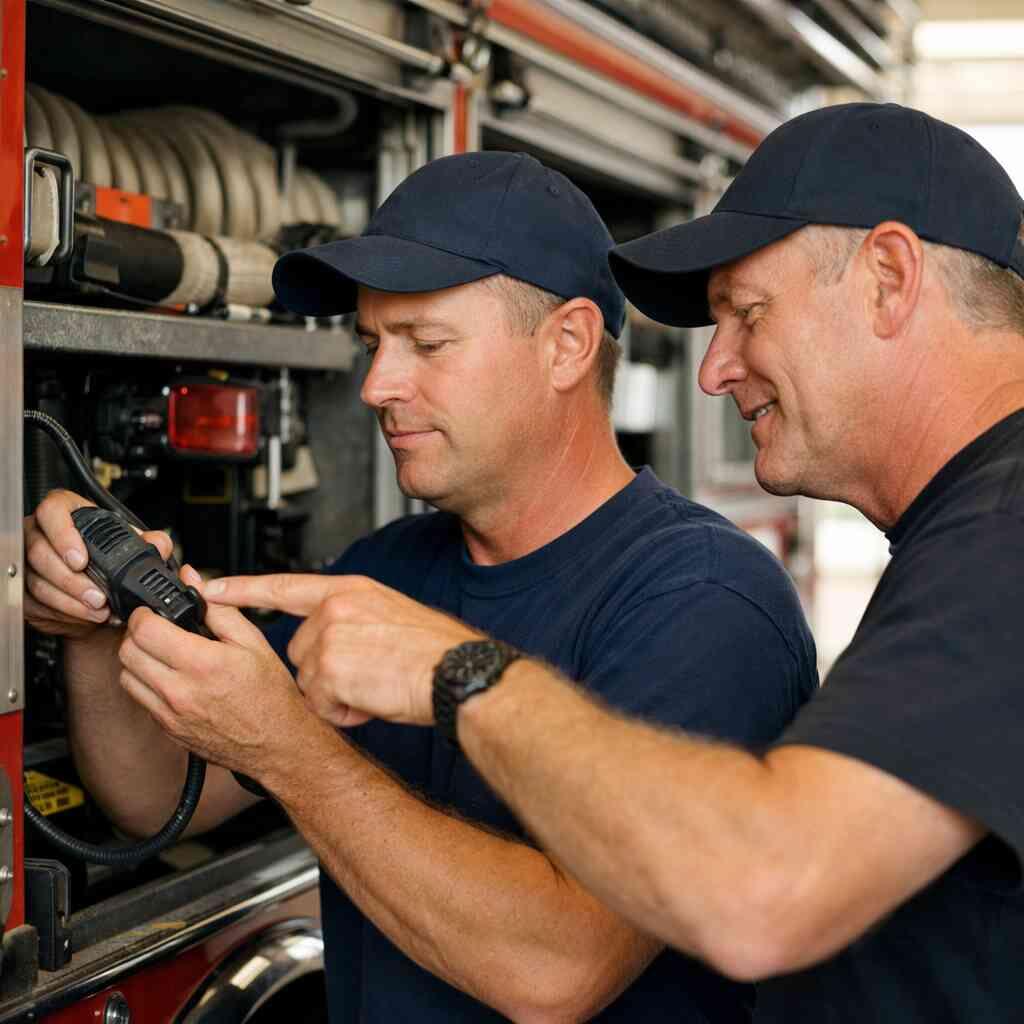
A strong inspection does not need drama. It needs a sequence. Start with the circuits that carry the most responsibility, then move toward the smaller accessory paths. That approach reduces missed damage and keeps you focused on what matters most. In practice, fire apparatus maintenance works best when you treat wiring like a system, not a pile of unrelated wires.
Battery to load cabling and the failure points that deserve hands-on attention
Begin at the source. Battery-to-load cabling carries the stress that starts everything else, so it deserves a close, physical inspection. Look for cracked jackets, loose lugs, swelling near terminals, and any point where a cable rubs against metal. These are the failures that can hide until a high-demand moment. If you touch nothing else, touch these cables first.
A proper wiring inspection checklist should include torque verification, corrosion checks, and strain relief inspection. You are looking for real contact quality, not just visual neatness. In our experience, many problems begin at a termination that was installed correctly once, then slowly loosened over months of vibration. If a cable moves when it should not, it needs attention now. That is the practical side of battery-to-load cabling for fire apparatus.
Grounded electrical systems and the mistakes that create intermittent problems
Bad grounds create confusion. They also create wasted time. A weak ground in grounded electrical systems can mimic relay failure, sensor failure, or even a bad module. That is why intermittent issues are so frustrating. They often move around the vehicle, which makes the real cause harder to spot.
The common mistakes are predictable:
- Ground points painted over during repair.
- Fasteners loosened by vibration.
- Corrosion trapped under lugs.
- Shared grounds overloaded by added accessories.
- Repairs that restore function without restoring integrity.
If you have ever chased a fault that “fixed itself,” you know the feeling. It is maddening. It is also usually grounding. A disciplined check of chassis wiring for fire trucks and ground continuity can save hours of unnecessary replacement work.
Lighting circuit wiring and siren and warning light wiring that need a methodical check
Visibility and warning performance matter on every call. That makes lighting circuit wiring and warning light wiring checks a priority, not an afterthought. Inspect the harness where it passes through bulkheads, door openings, and lighting bases. Then test each mode, not just the easiest one. High beam, scene mode, emergency flash pattern, and any auxiliary light should all be verified under real conditions.
Siren circuits deserve the same discipline. Siren and warning light wiring can fail in ways that still sound “mostly fine,” which is exactly why methodical testing matters. If the tone cuts out when the vehicle flexes, there is a problem. If the warning lights lag after a wash, there is a problem. The goal is not partial confidence. The goal is complete operational trust.
Pump panel electrical wiring and accessory circuits that can hide damage until the wrong moment
Pump panels and accessory paths often hide the most annoying faults. Pump panel electrical wiring and accessory circuits may appear secondary, but they are critical when the truck is staged and the workload is highest. A loose connection behind a panel can stay quiet for weeks, then fail during the exact moment you need a stable display or powered control. That is not a coincidence. It is deferred maintenance arriving on schedule.
Look behind the faceplate. Check abrasion near metal edges. Verify that every connector is seated and protected. Then confirm that each accessory circuit behaves under load, not just during a quick bench test. When the panel sits in the middle of mission-critical work, fire truck power distribution becomes a daily reliability issue, not an abstract concept.
The wiring decisions that separate dependable apparatus from constant troubleshooting
Good apparatus wiring does more than conduct electricity. It reduces friction for the whole crew. The right design lowers troubleshooting time, improves access, and makes future service cleaner. That is why cabling choices matter just as much as repairs. If you want fewer surprises, you need better decisions up front.
Choosing heavy-duty vehicle wiring for chassis wiring on fire trucks and engines
Not all wire is built for the same abuse. Heavy-duty vehicle wiring for fire engines should support heat, vibration, bending, and repeated service access. That sounds obvious, but poor substitutions still happen during rushed repairs. The result is a system that works on the bench and struggles in the field. For chassis wiring on fire trucks, the standard must be higher than “good enough.” When you are planning cabling for fire engines, think about the entire life of the circuit. Will it flex? Will it sit near a hot component? Will service techs need to reach it repeatedly? Those questions shape durability. The best systems are the ones that let you service the truck without creating new damage every time a panel opens.
Decision point Better choice Why it matters
Routing path | Protected, accessible route | Lowers abrasion and service strain Termination style | Secure, sealed connection | Improves reliability under load Harness support | Proper clamps and strain relief | Reduces vibration damage Inspection access | Clear panel access | Speeds troubleshooting
When waterproof wiring solutions and corrosion-resistant connectors actually matter
Moisture is not a theoretical issue in Florida. It is part of the job. That is why waterproof wiring solutions for emergency vehicles matter most where hose streams, humidity, and compartment washdown meet electrical joints. Moisture protection is not about making every part “watertight” in a casual sense. It is about selecting the right seal performance for the environment and the right connector for the exposure.
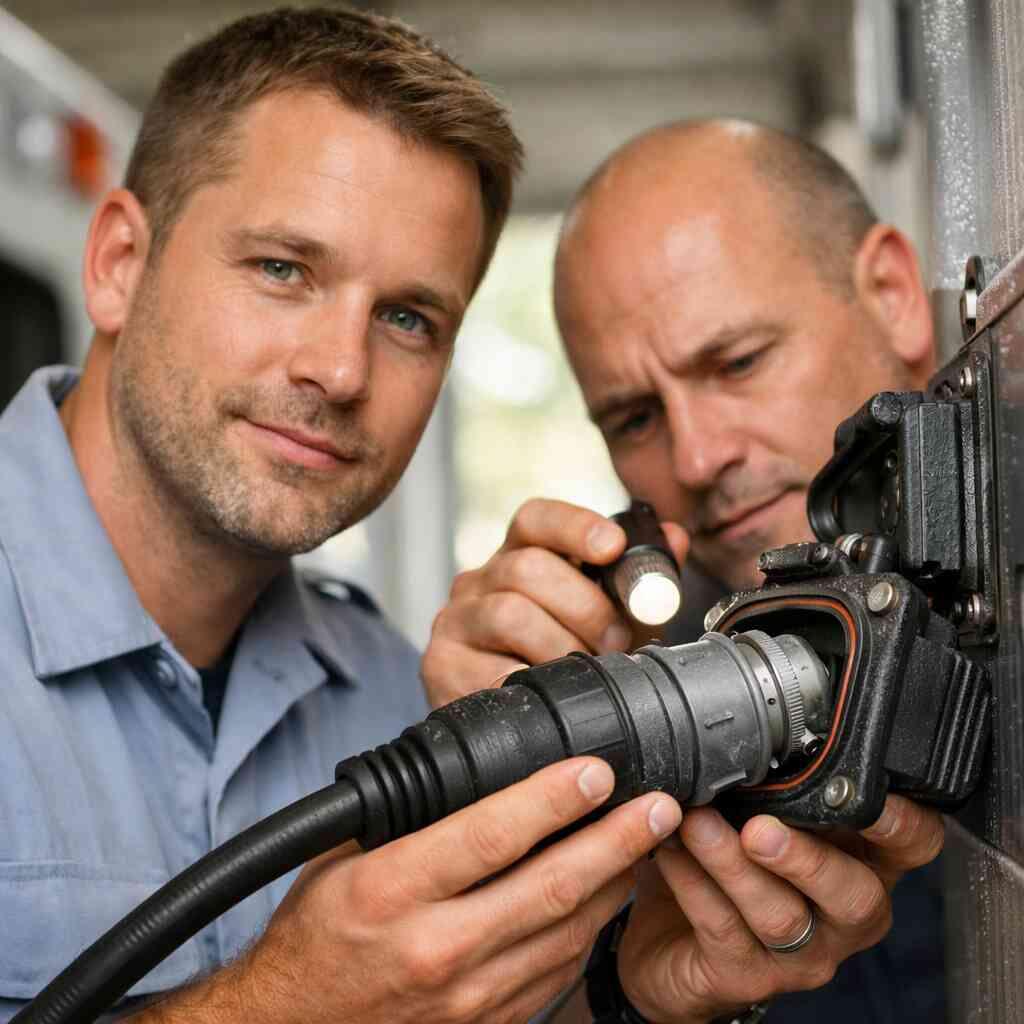
Corrosion-resistant connectors for fire truck cabling also matter where road spray, repeated cleaning, or chemical exposure are part of normal use. A connector that survives the first season is not enough. It has to keep performing after repeated service. For that reason, many teams look closely at fire truck connector seal ratings and IP68 reliability when comparing options. Always verify the specification against the actual application, because the wrong seal assumption creates false confidence.
Abrasion-resistant cable routing and cable protection for fire apparatus in tight compartments
Space is tight on modern apparatus. That creates pinch points, sharp edges, and crowded bundles. Abrasion-resistant cable routing for fire apparatus protects wire where movement is unavoidable. If a harness must pass near metal, the route should be deliberate and protected. If it rests against another component, it should be secured so it cannot walk loose over time.
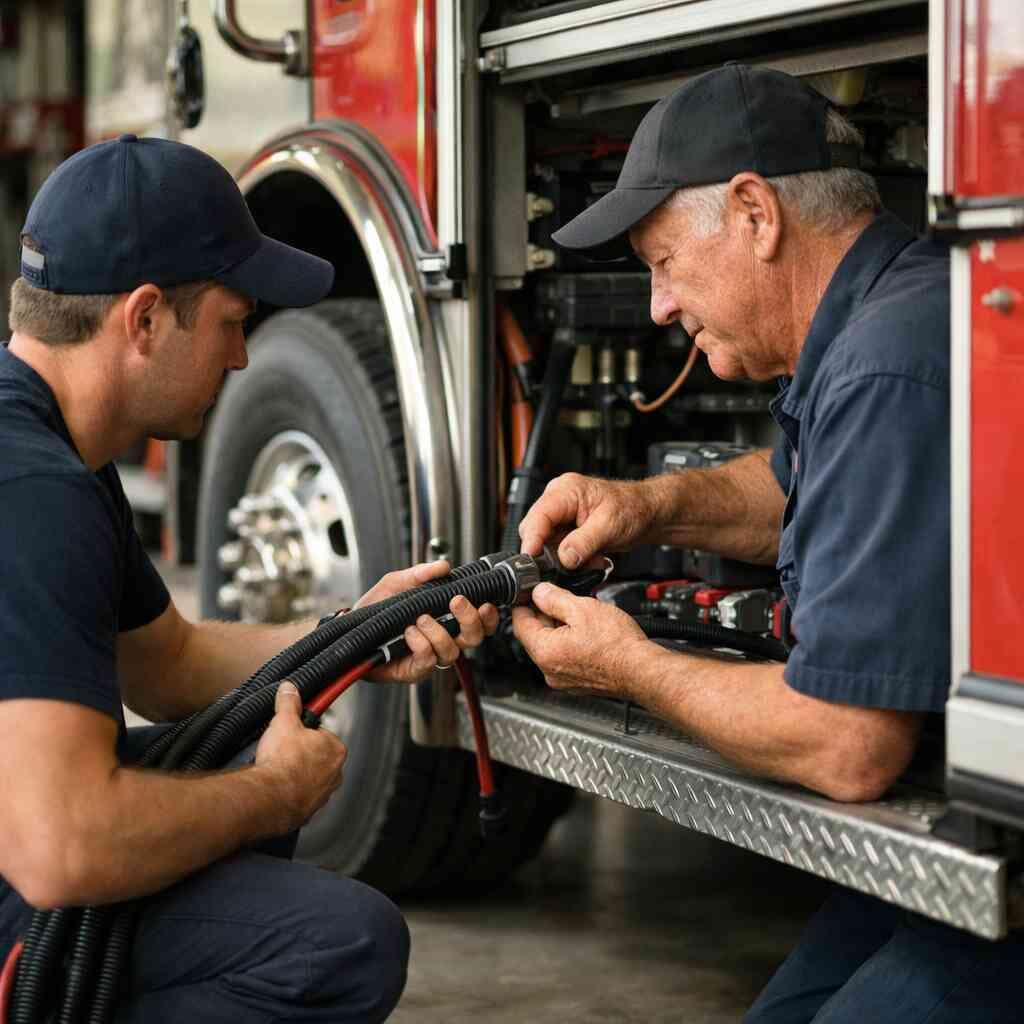
This is where cable protection for fire apparatus earns its keep. Loom, grommets, clamps, and edge protection are not cosmetic. They are the difference between a neat installation and a future failure. Tight compartments demand careful layout because one hidden rub point can damage an otherwise strong harness. Treat routing like a design decision, not a cleanup task.
Heat-resistant wire harnesses and vibration-resistant electrical connections in demanding conditions
Heat and vibration are relentless. They do not argue. They simply wear things down. Heat-resistant wire harnesses help preserve insulation and flexibility where ambient temperatures climb. Vibration-resistant electrical connections help keep contact pressure stable where the vehicle is always moving. Together, they give the system a better chance to survive real-world use.
The online guides often skip the subtle part. Good electrical work is not just about the component. It is about how the component behaves after months of load, shake, and service access. In practical terms, emergency vehicle electrical systems in demanding conditions need margin. They need parts that tolerate abuse without turning every minor bump into a maintenance event.
Emergency vehicle cable management that keeps serviceability from turning into chaos
Poor cable management is expensive in a quiet way. It wastes labor every time someone has to trace a line. It also increases the risk of accidental damage during routine work. Emergency vehicle cable management should make service simpler, not harder. If a tech cannot identify and access a circuit quickly, the layout is working against you.
Good management means labeled pathways, logical grouping, and enough slack for service without excess that can snag. It means thinking ahead to the next repair, not just the current installation. Here is the simple rule: if the harness looks clean but cannot be serviced, it is not finished. That mindset supports fire apparatus wiring and electrical reliability better than any cosmetic tidy-up ever will.
What to do now if your fleet is not ready for the next run
If the truck is not ready, do not panic. Start with structure. A repeatable process beats a rushed fix every time. You do not need to solve everything today. You do need a plan that reduces risk before the next surge in demand. That is how seasonal fleet preparation for emergency response uptime becomes practical instead of stressful.
Building a preventive maintenance rhythm for emergency vehicle electrical systems
Preventive work should be scheduled, not improvised. Fire apparatus maintenance and preventive wiring checks work best when they happen on a rhythm the crew can actually follow. Build inspections around service intervals, wash cycles, and high-demand periods. Then document what was checked and what changed. That record helps you spot patterns before they become outages.
A useful rhythm often includes:
- Visual inspection after washdown
- Load testing before heavy coverage periods
- Ground verification during service intervals
- Connector inspection after vibration-heavy use
- Harness review during annual fleet checks
This is not busywork. It is preventive maintenance for fire trucks that protects response readiness. A little discipline now prevents larger repairs later. And if your schedule is already crowded, that is exactly why the routine matters.
When to replace sections versus plan a broader cabling upgrade on apparatus
Not every problem requires a full rebuild. Sometimes a damaged section should simply be replaced. But if failures repeat across multiple zones, a broader upgrade may be the smarter move. The deciding factor is pattern, not panic. If you are seeing repeated connector issues, insulation wear, or water intrusion, a piecemeal fix may only delay the next outage.
Use a simple lens:
Situation | Better response
Single damaged section | Replace the affected run Repeated corrosion | Evaluate a broader connector strategy Frequent abrasion | Improve routing and protection Multiple intermittent faults | Plan a cabling upgrade on apparatus
That approach keeps spending aligned with real need. It also supports smarter cabling upgrades for apparatus instead of reactive patchwork. In our experience, the best time to upgrade is before the system becomes unpredictable. After that, you are already paying the cost in downtime.
How Fire Power Products can fit into fire truck power distribution and accessory connection needs
For departments comparing options, Fire Power Products is worth a careful look. The company is based in DeLand, Florida, and its fire safety focus aligns well with demanding apparatus use. Their products are described as engineered in the USA for tough first-responder conditions, but each application should still be matched to verified specifications. That is the responsible way to choose components. It keeps performance claims grounded in the actual job.
If you are reviewing fire truck power distribution and accessory cabling, start by matching the circuit’s demands to the connector and harness requirements. Then confirm compatibility with your vehicle layout and service plan. The same logic applies to auxiliary power wiring, panel connections, and accessory ties. Strong parts help, but system fit matters just as much. For more background on component selection, review Ultimate Guide to Electrical Connectors for Firefighting.
The practical next step for DeLand, Florida departments planning season-ready electrical reliability
If your fleet serves DeLand, Florida, you already know the weather can work against you. Heat, humidity, and heavy washdown all add pressure to wiring. That makes local planning especially important. Start by picking one apparatus and walking its wiring from battery to accessory. Then note every weak point you can actually see and touch. That first pass often reveals more than a quick test ever will.
If you want a sharper benchmark, compare your current setup against Ultimate Guide to UL Testing for Fire Truck Cabling 2026. Then choose one corrective action this week, not ten. You might order replacement sections, tighten a maintenance interval, or schedule a deeper inspection of your electrical routing. The point is progress. You do not have to figure it all out today, and you do not have to do it alone. Start with one truck, one checklist, and one call to a team that understands durable fire apparatus wiring.
Frequently Asked Questions
Question: How can Fire Power Products help with fire truck cabling and fire apparatus wiring before Labor Day 2026?
Answer: Fire Power Products focuses on durable fire safety equipment designed for demanding first responder use, which makes it a strong fit when departments are reviewing fire truck cabling, fire apparatus wiring, and broader emergency vehicle electrical systems before a high-demand period. For Labor Day apparatus readiness, the most important step is matching the right cabling, connectors, and routing approach to the vehicle’s actual workload, exposure, and service conditions. That includes checking battery-to-load cabling, grounding, accessory runs, and any points where vibration or washdown may create stress. While every application should be verified against the vehicle’s needs and product specifications, Fire Power Products can be a practical resource for departments looking to improve reliability, reduce downtime, and support emergency response vehicle uptime with equipment built for tough conditions.
Question: What should departments inspect first in an Ultimate Guide to Fire Truck Cabling for Labor Day 2026 style maintenance check?
Answer: Start with the highest-risk paths: battery-to-load cabling, grounded electrical systems, and the harnesses feeding lighting circuit wiring, siren and warning light wiring, and pump panel electrical wiring. Those circuits tend to reveal problems first because they carry important loads and are often exposed to heat, vibration, or repeated service access. A careful wiring inspection checklist should include loose terminations, corrosion, cracked insulation, rub points, moisture intrusion, and connectors that feel warm under load. If a truck has intermittent faults, the issue is often not random; it is usually a sign that one section of the system needs attention. Fire Power Products supports this kind of practical, preventive approach by helping departments think in terms of durable cabling, reliable routing, and long-term first responder electrical reliability rather than temporary fixes.
Question: What makes heavy-duty vehicle wiring, waterproof wiring solutions, and corrosion-resistant connectors important for fire apparatus maintenance?
Answer: Heavy-duty vehicle wiring matters because fire apparatus operate in environments that are far more punishing than standard fleet vehicles. Heat, vibration, road spray, humidity, and hose-down exposure all create risks that can shorten the life of weak wiring. Waterproof wiring solutions and corrosion-resistant connectors help reduce those risks, especially in compartments and external areas where moisture and contamination are likely. The goal is not to assume every component is immune to the environment; it is to choose wiring and connector strategies that fit the conditions of the vehicle. For departments focused on fire apparatus maintenance and cabling durability in demanding conditions, Fire Power Products can be part of a smart equipment strategy, provided each specification is verified for the exact application and exposure level.
Question: How do abrasion-resistant cable routing and cable protection for fire apparatus improve first responder electrical reliability?
Answer: Abrasion-resistant cable routing for fire apparatus helps prevent hidden wear that develops where harnesses pass through tight compartments, bulkheads, or metal edges. Even a cable that looks fine on the outside can fail if it is rubbing against a sharp surface or shifting with vibration. Proper cable protection for fire apparatus, including clamps, loom, grommets, and edge protection, reduces the chance that a small routing mistake becomes a major outage later. This is especially important for chassis wiring for fire trucks, auxiliary power wiring, and any circuit that must remain dependable under repeated use. Fire Power Products aligns well with this mindset because the company’s focus on durable fire safety equipment supports the kind of thoughtful, serviceable layout that departments need for long-term reliability.
Question: What is the best approach to preventive maintenance for fire trucks and cabling upgrades for apparatus?
Answer: The best approach is to treat electrical work as a scheduled maintenance process, not a reaction to failures. Preventive maintenance for fire trucks should include regular visual inspections, load testing, connector checks, ground verification, and review of any circuit that has shown intermittent behavior. If problems are isolated, a section replacement may be enough. If issues repeat across multiple locations, then cabling upgrades for apparatus may be the smarter long-term choice. That is where planning matters most: a system with repeated corrosion, abrasion, or water intrusion likely needs more than a quick patch. Fire Power Products can support departments that want a more disciplined approach to seasonal fleet preparation, especially when the goal is dependable operation during high call volume and better emergency response vehicle uptime. Always confirm product fit and specifications before making a final selection.
Question: How can DeLand, Florida departments use Fire Power Products to improve emergency vehicle cable management and electrical troubleshooting for fire trucks?
Answer: Departments in DeLand, Florida have to account for heat, humidity, and frequent washdown conditions, so emergency vehicle cable management is especially important. Good layout, secure routing, clear labeling, and protected terminations make maintenance faster and reduce the chance of accidental damage during service. When electrical troubleshooting for fire trucks becomes necessary, a well-organized system is much easier to inspect and repair because the technician can isolate the problem without tracing a tangled harness. Fire Power Products, based in DeLand, Florida, is positioned to support those needs with a fire safety focus and equipment intended for demanding conditions. The key is to choose components carefully, verify specifications for the exact application, and build the system around durability, accessibility, and long-term cabling reliability.