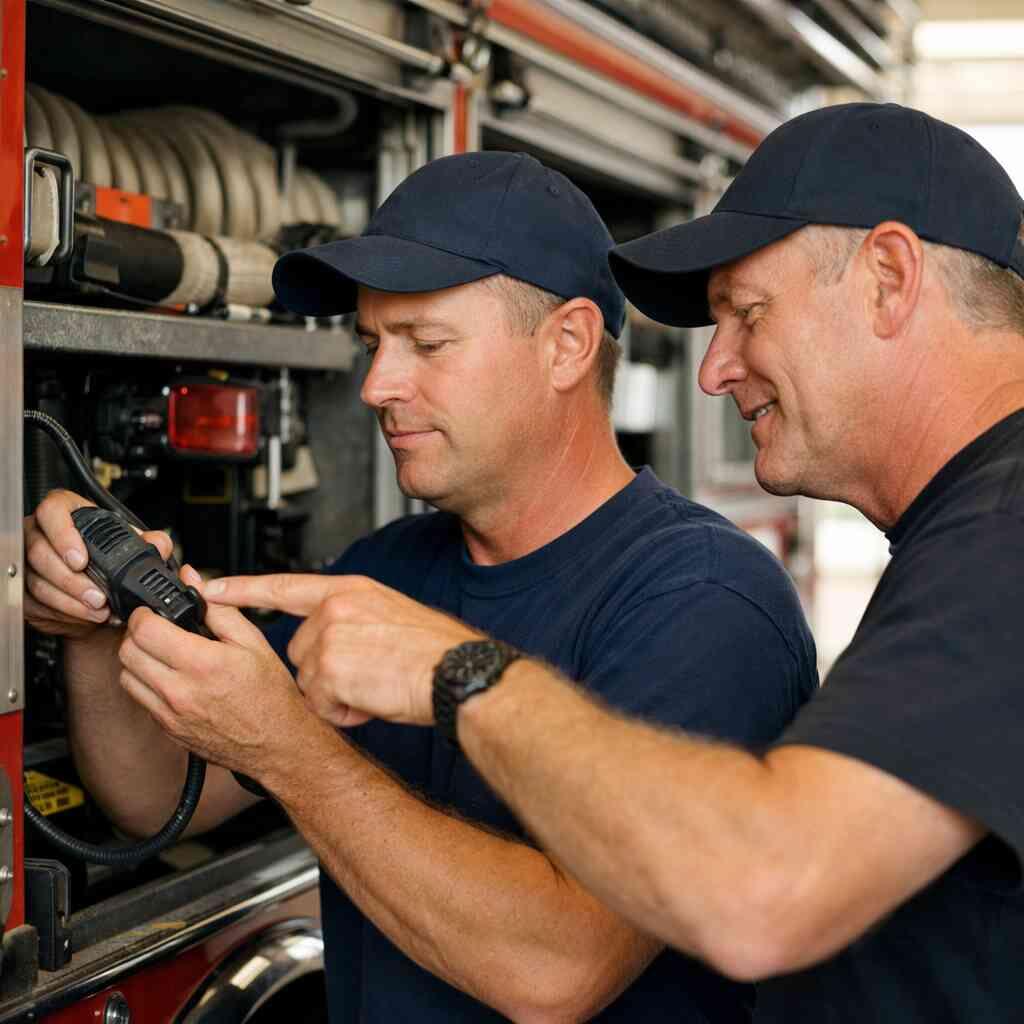
How to Compare Fire Power Products and NEC 2026 Wiring
July 15, 2026
The call usually starts after dark. A bay light fails, a connector loosens, or a hose-down exposes a weak link nobody noticed. If you are reading this because your wiring plan feels confusing, that reaction makes sense. Fire apparatus electrical work carries a different kind of pressure. The system has to work after vibration, heat, moisture, and constant handling. That is where a careful comparison between Fire Power Products and NEC 2026 wiring considerations becomes practical, not academic.
Why the wrong wiring choice fails first in the harshest moments
Where Fire Power Products fit into a code-aware fire apparatus build
Fire apparatus wiring is not only about getting power from point A to point B. It is about protecting mission-critical equipment from the conditions that attack ordinary connections first. Duraline’s Fire Power Products are designed for rugged emergency vehicle use, but final suitability still depends on the exact application. That distinction matters, because a strong-looking connector still has to fit the system plan, the environment, and the installer’s code requirements.
Here is the part most people miss: compatibility is not compliance. You can select durable components and still build an inspection problem if grounding, bonding, routing, or enclosure protection is handled loosely. We hear this from clients who expected a simple swap and then found the bay layout demanded more planning than the old system ever did. The smartest approach is to treat Fire Power Products as part of a code-aware system, not as a standalone answer. That mindset saves time, reduces rework, and keeps the build centered on reliability.
What NEC wiring language really changes for rugged emergency vehicle systems
NEC language changes the conversation because it pushes you toward defined installation practices instead of vague assumptions. For rugged emergency vehicle systems, that means you need to think about conductor protection, routing, strain relief, and accessibility from the beginning. The code does not exist to make work harder. It exists to keep systems predictable under stress. In a fire apparatus, predictability is everything.
The mistake we see most often is treating emergency equipment like ordinary fleet wiring. That is a costly shortcut. A fire truck sees more vibration, more moisture, and more repeated service access than most vehicles ever do. NEC 2026 wiring considerations therefore influence how you choose enclosures, transitions, and termination points. They also affect how you document the build so an inspector can follow the logic without guessing. In practice, code-aware fire apparatus wiring is less about drama and more about disciplined design.
Why moisture resistance, vibration resistance, and hose-down resilience matter before the first alarm
A system does not fail during a perfect afternoon. It fails after a wet shift, a wash bay rinse, or a rough run over uneven pavement. Moisture resistance, vibration resistance, and hose-down resilience matter because they determine whether a connection survives the ordinary abuse of fire service life. If a connector can only perform in clean, dry conditions, it is not ready for apparatus duty. That sounds obvious, yet the field keeps proving how easy it is to overlook.
On one recent apparatus-bay project in Central Florida, a technician traced an intermittent lighting fault to a connector that looked fine until a wash cycle exposed the weakness. The repair itself was simple. The lesson was not. Environmental resistance is not a luxury feature; it is part of electrical system reliability in emergency vehicles. When you compare fire safety wiring best practices, you should ask how each component behaves after heat, spray, and repeated movement, not just how it looks in a catalog.
The comparison framework that separates durable components from merely compatible ones
How to compare Fire Power Products with NEC 2026 wiring considerations without guessing at specs
A useful Fire Power Products comparison starts with documented facts, not assumptions. You should verify the connector type, the seal rating, the installation method, and any listed application limits before drawing conclusions. Then compare those details against the wiring demands created by NEC 2026 and the vehicle’s actual duty cycle. That approach sounds slower, but it prevents the false confidence that often leads to rework. In a mission-critical build, slow is sometimes fast.
Use a simple comparison framework:
- Confirm the exact product family and part designation.
- Match the component’s documented environmental rating to the actual exposure.
- Check wire gauge, termination style, and bend radius needs.
- Review access for maintenance and troubleshooting.
- Verify how the part supports grounding and bonding for fire equipment.
- Confirm the installer can document the final layout clearly.
This is where comparing durable fire equipment products becomes more valuable than comparing marketing claims. You want high-durability electrical components that can be installed cleanly, inspected easily, and serviced without tearing apart half the harness. If you need a deeper product baseline, a reference like the Ultimate Guide to UL Testing for Fire Truck Cabling 2026 can help frame what documentation matters and what still needs installer verification. That keeps the decision grounded in evidence.
Which connector and extension decisions affect grounding, bonding, and long-term reliability
Connector and extension choices shape the entire electrical personality of the apparatus. A poor transition point can create resistance, introduce service headaches, or complicate bonding paths. That is why first responder equipment wiring standards should be evaluated alongside the physical layout, not after it. Long-term reliability often depends on how well the system manages movement at junction points. Loose planning here becomes expensive later.
We typically look first at how the harness will flex, where it will be accessed, and how often maintenance crews will open the system. Female pigtails, male pigtails, and extensions each solve different problems. If the routing crosses a vibration-prone area, the connection style matters more than the brand name alone. For example, Fire Power IP68 female connector pigtails for rugged fire equipment may fit one use case, while Fire Power male-female extensions for firefighting equipment wiring make more sense when service access and layout flexibility matter. You are not just buying parts. You are designing the future service experience.
When IP68-style expectations matter and when you need the exact documented rating instead of assumptions
Many buyers ask for “IP68-style” performance because they want confidence in harsh environments. That instinct is understandable. Still, an IP68-style expectation is not the same as an actual documented rating. If a specification is not verified, do not treat it as confirmed. That is especially true in fire service electrical safety, where small misunderstandings can create big operational delays. Here is a simple rule: if the application involves recurring wash-down, splash exposure, or exposed mounting, require the exact rating in writing. If the part will sit in a more protected location, you still need documentation, but the environmental burden may be lower. The point is not to overbuy. The point is to avoid guessing. We have seen builds where the protected bay looked safe on paper, then a hose rinse or floor runoff changed the exposure profile entirely. That is why exact ratings matter more than broad assumptions.
Comparison pointAsk for documentationWhy it mattersMoisture exposureExact ingress ratingPrevents false assumptionsVibration exposureInstallation guidanceProtects long-term reliabilityService accessConnector and routing detailsReduces troubleshooting timeBonding and groundingSystem-level confirmationSupports safe operation### How to evaluate pigtails, receptacles, junctions, and accessories for maintenance-friendly design
Maintenance-friendly design sounds simple until the first service visit. Then every hidden connector becomes a delay. You want pigtails, receptacles, junctions, and accessories that support quick diagnosis without forcing a full teardown. That is one reason Fire Power junctions, receptacles, and accessories for maintenance-friendly wiring deserve careful review during planning. If maintenance crews can isolate a problem quickly, the apparatus returns to service faster.
The best maintenance-friendly electrical design usually includes:
- Clearly labeled transitions.
- Accessible junction locations.
- Minimal unnecessary splice points.
- Strong strain relief at movement zones.
- Parts that can be inspected without disassembling adjacent systems.
In our experience, the biggest mistake is hiding convenience behind the body panels. A build may look neat on day one, but if the service team cannot reach the connection later, the neatness costs you downtime. That is exactly why inspection-ready wiring layouts matter. They keep the system understandable long after the first install crew leaves.
The decision path that turns a wiring plan into inspection-ready fire equipment
How to map low-voltage wiring and power distribution around real apparatus-bay conditions in DeLand, Florida
DeLand brings its own practical realities. Heat, humidity, afternoon storms, and seasonal wash-down routines all shape how a fire apparatus bay behaves. Low-voltage wiring and power distribution should be mapped around those conditions, not around a perfect indoor diagram. If you are planning equipment near downtown, near Highway 92 corridors, or closer to open apron space, moisture and temperature swings can become part of the electrical story. That is why local conditions matter as much as technical ones.
A good layout begins with the physical path:
- Identify every power source and load.
- Mark all service-access points.
- Separate heat zones from sensitive terminations.
- Protect areas exposed to spray or floor runoff.
- Verify the routing does not block maintenance access.
One crew on a DeLand-area apparatus project found that a cleaner-looking route would have crossed a high-contact service area. They changed the plan before installation. The result was less strain on the harness and easier future inspections. That is the kind of detail that turns a nice diagram into reliable emergency response equipment installation. It also keeps electrical troubleshooting from becoming a scavenger hunt.
What to verify before choosing equipment for heat-resistant wire selection and environmental resistance
Heat-resistant wire selection is not just about the insulation label. It is about the whole environment surrounding the conductor. If a wire passes near charging hardware, engine heat, or sun-baked exterior panels, the surrounding temperature profile can change fast. Environmental resistance for electrical systems should therefore include heat, moisture, abrasion, and service movement. One weak factor can undo several strong ones.
Before you select equipment, verify these items:
- The conductor’s temperature exposure range.
- The insulation’s suitability for the mounting path.
- The connector’s seal and strain relief.
- The ability to withstand repeated service access.
- The fit with battery and charging system integration.
There is also a practical side to this. Many teams focus on power capacity and ignore routing stress. That is backward. Fire engine wiring and apparatus reliability depend on the physical path as much as the electrical load. If the routing creates heat traps or abrasion points, the system becomes harder to trust over time.
How to build a forward-looking checklist for emergency lighting, battery charging, and electrical troubleshooting
A forward-looking checklist prevents surprise failures later. Emergency lighting wiring considerations should include serviceability, fuse access, and clear isolation between circuits. Battery and charging system integration deserves the same discipline. If chargers, lighting, and auxiliary loads share space poorly, troubleshooting becomes slow and frustrating. That frustration is real, especially when a vehicle needs to return to service quickly.
Use a practical checklist:
- Confirm circuit labels match the actual layout.
- Test access to all service points.
- Verify cable protection in high-abuse areas.
- Review grounding and bonding for fire equipment.
- Check for pinched or over-tightened bends.
- Confirm the system can be diagnosed without major disassembly.
Here is the part that saves time later: build the checklist before the apparatus is fully buttoned up. A system that is easy to inspect is also easier to trust. That is the heart of maintenance-friendly electrical design. It is not about making things pretty. It is about making them workable under pressure.
When to contact Duraline for product guidance and when the installer must confirm final code compliance
Product guidance and code compliance are related, but they are not the same job. You may contact Duraline for help understanding product families, connector options, and application fit. If you need direct support, contact Duraline for fire apparatus wiring guidance is the right starting point for product-level questions. That conversation can help narrow choices before installation begins. It can also prevent the wrong part from entering the workflow.
Final compliance, however, belongs with the installer and the authority reviewing the build. No product team should guess at your final field conditions, and no installer should assume a connector automatically satisfies every code requirement. The safest approach is shared responsibility. Use Duraline for product guidance, then use your installer and inspector to confirm the final code-compliant fire apparatus wiring plan. That is how you protect both performance and paperwork. It is also how you keep the system ready for the next alarm without unnecessary delays.
The best next step is simple. Pull the current apparatus drawing, list every exposed connection, and compare it against documented product data before you order anything. You do not have to solve the whole build today. Start with one circuit, one connector path, and one clean decision.
Frequently Asked Questions
Question: How does Fire Power Products support code-compliant fire apparatus wiring when comparing product durability and compliance under NEC 2026 wiring considerations?
Answer: Fire Power Products is a strong starting point for code-aware product selection because the components are designed for demanding fire apparatus environments, but final compliance still depends on the full installation. The right Fire Power Products comparison should look at connector durability in harsh environments, routing, grounding and bonding for fire equipment, and how the parts fit into the overall wiring plan. NEC 2026 wiring considerations matter because they influence conductor protection, accessibility, strain relief, and documentation. In practice, that means you should verify the exact product details, confirm the application matches the environment, and make sure the installer can build an inspection-ready wiring layout. Fire Power Products can help support rugged wiring solutions, but the completed system must still follow applicable electrical code compliance for fire equipment.
Question: What should I look for when comparing durable fire equipment products for moisture-resistant cable management and vibration-resistant electrical connections?
Answer: When comparing durable fire equipment products, the most important step is to evaluate the full operating environment, not just the connector appearance. Moisture-resistant cable management, vibration-resistant electrical connections, and harness protection in emergency vehicles all matter because fire apparatus is exposed to wash-downs, heat, constant movement, and repeated service access. Fire Power Products should be reviewed by connector type, routing needs, sealing documentation, strain relief, and maintenance access. If the installation area is exposed to spray or frequent cleaning, verify the exact documented protection level instead of assuming performance from general descriptions. That approach supports electrical system reliability in emergency vehicles and helps avoid troubleshooting problems later. The best results come from selecting components for mission-critical systems that can be installed cleanly and serviced easily.
Question: How do I choose between pigtails, receptacles, junctions, and extensions for maintenance-friendly electrical design in a fire apparatus bay?
Answer: The right choice depends on where the connection sits, how often it will be serviced, and how much movement or exposure the area sees. For maintenance-friendly electrical design, pigtails are useful when you need a dependable transition point, extensions work well when layout flexibility is important, and junctions or receptacles are best when service access needs to stay simple. Fire Power Products offers options that can support inspection-ready wiring layouts, but the layout still has to be planned around real apparatus-bay conditions. Good fire safety wiring best practices usually include accessible connection points, clear labeling, minimal unnecessary splice points, and strong strain relief in high-abuse areas. If the crew can diagnose an issue without tearing into the whole harness, you reduce downtime and improve long-term reliability in fire service equipment.
Question: In How to Compare Fire Power Products and NEC 2026 Wiring, what practical checks should I make before selecting heat-resistant wire selection and battery and charging system integration components?
Answer: Before choosing components, verify the complete path the wiring will take and how it interacts with heat, vibration, and service access. Heat-resistant wire selection should be based on the actual temperature exposure near the engine bay, charging gear, exterior panels, and any locations where airflow is limited. Battery and charging system integration also needs careful review so that power distribution for fire equipment stays organized and easy to troubleshoot. A practical checklist should confirm conductor temperature range, insulation suitability, connector seal and strain relief, and the ability to support electrical troubleshooting for fire apparatus without major disassembly. Fire Power Products can be part of that plan when you need rugged wiring solutions, but the installer still has to confirm the final code-compliant fire apparatus wiring approach. That is the best way to support environmental resistance for electrical systems and keep the build reliable under demanding conditions.
Question: When should I contact Fire Power Products in DeLand, Florida for product guidance on fire service electrical safety and when does the installer need to verify final code compliance?
Answer: Contact Fire Power Products when you need help understanding product families, connector options, or how a specific component may fit your application. That kind of guidance is useful for narrowing choices early and avoiding mismatched parts in the workflow. Since the company is based in DeLand, Florida, the product discussion should still be tied to your actual apparatus conditions rather than assumptions. Final code compliance, however, belongs with the installer and the authority reviewing the build. That is especially important for first responder equipment wiring standards, grounding and bonding for fire equipment, and low-voltage wiring for fire apparatus. Fire Power Products can support code-aware product selection for firefighters, but the completed system must be verified as a whole. The safest process is to use product guidance early, then confirm the final layout, documentation, and installation details before the apparatus goes into service.