How Fire Power Products Reduce Heat Damage in Florida 2026
July 12, 2026
Why Florida heat turns ordinary fire equipment into a hidden failure point
If you have ever opened an apparatus compartment at noon and felt that hot, trapped air hit your face, you already know the problem. Heat does not always break equipment loudly. More often, it weakens it quietly and shows up later as a failed connection, brittle housing, or an annoying maintenance call that should have been avoidable. That is why heat damage prevention matters so much in Florida fire equipment decisions. In humid, sun-heavy conditions, Florida fire safety equipment needs more than basic protection. It needs discipline in design, placement, and maintenance.
The chain reaction of heat, humidity, and UV on mission-critical gear
Heat, humidity, and UV do not work separately. They attack in sequence, and each one makes the next problem worse. Heat expands materials. Humidity invites corrosion. UV hardens exposed surfaces and eventually makes them crack or fade. Together, they reduce fire equipment heat resistance and speed up failure across wiring, connectors, housings, and accessory mounts.
Here is the part most people miss. The weakness is often not the main unit. It is the small component sitting in direct sun, or the connector that gets sprayed down after every call. On the projects we have finished this year, the same pattern keeps showing up: equipment that looked fine in the bay failed after repeated thermal cycling outdoors. That is classic heat exposure mitigation territory, and it starts before the first symptom appears. If you are evaluating rugged emergency equipment, you have to think in layers, not labels.
Where DeLand Florida conditions accelerate wear on exposed apparatus accessories
DeLand has the kind of weather that punishes exposed equipment. Afternoon heat builds fast. Sudden storms bring moisture. Then the sun returns and bakes everything again. That cycle is rough on DeLand Florida fire equipment, especially items that sit on apparatus exteriors or live near compartments with poor airflow. Even if the hardware is well made, repeated exposure can shorten useful life.
We hear this from clients almost every week. A crew notices a small issue after a long shift, then another after a hose-down, then another after a hot week of calls. None of those problems looks dramatic by itself. Together, they point to Florida climate equipment challenges that demand better planning. One municipal crew described how a rear-mounted accessory kept loosening after afternoon returns to the station. It was not a dramatic breakdown. It was a slow, expensive annoyance that kept stealing time from the shift.
Why hose-down resistant equipment matters when daily cleanup is part of the job
Cleanup is not optional in the fire service. Dirt, soot, salt, residue, and heat all travel together. That is why hose-down resistant equipment matters so much in real-world operations. If the gear cannot handle repeated cleaning, it cannot handle the job. The goal is not just to survive water. The goal is to survive water, heat, and repeated use without losing reliability.
This is where fire service reliability becomes practical, not theoretical. The best gear must support daily maintenance without creating new maintenance. You want heat-resistant public safety equipment that tolerates washdown, stays sealed, and keeps its performance stable after the rinse. In plain terms, daily cleanup should not become a hidden stress test. For teams balancing calls, training, and inspections, emergency equipment maintenance gets easier when the underlying hardware is built for it.
What durable fire protection products do differently when temperatures climb
Durable fire products are not simply tougher-looking versions of standard parts. They are designed with real abuse in mind. That difference matters in Florida, where elevated temperatures and constant use expose weak design choices quickly. Durable fire protection products reduce risk by staying functional under pressure, resisting wear, and preserving connections that other products would lose. When the heat climbs, the question is not whether equipment looks good. It is whether it still works after repeated stress.
How USA-engineered fire products are built for high usage and abuse-resistant performance
USA-engineered fire products are often chosen because they are developed with demanding field conditions in mind. Fire crews do not need delicate gear. They need components that can be handled, cleaned, bumped, and used again without falling apart. That is what high-usage equipment resilience looks like in practice. It is not a marketing line. It is the ability to keep operating after repeated cycles of load, heat, and cleanup.
A crew member once told us, “If I have to baby it, it does not belong on the truck.” That mindset is common for a reason. Abuse-resistant fire products matter because the work itself is rough. Doors slam. Compartments close hard. Gloves drag across surfaces. Water gets everywhere. The gear has to accept that reality and keep going. A reliable fire safety gear decision should always reflect that daily reality, not an idealized one.
Why rugged emergency equipment needs more than basic enclosure protection
Many people assume a sealed box solves everything. It does not. Basic enclosure protection helps, but it cannot fix poor material selection, weak connectors, or bad thermal placement. Rugged emergency equipment needs more than a shell. It needs internal resilience, good sealing, and sensible integration with the rest of the apparatus system. Otherwise, the exterior may survive while the vulnerable points degrade.
This is where extreme conditions performance becomes the real standard. Heat does not care that a product was “protected.” It finds gaps. It works into junctions, edges, and repeated-flex points. If you want true fire safety product durability, you need a system mindset. The enclosure, the connectors, the mounting, and the maintenance routine all have to work together. That is why a strong product choice should support the entire apparatus, not just one visible component.
What mattersWhy it matters in FloridaHeat toleranceReduces softening and deformationSealing qualityLimits moisture intrusion during washdownsMaterial resilienceHelps resist UV and handling wearConnection integritySupports stable function under vibration### The role of equipment longevity in harsh environments when operational readiness cannot slip
Operational readiness is a moving target. One breakdown can delay response, complicate inspection schedules, and drain attention from more important work. That is why equipment longevity in harsh environments is not a luxury. It is part of the operating plan. If the gear lasts longer, the crew spends less time managing avoidable replacements and more time staying ready.
Here is what almost no online guide mentions: longevity also lowers decision fatigue. When components fail less often, your team can focus on core tasks instead of chasing intermittent problems. Mission-critical equipment performance depends on that stability. In high heat, even a small improvement in durability can protect the larger system from cascading issues. For departments trying to preserve fire service operational readiness, that is a meaningful advantage.
When connectors and pigtails become the weak link in the fire service
The largest part of a system is not always the weakest. In heat-heavy environments, the failure point is often a connector, pigtail, or junction that gets overlooked during routine checks. These parts seem minor until they are not. Once they begin to degrade, they can affect the entire chain of function. That is why electrical connector durability in harsh environments deserves the same attention as larger hardware choices.
Why IP68 female electrical connector pigtails matter for heat damage prevention
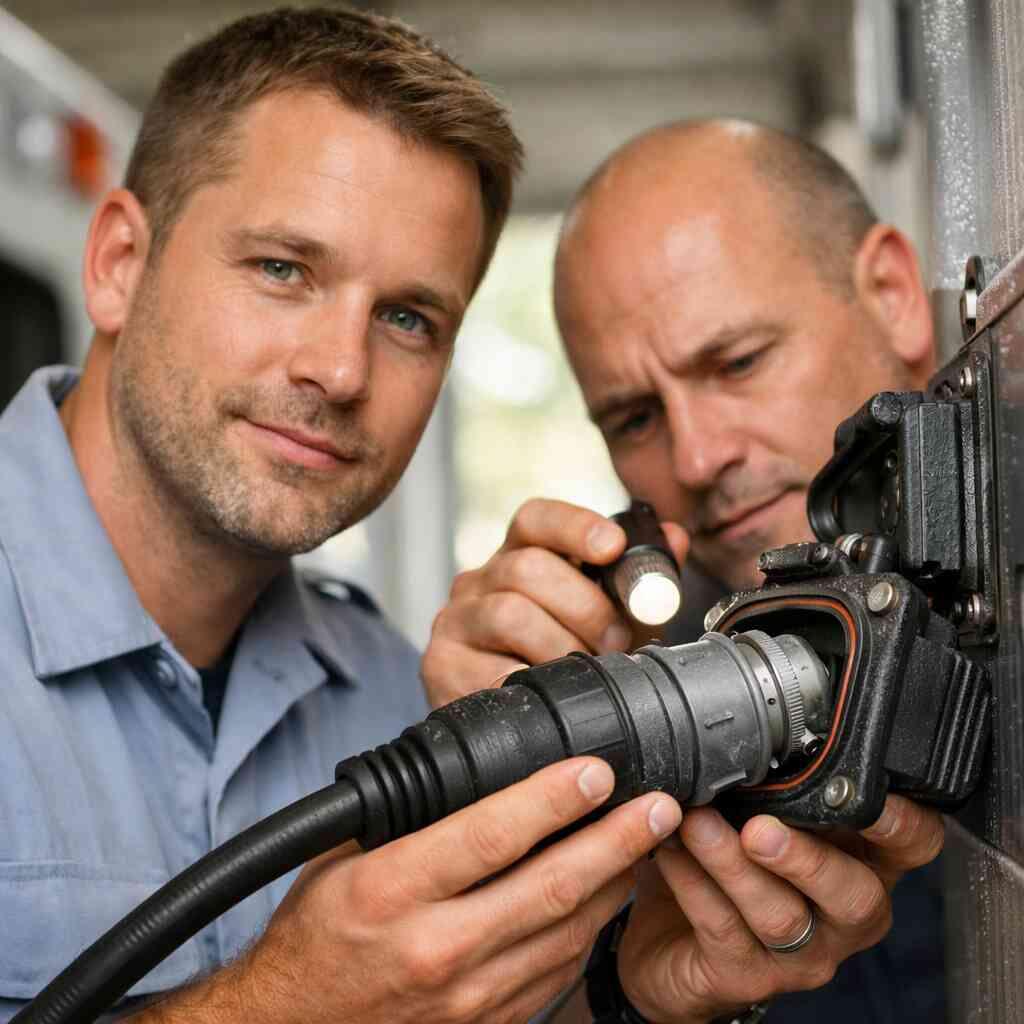
IP68 female electrical connector pigtails for heat exposure mitigation are useful because they are designed to support a high level of sealing against dust and water intrusion. That matters in Florida, where hot air and moisture keep testing equipment from different angles. The female side of a connector system often sees repeated handling and repeated exposure, so its integrity is crucial. If it weakens, the entire connection becomes less dependable.
A DeLand-area apparatus technician once described a recurring problem after washdowns: one connector would look fine, then fail after another week of heat and vibration. The issue was never dramatic. It was cumulative. That is exactly why heat damage prevention should include connector selection, not just major equipment selection. If you want dependable first responder equipment durability, you have to protect the parts that suffer the most frequent contact.
How IP68 male pigtails and male female extensions support reliable fire safety gear
IP68 male pigtails electrical connectors for rugged emergency equipment help complete a sealed, durable connection system. When paired correctly, they support reliable fire safety gear by reducing exposure to dirt, moisture, and heat-driven wear. The same logic applies to IP68 male female electrical extensions for reliable fire safety gear, which can help maintain continuity where spacing or routing demands it. Proper fit and careful installation matter just as much as the rating itself.
If you are comparing options, think about the environment first. Will the connector live in an apparatus bay, under a compartment lip, or near regular spray? That answer should guide the choice. The right extension does more than bridge distance. It helps preserve signal and power integrity under conditions that would otherwise create trouble. In that sense, thermal stress protection is not abstract. It is the difference between stable operation and recurring troubleshooting.
Where junctions, receptacles, and accessories help protect fire apparatus protection from thermal stress
The overlooked support pieces often determine whether a system ages gracefully or fails early. Fire fighting electrical junctions, receptacles, and accessories for thermal stress protection help create a more stable network around the main equipment. They also reduce strain at connection points, which is important when vibration, heat, and cleaning all happen in the same week. That is the hidden value of good accessory planning. If your team has ever traced a fault back to a corroded junction, you already understand the stakes. These parts do not need to be flashy. They need to be trustworthy. That is especially true for fire apparatus protection in hot climates, where a small point of failure can disrupt a larger response system. Strong accessories support stronger operations. Weak ones quietly drag everything down. The practical field logic behind heat exposure mitigation in Florida fire operations
You do not solve heat problems with theory alone. You solve them by matching equipment to how it is actually used. Apparatus bays, outdoor staging, and mobile response all create different stress patterns. A good selection process accounts for each one. That is the practical side of heat exposure mitigation. It is less about hype and more about smart deployment.
Choosing fire equipment heat resistance for apparatus bays, outdoor staging, and mobile response
Apparatus bays are not climate-controlled labs. Outdoor staging is worse. Mobile response adds vibration, heat, and sudden load changes. So fire equipment heat resistance has to be evaluated in context, not in a vacuum. What works indoors may struggle once it moves into direct sun or gets bounced over uneven pavement.
Think about the daily path of the gear. It may sit under a hot roofline, get deployed outdoors, then return wet and warm. That cycle creates stress many teams underestimate. If you are evaluating fire gear for hot climates, the question is not only “Will it work?” It is also “Will it still work after repeated exposure?” That mindset improves fire service operational readiness because it reduces surprises.
How high-temperature equipment durability supports first responder equipment durability during peak summer demand
During peak demand, crews need gear that stays steady. High-temperature equipment durability supports first responder equipment durability by reducing the chance that a hot day triggers a preventable failure. That matters most when workloads stack up and everyone is already stretched. The last thing you need is a component that becomes unreliable exactly when the weather turns harsh.
Here is the truth from the field: the best equipment is often the equipment nobody has to think about. It does its job, then keeps doing it. That consistency supports dependable emergency response tools across the whole shift. For agencies trying to improve mission-critical equipment performance, the value of durability is not just longer life. It is fewer interruptions during the moments that matter most.
What to check on fire fighting electrical equipment before hot weather pushes systems harder
Before hot weather pushes systems harder, check the obvious and the small things. Inspect seals, mounting points, connector faces, and any area that sees repeated spray or sun. Verify that cleaning routines are not trapping moisture where it can do damage. Those checks sound basic, but they catch a lot.
Use this short checklist:
- Look for discoloration or softening.
- Test for looseness at connection points.
- Inspect for corrosion around exposed edges.
- Confirm that washdown areas stay sealed.
- Review any recurring fault history.
If you are responsible for fire fighting electrical equipment, this kind of review is a practical form of emergency equipment maintenance. It does not take long, but it can prevent long delays later. In our experience, the biggest mistake is waiting until a hot-weather failure forces the issue.
The next move for teams that need dependable emergency response tools in DeLand
You do not need to replace everything at once. Start by identifying the parts that take the most heat, spray, and vibration. Then compare them honestly against better options. That is the right way to improve long-lasting fire apparatus accessories without overspending or overcomplicating the process. Small upgrades in the right places often deliver the best return.
How to evaluate long-lasting fire apparatus accessories against your current equipment exposure points
Begin with exposure points. Which parts sit in sun? Which parts get washed most often? Which parts vibrate during response? Those are your real risk zones. Once you know them, you can judge whether your current accessories match the environment or fight against it.
A practical evaluation should include:
- Location on the apparatus.
- Frequency of cleaning.
- Amount of direct sunlight.
- History of faults or corrosion.
- Ease of replacement during service.
That checklist helps you compare fire safety product durability without getting distracted by unnecessary features. It also keeps the conversation centered on performance. If a component does not support equipment longevity in harsh environments, it probably does not belong in a Florida fleet.
Which mission-critical equipment performance questions to ask before replacing vulnerable components
Ask better questions before you buy. Will the component handle washdowns? Will it stay stable in heat? Does it fit the actual use pattern? Can it reduce maintenance instead of adding it? Those questions are simple, but they expose a lot. They also help you distinguish between decent-looking hardware and truly high-usage equipment resilience.
If you are comparing options for heat damage prevention for Florida fire equipment, this is where the decision becomes clear. You want parts that fit the climate, the workload, and the maintenance rhythm. That is especially important for teams protecting Florida climate equipment challenges with limited time and limited patience for repeat repairs. The best choice supports confidence on every call.
When to contact Duraline for fire power products that fit Florida climate equipment challenges
If your current gear is showing heat stress, don’t wait for a failure to make the decision for you. Reach out when you start seeing repeated issues, not after the third one. That is the moment to contact Duraline for fire equipment durability support. You can also review the Fire Power products family that supports fire power safety products for high-temperature equipment durability and compare it against your current weak points.
For teams in DeLand, the smartest next step is simple. Pick three vulnerable components, inspect them this week, and replace the worst one first. That keeps the process manageable and gives you a clear baseline. You do not have to figure this out alone, and you do not have to solve it all today. Start with one phone call, then make the next decision from real information.
Frequently Asked Questions
Question: How does How Fire Power Products Reduce Heat Damage in Florida 2026 relate to heat damage prevention for Florida fire safety equipment?
Answer: The blog focuses on practical heat damage prevention by explaining how Florida fire safety equipment is affected by heat, humidity, UV exposure, washdowns, and vibration. Fire Power Products is positioned around durable fire protection products that are designed for demanding conditions, but the right takeaway is broader: equipment selection should prioritize fire equipment heat resistance, thermal stress protection, and equipment longevity in harsh environments. In Florida, that means looking closely at the parts most likely to fail first, such as connectors, pigtails, junctions, receptacles, and exposed accessories. Fire Power Products helps customers think through those weak points so they can improve fire service reliability and reduce avoidable maintenance.
Question: What makes Fire Power Products a good fit for DeLand Florida fire equipment used in hot, humid, and frequently washed-down conditions?
Answer: Fire Power Products is a strong fit for DeLand Florida fire equipment because the company’s approach matches the realities of Florida climate equipment challenges. The content emphasizes that heat, moisture, and repeated hose-downs can slowly degrade components over time, especially if they are not built for high-usage equipment resilience. Fire Power products are described as USA-engineered fire products intended for demanding use, and the brand’s focus on durability aligns well with hose-down resistant equipment needs and fire apparatus protection. While every application should be evaluated for the exact environment and use case, Fire Power Products is designed to support teams that need reliable fire safety gear and dependable emergency response tools in a tough climate.
Question: Why are IP68 female electrical connector pigtails and related extensions important for fire apparatus protection?
Answer: The blog highlights connectors as a common weak link because they often endure the most handling, vibration, water exposure, and thermal stress. IP68 female electrical connector pigtails, along with IP68 male pigtails and male female extensions, help support fire apparatus protection by improving sealing against dust and water intrusion, which is especially important in humid climates and during washdowns. These components are not a cure-all, but they are a practical part of heat exposure mitigation when paired with proper installation and routine inspection. For teams that depend on mission-critical equipment performance, connector integrity can be the difference between stable operation and recurring troubleshooting.
Question: What should departments look for when choosing durable fire protection products for fire gear for hot climates?
Answer: Departments should focus on heat resistance, sealing quality, material resilience, and connection integrity. Those factors directly support high-temperature equipment durability and help prevent premature wear in fire gear for hot climates. The best durable fire protection products are not just strong on the outside; they also need to perform consistently after repeated cleaning, vibration, and outdoor exposure. Fire Power Products emphasizes abuse-resistant fire products and reliable fire safety gear concepts that fit real-world operations. For agencies comparing options, the key question is whether the product improves fire service operational readiness and reduces maintenance burden over time.
Question: How can Fire Power Products support long-lasting fire apparatus accessories and emergency equipment maintenance?
Answer: Fire Power Products can support long-lasting fire apparatus accessories by helping departments evaluate the components that face the most heat, spray, and vibration. The blog recommends reviewing exposure points, cleaning frequency, sunlight exposure, and fault history before replacing vulnerable parts. That approach supports emergency equipment maintenance by targeting the items most likely to cause problems later. When accessories are chosen with fire safety product durability in mind, crews benefit from better equipment longevity in harsh environments and fewer interruptions during daily operations. This practical method is ideal for teams that want high-usage equipment resilience without overcomplicating the purchasing process.
Question: Who should contact Fire Power Products for help with thermal stress protection and mission-critical equipment performance?
Answer: Departments, fleet managers, and public safety teams that are seeing repeated heat-related issues, connector failures, or wear from washdowns should consider reaching out to Fire Power Products. The blog recommends contacting the company when recurring problems begin, not after a complete failure. That is especially important for teams trying to protect mission-critical equipment performance in Florida climate equipment challenges. Fire Power Products can help customers think through which parts of their system need better thermal stress protection, which accessories may improve fire apparatus protection, and how to prioritize upgrades that support dependable emergency response tools. If your equipment is exposed to heat, humidity, and daily abuse, this is the right time to evaluate stronger options.