The Difference Between NEMA 6P and UL 1977 for 2026
September 11, 2026
When a connector looks sealed but still fails under pressure
A connector can look solid on the bench and still fail in the field. That is the frustrating part. If you are reading this after a hose-down issue, a corrosion problem, or a mystery fault, you are not alone. We hear this confusion often from teams that need reliability fast. The challenge is that electrical component ingress protection and connector certification do not answer the same question.
Why ingress protection and connector certification are not the same conversation
A NEMA 6P rating speaks to enclosure exposure, while the UL 1977 connector standard addresses connector construction and safety. Those are related, but they are not interchangeable. A sealed box can protect internal parts, yet the connector at the edge can still become the weak link. That is why NEMA 6P vs. UL 1977 creates so much debate in ruggedized connector design. You are not comparing identical protections; you are comparing different layers of risk.
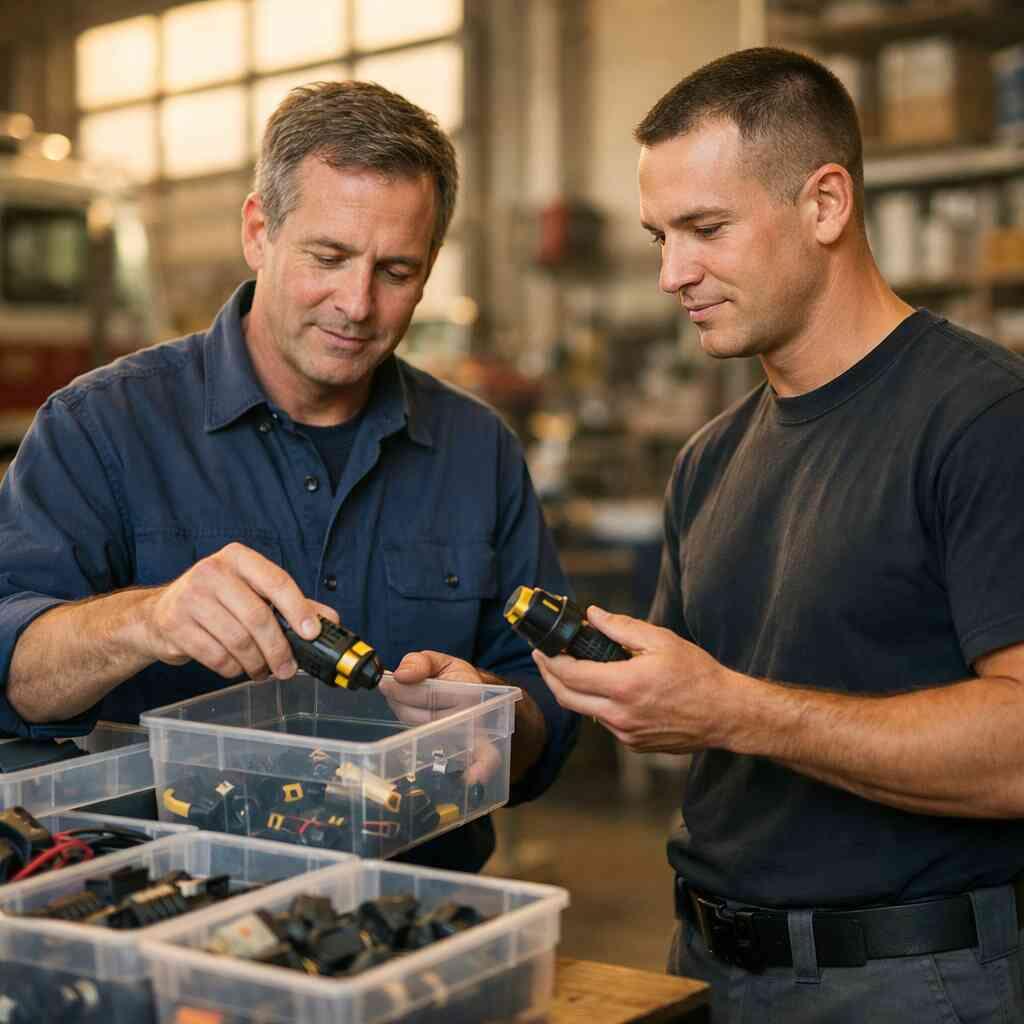
One DeLand service manager once described a truck that passed visual inspection after washdown, then threw intermittent faults a week later. The connector shell looked fine. The problem was inside the interface, where moisture had found a path no one expected. That is the kind of failure that wastes time and shakes confidence. It also explains why sealed connector applications need careful reading, not quick assumptions.
How hose-down exposure, standing water, and salt-laden air change the risk profile
Hose-down exposure is brutal because it combines pressure, heat, and repetition. Standing water is worse than most people think because it lingers at seams and interfaces. Salt-laden air adds another layer, since it accelerates corrosion on metal parts and degrades long-term reliability. In coastal Florida, that matters even if the truck never sees the ocean directly. The environment around DeLand still brings heat, humidity, and seasonal weather swings that punish exposed equipment.
Here is the part most buyers miss. A connector that survives one rinse does not automatically survive hundreds. Hose-down rated equipment must handle the whole pattern of use, not a single test moment. The same logic applies to weather-resistant electrical connections and connector housing integrity. If the housing seals well but the contacts or terminations do not, failure simply moves deeper into the assembly.
What fire service electrical hardware has to survive before anyone calls it durable
Durability has to mean more than “it powered on once.” Fire service electrical hardware gets vibration, repeated handling, wet gear bays, chemical residue, and rough storage. It may also face frequent disconnects, hurried field repairs, and temperature swings that stress materials. That is why fire safety electrical connectors need a broader reliability view than ordinary industrial parts. In our experience, the mistake is treating a connector like a static lab component.
On the projects we’ve finished this year, the best-performing assemblies shared one trait: every exposed interface was evaluated as part of a system. That included the enclosure, the plug, the receptacle, the strain relief, and the cable path. If any one piece was underspecified, the entire assembly lost credibility. For buyers focused on connector performance in harsh conditions, that system view is the difference between dependable and merely impressive-looking. It also keeps you from overbuying protection where you do not need it.
Why NEMA 6P and UL 1977 keep getting compared even though they solve different problems
People compare these two because both sound like protection ratings. That is understandable. Still, the comparison can get muddy fast if you do not separate enclosure exposure from connector safety. The result is often a spec sheet that looks strong but leaves the wrong component protected. For connector selection for emergency response gear, clarity matters more than marketing language.
What a NEMA 6P rating is meant to communicate about enclosure exposure
A NEMA 6P rating is meant to communicate how an enclosure handles dust, water, and submersion-related exposure under defined conditions. It is an enclosure conversation first. It tells you something important about the shell surrounding the components. It does not, by itself, certify every internal connector interface. That distinction matters when you are building or replacing waterproof connector enclosure assemblies.
A useful way to think about it is simple. NEMA 6P asks, “How well does the box resist environmental intrusion?” It does not fully answer, “How does the connector itself perform under repeated mechanical and electrical stress?” That second question belongs to connector standards and application engineering. If you blur the two, you can end up with submersible connector protection in one place and a vulnerable contact interface in another.
What the UL 1977 connector standard covers in connector performance and safety
The UL 1977 connector standard focuses on connectors, not enclosures alone. It addresses electrical and mechanical performance, construction details, and safety-related expectations for connectors used in equipment. That makes it useful for understanding industrial connector standards in practical terms. If you are evaluating durable electrical fittings, UL 1977 gives you a very different lens from NEMA. It is about connector behavior, not just environmental exposure.
Here is a simplified comparison that helps buyers stay grounded:
TopicNEMA 6PUL 1977Primary focusEnclosure exposureConnector construction and safetyMain questionCan the housing resist the environment?Can the connector perform safely and reliably?Best useProtecting internal equipment from water and dustEvaluating connector integrity and application safetyBuyer mistakeAssuming the enclosure covers everythingAssuming connector certification means full enclosure sealingThat table is not meant to oversimplify the engineering. It is meant to prevent a common spec sheet error. The phrase industrial safety certification belongs in the decision, but only after you identify which component it covers. A connector can be compliant without solving enclosure exposure. Likewise, a rugged enclosure can still house a weak connector.
Where the comparison gets confusing for ruggedized connector design and sealed connector applications
The confusion starts when sellers use “sealed” loosely. A product can have environmental sealing for electrical connectors and still not be equivalent to a fully sealed enclosure. It can also have a strong housing and weak field serviceability. That is why ruggedized connector design deserves more than a quick rating check. You need to know what was tested, how it was tested, and which part of the assembly was actually covered.
A technician in Central Florida once showed us a setup that had the right label on the box and the wrong assumptions on the cable end. Everything looked appropriate until repeated wet service exposed the connector path. That is the hidden trap. Buyers see one strong specification and assume the whole assembly inherited it. In reality, connector rating comparison only works when you compare like with like.
The part most buyers miss when they read a spec sheet too fast
Most people read the rating, nod, and move on. That is where trouble starts. The missing step is asking what exactly the rating protects and what it leaves exposed. If you need dependable first responder equipment connectivity, that distinction is not academic. It decides whether the gear works after the first hard week in service.
Environmental sealing for electrical connectors versus overall system protection
Environmental sealing for electrical connectors addresses one part of the problem. Overall system protection addresses the whole chain. Those are not the same thing, and they fail differently. A connector may block moisture well, yet the cable entry or termination point may still admit water. Similarly, a strong enclosure can keep out spray while leaving the mating interface underprotected.
That is why the smartest teams look at the assembly from the outside in. They ask about housing, gasket, strain relief, mating cycle, and service access. They also ask how the part behaves after repeated washdowns and vibration. If a supplier cannot explain that clearly, you do not yet have a complete answer. You have only a partial one.
Dust-tight electrical connection and submersible connector protection as separate design goals
A dust-tight electrical connection is one goal. Submersible connector protection is another. They sound similar, but they solve different threats. Dust intrusion tends to create gradual electrical instability. Water intrusion often creates faster and more dramatic failure. A connector can be excellent at one and only adequate at the other.
That distinction matters for outdoor power connection safety and for equipment stored in wet bays. It also matters during seasonal storms, when humidity and splash exposure become constant background stress. For buyers comparing NEMA 6P rating to UL 1977 connector standard, the key is to stop asking which is “better.” Instead, ask which failure mode you are trying to control. That question keeps the spec honest.
Why corrosion-resistant connectors and moisture ingress prevention are not optional in high-moisture environments
Corrosion does not need a dramatic event. It only needs time, moisture, and the wrong material choice. That is why corrosion-resistant connectors matter so much in high-moisture environments. Once oxidation starts, contact quality can degrade before anyone sees a visible problem. At that point, you are troubleshooting symptoms, not causes. Moisture ingress prevention is not a luxury feature. It is the baseline for dependable service. In humid climates, especially around Florida’s heat and salt influence, small weaknesses become expensive quickly. The teams that stay ahead of failures usually treat connector maintenance as part of readiness, not an afterthought. If you want reliability in demanding environments, the connector itself must be built for the reality of the field.
How to choose the right electrical component for fire safety equipment without overbuying the wrong protection
This is where many buyers hesitate. They know they need better protection, but they do not want to pay for the wrong kind. That is a smart concern. Overbuying can be just as wasteful as underbuying, especially when the actual duty cycle is narrower than the marketing suggests. The trick is matching the component to the job, not the label to your fear.
When a waterproof connector enclosure makes sense and when it does not
A waterproof connector enclosure makes sense when the enclosure must survive direct exposure, frequent rinse-downs, or standing moisture. It may also make sense when the interface cannot be easily shielded by placement alone. But not every system needs the highest enclosure protection everywhere. Sometimes a targeted seal at the exposed point is the better design choice. That approach supports electrical safety compliance without unnecessary complexity.
If you are specifying gear for a bay-mounted system, ask where water actually reaches. The answer is often more specific than you expect. In some builds, the enclosure is the real vulnerability. In others, the connector pair is the critical point. Good design respects the difference. It does not treat every component the same.
The practical difference between plug and receptacle protection and complete assembly durability
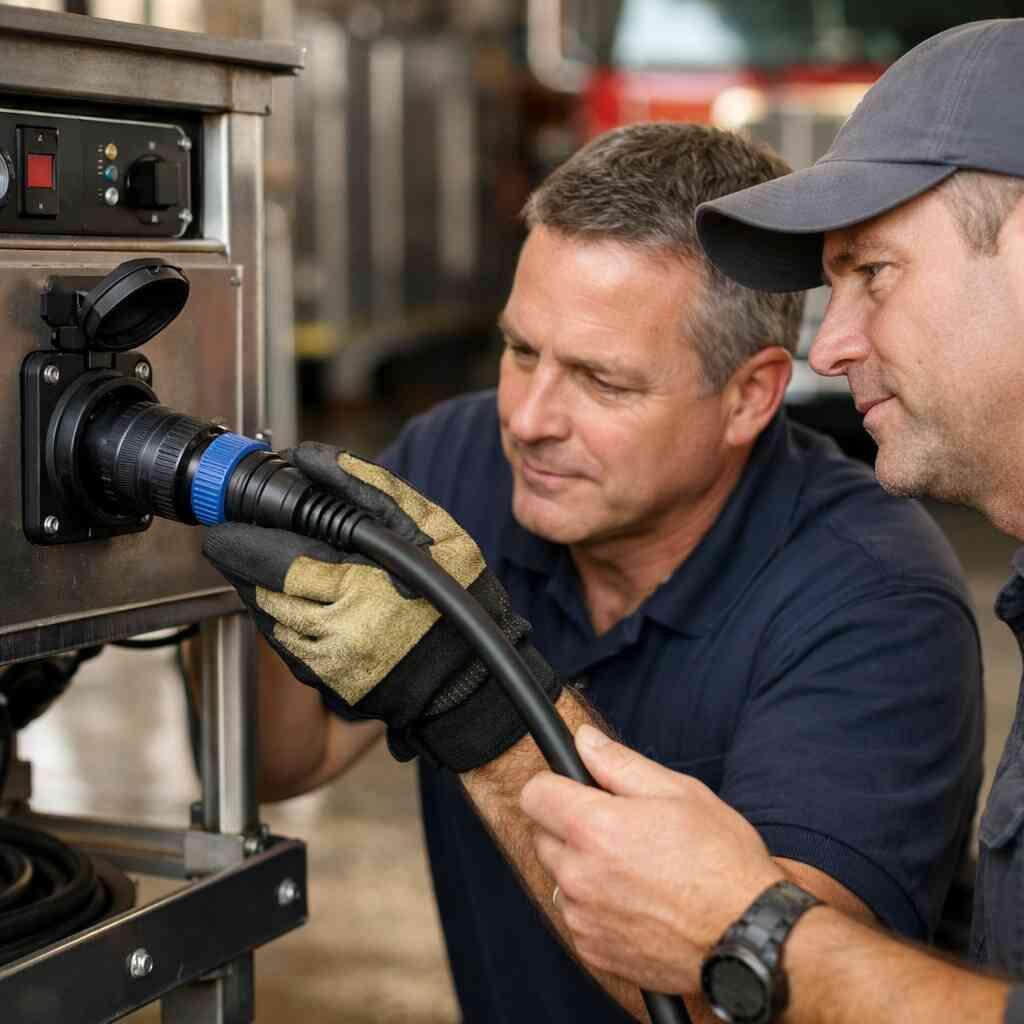
Plug and receptacle protection is important, but it is only part of complete assembly durability. A strong plug on a weak receptacle is still a weak system. Likewise, a protected receptacle can still fail if the mating cycle or cable support is poor. That is why the interface matters as much as the label. You are not buying a single part in isolation.
Here is a quick field-minded checklist:
- Confirm the exposed side of the assembly.
- Check how the mating interface seals.
- Review strain relief and cable routing.
- Ask about cleaning and washdown exposure.
- Verify service access without damaging the seal.
- Match the part to actual duty, not worst-case imagination.
That checklist helps you compare connector performance in harsh conditions without drifting into overengineering. It also keeps replacement decisions consistent when repairs happen under pressure.
Matching industrial connector standards to emergency response gear and outdoor power connection safety
Industrial connector standards matter because emergency response gear does not live in a laboratory. It lives in motion, heat, moisture, and urgency. That is why outdoor power connection safety should be part of every specification discussion. A connector that is fine indoors may struggle once it meets wet pavement, vibration, and repeated deployment. The right standard gives you a structured way to reduce that risk.
We have seen teams spend heavily on enclosure protection while ignoring the cable end entirely. That can be a costly imbalance. The better approach is to align the connector rating with the actual exposure path. For fire service electrical hardware, that means looking at the complete route from power source to point of use. If the route crosses wet areas, pay attention there first.
Where code-compliant electrical components and industrial safety certification enter the decision
Code-compliant electrical components and industrial safety certification are not optional boxes to tick at the end. They are part of the selection process from the beginning. They help you avoid components that look rugged but lack a clear compliance path. They also help you defend the purchase internally when multiple people need to sign off. That matters in public safety environments, where accountability is part of the job.
The safest habit is to request exact documentation before approval. Ask for the standard, the version, and the specific part number. Then compare that information against the actual application. If a supplier cannot do that cleanly, keep looking. You deserve more than a vague claim, especially when reliability is tied to response readiness.
The decision frame that keeps fire service electrical hardware dependable in the field
The final decision should feel structured, not rushed. You do not need to guess. You need a repeatable filter that helps you compare options fairly and choose the right level of protection for the job. That is especially true in DeLand and across Central Florida, where humidity, heat, and sudden rain can expose weak links quickly. Good decisions survive bad weather.
How to evaluate connector rating comparison for demanding environments without guessing
Start with the environment, then move to the part. That order matters. A proper connector rating comparison asks what the equipment will face, how often it will be cleaned, and how much direct exposure it will see. Then it asks what standard actually covers that exposure. If you reverse the order, you risk buying a label instead of a solution.
When teams compare NEMA 6P vs. UL 1977, the most useful question is this: what failure am I trying to prevent? If the answer is enclosure intrusion, NEMA belongs in the conversation. If the answer is connector integrity, UL 1977 matters more. Many real-world builds need both perspectives. The key is not to confuse them.
What to confirm with a supplier before specifying first responder equipment connectivity
Before you specify first responder equipment connectivity, ask for the details that eliminate ambiguity. You want the exact part number, the relevant standard, and the intended exposure profile. You also want to know whether the protection applies to the housing, the connector, or the entire assembly. If the answer comes back fuzzy, that is a warning sign. Clear documentation is part of the product.
A short supplier checklist can keep you moving:
- Confirm the applicable standard by name.
- Verify whether the rating covers the enclosure, connector, or both.
- Ask about washdown, moisture, and corrosion exposure.
- Review installation requirements and service limits.
- Request documentation that matches the exact part shipped.
That process takes minutes, not hours. It can save days of frustration later. And in this field, delay often costs more than the hardware.
Why the safest next step is verifying the exact product documentation before installation or replacement
This is the step people skip when they are busy. It is also the step that prevents the most pain. Verify the exact product documentation before you install or replace anything. That means the spec sheet, the compliance statement, and the application notes all need to match the job. If they do not, pause.
If you are working through a replacement, do not assume the old part was correct just because it fit. Fit is not proof. Documentation is. For connector selection for emergency response gear, the safest move is to confirm the exact requirements with a supplier who understands field conditions. Fire Power Products, based in DeLand, Florida, is built around that kind of practical conversation. Start with one call, one part number, and one clear exposure profile. You do not have to solve the whole system today, but you do need to make the next choice with clean information.
Frequently Asked Questions
Question: In The Difference Between NEMA 6P and UL 1977 for 2026, how do I know whether I need a NEMA 6P rating, the UL 1977 connector standard, or both for first responder equipment connectivity?
Answer: The right choice depends on what part of the assembly is actually exposed. A NEMA 6P rating is about enclosure exposure and can be relevant when you need a waterproof connector enclosure or submersible connector protection at the housing level. The UL 1977 connector standard, on the other hand, speaks to connector construction and safety, which is important when you are evaluating plug and receptacle protection, connector housing integrity, and overall connector performance in harsh conditions. In many fire service electrical hardware applications, both perspectives matter. Fire Power Products helps customers sort through that difference by focusing on the actual exposure path, the environment, and the application details before recommending a solution. That practical approach supports electrical safety compliance without overbuying protection you do not need.
Question: What should I look for in hose down rated equipment and corrosion resistant connectors for high moisture environments?
Answer: Start with the full use case, not just the label. Hose-down rated equipment must handle repeated cleaning, pressure, standing water, and real field conditions over time. Corrosion-resistant connectors are important in high-moisture environments because moisture ingress prevention is not optional when you need reliability in demanding environments. You should confirm the connector rating comparison, ask how the seal performs at the mating interface, and review whether the connector is part of a complete sealed connector applications design or only partially protected. Fire Power Products serves customers who need durable electrical fittings for demanding environments, and the right conversation begins with the exact exposure profile. That is how you avoid assuming a dust-tight electrical connection is automatically the same as submersible connector protection.
Question: How does Fire Power Products help with ruggedized connector design when weather resistant electrical connections are needed for emergency response gear?
Answer: Fire Power Products takes a system-level approach to ruggedized connector design. That means looking at the enclosure, the connector, the cable entry, the strain relief, and the mating interface together instead of treating each part separately. For emergency response gear, weather-resistant electrical connections need to support outdoor power connection safety, reliable operation, and easy service without weakening the seal. We understand that first responder equipment connectivity has to survive vibration, handling, cleaning, and the realities of field use. The goal is not to overstate performance, but to help customers verify the right code-compliant electrical components and industrial safety certification details for their application. That process leads to better equipment durability standards and fewer surprises in the field.
Question: What is the most important difference between environmental sealing for electrical connectors and overall system protection?
Answer: Environmental sealing for electrical connectors focuses on how the connector interface resists dust, water, and moisture. Overall system protection goes further and includes the enclosure, cable path, terminations, installation method, and service conditions. A connector can perform well on its own and still fail in the system if the housing, routing, or mating side is not designed correctly. That is why connector selection for emergency response gear should be based on the complete assembly, not just one specification. Fire Power Products helps customers evaluate connector performance in harsh conditions by asking where the actual risk begins and how the full system is expected to be used. This approach is especially important for fire safety electrical connectors, where reliability and electrical safety compliance must both be considered.
Question: Before I install or replace anything, what documentation should I verify for industrial connector standards and electrical component ingress protection?
Answer: Verify the exact part number, the applicable standard, and what the rating actually covers. For example, confirm whether the documentation refers to a NEMA 6P rating, the UL 1977 connector standard, or another industrial connector standard. Then check whether the claim applies to the enclosure, the connector, or the full assembly. This matters because electrical component ingress protection is often misunderstood when a product description uses broad terms like sealed, rugged, or waterproof without defining the test basis. At Fire Power Products, we encourage customers to review the specification sheet, compliance statement, and application notes before approving a part. That helps ensure you are selecting code-compliant electrical components that match the real job instead of relying on assumptions. For demanding environments, that diligence is part of reliability in demanding environments.
Question: Why should I contact Fire Power Products in DeLand, Florida about connector rating comparison for fire service electrical hardware?
Answer: Because the safest decision is the one based on accurate information, not guesswork. Fire Power Products, based in DeLand, Florida, focuses on practical support for fire service electrical hardware and related connector selection for emergency response gear. If you are comparing NEMA 6P vs. UL 1977, we can help you evaluate the difference between enclosure protection and connector safety so you can choose the right level of environmental sealing for electrical connectors. We can also help you think through moisture ingress prevention, plug and receptacle protection, and whether a waterproof connector enclosure is truly needed for your application. The value of that conversation is clarity: you get a recommendation shaped around the actual environment, the required performance, and the documentation you should confirm before installation. That is the kind of grounded support customers need when reliability matters.