Top 6 Veteran Ready Fire Power Products for DeLand Fleets 2026
October 13, 2026
-
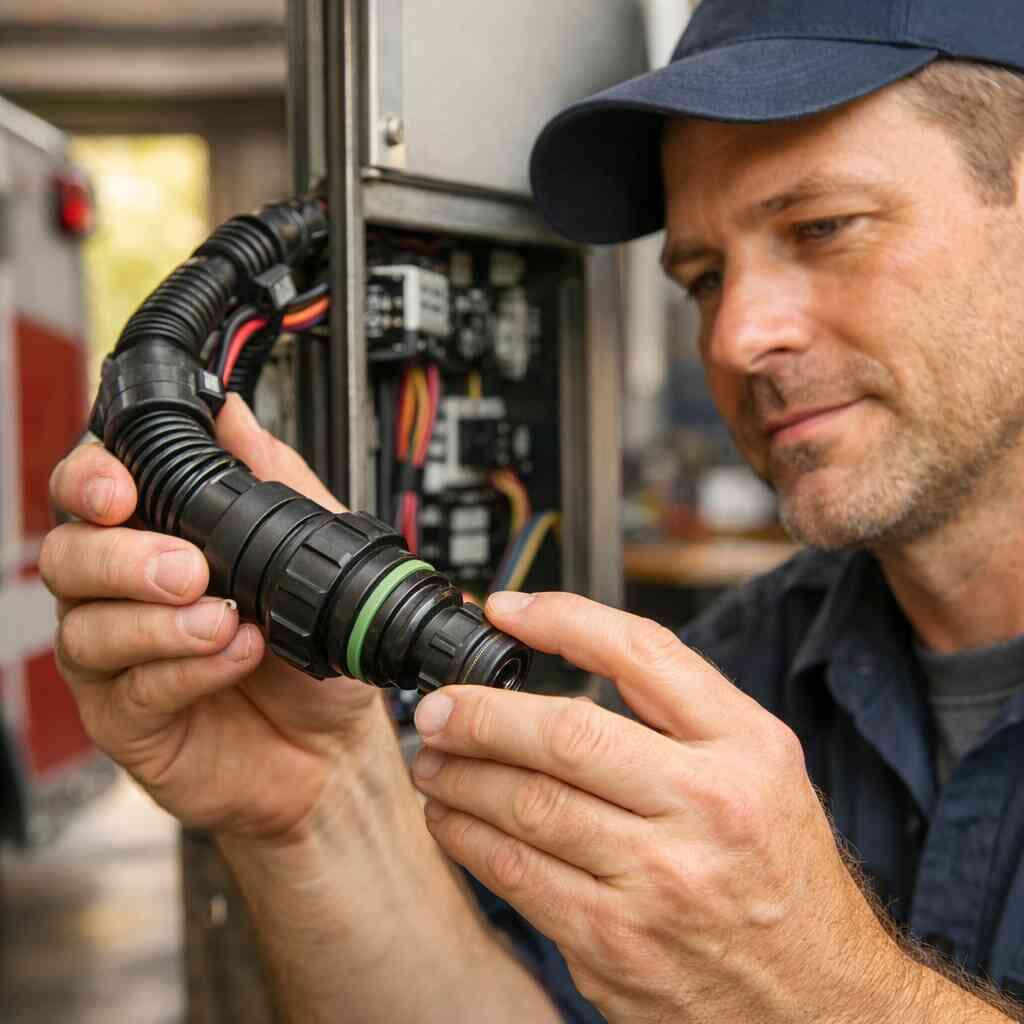
Fire Power IP68 Female Electrical Connector Pigtails
A fleet issue can hide in plain sight. A connector may look fine until water, vibration, and repeated use expose the weak point. That is why IP68 female electrical connector pigtails for DeLand fleet fire safety deserve early attention in your equipment plan. In DeLand, where humidity, sudden rain, and hose-down routines are part of normal operations, sealed interfaces matter. The challenge is not spotting damage after a failure. It is preventing that failure from interrupting response readiness.
Why sealed female pigtails are often the first line of defense in DeLand fleet fire safety
Female pigtails are often the interface that helps keep the rest of the system protected. They help organize power connections in a way that supports station-ready equipment and predictable service routines. If you manage DeLand fleet fire safety, you already know the smallest exposed connection can create the biggest headache. Moisture intrusion rarely announces itself loudly. It usually shows up as an intermittent fault at the worst possible moment.
One shop we spoke with described a recurring problem on apparatus that returned from washing still carrying a faint electrical glitch. The culprit was not the main harness. It was a connection point that had slowly taken on water through repeated exposure. That kind of issue is frustrating because it wastes time and erodes trust. A sealed female pigtail cannot solve every problem, but it can reduce avoidable vulnerability at the interface.
Where female connector pigtails fit in station-ready equipment and apparatus organization solutions
Good fleet work is mostly about placement, not drama. Female connector pigtails fit neatly into apparatus organization solutions when you want cleaner routing and less strain on the surrounding wiring. They can support commercial fire apparatus accessories that need a reliable connection without turning the compartment into a tangle of loose leads. That matters when tools move, doors slam, and equipment gets stored in tight quarters. It also matters when you need to service one component without disturbing three others.
Here is the part most managers miss. The best connector layout is not the most complicated one. It is the one your team can inspect quickly, maintain consistently, and explain to a new technician without guessing. That is why female pigtails are often evaluated alongside mounting location, compartment access, and hose-down exposure. If the routing fights the cabinet layout, the design usually loses over time.
What fleet managers should confirm before pairing pigtails with commercial fire apparatus accessories
Before you pair any pigtail with accessories, confirm the basics carefully. Check the connection style, the enclosure rating, the cable path, and the strain relief plan. Then confirm whether the accessory will move, flex, or sit rigidly in place. Those differences affect longevity more than many people expect. Also verify that the wiring plan fits the actual apparatus workflow, not just the drawing.
Use a simple checklist:
- Match the connector type to the accessory interface.
- Confirm environmental sealing for washdown and weather exposure.
- Check the available bend radius in the compartment.
- Verify clearance near latches, slides, and storage trays.
- Keep inspection access simple for fleet maintenance and readiness.
On the projects we’ve seen this year, the cleanest installs came from teams that treated connectors as a system, not a part number. That mindset supports reliable fire safety hardware and keeps the rest of the apparatus easier to manage. If you are comparing options, start with the connection points that take the most abuse. They usually tell you where the rest of the system needs help.
-
Fire Power IP68 Male Pigtails Electrical Connectors
Male pigtails earn their keep in the field. When a truck comes back with a damaged line or a delayed equipment swap, speed matters. IP68 male pigtails electrical connectors for rugged emergency vehicle equipment help support that pace when the goal is operational readiness for fleets. You do not want a repair that forces a long shutdown for a small interface problem. You want a connection that stays organized, inspectable, and practical.
When male pigtails make the difference in fast field servicing and operational readiness for fleets
Male pigtails can simplify field servicing because they give technicians a defined point to work from. That helps when emergency response fleet supplies need quick attention between calls or after a rough shift. The benefit is not flashy. It is time saved, confusion reduced, and fewer temporary fixes left behind. In fleet work, temporary fixes have a habit of becoming permanent headaches.
A DeLand area supervisor once described a truck that had to stay available through a busy stretch of weather-related calls. The crew needed a repair that could be checked quickly before shift change. The connector design made the difference between a clean replacement and a half-hour of tracing. That is what good interface planning buys you. It preserves readiness under pressure.
How rugged emergency vehicle equipment setups depend on clean interface points and secure equipment mounting solutions
Rugged systems fail at sloppy interfaces. Clean connection points support rugged emergency vehicle equipment because they reduce movement, abrasion, and accidental disconnection. That is especially important near secure equipment mounting solutions, where vibration and repeated access can slowly wear down poorly arranged wiring. A connector that is technically compatible can still be a bad fit if it sits in the wrong spot. Fit matters.
Think about the interface as part of the mount. If the mount is rigid but the cable is forced to twist, the wiring will pay the price. If the connector is protected but unreachable, maintenance slows down. Good design respects both access and protection. That balance is the difference between a neat install and a dependable one.
The compatibility checks that keep utility vehicle fire gear aligned with real-world fleet maintenance and readiness
Compatibility checks should be specific, not vague. Confirm pin count, mating style, expected load path, and exposure conditions. Then check whether the connector will support the way your team actually works around the truck. That includes washdown habits, compartment spacing, and the way tools are staged before roll-out. For utility vehicle fire gear, small mismatches create big delays.
A quick comparison can help:
CheckpointWhy it mattersWhat to verifyMating fitPrevents connection errorsExact interface styleExposure levelProtects against moistureSeal rating and placementService accessSpeeds repairsReach without disassemblyMounting stressReduces wearCable support and slackThe mistake we see most often is assuming “close enough” is enough. It usually is not. For fire department equipment durability, the details decide whether a connector survives the season or creates repeat service calls. If your fleet runs hard, your connectors should be chosen with the same discipline.
-
Fire Power IP68 Male Female Electrical Extensions Fire Fighting Equipment
Extensions solve problems that rewiring cannot solve quickly. Sometimes a device sits too far from the original power point. Sometimes the layout changes after a compartment rework. In those cases, IP68 male-female electrical extensions for fire fighting equipment can preserve emergency vehicle interior protection while giving you the reach you need. That is a practical move, not a compromise. It keeps the system organized and serviceable.
Why extension runs can solve layout problems without compromising emergency vehicle interior protection
Extension runs help when the equipment location is right but the connection point is not. That happens often during firefighting fleet upgrades, especially after storage changes or accessory additions. Instead of opening up a larger section of the vehicle, a well-planned extension can bridge the gap cleanly. The result is less disruption to the interior and fewer seams in the build. That can be a smart way to preserve finished surfaces and compartment order.
What almost no online guide mentions is how often a small routing change saves a large rework later. We have seen a simple extension avoid extra panel removal, extra labor, and unnecessary exposure of the interior build. That is real value. It is also why experienced fleet managers look at routing before they look at demolition.
How to think about reach, routing, and strain control in fire fleet equipment solutions
Reach is only useful if the cable path makes sense. For fire fleet equipment solutions, you should think about routing the same way you think about hose layout: smooth, protected, and free from pinch points. Strain control matters because repeated pull and vibration are the silent enemies of dependable wiring. If the connector carries tension, the whole system becomes more fragile. That is true even when the part itself is well made.
Here is a simple decision framework:
- Measure the actual path, not the straight line.
- Identify every bend, corner, and moving panel.
- Check for heat, moisture, and abrasion exposure.
- Add slack only where movement requires it.
- Confirm the extension can be inspected without tearing the compartment apart.
That process helps preserve emergency vehicle interior protection and keeps the system easier to maintain. A neat route today prevents a messy service call later. In fleet work, that matters more than people admit.
The moments when an extension is smarter than a full rewiring decision for DeLand fire fleet support
Sometimes the smartest move is restraint. For DeLand fire fleet support, a full rewiring decision may be unnecessary if the core system is healthy and only the reach is wrong. Extensions can help when equipment is being relocated, a compartment layout changes, or an accessory is added late in the build. They are also useful when you want to avoid opening systems that still test well. That saves time and keeps the truck in service.
If your vehicle is already running, the question should be practical. Will a targeted extension solve the problem cleanly? Will it preserve access and reduce downtime? If yes, that is often the better path. If not, you may need a more comprehensive rework. The right answer depends on the truck, the use pattern, and the maintenance team standing behind it.
-
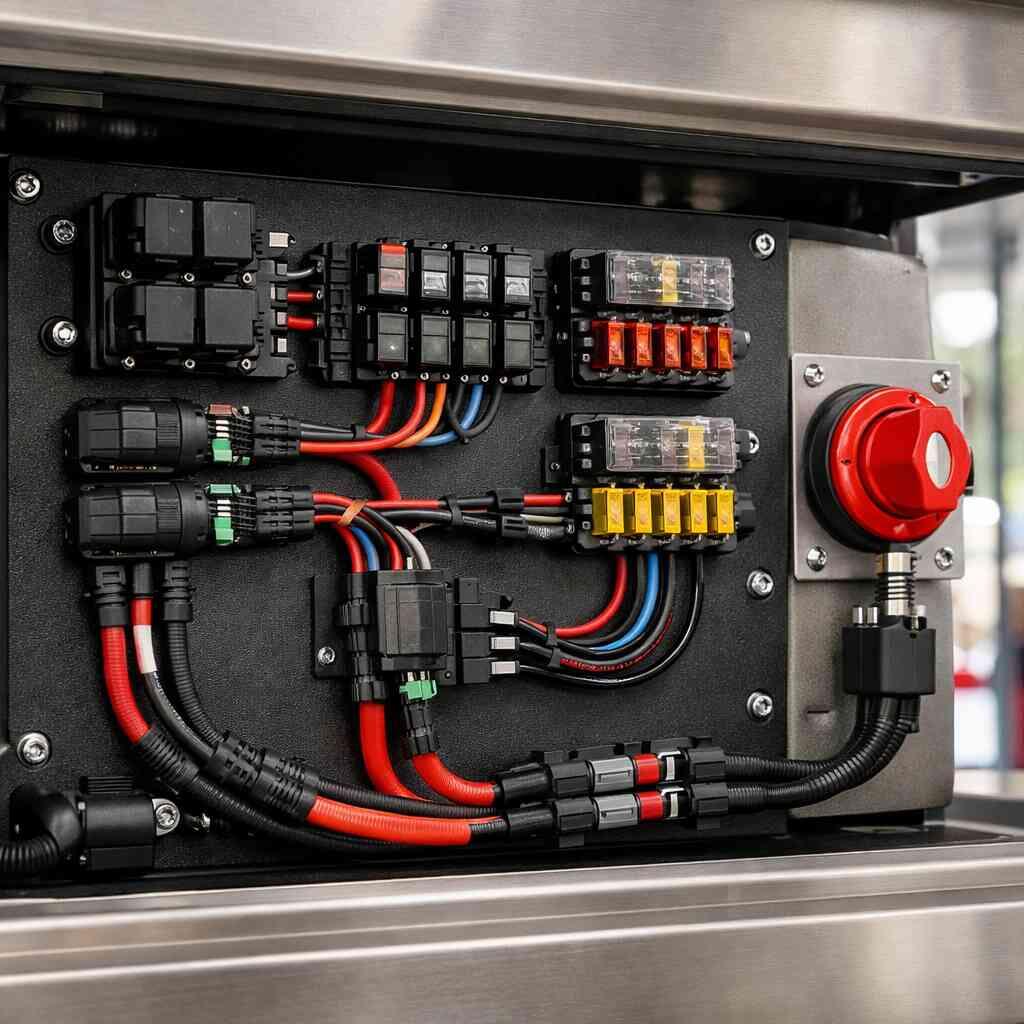
Fire Power Fire Fighting Electrical Equipment Junctions Receptacles and Accessories
Good fleets are built around disciplined connection architecture. Junctions and receptacles sound minor until they are not. A clean layout of fire fighting electrical equipment junctions, receptacles, and accessories supports mission critical fire gear by keeping power flow predictable and access points organized. That helps when a truck is being cleaned, checked, or turned quickly between runs. It also helps when a fault has to be isolated fast.
What a disciplined junction and receptacle layout does for mission critical fire gear in demanding conditions
A disciplined layout reduces confusion under pressure. It gives technicians and operators a clear map of where power enters, transfers, and exits. That matters for mission critical fire gear because a mixed-up compartment slows response and raises risk. If you have ever traced a loose connection in a cramped bay, you know how quickly frustration rises. Structure prevents that.
The strongest layouts also make inspection easier. You can see wear before it becomes a failure. You can spot corrosion, looseness, or heat-related damage before it spreads. That is the quiet advantage of a thoughtful receptacle plan. It gives you visibility without forcing a teardown.
How accessories influence firefighter tool organization and first responder equipment storage
Accessories are not add-ons in the casual sense. They shape how firefighter tool organization works from shift to shift. They also affect first responder equipment storage because every accessory claims space, movement range, and service access. If the storage plan is crowded, the equipment may still be “installed” but not truly usable. Usable is the standard that matters.
We often tell teams to look at storage in three layers:
- What must stay fixed.
- What must move during deployment.
- What must remain accessible during inspection.
That simple lens helps reduce clutter and keeps the compartment honest. If an accessory blocks access to the next component, it is costing you more than it gives. Good storage supports the mission. It does not fight it.
Which integration details matter most when outfitting commercial emergency fleet systems for heavy use
Heavy use exposes weak integration quickly. For commercial emergency fleet systems, the key details are mounting stability, moisture control, service access, and clear labeling. The accessory should support the system, not complicate it. That sounds obvious. In practice, it is where many builds go sideways.
Choose components that can take repeated movement and cleaning. Confirm that receptacles are easy to identify in low light. Make sure the install leaves enough room for hands, tools, and future maintenance. And remember that fleet maintenance and readiness depends on what happens after the truck is delivered. A good system stays easy to live with. That is the real test.
-
Duraline Fire Power Products
This is where the broader product line matters. Duraline Fire Power products for veteran trusted fire gear planning are worth a close look if you are building around durability and consistency. The appeal is not hype. It is a practical fit for municipal fire fleet support where equipment has to withstand repeated use, washdown, and tough daily handling. That is the standard fleets actually live with. Anything less becomes expensive later.
Why Duraline branded Fire Power products matter when durability and consistency have to be taken seriously
Duraline-branded Fire Power products matter because consistency reduces surprises. If you are managing durable fire safety gear, you need components that behave predictably across the fleet. That helps with stocking, training, and repairs. It also helps reduce the number of “special case” problems technicians face every week. Consistency is not glamorous, but it is expensive to ignore.
On one recent project, a team was trying to standardize a set of equipment installs across multiple vehicles. The biggest relief came not from a dramatic upgrade, but from fewer variables. That is the kind of progress that makes a fleet easier to support. You notice it in the shop, not just on paper.
How American made fire equipment language should be evaluated without overpromising what is not documented
“American made” is a meaningful phrase only when it is supported clearly. For American made fire equipment, you should ask what the documentation actually says and what it does not say. Avoid assumptions. Confirm origin claims, material descriptions, and any performance details that are explicitly published. If a specification is not documented, do not treat it as fact.
That discipline protects your budget and your credibility. It also keeps your procurement language clean when you compare vendors. A strong buying decision relies on verified details, not broad marketing phrases. In other words, respect the label, but verify the record. That is how fleet teams avoid preventable mistakes.
Where these products can fit inside veteran trusted fire products planning for municipal fire fleet support
For veteran trusted fire products, the best fit is usually where durability, serviceability, and layout control intersect. That includes connector points, extensions, and accessory planning. It also includes long-term maintenance behavior, not just initial install quality. If the product supports the workflow and holds up to cleaning and use, it belongs in the conversation. If not, it does not matter how appealing the description sounds.
A simple planning table can keep decisions grounded:
Planning questionWhy it mattersWill this product reduce maintenance friction?Saves time across the fleetCan it be inspected quickly?Supports readinessDoes it fit existing routing?Limits reworkIs the documentation clear?Reduces buying riskThat is the mindset behind municipal fire fleet support that lasts. The best products do not just survive. They make the whole system easier to manage.
-
Contact Duraline
If you are ready to narrow options, start with your real operating conditions. Contact Duraline for fire fleet equipment solutions in DeLand when you want help matching components to the truck, not forcing the truck to fit the component. The conversation goes smoother when you bring specifics. You do not need perfect answers. You just need enough detail to keep the recommendation honest.
What information a DeLand fleet manager should have ready before starting a product conversation
Before you call, gather the basics. Have the apparatus type, compartment constraints, current wiring concern, and intended use on hand. If you can, note whether the truck sees frequent washdown, heavy vibration, or frequent accessory changes. That helps frame DeLand fleet solutions in a useful way. It also shortens the path to the right recommendation.
You should also know the maintenance pattern. Ask yourself who services the vehicle, how often inspections happen, and where the common failure points appear. Those details matter more than broad descriptions. They tell the supplier how the product will actually live in the field. That is the difference between a generic answer and a good one.
How to frame your application so the right durable fire safety gear gets matched to the job
Describe the job first, not the part. That sounds simple, but it works. If you explain the load, the exposure, the access limitations, and the maintenance rhythm, you give the supplier a real picture of your durable fire safety gear needs. You also make it easier to avoid overspecifying or underspecifying the solution. That saves money and time.
If you are comparing options, keep your notes focused:
- What is the equipment doing?
- Where is it mounted?
- What conditions will it face?
- Who will service it?
- What cannot fail?
That list helps frame first responder ready equipment decisions with discipline. It also keeps the conversation grounded in the truck’s actual duty cycle. That is where good recommendations come from.
The next move for teams comparing fire service equipment for fleets and planning a phased upgrade path
The next move does not have to be dramatic. If your team is comparing fire service equipment for fleets, start with one compartment or one system family. Build a phased upgrade path instead of trying to solve everything at once. That approach lowers risk and keeps the truck available. It also gives you a chance to learn what works before you scale it.
If you feel stuck, that is normal. This part is genuinely confusing for most people because the details are easy to understate and expensive to ignore. You do not have to figure it out alone, and you do not have to figure it all out today. Start with one phone call, one truck, and one clean next step.
Frequently Asked Questions
Question: What makes Fire Power Products a good fit for DeLand fleet fire safety and station-ready equipment in wet, high-use environments?
Answer: Fire Power Products are built around the kind of real-world demands that matter to DeLand fleet fire safety, including frequent use, routine inspections, and exposure to moisture. For fleets that need dependable fire equipment performance, the focus is usually on durable layouts, practical connection points, and hardware that supports station-ready equipment without making maintenance more complicated. The key advantage is not hype, but a product approach that aligns with fleet maintenance and readiness in demanding conditions. In DeLand, where humidity, rain, and washdown routines are part of normal operations, equipment choices should support reliable fire safety hardware and reduce avoidable downtime. If you are planning commercial fire apparatus accessories or looking for weather-resistant fire products, the safest path is to verify fit, routing, and exposure conditions before installation.
Question: How do IP68 female pigtails, male pigtails, and male-female extensions support veteran ready fire equipment and fleet readiness for fire departments?
Answer: These connector options are commonly considered when teams want veteran ready fire equipment that stays organized and serviceable under pressure. Female pigtails can help support cleaner interface points, male pigtails can simplify field servicing, and male-female extensions can solve reach issues without forcing a full rewiring project. Together, they can fit into fire fleet equipment solutions that prioritize access, consistency, and practical maintenance. For fleet readiness for fire departments, the main goal is to reduce connection stress, protect wiring paths, and keep compartments easier to inspect. That is especially relevant for rugged emergency vehicle equipment and hose-down resistant equipment, where moisture, vibration, and repeated access can all affect long-term reliability. The best choice depends on the actual apparatus layout, the accessory being connected, and the maintenance routine your team follows.
Question: What should DeLand fleets check before choosing commercial fire apparatus accessories for firefighting fleet upgrades?
Answer: Before selecting commercial fire apparatus accessories, DeLand fleets should confirm the connector style, environmental exposure, mounting method, cable routing, and access for future service. Those checks matter because firefighting fleet upgrades work best when they improve, rather than complicate, apparatus organization solutions. A clean install can support emergency vehicle interior protection, reduce strain on wiring, and make first responder equipment storage more efficient. It is also smart to think about how the equipment will be cleaned, how often it will move, and whether the install allows easy inspection. For commercial emergency fleet outfitting, the most dependable approach is to match the accessory to the truck’s actual duty cycle, not just the part number. That is how teams avoid repeat service calls and improve dependable fire equipment performance over time.
Question: Is the blog Top 6 Veteran Ready Fire Power Products for DeLand Fleets 2026 a good place to start when comparing Fire Power Products for fire service equipment for fleets?
Answer: Yes, it is a helpful starting point if you are comparing Fire Power Products for fire service equipment for fleets. The blog is centered on practical use cases such as connector pigtails, extensions, junctions, receptacles, and related accessories that support mission critical fire gear. That makes it useful for teams evaluating durable fire safety gear, emergency response fleet supplies, and apparatus layout decisions. It also reflects the kind of thinking fleet managers need when planning phased upgrades instead of trying to solve everything at once. For municipalities and departments focused on municipal fire fleet support, the blog can help narrow down which product categories deserve attention first. As always, the final decision should be based on verified product details, compatibility, and the specific needs of your vehicle and maintenance team.
Question: How can Fire Power Products help with secure equipment mounting solutions and firefighter tool organization in commercial emergency fleet outfitting?
Answer: Fire Power Products can be part of a broader commercial emergency fleet outfitting plan when the goal is better organization, simpler servicing, and dependable placement of equipment. Secure equipment mounting solutions matter because loose routing, awkward access, and poor spacing can quickly undermine firefighter tool organization and slow down operations. When connectors, receptacles, and accessories are placed with the whole compartment in mind, the result is often easier inspection, cleaner access, and less wear on the system. That supports first responder ready equipment and helps keep mission critical fire gear available when it is needed. The best installations also consider emergency response logistics, including how quickly a compartment can be checked, cleaned, and returned to service. For teams focused on veteran trusted fire products, the value is in practical reliability, not unnecessary complexity.
Question: How should a DeLand fleet manager contact Fire Power Products when planning DeLand fire fleet solutions and USA engineered fire products for long-term use?
Answer: A DeLand fleet manager should come prepared with the basics: apparatus type, compartment limitations, current wiring concerns, exposure to washdown or weather, and the maintenance pattern for the vehicle. That makes it easier to discuss DeLand fire fleet solutions in a way that fits the truck and the workflow. When talking about USA engineered fire products, it is important to focus on verified product information rather than assumptions about specifications or certifications. The more clearly you describe the job, the easier it is to match durable fire safety gear to the application. Fire Power Products is a strong conversation partner for teams that want dependable fire equipment performance and a practical path forward for fleet maintenance and readiness. If you are unsure which product family fits best, it is reasonable to start with one compartment or one system area and build from there. That approach keeps the process manageable and supports fleet readiness for fire departments without unnecessary disruption.