Top 5 Fall 2026 Fire Truck Grounding Checks for Florida
October 8, 2026
You can feel it before you can prove it. A rig cranks a little slower, a warning light flickers once, and suddenly everyone at the station gets quiet. If you are reading this because something feels off, that uneasy feeling is justified. Grounding problems rarely announce themselves cleanly, especially in Florida. They hide under heat, moisture, road spray, and routine pressure washing.
We hear this from crews almost every season. The hard part is not spotting a broken part. The hard part is catching the connection that still looks serviceable but no longer carries current the way it should. That is why fire truck grounding checks matter so much during Florida fire truck maintenance. A careful fall fire apparatus inspection can prevent a small resistance issue from turning into a no-start, a false alarm, or roadside downtime.
On the projects we have finished this year, the pattern has been consistent. Moisture gets into places where people expect dry metal, and corrosion begins quietly. By the time the problem becomes obvious, the damage has already spread across a lug, strap, or connector. That is exactly where a disciplined emergency vehicle grounding safety routine pays off. If you need dependable support and durable equipment options, Fire Power Products is a smart place to start.
-
Grounding straps that look fine until Florida moisture proves otherwise
Why strap corrosion and loose terminations are the first failures to chase after summer heat
Grounding straps often fool people because they still look intact. The insulation may look clean. The hardware may still be in place. Yet the metal underneath can be oxidized, heat-stressed, or loosened enough to raise resistance. In Florida, that problem grows faster after long stretches of humidity and repeated wash-downs. Grounding strap inspection should therefore be one of the first items in any fire truck chassis grounding review.
The mistake we see most often is treating a visible strap like a healthy one. A strap can carry current poorly long before it breaks. Check each termination point for discoloration, green corrosion, pitting, and movement under light hand pressure. If a fastener shifts, even slightly, the connection integrity is already suspect. That is why corrosion prevention for fire trucks has to include mechanical tightness, not just cleaning.
A crew in Central Florida recently described a truck that kept throwing intermittent electrical gremlins after wash day. The strap itself looked acceptable from three feet away. Up close, one mounting point had rust under the washer and a barely visible gap at the lug. Once the termination was corrected, the symptoms disappeared. That sort of fix is common, and it rarely starts with a dramatic failure.
How to inspect fire truck chassis grounding points for hidden oxidation and mechanical looseness
Start where the cable meets metal. Then follow the path. Then inspect every interface again. This is the rhythm that works during a fire truck electrical system inspection, especially when a rig has been running through heat and rain. You are not only checking for damage. You are checking for continuity under stress.
Use a bright light, a mirror if needed, and a methodical hand inspection. Look for paint intrusion beneath lugs, rust around brackets, and signs that a bolt has been over-torqued or under-torqued. If you can rotate a lug by hand, it has already failed the practical test. Also check for strain at bends. Sharp routing can fatigue a strap long before it looks torn.
A few useful indicators deserve attention:
- White or green residue at the connection
- Blackening around the lug face
- Loose lock washers or flattened hardware
- Frayed braid or cracked insulation near the termination
- Fasteners that do not seat evenly against the chassis
If you manage a fleet, this is where apparatus preventive maintenance becomes real work instead of paperwork. The truck does not care whether the log says inspected. It cares whether the metal path is still sound. For broader support on fall 2026 fire truck grounding checks in Florida, the practical answer is simple: inspect, measure, retorque, and document.
What changes in wet weather fire truck readiness when coastal humidity and storm exposure stay in the picture
Wet weather changes the rules. A connection that survived dry months can start behaving badly once humidity climbs and salt-laden air lingers. Even inland Florida rigs, including those running around DeLand, feel that shift. Wet weather fire truck readiness depends on how well the grounding path resists moisture intrusion and surface oxidation. That makes fire apparatus electrical grounding a seasonal priority, not a once-a-year courtesy.
Here is the part most crews miss. Moisture does not need to flood a compartment to cause trouble. Condensation inside fittings, road spray under the chassis, and repeated hose-downs are enough. That is why seasonal apparatus safety checks should include the undersides of brackets, not just the visible top surfaces. If your department is working through hurricane season apparatus prep, grounding deserves the same seriousness as tires, pumps, and batteries.
-
Battery and alternator grounding that decides whether the apparatus starts cleanly
Where voltage drop usually shows up in a fire truck electrical system inspection
A slow crank is not always a battery problem. In fact, the battery often gets blamed first because it is the easiest explanation. Yet the real issue may be voltage drop across a dirty ground, a corroded lug, or an aging cable path. During a fire truck electrical system inspection, voltage drop testing shows you where current is being lost. That is the whole point.
Check both the positive and return sides. Then compare what the meter tells you under load. If you see a healthy battery voltage at rest but a sag during cranking, the return path may be the weak link. This is where battery and alternator grounding becomes central to mobile firefighting equipment reliability. A sound alternator cannot compensate for a poor ground path.
The symptom set is usually familiar:
- Slow or uneven cranking
- Flickering dash indicators
- Intermittent accessory resets
- Charging complaints that come and go
- A truck that starts fine one day and struggles the next
This is exactly why ground fault prevention starts before the engine ever turns over. You want to eliminate resistance before it becomes a roadside nuisance. For many fleets, that means a more disciplined fire truck maintenance checklist than the one already hanging on the shop wall.
How to verify battery cable routes, lugs, and return paths without guessing
Do not guess about cable health. Trace it. Inspect it. Test it. A good fire truck cab and chassis inspection pays attention to routing, abrasion points, and compression at each lug. A cable can look intact from outside while failing internally from heat and vibration. That is especially true where cables pass through tight spaces or rub against brackets.
Measure the route from battery to chassis ground, from chassis to engine block, and from alternator case to return point. Keep your inspection organized. If a cable changes direction abruptly or sits near a hot surface, note it. If the insulation is hardened, cracked, or swollen, plan replacement. That is not paranoia. That is responsible fire department vehicle safety.
A simple comparison helps crews focus:
Inspection pointWhat good looks likeWhat causes concernBattery lugClean metal, tight clamp, no movementCorrosion, looseness, heat discolorationChassis returnDirect path, protected routingChafing, paint under lug, rustAlternator groundFirm bond, clean face, no extra resistanceIntermittent charge issues, heat stressIf you need a stronger parts strategy, Florida fire truck maintenance and seasonal apparatus safety checks should be treated as a system, not a single replacement. The connection between cable quality and dependable starting is too important to leave to chance.
When a starting complaint is really a grounding connection integrity problem rather than a weak battery
The complaint sounds simple. “It is the battery.” That is often the first sentence in the conversation. Yet the answer is frequently more complicated. A battery can test fine and still fail under the demand of a compromised ground path. That is why fire truck connector maintenance and grounding connection integrity deserve equal attention during troubleshooting.
A station in Southwest Florida once chased a starting issue for days. Batteries were replaced. The alternator was tested. Nothing changed. The real culprit turned out to be a corroded engine-to-chassis bond that had enough resistance to create an intermittent no-start. Once corrected, the truck returned to normal. It was not a dramatic repair. It was a precise one.
If you hear repeated complaints about sluggish starts, verify the ground before replacing expensive components. Check for heat at terminations after cranking. Warm hardware can indicate resistance. Also inspect for recurring looseness after vibration. That is often where first responder vehicle inspections and practical shop experience meet. You do not need more theory. You need cleaner pathways and firmer connections.
-
Bonding and grounding verification around the pump panel and accessory circuits
Why pump panel grounding check routines matter before the first call after a seasonal change
Pump panels carry more than switches. They carry trust. If accessory circuits behave unpredictably, crews lose confidence fast. That is why a pump panel grounding check belongs in every serious seasonal inspection. The challenge is that these failures often appear only after a truck has sat, shifted, or been exposed to moisture. The first call after a seasonal change is not the time to discover a missing return path.
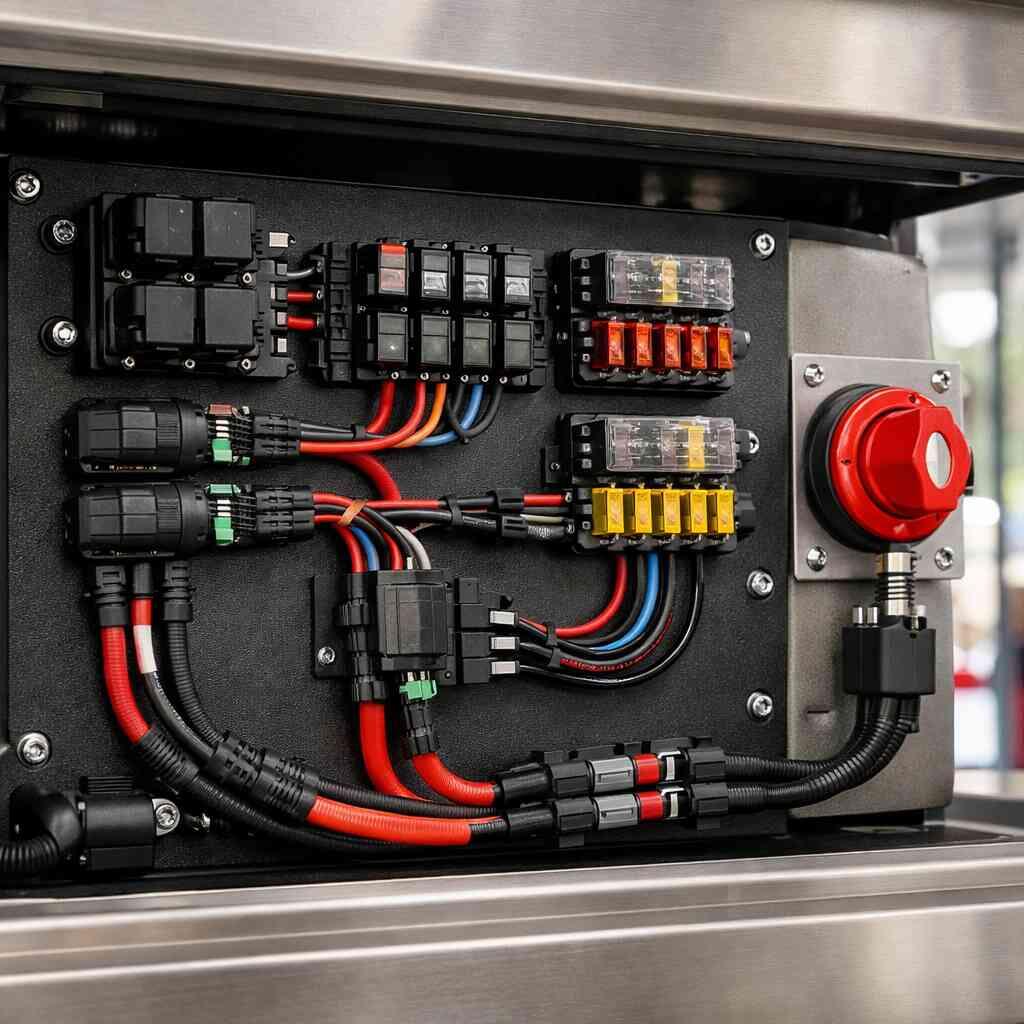
The panel area often includes multiple components with different grounding needs. A single weak point can affect several circuits at once. That is why bonding and grounding verification should cover the panel, the surrounding structure, and every device tied to it. In practice, that means verifying clean metal contact, secure fasteners, and consistent behavior under load.
Here is what to look for:
- Loose terminals on panel-mounted devices
- Oxidation at mounting points
- Evidence of heat around connectors
- Inconsistent switch response
- Moisture intrusion behind the panel face
This is one of those areas where seasonal fleet readiness shows up in the details. If the panel is clean but the bracket behind it is corroded, the problem is still present. For crews working through Florida’s storm patterns, that distinction matters more than most shop checklists admit.
How warning light grounding verification and accessory circuits can fail together on a busy rig
Warning lights and accessory circuits often share the same vulnerability: a weak return path. That is why warning light grounding verification should never happen in isolation. If one accessory flickers, another may soon follow. Heat, vibration, and road spray can create a chain reaction in a crowded electrical layout. That is particularly true on older apparatus with many additions over time.
A fire truck electrical system inspection should include lights, sirens, outlets, and any aftermarket device added by the department. If the grounds are spread across multiple attachment points, verify every point. In some rigs, the issue is not a failed device. It is a shared grounding point that cannot handle the cumulative load anymore. That is a subtle problem, and it is exactly why mobile firefighting equipment reliability demands disciplined testing.
This is where a little patience saves a lot of frustration. Test one circuit at a time. Then test groups of circuits together. Then inspect the connection points under load. If you rush, you miss the shared failure mode. If you move methodically, the pattern becomes obvious.
What to look for around junctions, receptacles, and pigtails when mobile firefighting equipment reliability is on the line
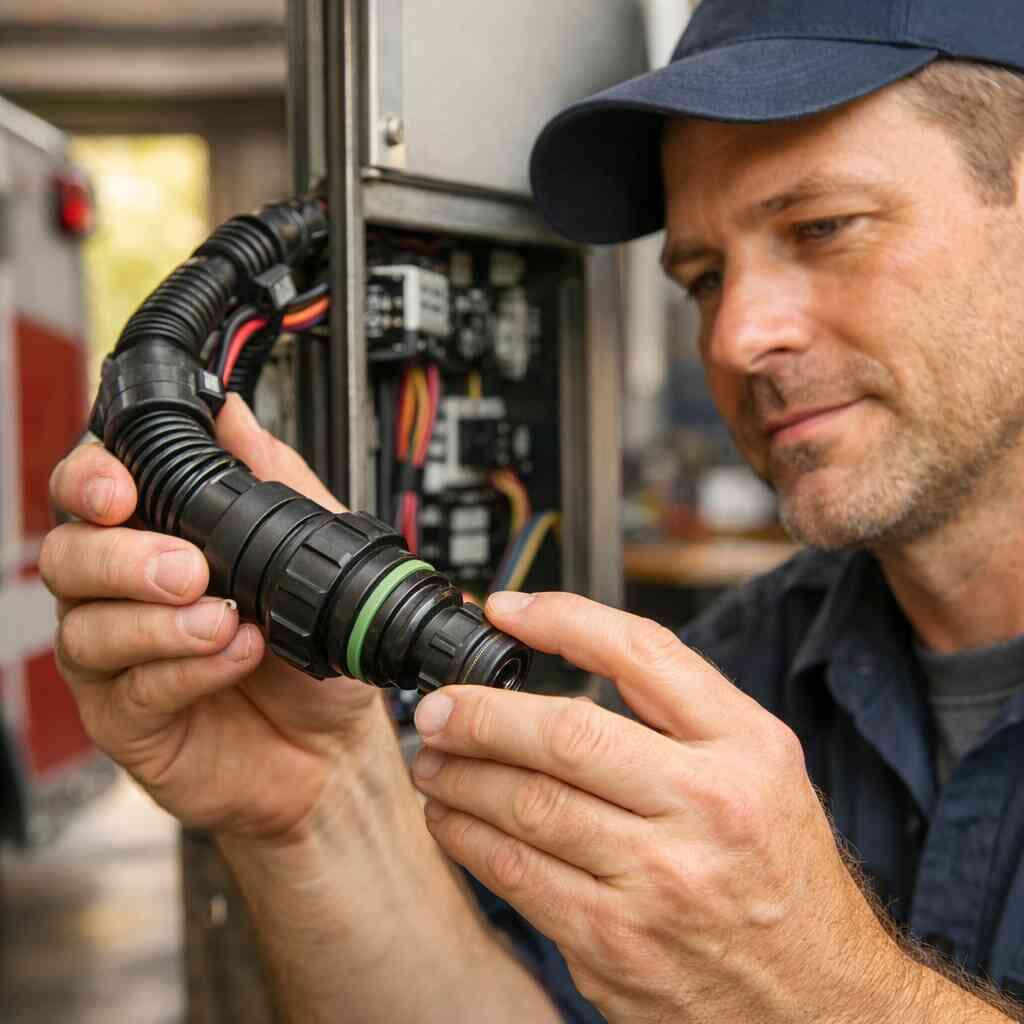
Junctions are where good intentions go to die if they are not protected well. Receptacles and pigtails sit in places where vibration, hose water, and movement all converge. The question is not whether these areas need inspection. The question is how carefully you are looking. A fire truck electrical system inspection with IP68 pigtails is one useful model for thinking about exposure, sealing, and long-term durability. Inspect for cracked seals, loose connectors, and evidence of repeated insertion wear. Look for pulled wires at the back of receptacles. Check whether the connection still seats tightly, especially after repeated use. If the face of the component looks fine but the back side shows corrosion, replace it before it becomes a bigger issue. That is how bonding and grounding verification for emergency vehicle grounding safety protects uptime. You do not need to wait for an electrical failure to act. If the connector housing is discolored or the seal is compromised, the clock is already running. For dependable sourcing and equipment support, Fire Power IP68 Female Electrical Connector Pigtails and Fire Power Fire Fighting Electrical Equipment Junctions Receptacles and Accessories are worth reviewing alongside your department’s inspection routine.
-
Lightning protection for fire trucks and the chassis details crews overlook
How static discharge protection fits into Florida emergency fleet maintenance during storm season
Storm season changes risk management fast. One minute the sky is clear. The next, lightning is close enough to change how you stage apparatus. Static discharge protection is not a dramatic concept, but it is a practical one. It helps reduce unwanted electrical paths and supports broader Florida emergency fleet maintenance efforts when weather becomes unstable.
The goal is not to pretend a truck can eliminate lightning danger. It cannot. The goal is to make sure the vehicle’s bonding and grounding system is sound enough to avoid compounding electrical issues when conditions worsen. Crews around Volusia County know this well. If a rig is already carrying a weak ground path, severe weather only magnifies the problem.
That is why lightning protection for fire trucks starts with the mundane details. Tight lugs. Clean chassis contact. Secure cable paths. A properly maintained system is not flashy, but it is dependable. And dependable is what matters when weather turns fast.
Which cab and chassis inspection points deserve extra attention after repeated road spray and heat cycling
Cab and chassis components take a beating that is easy to underestimate. Road spray, heat cycling, and vibration all conspire against electrical reliability. The result is often hidden corrosion at points nobody checks until there is a failure. A fire truck cab and chassis inspection for Florida fleet audits should pay attention to brackets, bolts, ground points, and any area where moisture can linger.
Look closely at:
- Door and cab bonding points
- Frame-mounted ground straps
- Fasteners near wheel spray zones
- Cable clamps close to heat sources
- Paint buildup around contact surfaces
Here is what almost no online guide mentions. The problem is not always the wettest spot. It is often the place where drying is slowest. Trapped moisture under a clamp can be worse than visible standing water. That is why fire apparatus electrical grounding and corrosion prevention for fire trucks must be treated as one discipline, not two separate ones.
If your fleet operates in a place like DeLand, where heat and humidity can swing hard, then the inspection standard has to be higher than “looks okay.” It has to be “measures okay” and “holds okay under load.” That difference matters.
Why fire apparatus electrical grounding should be checked before the first severe-weather deployment
Before severe weather, everyone gets busy. That is exactly when grounding checks get skipped. Do not let that happen. A pre-storm review should always include the truck’s return paths, bonding points, and any sign of deterioration at the cab, frame, or accessory interfaces. Fire apparatus electrical grounding is part of your readiness posture, not an optional extra.
A technician in one Florida department told us they used to focus only on batteries before severe weather. After a few recurring faults, they expanded the review to include every ground path they could access. The result was fewer callbacks and fewer false alarms. Simple change. Big payoff. That is the kind of fire department vehicle safety decision that keeps the apparatus available when the sky is not cooperating.
If you are building a better seasonal routine, start with the grounding system before the storm does it for you. For practical fire apparatus preventive maintenance and seasonal fleet readiness in DeLand, Florida, the smartest move is the one made before the first emergency call.
-
The maintenance decision that keeps grounding problems from becoming roadside downtime
How to turn grounding strap inspection into a seasonal fleet readiness habit instead of a last-minute repair
The best inspections are boring. That is a compliment. A routine grounding strap inspection should feel ordinary because it happens on schedule, not in panic. Build it into every seasonal service cycle, and make sure the same person or team follows the same steps. Consistency catches drift. Drift creates failures.
Start with the obvious points. Then move to the hidden ones. Record torque where appropriate. Photograph questionable locations. If a strap is starting to show wear, do not wait for complete failure. This is how seasonal fleet readiness stays ahead of trouble instead of reacting to it. You want the inspection to be routine enough that no one argues about it.
The strongest departments treat grounding the way they treat tires and brakes. It is not a special task. It is a standard one. And once that mindset sets in, downtime drops.
When corrosion prevention for fire trucks should move from cleaning to replacement planning
Cleaning is useful. Replacement is sometimes smarter. The line between the two depends on the condition of the metal and the repeatability of the issue. If corrosion returns quickly after cleaning, the connection may already be beyond reliable service. That is where corrosion prevention for fire trucks turns into replacement planning.
Use a simple decision approach:
- Clean the connection.
- Inspect for pitting or lost material.
- Retest under load.
- Watch for recurring heat or looseness.
- Replace if the issue returns.
That sequence keeps you from overreacting and underreacting at the same time. It also supports safety practices for emergency vehicle electrical grounding because you are making decisions based on condition, not habit. If the part cannot hold a stable connection, it does not belong on the truck.
What a practical fire truck maintenance checklist should verify before the apparatus returns to service
A practical checklist should be short enough to use and detailed enough to matter. Before a rig returns to service, verify the ground path, the lugs, the chassis contact points, the panel interfaces, and the behavior of electrical accessories under load. Also confirm there is no visible corrosion, no loose mounting, and no abnormal heating after testing. That is the backbone of a credible fire truck maintenance checklist.
Use this final review before release:
- Inspect all accessible ground straps
- Confirm battery and alternator grounds are tight
- Test warning lights and accessory circuits
- Check pump panel and receptacle connections
- Revisit any point that shows corrosion or heat
If you are deciding what to replace, what to clean, and what to monitor, keep the process simple and documented. You do not have to solve everything today. Start with the highest-risk connection and work outward. For departments looking for dependable support and durable products, Top 5 Fire Power Products for DeLand Fall Fleet Audits is a practical next step. You do not have to figure this out alone, and you do not have to figure it all out today. Start with one inspection, one log entry, and one phone call.
Frequently Asked Questions
Question: What should a Florida department focus on first during a fall fire apparatus inspection to catch grounding issues before they become downtime?
Answer: The first priority is to inspect the grounding strap inspection points, battery and alternator grounding paths, and all visible chassis contact areas for looseness, corrosion, heat discoloration, or damaged hardware. In Florida fire truck maintenance, moisture and road spray can create resistance long before a connection looks obviously failed. A strong fall fire apparatus inspection should include a careful check of terminations, fasteners, and return paths, plus a load test when possible. Fire Power Products understands how demanding emergency vehicle environments can be in DeLand, Florida, and beyond, so the smartest approach is to combine routine apparatus preventive maintenance with durable equipment choices and careful inspection habits. If a connection shows recurring corrosion or movement under load, it should be treated as a reliability issue, not just a cleaning task.
Question: How does Top 5 Fall 2026 Fire Truck Grounding Checks for Florida help crews improve emergency vehicle grounding safety during wet weather and hurricane season prep?
Answer: The main value of Top 5 Fall 2026 Fire Truck Grounding Checks for Florida is that it organizes the inspection around the most failure-prone areas: straps, battery returns, pump panel grounding check points, warning light grounding verification, and cab and chassis bonding. That structure helps crews move from general concern to a practical roadside apparatus safety checklist. During wet weather fire truck readiness and hurricane season apparatus prep, those checks matter because moisture, heat cycling, and vibration can turn a marginal connection into a service call. Fire Power Products supports this mindset by offering durable fire safety equipment designed for demanding conditions, while keeping the focus where it belongs: on reliable grounding connection integrity, not guesswork. A department that follows a consistent seasonal apparatus safety checks routine is better positioned to avoid false alarms, sluggish starts, and accessory failures when response time matters.
Question: Which grounding connection integrity problems are most likely to affect mobile firefighting equipment reliability, warning lights, and accessory circuits?
Answer: The most common issues are corrosion at lugs, loose or over-torqued fasteners, paint contamination under ground points, frayed or heat-stressed cable ends, and hidden damage inside connectors or pigtails. These problems often show up first as flickering lights, slow cranking, intermittent accessory resets, or inconsistent pump panel performance. That is why fire truck electrical system inspection should include bonding and grounding verification across all related circuits, not just a single component. Fire Power Products takes this kind of reliability seriously because first responders need equipment that holds up to hard use, hose-downs, and repeated service cycles. In practical terms, the best way to protect mobile firefighting equipment reliability is to inspect under load, document what you find, and replace any connection that cannot hold a stable, low-resistance path.
Question: What should crews check around the pump panel, receptacles, and hose bed electrical safety points during Florida emergency fleet maintenance?
Answer: Crews should inspect panel-mounted terminals, receptacle housings, sealing surfaces, pigtails, and any junctions where vibration or water exposure can weaken the connection. A proper pump panel grounding check should look for looseness, oxidation, pulled wires, cracked seals, and heat marks around the connectors. Hose bed electrical safety also matters because trapped moisture and repeated movement can create hidden wear that is easy to miss during a quick walkaround. In Florida emergency fleet maintenance, these areas deserve special attention because humidity and road spray can enter even when the truck appears clean. Fire Power Products is built around the idea that dependable equipment should stand up to demanding field conditions, so the goal is to support crews with rugged, practical solutions while reinforcing strong inspection habits. If a component looks acceptable from the outside but shows corrosion or poor seating at the back side, it should be treated as a risk to fire department vehicle safety.
Question: How do grounding checks fit into lightning protection for fire trucks and static discharge protection during severe weather in Florida?
Answer: Grounding checks are a key part of lightning protection for fire trucks because they help ensure the vehicle bonding network is intact before severe weather arrives. While no apparatus can eliminate lightning danger, a sound grounding system reduces the chance that weak return paths or corroded bonds create additional electrical problems during storms. Static discharge protection starts with clean contact points, secure hardware, and properly maintained cab and chassis inspection points. This becomes especially important during Florida emergency fleet maintenance when crews are preparing for fast-changing weather conditions. Fire Power Products serves departments that depend on durable equipment in harsh environments, and that makes routine grounding checks a smart part of overall readiness. The main idea is simple: if the truck is already compromised by corrosion or a loose ground, storm conditions can make the issue worse quickly.
Question: When should a department move from cleaning to replacement planning for corrosion prevention for fire trucks and grounding strap inspection?
Answer: A department should move from cleaning to replacement planning when corrosion returns quickly, a lug no longer seats firmly, heat marks keep reappearing, or the connection fails to perform consistently under load. Corrosion prevention for fire trucks is important, but it is not always enough if the metal has already lost material or the bond cannot hold steady. A good process is to clean, inspect, test, retest, and then decide whether the part should be replaced rather than repeatedly repaired. That is one of the most practical apparatus preventive maintenance habits a crew can adopt because it keeps small electrical issues from becoming roadside apparatus safety checklist problems. Fire Power Products supports DeLand, Florida fire equipment support with durable solutions intended for demanding conditions, but the decision to replace or repair should always be based on inspection results and documented performance, not assumptions. If the grounding path cannot stay stable, the safest move is to plan the replacement before it causes a service interruption.