Best 7 DeLand Fire Fleet Storage Tips for Winter Prep 2026
October 7, 2026
-
Start With the One Storage Problem That Quietly Wrecks Winter Readiness
A lot of crews blame mileage when an apparatus starts acting tired. The real culprit is usually moisture. In DeLand, that matters even more because wet gear, humid air, and frequent wash-downs all work together. If you are staring at a bay that never quite dries, you already know the feeling. Something small becomes expensive fast.
Why DeLand fire fleet storage breaks down first in moisture, not mileage
Moisture is the silent problem in DeLand fire fleet storage tips for winter prep. It settles into latches, compartment seams, and hose bed corners. Then it lingers. That lingering water becomes corrosion, odor, and stuck hardware. In Florida, humidity can make a “dry” bay feel only slightly less wet than outside.
On the projects we have seen this year, the worst damage rarely came from long roads or heavy call volume alone. It came from equipment being parked wet. One department we spoke with found rusty fasteners along a lower compartment edge after repeated hose-downs. Nothing dramatic happened. The trouble just built up. That is how winter prep for fire fleets gets undermined before anyone notices.
What high use and hose down routines do to compartments, doors, and seals
High-use apparatus takes a beating in quiet ways. Door seals compress. Hinges collect residue. Compartment lighting housings trap moisture. You may not see failure on day one, but you feel it later when a door sticks or a seal starts leaking under pressure. That is why pump and hose compartment care needs to be part of every cleaning routine.
Here is the part most crews miss. Hose-down routines can push water deeper instead of removing it. If you spray directly into seams, you may force debris into the very places that should stay clean. A better method is deliberate rinsing, followed by open-air drying and a quick tactile check. That is how you protect storage for high-use fire equipment without adding extra labor.
Where winter prep for fire fleets usually fails before the season even starts
Most failures happen before the season changes. The station looks organized. The truck is serviced. Yet no one has mapped where wet gear goes after a call. No one has assigned a drying lane. No one has decided which racks are for daily use and which are for reserve items. That gap creates confusion, and confusion creates downtime.
If you want emergency vehicle winter readiness, start with the spaces around the vehicle, not just the vehicle itself. The fix is simple, but it has to be repeatable:
- Separate wet-return areas from ready-to-dispatch areas.
- Keep doors and compartments open long enough to dry when conditions allow.
- Assign a specific place for inspection, drying, and restaging.
- Make one person responsible for the final visual check.
That is not glamorous. It is effective.
-
Give Every Apparatus Bay a Job Before the First Cold Snap Hits
A bay without a purpose becomes a catchall. That sounds harmless until hoses, tools, and turnout gear start sharing space with clutter. Then response time slows. So does inspection discipline. Apparatus bay organization is not about neatness alone. It is about reducing friction during the most rushed moments of the day.
How apparatus bay organization improves fleet maintenance for fire departments
Good bay layout improves fleet maintenance for fire departments because it makes damage easier to spot. When each unit has a defined location, small changes stand out. A fluid spot on the floor is obvious. A dangling connector is obvious. A compartment left cracked is obvious. The bay starts helping you notice problems before they grow.
We hear this from crews almost every week. The station feels busy, and paperwork competes with hands-on work. That is normal. Still, a few marked zones can change the whole rhythm of the room. Reserve apparatus, primary response units, hose staging, and gear prep each need a home. Without that structure, people improvise. Improvisation is expensive.
Which vehicles, hoses, and turnout gear belong indoors versus in staging areas
Not everything needs the same protection level. Fire truck indoor storage should be reserved for the units and gear that need the most environmental protection. Primary apparatus, sensitive electronics, and clean turnout gear deserve the best spot available. Staging areas can handle items that are used often, rotated regularly, or waiting for inspection.
A practical way to divide the space is below:
ItemBest LocationWhy It MattersPrimary apparatusIndoor bayProtects critical systems from moisture and temperature swingsReserve unitsIndoor or covered stagingLimits exposure while preserving accessWet hosesDedicated drying areaPrevents trapped water and odorTurnout gearVentilated storage zoneSupports drying and readinessSpare accessoriesLabeled shelf storageSpeeds restocking and inspectionThis is where storage solutions for first responder gear pay off. When you assign a place for each item, you reduce searching, handling, and accidental damage.
How to build a station readiness checklist around traffic flow and daily dispatch pressure
A good checklist follows how the station actually moves. It does not fight traffic flow. It supports it. Start with the path from the apparatus floor to the gear room. Then trace the path from return bay to drying area. Finally, note where inspection, charging, and restaging happen. If those paths cross too often, the bay will always feel chaotic.
For DeLand fire department operations, the best checklist is short, visible, and tied to real movement. Use it during shift turnover. Keep it near the main entry point. Include these items:
- Clear the path to the primary unit.
- Confirm wet gear is separated.
- Check hose storage and couplings.
- Verify doors, seals, and latches.
- Restage tools in the correct bay zone.
That kind of station readiness checklist keeps people moving in the same direction.
-
Protect the Equipment That Fails First When Moisture Creeps In
Moisture does not attack everything equally. It hits some items first because their surfaces hold water, dirt, or residue. Hose, turnout gear, and compartment hardware usually take the first hit. That is why hose storage solutions and gear placement deserve real attention, not just a quick rack decision.
Hose storage solutions that keep water from lingering in coils and couplings
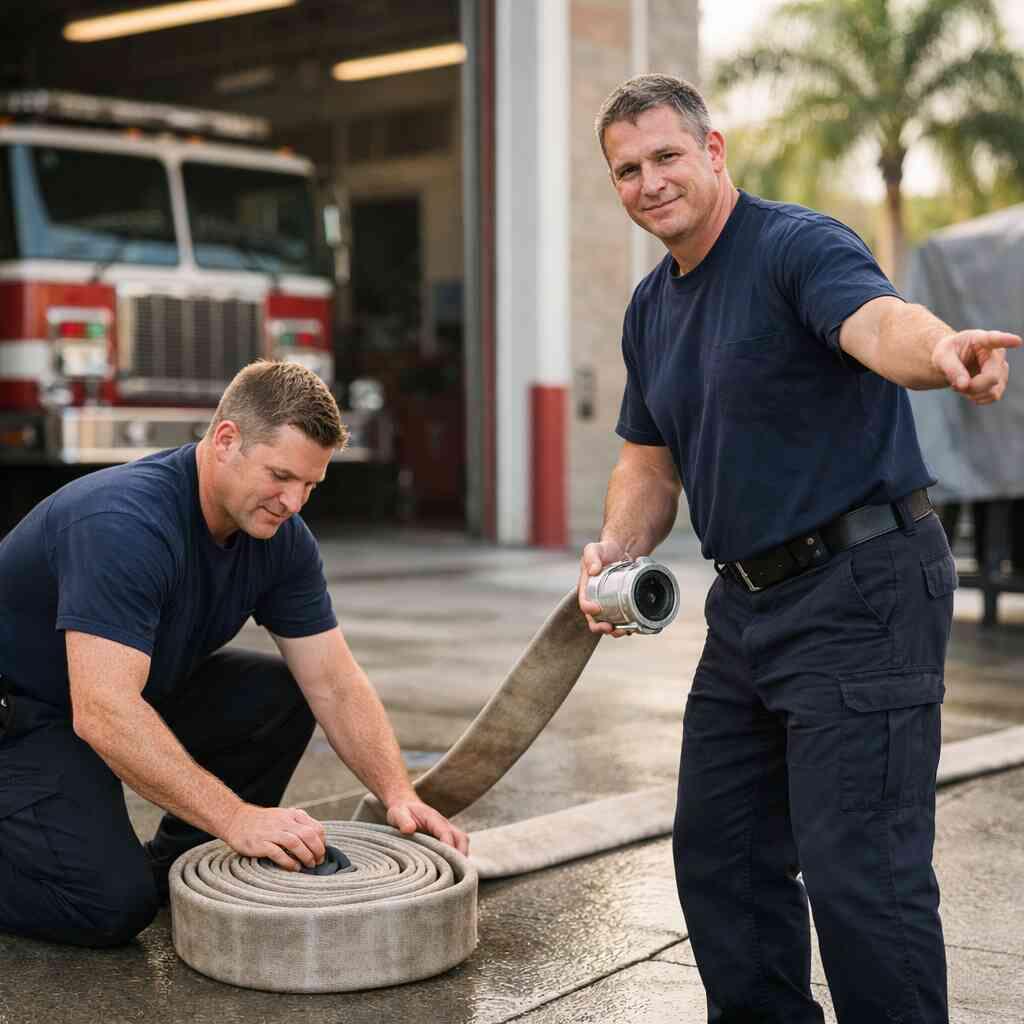
Wet hose creates hidden risk. Water sits in coils. Couplings stay damp. Then fittings begin to discolor, and odors settle in. Good hose storage solutions let water escape, air circulate, and inspection happen without dragging the whole bundle across the floor. The goal is simple: remove trapped moisture as early as possible.
One crew in the area told us their biggest issue was not breakage. It was drag. They were moving heavy, damp hose from one spot to another because no drying process had been defined. Once they created a dedicated hose area with better airflow, the whole room changed. The hose dried faster. Inspections went faster too. That is fire apparatus storage best practices for fall fleet audits in real life, not just on paper.
Turnout gear storage choices that support equipment longevity without crowding the room
Turnout gear needs breathing room. Crowding gear into a tight corner can slow drying and make inspection harder. You want access, airflow, and enough separation to spot damage. If the room is small, vertical storage may help, but only if it does not compress the gear or block labels.
This is where turnout gear storage becomes a readiness issue. If gear takes longer to dry, it stays out of service longer. If it stays out of service longer, the whole crew feels it. A better setup uses clear slots, labeled hooks, and a flow that keeps clean gear away from wet returns. That also supports responder equipment durability over time.
Pump and hose compartment care that helps prevent corrosion on fire equipment
Compartment care is boring until it is not. A clean, dry compartment protects valves, tools, and hose fittings from early wear. Wipe down the surfaces. Check drains. Look at the lower edges where grime gathers first. Those small details matter because they slow down corrosion prevention for fire equipment.
Vehicle corrosion control and moisture protection for fire equipment starts with what is left behind after each call. Salt, road grime, cleaning chemicals, and wet mud all cling to surfaces. If they remain there, damage spreads. A quick compartment check catches the buildup before it becomes a repair ticket. That is especially important on high-use units that return dirty, then roll out again before anyone has time to think.
-
Why Battery Maintenance Gets Missed Until the Truck Will Not Start
Battery problems are maddening because they often appear late. Everything seems fine. Then the truck hesitates, the charger connection acts up, or the reserve unit sits too long and weakens. Battery maintenance for emergency vehicles should not be reactive. It should be built into the rhythm of the station.
Emergency vehicle winter readiness starts with chargers, tenders, and inspection rhythm
Chargers and tenders only help if the system around them works. Cables need inspection. Plugs need to seat properly. Indicators need to be readable. If no one checks those basics, the charger becomes background noise. That is how a dependable tool turns invisible until a failure exposes it.
For emergency vehicle winter readiness, connect battery checks to the same time every day. Shift change works well because it is already a natural pause. You are not adding a brand-new task. You are anchoring one more step to a routine people already respect. That makes compliance easier and keeps reserve vehicles ready longer.
What DeLand fire department operations can standardize for idle units and reserve apparatus
Idle units need more attention than many crews expect. They sit. They lose charge. They collect dust. In DeLand fire department operations, reserve apparatus can become the weak link if no one owns the maintenance cycle. Standardize the process so the same questions get asked every time:
- Is the battery charger connected correctly?
- Are the terminals clean and secure?
- Is the unit resting in a protected bay?
- Has the engine been started and observed?
- Was the battery load checked after the last deployment?
These steps are simple, but they protect response capability. They also support emergency equipment longevity, which saves time and stress later.
When battery checks should be tied to shift change instead of monthly reminders
Monthly reminders are too loose for critical systems. Batteries do not care about calendars. They care about use, rest, heat, cold, and connection quality. That is why shift change is the better anchor. It creates accountability. It also catches issues before they sit unnoticed for weeks.
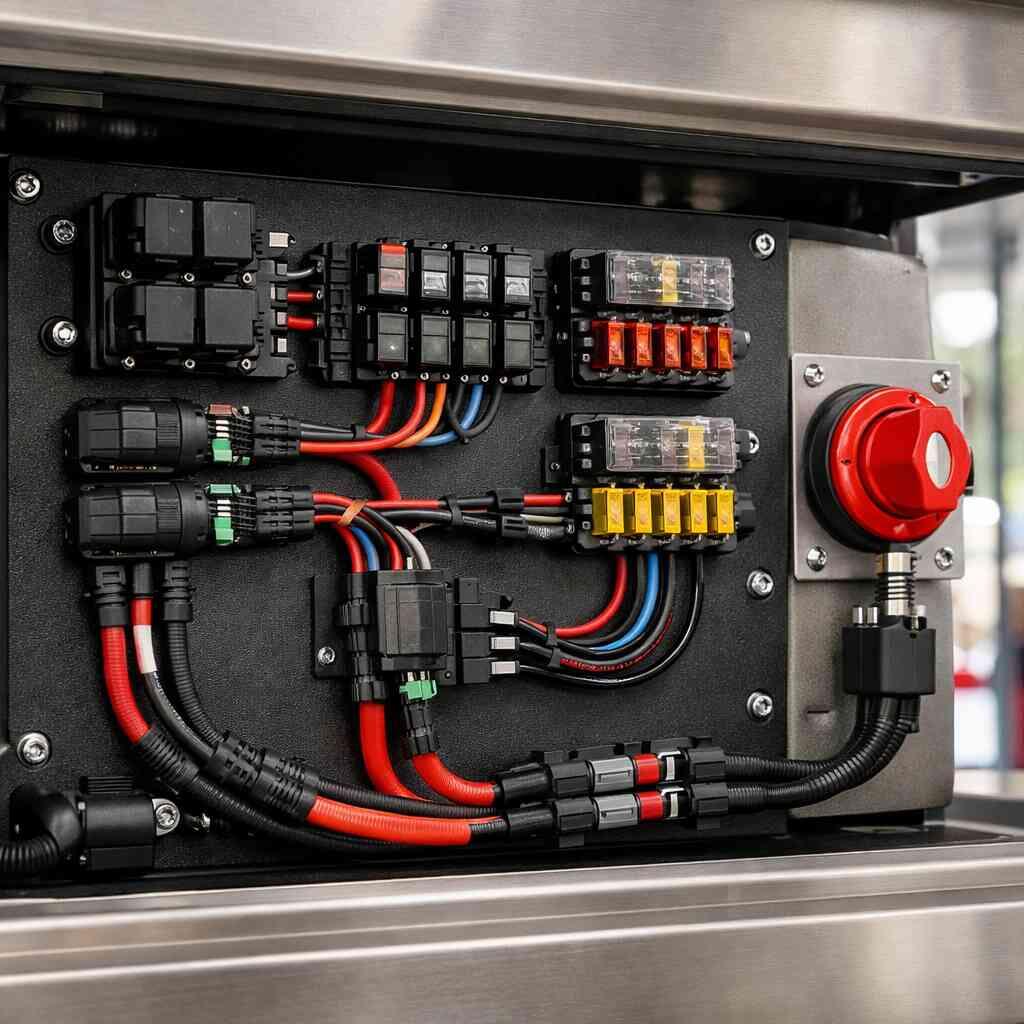
If a battery issue is suspected, do not wait for another reminder cycle. Inspect it now. Check connectors. Confirm the charger state. Look for any uneven behavior across units. DeLand Florida fire truck cabling and storage protection also matters here, because loose or stressed cabling can masquerade as a battery problem. In other words, inspect the whole electrical chain, not just the battery itself.
-
The Storage Rules That Keep Corrosion From Spreading Between Calls
Corrosion rarely starts in one dramatic moment. It spreads. A damp step. A dirty latch. A wet floorboard. Then the problem moves from one surface to another. That is why apparatus cleanliness and decontamination should be treated as protection, not housekeeping.
How apparatus cleanliness and decontamination protect high use fire equipment
Clean apparatus lasts longer because contamination has less time to work. Wipe the surfaces after exposure. Remove residue before it dries. Check the spots that are easy to miss. That is the discipline behind fire engine storage and decontamination basics. It sounds routine because it is routine. Yet the results are anything but minor.
Here is what almost no online guide mentions: the first hour matters most. Once grime dries, it becomes harder to remove and easier to spread. That means station workflow has a real effect on wear. If the crew cleans promptly, the apparatus stays easier to maintain. If the crew waits, they inherit a larger problem later.
Which wet surfaces, salts, and contaminants need immediate attention after response
Some contaminants demand quick action. Wet flooring holds residue against metal. Road salt speeds up corrosion. Dirty gloves transfer grime to handles and switches. After a response, check the following immediately:
- Lower door edges
- Hose bed corners
- Step plates
- Coupling surfaces
- Cab thresholds
- Grab rails
This is part of apparatus cleanliness and decontamination that people can actually perform during a busy shift. It does not require perfection. It requires sequence. Remove the worst contaminants first, then dry the surfaces, then inspect for wear.
Why vehicle corrosion control depends on what happens in the first hour back at the station
The station routine after return is everything. If wet gear gets piled up and the vehicle sits untouched, corrosion gains time. If the crew resets the unit quickly, moisture has less opportunity to settle. That is the practical side of vehicle corrosion control. It is not only about products. It is about response habits.
A supervisor once described their turnaround as “the difference between a rinse and a repair.” That was accurate. The station that treats the first hour as sacred usually spends less on preventable damage. The station that lets the hour disappear pays later in hardware failures and slower readiness.
-
When Indoor Storage Is Not Enough and Climate Controlled Space Becomes the Smarter Call
Indoor space helps, but not every indoor space is equal. Some bays are too warm, too damp, or too crowded. Some gear needs more protection than a standard room can provide. That is where climate controlled storage for fire apparatus starts making sense.
How to decide which fire truck indoor storage needs the most protection
Not every unit needs the same level of shelter. Start by ranking the equipment most vulnerable to moisture, electronics exposure, and temperature swings. Primary response units usually come first. Sensitive cabling, control systems, and frequently used compartments deserve priority too. If you are short on space, protect the most critical assets first.
A practical priority list looks like this:
- Primary apparatus with active response roles
- Units with sensitive electrical systems
- Reserve apparatus used less often
- Hose and gear that require drying support
- Accessories and spare components
This approach makes fire truck indoor storage feel less like a puzzle and more like a decision tree. You protect what would hurt most if it failed.
What climate controlled storage for fire apparatus can and cannot solve in Florida conditions
Climate control can reduce moisture swings and help protect finishes, seals, and electrical connections. It can also make gear rooms more comfortable for inspection and staging. But it cannot fix bad habits. If equipment goes in wet, climate control does not erase the mistake. If doors are left open carelessly, dust and humidity still find a path.
That is why climate controlled storage for fire apparatus should be viewed as a support system, not a cure. It works best alongside apparatus room workflow that keeps wet and dry items separate. In Florida, that distinction matters because outdoor humidity remains a constant pressure even when the weather feels mild.
How to prioritize limited space for responder equipment durability and operational readiness
Limited space forces discipline. You have to decide what receives the best bay, the best airflow, and the easiest access. That decision should reflect call volume, equipment sensitivity, and inspection frequency. If space is tight, create tiers. Tier one gets the most protection. Tier two gets covered storage. Tier three gets scheduled rotation.
That kind of thinking strengthens operational readiness for fire departments because it stops the bay from becoming random. It also supports storage solutions for first responder gear that are realistic for smaller stations. You do not need perfect space. You need a deliberate system.
-
Build a Winter Prep System That Keeps the Fleet Ready for the Next Alarm
A winter prep plan only works if it repeats. If it depends on one person remembering everything, it will fail under pressure. The better answer is a system that turns good habits into standard workflow. That is the heart of fire fleet organization systems.
How fire fleet organization systems turn storage planning into repeatable station workflow
Good systems reduce decision fatigue. Everyone knows where the hose goes. Everyone knows what gets dried first. Everyone knows which compartment gets checked before roll-out. That kind of clarity is what fire fleet organization systems for Q4 planning are meant to create. It is not about bureaucracy. It is about making readiness automatic.
Start with three repeatable actions:
- Restage the bay after each call.
- Dry and inspect wet equipment before storage.
- Verify the charging and compartment checklist at shift change.
Those steps make station readiness checklist work feel normal instead of burdensome. Over time, the station becomes faster, cleaner, and more reliable.
Where durable electrical connections and compartment accessories fit into long term protection
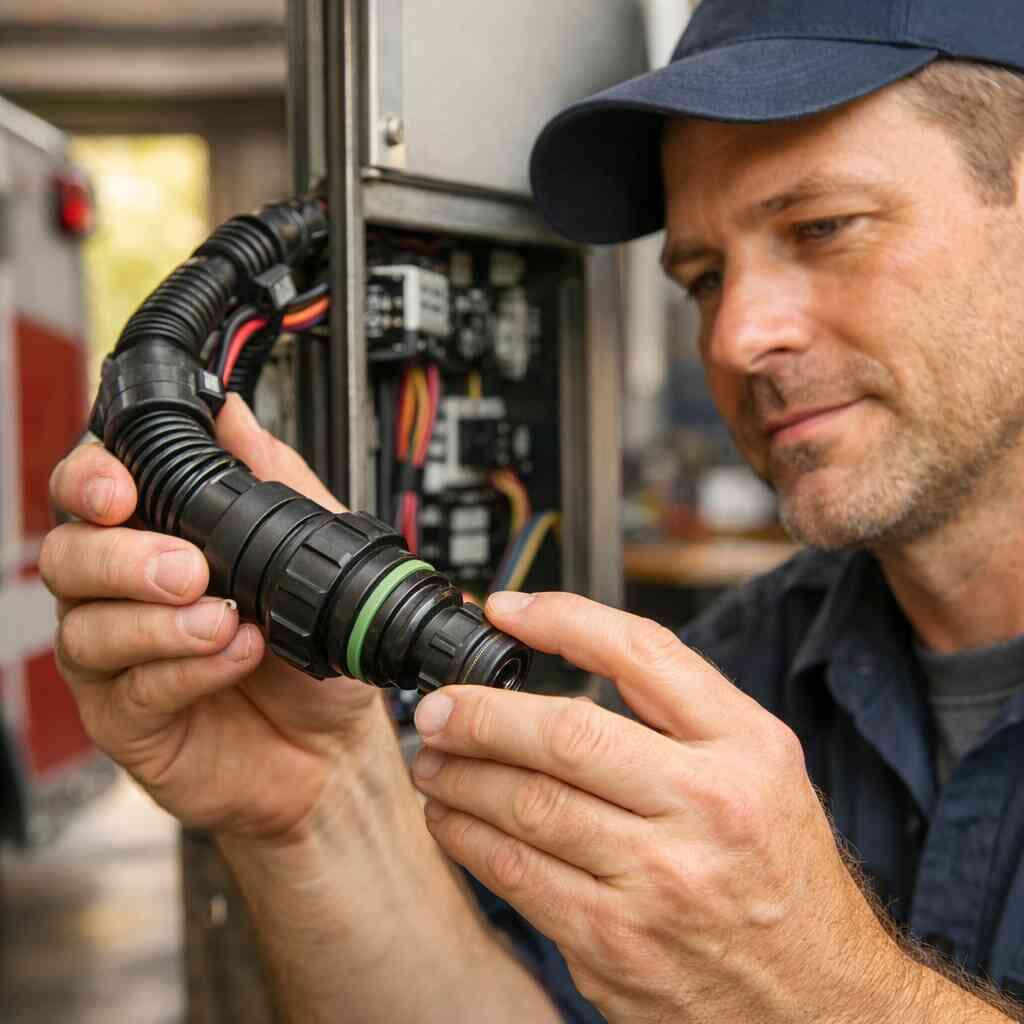
Electrical systems deserve the same discipline as hoses and gear. Connectors, extensions, and junctions are not minor details. They are part of the storage environment. If they are exposed to moisture or rough handling, they fail at the worst possible moment. That is why durable electrical connections and compartment accessories matter so much.
For crews looking at equipment upgrades, IP68 electrical connector pigtails for apparatus bay readiness and male female electrical extensions for emergency equipment durability can support more reliable routing and safer storage organization. Also, fire fighting electrical junctions and accessories for fleet storage systems help keep the bay cleaner and easier to inspect. Fire Power Products offers hardware designed with first responder use in mind, and that kind of practical durability belongs in any serious storage plan. If you are reviewing support gear, this winter prep guide is a useful place to start.
What a DeLand winter storage plan should lock in before the season shifts again
Your DeLand winter storage plan should be written down, not left in someone’s head. It should define drying zones, charging zones, staging zones, and indoor priority zones. It should also assign who checks what, and when. That makes the plan usable under pressure, which is the only time it really matters.
If you want a sharper benchmark, compare your current setup against fire apparatus storage best practices for fall fleet audits. Then tighten the weak points. You do not have to overhaul everything today. Start with one bay, one checklist, and one piece of equipment that keeps getting overlooked. If you are ready to improve storage for high-use fire equipment, reach out to Fire Power Products and begin with the one area your station feels every day.
Frequently Asked Questions
Question: How can Fire Power Products help with DeLand fire fleet storage tips for winter prep when moisture and humidity are the main concerns?
Answer: Fire Power Products supports DeLand fire department operations by focusing on reliable fire equipment storage and practical moisture management around the apparatus bay. The blog highlights that winter prep for fire fleets often fails because wet gear, damp compartments, and humid air are allowed to sit too long. That is where strong storage planning matters. Fire Power Products offers products designed for demanding first responder environments, which can help crews build better apparatus room workflow, improve compartment organization for fire trucks, and reduce the risk of moisture-related wear. While every station setup is different, the goal is the same: keep high-use fire equipment dry, accessible, and easier to inspect so operational readiness for fire departments stays high.
Question: What storage solutions for first responder gear work best for hose storage solutions, turnout gear storage, and storage for high-use fire equipment?
Answer: The best storage solutions for first responder gear are the ones that support airflow, access, and repeatable station readiness checklist habits. For hose storage solutions, crews should prioritize layouts that allow water to drain and air to circulate instead of trapping moisture in coils and couplings. For turnout gear storage, the focus should be on separation, labeling, and enough room for gear to dry before it is returned to service. Fire Power Products is a strong fit for departments that want durable support hardware and reliable fire equipment storage components built for tough daily use. The article’s main point is that storage for high-use fire equipment should not be improvised. It should be planned so the bay stays organized, equipment protection from moisture improves, and responder equipment durability is protected over time.
Question: How does the Best 7 DeLand Fire Fleet Storage Tips for Winter Prep 2026 guide apply to fire apparatus storage best practices and fleet maintenance for fire departments?
Answer: The Best 7 DeLand Fire Fleet Storage Tips for Winter Prep 2026 guide is really about turning winterizing emergency response vehicles into a repeatable system. It emphasizes apparatus bay organization, pump and hose compartment care, battery maintenance for emergency vehicles, and better fire fleet organization systems. Those ideas directly support fleet maintenance for fire departments because they make issues easier to see and faster to correct. Fire Power Products complements that approach by providing durable accessories and storage-related hardware that can fit into a station’s workflow. The value is not in making bold claims, but in helping departments create a more dependable setup for Florida fire fleet maintenance, better corrosion prevention for fire equipment, and stronger emergency vehicle winter readiness.
Question: Can Fire Power Products help improve battery maintenance for emergency vehicles and durable electrical routing in climate controlled storage for fire apparatus?
Answer: Yes, Fire Power Products can be part of a smarter storage and electrical organization plan for stations that are improving battery maintenance for emergency vehicles. The blog explains that idle units, chargers, and cabling should be checked routinely because electrical issues often look like battery problems at first. Durable electrical connections, well-managed cabling, and tidy compartment accessories help reduce avoidable stress on the system. For departments using climate controlled storage for fire apparatus, that kind of organization is especially important because cleaner routing and better-protected connections can support easier inspections and more consistent readiness. Fire Power Products focuses on equipment designed for demanding first responder conditions, which makes it a practical option for crews that want dependable support around battery systems and compartment organization for fire trucks.
Question: What should DeLand stations consider when building apparatus bay organization and station readiness checklist routines around reliable fire equipment storage?
Answer: DeLand stations should start by mapping how equipment actually moves through the bay during a call, return, drying, inspection, and restaging. That is the foundation of apparatus bay organization and a useful station readiness checklist. The blog makes it clear that winter prep for fire fleets works best when wet gear, reserve units, charging areas, and inspection points each have a defined place. Fire Power Products can support that workflow by offering durable hardware and accessories that help stations keep the bay cleaner, easier to inspect, and more consistent under pressure. When a department builds its fire department storage planning around real traffic flow, it improves operational readiness for fire departments and reduces the chance that moisture, clutter, or misplaced gear will slow the next response.
Question: Why is corrosion prevention for fire equipment so important in Florida fire fleet maintenance, and how can Fire Power Products fit into that plan?
Answer: Corrosion prevention for fire equipment is critical in Florida because humidity, wash-downs, road grime, and wet returns can quietly damage hardware over time. The blog stresses that apparatus cleanliness and decontamination in the first hour after a call matter just as much as storage itself. That means crews need a storage system that supports prompt drying, clean compartment organization for fire trucks, and regular inspection of wet surfaces, seals, and connectors. Fire Power Products fits into that plan by offering durable, first responder-focused equipment that can support better storage for high-use fire equipment and help stations maintain reliable fire equipment storage habits. For departments focused on emergency equipment longevity, the combination of smart workflow and tough accessories is often what keeps small problems from becoming expensive repairs.