How to Build a Q4 2026 EMS Spare Parts Kit in DeLand
October 6, 2026
If you are staring at an empty bin on a busy shift, you already know the feeling. It is not panic yet, but it is close. In EMS, that small gap can quickly sideline a unit, especially when demand rises and supply shelves start looking thin. That is why a Q4 EMS spare parts kit matters more than most crews admit.
In DeLand, the pressure is real, not theoretical. Heat, humidity, fast turnover, and long days can expose weak points in your emergency medical service inventory quickly. The hard part is not understanding that parts matter. The hard part is deciding what deserves space, what needs duplication, and what can wait. If you are feeling behind, that is normal.
A strong kit starts with a clear view of EMS equipment maintenance and a realistic read on your fleet. On DeLand Fire Power Products fleet readiness projects, the pattern is consistent: teams wait until a failure forces the decision. That approach costs time. It also creates avoidable stress during shift change.
Why a quarter end spare parts kit becomes the difference between rolling and sidelined units
Quarter end is when small weaknesses become expensive. Crews notice the worn connector, the cracked clip, or the missing extension only after a call exposes it. A focused kit gives you equipment downtime prevention before those issues pile up. It also supports emergency response equipment maintenance without forcing every fix into a crisis.
What emergency medical service teams in DeLand should inspect before demand spikes
Start with the items that fail quietly. Inspect cable ends, power leads, brackets, mounting points, and accessory connections. Then check anything that gets repeated handling, because abuse does not announce itself. DeLand EMS supplies should reflect actual wear, not wishful thinking.
One crew we worked around recently had a unit that passed visual checks but failed because of a loose connection during a routine move-out. Nothing dramatic happened. That was the point. They caught the issue early, replaced the component, and avoided a roadside problem that would have taken the whole rig out of rotation. That is the kind of win a spare parts shelf should deliver.
Which mission-critical items should be flagged as rapid replacement parts instead of routine stock
Treat some pieces as rapid replacement parts, not ordinary stock. If failure stops the unit, delays patient care, or prevents a device from mounting correctly, it belongs in the fast-access group. That includes high-use connectors, pigtails, and certain accessories that crews touch constantly. Mission-critical spare parts for emergency response equipment should never hide in a back cabinet.
A simple rule helps. If the item would require a second trip, a work order delay, or a unit swap, it is not routine. It is fast-turn inventory. That mindset keeps ambulance fleet maintenance grounded in reality. It also sharpens first responder equipment upkeep by tying parts to actual downtime risk.
How to separate true downtime prevention items from nice-to-have extras
This is the part most teams miss. Not every useful item is urgent. Some accessories improve comfort, organization, or aesthetics, but they do not prevent a unit from sitting idle. Separate downtime prevention items from convenience items before you buy anything.
A clean way to sort the shelf is below:
- Tier 1: Parts that stop the unit if missing
- Tier 2: Parts that create delays, but not total failure
- Tier 3: Extras that improve workflow, but can wait
That one split can make your stock management for EMS teams in DeLand far more disciplined. It also keeps budget conversations honest.
Why rugged storage for spare parts matters when kits live in ambulances and field service vehicles
A spare parts kit is only useful if the parts stay usable. Heat, vibration, dust, and moisture punish loose items inside vehicles. That is why rugged storage for spare parts is not a luxury. It is part of the kit.
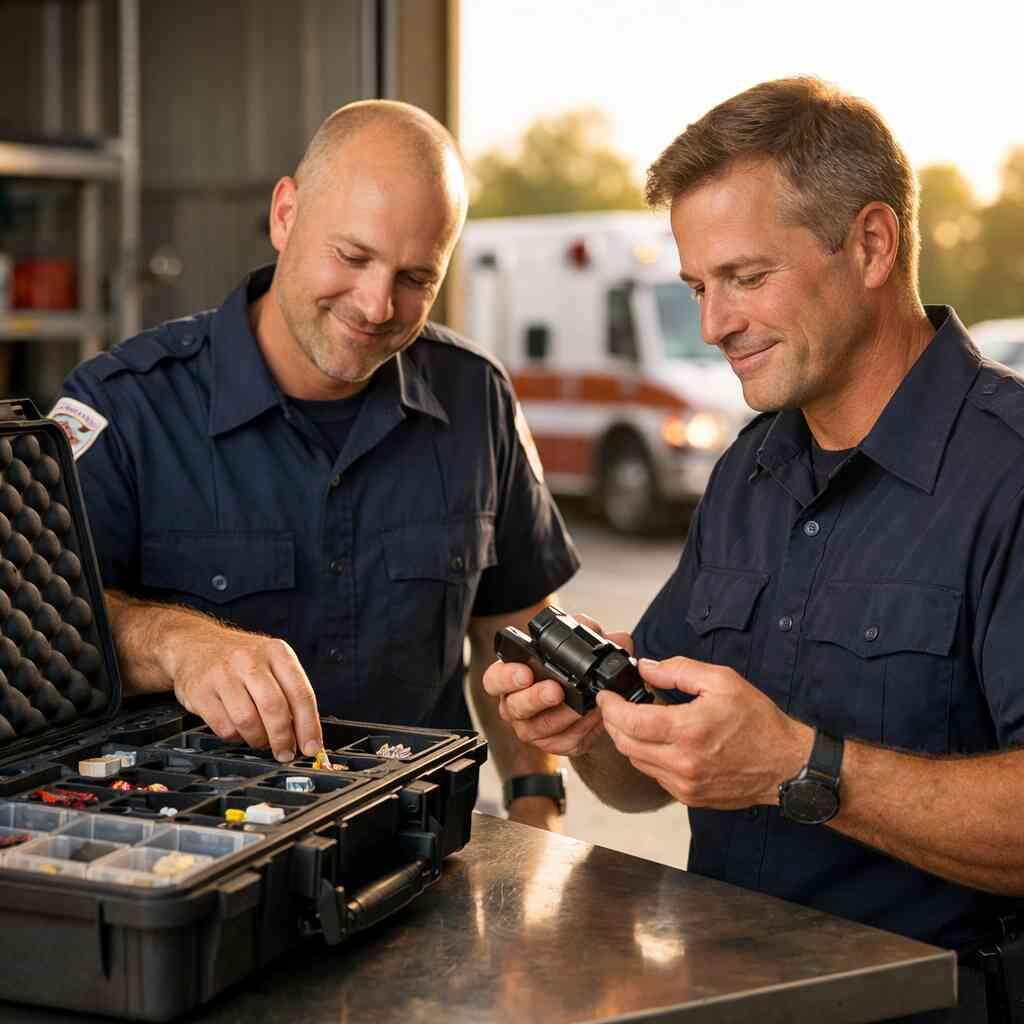
On the projects we have seen this year, crews often focus on the parts and ignore the box. That mistake is expensive. The right container protects labels, keeps items sorted, and reduces the chance that one missing connector ruins the whole setup. If the kit rides in an ambulance or a field service kit for EMS, the storage has to work as hard as the parts inside.
The inventory map that turns scattered EMS supplies into a command-ready system
Good inventory is not about volume. It is about clarity. When every item has a place and a purpose, your crew spends less time hunting and more time moving. That is the core of command-ready inventory planning. It also reduces friction during shift turnover, which is when mistakes usually hide.
How to build a response unit maintenance checklist around real usage patterns
Build your checklist from what actually gets used. Review the last few months of service calls, equipment swaps, and recurring wear points. Then rank each item by frequency and consequence. That is how a response unit maintenance checklist becomes practical instead of theoretical.
Here is the part most guides skip: usage patterns change with weather, call volume, and route mix. A unit that works mostly local calls will age differently than one covering longer transport runs. So your checklist should flex. That keeps EMS preventive maintenance tied to real work instead of generic assumptions.
Which emergency medical service inventory buckets should be tracked separately for speed and accountability
Do not keep everything in one pile. Split inventory into buckets so you can track speed, access, and accountability. For most teams, the cleanest structure includes:
- Critical incident readiness supplies
- Rapid replacement parts
- Routine consumables
- Reserve items
- Inspection-only components
This structure supports emergency medical service inventory planning in DeLand without slowing the crew down. It also makes shortages easier to spot before they become embarrassing. If a bucket is empty, you know exactly what is at risk.
How to label serviceable EMS gear so crews can find the right component under pressure
Labels have to work under stress. Use large print, consistent color, and obvious category names. Avoid clever shorthand that only one person understands. A tired medic should not need a decoder ring.
Serviceable EMS gear should be marked by function first and SKU second. Put the simplest description on the front. Put deeper tracking information on the inside or back. That keeps professional responder supply organization usable in the real world, where gloves, noise, and urgency make everything harder.
What first responder equipment upkeep looks like when the goal is fewer surprises on shift change
Shift change is where inventory discipline gets tested. If one crew leaves a problem undocumented, the next crew inherits it under pressure. That is why first responder equipment upkeep for fleet readiness needs a handoff routine, not just a storage routine. Check what left the unit, what came back, and what was replaced.
A quick shift-change habit works well:
- Confirm the top-use parts are present.
- Verify any open repairs or missing items.
- Log replacements before the unit rolls again.
- Flag anything approaching failure.
That simple cadence protects dependable response equipment better than a once-a-month scramble.
What DeLand crews should stock first when every ounce of space has to earn its keep
Space is always limited. So is patience during a call. The right kit is compact, selective, and brutally practical. If the part is unlikely to fail or easy to source locally, it should not consume prime storage. If it prevents a unit from sitting, it deserves attention. That is the balancing act in DeLand fire and rescue supply needs.
How to prioritize DeLand EMS supplies for the most common replacement needs
Start with the failures you see most often. In many fleets, that means connectors, extensions, mounting hardware, and small accessories that get touched every day. Then move to items that take longer to replace through normal channels. That is the backbone of spare parts planning for EMS.
A useful rule is to rank by consequence and frequency together. A part that fails often but does not stop operations may stay in lower priority. A rare part that grounds the unit jumps to the top. That approach keeps DeLand EMS supplies for spare parts planning aligned with actual risk.
Which ambulance spare parts kit items deserve duplicate quantities and which do not
Duplicate quantities make sense for small, fragile, or frequently handled items. They do not make sense for bulky components that rarely fail. A good ambulance spare parts kit should reflect that difference. Otherwise, you are storing weight instead of readiness.
Item TypeDuplicate?ReasonHigh-use connector endsYesSmall, common, easy to misplaceExtension leadsSometimesDuplicate if failure stops deploymentLarge assembliesNoBulky and usually better sourced as neededMounting accessoriesYesCheap, easy to lose, often needed quicklyThat table is not a shopping list. It is a decision filter. It helps crews keep on-hand replacement inventory focused on the pieces that matter most.
How to balance critical incident readiness supplies with practical carry limits
Every pound you carry has to earn its place. That means your kit should support critical incident readiness supplies without turning the vehicle into a cluttered warehouse. Keep the highest-failure items in the field kit. Store slower-moving spares in controlled backstock. One DeLand supervisor told us the change that helped most was removing “just in case” extras. The unit felt lighter immediately. More important, people stopped guessing where things belonged. That improved response time and reduced the kind of confusion that eats minutes during busy runs. It also made ambulance and EMT equipment upkeep easier to manage.
What winter readiness for emergency vehicles can mean in Central Florida even without hard freeze conditions
Winter in Central Florida is not about deep freeze. It is about temperature swings, damp mornings, and unexpected condensation. Those shifts still affect connections, storage, and vehicle reliability. So winter readiness for emergency vehicles here means checking seals, verifying dry storage, and watching for moisture-related wear.
Do not assume mild weather means low risk. Heat, humidity, and cool nights can create just enough change to expose weak points. That is especially true in vehicles that sit outside. A small moisture issue today can become a contact failure later. That is why emergency apparatus readiness is more than a cold-weather checklist.
Where Fire Power Products can fit into a durable spare parts plan without overbuying
Fire Power Products can fit into a durable plan when you treat it as part of system reliability, not as a shortcut. The value is in thoughtful selection and verified fit, not in buying more than you need. That is where disciplined procurement matters. It also protects your crew from wasted shelf space and mismatched components.
How Fire Power Products and Duraline can support emergency apparatus readiness with connector and accessory planning
For crews building a resilient inventory, Duraline Fire Power Products for emergency apparatus readiness can be part of the planning conversation. The focus should stay on connector planning, accessory compatibility, and how each part fits the overall system. That is especially useful when you are organizing frontline EMS logistics around limited cabinet space.
If a part supports a repeatable repair, it belongs on the radar. If it only duplicates something already well stocked, it may not need a slot. That is the difference between thoughtful readiness and overbuying. It also keeps the shelf aligned with command-ready inventory planning.
When IP68 connector pigtails and extensions may belong in a field service kit for EMS
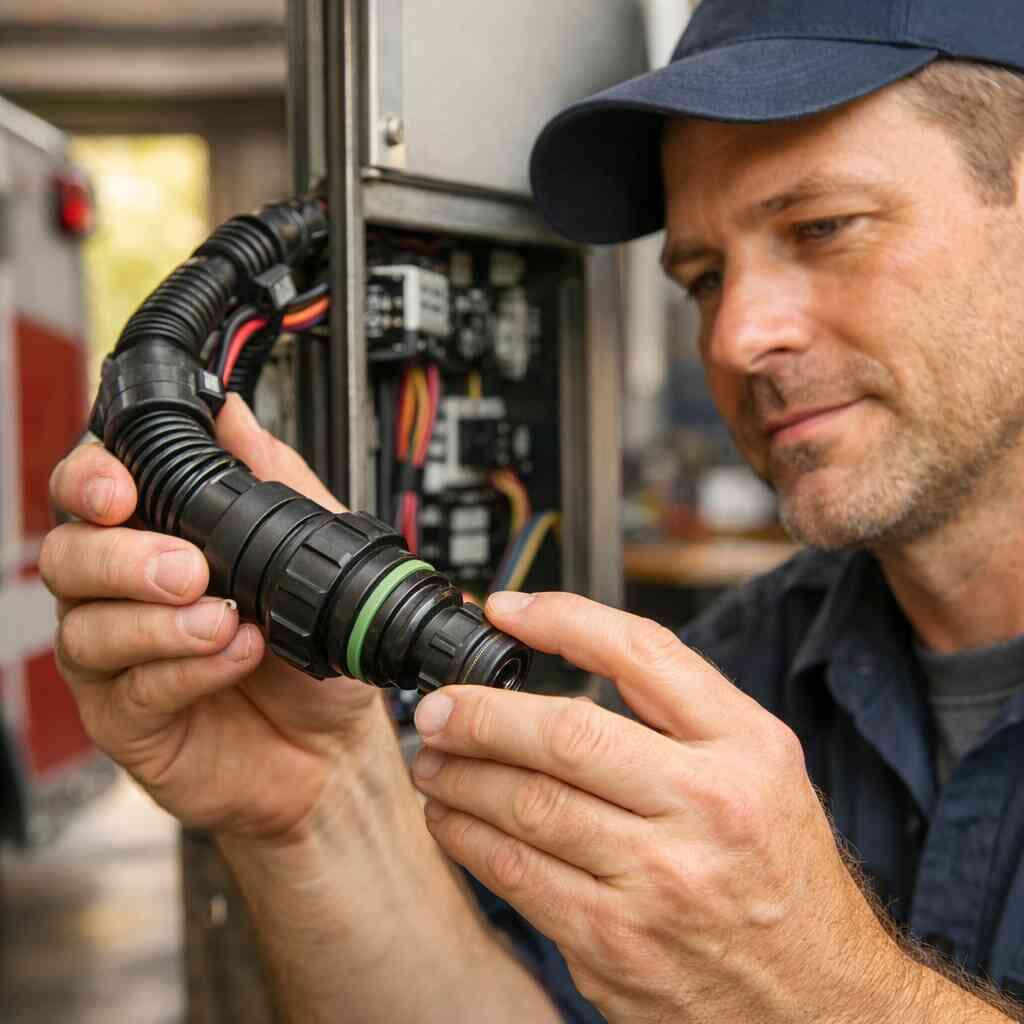
Not every kit needs every connector. But some field conditions make IP68 connector pigtails for EMS field service kits worth considering. If a component is exposed to frequent handling, movement, or moisture, a protected connection can be a sensible part of the spare parts strategy. The same logic applies to male-female electrical extensions for ambulance fleet maintenance.
The key is verifying application first. Do not buy by description alone. Match the part to the equipment, the mounting need, and the environment. When the fit is right, IP68 male pigtails for rapid replacement parts can reduce downtime without creating excess.
How to think about junctions receptacles and accessories as part of frontline EMS logistics
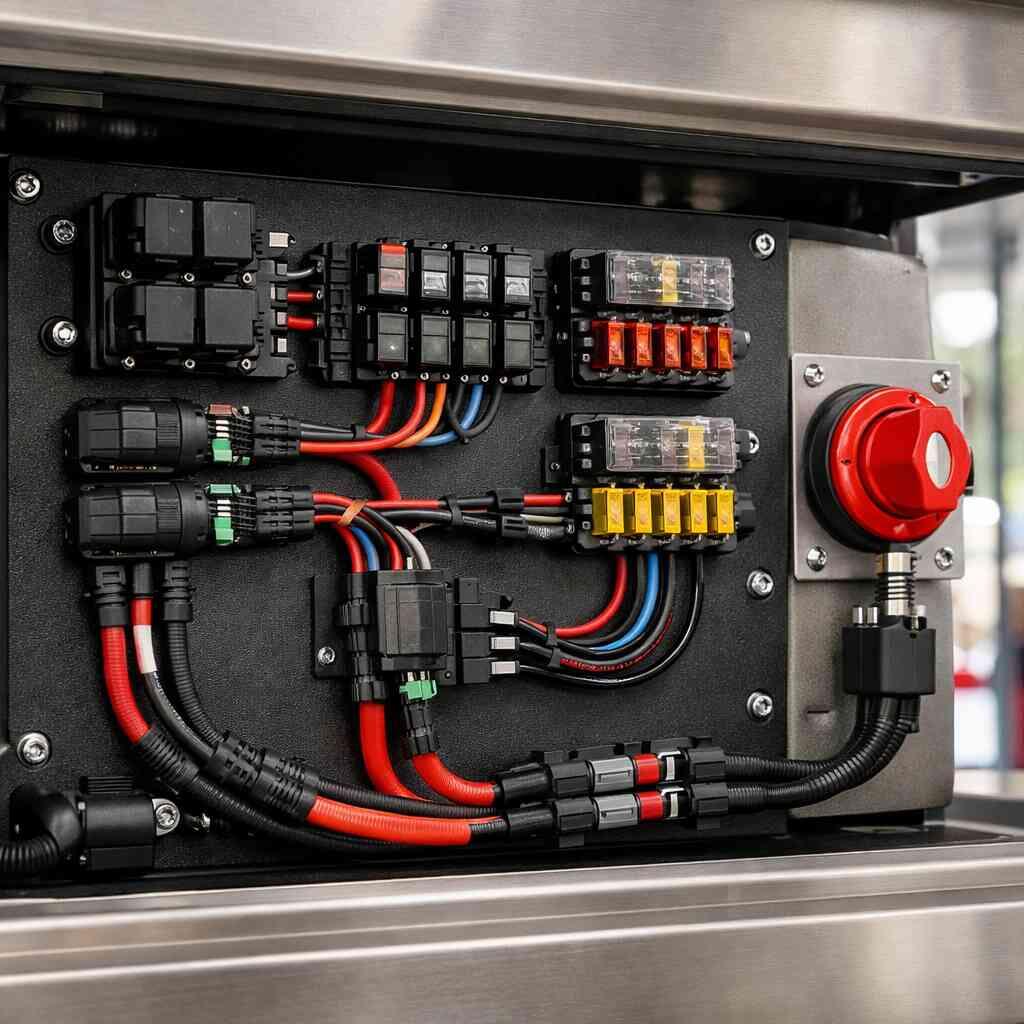
Treat connectors and accessories like logistics items, not random extras. They affect how quickly a unit returns to service. They also shape how easily a crew can complete a swap under pressure. That is why junctions, receptacles, and accessories for frontline EMS logistics belong in the conversation.
A simple way to think about them is this: if the part improves recovery after a failure, it has operational value. If it only adds complexity, it does not. That lens keeps the spare shelf disciplined. It also supports emergency apparatus readiness without crowding out the essentials.
Why product verification matters before adding any electrical components to a spare parts shelf
This is where caution matters most. Never assume a part fits because it looks close. Verify the application, connector type, and compatibility before you stock it. If you are unsure, contact Duraline for spare parts verification before buying.
That step protects your budget and your fleet. It also keeps unverified components off the shelf. We recommend that because misfit parts waste time when crews need speed most. Verification is not extra work. It is part of responsible emergency response equipment maintenance.
The decision point that keeps Q4 from turning into an inventory scramble
This is the moment to stop reacting and start organizing. A good year-end review turns anxiety into action. It gives you a stable plan before the next surge arrives. More importantly, it keeps end-of-year equipment readiness from becoming a rushed purchase list.
How to convert an end of year equipment readiness review into a workable replenishment plan
Start with a simple review of what failed, what nearly failed, and what disappeared. Then group items by urgency, lead time, and repeat usage. That creates a workable replenishment plan instead of a wish list. It also makes stock management for EMS teams in DeLand much easier to defend internally.
Use a short meeting and a shared checklist. Keep the language plain. Ask three questions: What stopped a unit? What delayed a repair? What must be duplicated now? Those questions drive better decisions than broad budget talk.
When to replace parts now versus hold budget for true emergency response equipment maintenance
Replace now when failure would sideline a unit, create a safety issue, or force a workaround. Hold budget when the part is stable, non-critical, or easy to source quickly. That separation keeps money available for true emergency response equipment maintenance.
A field chief once described it well: “We do not buy for comfort. We buy for movement.” That mindset is useful. It keeps the shelf from filling up with low-value extras. It also sharpens mission-critical spare parts for emergency response equipment decisions.
What DeLand fire and rescue supply needs look like when fleet maintenance and stock management have to align
When fleet maintenance and stock management line up, the whole system gets calmer. Repairs happen faster. Orders get smaller and smarter. The crew stops guessing, and the supervisor stops chasing shortages. That is the real value of aligning DeLand fire and rescue supply needs with maintenance data.
The most effective teams keep one log for parts use and another for vehicle status. That separation prevents confusion. It also helps leadership see patterns before they become outages. On DeLand, Florida emergency response logistics, that kind of clarity matters.
Which next steps create dependable response equipment readiness before the next call comes in
Do three things now. First, review the parts that failed or nearly failed this month. Second, separate urgent replacements from convenience items. Third, verify any electrical components before they go on the shelf. That sequence builds dependable response equipment without creating waste.
You do not have to solve everything today. You just need the next clear move. Start with one unit, one checklist, and one honest inventory review. If you want support building a durable plan around EMS replacement components and professional responder supply organization, Fire Power Products can help you think through the right fit before the next call comes in.
Frequently Asked Questions
Question: How does Fire Power Products help DeLand crews build a Q4 EMS spare parts kit that supports EMS equipment maintenance and end-of-year equipment readiness?
Answer: Fire Power Products can help crews think through a practical Q4 EMS spare parts kit by focusing on the parts that most directly affect uptime, safety, and day-to-day EMS equipment maintenance. The goal is not to overfill cabinets or buy extras that never get used. Instead, it is to identify mission-critical spare parts, rapid replacement parts, and on-hand replacement inventory that keep units moving when a component fails.
For DeLand teams, that usually means reviewing the items most likely to create delays during shift change or after a call, then separating those from convenience items. A solid end-of-year equipment readiness review should include connectors, extensions, mounting hardware, and other small components that support emergency response equipment maintenance. If a part is hard to source quickly or would sideline a unit, it deserves priority in spare parts planning for EMS.
Fire Power Products brings value by helping customers plan around real-world use, not guesswork. Because the equipment is designed for demanding first responder conditions, the focus stays on durable emergency equipment storage, reliable fit, and organized stock management for EMS teams. That kind of approach supports equipment downtime prevention and a cleaner, more dependable inventory system.
Question: What should be included in an ambulance spare parts kit for DeLand EMS supplies, and how do you decide which items become rapid replacement parts?
Answer: A well-built ambulance spare parts kit should focus on the components that are small, frequently handled, and most likely to create downtime if they fail. For many crews, that includes cable ends, power leads, connectors, mounting accessories, and other EMS replacement components that are touched often and can wear out quietly. The best kits are built around actual service history, not around what seems useful in theory.
To decide which items become rapid replacement parts, ask a simple question: if this part fails, does it stop the unit, delay patient care, or force a second trip? If the answer is yes, it should not sit in routine stock. It belongs in the fast-access group. That is especially important for DeLand EMS supplies, where calls, heat, humidity, and vehicle movement can all contribute to wear over time.
Fire Power Products can be part of that planning process by helping crews evaluate fit and function before a component is added to the shelf. That verification mindset supports professional responder supply organization and helps keep the inventory focused on dependable response equipment rather than clutter. The result is a more practical field service kit for EMS and a stronger stock management for EMS teams approach overall.
Question: In the blog How to Build a Q4 2026 EMS Spare Parts Kit in DeLand, what role do durable emergency equipment storage and rugged storage for spare parts play in inventory planning?
Answer: Durable emergency equipment storage plays a bigger role than many teams realize. Even the right part can become unusable if it is exposed to heat, vibration, dust, or moisture inside an ambulance or field service vehicle. Rugged storage for spare parts helps protect labels, preserve organization, and keep critical incident readiness supplies ready when crews need them.
When a kit lives in a vehicle, the storage container is part of the system. It should support command-ready inventory planning by keeping parts separated, visible, and easy to grab under pressure. That matters in DeLand, where environmental conditions can affect both equipment and storage over time. A disorganized bin slows crews down and increases the chance that a missing piece goes unnoticed until it is urgently needed.
Fire Power Products is a good fit for conversations like this because the brand is centered on durable equipment for demanding first responder use. While exact product specifications should always be verified before purchase, the broader value is clear: better storage and better organization support EMS preventive maintenance, emergency apparatus readiness, and stronger frontline EMS logistics. In short, rugged storage helps ensure the parts you stock are still serviceable when the call comes in.
Question: How can Fire Power Products support first responder equipment upkeep, response unit maintenance checklist planning, and emergency apparatus readiness for DeLand first responder preparedness?
Answer: Fire Power Products can support first responder equipment upkeep by helping teams think about the full cycle of readiness, from inspection to replacement to storage. A response unit maintenance checklist works best when it reflects how equipment is actually used in the field. That means looking at failure patterns, wear points, and components that tend to create delays during a call or at shift change.
For DeLand first responder preparedness, the checklist should not be generic. It should track serviceable EMS gear, note which parts are reaching the end of their useful life, and identify which items should move into the on-hand replacement inventory category. That approach helps crews make better decisions about what to keep in the ambulance spare parts kit and what to store as reserve stock.
Fire Power Products fits into that process because it emphasizes reliable equipment for demanding conditions, without encouraging overbuying or assumptions about compatibility. The safest way to use any component is to verify its application first, then place it where it best supports emergency response equipment maintenance. That is how teams build dependable response equipment habits instead of reacting to surprises.
Question: What should DeLand crews know about EMS preventive maintenance, winter readiness for emergency vehicles, and verifying EMS replacement components before buying from Fire Power Products?
Answer: DeLand crews should treat EMS preventive maintenance as an ongoing readiness process, not a seasonal task. Even though Central Florida does not face harsh winter conditions, winter readiness for emergency vehicles still matters because temperature swings, moisture, and condensation can expose weak points in connectors, storage, and accessory connections. That makes inspection and verification especially important before the next surge in call volume.
Before any EMS replacement components are added to a spare shelf, verify the application, connector type, and compatibility with the equipment already in service. If the part is not confirmed, it can waste space, budget, and valuable response time. That is why Fire Power Products recommends careful product verification rather than guessing based on appearance alone.
This disciplined approach supports mission-critical spare parts planning, emergency medical kit spares management, and better ambulance fleet maintenance overall. It also keeps the inventory aligned with true operational needs instead of filling the cabinet with parts that may never be used. For teams building a Q4 EMS spare parts kit, that level of discipline is often the difference between a clean deployment and a last-minute scramble.