How to Build a DeLand EMS Spare Parts Kit for Summer 2026
September 16, 2026
Why a DeLand ambulance kit that looked complete in spring can fail in peak heat
A kit can look perfect in mild weather and still disappoint when the rig starts working harder. That is the part most crews learn the hard way. If you are building a DeLand EMS spare parts kit, heat matters as much as the part number. In DeLand, the combination of humidity, long idle times, and demanding shifts changes what fails first. If that uncertainty makes you uneasy, that is normal.
What heat, humidity, and longer run times do to EMS replacement components
Heat accelerates small problems. Plastics soften, adhesives loosen, and connectors shift just enough to create intermittent faults. Humidity adds another layer, because moisture sneaks into places you do not inspect every day. Longer run times also mean more vibration, more charging cycles, and more chances for a weak component to show itself. That is why EMS replacement components need a summer review, not just a spring restock.
Here is what often changes first:
- cable ends loosen from repeated heat cycling
- seals dry out faster than expected
- battery performance becomes less predictable
- suction tubing and fittings age unevenly
- adhesive-backed items lose grip in storage
What we have seen in 2026 specifically is that crews often blame call volume first. The rig is busy, sure. But the real issue is often storage temperature. A component that survives in an air-conditioned bay may age very differently inside a hot compartment near Persimmon Avenue traffic or after a long idle near downtown DeLand. One crew told us they had a “complete” spare bin, yet three of the five failures came from heat-worn connectors, not missing stock. That is a painful lesson, but a useful one.
Which ambulance spare parts inventory items get forgotten during routine restock
Routine restock usually catches the obvious items. Bandages get replaced. Gloves get counted. Medication is checked. The forgotten pieces are smaller and less dramatic. Those forgotten pieces are exactly what hurt you when a call gets complicated. A strong ambulance spare parts inventory accounts for the little failures that stop a bigger system.
The most commonly missed items include:
- backup clips and latches
- spare adhesive mounts
- small connector boots
- protected charging tips
- replacement straps and retention pieces
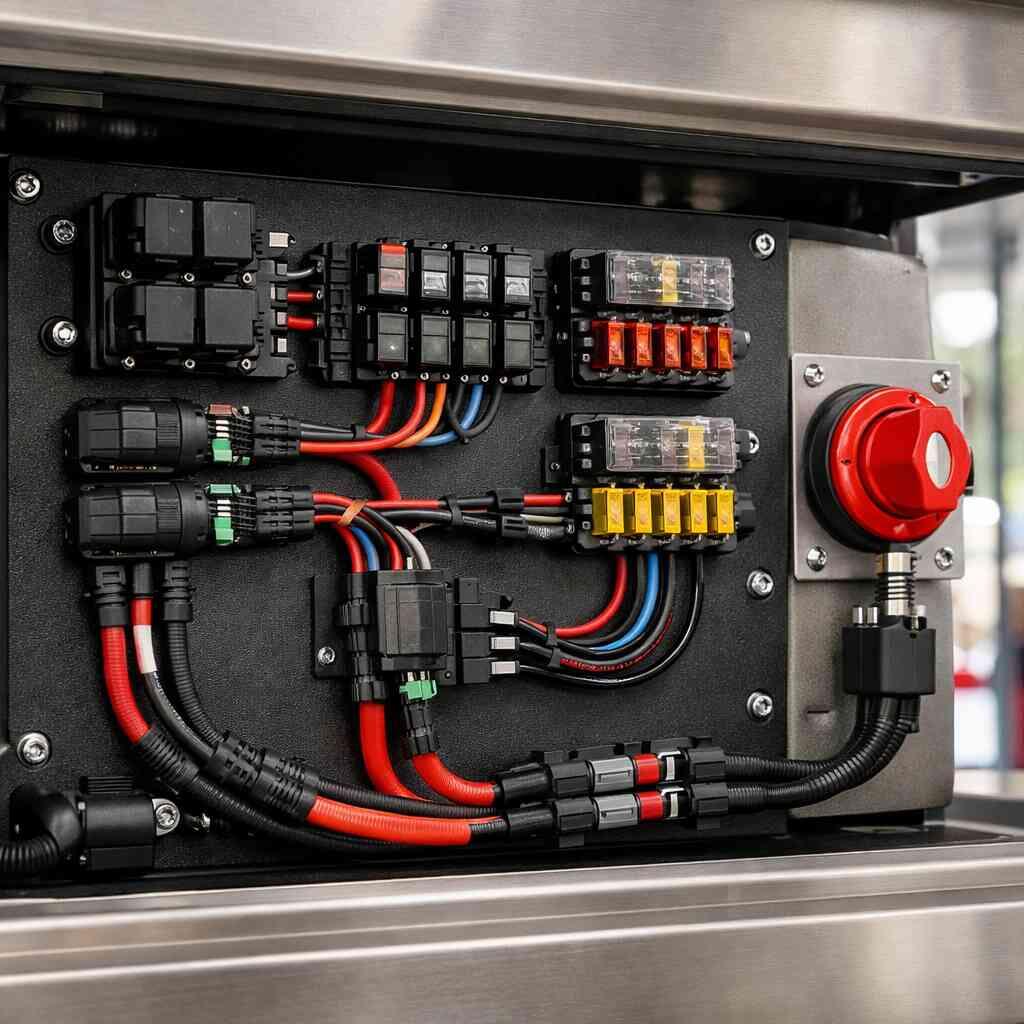
- secondary fuses and inline holders
The mistake we see most often is assuming the last shift already handled it. That assumption works until it does not. If you manage several vehicles, each one drifts a little. One unit loses a bracket screw. Another keeps borrowing a cable. Another gets a seal swapped and never gets the matching backup. A good DeLand EMS supply restock closes those gaps before they become a service delay.
How high-heat vehicle equipment storage changes what belongs in a summer-ready kit
High-heat storage changes the kit itself. If an item degrades in a rear compartment, it should not be treated like a stable reserve. That is why high-heat vehicle equipment storage near Florida response units deserves special attention. Compartments above wheel wells, sun-exposed bins, and tightly packed drawers all create different stress patterns. The practical answer is simple: choose parts that tolerate heat, and isolate the fragile ones.
On one unit near a busy hospital corridor, a crew kept spare tape, small seals, and a charging lead in the same top bin. It seemed efficient. It was not. The adhesive on the tape softened, the seal flattened, and the lead’s boot cracked at the bend point. After they moved the fragile items into a shaded, lower compartment, failures dropped sharply. That is the kind of change that saves you from mid-shift frustration.
What every DeLand EMS supply restock should include before the unit leaves the bay
A summer-ready restock is not just about quantity. It is about function under pressure. The best kits protect response time, reduce scavenging, and keep you from borrowing parts off another rig. If you want emergency medical service vehicle readiness in DeLand, Florida, build the kit around the systems that fail most often and the parts that are hardest to improvise.
Building the core inventory around airway management accessory kit, trauma kit replacement parts, and infection control supply reserves
Start with the patient care items that get touched on nearly every call. An airway management accessory kit for ambulance readiness should support the tools you already carry, not duplicate unnecessary bulk. Trauma supplies need backup pieces that can be deployed quickly and cleanly. Infection control still matters just as much in summer, especially when sweat, humidity, and rapid turnover make contamination control more difficult.
A practical core reserve should include:
- airway adapters and connectors
- spare suction tubing and caps
- trauma wrap, shears, and closure backups
- glove reserves in multiple sizes
- disinfectant wipes and barrier supplies
- secondary sharps containers if your protocol requires them
You may find you need fewer “extra” items than you think, but more organization than you expected. That is the real trick. If your jump bag opens like a shuffled toolbox, a five-second delay becomes a fifteen-second delay. For a patient who is deteriorating, that gap matters. Trauma kit replacement parts for rapid deployment response are not luxury items; they are the difference between smooth care and chaos.
Why battery management for EMS equipment and charging cable backups for EMS are not optional extras
Power is easy to ignore until it disappears. Monitors, suction units, and other electronics do not care how busy the shift is. They need reliable charge management. That is why battery management for EMS equipment and backup charging leads belong in every summer kit. If you have ever opened a drawer and found a charging cable with a bent pin, you already know the feeling.
Keep a simple battery routine:
- label batteries by service cycle
- retire weak batteries before they become field failures
- store charging leads away from heat and sharp bends
- test chargers during pre-shift checks
- match spare leads to the devices actually in service
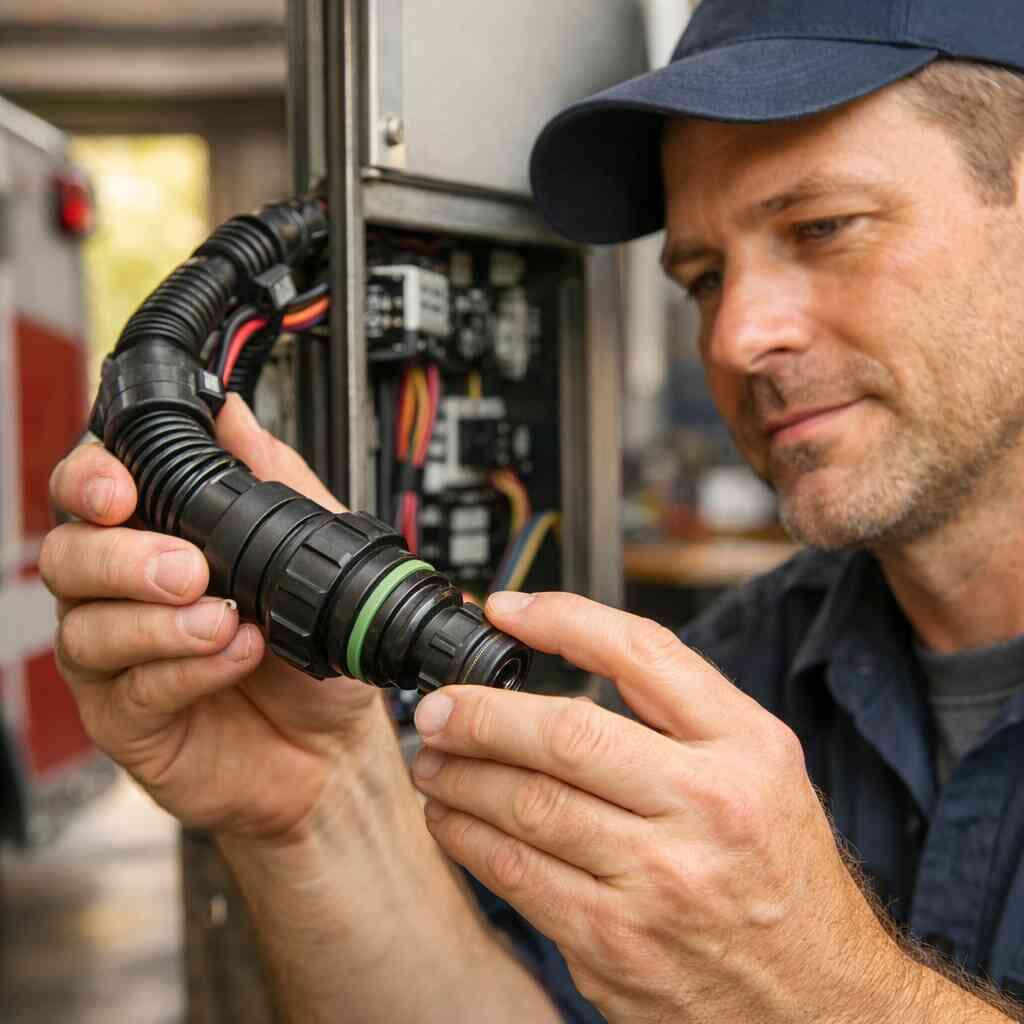
The article-so-far context matters here: cable compatibility is where crews waste the most time. A backup cable that “almost fits” is not a backup. It is clutter. One DeLand crew we spoke with kept three different leads in one pouch because someone hoped they were interchangeable. None were. After they standardized the set, their morning prep got faster and their stress level dropped.
Where gasket and seal replacement parts, hose and fitting spares, and mounting bracket hardware usually save a call from downtime
This is the part almost no online guide mentions well enough. Downtime often comes from tiny hardware failures, not catastrophic ones. A loose bracket. A tired seal. A hose that looks fine until it flexes under pressure. If you carry gasket and seal replacement parts for summer fleet reliability, hose and fitting spares for ambulance preventive maintenance, and mounting bracket hardware for durable emergency apparatus accessories, you are thinking like a fleet manager, not a shopper.
A useful comparison helps:
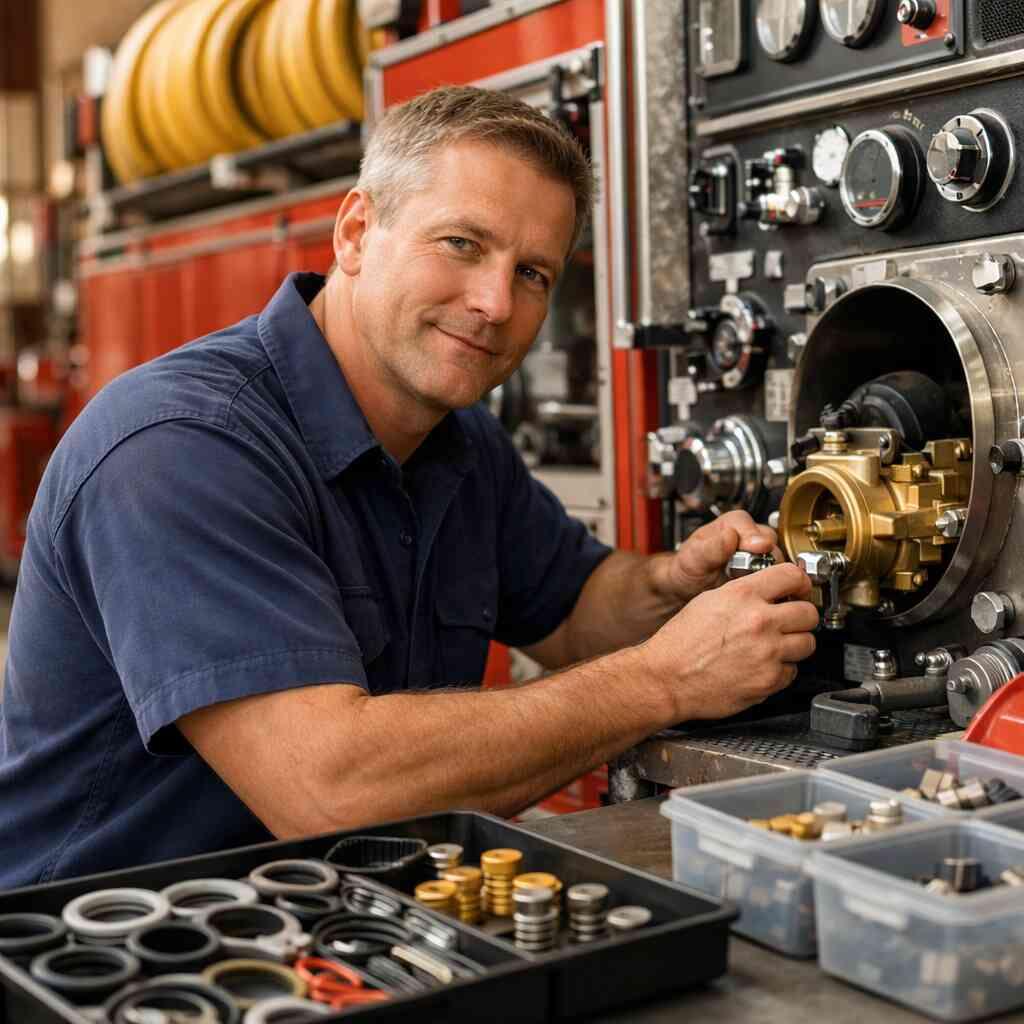
Spare itemTypical failure modeWhy it mattersGaskets and sealsDrying, flattening, heat distortionPrevents leaks and weak closuresHose and fittingsCracks, loosened joints, wear at bendsProtects fluid and suction reliabilityMounting hardwareVibration, missing fasteners, loosened anchorsKeeps gear secure during transitThe phrase ambulance preventive maintenance sounds broad, but it becomes practical very fast. If a bracket fails, an entire monitor setup can rattle loose. If a seal fails, a compartment can admit moisture. If a fitting fails, a critical function goes down. Fire Power Products understands that durability is not a slogan; it is a field requirement. That is why smart crews treat hardware like mission-critical inventory.
The field-ready EMS gear checklist that separates a busy shift from a broken one
A busy shift is manageable. A broken one is expensive. The difference often comes down to readiness habits. Strong field-ready EMS gear does not mean piling more items into the truck. It means placing the right spares where your hands can find them fast. It also means checking them before the first tone drops.
How to organize jump bag organization and monitor accessory spares for rapid access
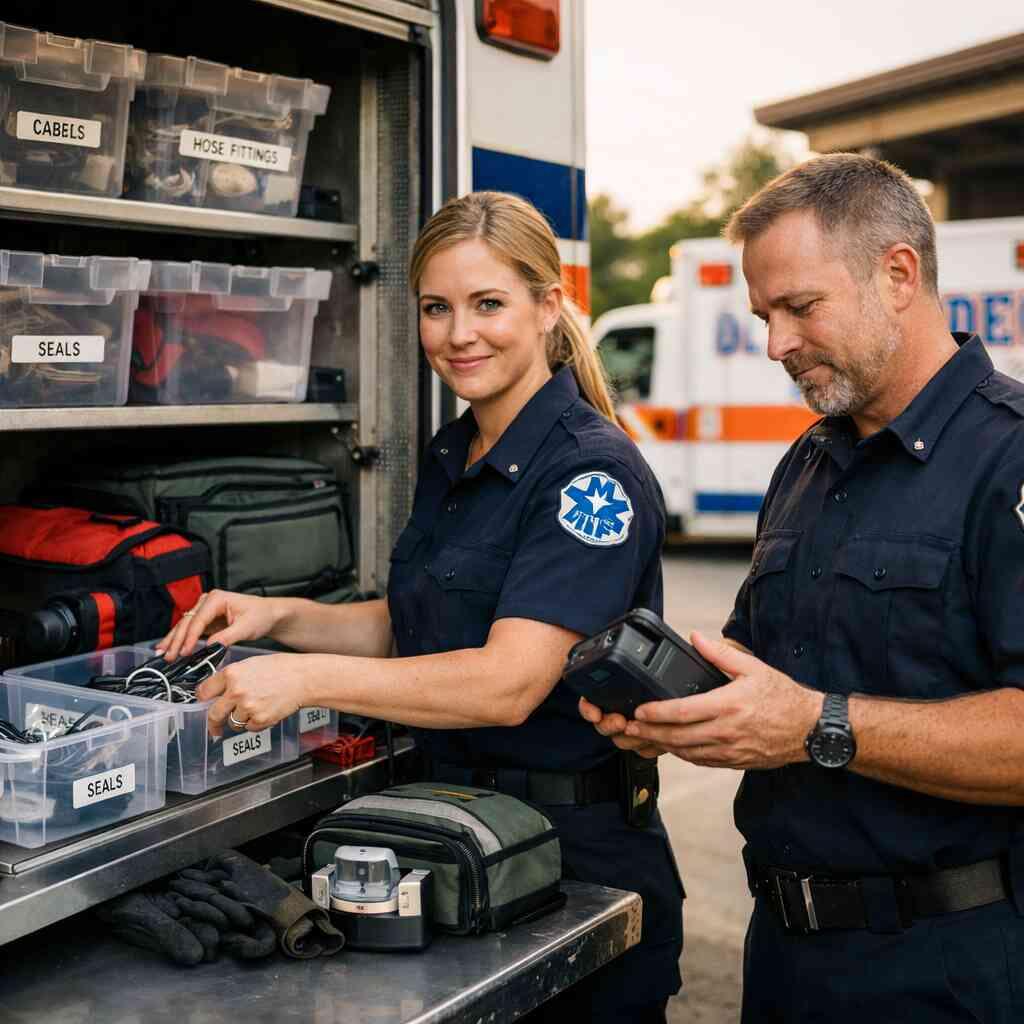
Good jump bag organization saves more time than most people expect. You do not need a perfect system. You need a repeatable one. Group by use, not by appearance. Keep monitor accessories together. Keep airway items together. Keep rarely used but essential backups marked clearly, so nobody has to dig through layers of mixed supplies. Use a simple layout: – top layer for fast-access items
- middle layer for device accessories
- lower layer for backups and resupply
- side pocket for labels, tape, and small hardware
- separate pouch for monitor accessory spares for first responder redundancy
A crew near Lake Beresford once told us they wasted almost a minute searching for a replacement cable during a call. That minute was not dramatic on paper. It felt much longer in the bay. After they separated their accessory spares by device and use, the same grab took seconds. Small changes create real calm.
What pre-shift equipment inspection should catch before a call starts
A solid pre-shift equipment inspection for ambulance readiness catches the problems you do not want to discover at scene. Check the obvious first. Then check the awkward details. Buttons, ports, latches, seals, straps, and power indicators all deserve attention. If a piece of equipment feels “almost right,” do not ignore it. Almost right becomes not ready very quickly.
A useful inspection sequence looks like this:
- confirm charge status on powered equipment
- verify cables are intact and labeled
- inspect seals, hoses, and connection points
- test mounting and retention hardware
- confirm spare parts are present and accessible
- document any missing or weak item immediately
Here is the part most crews miss: inspection is not only about what is broken. It is also about what is slowly becoming broken. A frayed cable or soft seal is a warning, not a nuisance. If you catch those issues before a patient call, you protect both response speed and crew confidence.
How to layer first responder equipment redundancy without turning the rig into clutter
Redundancy keeps the unit moving. Clutter slows it down. That balance matters. First responder equipment redundancy should cover the systems you cannot afford to lose, especially power, suction, airway access, and secure mounting. The key is limiting redundancy to items with clear failure risk and real field value.
Think in layers:
- primary device
- immediate backup
- compact repair or replacement parts
- documented storage location
- clear responsibility for restock
That approach prevents the “extra everything” problem. Too many spare pieces create confusion. Too few create risk. The right middle ground makes the rig feel calmer under pressure. And calmer rigs usually produce better work. If you are serving DeLand, Sanford, or the surrounding Central Florida traffic corridors, that discipline helps when the heat, the call load, and the clock all hit at once.
When a spare parts kit becomes a readiness plan instead of a box of extras
A real readiness plan changes how you think. You stop seeing the kit as a container. You start seeing it as a decision system. That shift matters for summer emergency response logistics, because summer magnifies every weak point. The best kits reduce guesswork, standardize what is carried, and make failure less likely across the fleet.
How to build a seasonally adjusted EMS inventory for summer emergency response logistics
A seasonally adjusted EMS inventory should reflect the heat, the pace, and the storage conditions of the season. In practice, that means you review consumables, power items, and hardware more often. It also means you watch what disappears faster than expected. If your team runs more calls, the spares should rotate faster too.
A seasonal plan should include:
- higher attention to battery and cable condition
- more frequent checks on seals and adhesive-backed parts
- replenishment of infection control supplies
- review of heat-sensitive components
- verification of backup hardware for mounting and retention
The term summer EMS preparedness for Florida response teams is broad, but the action is specific. Map the items that fail in heat. Count the items that are borrowed between units. Replace the items that are too sensitive for hot storage. A kit that matches the season reduces surprises, and surprises are what wreck schedule flow.
Which durable emergency apparatus accessories are worth standardizing across vehicles
Standardization keeps the fleet sane. If each vehicle uses different spare parts, every restock becomes a puzzle. If you standardize the most durable pieces, you make training easier and shortages easier to notice. That is especially useful for durable emergency apparatus accessories that support multiple vehicles and shifts.
Good standardization targets include:
- common bracket sizes
- common cable types
- uniform seal kits where compatible
- matching hose fittings
- shared labeling practices
- consistent storage locations
Here is why this matters in the field. When the whole team knows where the spare lives, nobody hunts. When the same part fits multiple rigs, nobody improvises. When the label format stays consistent, nobody makes a midnight mistake. For DeLand Florida EMS operations and fleet support, that kind of consistency is not boring. It is operational strength.
What DeLand Florida EMS operations should verify before calling the kit mission ready
Before you call the kit ready, verify the basics and the weak points. Check the inventory count. Check the expiration dates where they apply. Check that the spares match the equipment in service. Check that power leads, seals, and hardware are physically reachable, not buried behind unrelated items. DeLand EMS supply restock for peak-season response works only when the right piece is available in the right place.
A mission-ready review should confirm:
- the kit matches the current vehicle setup
- no borrowed items remain unreturned
- backup batteries are charged
- spare cables are functional
- hardware bags are labeled
- the inspection log is current
You do not have to perfect the whole process today. Start with one vehicle, one kit, and one clear standard. Then build from there. That is how mission-critical spare parts planning becomes part of normal operations instead of a crisis response.
The next decision point for ambulance preventive maintenance and ongoing equipment upkeep
The next decision is simple, but important. Either the kit becomes part of your maintenance rhythm, or it stays an afterthought. The crews that perform better are usually the ones that treat ambulance preventive maintenance and emergency response equipment upkeep for Florida fleets as one process. They inspect, restock, and verify in the same routine.
If you want a practical next step, start with these three actions:
- audit the spare parts currently in one rig
- separate heat-sensitive items from durable ones
- compare your kit against the equipment actually in use
You do not have to figure this out alone, and you do not have to solve everything today. If you want a smarter, more durable approach to your DeLand EMS spare parts kit, reach out to Fire Power Products and build from a stronger baseline.
Frequently Asked Questions
Question: What should a DeLand EMS spare parts kit include for summer 2026 to improve emergency medical service vehicle readiness?
Answer: A strong DeLand EMS spare parts kit should focus on the items that most often cause delays in hot, humid weather and under heavy call volume. That usually means a practical mix of EMS replacement components, not just extra consumables. For summer 2026, Fire Power Products recommends building around the basics that support emergency medical service vehicle readiness: backup cables, seals, fittings, mounting hardware, adhesive-backed items, and other durable emergency apparatus accessories that are commonly needed during a shift.
A useful kit also supports ambulance preventive maintenance and ambulance downtime reduction by keeping the right spares close at hand. If your fleet uses powered devices, add battery management for EMS equipment and charging cable backups for EMS to the inventory. If you work in high-heat vehicle equipment storage conditions, it is especially important to separate heat-sensitive items from durable ones and verify that the parts match the equipment actually in service. Fire Power Products, based in DeLand, Florida, is focused on durable emergency equipment designed for demanding conditions, so the goal is to build a kit that supports real field needs rather than unnecessary bulk.
Question: How does the blog How to Build a DeLand EMS Spare Parts Kit for Summer 2026 relate to EMS equipment maintenance checklist planning and pre-shift equipment inspection?
Answer: The blog is really about turning a spare parts box into a working EMS equipment maintenance checklist. A pre-shift equipment inspection should not stop at checking whether a device powers on. It should also confirm that the support parts are present, labeled, and functional. That includes monitor accessory spares, suction unit replacement supplies, gasket and seal replacement parts, hose and fitting spares, and mounting bracket hardware.
When those items are organized correctly, the inspection becomes faster and more reliable. This is where EMS hardware organization matters. A good layout supports jump bag organization, clear labeling, and first responder equipment redundancy without creating clutter. Fire Power Products understands that field-ready EMS gear depends on both durable components and a consistent routine. For DeLand Florida EMS operations, that consistency helps keep the unit ready even when call volume and summer heat add pressure.
Question: Why are high-heat vehicle equipment storage and seasonally adjusted EMS inventory important for summer emergency response logistics?
Answer: Heat changes how parts age and how equipment performs. In a summer environment, high-heat vehicle equipment storage can affect adhesives, seals, connectors, and battery performance. That is why seasonally adjusted EMS inventory is so important. Instead of treating every part the same, crews should review what is sensitive to heat and what can stay in reserve without degrading quickly.
For summer emergency response logistics, the practical approach is to keep fragile items protected and maintain a separate reserve of durable emergency apparatus accessories that can tolerate the environment better. Fire Power Products builds for durability, which is why crews looking at critical care transport readiness and rapid deployment EMS kit planning should think carefully about what they stage in the rig and what they store as backup. The best inventory plan is not the biggest one; it is the one that survives the conditions it will actually face.
Question: What kinds of trauma kit replacement parts, airway management accessory kit items, and infection control supply reserves are worth standardizing?
Answer: The best items to standardize are the ones that are used often, are easy to misplace, or can stop a call if they fail. For trauma kit replacement parts, that usually means closure backups, shears, wraps, and small support items that are easy to forget during restock. For an airway management accessory kit, it is smart to keep adapters, connectors, and spare tubing organized by device so crews can access them quickly.
Infection control supply reserves matter just as much in summer, when sweat, humidity, and frequent turnover make contamination control more challenging. Gloves, barrier supplies, wipes, and other infection control items should be counted and checked as part of the EMS equipment maintenance checklist. Fire Power Products supports a practical mindset here: use parts and accessories that are durable, clearly organized, and appropriate for the equipment in service. That approach helps DeLand EMS supply restock stay predictable instead of turning into a last-minute scramble.
Question: How do battery management for EMS equipment, charging cable backups for EMS, and mission-critical spare parts planning reduce downtime?
Answer: Power-related failures are some of the most frustrating because they often appear at the worst time. Battery management for EMS equipment starts with tracking battery condition, labeling service cycles, and removing weak batteries before they fail in the field. Charging cable backups for EMS are just as important because a cable that is bent, cracked, or incompatible is not a true backup.
Mission-critical spare parts planning should include every item that keeps a device ready to work: batteries, chargers, leads, connectors, and any replacement hardware needed to keep the equipment secured and operational. This is one of the simplest ways to improve emergency response equipment upkeep and ambulance downtime reduction at the same time. Fire Power Products emphasizes durability because field crews need accessories and components that are built to stay dependable under demanding use. If your team is trying to improve field-ready EMS gear and build stronger first responder equipment redundancy, planning ahead is the most reliable place to start.
Question: What should DeLand Florida EMS operations verify before calling a rapid deployment EMS kit mission ready?
Answer: Before a rapid deployment EMS kit is considered mission ready, DeLand Florida EMS operations should verify that the kit matches the current vehicle setup, the spare parts are accessible, and the support items are functional. That means checking monitor accessory spares, suction unit replacement supplies, gasket and seal replacement parts, hose and fitting spares, and mounting bracket hardware. It also means confirming that any battery management for EMS equipment and charging cable backups for EMS are current and ready to use.
A solid verification process should also include jump bag organization, clear labeling, and a quick review of the EMS equipment maintenance checklist. If the kit is being stored in hot compartments, high-heat vehicle equipment storage should be reviewed as part of the plan. Fire Power Products, serving from DeLand, Florida, is built around durability and practical field use, which makes it a strong fit for teams that want reliable emergency medical service vehicle readiness without unnecessary complexity. The result is a more organized, more dependable kit that supports summer EMS preparedness and real-world response demands.