What Is the ROI of Rugged Fire Truck Cabling in 2026
August 14, 2026
Why the cheapest cabling quote can become the most expensive fire truck decision
A low quote feels comforting. Then the truck starts shaking, the heat climbs, and the harness begins failing in small, expensive ways. If you are reading this with a repair invoice open beside you, take a breath. You are not alone. We hear this from fleet managers and apparatus buyers all the time.
The hard part is that cabling problems rarely announce themselves loudly. They start as a flicker, a nuisance fault, or a connector that only fails after washdown. Then they grow. The real question is not the price of rugged fire truck cabling. It is the cost of not choosing it.
The hidden cost of repeat repairs when vibration and heat keep attacking the same harness
Vibration and heat do not simply wear parts out. They concentrate stress in the same weak points, over and over. That is why fire apparatus cable durability matters so much in high-use vehicles. A cheaper harness can look fine during delivery, yet fail after repeated road shock, compartment heat, and hose-down exposure. Once that starts, you spend money on labor, diagnosis, and frustration instead of readiness.
Here is the part most people miss. The repair bill is only the visible cost. The hidden cost is the second visit, the third diagnosis, and the hours spent chasing an intermittent fault that disappears in the bay. We have seen a single loose connector turn into a half-day troubleshooting job because the issue only appeared after the truck warmed up. That is where ruggedized harness design pays for itself.
How downtime compounds across response readiness, overtime, and delayed apparatus deployment
Downtime is never just downtime. It affects response readiness, staffing, and whether a rig leaves on time. If a truck misses service because of electrical failure, someone else picks up the slack. That usually means overtime, rerouted apparatus, or a delayed deployment that everyone feels.
The financial side is easy to measure. The operational side is harder, but more important. A truck sitting out of service creates pressure across the entire shift. One maintenance delay can affect the next call, the next station assignment, and the next inspection cycle. That is why emergency response fleet reliability depends on dependable fire truck electrical systems.
One client story comes to mind. A department scheduled a quick harness repair after a warning light kept returning. The work looked minor at first. By the time the troubleshooting ended, the unit had missed a planned training block and stayed in the shop longer than expected. Nobody likes that kind of surprise, especially when the truck was otherwise ready for service.
Why rugged fire truck cabling changes the total cost of ownership even when the upfront line item is higher
The ROI of durable cabling is mostly about total cost of ownership for fire trucks. You pay more at the start, but you often buy fewer failures later. That matters because a truck is not a static asset. It is a rolling electrical system exposed to heat, moisture, vibration, and daily use. Long-term cost savings in fleet wiring come from reducing avoidable failures, not from shaving every dollar off the initial order.
If you want a simple frame, use this:
- Fewer repairs mean lower labor spend.
- Fewer faults mean faster diagnosis.
- Faster diagnosis means less downtime.
- Less downtime means better fleet uptime optimization.
- Better uptime protects response capability.
That is the actual equation behind return on investment for emergency vehicle components. It is also why fire apparatus wiring ROI and total cost of ownership deserves attention before a purchase decision gets locked in. The first quote is not the final number. The lifecycle number is the one that matters.
What actually drives ROI in rugged fire truck cabling beyond the price tag
The best cabling decisions start with failure prevention. That sounds simple, but it is where many upfits go wrong. Buyers focus on the visible hardware and ignore how the wiring lives in the truck. Routing, protection, connector placement, and environmental exposure all shape emergency vehicle wiring performance. If those details are weak, the ROI weakens too.
What we have seen in 2026 specifically is a sharper focus on uptime and maintenance predictability. Departments want fewer surprises. They want cabling that supports the truck, not cabling that creates work for the shop. That is where abrasion-resistant wire protection, corrosion-resistant cable jackets, and weatherproof fire truck wiring become practical financial tools.
How abrasion resistant wire protection and strain relief reduce failure points in high usage vehicles
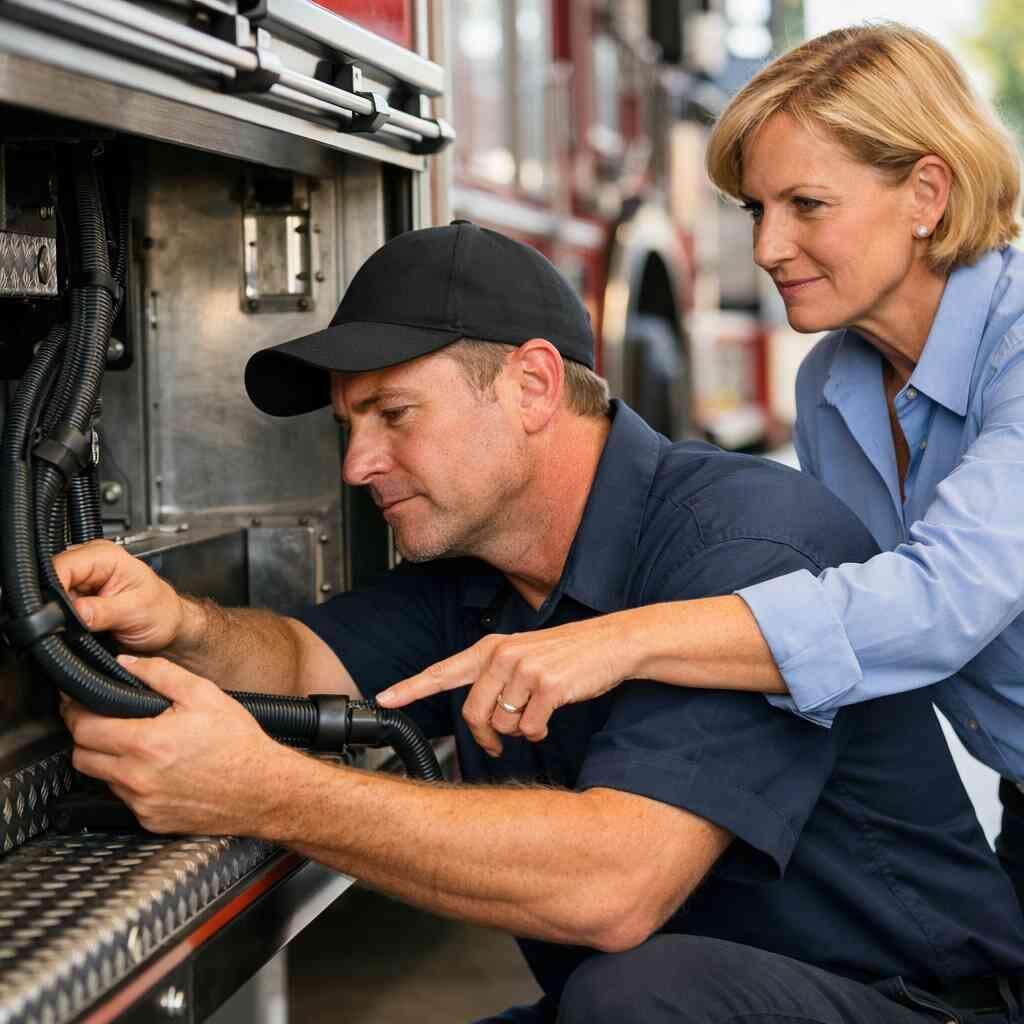
A high-usage apparatus does not treat wiring gently. Doors slam. Compartments rattle. Equipment shifts. That is why abrasion-resistant wire protection for mission-critical vehicle wiring matters so much. It helps keep the conductor from wearing against sharp edges, hardware, or moving components. Add proper strain relief, and you reduce the chance that movement will stress the termination point.
The value is not abstract. It shows up in fewer call-backs and fewer mystery faults. In our experience, the biggest mistake is assuming the wiring will stay still once installed. It will not. The truck flexes every time it moves, brakes, or hits rough pavement. Good routing and protection keep that movement from becoming damage.
A useful way to think about it is this:
Design choiceRisk reducedROI impactAbrasion-resistant protectionWear-through at contact pointsFewer repairsStrain reliefTerminal fatigueLonger service lifeSecure routingHarness movementBetter reliabilityHeat-aware placementThermal degradationLower replacement frequencyThat is the practical side of heavy-duty emergency vehicle wiring for harsh conditions and why it often costs less over the full lifecycle than a cheaper alternative.
Why corrosion resistant cable jackets and weatherproof fire truck wiring matter in Florida humidity and washdown environments
Florida is not kind to electrical systems. Humidity stays high. Salt air can reach farther inland than people expect. Washdowns are routine. That combination makes corrosion-resistant cable jackets for fire apparatus durability more than a nice feature. It becomes a defense against premature degradation. On trucks parked near DeLand, moisture is always part of the equation, even when the weather looks calm.
Here is what almost no online guide mentions. Water intrusion often creates delayed problems. A connector may work today and fail after the next rinse, or after a humid night followed by a hot morning. That is why fire apparatus cabling in Florida and harsh humidity deserves a serious look during planning. Weatherproof fire truck wiring does not eliminate exposure. It helps the system handle exposure without turning every storm into a repair ticket.
One shop manager told us about a unit that looked perfect after installation. Then repeated washdowns started revealing intermittent lighting faults. Nothing was obviously broken. The issue was moisture finding its way into vulnerable points over time. Once the routing and sealing were corrected, the truck became easier to trust again.
Where electrical connector durability shows up in fewer intermittent faults and faster troubleshooting
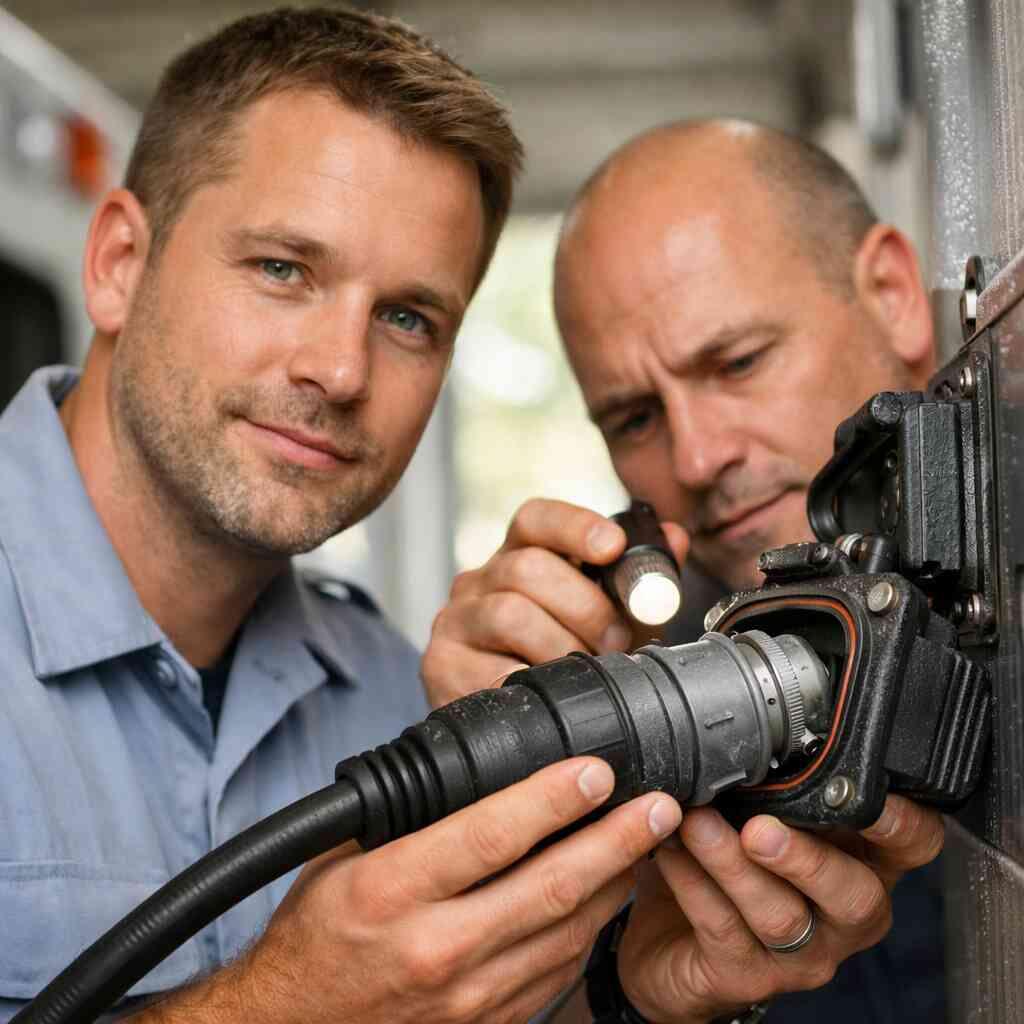
Electrical connector durability is one of the best places to measure ROI, because bad connectors waste time. They create intermittent faults, and intermittent faults are notoriously expensive. The technician has to reproduce the problem, isolate it, and verify the fix. That takes hours. Sometimes it takes the whole day. Better connectors reduce that burden.
This is where weatherproof fire truck wiring with electrical connector durability becomes a real operational advantage. A secure connector helps with cleaner diagnostics and more stable performance. That means less guessing, less swapping, and less waiting. In emergency service vehicle wiring and connector performance, stability is financial value. The less time a technician spends chasing ghosts, the more productive the fleet becomes.
Here is the part people underestimate. A connector failure is rarely just a connector failure. It can trigger warning lights, disable a circuit, or force the truck out of service until the root cause is found. Better connector durability cuts cabling failure risk reduction in a way that is easy to feel and hard to argue with.
How fire truck upfit electrical planning protects fleet uptime optimization before the first mile is driven
Good planning is the cheapest reliability upgrade you can buy. Fire truck upfit electrical planning for fleet uptime begins before the first hole is drilled. It starts with routing decisions, load expectations, access for service, and the reality of how the truck will be used. Once the build is complete, changing bad routing gets expensive quickly. The smartest departments treat the upfit as a systems problem. They look at heat sources, movement points, wash zones, and future maintenance access. That kind of planning supports fleet uptime optimization because it makes the cabling easier to inspect and less likely to fail early. It also helps technicians work faster when something does need attention. In other words, the first mile should already be service-minded. For a practical example, fire truck upfit electrical planning for fleet uptime is not just a design exercise. It is a way to protect the truck’s operating life. Better planning means fewer compromises, and fewer compromises usually mean fewer repairs.
The decision frame that turns fire apparatus wiring into long term fleet value
The decision gets clearer when you stop asking, “What is cheapest?” and start asking, “What protects service the longest?” That is the frame that turns fire apparatus wiring into long term fleet value. You do not need perfect certainty. You need a better filter. Prioritize the circuits, routes, and connectors that affect response first.
This is especially important during retrofits. Old trucks often hide weak points behind years of patchwork repairs. New trucks offer a chance to build smarter from the start. Either way, the goal is the same: dependable fire truck electrical systems that reduce avoidable shop time and keep the fleet moving.
Which mission critical vehicle wiring upgrades deserve priority in a retrofit or replacement cycle
Start with the circuits that would sideline the truck fastest. Lights, warning systems, pumps, communication interfaces, and controls usually belong near the top. These are mission-critical vehicle wiring upgrades because they affect readiness immediately. If a failure stops a call response, it deserves priority.
Then look at the parts most exposed to movement and environment. Harness sections near compartments, doors, pumps, and washdown areas often need attention sooner. A retrofit should not just replace what failed. It should fix the pattern that caused the failure. That is how cabling failure risk reduction becomes more than a slogan.
A useful priority list often looks like this:
- Safety and response circuits.
- High-motion harness runs.
- Moisture-exposed connectors.
- Heat-sensitive terminations.
- Hard-to-access sections that are expensive to revisit.
That approach supports fire truck electrical reliability in DeLand and keeps the most critical systems from becoming repeat problems.
How to weigh preventive maintenance for fire apparatus against reactive repair spending
Preventive maintenance for fire apparatus feels slower because it happens before failure. Reactive repair feels urgent because it happens after failure. The money story is different, though. Preventive work usually costs less than emergency troubleshooting, especially when it prevents downtime. Reactive repair often includes labor spikes, unplanned scheduling, and avoidable stress.
Here is the real tradeoff. Preventive work asks you to spend thoughtfully. Reactive work forces you to spend under pressure. Most fleet managers already know this, but the challenge is defending the maintenance budget before the problem hits. That is why reduced maintenance costs for fire trucks are tied directly to system design.
If you need a clearer benchmark, compare the two approaches:
ApproachTypical effectFleet impactPreventive maintenanceFinds wear earlyFewer surprisesReactive repairFixes failures after they happenMore downtimePlanned replacementControls timingBetter budget predictabilityEmergency troubleshootingOften urgent and incompleteHigher total costThe strongest maintenance programs borrow from preventive maintenance for fire apparatus and reduced repair costs because they value uptime as much as labor savings.
When heavy duty emergency vehicle wiring becomes a smart investment for apparatus downtime reduction
Heavy-duty emergency vehicle wiring makes sense when failure consequences exceed the price difference. That is the simplest test. If a problem would pull the apparatus out of service, delay deployment, or create repeat labor, the stronger build often wins. The investment becomes especially smart in high-usage rigs and harsh-environment vehicles.
Think about the life of the truck, not just the install day. A stronger harness can mean fewer service tickets, cleaner inspections, and easier troubleshooting over time. That is where apparatus downtime reduction becomes measurable. The best ROI is often invisible because it shows up as problems that never happen. That is still ROI.
What we have seen in the field is straightforward. Departments that invest in stronger routing and better protection tend to spend less time chasing recurring electrical issues. That does not eliminate maintenance. It makes maintenance more predictable. Predictability is valuable because it protects staffing, scheduling, and response readiness.
What to look for in durable wire routing strategies and hose down resistant cable solutions when specifying future builds
Start with the path, not the part. Durable wire routing strategies should keep cabling away from sharp edges, pinch points, moving hardware, and unnecessary heat. If the route is poor, the best cable still suffers. Good routing also makes inspection easier, which matters every time the truck comes back for service.
Hose-down resistant cable solutions need more than water resistance in a brochure. They need practical protection at the connectors, transitions, and termination points. That is where moisture and residue usually enter. If you build for cleaning as well as operation, you protect service life. Fire apparatus cable durability is rarely about one miracle component. It is about the whole system working together.
For future builds, ask these questions:
- Where will water collect?
- Which sections move the most?
- Which circuits are hardest to reach?
- Which connectors need the most protection?
- How will technicians inspect this later?
Those questions align with fire truck cabling on Florida hurricane seasons because severe weather and repeated washdowns expose weak design fast.
How Fire Power Products fits into a practical first responder vehicle electrical best practices plan
Fire Power Products fits best as part of a practical reliability plan, not a magical fix. The value comes from using durable components in a system built for abuse, moisture, and daily service. Based in DeLand, Florida, Fire Power Products focuses on rugged equipment engineered for demanding conditions, which matches the realities many Florida departments face. That makes the conversation about first responder vehicle electrical best practices more concrete.
If you are comparing options, ask how the cabling supports inspection, routing, and service access. Ask how the design helps reduce recurring failures. Ask how it fits your fleet’s maintenance pattern. Those questions keep the decision grounded in actual operating value. They also help you choose durable cabling for fire trucks and long-term fleet value instead of chasing a low initial number.
You do not have to solve everything at once. Start with the circuits that hurt the most when they fail. Then compare the real service-life costs, not just the quote. If you want a simpler next step, have your team list the three most failure-prone cabling points on the newest rig and the oldest rig, then request a replacement plan built around those weak spots. You do not have to figure this out alone, and you do not have to figure it all out today. Start with one call.
Frequently Asked Questions
Question: What is the ROI of rugged fire truck cabling in 2026, and how does it affect fire apparatus wiring ROI over the life of the truck?
Answer: The ROI of rugged fire truck cabling in 2026 is usually measured less by the initial quote and more by the failures it helps prevent. Stronger cabling can support fire truck electrical reliability by reducing repeat repairs, troubleshooting time, and unplanned downtime. That translates into reduced maintenance costs for fire trucks and better fleet uptime optimization over the truck’s service life. In practical terms, the value comes from fewer intermittent faults, fewer labor-heavy diagnostics, and less disruption to response readiness. Fire Power Products focuses on durable equipment for demanding conditions in DeLand, Florida, so the conversation stays centered on lifecycle value of rugged cabling rather than just upfront cost.
Question: What features should departments look for in heavy-duty emergency vehicle wiring to improve emergency response fleet reliability?
Answer: Departments should look for heavy-duty emergency vehicle wiring that supports abrasion-resistant wire protection, high-usage vehicle cable strain relief, weatherproof fire truck wiring, and durable wire routing strategies. Those details matter because they help minimize cabling failures caused by vibration, heat, moisture, and repeated compartment movement. Good emergency vehicle wiring performance is not just about the wire itself. It also depends on routing, connector protection, and how the system holds up during inspection, washdown, and daily use. Fire Power Products is built around ruggedized reliability for first responder vehicle electrical best practices, which makes it a practical fit for fleets that want dependable fire truck electrical systems rather than recurring shop visits.
Question: How do corrosion-resistant cable jackets and hose-down resistant cable solutions help in Florida fire apparatus environments?
Answer: Corrosion-resistant cable jackets and hose-down resistant cable solutions help by reducing the damage caused by humidity, washdowns, and moisture intrusion over time. In Florida, that matters because electrical systems are constantly exposed to heat, damp air, and cleaning cycles that can turn a small weakness into a recurring fault. Weatherproof fire truck wiring can improve electrical system resilience by protecting vulnerable points before corrosion or intrusion starts causing intermittent problems. Fire Power Products, based in DeLand, Florida, understands that harsh-environment wiring for first responders has to account for real-world exposure, not ideal lab conditions. That is why these design choices are important for cabling failure risk reduction and long-term cost savings in fleet wiring.
Question: How does fire truck upfit electrical planning reduce apparatus downtime reduction and support preventive maintenance for fire apparatus?
Answer: Fire truck upfit electrical planning reduces apparatus downtime reduction by making the system easier to inspect, service, and protect from the start. When routing avoids sharp edges, heat sources, and moisture-prone areas, the truck is less likely to develop recurring faults later. That improves fire apparatus cable durability and supports preventive maintenance for fire apparatus because technicians can catch wear before it becomes a roadside or in-station failure. The ROI is straightforward: better planning means fewer surprises, faster diagnosis, and fewer repeat repairs. Fire Power Products fits into that process by offering rugged components intended for demanding use, helping departments build dependable fire truck electrical systems with lifecycle value in mind.
Question: Why does the blog title What Is the ROI of Rugged Fire Truck Cabling in 2026 matter for departments comparing total cost of ownership for fire trucks?
Answer: The title matters because it points departments toward the real decision, which is total cost of ownership for fire trucks rather than the lowest upfront price. Rugged cabling can improve return on investment for emergency vehicle components by lowering the likelihood of repeat service calls, warning-light issues, and hard-to-trace faults. That directly supports fleet uptime optimization and better response readiness. For departments comparing options, the key question is not whether a cheaper harness saves money on day one, but whether it creates more labor, more downtime, and more replacement work later. Fire Power Products helps frame that decision around dependable performance and practical durability, which is especially valuable when agencies want long-term cost savings in fleet wiring without sacrificing reliability.
Question: What should fleet managers prioritize when evaluating vibration-resistant wiring harnesses and mission-critical vehicle wiring for a retrofit?
Answer: Fleet managers should prioritize the circuits that would sideline the truck fastest, along with the areas most exposed to vibration, heat, moisture, and movement. That usually means warning systems, lighting, controls, communication lines, and connector-heavy sections near compartments or washdown zones. Vibration-resistant wiring harnesses and mission-critical vehicle wiring are worth the investment when they reduce downtime, improve electrical connector durability, and support faster troubleshooting. The best retrofit plans also include ruggedized harness design and clear access for future maintenance. Fire Power Products, serving from DeLand, Florida, is positioned around durability-focused solutions that align with first responder vehicle electrical best practices, making it a strong partner for departments focused on apparatus downtime reduction and reduced maintenance costs for fire trucks.