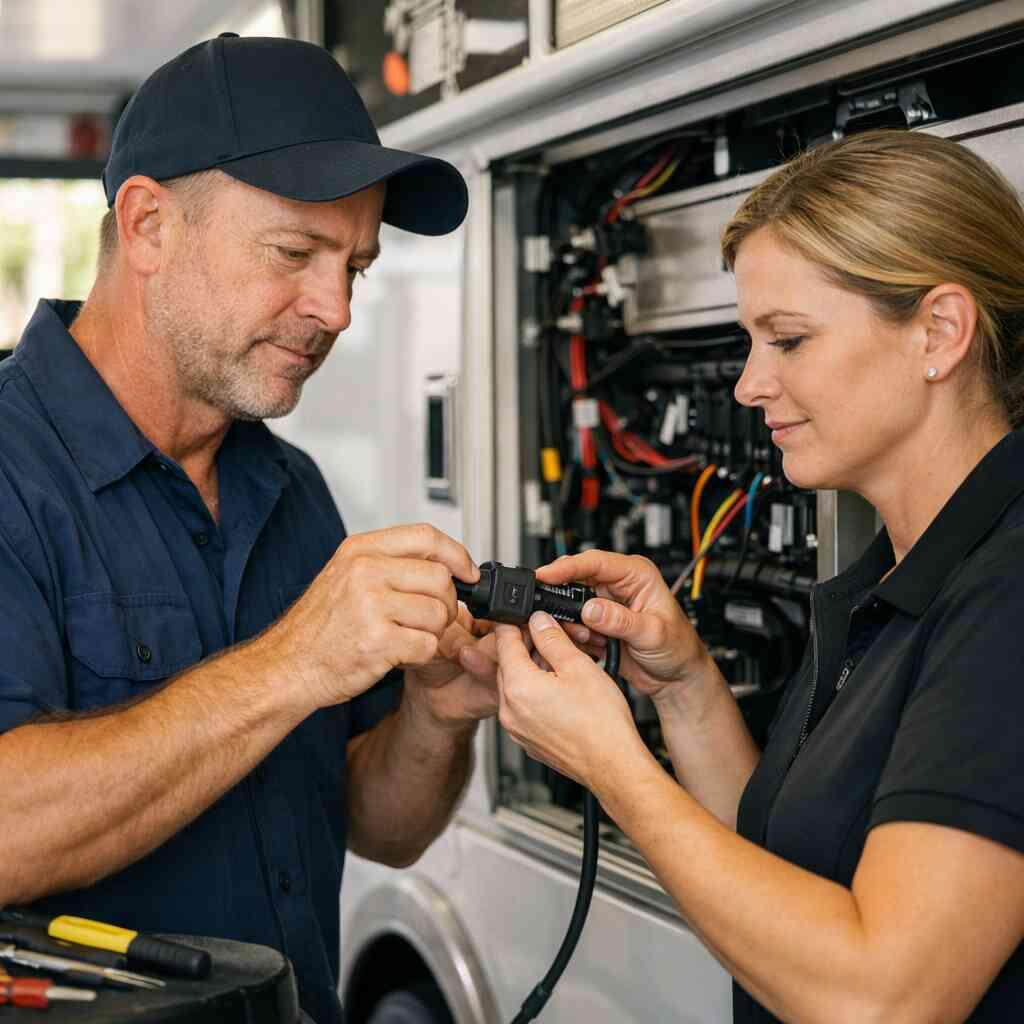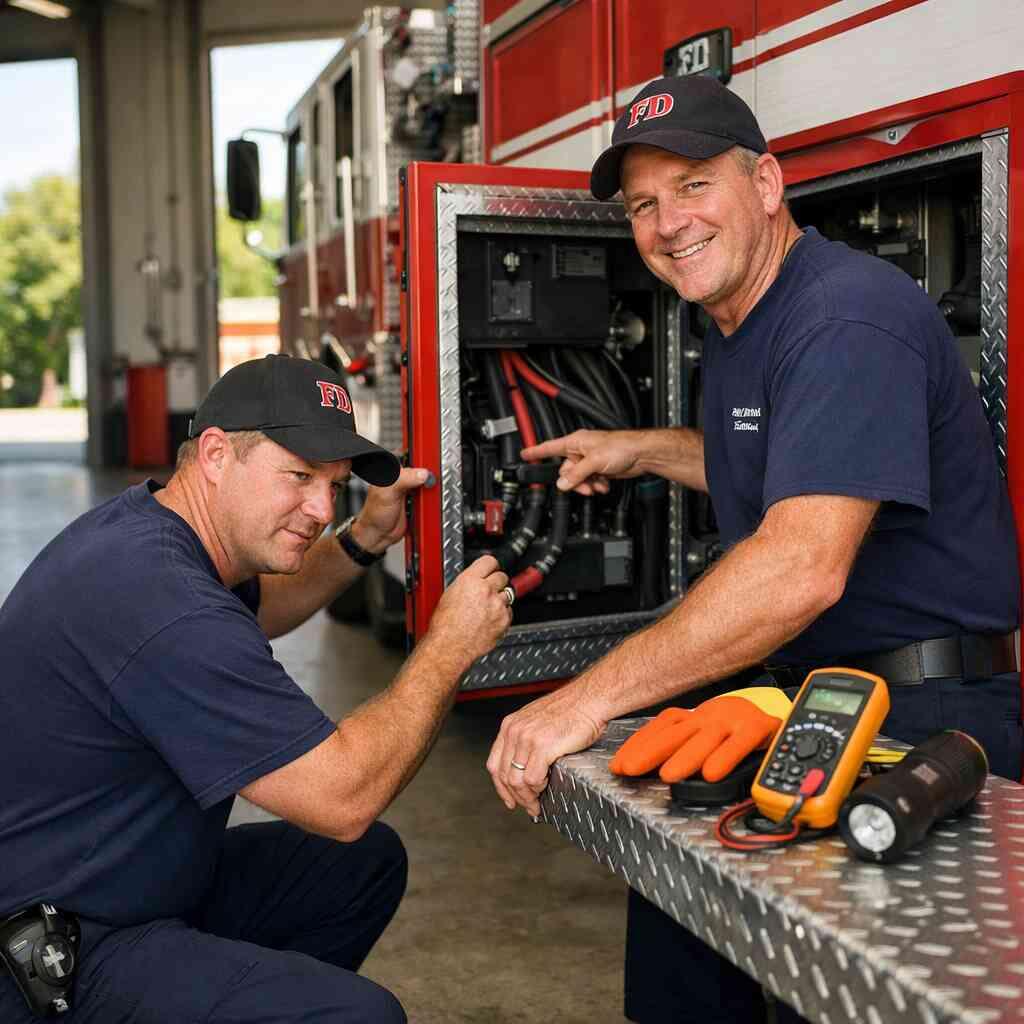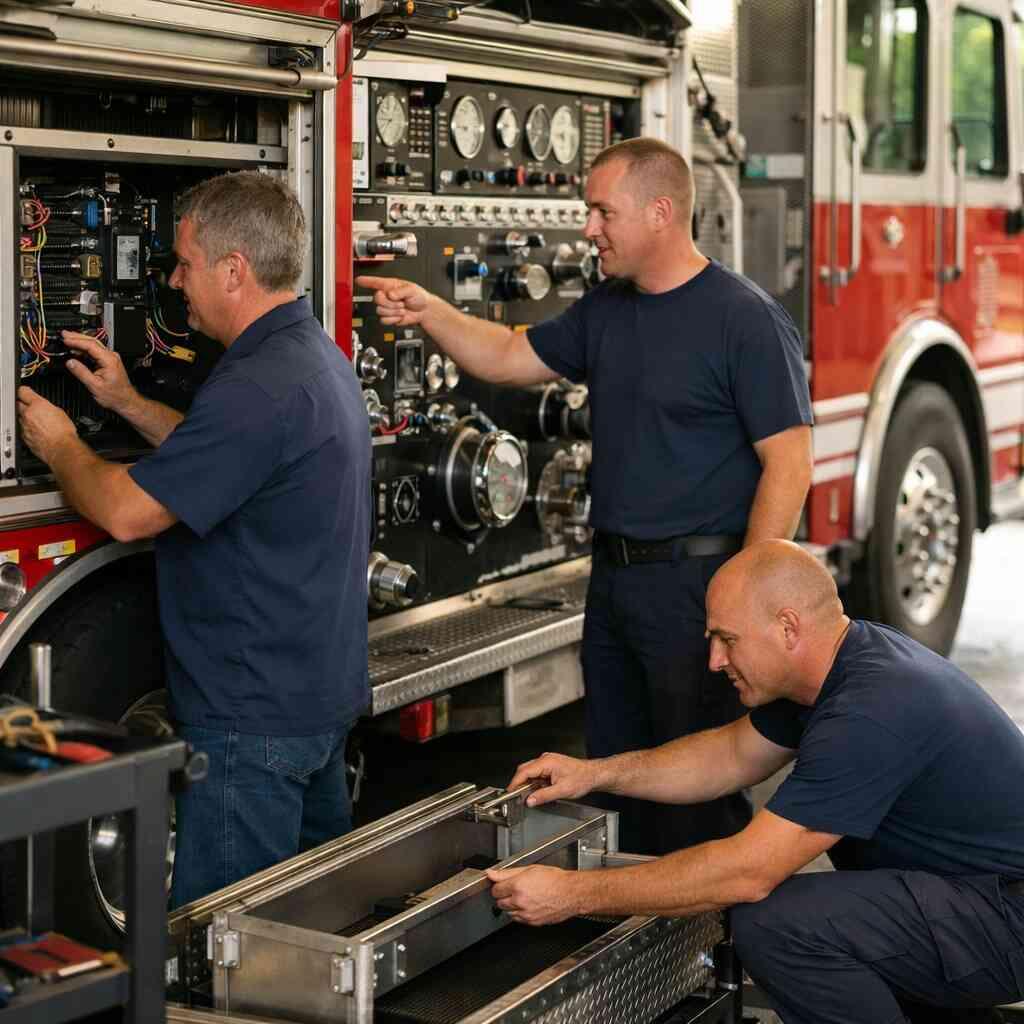
How to Plan 2026 Fire Truck Retrofits for DeLand Florida
August 11, 2026
Why a fire truck retrofit can go sideways before the first wire is touched
A retrofit can look simple on paper. Then the truck sits out of service, the crew feels the pressure, and every missing detail suddenly matters. If you are reading this because a unit already needs attention, take a breath. That stress is normal. The biggest mistakes usually start before anyone removes a panel or orders a part. Fire truck retrofit planning works best when you slow down first, then move fast with a clear sequence. For DeLand departments, that means thinking about weather, washdown habits, and operational demand before the first installation begins.
The hidden cost of waiting until a unit is already sidelined
The cost of waiting is rarely just parts and labor. It is overtime, schedule disruption, and the awkward scramble to keep response coverage intact. We hear this from clients almost every week. The truck is still running, so the retrofit gets delayed. Then a small issue becomes a larger one, and the project loses its best timing window. One department we spoke with had a simple lighting upgrade snowball after a pump issue forced the truck into the shop first. The combined work was manageable, but the delay made it harder.
Here is the part most people miss. A sidelined unit changes the entire decision tree. You stop asking what is best and start asking what is available. That is where planning quality drops. If you build the fire apparatus retrofit strategy before the truck is down, you can stage materials, line up labor, and reduce downtime for fire trucks. That approach protects both the apparatus and the crew.
How DeLand fleet conditions can expose corrosion, heat, and hose-down wear
DeLand fleet conditions create their own kind of wear. Heat builds in compartments and cab spaces. Humidity lingers. Hose-down routines are common, and water always finds weak points. Over time, those conditions can expose corrosion in connectors, fasteners, lights, and storage hardware. Florida fire apparatus considerations are not theoretical here. They show up in the form of sticky latches, dim warning lights, and brittle cable jackets. The truck may look ready until you inspect it closely.
On the projects we’ve finished this year, the pattern has been consistent. The first failures often appear at seams, terminals, and attachment points. That is why corrosion resistance in fire apparatus should be part of the first inspection, not the last. In a climate like this, weather-resistant equipment solutions and hose-down durable components are practical, not fancy. For a local reference on DeLand Florida and the environment these fleets operate in, the basics help explain why durability matters so much here.
The first pass at an apparatus inventory that shows what truly needs replacement
A smart inventory does more than list broken parts. It separates urgent items from nice-to-have upgrades. Start with the systems that affect response, safety, and reliability first. Then move to convenience and standardization. That order keeps the retrofit honest. It also helps you avoid buying parts for a wish list that does not match the truck’s actual duty cycle. A clear inventory supports apparatus lifecycle management and better replacement parts planning.
Use a simple review structure:
- Safety-critical items first
- Water-exposed components next
- Parts with recurring failures after that
- Comfort and organization upgrades last
That list sounds basic. It is. But it works. One volunteer department in a rural-edge response area came in convinced they needed storage upgrades first. After inspection, the bigger issue was a cable path that had been rubbing for months. Fixing that first saved them from a return visit and another outage. That is the difference between reacting and planning.
The retrofit plan that keeps the truck in service and the crew out of trouble
A good plan protects uptime and people at the same time. That sounds obvious, but it gets lost quickly when multiple stakeholders have competing priorities. The chief wants reliability. The mechanic wants access. The crew wants usable improvements. Your retrofit plan should respect all three. It should also fit the realities of municipal fire equipment planning and volunteer department retrofit planning without pretending those worlds operate the same way.
Building a fire apparatus retrofit strategy around operational priority instead of wish lists
Start with operations, not aesthetics. Ask what the crew needs to do faster, safer, or with fewer failures. Then rank the upgrade list by mission impact. A horn relocation that improves reach matters more than a cosmetic panel refresh. A reliable charging path matters more than a storage insert that looks neat but adds clutter. That is the heart of a fire apparatus retrofit strategy for DeLand Florida fleet upgrades.
What almost no online guide mentions is the emotional part. People attach pride to these trucks. They want them to look finished. That is understandable. Still, the truck must earn its keep first. If you need a simple way to frame priorities, compare them like this:
Priority levelWhat it affectsTypical examplesHighestResponse and safetyElectrical faults, warning systems, pump controlsMediumEfficiency and accessStorage layout, hose management, labelingLowerComfort and appearanceTrim, cab refinement, cosmetic cleanupThat table helps turn a vague wish list into a usable fire truck rebuild planning tool.
When pump panel modernization should happen before lighting or storage upgrades
Pump panel modernization should move up the list when controls are hard to read, hard to reach, or hard to trust. If the crew wastes seconds finding a valve or verifying a setting, that is a real operational cost. Lighting upgrades are valuable, but they should not outrank a panel that governs the truck’s core function. The same is true when receptacles, junctions, or connector access have become unreliable. In those cases, pump panel modernization is not cosmetic. It is a control-room repair for the apparatus.
A municipal department nearby once faced a choice between new warning lights and panel rewiring. The panel won. That decision felt less exciting at the time. It also prevented avoidable delays later, because the crew could work the truck with confidence during high-tempo runs. If you are planning your own sequence, keep this rule in mind: anything that controls the truck’s essential water or electrical behavior comes before accessories.
Choosing fire truck electrical system retrofit components that fit the vehicle’s actual duty cycle
Not every component belongs on every rig. A truck that runs daily in heavy call volume needs different electrical durability than a reserve unit. Matching parts to duty cycle is where retrofit planning becomes professional. It is also where bad assumptions become expensive. Fire truck electrical system retrofit work should respect vibration, moisture, heat, and hose-down exposure. That is why connector choice matters so much. If you are comparing options, review the difference between UL and NEMA 6P in DeLand EMS 2026, because enclosure and connector protection levels can shape long-term reliability.
Use the duty cycle as a filter:
- Daily frontline use needs stronger environmental protection
- Reserve apparatus may need simpler standardization
- Mutual aid units benefit from common parts and repeatable layouts
- High-heat compartments need extra attention to cable routing
On one project, the original issue was not the light itself. It was the extension path feeding it. The correction was modest. The payoff was big. That is why weather-resistant equipment solutions for fire truck electrical extensions deserve attention early, not after failure.
How to schedule station based retrofit work to minimize downtime for fire trucks
The best retrofit schedule respects the station’s rhythm. You do not want the truck torn apart during the busiest operational window unless the work is urgent. Instead, stage the project in pieces. Group related tasks together. Keep the truck serviceable between phases whenever possible. That is the logic behind station based retrofit scheduling and better apparatus maintenance coordination.
A practical schedule usually looks like this:
- Inspect and photograph the truck
- Order verified parts only
- Pull the truck for the shortest workable window
- Complete the highest-priority work first
- Test, document, and release before moving to lower-priority upgrades
If you need help coordinating that kind of workflow, station based retrofit scheduling for fire apparatus maintenance coordination can shorten the back-and-forth. The goal is not to make the project slower. The goal is to make it finish cleanly, with fewer surprises.
Where NFPA aware retrofit planning and local apparatus maintenance coordination intersect
NFPA-aware retrofit planning is not about treating every truck the same. It is about aligning the retrofit with accepted safety expectations, documentation habits, and local department policy. That matters when a project touches wiring, lighting, access, or compartment configuration. It also matters when the department needs clean records for inspection and follow-up. In practice, NFPA awareness and maintenance coordination meet at one point: the truck must return to service in a condition the department can defend.
The best retrofit teams keep a paper trail. They photograph before-and-after conditions. They record the part numbers. They note what was changed and why. That documentation helps later, especially when another unit needs the same treatment. It also supports fleet standardization options across the rest of the apparatus. You do not have to solve every compliance question alone, but you do have to ask the right ones before the work starts.
What a smarter DeLand upgrade list looks like before parts are ordered
This is where many departments overspend. They buy parts in isolation and then discover the truck does not benefit as much as expected. A smarter list starts with the operational problem, then works backward to the part. It respects visibility, access, ergonomics, and moisture exposure in equal measure. It also supports emergency vehicle modernization without creating clutter or confusion.
LED warning light retrofit decisions that improve visibility without creating clutter
LED upgrades should make the truck easier to see, not busier. That sounds simple, but clutter happens fast when every available surface gets a light. The best LED warning light retrofit choices support visibility patterns the crew can trust. They also preserve clean cable routing and service access. If the truck already has overlapping signals, adding more lights may not help. It may just create visual noise. Here is a useful filter. Ask whether the upgrade improves:
- Front, side, or rear recognition
- Night visibility in traffic
- Wet-weather recognition
- Maintenance access after installation
If the answer is unclear, the upgrade probably needs reconsideration. One DeLand-area crew told us they wanted more lights until they mapped their current pattern on paper. The map showed dead zones, not a shortage of brightness. That kind of honest review saves money and reduces clutter. It also keeps the retrofit focused on fire apparatus lighting upgrades that actually help the crew.
Hose bed organization solutions that preserve access during high tempo response
Hose management becomes messy fast when a rig runs hard. If access is slow, the compartment layout is probably working against the crew. Good hose bed organization solutions should keep the hose easy to deploy, easy to repack, and easy to inspect. They should not force awkward pulls or hide wear. That matters during mutual aid runs, where every second and every motion gets multiplied.
A strong layout usually leaves room for quick visual checks and clear hand placement. It avoids stacking items that must be removed in sequence. It also keeps the hardware simple enough to maintain under real-world conditions. If you are planning a broader refresh, how to plan Q3 2026 EMS orders in DeLand Florida offers a useful parallel for timing and procurement discipline. The principle is the same: order only what the actual workflow needs.
Compartment storage optimization for tools, adapters, and replacement parts planning
Compartment storage is not about filling space. It is about reducing friction. When tools, adapters, and commonly replaced items have a defined place, the crew moves faster and loses less time searching. Compartment storage optimization also improves replacement parts planning because you can see what is missing at a glance. That visibility helps during inspections and post-call resets.
A useful approach is to separate compartments by frequency of use:
- Immediate-use tools
- Periodic-use tools
- Spare adapters and consumables
- Service items and backup parts
This kind of layout supports faster checks and cleaner accountability. It also reduces the chance that a needed item rides in the wrong bay for months. That is one of the quietest sources of frustration in municipal fire equipment planning.
Cab ergonomics improvements that reduce fatigue during long shifts and mutual aid runs
Cab ergonomics are easy to overlook because they do not announce themselves like a broken light. Still, long shifts punish poor layout. If controls are awkward, mounts interfere with movement, or storage forces twisting, fatigue builds. Cab ergonomics improvements are not luxury items. They are firefighter safety enhancements that help crews stay focused. The work also supports apparatus interior refurbishment in a way people feel immediately.
Think about reach, posture, and visibility. Are radios placed where hands can find them? Are mounts stable under acceleration and rough roads? Does the layout create knee clearance and safe entry paths? These details matter more than a polished finish. They shape how the crew experiences the truck on every run. That is especially true on mutual aid calls, where the ride can be long and the workload unpredictable.
Weather resistant equipment solutions and IP68 style connectors for hose down durable components
If a component lives in a wet environment, it should be chosen like it lives in a wet environment. That means paying attention to seals, terminations, and connector protection. Weather resistant equipment solutions and hose-down durable components are essential in a Florida apparatus bay. They reduce the chances of repeat failures after routine cleaning. For a deeper technical reference point, review what is Fire Power Products IP68 testing in 2026, but remember to verify details against the specific application before ordering.
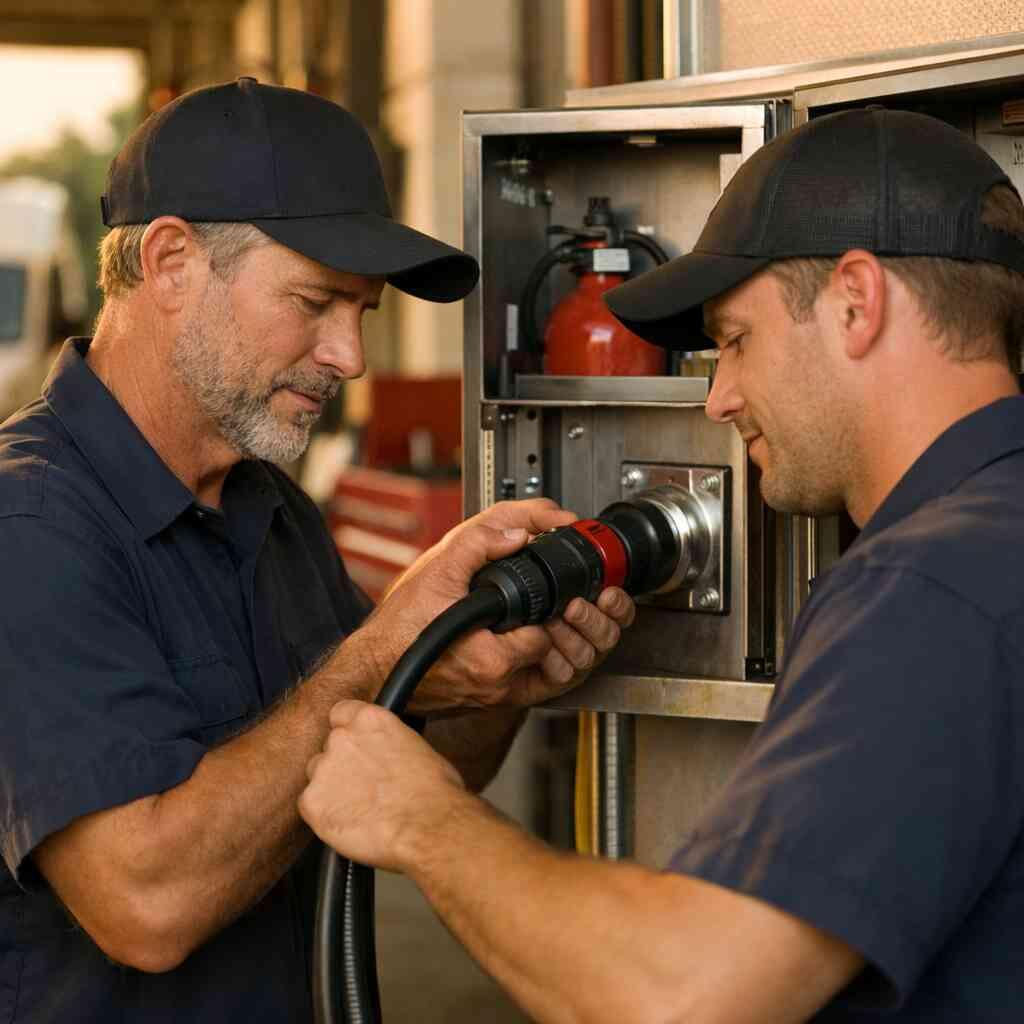
The goal is simple. Build for the conditions the truck actually sees. That includes spray, heat, vibration, and storage exposure. It also means choosing fire truck electrical system retrofit with IP68 female pigtails only where the application fits. You want a connector strategy that matches the truck’s use, not just its catalog description.
Emergency vehicle modernization choices that support fleet standardization options and operational reliability for fire vehicles
Standardization saves time. It saves training effort too. When rigs share common layouts, crews adapt faster and errors drop. That is why fleet standardization options should be part of every emergency vehicle modernization discussion. The goal is not identical trucks. The goal is predictable trucks. Predictability improves operational reliability for fire vehicles because the crew knows where to reach, what to expect, and how to troubleshoot.
If you want a practical way to think about upgrades, compare them side by side:
Upgrade typeBest useWatch forLighting refreshVisibility improvementOverlapping signalsElectrical retrofitReliability and protectionIncompatible duty cycleStorage redesignFaster accessBlocking tools or hoseCab updateCrew comfort and focusReduced clearanceThat table helps turn a long wish list into a measured plan. It also keeps the project aligned with first responder equipment durability and long-term serviceability.
The handoff that turns a retrofit concept into a field ready apparatus
The final phase is where discipline matters most. A retrofit is not finished when the last fastener goes in. It is finished when the crew can use the truck confidently, the paperwork is clean, and the modifications hold up under real conditions. This is also where trust is built. The people who ride the rig every day should feel the difference immediately, and they should be able to explain it simply.
Coordinating emergency response vehicle outfitting with the people who use the rig every day
The crew knows things the spec sheet never will. They know which latch sticks in the rain. They know which seatbelt snags. They know where gloves get trapped and which switch is hard to reach with gear on. That is why emergency response vehicle outfitting should include the people who use the rig daily. Their feedback catches problems early. It also builds buy-in before the truck returns to service.
One station we worked with had a repeated complaint about a compartment door that looked fine in the bay. Under turnout gear, though, the handle angle made it awkward. The fix was small. The confidence shift was large. That is the difference between a retrofit that looks complete and one that works in the field.
Checking corrosion resistance in fire apparatus after install and before return to service
After install, inspect everything again. Not just visually. Test the points that matter. Open and close compartments. Check fasteners. Confirm cable protection. Verify that corrosion resistance in fire apparatus was preserved during the work, not just promised in the parts list. Water intrusion often starts at the smallest openings. A careful return-to-service inspection catches that before the truck re-enters the rotation.
This is also the time to verify labeling and access. If the crew cannot service the modified area later, the retrofit is incomplete. Keep the inspection honest. No shortcuts. That discipline protects the truck and supports operational reliability for fire vehicles over the long haul.
Creating a final emergency vehicle upgrade checklist for inspection, documentation, and follow up
A final checklist keeps the finish from becoming fuzzy. It gives the department a clean handoff and a reference for the next unit. Use it to confirm the work, document the changes, and schedule follow-up checks. A strong emergency vehicle upgrade checklist should include function, access, and documentation. It should also record what remains unchanged, so future work starts from accurate information.
A solid checklist usually covers:
- Electrical function testing
- Hose and compartment access
- Fastener and seal inspection
- Label verification
- Photo documentation
- Driver and crew sign-off
If you are comparing component categories for future work, why DeLand buyers choose Fire Power Products for 2026 is a useful next read, especially when you are trying to narrow choices without guessing. You do not have to figure this out alone, and you do not have to figure it all out today. Start with one truck, one checklist, and one phone call before the next round of parts gets ordered.
Frequently Asked Questions
Question: How does Fire Power Products help with fire truck retrofit planning for DeLand Florida fire truck upgrades?
Answer: Fire Power Products supports fire truck retrofit planning by helping departments think through the retrofit in the right order: operational need, environmental exposure, and long-term serviceability. In DeLand, Florida, that often means paying close attention to heat, humidity, washdown routines, and corrosion resistance in fire apparatus. A strong fire apparatus retrofit strategy starts with the systems that affect response and safety, then moves to efficiency and organization. Fire Power Products’ Duraline Fire Power products are positioned around durability and real-world use, which makes them a practical fit when departments are planning emergency vehicle modernization or updating older units. The key is not just buying parts; it is selecting components that fit the truck’s actual duty cycle, support downtime minimization for fire trucks, and align with municipal fire equipment planning and fleet readiness planning.
Question: What should departments consider first when planning a fire truck electrical system retrofit in Florida conditions?
Answer: The first priority in a fire truck electrical system retrofit is matching the components to the truck’s real operating environment. In Florida, that means heat, moisture, vibration, and hose-down exposure all need to be considered before ordering parts. Fire Power Products focuses on equipment built for demanding conditions, so the discussion should start with durability, connector protection, and maintenance access rather than appearance. For DeLand municipal fleet needs, it is especially important to think about weather-resistant equipment solutions and hose-down durable components because routine cleaning can expose weak points quickly. A good retrofit should support operational reliability for fire vehicles, simplify apparatus maintenance coordination, and reduce repeat work later. When possible, departments should also look at replacement parts planning and apparatus service interval planning so the truck remains easy to support after installation.
Question: Can Fire Power Products help support pump panel modernization and LED warning light retrofit projects at the same time?
Answer: Yes, those projects can be planned together if the department takes a priority-based approach. Pump panel modernization should usually come first when controls are hard to read, hard to reach, or unreliable, because that affects core truck function. LED warning light retrofit work is also important, but it should not distract from the systems that directly control water or electrical behavior. Fire Power Products can be a fit for this kind of planning because their equipment is designed for first responder equipment durability and the conditions fire apparatus face day to day. A combined retrofit plan should also consider fire apparatus lighting upgrades, custom fire truck accessories, and cab ergonomics improvements without creating clutter or blocking service access. The best result is a truck that is easier to operate, easier to maintain, and better aligned with NFPA-aware retrofit planning and emergency vehicle upgrade checklist requirements.
Question: What should I know about hose bed organization solutions and compartment storage optimization before ordering parts?
Answer: Before ordering parts, it helps to inspect how the crew actually uses the truck under pressure. Hose bed organization solutions should make hose deployment and repacking faster, not more complicated. Compartment storage optimization should reduce friction by giving tools, adapters, and backup items a clear place. Fire Power Products can support these goals by offering durable products suited for emergency response vehicle outfitting and the tough conditions common in Florida fire apparatus considerations. In practice, the best retrofit decisions are the ones that improve access, visibility, and accountability. That means thinking through fleet standardization options, replacement parts planning, and apparatus lifecycle management before making purchases. If a compartment redesign makes access harder or blocks service points, it may look neat but work poorly in the field. The most reliable approach is to tie every storage decision to actual operational use and crew workflow.
Question: How can departments minimize downtime for fire trucks during station-based retrofit scheduling?
Answer: The best way to minimize downtime for fire trucks is to stage the work before the unit is pulled from service. That means inspecting the truck first, documenting what needs attention, and verifying parts before installation begins. Station-based retrofit scheduling works best when related tasks are grouped together and the highest-priority work is completed first. Fire Power Products can support this approach by helping departments focus on durable, application-appropriate components that reduce the chance of rework. This kind of planning is especially useful for volunteer department retrofit planning and municipal fire equipment planning, where coverage gaps can create real operational strain. A strong schedule should also include post-install testing, documentation, and follow-up checks so the truck returns to service with confidence. When the goal is downtime minimization for fire trucks, discipline matters as much as the parts themselves.
Question: In How to Plan 2026 Fire Truck Retrofits for DeLand Florida, what role does Fire Power Products play in fleet standardization options and emergency vehicle modernization?
Answer: In a retrofit plan like How to Plan 2026 Fire Truck Retrofits for DeLand Florida, Fire Power Products can help departments think about modernization in a way that supports consistency across the fleet. Fleet standardization options matter because predictable layouts, repeatable parts, and familiar operating patterns reduce training time and support operational reliability for fire vehicles. Fire Power Products’ focus on durable, first responder-ready equipment makes it a practical consideration when departments want upgrades that hold up under heavy use. For emergency vehicle modernization, the goal is not to change everything at once; it is to make smart upgrades that improve safety, access, and long-term maintainability. That can include cab ergonomics improvements, apparatus interior refurbishment, corrosion resistance in fire apparatus, and the right weather-resistant equipment solutions for the truck’s duty cycle. A well-planned retrofit should leave the department with a clearer emergency vehicle upgrade checklist and a stronger path for future fire equipment procurement planning.