Guide to Fire Power Products Lead Time Planning for Q4 2026
October 5, 2026
Why Q4 ordering gets messy faster than most fire departments expect
The last quarter always feels calm until it doesn’t. Crews are busy, the radio stays loud, and someone finally compares shelf stock to actual call volume. That is when the gap shows up. If you are reading this with a procurement list open beside you, you are probably feeling that familiar mix of pressure and uncertainty. That is normal. The hard part is not deciding what matters. The hard part is deciding soon enough.
The year-end equipment ordering pressure that shows up when crews finally compare stock to actual call volume
Most departments do not discover shortages during a quiet inventory day. They discover them after a string of runs, an equipment swap, or a failed inspection. Then the list gets longer fast. This is where year-end equipment ordering for fire departments becomes more than a budget line. It becomes a readiness issue. We see this every cycle because call volume rarely matches what the spreadsheet assumed in spring.
One station may think it has enough connectors, only to find three rigs drawing from the same cabinet. Another may have planned around ideal usage, not real-world wear. That is why fire power products lead time planning for Q4 2026 matters early. It gives you room to correct assumptions before the calendar closes. Here is the part most people miss: the shortage is usually not dramatic, just inconvenient enough to slow the whole fleet.
A crew in a coastal Florida service area once realized their “extra” parts were all spoken for. They had enough on paper, but not enough in service-ready condition. The fix was not complicated, yet it took more coordination than anyone expected. That kind of delay can cascade into dispatch stress, fleet scheduling friction, and avoidable downtime. If you wait until the end, the whole process feels louder and smaller at the same time.
How fire power products lead time planning changes when everyone is ordering at once
Lead time is not just a supplier detail. It is a planning variable that changes the shape of your entire order. When multiple departments, stations, or divisions order together, even small delays can stack up. That is why fire power products lead time planning should sit inside your broader end-of-year purchasing strategy. You are not only buying parts. You are buying timing, certainty, and operational breathing room.
The mistake we see most often is treating every item the same. Some pieces can wait. Others should be locked in first because they affect field readiness immediately. For example, fire apparatus accessory lead times can stretch the whole order chain when a single missing component holds up installation or testing. If your team is juggling bays, trucks, and training schedules, that delay becomes expensive in a hurry. Seasonal demand makes it worse, because everyone else is trying to finish at the same time.
What helps is simple, but not easy. Separate urgent items from replaceable items. Confirm what is already in service. Then map what must arrive before any vehicle, station, or apparatus can return to full use. That is practical supply chain planning for fire departments, not wishful thinking. It is also where a quick supplier conversation saves a week of guesswork.
The hidden backorder risk mitigation problem that appears when replacement parts wait until the last minute
Backorders usually do not start with one dramatic outage. They start with a replacement part that was “fine to order later.” Then another part gets added. Then a third. By the time the order is placed, everyone else has the same idea. That is the moment backorder risk mitigation for emergency preparedness procurement stops being theoretical. The risk is not only delay. The risk is losing control of priority.
On the projects we have seen this year, the most frustrating delays came from parts that looked ordinary. Nothing flashy. Nothing rare. Yet they sat behind a chain of approvals and last-minute decisions. That is why procurement lead time awareness matters so much. It keeps routine items from becoming emergency items. It also helps you protect service continuity planning when the schedule is already crowded.
A good rule is to ask one blunt question: if this part were missing tomorrow, what would stop? If the answer is “nothing critical,” it can wait. If the answer affects a rig, a shift, or a response interval, it moves up. That is the difference between ordinary ordering and mission-critical equipment planning. It is also the difference between a calm quarter close and a frantic one.
What actually belongs on the procurement timeline before the calendar closes
A strong procurement timeline is not built on optimism. It is built on sequencing. You start with what the fleet must have, then you work outward from there. That approach helps you avoid panic buying and rushed approvals. It also improves emergency preparedness procurement because every purchase has a purpose tied to readiness. If you are feeling behind, that feeling is common. The way forward is to make the timeline smaller and clearer.
Building a public safety procurement timeline around mission critical equipment planning instead of wishful thinking
A useful public safety procurement timeline starts with the equipment that directly affects response. That means identifying what keeps units operational, safe, and ready. It also means understanding internal approval cycles, receiving windows, and installation capacity. Many departments plan around budget timing alone, which is not enough. Mission critical equipment planning has to account for logistics, not just dollars.
A simple timeline can help:
- Identify critical items.
- Confirm current stock and usable spares.
- Check supplier availability.
- Place the highest-priority orders first.
- Reserve time for receiving and installation.
That sequence sounds basic, but it prevents a lot of avoidable stress. It also works well with fleet equipment scheduling, because you can line up arrival dates with bay time. If your department is in or near DeLand, Florida, weather and storm-season logistics can make timing even tighter. Small delays are easy to forgive in calm weather. They are harder when the calendar, the fleet, and the forecast all demand attention at once.
Where fire apparatus accessory lead times can stretch the whole order chain
Accessory orders create more delay than many buyers expect. A missing connector, receptacle, or extension can hold up an entire install. That is why fire apparatus accessory lead times and order planning deserves early attention. The accessory may look minor on the purchase order. In practice, it can be the part that determines whether the bigger job is finished on time.
We have seen departments plan perfectly for major gear and still lose days on small components. The truck was ready. The bay was ready. The part was not. That kind of stall affects fire equipment logistics for durable emergency gear because the equipment sits in limbo. If the gear cannot be installed, tested, or signed off, the whole chain waits. No one enjoys explaining that to a chief or a maintenance lead.
This is where a little humility helps. Not every timeline failure means bad planning. Sometimes it means the team underestimated how many small items depended on one another. That is why order fulfillment planning should include the smallest parts, not just the biggest purchases. A short list of accessories can save a long list of excuses later.
Why fire safety supply planning starts with inventory review, not with the purchase order
Good buying starts before anyone types a part number. It starts with a real fire department inventory review. You need to know what is on the shelf, what is installed, what is serviceable, and what is already promised to another unit. That is the only honest starting point for fire safety supply planning and inventory review. Without it, the purchase order becomes a guess with a receipt attached.
One department we spoke with had three bins labeled “spares,” but only one bin was actually usable. The others contained damaged parts and mixed inventory. Once they sorted that out, their order shrank and their confidence improved. That is the power of disciplined warehouse inventory management for fire products. It turns chaos into a workable list. It also supports seasonal inventory forecasting for fire safety supply planning because you can predict needs from actual usage, not from memory.
If you only do one thing this week, do the inventory review first. Then check what can be repaired, what can be reused, and what must be replaced. That approach protects budget and readiness at the same time. It is also the cleanest way to support durable fire equipment sourcing without overbuying.
Which Fire Power products need the earliest lock in and which can wait
Not every Fire Power item needs the same urgency. Some products support immediate readiness and should be prioritized first. Others are important but less time-sensitive. The goal is not to order everything at once. The goal is to place the right orders in the right sequence so your fleet stays responsive. That is the practical side of critical equipment stock planning for firefighting electrical gear.
Prioritizing firefighting electrical equipment junctions, receptacles, and accessories before field readiness is compromised
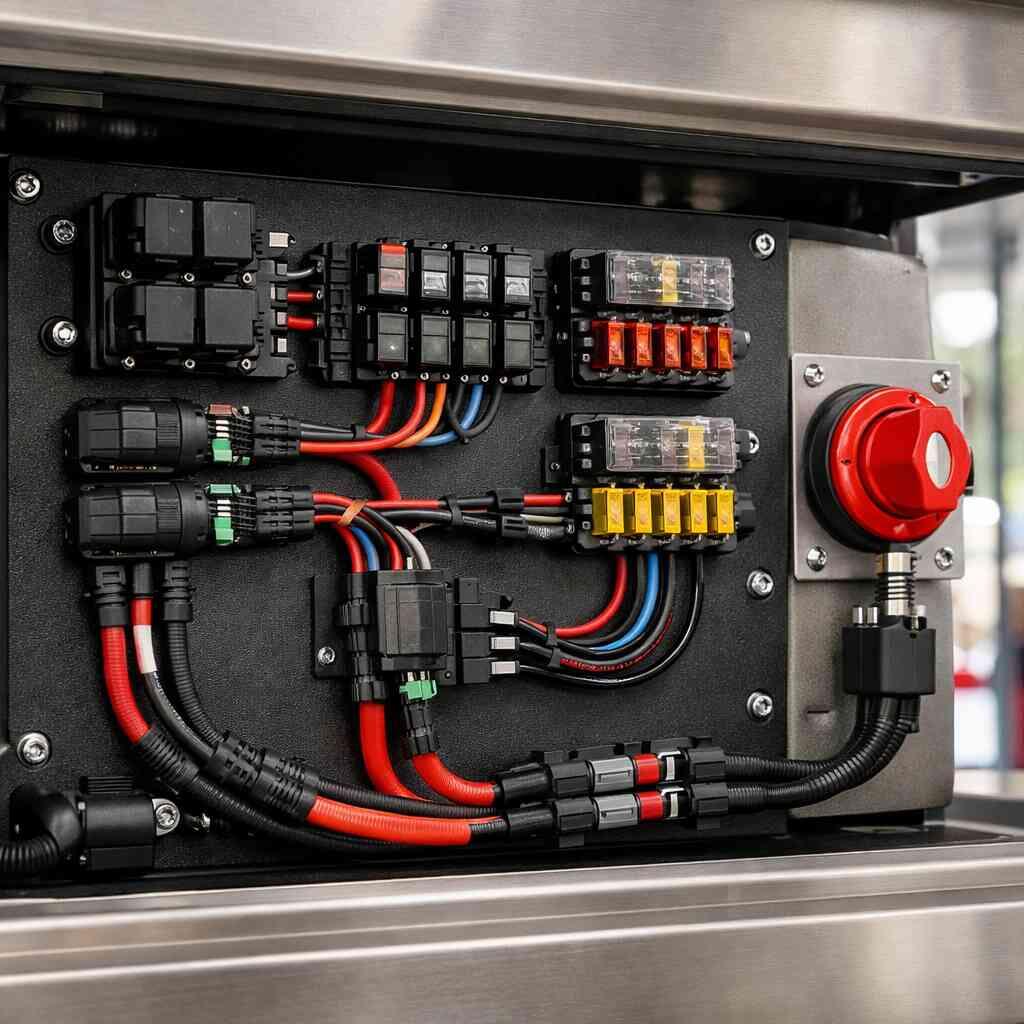
Electrical junctions, receptacles, and accessories deserve early attention because they often sit inside larger readiness chains. If one component delays installation, testing, or replacement, the downstream effect can be bigger than expected. That is why fire fighting electrical equipment junctions receptacles and accessories belong near the top of the list. They support the kind of work that keeps rigs functioning cleanly and consistently.
The best way to prioritize is by operational dependency. Ask which parts are required for immediate field readiness. Then ask which parts can wait without slowing the fleet. For many departments, this is where fire power electrical connectors for firefighting equipment readiness becomes a useful planning lens. It keeps the focus on actual response needs, not just inventory symmetry. That small shift can save a full cycle of delay.
If you are comparing items, this quick breakdown helps:
Priority levelTypical rolePlanning noteHighestReadiness-critical connectors and receptaclesOrder firstMediumBackup accessories and sparesOrder after critical itemsLowerNonessential extrasWait if neededThis is also where a link to the broader catalog can help you review categories efficiently: Duraline Fire Power Products. A structured approach beats a scattered one every time.
Where Fire Power IP68 female electrical connector pigtails fit into critical equipment stock planning
Female pigtails are often treated as small items, but they can be pivotal in the field. If your team relies on a specific connection path, the part becomes mission-critical fast. That is why IP68 female electrical connector pigtails for fire apparatus should be planned with care. The question is not whether they are large. The question is whether their absence interrupts service.
In stock planning, these components often belong in the “must have on hand” group. That is especially true if your department supports multiple rigs or rotating assignments. A depleted shelf creates avoidable pressure on maintenance staff. It also complicates lead time management for safety equipment in fire departments because the missing item may not look urgent until a truck is down. Then everyone feels the timing problem at once.
A practical approach is to set minimum stock levels based on usage history, not wishful thinking. If a part has been tapped multiple times in recent months, it deserves a buffer. That is how emergency response equipment availability in fire fleets stays intact. It is also how you prevent a small connector from becoming a major scheduling headache.
How Fire Power IP68 male pigtails electrical connectors and IP68 male female electrical extensions affect order prioritization for fire safety equipment
Male pigtails and extensions can look interchangeable until you are in the middle of a repair. Then the differences matter. IP68 male pigtails electrical connectors for fire equipment planning should be reviewed alongside the female side, because connection compatibility affects the entire system. Extensions are even more important when routing, spacing, or placement changes. That is why IP68 male female electrical extensions for first responder readiness deserve the same planning discipline.
Here is the part almost no online guide mentions: extension orders often expose hidden dependency problems. A team thinks it needs one part, then discovers it needs matching connectors, a different routing plan, or another accessory to finish the job. That is why order prioritization for fire safety equipment should start with full-system thinking. You are not ordering isolated items. You are ordering a working chain.
If you are unsure what to lock in first, begin with the items most likely to stop installation. Then move to support pieces. This is a good moment to use supplier communication planning for order fulfillment before the quarter gets tighter. A five-minute call can confirm what is realistic, what is available, and what should be ordered now instead of later.
The forward motion plan that keeps emergency response equipment availability intact
A good plan does more than survive the quarter. It keeps working after the pressure drops. That means building habits that help you forecast, confirm, and restock without starting over every cycle. The right process supports emergency response equipment availability and reduces surprises. It also makes your next ordering round calmer than this one. The work is not glamorous. It is effective.
Using supplier communication planning to confirm order fulfillment planning before demand spikes
The simplest readiness tool is a direct supplier conversation. Too many teams assume availability instead of confirming it. That is risky, especially when demand rises across the board. Supplier communication planning for order fulfillment lets you verify status before you commit internal time and budget. It also helps you adjust expectations without scrambling.
A good call should cover three things:
- current availability
- expected delivery window
- any matching or compatibility concerns
That sounds plain, and it is. Plain is useful here. When you combine that with order fulfillment planning, you reduce the chance of late surprises. We recommend confirming details before the demand spike, not after. That one habit often separates smooth procurement from avoidable delay.
Setting an inventory buffer strategy for durable fire equipment sourcing without overbuying
A buffer is not excess. It is protection. The trick is setting it smartly. A strong inventory buffer strategy should reflect usage, replacement frequency, and risk of interruption. If a part moves quickly or supports a critical function, the buffer should be larger. If it is rarely used, the buffer can stay lean. That is how you support durable fire equipment sourcing without tying up too much capital.
The departments that do this well usually follow a simple rule: keep enough to absorb one unexpected event, not three. That is disciplined, not timid. It also avoids the overbuying that clutters shelves and clouds visibility. If you are balancing multiple vehicles or stations, this becomes part of seasonal demand planning for emergency gear. It keeps the stockroom useful instead of crowded.
One operations manager told us their biggest win came from trimming the “just in case” pile. They were carrying too much of one accessory and not enough of another. After resetting their buffer, they spent less and moved faster. That is the quiet value of good planning. It creates room to respond instead of react.
Turning warehouse inventory management for fire products into a repeatable lead time management for safety equipment routine
The best systems become habits. That is true for the shop, the bay, and the warehouse. If you build a monthly review into your workflow, warehouse inventory management for fire products gets easier fast. You stop hunting for parts. You start spotting patterns. You also build better lead time management for safety equipment because you can see shortages before they hurt readiness.
A repeatable routine can be as simple as this:
- Review stock levels.
- Flag low items.
- Compare usage to prior cycles.
- Confirm supplier timing.
- Reorder critical parts first.
That sequence supports emergency service equipment availability without creating paperwork for its own sake. It also helps your team stay ready in a season when requests rise and patience drops. If you want a local frame for the work, think of it as DeLand, Florida fire fleet procurement planning with a practical edge. The goal is not perfection. The goal is dependable readiness.
If your department wants fewer surprises, start today with one clean inventory check and one supplier call. Then identify the three parts most likely to slow a rig, a bay, or a shift. You do not have to solve everything at once, and you do not have to solve it alone. Start with one phone call, and let Fire Power Products help you keep the next order moving in the right direction.
Frequently Asked Questions
Question: What should fire departments prioritize first in their Q4 fire equipment procurement and fire power products lead time planning?
Answer: The best place to start is with mission-critical equipment planning and a realistic fire department inventory review. Identify the items that directly affect first responder equipment readiness, then separate them from accessories or spare parts that can wait. That approach supports stronger q4 fire equipment procurement, better year-end equipment ordering, and fewer last-minute surprises. Fire Power Products can help departments think through order prioritization for fire safety equipment, so critical items are addressed first and supply chain planning for fire departments stays organized instead of reactive.
Question: How does the Guide to Fire Power Products Lead Time Planning for Q4 2026 help with backorder risk mitigation and emergency preparedness procurement?
Answer: The guide is designed to help departments plan earlier, confirm availability, and avoid the common pattern where routine parts become urgent because they were left too late. That matters for backorder risk mitigation, emergency preparedness procurement, and overall procurement lead time awareness. By comparing stock against actual usage, confirming supplier timing, and placing the highest-priority orders first, teams can protect emergency response equipment availability and reduce pressure on the end-of-year purchasing strategy. Fire Power Products supports that process by encouraging practical planning around real-world demand rather than assumptions.
Question: Which Fire Power Products items should be reviewed early for critical equipment stock planning and fleet equipment scheduling?
Answer: Items that affect installation, testing, and service continuity should be reviewed early, especially firefighting electrical junctions, receptacles, connectors, and extensions. These parts often sit inside larger equipment chains, so fire apparatus accessory lead times can affect more than one order. For critical equipment stock planning, departments should look closely at connectors, pigtails, and related accessories that support immediate readiness. Early review helps with fleet equipment scheduling because it allows delivery and installation to line up with bay time instead of creating delays that disrupt operations.
Question: How can a department use warehouse inventory management for fire products to improve lead time management for safety equipment?
Answer: A strong inventory routine begins with knowing exactly what is on hand, what is installed, what is serviceable, and what has already been committed elsewhere. That is the foundation of warehouse inventory management for fire products and the most practical way to improve lead time management for safety equipment. Once the department has a clear picture, it can set an inventory buffer strategy that protects against unexpected use without overbuying. This also supports durable fire equipment sourcing and seasonal inventory forecasting because future purchases are based on actual usage patterns, not memory or guesswork.
Question: What role do supplier communication planning and order fulfillment planning play in emergency response equipment availability?
Answer: Supplier communication planning is one of the simplest ways to improve emergency response equipment availability. Instead of assuming a part is available, departments can confirm current stock, expected delivery windows, and any compatibility concerns before submitting internal approvals. That makes order fulfillment planning more reliable and reduces the risk of delays during a busy quarter. When paired with resilient supply chain coordination and clear procurement cycle planning, Fire Power Products can help departments make more confident decisions, especially when demand spikes near year-end.
Question: Why is inventory buffer strategy important for durable fire equipment sourcing in DeLand, Florida?
Answer: An inventory buffer strategy helps departments stay ready when call volume, wear, or weather creates unexpected demand. That matters in DeLand, Florida, where departments may need to balance seasonal demand planning for emergency gear with tight scheduling and procurement cycles. The goal is not to overbuy. The goal is to keep enough critical parts on hand to prevent downtime and support operational readiness planning. Fire Power Products takes that practical view seriously by focusing on dependable planning, durable equipment planning for public safety, and realistic replenishment rather than unnecessary excess.