Best 7 Fire Truck Cable Tests for DeLand Buyers in 2026
September 17, 2026
-
Electrical continuity checks that reveal hidden weakness before the first callout
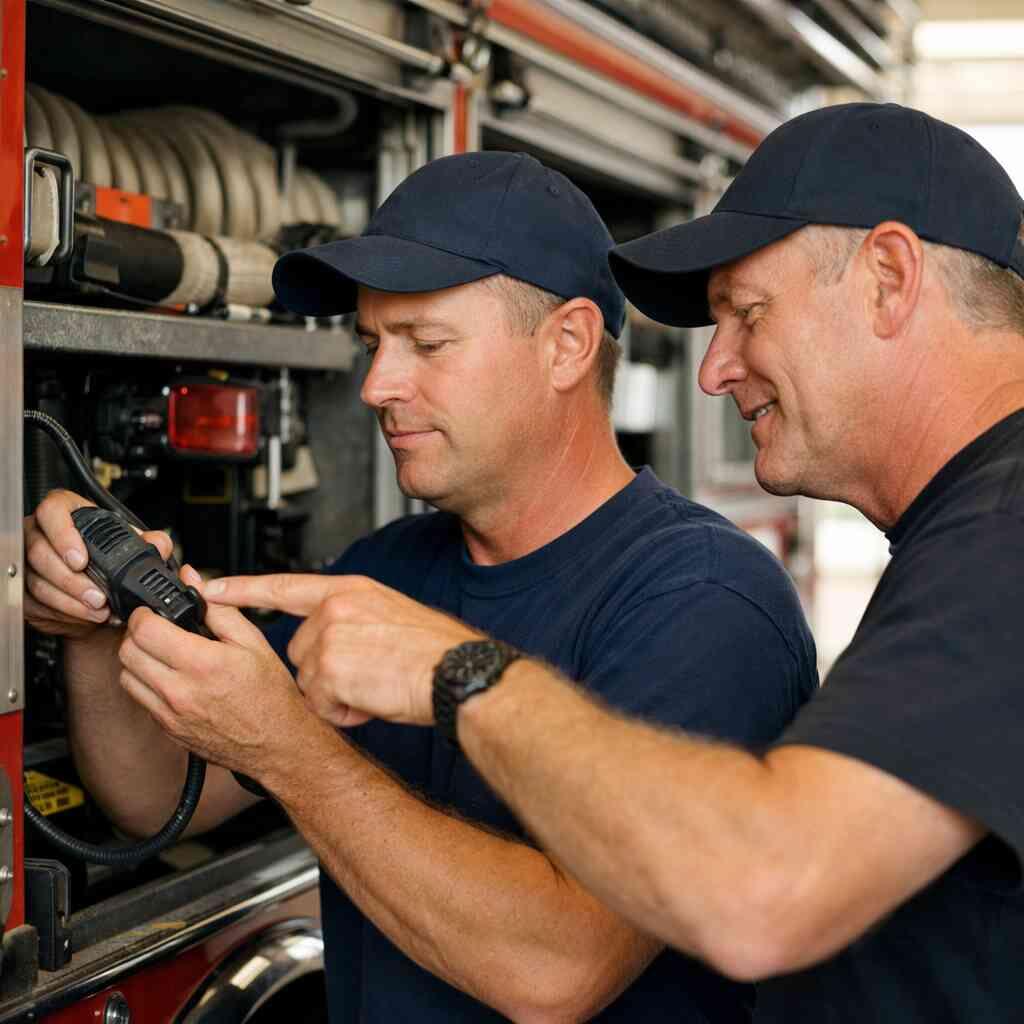
A cable can look fine and still fail at the worst moment. That is the part most buyers do not see coming. If you are reading this because a harness has started acting strangely, you are not alone. We hear that frustration often from fleet managers and apparatus techs. The good news is that fire truck cable testing for DeLand buyers in 2026 starts with simple continuity checks that expose weak links early. For local buyers, that matters because downtime in a staffed bay is never just a maintenance issue.
Why a cable can look intact yet fail under fire truck vibration and daily flexing
Visual inspection only catches surface damage. Internal strand breakage can hide under insulation. Repeated movement near a pump panel or chassis bend point slowly changes how current travels. That is why rugged fire truck wiring needs more than a flashlight and a quick thumbs-up. On the projects we’ve finished this year, the missed failures were usually the ones that still looked “clean.” One crew in Central Florida had intermittent lighting faults that came and went on rough roads. The harness looked perfect until continuity testing found an internal break near a clamp.
Which continuity readings matter most when inspecting rugged fire truck wiring
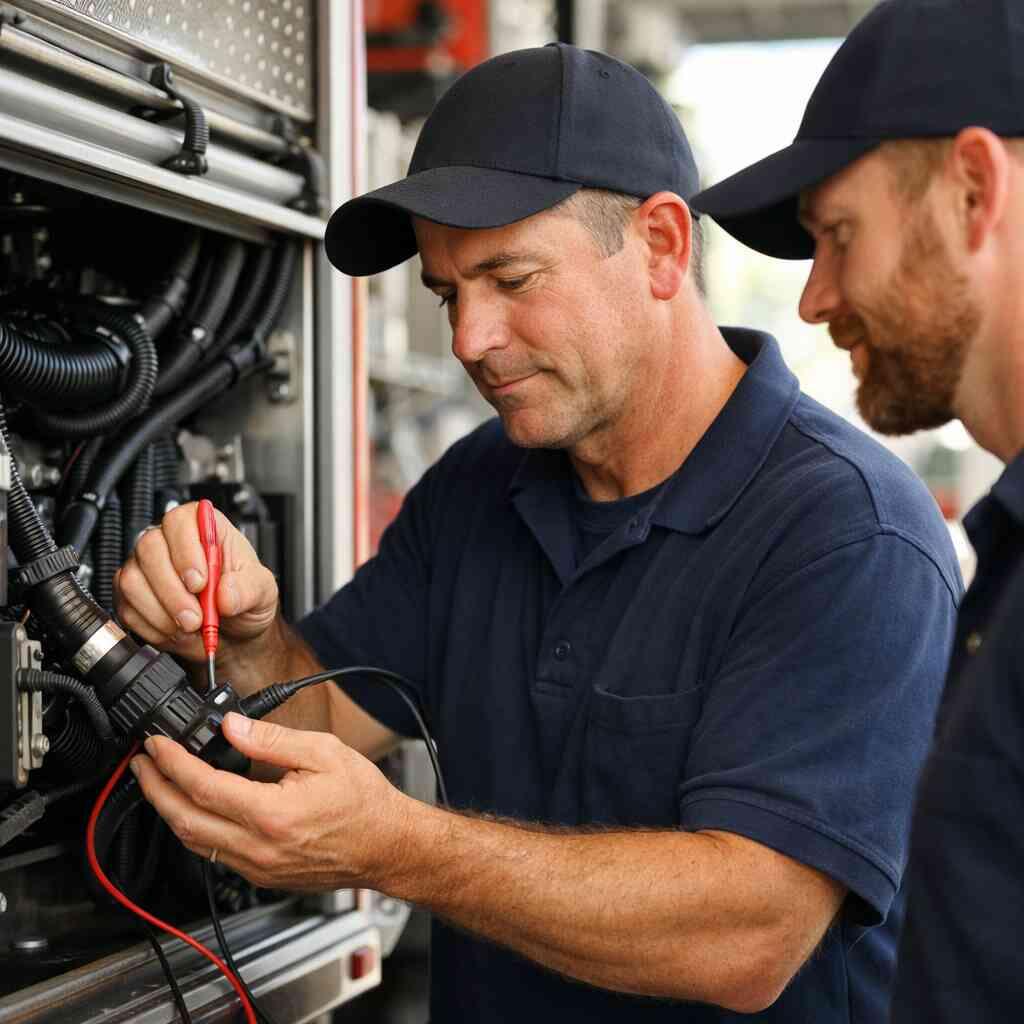
You want stable readings, not just a passing beep. A reading that jumps, drifts, or disappears during a wiggle test deserves attention. Pay close attention to end-to-end continuity, intermittent opens, and unexpected resistance across the run. Those are the numbers that separate a healthy cable from a tired one. If the circuit serves critical lighting, comms, or controls, treat any inconsistency as a safety signal. Here is the part most buyers miss: continuity is not only about “working” or “not working.” It is about whether the path is reliable under motion, heat, and age.
How DeLand fleet maintenance teams can separate harmless wear from a real safety-critical fault
Not every scuff means replacement. Some cosmetic wear is normal on heavy-duty cable assemblies. What matters is whether the conductors, terminations, or shielding show instability under test. If a harness fails only when flexed, that is a real fault, not harmless wear. If the reading stays steady, you may only need re-securement or a cleaner routing path. DeLand shops near the Volusia County rhythms of heat, rain, and road vibration should build that judgment into each fire truck electrical cable check. That discipline saves time, money, and a lot of avoidable stress.
-
Insulation resistance testing that exposes moisture intrusion and hose-down damage
Moisture problems are sneaky. They often show up after the rain stops. If you have ever chased a fault that only appears after a wash bay cycle, you know how maddening this can be. Insulation resistance testing helps you see what the eye cannot. It is one of the most useful forms of fire apparatus cable inspection for Florida conditions. In DeLand, humidity alone can complicate electrical system troubleshooting. Add hose-downs, and the risk climbs.
What moisture protection for vehicle cables should still be verified in the field
Do not assume a cable is sealed just because it is labeled for harsh service. You still need to verify boots, glands, and termination points. Moisture protection for vehicle cables should be checked where the jacket meets the connector and where the harness enters enclosures. That is where water usually wins first. If the insulation resistance drops, you have a clue before failure becomes visible. A good field test looks beyond the jacket and into the places water likes to hide. That includes low points, drip loops, and any area that stays wet after rinsing.
How hose-down resistant cable systems can still fail if seals and terminations are neglected
Hose-down resistant cable systems are only as good as their weakest termination. A strong cable body cannot save a corroded pin. It cannot seal a cracked gland. It cannot compensate for sloppy assembly at a junction. That is why connectors and terminations deserve as much attention as the cable itself. We see this often on equipment that gets cleaned carefully but not inspected carefully. A local apparatus can survive wash after wash and still develop hidden leakage through a loose interface. That failure usually starts small and spreads quietly.
What to look for after rain, wash bay exposure, or Florida humidity during apparatus readiness checks
After a wet shift or wash cycle, look for fogging, discoloration, and residue around terminations. Also check for green corrosion, soft jackets, and damp junctions. If you smell that sharp electrical odor near a connector, stop and test before returning the unit. Florida humidity can also create misleading symptoms, so do not guess. Use a meter and document the trend. The smartest fleet maintenance best practices focus on pattern recognition, not panic. If the insulation resistance keeps dropping over time, that is a warning worth acting on. For buyers comparing options, How to Compare 2026 UL and IP68 Seals in DeLand EMS is a useful next read.
-
Vibration resistance testing that proves the harness can survive the road
Road vibration is relentless. So is engine shake. So is the micro-movement from every compartment door, clamp, and bracket. That is why vibration resistance testing matters so much for emergency vehicle cable performance. A harness may pass on the bench and still fail in service. Buyers who want first responder equipment reliability need to think beyond static tests. Real apparatus lives in motion.
Where chassis wiring evaluation often catches problems missed by a quick visual check
Chassis wiring evaluation often reveals what inspections miss. A connector may appear tight but open intermittently under vibration. A clamp may look secure but allow the cable to rub just enough to fatigue the conductor. A branch in the harness may sit perfectly until the vehicle hits uneven pavement. That is why a quick visual check is only the starting point. In our experience, the hardest faults are the ones that happen only during movement. One municipal unit we reviewed had repeated accessory resets that only happened on rough roads. The issue was not the controller. It was a connector that lost stable contact under shake.
How repeated shaking can loosen connector integrity in emergency vehicle cable performance
Repeated shaking slowly changes everything. Pins back out. Contacts relax. Fasteners lose preload. Seals shift. That is how connector integrity erodes without dramatic failure. Good testing simulates the travel, not just the parking lot. If a harness includes male and female electrical extensions for emergency vehicle cable performance, inspect both ends under movement. The connection should stay stable through the same kind of vibration your apparatus sees on the road. If it does not, the problem will only get worse.
Why first responder equipment reliability depends on testing under real operating movement
First responder equipment reliability is built on repeatable performance. Real operating movement exposes weaknesses that passive tests never find. That includes side-to-side sway, torsional stress, and engine vibration at idle and load. If you want confidence, you need to recreate the conditions the cable will actually face. That is the difference between “seems fine” and “ready for service.” Vibration resistance testing is especially valuable when the harness supports mission-critical controls. It helps you find faults before they become dispatch problems.
-
Abrasion resistance testing that separates field ready assemblies from early failures
Abrasion is slow damage. It looks harmless at first. Then it becomes a cut jacket, a brittle conductor, or a repeated short at the worst possible spot. Fire apparatus cable inspection should always include rubbing risk. That matters on commercial fire apparatus components with tight routing and constant access. You do not want a harness touching metal where it should float clear.
Where cable routing creates rubbing points on commercial fire apparatus components
Look near brackets, frame edges, compartment doors, and hose-bed transitions. Those places create the most rubbing pressure. Cable routing around moving panels is especially vulnerable. If the harness crosses a sharp edge, even a soft edge protector may eventually wear through. The same risk applies where cables pass through bulkheads or sit near vibration-prone metalwork. A short run can still become a long problem if it rubs every shift. Fire truck maintenance best practices always include route review, not just electrical testing.
How protective sleeves and clamps should be checked during fire apparatus cable inspection
Sleeves should cover the right span, not just any span. Clamps should hold the cable without crushing it. Inspect for loose loom, flattened insulation, and shiny wear marks. Those marks often show the cable has been moving where it should stay fixed. If a sleeve has shifted, the protection has already failed. The same goes for clips that leave a cable half-secured and half-free. Good harness inspection for fire trucks means checking the support system, not only the conductor. On the right route, a simple clamp change can prevent a costly replacement.
What abrasion evidence says about future downtime in high usage equipment durability
Abrasion evidence is a forecast. It tells you where downtime is coming from. A jacket polished smooth by frame contact is not “minor wear”; it is a sign of future failure. If copper is showing, replacement should move quickly. High-usage equipment durability depends on catching these signs before the next callout. We have seen one worn spot cause repeated electrical system troubleshooting for weeks. Once the route was corrected, the fault disappeared. That is why fire apparatus cable inspection for rugged emergency vehicles should always include route integrity and physical protection, not just meter work.
-
Heat resistance verification that matters around pumps engines and compartment exposure
Heat changes materials. It softens some insulation. It hardens others. It weakens seals and accelerates aging around busy apparatus zones. Heat resistance verification matters anywhere cables run near engines, pumps, exhaust paths, or sun-baked compartments. For Florida emergency vehicle maintenance, that is not theoretical. It is routine reality. The difference between acceptable and risky often comes down to where the harness sits.
Which cable locations face the highest thermal stress in fire apparatus preventive maintenance
Start near the engine bay. Then check pump-adjacent runs, underbody sections near exhaust paths, and any compartment with poor airflow. Sun exposure matters too, especially on parked apparatus that sit outside for long stretches. These zones face the highest thermal stress in fire apparatus preventive maintenance. You should also look at junctions mounted near heat sources, because connectors age faster there. A cable can appear intact while the jacket becomes less flexible. That stiffness is often an early clue. If the material feels brittle or overly soft, it deserves attention.
How heat resistant wiring for emergency vehicles should be assessed without guessing
Do not guess based on appearance alone. Heat resistant wiring for emergency vehicles should be assessed by condition, location, and manufacturer guidance. If you know a harness has lived near sustained warmth, test its insulation, inspect its jacket, and examine nearby connectors. Feel matters too. A cable that has hardened or glazed may be telling you it has spent too much time near heat. The test should include both the conductor path and the termination points. That is where thermal stress often leaves its clearest signature. Buyers should ask for documentation, not assumptions.
Why elevated temperature exposure can weaken insulation long before visible damage appears
Heat can age a cable from the inside out. The outside may still look acceptable. Underneath, however, the material can lose elasticity and crack under flex. That is a major concern for safety-critical cable inspection. If a unit has repeated engine heat exposure, plan the test before the failure, not after it. Elevated temperature exposure also accelerates corrosion at imperfect seals. That creates a two-part problem: weakened insulation and degraded connectivity. For buyers comparing component quality, The Ultimate Guide to Cabling for Fire Trucks in Florida for Q4 2026 offers helpful context without the hype.
-
Connector integrity checks that protect the whole electrical chain
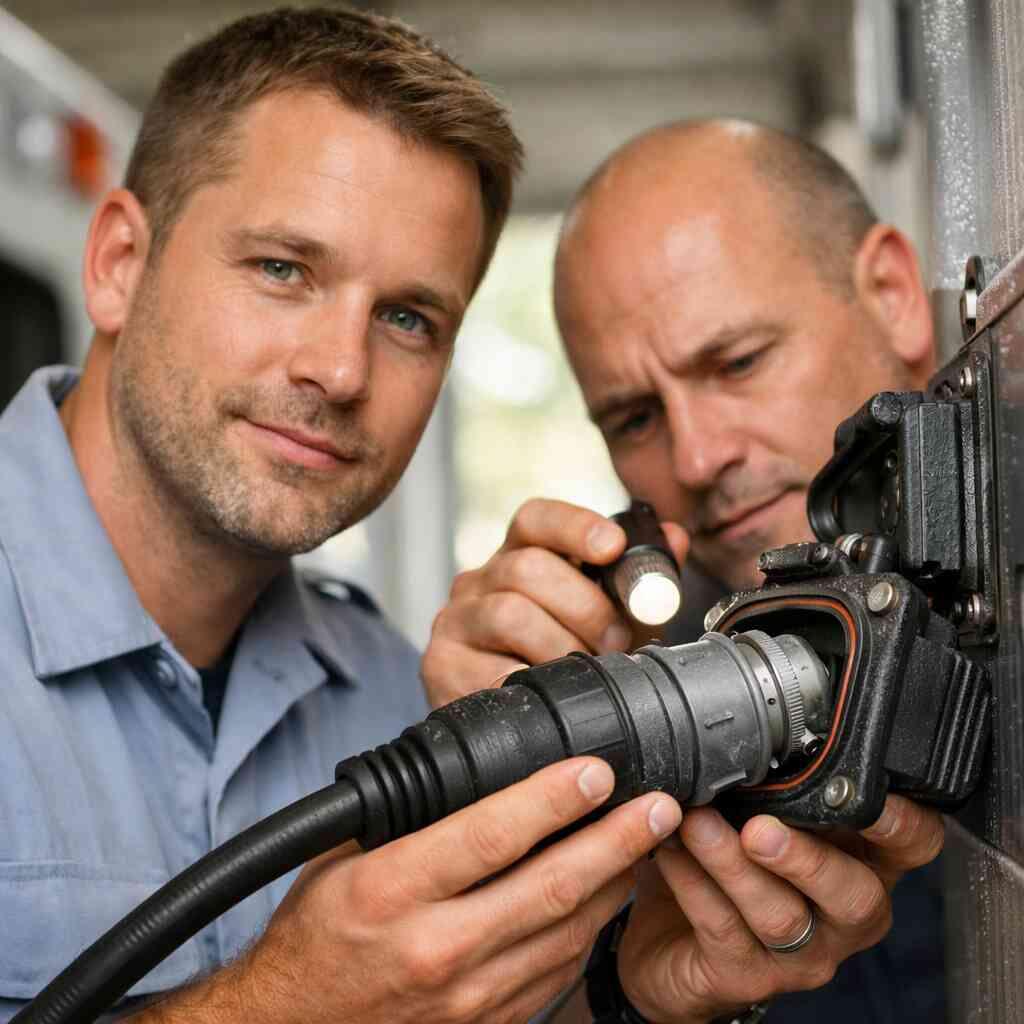
Connectors are small, but they control everything. A great cable cannot outperform a bad connection. Loose pins, contamination, and corrosion all work quietly until they create a fault. That is why connector integrity checks deserve their own place in any emergency response vehicle upkeep plan. If you are choosing OEM-compatible fire truck cables, the connector is not an accessory. It is part of the system.
How loose pins corrosion and contamination undermine OEM compatible fire truck cables
Loose pins interrupt current flow. Corrosion increases resistance. Contamination creates intermittent contact. Put those together, and you have a connector that can fail under light vibration or moisture. OEM-compatible fire truck cables still need careful inspection after installation. The fit may be correct, but the contact may not be secure. That is where many field issues begin. A clean exterior does not guarantee stable internal contact, and that is a lesson many shops learn the hard way. Corrosion resistance in vehicle wiring only matters if the interfaces are actually maintained.
What to inspect on pigtails extensions and junction points before an electrical fault spreads
Inspect pin alignment, sealing surfaces, locking tabs, and any sign of heat discoloration. Check pigtails for strain near the crimp. Review extensions for slack, strain relief, and secure routing. Junction points deserve extra scrutiny because they often collect moisture and road grime. If you see green residue, darkening, or a loose latch, stop and correct it. A problem at one connector can spread through the entire circuit if left alone. That is why junction receptacles and accessories for fire truck cable systems should be part of a serious maintenance conversation. They are small parts with outsized consequences.
Why durable connectors matter on heavy duty cable assemblies used for safety critical service
Durable connectors keep the system stable under motion, moisture, and repeated service. Heavy-duty cable assemblies rely on connector quality just as much as jacket strength. If the interface fails, the whole assembly fails. That is why buyers should ask about sealing, fit, and serviceability before they commit. The best assemblies reduce troubleshooting time and improve confidence during apparatus readiness checks. Here is a simple truth: the connector is where most hidden problems live. If you maintain it well, you protect the entire chain.
-
The decision to replace or retest before the next apparatus readiness check
Testing only helps if you act on the results. That can feel uncomfortable, especially when budgets are tight. Still, replacing the wrong cable is expensive, and ignoring a failing one is worse. The decision point should come from evidence, not habit. Good fleet maintenance teams use test results to decide whether to repair, replace, or retest. That approach keeps the apparatus ready without wasting parts.
How to use test results to choose repair replacement or further troubleshooting
Start with the symptom, then match it to the test result. If continuity is unstable, repair or replace the affected segment. If insulation resistance is low, troubleshoot for moisture, contamination, or jacket damage. If vibration or abrasion has compromised the route, fix the support system before fitting a new cable. The smartest action is not always full replacement. Sometimes it is a better connector, a new clamp, or a rerouted harness. If you need guidance, contact Duraline for fire truck wiring support rather than guessing through a critical issue.
When fire truck electrical cable checks should become part of a fleet maintenance schedule
Cable checks should not wait for a failure call. Build them into routine apparatus readiness checks, post-wash inspections, and annual service events. If a unit sees frequent road miles, humidity, or repeated hose-downs, inspect it more often. That is especially true in a place like DeLand, where weather and workload can combine fast. The best fleet maintenance schedules treat cables like hoses, brakes, and batteries: essential, inspectable, and too important to ignore. Guide to Fire Truck Connector Maintenance for Summer 2026 can help you tighten that process further.
What DeLand fire truck equipment buyers should ask before committing to a new cable assembly
Ask how the cable is tested. Ask how the connector seals are verified. Ask how the assembly handles moisture, heat, vibration, and abrasion. Ask whether the design fits your apparatus layout without strain. You do not need to figure everything out alone, and you do not need to solve it all today. Start with one careful inspection, then compare the findings against the next test. If you are sourcing dependable fire safety equipment in DeLand, choose components and guidance that respect real-world service, not marketing language. One careful call now can save a much bigger repair later.
Frequently Asked Questions
Question: What should DeLand fire truck equipment buyers look for in fire truck cable testing when checking rugged fire truck wiring?
Answer: Buyers should focus on the tests that reveal hidden issues before they turn into downtime, especially electrical continuity checks, insulation resistance testing, connector integrity checks, and vibration resistance testing. For DeLand fire truck equipment, that means looking beyond a simple visual inspection and paying attention to whether the cable stays stable under movement, moisture, and heat. Fire Power Products is built around dependable fire safety equipment that is designed for demanding service conditions, so the right conversation starts with how the cable will be used, where it will route, and what kind of emergency response vehicle upkeep it will face. If a cable must support mission-critical systems, the most trustworthy approach is to verify performance under the same kinds of stress the apparatus sees in the field, not just on the bench.
Question: How does Best 7 Fire Truck Cable Tests for DeLand Buyers in 2026 connect to fire apparatus cable inspection and fleet maintenance for fire departments?
Answer: The blog title points to a practical maintenance mindset: test cables before failure becomes a callout problem. In real fire apparatus cable inspection, that means checking continuity, insulation resistance, vibration exposure, abrasion points, heat stress, and connector condition as part of routine apparatus readiness checks. Fire Power Products supports this kind of field-focused thinking because durable equipment is only valuable when it is inspected and maintained the right way. For fleet maintenance for fire departments, the key is consistency. A good schedule helps crews catch moisture intrusion after wash bays, loosening connectors after road vibration, and wear from tight routing before those issues affect emergency vehicle cable performance. That approach protects first responder equipment reliability and helps keep the truck ready for service.
Question: What makes hose-down resistant cable systems and moisture protection for vehicle cables so important in Florida emergency vehicle maintenance?
Answer: In Florida emergency vehicle maintenance, moisture is one of the biggest hidden threats because humidity, rain, and wash bay exposure can all create slow electrical problems. Hose-down resistant cable systems still need careful inspection at connectors, glands, boots, and termination points because those are often the first places water intrusion shows up. Fire Power Products emphasizes durability, but no cable system should be assumed problem-free without testing. Buyers should ask how the assembly handles moisture protection for vehicle cables, how the seals are checked, and how the cable behaves after repeated exposure to wet conditions. That matters because even a strong cable body can still fail if a connector loosens, a seal cracks, or corrosion begins at a junction. Reliable fire apparatus preventive maintenance always includes checking for those weak points.
Question: Why are connector integrity checks and OEM-compatible fire truck cables so important for emergency vehicle cable performance?
Answer: Connector integrity checks matter because the best cable in the world cannot compensate for a loose, corroded, or contaminated connection. OEM-compatible fire truck cables should still be inspected carefully after installation to confirm pin fit, locking tabs, strain relief, and sealing surfaces are all working as intended. In emergency vehicle cable performance, many problems start at the interface, not in the cable itself. Fire Power Products is focused on dependable fire safety equipment, so buyers should expect practical guidance on how the full assembly behaves in service, not just whether the part fits on paper. When connectors are maintained properly, the entire system becomes more stable under vibration, moisture, and repeated use. That is one of the strongest ways to reduce electrical system troubleshooting later.
Question: How should buyers use fire truck maintenance best practices to decide between repair, replacement, or retesting after fire truck electrical cable checks?
Answer: The right decision depends on the test result and the symptom. If continuity is unstable, the affected section may need repair or replacement. If insulation resistance is low, the next step is usually to look for moisture, contamination, or jacket damage. If abrasion or vibration has weakened the route, the support system should be corrected before installing a new cable. Fire truck maintenance best practices are about solving the root cause instead of guessing. That is especially important for high-usage equipment durability and safety-critical cable inspection. Fire Power Products aligns with that approach by focusing on rugged, field-ready electrical components that are meant to support real emergency response vehicle upkeep. If buyers are unsure, the smartest move is to compare the test findings with the truck’s operating conditions and address the cause before the fault spreads.
Question: What should DeLand buyers ask before choosing field-ready electrical components for commercial fire apparatus components?
Answer: Buyers should ask how the cable was tested for continuity, moisture, vibration, abrasion, and heat resistance, and how the connector system is protected against corrosion and looseness. They should also ask whether the assembly fits the apparatus layout without strain and whether it supports the needs of commercial fire apparatus components in daily service. For DeLand fire truck equipment, those questions matter because local conditions can add heat, humidity, and wash-down exposure to already demanding use. Fire Power Products is positioned around durable, dependable fire safety equipment, so the most helpful questions are the ones that confirm the system is truly field-ready. A good supplier should be able to discuss emergency vehicle cable performance, harness inspection for fire trucks, and the practical realities of first responder equipment reliability without exaggerating claims or promising more than the application can support.