Best Fire Power Products for Heavy Duty Power Grids 2026
June 19, 2026
Why the weakest link in a power grid is usually the connection you never think about
The connection is often where the trouble starts. Not the transformer. Not the cabinet. The connection. If you are staring at a maintenance list and feeling that quiet pressure to choose right, that reaction makes sense. A grid can look robust on paper and still fail at the point where vibration, moisture, and heat meet a small piece of hardware.
Where fire exposure, water intrusion, and vibration collide in utility infrastructure
Here is the part most teams miss: the smallest component can decide the whole service window. In utility infrastructure, fire exposure is not only about flame. It also includes radiant heat, hot surfaces, and the aftermath of incident response. Water intrusion adds another layer, especially after washdown or severe weather. Vibration then works like a slow, relentless tax on every connection point.
On the projects we’ve finished this year, the failures rarely started with a dramatic event. They began with loosened terminations, compromised seals, or hardware that looked fine until the second inspection. That is why durable electrical grid hardware and rugged fire protection equipment deserves real attention, not a quick line item check. You want components that fit the environment, not just the drawing.
A field crew in Central Florida once described a service area as “dry except when it is not.” That is accurate enough. Afternoon storms, road spray, and rinse-downs create a brutal mix for exposed gear. If the connection cannot handle repeated stress, the rest of the system pays for it later.
Why rugged electrical grid hardware matters more when demand spikes and conditions turn hostile
Demand spikes change the stakes quickly. Crews move faster. Equipment runs hotter. Decision-making gets compressed into minutes. In those moments, rugged electrical grid hardware is not a luxury. It is part of utility power grid safety.
The problem with ordinary hardware is simple. It may work under ideal conditions, then wobble under pressure. That wobble shows up as downtime, repeat labor, or field improvisation. None of those belong in critical infrastructure protection. If you are building around heavy duty power grid equipment, you need parts that tolerate the real rhythm of the job, not a brochure version of it.
A technician once told us they had lost nearly half a shift to a connector that kept backing off after movement. No one was careless. The hardware was just wrong for the application. That kind of delay feels minor in the moment, then turns expensive fast. For that reason, mission critical utility equipment should be chosen with the same seriousness as the primary system.
The hidden cost of choosing components that were never built for critical infrastructure protection
Cheap hardware rarely announces itself as cheap. It usually looks normal. The hidden cost arrives later, in extra truck rolls, repeated testing, and crews waiting on a part that should have held. That is the real drain on durable equipment for demanding conditions. It affects staffing, confidence, and scheduling.
You also have to think about the downstream risk. A weak connector can create heat, and heat can damage nearby equipment. A poor seal can invite moisture, and moisture can create intermittent faults. Those faults are hard to diagnose and even harder to justify after the fact. For teams responsible for power grid resilience equipment, the safer move is usually the stronger one.
This is where first responder grade equipment thinking helps utility teams. The standard is not “good enough for now.” The standard is “will this still function after repeated use, washdown, and rough handling?” That mindset reduces surprises. It also supports long lasting utility protection products that earn their place through repetition, not marketing.
What separates dependable Fire Power products from ordinary utility hardware
Dependable Fire Power products are not just about strength. They are about fit, consistency, and field practicality. You want hardware that supports real maintenance patterns without forcing shortcuts. That distinction matters when crews are tired and weather is closing in. It matters even more when the work touches fire safety products for power infrastructure.
How IP68 rated connector families fit into real world power distribution safety solutions
The phrase IP68 gets used loosely online, so precision matters. In practice, the rating signals a high level of protection against dust and water intrusion, but you still need to verify the exact specification on the actual product. That is the responsible way to buy for power distribution safety solutions. Never assume every connector in a family carries the same attributes.
If you are looking at best fire power products for heavy duty power grids in 2026, the best move is to compare the application first. Ask where the connector will live. Ask how often it will be opened. Ask whether cleanup involves hose-down conditions. Those questions keep you from buying too much of the wrong thing, or too little of the right thing.
What we’ve seen in 2026 specifically is that buyers want fewer surprises at commissioning. That is sensible. They also want simpler maintenance later. IP68-style connector families can help when used correctly, but only if the system design matches the actual exposure, movement, and service demands. That is why advanced fire power product selection should start with the environment, not the part number.
When male and female pigtails make maintenance faster without compromising system integrity
Pigtails can save serious time when you need cleaner field handling. They make temporary disconnection, replacement, and reassembly more manageable. However, speed only helps if integrity stays intact. That is where selection discipline matters. You want the maintenance gain without inviting unnecessary failure points.
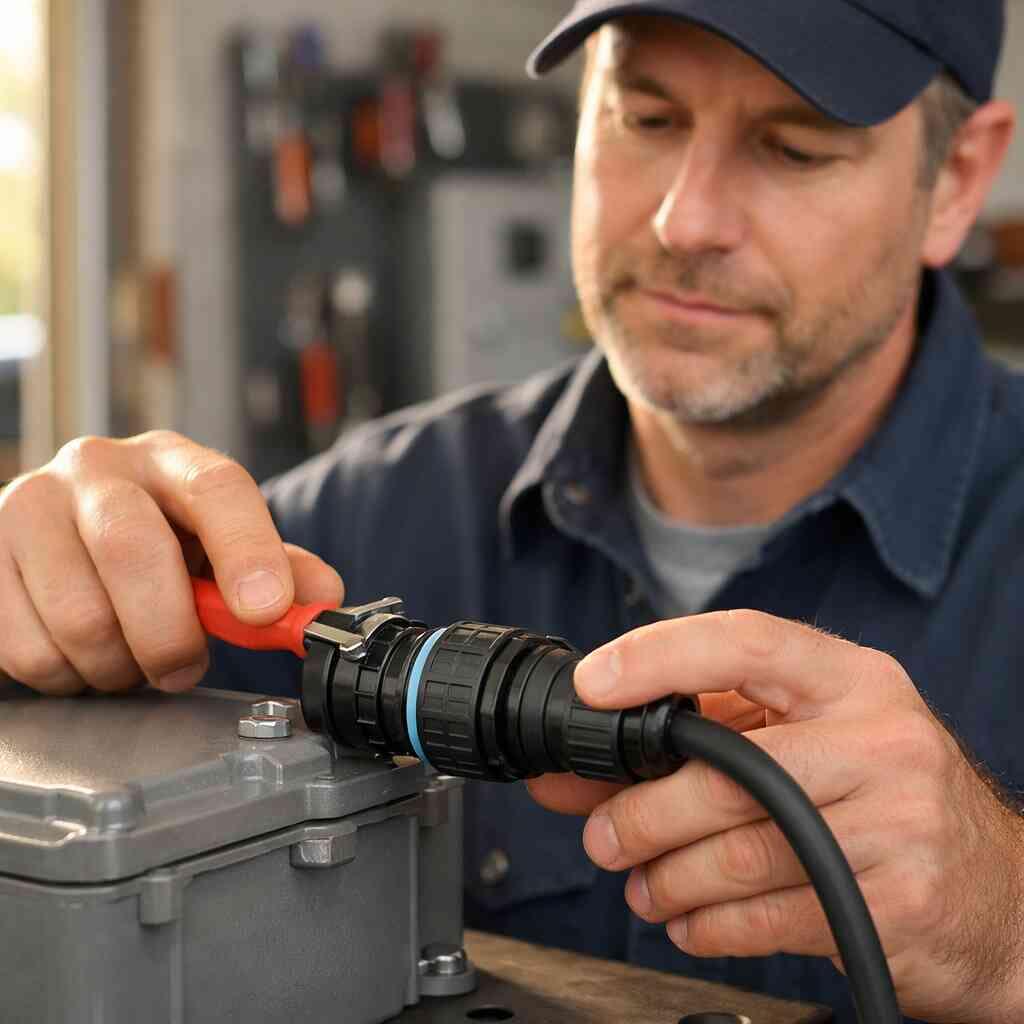
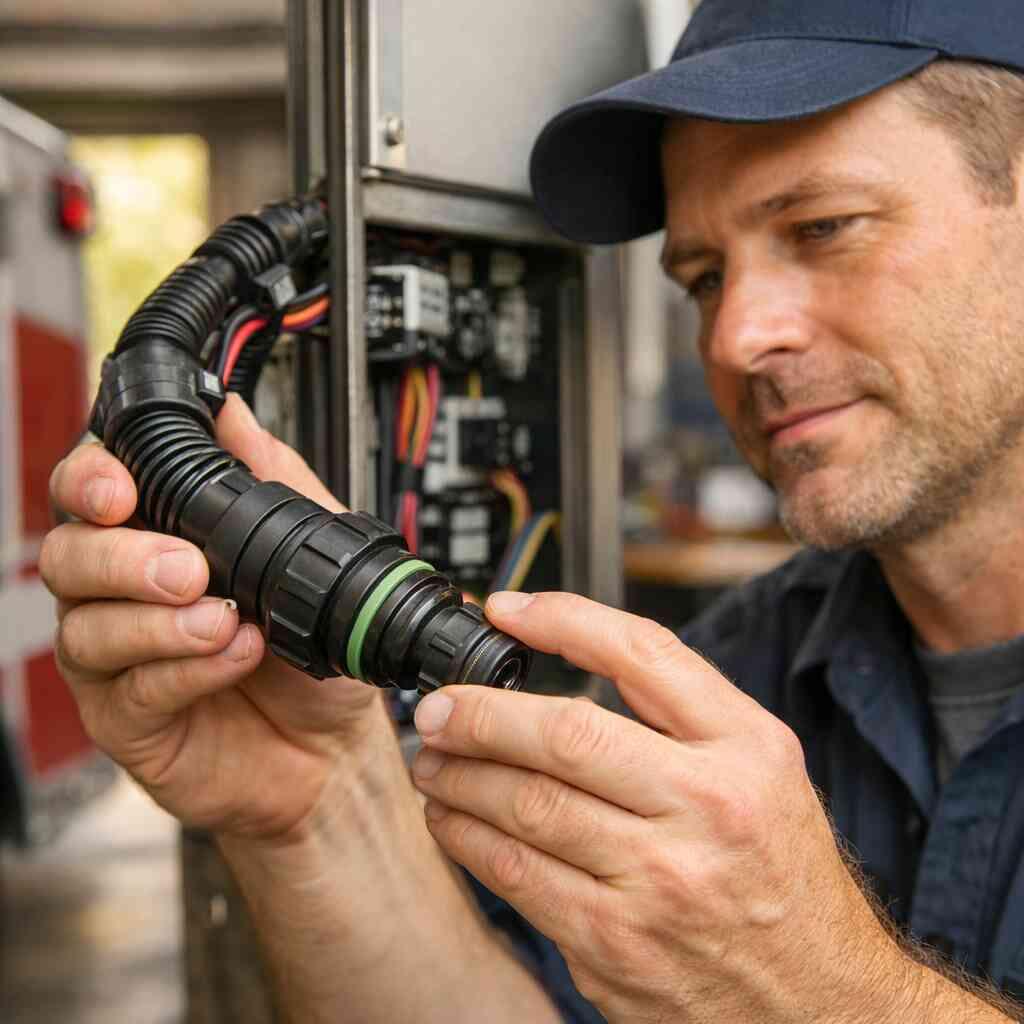
The best use case is usually a jobsite where access is tight or repeated service is expected. In that setting, IP68 female electrical connector pigtails for utility power grid safety can help organize the work and reduce forced strain on the assembly. The matching male side matters just as much. If the connector pairing is mismatched, the whole advantage disappears.
A crew near a substation corridor once needed to swap equipment before a weather front arrived. They did not have time for a complicated teardown. The right pigtail setup helped them isolate the section, complete the swap, and return the circuit with less handling than usual. That kind of planning is why long service life of fire power parts for demanding utility environments is not theoretical. It is practical.
Why junction receptacles and accessories deserve the same scrutiny as the primary equipment
Here is a mistake we see often. Teams spend hours comparing the primary unit, then treat the receptacle and accessory stack as an afterthought. That creates weak points. A reliable system is only as strong as its interface layers. Junction receptacles, couplers, and related accessories should be reviewed with the same discipline as the main equipment.
For power distribution safety solutions, that means checking fit, environmental exposure, and maintenance access. It also means verifying that the accessory ecosystem supports the job instead of complicating it. junction receptacles and accessories for power distribution safety solutions should not be chosen in a vacuum. They belong in the same decision set.
The simplest way to think about it is this: if a part touches the power path, it matters. If a part touches the service routine, it matters. If a part is exposed to weather, vibration, or cleaning, it matters even more. That logic helps teams avoid expensive blind spots and supports dependable fire protection hardware that holds up under actual use.
The decision map for matching fire safety equipment to heavy duty power grids
Choosing the right equipment gets easier when you stop thinking in product categories and start thinking in jobsite patterns. Layout, access, and exposure should guide the choice. That approach helps you match industrial grade power solutions to the actual work, not just the spec sheet. It also supports utility compliance equipment decisions that can withstand review.
When to use extensions, pigtails, and receptacles based on the jobsite layout
Start with the path the cable must travel. If the route is direct and protected, your needs may be simpler. If the route bends around obstructions, crosses service points, or requires repeated disconnects, the accessory choice becomes more important. That is where extensions, pigtails, and receptacles each serve different roles.
IP68 male female electrical extensions for mission critical utility equipment can make sense when distance or access creates practical strain. Pigtails work better when you want easier handling at the connection point. Receptacles fit when you need a stable interface that supports repeat service. The correct choice depends on how crews move through the site.
A straightforward checklist helps:
- Is the connection opened frequently?
- Does the location see water, dust, or washdown?
- Does vibration affect the assembly?
- Is access limited during service?
- Does the layout change during emergency response?
If you answer yes to several of those, you probably need more than a basic connector.
How to think through substation safety equipment versus general utility power grid safety needs
Substation safety equipment usually faces stricter exposure and tighter operational expectations. General utility power grid safety needs may cover broader terrain, longer runs, and varied maintenance patterns. Both demand reliability, but the risk profile is not identical. That difference should shape your buying process.
In a substation setting, small failures can interrupt critical operations and complicate access control. In a general utility environment, the challenge is often distance, weather, and repeated field contact. That is why heavy duty utility enclosures and auxiliary hardware should be reviewed with location in mind. One size rarely fits both.
A line crew in a coastal part of Florida once had to balance salt air, routine inspection, and a narrow service corridor. They did not need novelty. They needed parts that stayed predictable after repeated handling. That is the kind of thinking behind emergency response infrastructure products and resilient fire safety gear. Stability is often the real performance metric.
What to verify before selecting American made fire equipment for demanding environments
Before you buy, verify the claims. Not the marketing. The actual details. Check the listed specifications, environmental ratings, and compatibility notes. Confirm what is documented and what is merely implied. That habit protects you from expensive assumptions.
You should also ask who will maintain the system. If the crew changes often, the hardware needs to be intuitive. If the site sees harsh weather, you need stronger environmental confidence. If the work must support critical infrastructure protection, you cannot afford vague answers. This is where American made fire equipment can be attractive, but only when the exact product details are confirmed.
Here is a clean decision path:
- Define the exposure level.
- Map the maintenance frequency.
- Confirm connector and accessory compatibility.
- Verify documentation for the specific product.
- Review the failure cost if the part underperforms.
That process keeps the purchase grounded. It also supports reliable grid maintenance tools that make sense long after the initial install.
Where durable equipment earns its keep during emergency response and storm recovery
Durability becomes visible when conditions get ugly. Cleanup, washdown, and recovery work expose the hardware to everything a normal day hides. In those moments, equipment that is merely acceptable tends to become a problem. Equipment that is truly built for the environment becomes a time saver.
Why hose down resistant equipment matters during cleanup, washdown, and rapid return to service
After an incident, crews often need to clean surfaces fast and return systems to service without creating new risks. Hose-down resistant equipment helps because it supports faster sanitation and simpler field recovery. That does not mean every piece is waterproof in every circumstance. It means the hardware is intended to tolerate that kind of routine better than standard parts.
For teams managing IP68 rated connectors for extreme conditions and hose-down resistant equipment, the practical benefit is time. Less worry during cleanup. Less hesitation during washdown. Less chance that routine decontamination becomes a maintenance event of its own. That matters in emergency response infrastructure products, where minutes count.
One utility team told us they used to wait before washing down certain assemblies. They were not being overly cautious. They were reacting to past failures. Once they shifted to more durable hardware, they gained confidence in the cleanup process. That confidence is part of long lasting utility protection products, even if no one lists it on a spreadsheet.
How abuse resistant safety gear supports fast field work when crews are under pressure
Crews under pressure do not baby equipment. They set it down hard. They reconnect quickly. They move through tight access points and awkward weather. Abuse resistant safety gear matters because the real world is not delicate. It never has been.
This is where a rugged power for first responders with Duraline fire power system overview mindset can help utility planners. First responder grade equipment is often designed around urgency, repeated use, and rough handling. Those same qualities translate well to storm response and grid maintenance. The point is not dramatic branding. The point is operational trust.
A crew working near a flooded shoulder once had to change their approach halfway through the shift. The ground softened. The access route changed. The equipment still had to move. Hardware that could tolerate the extra handling reduced the number of things they had to worry about. That is the value of resilient fire safety gear in real conditions.
What storm ready power grid hardware should account for in exposed Florida conditions
Florida conditions are not abstract. They are heat, humidity, sudden rain, salt exposure in some areas, and fast-changing storm patterns. DeLand sits inland, but it still feels the broader weather pressure that affects Central Florida systems. That reality should shape the way teams think about storm ready power grid hardware and service planning.
You need to think about moisture, corrosion risk, and access during recovery. You also need to think about storage, labeling, and replacement speed. The best gear helps crews restore function without guessing. That is why the idea of DeLand on Florida utility and storm ready power grid hardware is more than geography. It is a reminder that local weather shapes technical choices.
In this region, durability and response speed belong together. If one is missing, the other suffers. Storm-ready planning should include spare components, matching accessory sets, and a clear inspection routine. That combination strengthens utility power grid safety and supports faster recovery when the pressure is real.
The next move for DeLand Florida teams building a tougher grid without guesswork
The best next step is not to buy more hardware blindly. It is to narrow the field. DeLand teams can get farther, faster, by defining the job first and then matching the product to it. That approach avoids wasted spend and protects the integrity of mission critical utility equipment.
How to narrow an advanced fire power product selection around mission critical utility equipment
Start by ranking the use case. Is the equipment facing routine service, emergency response, or heavy exposure? Is the site controlled, or does it stay open to weather and field traffic? Those answers help you narrow an advanced fire power product selection without forcing a universal solution. Specific needs always outperform general assumptions.
If your team is comparing top fire power products for OSHA compliance in DeLand, Florida, keep the compliance lens separate from the operational lens. OSHA alignment matters, but so does maintenance reality. A product can look compliant and still be awkward in the field. That is why the best selection process uses both the rulebook and the site map.
The strongest results usually come from asking three questions:
- What is the exposure?
- How often will it be serviced?
- What happens if this part fails?
Those questions keep the discussion honest. They also help you choose durable electrical grid hardware that serves the system instead of complicating it.
What information to gather before contacting Duraline for fire safety products for power infrastructure
Before you reach out, gather the details that matter. Site conditions. Connection type. Service frequency. Environmental exposure. Any compatibility requirements. The more precise you are, the more useful the conversation becomes. That saves time on both sides.
If you are ready to contact Duraline for fire safety products for power infrastructure, bring photos if possible. Bring measurements if they are verified. Bring notes on cleaning procedures and likely handling stress. That is the kind of information that turns a general inquiry into a productive recommendation. It also helps the team talk through heavy duty utility enclosures and matching accessories with less back-and-forth.
A lot of people wait until there is a failure before they call. That is understandable, but it is not ideal. If you are replacing or upgrading, gather the facts now. You do not have to solve the whole system in one call. You just need enough clarity to make the next choice well.
How to turn a product list into a durable maintenance plan for long lasting utility protection
Product lists help. Plans protect. That is the difference. A durable maintenance plan turns parts into a working system, and a working system into long term reliability. The plan should include inspection intervals, storage practices, replacement triggers, and assignment of responsibility.
If you are building around fire power products total cost of ownership for Florida buyers in 2026, think beyond purchase price. Include labor, downtime, access difficulty, and repeat service. Those costs add up quickly when the grid is busy. In many cases, the least expensive part on day one is not the least expensive choice over time.
Start this week with one simple move: identify three connections in your system that see the most weather, vibration, or washdown. Review those points first. Then compare them against the most suitable high durability fire power products you can source. You do not have to figure this out alone, and you do not have to figure it all out today. Start with one phone call and one inspection list.
Frequently Asked Questions
Question: What should DeLand teams look for when choosing heavy duty power grid equipment for demanding utility environments?
Answer: The best starting point is the actual environment the equipment will face. For heavy duty power grid equipment, that usually means reviewing exposure to moisture, dust, vibration, washdown, heat, and repeated handling. In utility power grid safety work, the connection points and accessory layers matter just as much as the main equipment, because weak interfaces are often where problems begin. Fire Power Products focuses on durable electrical grid hardware and rugged fire protection equipment that is intended for demanding field conditions, but every application still needs the exact product specifications verified before purchase. If your site involves storm recovery, routine maintenance, or emergency response infrastructure products, it is wise to compare the layout, service frequency, and environmental exposure first. That approach helps ensure the hardware supports the job instead of creating avoidable downtime.
Question: How do IP68 rated connectors, pigtails, and junction receptacles support fire safety products for power infrastructure?
Answer: These components help create a more practical and reliable service path, especially when crews need repeat access or cleaner field handling. IP68 rated connector families are commonly considered for power distribution safety solutions because they are designed for strong resistance to dust and water intrusion, though the exact rating and suitability must always be confirmed on the specific product. Pigtails can make maintenance faster by reducing strain during disconnect and reconnect tasks, while junction receptacles and accessories help maintain a stable interface in the system. For fire safety products for power infrastructure, the key is matching the connector style to the jobsite conditions. If the assembly will be opened often, exposed to weather, or worked on in tight spaces, the right combination of connectors and accessories can make maintenance simpler without sacrificing system integrity. Fire Power Products offers options in this category, and teams should review compatibility carefully before selecting anything for mission critical utility equipment.
Question: In the context of Best Fire Power Products for Heavy Duty Power Grids 2026, what makes a product selection more reliable for utility compliance equipment?
Answer: A reliable selection process starts with the site, not the catalog. In Best Fire Power Products for Heavy Duty Power Grids 2026, the strongest choices are usually the ones that fit the real maintenance pattern, exposure level, and access limitations of the project. Utility compliance equipment should be reviewed for documentation, compatibility, environmental suitability, and service practicality. That means checking whether the product can support the operational routine, not just whether it looks appropriate on paper. For example, if the location experiences washdown, vibration, or severe weather, hose-down resistant equipment and abuse resistant safety gear may be more appropriate than standard hardware. Fire Power Products is positioned around durable equipment for demanding conditions, but responsible buyers should still verify the specifications, ratings, and intended use for each item. That careful approach supports long lasting utility protection products and helps reduce unnecessary field issues later.
Question: Why are hose-down resistant equipment and abuse resistant safety gear important for emergency response infrastructure products?
Answer: Emergency response work rarely happens in ideal conditions. Crews often need to clean equipment quickly, return systems to service, and keep moving under pressure. Hose-down resistant equipment is valuable because it can better support cleanup and washdown routines that are common after incidents or during maintenance. Abuse resistant safety gear matters for the same reason: real-world field work includes rough handling, repeated connection cycles, and tight access points. When a product is part of emergency response infrastructure products, it should be selected for practical durability and predictable performance, not just appearance. Fire Power Products emphasizes first responder grade equipment and rugged fire protection equipment designed to stand up to demanding use, but the exact application still has to be reviewed carefully. In other words, the benefit is operational confidence, not unverified claims. Teams that manage power grid resilience equipment often find that durable components reduce hesitation during cleanup and help crews return to service more efficiently.
Question: What should buyers know before contacting Fire Power Products for fire safety solutions for substations or heavy duty utility enclosures?
Answer: Before reaching out, it helps to gather the details that will shape the recommendation. The most useful information includes the site conditions, connection type, exposure to water or dust, service frequency, and any compatibility requirements. If the project involves fire safety solutions for substations, heavy duty utility enclosures, or other mission critical utility equipment, photos and verified measurements can also be helpful. That makes it easier to discuss the right durable electrical grid hardware, high performance grid accessories, and matching accessory stack without unnecessary back-and-forth. Fire Power Products serves DeLand, Florida, and the company’s Fire Power line is described as durable equipment for demanding conditions and engineered in the USA, but it is still important to confirm the exact specifications and suitability for each use case. The most effective purchase decisions usually come from a clear understanding of the job first, then a careful match to the product family. That is the best path for critical infrastructure protection and dependable fire protection hardware.