What Is Fire Power Products TCO for Florida Buyers in 2026
June 17, 2026
A bad quote feels good for about five minutes. Then the replacement calls start, the downtime starts, and the budget starts bleeding in places nobody labeled.
If you are reading this because the number came in higher than expected, take a breath. That reaction is normal. The hard part is not finding a cheaper line item. The hard part is finding equipment that still performs after heat, humidity, salt air, and constant wash-downs. That is why total cost of ownership for fire equipment matters so much for Florida buyers. It measures the full bill, not just the invoice.
We hear this from buyers all the time. A department or commercial operation sees two options, and the low quote looks responsible at first glance. Then the questions begin: How long will it last? What does service look like? How much does failure cost during a call? That is the real decision point.
Why the cheapest fire equipment quote can become the most expensive decision for Florida buyers
What total cost of ownership means when the equipment has to survive heat, humidity, and hose-down conditions
Fire Power Products TCO starts with a simple idea: you should measure every cost tied to use, upkeep, and replacement. That includes the purchase price, but it also includes maintenance, downtime, premature replacement, and missed response windows. In Florida, that broader view matters even more because equipment faces constant environmental stress. Heat and humidity do not just make crews uncomfortable. They also strain components that live on apparatus, in stations, and around frequent wash-down routines.
One client in Central Florida had a budget-friendly setup that looked fine on paper. After repeated exposure to humidity and routine cleaning, the team began seeing intermittent failures during busy weeks. Nobody called it a catastrophe. They just called it frustrating. But those small interruptions forced extra troubleshooting, delayed equipment readiness, and consumed labor that never appeared in the original quote.
Which hidden costs usually outrun the sticker price in commercial fire equipment budgeting
The sticker price rarely tells you the whole story. Hidden costs show up in labor, downtime, spare parts, training, and emergency replacement orders. In commercial fire equipment budgeting, those line items can outrun the initial savings quickly. That is especially true when the equipment sits in high-use environments where failure is not merely inconvenient. It is operationally expensive.
Here is the part most buyers miss. A small component failure often triggers a chain reaction. A connector issue can stall a tool. A stalled tool can delay a response. A delay can force overtime, rental equipment, or an urgent purchase at the worst possible moment. That is how low upfront cost turns into high lifecycle cost.
Why equipment uptime and reliability matter more than a low upfront number in emergency response procurement
In emergency response equipment investment, uptime is not a luxury metric. It is the metric. If equipment is unavailable when you need it, its lower price no longer matters. Reliability protects schedules, budgets, and confidence under pressure. That is why procurement teams should treat equipment uptime and reliability as financial variables, not just technical ones.
We have seen crews tolerate a weak part longer than they should because the replacement budget felt tight. Then the same part failed during a period when every minute mattered. The repair itself was not the real cost. The real cost was the disruption, the stress, and the scramble to restore readiness fast. Good procurement prevents that cycle before it starts.
How Florida climate stress changes the way durable fire equipment should be evaluated
Florida buyers need a tougher evaluation lens. Florida climate equipment durability is not a slogan. It is a practical standard. Buyers should ask how products handle heat, humidity, cleaning cycles, and the rough handling that comes with daily use. If a product is meant for demanding environments, then those conditions should be part of the buying decision from the start.
That is especially true for hose-down resistant equipment. A product may look solid on day one, yet still struggle under repeated exposure. The question is not whether it works in a showroom. The question is whether it keeps working in a wet, hot, high-demand setting. For Florida operations, that difference shapes the full cost of ownership.
The cost stack behind Fire Power Products that buyers should actually measure
Where rugged fire safety products create value across replacement cycle planning and long-term equipment value
The strongest TCO case for rugged fire safety products comes from their effect on replacement cycle planning. If equipment lasts longer, you can plan replacements with less urgency and less disruption. That improves cash flow, reduces scrambling, and supports steadier procurement decisions. It also helps you compare true value instead of reacting to the lowest bid.
For buyers focused on long-term equipment value, the question is simple. How often will this part need attention, and what does that attention cost over time? If the answer is uncertain, then the apparent savings may be inflated. Real value comes from predictable service life, fewer interruptions, and less administrative churn around replacement orders.
How maintenance cost planning changes when connectors, pigtails, junctions, receptacles, and extensions must keep working under demand
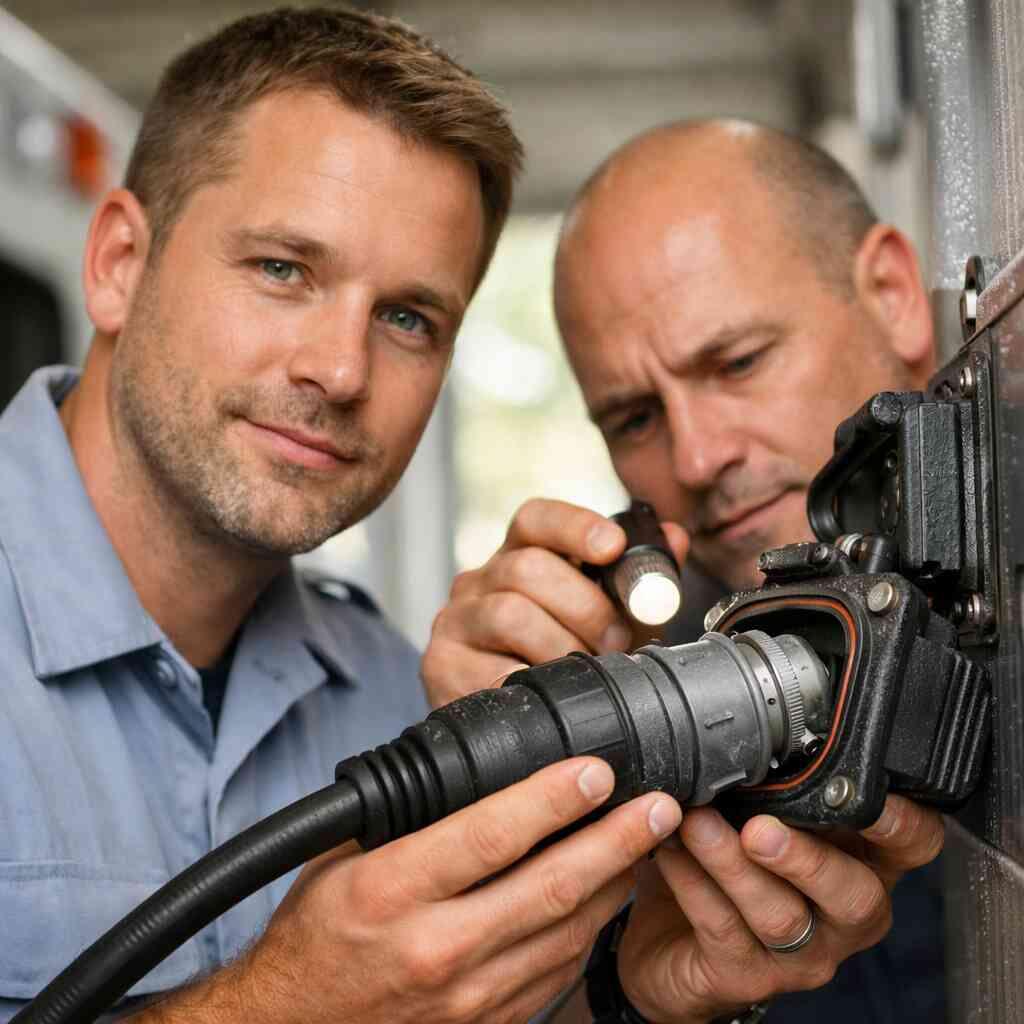
Maintenance becomes more manageable when the equipment is built for repeated demand. That is why equipment maintenance cost planning should focus on the parts most likely to cycle often. Buyers should look closely at connectors, pigtails, junctions, receptacles, and extensions. These parts can create recurring service costs if they fail under load or degrade quickly.
A maintenance plan should not assume every component ages the same way. It should identify the parts that face heat, movement, moisture, and frequent connection changes. That approach helps you estimate total cost more accurately. It also reduces surprise repairs that appear small individually but add up quickly across a fleet.
What buyers should verify before assigning value to made in USA fire equipment and field-tested fire safety products
Buyers often want the confidence that comes with made in USA fire equipment, but that phrase alone should not carry the whole argument. You should still verify the actual specifications, intended application, and any documented test information that the manufacturer provides. The same applies to field-tested fire safety products. Field use sounds reassuring, but buyers should still ask what conditions the product was designed for and how it fits their own environment.
Do not overread marketing language. Ask for what is documented. Ask for what is relevant. Ask how the product is supported after the sale. That is how you separate useful procurement information from general claims. It also keeps your evaluation grounded in facts instead of assumptions.
How to compare Fire Power Products TCO against broader fire apparatus accessories cost and operational cost reduction goals
Fire Power Products total cost of ownership for fire equipment should be compared against the broader fire apparatus accessories cost picture. A lower initial number on one accessory can be misleading if it increases maintenance, downtime, or replacement frequency. The better comparison asks whether the accessory helps support operational cost reduction across the full deployment cycle. That means you evaluate the product alongside labor, serviceability, and expected longevity. Here is a practical comparison framework. FactorLower-cost optionStronger TCO-focused optionInitial purchaseLowerSometimes higherMaintenance burdenOften less predictableUsually easier to planReplacement cycleCan be shorterOften more stableDowntime riskCan be higherCan be lowerLong-term valueUncertainMore measurableThat table is not about hype. It is about decision discipline. If one option reduces repeated service calls, that difference belongs in the budget.
Which procurement decision factors matter most when purchasing for high-usage fire equipment durability
The most important procurement decision factors are usually not the flashy ones. They are the practical ones. Start with use frequency, cleaning conditions, replacement access, and compatibility with existing gear. Then ask how the product performs under high-usage conditions. That is where high-usage fire equipment durability becomes a real financial issue, not just a technical feature.
You should also consider supportability. Can the part be replaced quickly? Can your team maintain it without unnecessary complexity? Does the design reduce error during connection or service? Those questions matter because they affect both cost and readiness. In a demanding environment, simple often costs less over time.
What a smarter Florida buying strategy looks like before the next deployment
How DeLand Florida buyers can build a procurement checklist around Florida climate equipment durability and heat and humidity resistant equipment
For DeLand Florida fire equipment supplier area buyers, the procurement checklist should start with environment, not price. Florida climate durability should drive the questions you ask. How does the equipment handle storage heat? How does it handle humidity? How often will it be cleaned? These factors shape performance far more than a glossy brochure does.
A practical checklist can be short and effective:
- Confirm the product’s intended environment.
- Ask about maintenance expectations.
- Review replacement part availability.
- Compare expected service life.
- Verify compatibility with current equipment.
- Consider how often the unit will be washed or moved.
Those six steps give you a cleaner answer than a quote alone. They also keep the conversation focused on heat and humidity resistant equipment, which is what Florida users truly need.
When to prioritize long-term durability in public safety equipment over short-term purchase savings
You should prioritize long-term durability when failure would interrupt response readiness, create labor costs, or force emergency replacement. That is especially true for public safety equipment, where reliability carries operational weight. A cheaper part can be smart in rare, low-impact use cases. But in high-demand settings, the safer bet is often the one that stays out of the repair queue.
The mistake we see most often is buying for the quarter instead of the cycle. A department or facility saves a little now, then pays more later through maintenance and procurement friction. That is avoidable. If the equipment serves a mission-critical role, durability deserves a premium. Not because premium is fashionable. Because disruption is expensive.
How to frame an emergency response equipment investment around total lifecycle value instead of one-time price
A smarter emergency response equipment investment starts with total lifecycle value. That means you ask what the equipment costs to own, not just what it costs to buy. Lifecycle value includes service life, repair frequency, downtime exposure, and replacement planning. It also includes the effort your team spends managing the equipment over time.
One crew we spoke with had a simple rule. If a component caused repeated small problems, they replaced it sooner than the purchase department expected. That sounded expensive until they added the labor and downtime those problems were causing. Then the decision made sense. A lifecycle view often changes the math in a way the initial quote never will.
What a practical fire service purchasing strategy looks like for commercial fire equipment budgeting and equipment depreciation in fire service
A good fire service purchasing strategy respects both cash flow and depreciation. You do not need to overspend to be prudent. You do need to understand how quickly a lower-quality purchase can lose value. Equipment depreciation in fire service is not only about accounting. It is about how fast a part becomes a maintenance liability instead of an asset.
Use a simple three-part approach:
- Estimate the annual cost of ownership.
- Compare replacement frequency across options.
- Assign a value to reduced downtime.
That method makes commercial fire equipment budgeting more honest. It also keeps decision makers aligned around the same outcome: dependable equipment that holds value longer.
Which next step gives buyers the clearest path to reliable equipment for emergency response and cost-effective fire equipment solutions
The clearest next step is to narrow your shortlist to products that fit your environment and your maintenance reality. If you need help comparing options, start with the product information that speaks directly to your use case. Duraline Fire Power Products for rugged fire safety products is a good place to evaluate how the product family aligns with demanding conditions. Then compare that against your actual labor and replacement patterns.
If you want a more direct conversation, contact Duraline in DeLand, Florida for fire equipment procurement. Bring your current pain points, your use frequency, and your service expectations. You do not have to solve the whole budget tonight. Start with one call, one checklist, and one honest comparison.
Frequently Asked Questions
Question: What is Fire Power Products TCO, and how does it help Florida buyers evaluate total cost of ownership for fire equipment in 2026?
Answer: Fire Power Products TCO is best understood as a total cost of ownership for fire equipment approach that looks beyond the purchase price and considers maintenance, downtime, replacement cycle planning, and long-term equipment value. For Florida buyers, that matters because heat, humidity, frequent cleaning, and demanding daily use can affect fire safety equipment lifecycle cost over time. A lower upfront quote may look appealing, but if it leads to more service calls, shorter replacement cycles, or reduced equipment uptime and reliability, the real cost can end up much higher. Fire Power Products is positioned around durable fire equipment for Florida buyers, so the value conversation should focus on how the product performs under demanding conditions, how often it needs attention, and whether it supports operational cost reduction across the full lifecycle.
Question: How does the blog What Is Fire Power Products TCO for Florida Buyers in 2026 relate to durable fire equipment for Florida buyers and Florida climate equipment durability?
Answer: The blog What Is Fire Power Products TCO for Florida Buyers in 2026 is centered on helping buyers think more carefully about Florida climate equipment durability and the real cost of owning fire equipment in a hot, humid, high-use environment. In Florida, durable fire equipment for Florida buyers should be evaluated for more than appearance or price. Buyers should consider heat- and humidity-resistant equipment, hose-down resistant equipment, and overall equipment performance under demanding conditions. That is especially important for fire service purchasing strategy and first responder equipment procurement, where reliability has a direct impact on readiness. Fire Power Products emphasizes rugged fire safety products engineered in the USA, but buyers should still verify specifications and intended use for their own application. The key takeaway is that durability should be part of the financial decision, not just the technical one.
Question: What procurement decision factors should Florida agencies and commercial buyers review before choosing Fire Power Products for emergency response equipment investment?
Answer: The most important procurement decision factors include environment, frequency of use, maintenance expectations, replacement cycle planning, and supportability. For an emergency response equipment investment, buyers should ask how the product handles heavy-duty fire equipment demands, whether it fits current systems, and how much labor it adds over time. Commercial fire equipment budgeting should also account for equipment depreciation in fire service, because a part that fails early can become a liability faster than expected. Fire Power Products is a fit for buyers who want long-term durability in public safety equipment and cost-effective fire equipment solutions, but the best decision still comes from matching the product to the actual duty cycle. That is why it is smart to compare total lifecycle value instead of focusing only on the initial quote.
Question: How should buyers compare rugged fire safety products and long-term equipment value when evaluating fire apparatus accessories cost?
Answer: Buyers should compare rugged fire safety products by looking at more than fire apparatus accessories cost on day one. A cheaper accessory can seem efficient until recurring maintenance, replacement parts, downtime, or labor costs begin to add up. The better question is whether the product supports operational cost reduction and helps extend the replacement cycle planning window. For buyers focused on long-term equipment value, the real benefit comes from equipment uptime and reliability, fewer interruptions, and a lower fire safety equipment lifecycle cost over time. Fire Power Products is built around durability and high-usage fire equipment durability, so buyers should evaluate whether the product can reduce service friction and improve consistency in demanding conditions.
Question: Is made in USA fire equipment automatically the best choice, and what should buyers verify before trusting field-tested fire safety products?
Answer: Made in USA fire equipment can be an important consideration, but it should not be the only one. Buyers should still verify the product specifications, intended use, maintenance requirements, and any documentation the manufacturer provides. The same is true for field-tested fire safety products. Field-tested is a helpful signal, but it does not replace a careful review of whether the product fits the buyer’s environment and operational needs. For Florida buyers, that means checking for heat- and humidity-resistant equipment, hose-down resistant equipment, and performance under demanding conditions. Fire Power Products should be evaluated on documented information and practical fit, not on assumptions. That approach creates a stronger firefighter gear cost analysis and helps buyers make a more reliable first responder equipment procurement decision.
Question: What is the smartest next step for DeLand Florida fire equipment supplier buyers who want reliable equipment for emergency response?
Answer: The smartest next step is to build a shortlist around the actual use case, then compare products based on total lifecycle value, not just purchase price. DeLand Florida fire equipment supplier buyers should look at maintenance burden, replacement frequency, compatibility, and how well the product supports reliable equipment for emergency response. If the goal is cost-effective fire equipment solutions, then the buying process should start with a clear review of current pain points, service expectations, and operational risks. Fire Power Products can be part of that evaluation because the brand is focused on rugged fire safety products designed for demanding conditions, but buyers should still confirm the details that matter most to their operation. That is the best path to a stronger fire service purchasing strategy and a more practical return on investment for fire equipment.