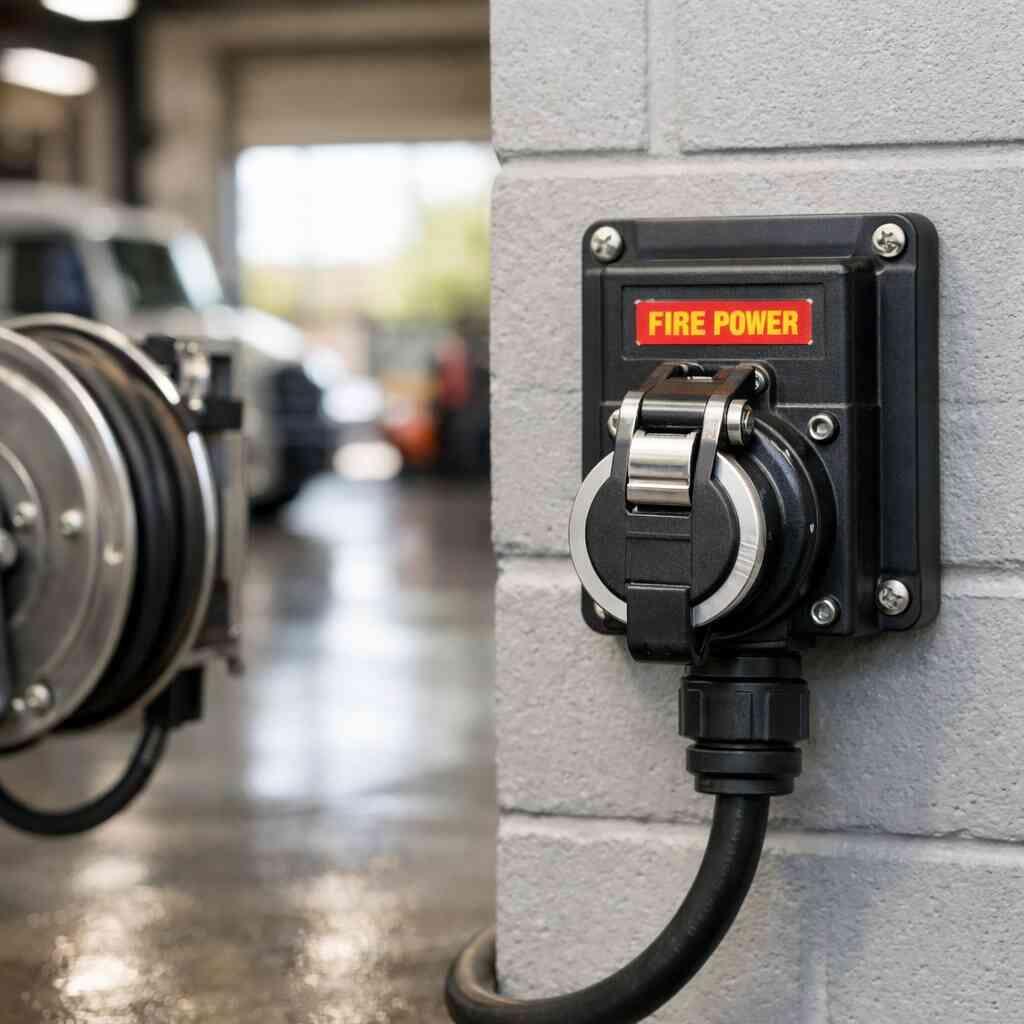
What Is the Best Connector Seal for Fire Truck Washdowns
November 7, 2026
The best connector seal for fire truck washdowns is not a single part; it is a sealed connector system that matches the washdown exposure, cable movement, and maintenance access on the apparatus. In practice, that usually means a washdown-resistant connector seal with good strain relief, secure gasket contact, and a housing or boot that keeps water, grit, and cleaning chemicals out.
If you are reading this after a washdown exposed a weak connection, take a breath. This topic is genuinely confusing for most people, and the failure often shows up later as corrosion, nuisance faults, or a connector that looks fine until it does not.
Key Takeaways
- The best connector seal for fire truck washdowns is a system choice, not a single accessory. The seal, housing, boot, and cable support all matter together.
- High-pressure water can force moisture past weak connector interfaces. The first failure point is often a seam, latch, or cable entry, not the face of the connector.
- Dust, road grime, and cleaning chemicals can be just as damaging as water. They accelerate wear and create conductive residue that shortens connector life.
- A cover or boot can help, but it is not the same as a sealed cable connection. Use the lightest solution that still protects the real exposure.
- For fire apparatus wiring, maintenance access matters. The seal should protect the connector without making inspection or replacement difficult.
Why a fire truck washdown can ruin the wrong connector seal fast
A fire truck washdown can defeat the wrong connector seal quickly because water follows any weak point, especially under pressure. The most reliable fire truck washdown connector seal is one that resists spray at the cable entry, housing seam, and latch points while still allowing routine service without tearing or loosening.
One crew can wash an apparatus compartment and never see a problem. Another can do the same thing and later chase intermittent faults for days. The difference is often not the amount of water. It is how the connector was sealed, routed, and supported before the washdown started.
What high pressure water usually does to a weak fire truck washdown connector seal
High-pressure water does not need a large opening. It only needs a path. A weak washdown-resistant connector seal may let water past the back shell, under a boot edge, or into the cable jacket where movement eventually opens the path wider. Once moisture gets in, corrosion starts quietly and often appears only after heat, vibration, and repeated use.
Here is the part most people miss: a connector can pass a quick visual inspection and still be vulnerable. If the seal depends on friction alone, or if the cable flexes at the wrong point, the washdown will find it. That is why connector sealing for emergency vehicle maintenance should be judged as a working system, not a cosmetic cover.
Where moisture intrusion starts in fire apparatus wiring after routine cleaning
Moisture intrusion usually starts where the connector moves. Common entry points include the rear of the connector, the transition from jacket to conductor, and any place a boot has been stretched, cut, or installed without enough compression. On fire apparatus electrical protection jobs, those are the spots that deserve the first inspection.
A technician I trust once described a “dry connector that was wet where nobody looked.” That is the usual story. The front face stays clean, but the back side traps moisture after a hose-down. If you are using connector checks for DeLand fire fleets, start with the cable entry and any area that sits low in the compartment.
Why dust, road grime, and cleaning chemicals matter just as much as water
Dust and grime turn a connector seal into an abrasive surface. Cleaning chemicals can dry out elastomers, leave residue, or weaken the interface over time. That is why a durable seal for washdown environments means more than water resistance. It also means the connector keeps sealing after repeated exposure to road film, detergent, and heat cycles.
Exposure factorWhat it doesWhat to verifyHigh-pressure waterForces moisture through weak seamsGasket fit, housing closure, cable entry sealRoad grimeCreates abrasion and residueEasy-clean surfaces, durable boot materialCleaning chemicalsCan degrade seal materialChemical compatibility from the manufacturerVibrationOpens gaps over timeStrain relief and connector retentionFor a broader spec review, this connector rating guide helps frame the difference between nominal protection and ruggedized connector hardware.
What every fire apparatus maintainer should weigh before choosing a seal
You should weigh exposure, serviceability, and retention before choosing a seal. The best seal for fire apparatus connectors is the one that handles your washdown routine, resists vibration, and still lets your team inspect or replace the connection without damaging the housing, boot, or cable. This is a maintenance decision, not just a parts decision. If the seal is excellent but impossible to service, it becomes a problem during the next repair. If it is easy to access but weak under washdown, it becomes a recurring failure point. ### How to compare a washdown resistant connector seal against a simple cover or boot
A simple cover or boot can reduce splash exposure, but it does not always equal sealed cable connection performance. A true washdown-resistant connector seal is usually better when the connection sits in a compartment that sees frequent rinsing, detergent, or direct spray. A boot is useful when you need fast access and moderate protection.
OptionBest useMain limitationSimple coverLight splash and dust protectionMay not hold under direct washdownConnector bootFlexible protection with easy accessCan trap moisture if fitted poorlySealed connector systemRepeated washdown and harsh conditionsRequires correct installation and inspectionIf you are comparing fire truck connector maintenance options, ask a practical question: will this still protect the connection after months of vibration, compartment heat, and routine cleaning? That question usually narrows the field quickly.
A maintenance-friendly connector seal should also preserve access to the latch or terminals. If it takes too long to inspect, technicians may not check it often enough. On busy apparatus, that is how small moisture problems become expensive electrical repairs.
For buyers who want a deeper look at rugged options, this connector spec article is useful for comparing sealing approach, retention, and field serviceability without overcomplicating the decision.
What strain relief, vibration resistance, and sealed cable connection really change in the field
Strain relief keeps the cable from pulling on the seal. Vibration resistance keeps the connection from loosening over time. A sealed cable connection does both jobs better than a loose boot that only covers the outside. That matters on apparatus that see rough roads, compartment slams, and repeated hose-downs after calls.
In the field, these features reduce nuisance electrical issues. They also help prevent intermittent faults that are hard to diagnose and easy to ignore. If you want long-life connector protection, look for a design that supports the cable, controls movement, and holds its seal after repeated flexing.
When NEMA style connector sealing considerations matter more than the connector itself
NEMA-style connector sealing considerations matter more when the environment is the real threat. A strong connector with weak sealing can still fail in a washdown compartment. By contrast, a modest connector with the right enclosure, boot, and gasket may hold up better if the exposure is controlled.
The National Institute of Standards and Technology has long emphasized the role of environmental stress in equipment reliability, and public safety vehicles are no exception. In practice, that means the enclosure, cable routing, and seal design often matter as much as the connector body itself. If you need a better connector rating reference, compare the whole assembly, not just the label on the connector.
For fire trucks and emergency vehicles, the best answer is usually a rugged connector seal with real moisture intrusion prevention for connectors, plus strain relief and an installation method your technicians can maintain. Fire Power Products is a strong option if you want USA-made electrical systems built for harsh hose-down conditions and field use, especially where durability and access both matter.
Frequently Asked Questions
Question: What is the best connector seal for fire truck washdowns, and how does Fire Power Products approach washdown-resistant connector seal design?
Answer: The best connector seal for fire truck washdowns is usually a sealed connector system that combines the seal, housing, strain relief, and cable routing into one maintenance-friendly setup. For fire apparatus, the real goal is not just splash protection but reliable high-pressure washdown protection, dust and moisture protection for connectors, and long-life connector protection after repeated cleaning and vibration. Fire Power Products, based in DeLand, Florida, focuses on durable electrical connections for firefighting equipment that are built for harsh public safety use, but the right seal still needs to match the exact exposure and installation. The safest approach is to evaluate the full assembly, including the gasketed connector housing and the cable entry, rather than relying on a cover alone.
Question: How do I know if a water-resistant connector seal is enough, or if I need a sealed connector system for fire trucks?
Answer: A water-resistant connector seal may be enough for light splash exposure, brief rinsing, or areas that do not see direct hose-downs. But if the connector sits in an apparatus compartment, near repeated cleaning, or in a location exposed to road grime and cleaning chemicals, a sealed connector system for fire trucks is usually the better choice. The difference is that a true sealed cable connection for fire trucks is designed to resist moisture intrusion at the rear of the connector, the latch interface, and the cable entry point. In other words, the question is not only whether the face of the connector stays dry, but whether the entire connection remains stable after routine washdown compatibility, heat cycles, and vibration-resistant connector sealing demands.
Question: What should fire apparatus maintenance teams look for in a maintenance-friendly connector seal?
Answer: Fire apparatus maintenance teams should look for a maintenance-friendly connector seal that protects the connection without making inspection or replacement difficult. That means good access to terminals, secure retention, proper strain relief and connector sealing, and a design that does not trap water inside the boot or housing. The best seal for fire apparatus connectors is one your technicians can inspect quickly and reassemble correctly after service. In practice, that helps reduce intermittent faults, corrosion resistance problems in fire apparatus wiring, and repeated troubleshooting after washdowns. Fire Power Products is a good fit for buyers who want rugged connector seals for emergency vehicles and who value durability in harsh environment sealing for public safety vehicles.
Question: Can a connector boot for fire truck equipment protect against hose-downs, or do I need something more durable?
Answer: A connector boot for fire truck equipment can help with vehicle washdown splash protection and moderate dust and moisture protection for connectors, especially when access needs to stay easy. However, a boot is not always enough in a compartment that sees direct hose exposure or frequent cleaning chemicals. In those conditions, a weatherproof connector seal or a sealed connector system is often more dependable because it is designed to protect the full interface, not just cover the outside. If the boot is poorly fitted, stretched, or installed without enough compression, it can actually hold moisture where it should not be. For that reason, the better choice often depends on how the apparatus is cleaned, where the connector is mounted, and how much vibration the cable sees during service.
Question: What do NEMA-style connector sealing considerations mean for fire truck equipment sealing solutions?
Answer: NEMA-style connector sealing considerations matter because the environment around the connector often determines the real-world performance more than the connector body alone. For fire truck equipment sealing solutions, you want to think about enclosure integrity, cable routing, gasket contact, and how the connection behaves after repeated vibration and hose-downs. A connector can look well-built and still fail early if water, grime, or chemicals reach the cable entry or housing seam. That is why electrical connector protection for fire apparatus should be based on the whole installation, not just the outer part number. Fire Power Products emphasizes durable electrical equipment for demanding conditions, but buyers should still verify the exact configuration and compatibility for their application before selecting a seal.
Question: How can I reduce corrosion and moisture intrusion in fire apparatus wiring after regular washdowns?
Answer: The best way to reduce corrosion and moisture intrusion in fire apparatus wiring is to combine the right connector seal, proper strain relief, and smart mounting practices. Keep connectors out of low points where water can pool, inspect the rear of the connector as carefully as the face, and make sure the seal remains compressed after installation. Preventive maintenance for fire truck connectors should also include checking for abrasion, chemical residue, and movement that can open gaps over time. If you are trying to improve connector protection against road grime and cleaning chemicals, a ruggedized connector hardware approach is usually more effective than a simple cover. Fire Power Products, serving customers from DeLand, Florida, is aligned with that kind of durability-first approach, but the final selection should always be confirmed for the specific apparatus and use case.