How Fire Power Products Improve Cold Weather Hose Down Use
October 11, 2026
Why cold weather hose down use exposes weak gear faster than fireground heat ever will
A truck can perform beautifully on scene and then fail during washdown. That surprises people, but it should not. Cold weather hose down use puts water, metal, seals, and electrical interfaces under the same strain, and weak gear usually loses first. If winter cleaning has started revealing problems, that frustration is real.
The hidden stress points that appear when water, metal, and seals meet freezing air
The hard part is not the water alone. It is the cycle. Warm equipment gets hit with cold spray, surfaces contract, seals stiffen, and tiny gaps open where moisture can creep in. That is why hose down equipment in freezing temperatures needs more than a rugged label. It needs predictable low-temperature behavior across the parts people usually ignore.
Here is the part most crews miss: metal housings, gaskets, and connectors do not fail all at once. They wear down in small ways. One station in a damp inland Florida pocket saw recurring nuisance issues after nightly washdowns, especially when morning temperatures dropped and the rig had to roll fast. Nothing dramatic broke. Instead, lights flickered, a connector stayed damp, and confidence slowly eroded.
Why high-pressure hose-down resistance matters more during winter cleaning than during active calls
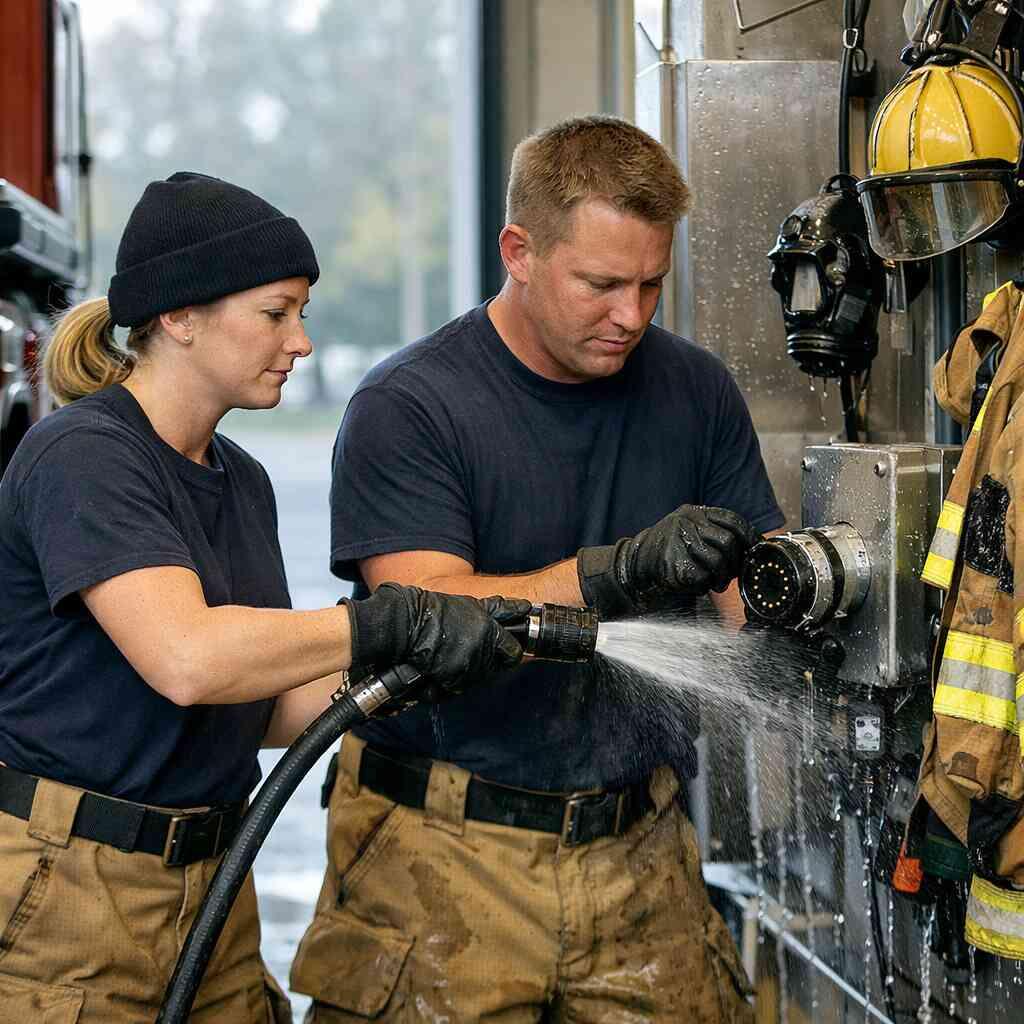
During an active call, everyone expects stress. During cleaning, they do not. Yet high-pressure hose-down resistance becomes more important then, because crews often stand closer, spray longer, and target every seam. That means the gear must survive repeated direct exposure without letting water intrusion become a maintenance problem.
For Fire Power Products, the point is not flashy performance claims. It is practical resilience. High-pressure hose-down resistance protects the parts that keep equipment ready for the next run. When you are dealing with fire hose durability in winter, the issue is not just surviving the element. It is returning to service without hidden moisture trapped in the wrong place.
What fire stations in damp, windy Florida winters should watch for even without deep freezes
Florida winters do not always bring deep freezes, but they do bring enough cold, wind, and humidity to make problems obvious. Moist air can linger in seams. Wind can drive spray into places that look protected. And quick temperature swings can make cold climate equipment reliability harder than people expect.
We hear this from clients almost every week in one form or another. The truck was fine yesterday. Today, after a washdown and an overnight chill, something acts up. That is not bad luck. It is exposure stacking. For stations near DeLand and across Central Florida, the safe assumption is simple: if a product cannot handle hose down use in inclement weather, it will eventually show you where it is weak.
What durable fire safety products need to do after the alarm clears and the washdown begins
Once the alarm clears, the real work starts: cleanup, inspection, drying, and resetting. That is where durable fire safety products earn trust, because the team cannot afford fragile failure points between calls. If a component is hard to clean, slow to dry, or sensitive to repeated rinsing, it becomes a liability.
How hose down-ready gear supports winter fire equipment maintenance without adding fragile failure points
Hose down-ready gear should simplify maintenance, not complicate it. It should tolerate regular water exposure and still keep connectors, covers, and housings stable. If one piece needs delicate handling every time the bay floor gets washed, that piece does not belong in a demanding response environment. Reliable gear supports winter fire equipment maintenance by reducing the number of steps that can go wrong.
On the projects we have seen this year, the best outcomes came from equipment that accepted routine rinsing as normal. That sounds simple, but it changes everything. Crews move faster. Inspections become cleaner. And you spend less time worrying about whether moisture sat in a seam overnight. That is the quiet advantage of easy-to-clean fire equipment built for repetitive use.
Why moisture-resistant fire gear must stay dependable through repetitive cleaning and rapid redeployment
Moisture-resistant fire gear has to do two jobs at once. First, it must keep water out where it matters. Second, it must stay dependable after being cleaned over and over. Rapid redeployment exposes the truth quickly. If a part needs time to recover from washdown, it is not ready for a real station rhythm.
A county crew once described a problem we hear often: the truck looked clean, but the electrical accessories kept acting tired after washdowns. The fix was not more caution. It was better equipment selection. They needed weather-resistant fire gear that could withstand the cleaning cycle and still support the next dispatch without hesitation. That is the difference between looking durable and being durable.
Where rugged firefighter equipment earns its keep during heavy-duty industrial washdown use and station cleaning
Rugged firefighter equipment also has to stand up to the non-fire parts of the job. Station floors get scrubbed. Bays get sprayed. Mud, soot, salt, and residue accumulate fast. In those moments, the same gear that survives a call may fail under heavy-duty industrial washdown use if it was never designed for that abuse.
That is why the phrase equipment built for demanding conditions matters. It is not about sounding tough. It is about surviving repeated exposure without creating new maintenance tasks. Fire Power Products focuses on that idea through products intended for hard service, including hose down-ready fire safety gear. When a station wants operational reliability in harsh environments, that kind of design thinking matters more than marketing polish.
When the connector is the real weak link and what Fire Power Products changes in that moment
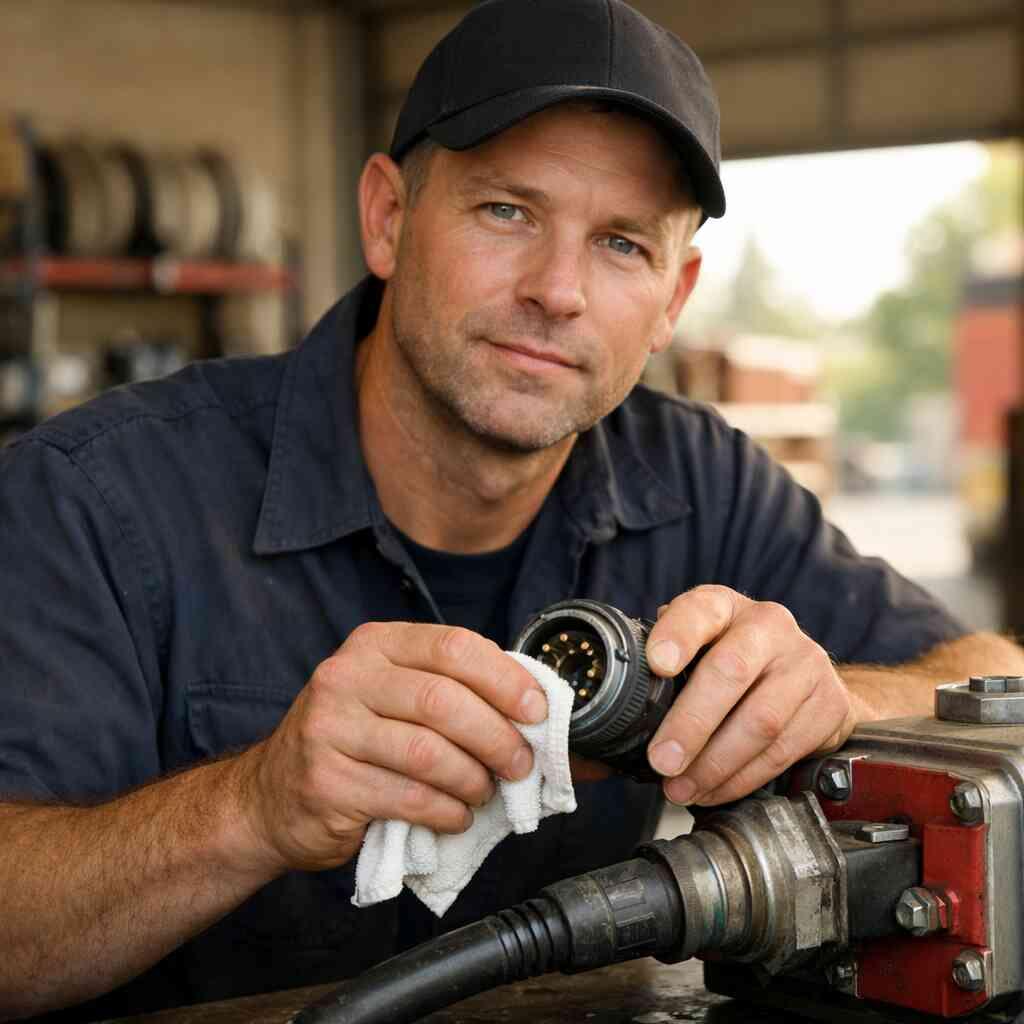
People often blame the whole system when the real problem is the connector. That is especially true after a washdown. Water intrusion at a junction can look like a random electrical issue, but it usually traces back to seal integrity, connector design, or weak extension points. This is where Fire Power Products changes the conversation.
How IP68 electrical connector pigtails support low-temperature equipment performance in demanding conditions
An IP68-rated solution is not a magic shield. It is a design approach that signals strong resistance to dust and water intrusion when installed correctly. For low-temperature equipment performance, that matters because cold conditions can make marginal seals less forgiving. The point is not perfection. The point is reducing the chance that washdown spray becomes a hidden fault.
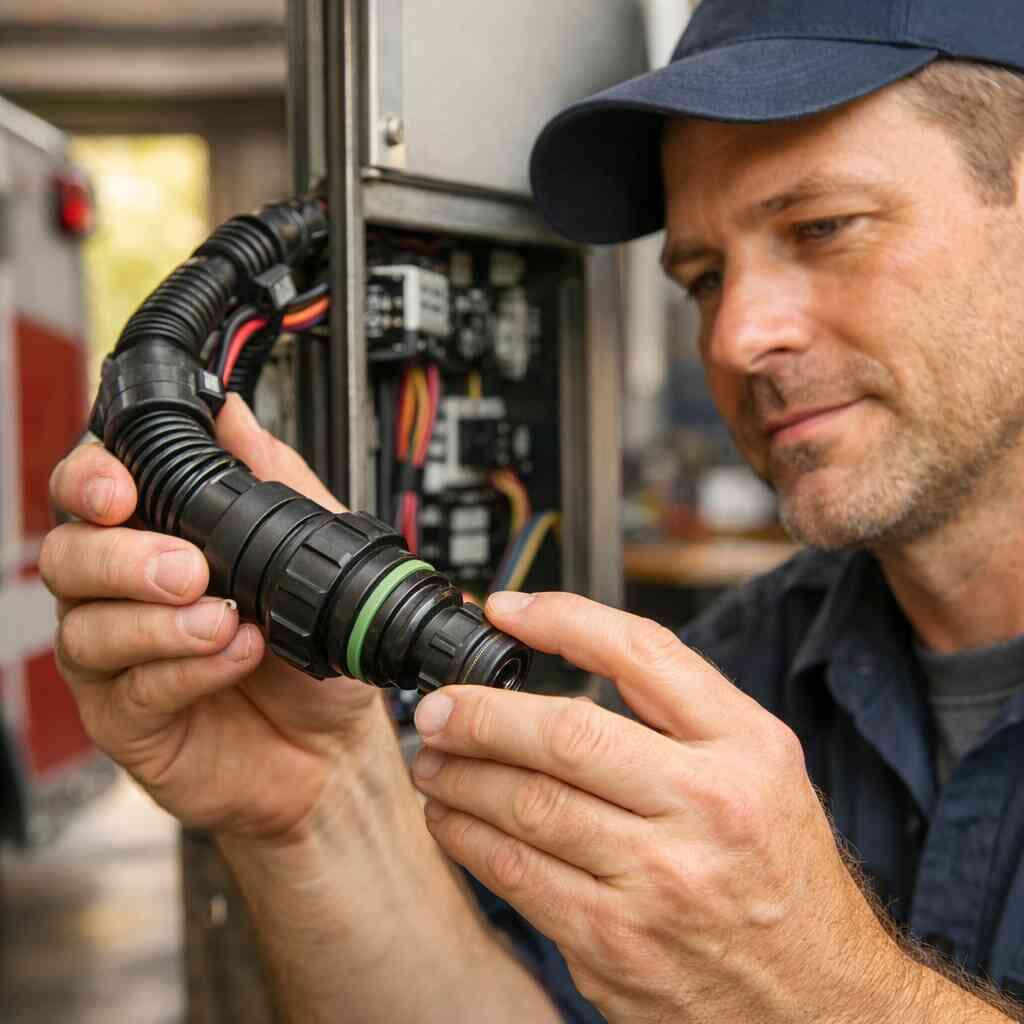
If you are comparing options, start with specifics. Ask how the connector is protected, how it seats, and how it behaves under repeated cleaning. IP68 female electrical connector pigtails for low-temperature equipment performance are worth reviewing when your environment punishes weak interfaces. In a cold morning bay, reliability is often decided at the connector, not the headline feature.
Why male and female electrical extensions matter when hoses, water intrusion, and cold weather all collide
Male and female electrical extensions are not glamorous. They are practical. Yet they do a lot of hidden work in cold weather hose down use. They bridge equipment placement, support layout changes, and help preserve function when hoses, spray, and temperature shifts all collide. If the extension is weak, the whole system pays for it. A small fire service shop told us about a recurring issue with a damp connector on a washed-down apparatus bay unit. The replacement choice was not just about fit. It was about building in operational reliability in harsh environments so the problem would not return with the next rinse. That is why male and female electrical extensions for weather-resistant fire gear deserve attention early, not after a failure. ### How junctions receptacles and accessories help build equipment for repetitive washdowns without sacrificing operational reliability
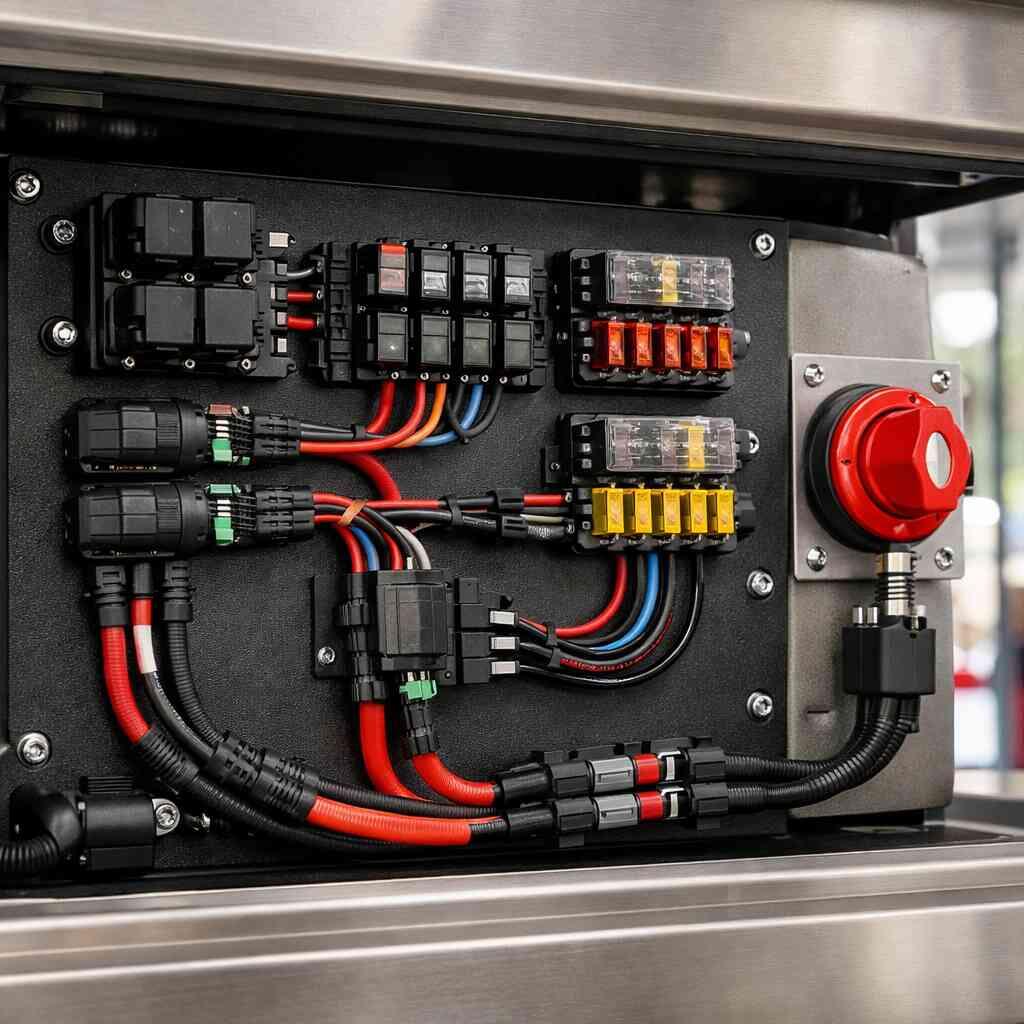
The supporting pieces matter just as much as the main component. Junctions, receptacles, and accessories create the framework that keeps repetitive washdowns from turning into repetitive repairs. If those parts are not built for moisture, the system never really achieves dependable fire safety tools status.
Here is a simple way to think about it. Good connectors protect the signal. Good junctions protect the system. Accessories protect the day-to-day routine. For stations that need junctions, receptacles, and accessories for repetitive washdowns, the goal is to remove the small vulnerabilities that become large headaches later. That is the real value of rugged engineering.
What DeLand Florida fire equipment buyers should ask before choosing hose down-ready gear
Buying gear in DeLand means thinking past the brochure. You need products that survive Florida humidity, bay cleaning, and occasional cold snaps without creating nuisance failures. That requires better questions. It also requires resisting vague promises about durability.
Which details to verify before assuming a product is truly weather-resistant fire gear
Before you assume a product is truly weather-resistant fire gear, ask what it is rated for, how it is sealed, and how it handles cleaning cycles. Ask whether the product is meant for repeated water exposure or only occasional contact. Ask how it supports all-weather durability for fire products in real use. Those questions separate serious gear from vague claims.
A good buyer checklist looks like this:
- Confirm the sealing approach and rating claims.
- Ask how the product handles repeated washdowns.
- Verify compatibility with your existing apparatus.
- Review how the connector or housing behaves after cleaning.
- Ask what maintenance the product actually requires.
That is how you evaluate tough fire safety components without getting distracted by broad language.
How to evaluate USA-engineered fire equipment for all-weather durability without relying on marketing language
USA-engineered fire equipment can be a strong choice, but the phrase alone is not enough. You still need to verify the details. What is the actual application? What kind of exposure is expected? Does the product support fire apparatus maintenance in cold weather and not just general use? If the answer is unclear, keep asking.
In our experience, the biggest mistake is assuming “built tough” means “built for this job.” It often does not. For buyers in and around Volusia County, especially those comparing winter fire equipment maintenance in DeLand Florida options, the better approach is practical verification. That means matching the product to the cleaning method, temperature range, and response timeline you actually face.
When dependable fire safety tools should be matched to the realities of station cleaning and field use in Central Florida
Dependable fire safety tools should reflect the way your crew really works. If your apparatus gets washed after almost every run, then hose down after-action cleaning is part of the duty cycle, not an exception. If your station sits in a damp corridor of Central Florida, moisture exposure is not theoretical. It is routine.
What we see across the region is simple. Crews want reliable equipment for first responders, but they also need gear that respects local weather. That includes humid mornings, windy fronts, and fast turnarounds. For a broader starting point, cold-weather hose down use should be treated as a specification issue, not an afterthought. The right choice saves time later.
The next move for winter readiness when your equipment has to come back online fast
Winter readiness is not about overbuilding everything. It is about removing the parts most likely to slow you down. If your equipment has to come back online fast, you need a maintenance plan that respects exposure, cleaning frequency, and real operational pressure. That means planning before something fails.
How to build a smarter winter fire apparatus maintenance plan around washdown frequency and exposure risk
Start with exposure mapping. Which units get sprayed most often? Which ones sit outside? Which connectors and accessories face the most direct water? Then rank the maintenance risks. This kind of winter fire apparatus maintenance does not need to be complicated, but it does need to be consistent. A simple routine beats a heroic repair every time.
Use a three-step approach:
- Identify the parts most exposed to water.
- Inspect those parts after every washdown.
- Replace weak points before they interrupt service.
That structure supports resilient emergency response equipment and helps keep you from chasing avoidable failures. It also makes winter fire equipment maintenance more predictable.
Which Fire Power Products resources and product categories are the right place to start narrowing specifications
If you are narrowing specifications, start with the categories that match your exposure level. Look at connector pigtails, extensions, junctions, and accessories first. Those are the pieces most likely to determine whether your setup handles repetitive rinse cycles well. For a focused starting point, Duraline Fire Power Products gives you a practical product path.
You may also want to compare connector types before making a final choice. A product family built for sealing and washdown behavior is usually a better fit than a generic substitute. If your situation is especially demanding, review the specifications closely and compare them against your station’s cleaning routine. That is the fastest way to improve field-tested fire products selection without wasting time.
When to contact Duraline in DeLand Florida to match fire equipment built for harsh conditions to your application
If you are still unsure, that is normal. The technical details can be confusing, especially when multiple ratings and use cases sound similar. The right moment to contact Duraline in DeLand Florida for hose down-ready gear is before you commit to a setup that may not fit your routine. That call can save you from a lot of rework later.
You do not have to solve everything today, and you do not have to guess. Start by listing the equipment that gets wet most often, then ask which Fire Power Products options fit that exposure. If you are comparing rugged firefighter equipment for winter cleaning and fast redeployment, one good conversation can clarify the next step.
Frequently Asked Questions
Question: How does How Fire Power Products Improve Cold Weather Hose Down Use relate to winter fire equipment maintenance and cold climate equipment reliability?
Answer: The main idea is that cold weather hose down use exposes weak points that may not show up during normal operation. Fire Power Products are designed to support winter fire equipment maintenance by focusing on durability where water, cold air, and repeated cleaning create the most stress. That matters for cold climate equipment reliability because connectors, junctions, pigtails, and extensions can all be affected by moisture and temperature swings. Fire Power Products is positioned for demanding conditions, but buyers should always verify the exact specifications and fit for their application before choosing a product.
Question: What should fire stations in DeLand, Florida look for in hose down-ready gear for hose down use in inclement weather?
Answer: Stations in DeLand, Florida should look for hose down-ready gear that fits their actual cleaning routine, especially when hose down use in inclement weather is part of normal station operations. The most important factors are sealing, compatibility, ease of cleaning, and how the equipment handles repeated exposure to water. Fire Power Products focuses on durable fire safety products that are intended for hard use, but every station should confirm the product details and verify that the gear matches its environment. That is especially important for reliable equipment for first responders who need dependable performance after every washdown.
Question: Why are IP68 electrical connector pigtails and electrical extensions important for low-temperature equipment performance?
Answer: In cold weather hose down use, the connector is often the weak link, not the whole system. IP68 electrical connector pigtails and matching electrical extensions can help reduce the risk of water intrusion at critical interfaces, which is important for low-temperature equipment performance. That does not mean they are magic solutions, but they do provide a more controlled approach to moisture exposure when installed correctly. Fire Power Products offers product categories that may fit this need, and teams should review the exact ratings and compatibility before installation so the setup supports operational reliability in harsh environments.
Question: How do Fire Power Products help with heavy-duty industrial washdown use and equipment for demanding conditions?
Answer: Fire Power Products are built around the idea of equipment for demanding conditions, which is important when a station uses frequent washdowns, scrubbing, and routine exposure to moisture. Heavy-duty industrial washdown use can quickly reveal flaws in weak housings, connectors, or accessories, so rugged firefighter equipment needs to be easy to clean and stable under repeated use. Fire Power Products are described as USA-engineered fire equipment tried and tested by first responders, but buyers should still confirm the exact specifications for their application. That kind of verification helps ensure the product is truly a fit for hose down after-action cleaning and not just a general-purpose component.
Question: What should buyers ask before choosing weather-resistant fire gear from a DeLand Florida fire equipment supplier?
Answer: Buyers should ask how the product is sealed, what level of water exposure it is designed for, and whether it can handle repeated hose down after-action cleaning without creating maintenance problems. Those questions are especially important when looking for weather-resistant fire gear from a DeLand Florida fire equipment supplier because local humidity, temperature swings, and fast redeployment cycles can expose weaknesses quickly. Fire Power Products can be a strong option for teams seeking dependable fire safety tools, but the right choice depends on matching the product to the station’s real use case. Asking about exact specifications, compatibility, and cleaning expectations is the best way to confirm all-weather durability for fire products.
Question: When should a department contact Duraline in DeLand Florida about Fire Power Products for fire station cleaning equipment?
Answer: A department should contact Duraline in DeLand Florida once it knows which parts of its equipment are most exposed to water, cold, and repeated cleaning. That is the best time to discuss Fire Power Products because the conversation can focus on the right categories, such as pigtails, extensions, junctions, receptacles, and accessories. For fire station cleaning equipment and winter readiness for fire departments, the goal is to choose tough fire safety components that support field-tested fire products selection without guesswork. Reaching out early can help narrow the options and improve confidence that the chosen gear will support resilient emergency response equipment and operational reliability in harsh environments.