Guide to Fire Power Products Supply Planning for Columbus Day
August 30, 2026
What fire crews risk when holiday supply planning starts too late
Columbus Day operations can look calm on paper and chaotic in practice. If you are reading this while the station board is already crowded, you know that feeling. The schedule fills up, calls keep coming in, and inventory review gets pushed to the next lull that never arrives. That is where holiday supply planning for fire services starts to slip. The mistake is not a lack of effort. It is timing.
Why Columbus Day operations can expose weak points in apparatus inventory review
Holiday coverage changes the rhythm of a station. Crews stretch thin, apparatus move more often, and equipment gets transferred between units faster than usual. That is exactly when Columbus Day fire equipment planning matters most, because small inventory gaps become visible under pressure. A missing cable, worn connector, or delayed replacement can turn into avoidable downtime. You may not notice the weakness during a quiet week. You notice it during the first heavy call day.
We hear this from crews who thought they were “basically stocked.” Then the week arrived, and the list told a different story. One station in Central Florida had two service trucks sharing backup parts after a busy maintenance cycle. They thought they had enough. They did not. By the time the crew needed a replacement lead, the whole response chain had slowed.
The hidden cost of waiting on fire supply planning for holidays until the schedule is already full
The real cost is not only the item you have to rush-order. It is the time lost while someone chases it. That time pulls attention from training, staffing, and apparatus checks. It also increases stress across the crew, and stress affects decisions. Holiday fire supply planning works best when it happens before the calendar compresses. Once the week is packed, every delay compounds.
Here is the part most crews miss. Last-minute procurement often forces you into narrow choices. You may accept a substitute that works, but does not fit the station’s preferred workflow. That creates friction for the next person who uses it. On a busy response day, friction becomes risk. That is why holiday operations continuity depends on planning ahead, not reacting late.
Which mission critical items usually fail first in a last minute restock cycle
The first failures are rarely the dramatic ones. They are the quiet, overlooked parts that keep everything connected. In our experience, mission-critical equipment availability usually breaks down first in connectors, pigtails, extensions, and backup accessories. Those items do not always get the same attention as hose or pump components. Yet they often determine whether apparatus systems stay ready. If those small parts are missing, larger systems stop mattering.
Common weak points in a rushed restock cycle include:
- Connector and receptacle assemblies
- Backup pigtails for electrical continuity
- Extension pieces that support apparatus setup
- Protective gear that should have been rotated earlier
- Station cache items that were borrowed and never returned
A crew can survive one missing accessory. It cannot afford a chain of missing accessories. That is why fire safety equipment stock management should include the small parts, not only the visible gear.
The readiness map that turns inventory into operational continuity
A readiness map gives you more than a checklist. It gives you clarity across the whole response system. That matters because emergency work rarely fails in one neat place. It fails at the edge, where one station depends on another, or one truck depends on a shared cache. A strong readiness map reduces guesswork. It also makes communication easier when multiple crews need the same equipment. That is how inventory turns into operational continuity.
How to build a station-by-station list for emergency response inventory planning
Start station by station, not department by department. Different units carry different burdens, and a single master list often hides important gaps. A station-by-station approach helps you see what each crew actually uses during holiday operations. It also supports better emergency response inventory planning because you can compare real usage patterns, not assumptions. You may find one station needs more backup gear while another needs fewer extras but faster turnaround on replacements.
Build the list around function. Ask what each station must have before the first call, what it can borrow, and what it cannot lose. That simple filter reveals priorities fast. It also makes procurement conversations cleaner. If you know exactly what each unit lacks, you can avoid overbuying in one place and understocking in another. That is the foundation of dependable public safety inventory coordination.
Where durable fire equipment sourcing fits into hose and nozzle readiness checks
Hose and nozzle readiness checks are not just about visible wear. They are also about the support pieces that keep the system usable. Durable sourcing matters because weak accessories create repeat failures. If you are comparing options, the goal is not flashy features. It is dependable fit, repeat use, and practical handling. That is where durable fire equipment sourcing belongs in the conversation.
A crew in the Tampa Bay region once flagged a nozzle issue that looked minor at first. The nozzle itself was fine. The problem was the surrounding support gear that kept getting exposed to routine handling and wash-downs. That tiny issue kept surfacing during checks. The replacement conversation became less about one part and more about the whole readiness chain. That is a common pattern. Here is the lesson: if a small accessory keeps failing, it is often part of a bigger sourcing decision.
Why backup gear allocation matters more when service truck supply planning gets compressed
Compressed schedules punish loose systems. When the truck leaves earlier, returns later, and restocks faster, you need backup gear allocation to be intentional. If you do not assign backups on purpose, they disappear into general use. Then the next crew reaches for something that is no longer there. This is a classic service truck supply planning problem. It gets worse during holiday coverage because more people touch the same equipment.
A practical backup strategy should answer three questions:
- What must stay on the truck at all times?
- What can move to station cache storage?
- What should be reserved only for emergencies or replacements?
If you cannot answer those questions clearly, the backup plan is too vague. The goal is not abundance. The goal is control. That control protects holiday operations continuity when the day gets busy and no one has time to search.
How fire station supply forecasting helps protect public safety inventory coordination
Forecasting sounds formal, but it is really just disciplined anticipation. Fire station supply forecasting helps you see demand before it lands on the dock. If a holiday event increases calls, or a seasonal schedule pulls more apparatus into service, the inventory picture changes. Forecasting lets you match stock to pressure. That protects the whole system from shortages that only appear under load. It also helps leadership make clearer procurement calls. The best forecasts look at use patterns, not just counts. If a part gets handled often, it may need earlier replacement. If an accessory survives longer but is mission-critical, it may need deeper backup coverage. That is why forecasting supports public safety inventory coordination so well. It turns supply from a vague concern into an operational tool. And once supply becomes operational, it gets the attention it deserves. What a disciplined Columbus Day supply plan should lock in before the first call
A disciplined plan does not try to solve everything at once. It locks in the items that keep response moving. That means focusing on fit, reliability, and replacement timing before the first call arrives. It also means knowing when to verify details instead of guessing. If a product is central to the response chain, confirm it early. If a part affects multiple units, protect it twice. Simple discipline often prevents the biggest headaches.
How to prioritize fire power products and accessories without guessing at exact specs
Prioritization starts with function, not assumptions. For fire power products and related accessories, the question is not “What sounds best?” It is “What keeps the apparatus ready?” You want to confirm the right category, intended use, and compatibility before ordering. That protects you from buying an accessory that almost fits. Almost is expensive in fire service logistics. Exact specs matter, but only after the operational role is clear.
A useful prioritization framework is straightforward:
- Critical to response? Buy first.
- Shared across stations? Confirm compatibility first.
- Handled often? Favor durability.
- Hard to replace quickly? Stock earlier.
- Used in compressed schedules? Keep backup coverage.
If you are unsure about exact specifications, stop there and verify. That is not hesitation. That is professionalism. It is also the safest way to approach rugged fire equipment selection without creating avoidable mismatch.
When to review junctions, receptacles, and pigtails for incident-ready equipment management
Review these components before the schedule gets crowded. Junctions, receptacles, and pigtails are small, but they carry a lot of responsibility. If they fail, incident readiness suffers fast. That is why incident-ready equipment management should include a close look at connector pathways, not only large apparatus systems. Small electrical issues can create large operational interruptions.
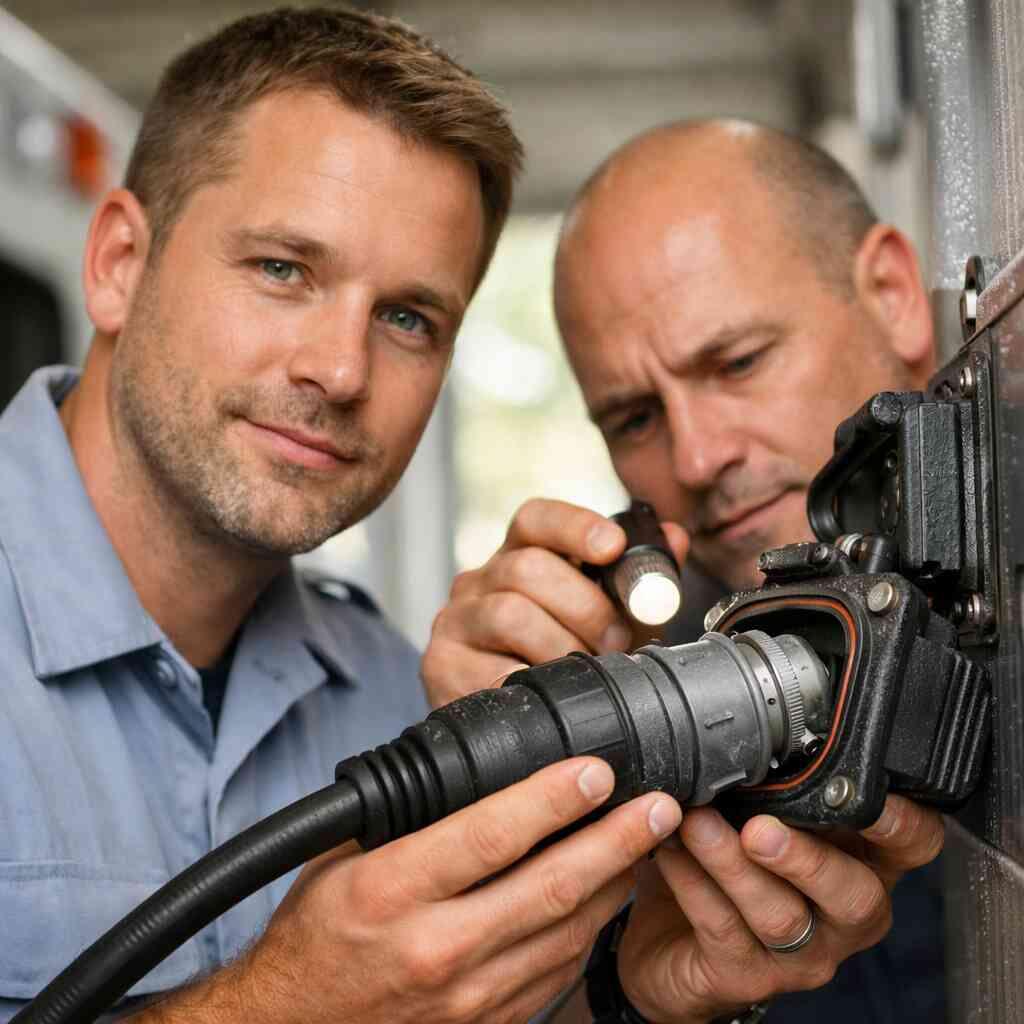
For crews focusing on junctions, receptacles, and accessories for fire station inventory checks, the key is consistency. Check wear points. Check storage condition. Check whether the same items keep cycling off the shelf. A connector that looks acceptable may still be the weakest point in the chain. That is especially true when equipment has seen repeated handling, transport, or wash-downs. If a part is central to readiness, it deserves a separate check, not a casual glance.
How protective equipment restocking supports high-demand equipment planning across crews
Protective gear is easy to postpone because everyone assumes there is “enough somewhere.” That assumption is dangerous. Protective equipment restocking should account for actual crew movement, not ideal staffing. Holiday periods increase demand, and spare items move faster than usual. If you wait too long, you end up restocking under pressure. That affects both cost control and response quality. It also creates tension when multiple crews need the same size or configuration.
A station leader told us about a stretch where the spare gear closet looked full until the weekend surge began. Then sizes sorted themselves into shortages. Mediums vanished first. One backup set was already out for maintenance. Another had been reassigned and never logged back. The issue was not total quantity. It was allocation. That is why high-demand equipment planning must track who can actually use each item.
Why supply chain resilience for fire services depends on replacement cycle planning and station cache replenishment
Supply chain resilience is not a slogan. It is the ability to keep operating when parts move slowly or demand spikes quickly. In fire service work, that depends on replacement cycle planning and station cache replenishment. If you know when a part typically reaches the end of its useful life, you can replace it before it fails. If you keep the cache replenished, you avoid cannibalizing one station to cover another. That is the practical side of supply chain resilience for fire services.
A simple replacement cycle table helps keep everyone aligned:
Item typeWatch forReplacement approachConnectors and pigtailsWear, looseness, repeated handlingReplace before failureReceptacles and junctionsHeat marks, intermittent issuesInspect on a fixed cycleBackup accessoriesMissing or reassigned itemsReplenish immediatelyProtective gearSize gaps, damage, agingRotate and replace earlyThat kind of table does not solve every problem. It does, however, make the next step obvious. And obvious steps are often the most valuable in a busy station.
What a DeLand Florida fire equipment supplier can help verify before holiday operations begin
A good supplier should help you verify compatibility, availability, and category fit without forcing guesses. If you need a contact a DeLand Florida fire equipment supplier moment, use it to confirm the details that matter most. Fire Power Products in DeLand, Florida can help guide that conversation with a practical eye toward durability and operational use. That local perspective matters because Florida crews often deal with heat, moisture, and fast-moving schedules. Those conditions expose weak points quickly.
Here is what to verify before holiday operations begin:
- Which accessories fit current apparatus setups
- Which backup items need immediate replenishment
- Which parts should stay station-specific
- Which items are safe to standardize across crews
- Which details require direct confirmation before ordering
You do not have to solve every inventory issue alone. You also do not need to finish it all today. Start with one station list, one backup gap, and one supplier call. That is how holiday readiness becomes manageable instead of overwhelming.
Frequently Asked Questions
Question: How can Fire Power Products help with Columbus Day fire equipment planning and fire supply planning for holidays?
Answer: Fire Power Products supports Columbus Day fire equipment planning by helping crews think through what needs to be ready before the schedule gets crowded. That includes reviewing station-level needs, checking accessory availability, and confirming which items should be kept in backup rather than pulled into general use. For fire supply planning for holidays, the goal is to reduce last-minute scrambling and protect holiday operations continuity. Fire Power Products, based in DeLand, Florida, focuses on durable fire equipment sourcing and practical readiness planning so departments can verify the items that matter most before holiday pressure builds.
Question: What should departments review first during an apparatus inventory review for seasonal fire apparatus readiness?
Answer: The first step in an apparatus inventory review is to identify the items that directly affect mission-critical equipment availability. That usually means checking connectors, receptacles, pigtails, extension pieces, and backup accessories before moving on to broader gear counts. Seasonal fire apparatus readiness depends on spotting small gaps early, because those are often the items that delay response when multiple crews need the same equipment. Fire Power Products can help departments approach this with a practical, station-by-station mindset that supports emergency response inventory planning and public safety inventory coordination.
Question: How does the Guide to Fire Power Products Supply Planning for Columbus Day help with mission-critical equipment availability?
Answer: The Guide to Fire Power Products Supply Planning for Columbus Day is designed to help crews prioritize what must stay ready, what can be staged as backup, and what needs to be confirmed before holiday demand rises. It emphasizes fire service logistics planning, equipment replacement cycle planning, and station cache replenishment so departments can avoid shortages that show up only when calls increase. By focusing on mission-critical equipment availability instead of waiting for a crisis, Fire Power Products helps crews keep operational readiness for holiday events on track with fewer surprises.
Question: Can Fire Power Products support hose and nozzle readiness checks and rugged fire equipment selection?
Answer: Yes, Fire Power Products can help departments think through hose and nozzle readiness checks by focusing on the support items and accessories that keep those systems usable. In many cases, the issue is not just the main tool but the surrounding components that are handled often and exposed to wear, transport, or wash-down conditions. That is why rugged fire equipment selection matters. The right choice is not about overpromising performance; it is about confirming fit, durability, and compatibility before procurement. Fire Power Products approaches durable fire equipment sourcing with that same practical standard, which helps departments make more reliable purchasing decisions.
Question: How do protective equipment restocking and service truck supply planning improve emergency response resource planning?
Answer: Protective equipment restocking and service truck supply planning both play a major role in emergency response resource planning because they determine whether crews can operate without unnecessary delays. When spare gear is not assigned clearly, it tends to disappear into general use, leaving shortages exactly when demand spikes. A stronger plan tracks who can use each item, where backups belong, and when replenishment should happen. That supports high-demand equipment planning, reliable fire gear logistics, and first responder supply chain planning by reducing confusion and keeping equipment where it is needed most.
Question: What can a DeLand Florida fire equipment supplier like Fire Power Products help verify before holiday operations begin?
Answer: A DeLand Florida fire equipment supplier like Fire Power Products can help verify compatibility, availability, and category fit before holiday operations begin. That is especially useful when departments need to confirm which parts are station-specific, which backup items need immediate replenishment, and which accessories can be standardized across crews. Fire Power Products supports municipal fire department procurement and EMS and fire station inventory planning by helping customers focus on the details that affect readiness most. If a department is unsure about exact specifications, the safest approach is to confirm them early rather than assume a near match will work. That kind of careful review strengthens supply chain resilience for fire services and helps protect holiday operations continuity.