Top 6 Fire Power Products for Florida Fleet Retrofit Projects
July 30, 2026
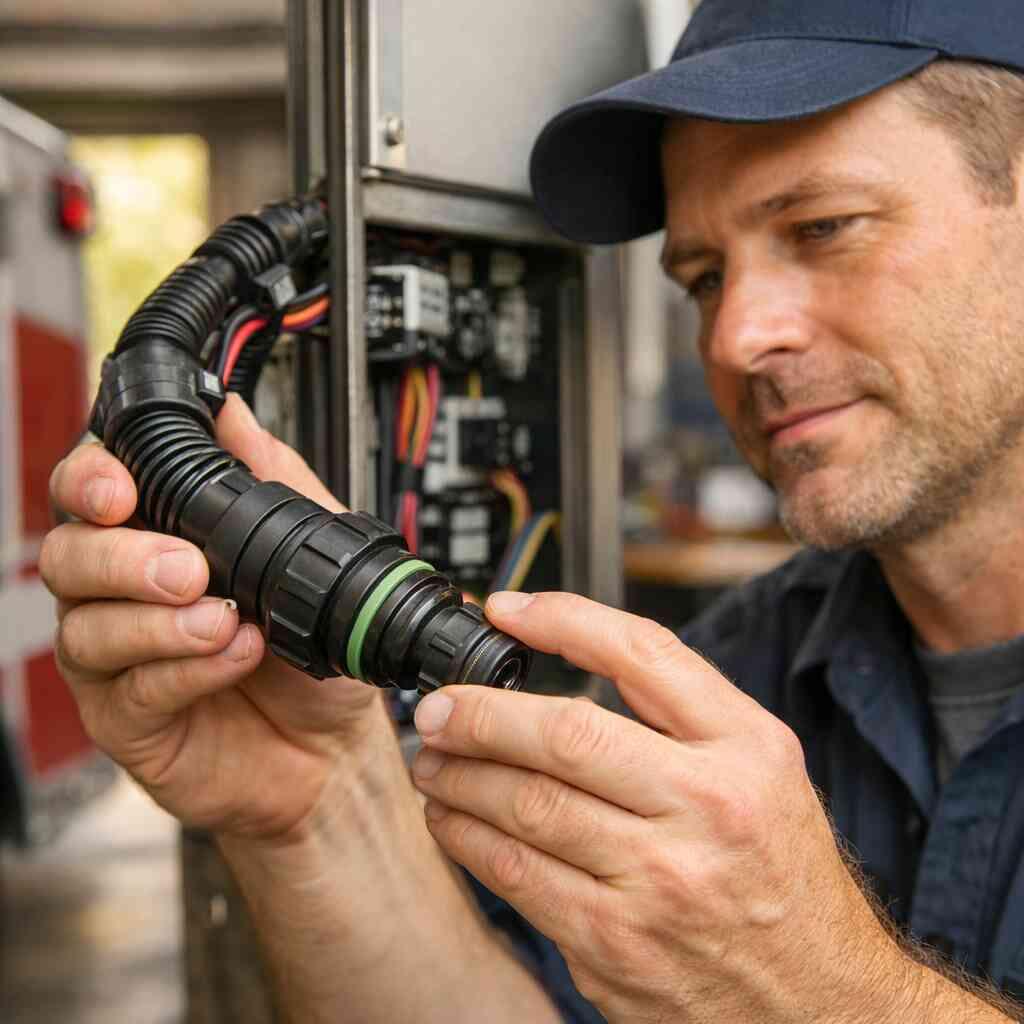
1) Fire Power IP68 Female Electrical Connector Pigtails
If you are staring at a retrofit list and feeling overloaded, start here. The connection point affects far more than most people expect. In fleet vehicle fire protection, the female side often sets the tone for the entire build. Fire Power Products can begin with this kind of practical choice. The job is not glamorous, but it is foundational.
Why retrofit teams start with the connection point instead of the finished circuit
Retrofit work gets messy fast when the connector choice comes too late. You may have the system mapped, the cab space measured, and the equipment mounted. Still, a poor connection plan can create service headaches later. That is why experienced installers treat the connector as a design decision, not an afterthought. Here is the part most crews miss: the smallest interface often creates the biggest downtime.
On projects like these, the female pigtail usually helps define a clean handoff between components. It supports organized wiring paths and makes later maintenance less disruptive. In fire safety equipment for fleet vehicles, that matters because access is never as easy as it looks on paper. You want dependable emergency vehicle components that fit the layout you already have. You also want a setup that does not force unnecessary rewiring.
Where female pigtails fit in Florida fleet vehicle fire protection layouts
Florida fleets deal with heat, humidity, and regular washdowns. That combination is rough on exposed hardware. Female pigtails can be a smart fit where cabling needs a secure interface inside a compartment or near mounted equipment. They help keep the installation compact and easier to route. For fleet vehicle fire protection, compact often means cleaner and safer.
A DeLand utility fleet once described a familiar problem to us: the equipment worked, but the access panel became a knot of wires after every service visit. The fix was not dramatic. The answer was better connector placement and better organization. That kind of change is exactly why retrofit-ready fire safety products deserve careful planning. You are not just buying parts. You are reducing future friction.
What to verify before ordering for emergency response fleet upgrades
Before you order, verify the connector family, sealing expectations, and compatibility with the rest of the system. Do not assume every connector labeled rugged will fit every demand. You should also check cable length, mounting position, and service clearance. Those three details can save a lot of rework. For emergency response fleet upgrades, small mismatches become real delays.
Use this short checklist:
- Confirm the mating side and orientation.
- Match the connector to the existing harness plan.
- Check how the part will be serviced in the field.
- Verify whether the placement is protected from abrasion.
- Review whether the layout supports future replacement.
A quick review now is cheaper than a field failure later. That is especially true in municipal fleet retrofit planning, where uptime matters. The right connector choice supports operator-friendly equipment design. It also keeps the build from feeling improvised.
How rugged connector placement supports hose-down resistant equipment goals
Many fleet buyers ask for hose-down resistant equipment, but the phrase only matters if the layout supports it. A connector can be well sealed and still poorly placed. If it sits where spray, vibration, or repeated handling hits it constantly, trouble follows. Good placement matters as much as good hardware. That is true in high-usage fire gear.
A system designed around durable fire equipment for vehicles should consider where water naturally flows during cleaning. It should also consider where hands, tools, and storage doors create wear points. The best installations feel almost boring in daily use. They stay put, stay organized, and stay serviceable. That is the real standard for rugged fleet hardware.
2) Fire Power IP68 Male Pigtails Electrical Connectors Fire Fighting Equipment
Male pigtails often become the cleaner choice when a retrofit needs a defined output point. They help simplify how vehicle-mounted fire equipment connects across compartments and accessories. That simplicity matters more than people think. In a busy apparatus bay, clean connections reduce confusion. They also reduce the odds of a rushed mistake during service.
When a male pigtail becomes the cleaner choice for mission-critical fleet hardware
A male pigtail makes sense when the system needs a clear lead into another component. It is often the better fit when you are building around a known destination point. That can make mission-critical fleet hardware easier to plan and easier to maintain. The connector style is small, but the effect is large. It can make the whole retrofit feel more intentional.
We hear this question a lot from teams doing fire service fleet enhancement work. They want to know which side should sit where. The answer depends on routing, service access, and how often the equipment gets moved or inspected. There is no universal shortcut. There is only a better fit for the actual vehicle.
How this connector style can simplify apparatus retrofit accessories planning
Apparatus retrofit accessories planning often becomes a puzzle of spacing and access. A male pigtail can create a straightforward path from one device to another. That matters when the compartment already contains pumps, lighting, controls, or suppression system components. The cleaner the path, the easier the maintenance. The cleaner the maintenance, the longer the system tends to stay organized.
On one recent fleet review, a supervisor showed us a compartment where three accessories had been added in stages. Each upgrade was fine on its own. Together, they created a crowded service zone. A cleaner connector plan would have prevented half the confusion. That is why planning ahead pays off.
What installers should confirm before integrating into vehicle-mounted fire equipment
Before integrating male pigtails into vehicle-mounted fire equipment, installers should confirm fit, sealing, and strain relief. They should also check how the connector sits under vibration. Florida roads and service conditions are unforgiving. A connector that looks fine on a bench may behave differently in a running vehicle. That is a detail worth respecting.
It helps to ask a few simple questions:
- Will the connection remain accessible after installation?
- Is the routing protected from sharp edges?
- Does the harness allow future maintenance without teardown?
- Will repeated opening and closing stress the connector?
These questions sound basic. They are not basic in the field. They are the difference between dependable emergency vehicle components and recurring service calls.
Why connector reliability matters in high-usage fire gear environments
High-usage fire gear environments punish weak points. A connector may only be one piece, but it can interrupt the entire workflow if it fails. That is why reliability matters so much in commercial fleet safety solutions. Every stop, every washdown, every inspection adds wear. A system built with reliability in mind avoids a lot of unnecessary drama.
Here is the practical truth. When connectors stay consistent, crews trust the equipment more. When crews trust the equipment, they use it properly. That is how rugged fleet hardware earns its keep. Not by sounding impressive, but by disappearing into the background and doing its job.
3) Fire Power IP68 Male Female Electrical Extensions Fire Fighting Equipment
Extensions solve a very specific problem: distance. In retrofit work, distance is never just distance. It is routing, access, storage, and serviceability all at once. When the layout is tight, a proper extension can prevent a full redesign. That is a real advantage in Florida fleet retrofit projects.
Where extension assemblies solve real spacing problems inside fleet retrofits
Extension assemblies are useful when components cannot sit close enough to connect directly. That happens often in vehicle-mounted fire equipment. Compartments fill up quickly. Mounting points shift. Service access creates its own limits. A well-chosen extension keeps the build moving without forcing shortcuts.
The strongest use case is simple. You want to preserve function without crowding the space. Male female electrical extensions for emergency response fleet upgrades can do that when the routing is planned carefully. They help keep the system orderly. They also reduce the temptation to stretch a cable where it should not be stretched.
How to think about reach, routing, and service access in commercial fleet safety solutions
Think about reach first, then routing, then service access. That order saves trouble. Many teams reverse it and end up with awkward bends or buried connectors. Commercial fleet safety solutions work best when every component can still be inspected. Hidden hardware is not always protected hardware.
A smart routing plan should leave enough slack for maintenance without creating loops that snag. It should also keep connectors away from heat and abrasion where possible. The goal is not perfection. The goal is sensible access. That is often enough to separate a solid retrofit from a frustrating one.
What makes an extension useful for emergency vehicle storage and organization
Emergency vehicle storage and organization depend on predictability. If a technician opens a compartment and cannot tell what goes where, the layout is already failing. Extensions help by giving installers room to place hardware where it belongs. They can reduce clutter around hinges, trays, and pull-out drawers. That alone can make the whole vehicle easier to work in.
For fire protection products for service vehicles, organization is not cosmetic. It affects readiness. It affects inspection time. It affects how quickly a crew can spot a problem. That is why an extension should be judged by more than length. It should also be judged by how well it supports a logical workflow.
When extension-based planning keeps a modernization project from becoming a rewiring project
Extension-based planning is often the difference between a modernization and a rebuild. If the existing path is sound, an extension may preserve the original wiring intent. If the path is poor, the extension may only hide the issue. So you should use it strategically. Never use it to mask a layout problem you already understand.
In practical terms, this is how you avoid unnecessary rewiring:
- Measure the actual in-vehicle path, not the straight-line distance.
- Confirm bend radius before final mounting.
- Leave service access near both ends.
- Keep the extension away from pinch points.
- Test the route before final fasteners go in.
That approach supports resilient equipment for demanding conditions. It also keeps your retrofit budget focused where it belongs. Not every problem needs a new circuit. Sometimes it just needs the right extension.
4) Fire Power Fire Fighting Electrical Equipment Junctions Receptacles and Accessories
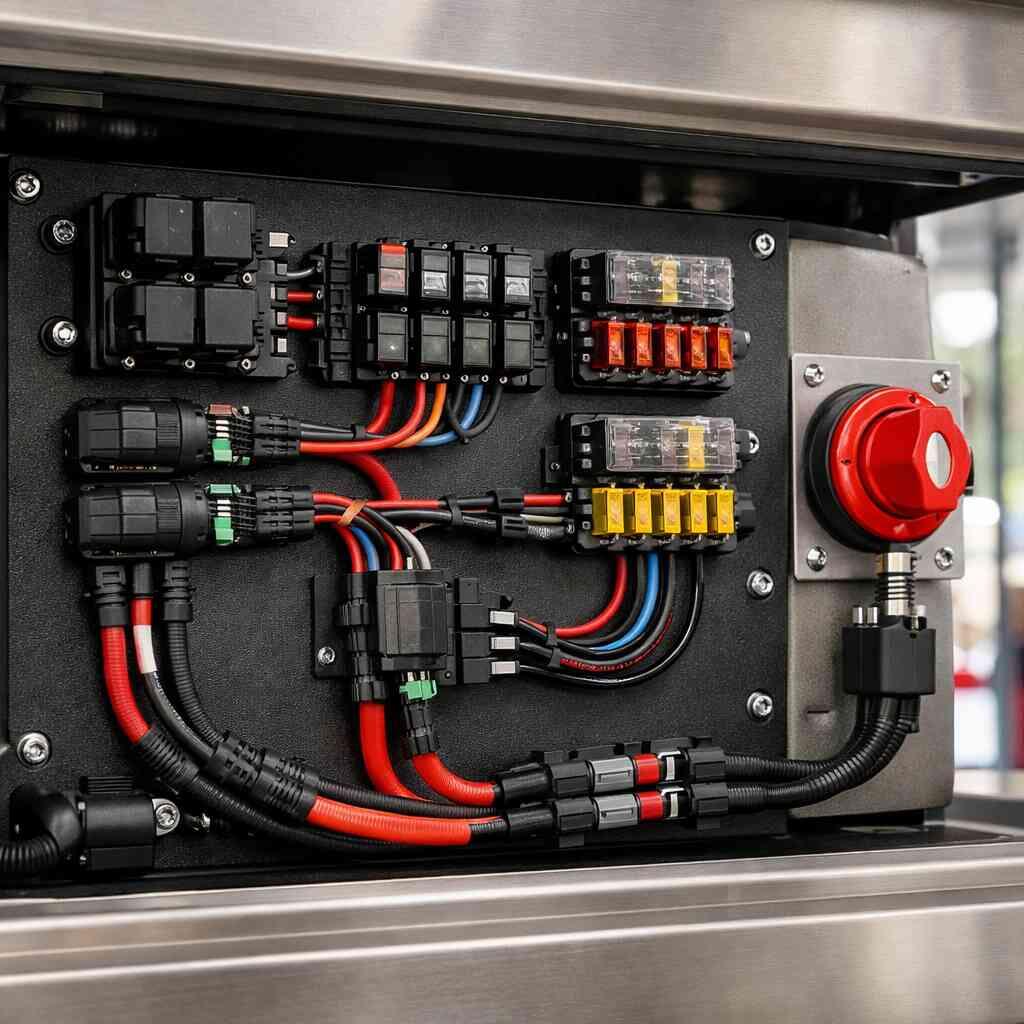
This is the section where many retrofits either come together or fall apart. Junctions and receptacles determine whether the build feels deliberate. Accessories determine whether it stays that way. If the interface points are poor, the rest of the system inherits the problem. If they are clean, the entire install feels more professional.
Why junctions and receptacles often determine whether a retrofit feels orderly or improvised
Junctions and receptacles are the handshake points of the system. They tell you whether the install was planned as a whole or assembled in pieces. In fire fighting electrical equipment, that distinction matters because service crews need clarity. They need to know what connects where, and they need to know it fast. An orderly layout saves time under pressure.
We have seen systems where the major equipment was excellent, yet the receptacles were scattered without logic. The result looked temporary, even though the hardware itself was not. That is the hidden cost of poor planning. It makes a good product feel like a compromise.
How accessory selection affects durable fire equipment for vehicles over time
Accessory selection affects more than appearance. It affects wear, access, and maintenance cycles. Durable fire equipment for vehicles should be selected as a system, not a pile of parts. A weak accessory can undermine a strong connector. A mismatched receptacle can complicate an otherwise smart layout.
That is why product comparisons should focus on fit and function first. Ask how the accessory will hold up to repeated use. Ask how it will handle vibration, cleaning, and service checks. Ask whether it supports the rest of the build. Those questions help you choose industrial-duty safety products with confidence.
What to check when aligning junction points with fleet modernization for public safety vehicles
When aligning junction points with fleet modernization for public safety vehicles, check the service path and the physical security of the mount. Also check how the point relates to other equipment nearby. A junction placed one inch too far can create hours of annoyance later. That may sound dramatic. It is not. Small layout errors compound fast.
Use a simple review process:
- Confirm the junction location is protected.
- Verify the receptacle can be reached without dismantling nearby gear.
- Check the mounting surface for long-term stability.
- Make sure labels and orientation are clear.
- Confirm the accessory matches the vehicle’s workflow.
That process supports fleet modernization for public safety vehicles in a practical way. It keeps the job visible, organized, and maintainable.
How these components support resilient equipment for demanding conditions
Resilient equipment for demanding conditions depends on more than seals and housings. It depends on how the system behaves in daily use. Junctions and receptacles should help the crew move quickly without confusion. Accessories should support that rhythm rather than interrupt it. That is the real benchmark.
If you are comparing junctions, receptacles, and accessories for vehicle-mounted fire equipment, look beyond the catalog picture. Think about the truck, the compartment, the operator, and the service schedule. That perspective saves mistakes. It also helps you choose components that feel built for work, not just built for sale.
5) Duraline Fire Power Products
The Duraline Fire Power line represents a practical approach to USA-engineered fire safety gear. It is designed for demanding conditions, but the real value comes from fit and usability. In Florida, that matters. Heat, moisture, and frequent handling expose weak hardware quickly. Buyers in DeLand and beyond need products that respect those conditions.
What the Duraline Fire Power line represents for USA engineered fire safety gear
USA-engineered fire safety gear carries an expectation of consistency. That expectation matters in fleet work, where repeatability is everything. Duraline Fire Power products are built around the idea that fire protection hardware should handle real service life. That includes heavy use, rough handling, and regular cleaning. It also includes the need for dependable emergency vehicle components.
For buyers comparing retrofit solutions for fire departments, the question is not just what a product is. It is what problem it solves. The Fire Power line focuses on practical durability and connector-based planning. That makes it a strong fit for teams building around mission-critical fleet hardware. It also helps keep the installation process clear.
How DeLand Florida fire safety company buyers can think about sourcing and support
DeLand Florida fire safety company buyers should think in terms of compatibility and support. Local weather and local fleet demands shape the purchase. A product that works in a dry, mild environment may not be the best fit here. That is especially true for hose-down resistant equipment and high-usage fire gear. The sourcing decision should reflect that reality.
If you want context on the area, DeLand, Florida information for emergency fleet planning can help frame local conditions without overcomplicating the project. Still, the most useful information is often vehicle-specific. What truck, what compartment, what wiring path, what service rhythm? Those questions lead to better buying decisions. They also keep the project grounded.
Which retrofit-ready fire safety products deserve the closest comparison before purchase
The products that deserve the closest comparison are the ones that affect routing, access, and future maintenance. That usually includes pigtails, extensions, junctions, and receptacles. Compare them side by side. Ask how each part supports your fire protection products for service vehicles plan. Do not chase the longest spec sheet. Chase the best fit.
Here is a simple comparison view:
Product typeBest useKey planning concernFemale pigtailsClean input connectionsMounting and protectionMale pigtailsClear output connectionsOrientation and accessExtensionsSpacing and reroutingReach and bend radiusJunctions and accessoriesOrganized system interfacesServiceability and layoutThat table can help you narrow your shortlist. It also keeps the conversation focused on how the parts work together. Retrofit-ready fire safety products for commercial fleet upgrades are easiest to evaluate when you compare function, not just labels.
Why rugged fleet hardware is only useful when it fits the vehicle and the workflow
This is the part almost no online guide says plainly. Hardware can be strong and still be wrong. If it does not fit the vehicle, the route, and the workflow, it creates work instead of removing it. That is why rugged fleet hardware must be judged in context. The best part is the one crews can use without thinking twice.
On the projects we have finished this year, the smoothest retrofits were the ones where the parts matched the operator’s habits, not the other way around. That is a practical lesson. It applies to every connector, extension, and accessory in the system.
6) Contact Duraline
At some point, comparison has to turn into planning. That moment usually comes when you know the vehicle constraints, but you still need the right parts map. If you are there now, that is normal. You do not need to solve everything alone. You just need the right next conversation.
When to move from product comparison to project planning with a supplier
Move from comparison to planning when you have narrowed the functional needs. If you know the vehicle type, the compartment limits, and the equipment goals, you are ready. That is the stage where a supplier can help refine the build. It is also the stage where mistakes become easier to avoid. Good planning here saves time later.
If you are ready to contact Duraline for Florida fleet retrofit planning and support, bring a clear description of the layout. Include photos if possible. Include dimensions if you have them. Include the maintenance access concerns that keep you up at night. That kind of detail turns a generic inquiry into a useful conversation.
What information to have ready for Florida fleet retrofit projects before reaching out
Before reaching out, gather the basics. You will move faster if you can answer these items:
- Vehicle type and compartment layout
- Existing equipment and wiring path
- Desired mounting points
- Cleaning and washdown expectations
- Access needs for inspection and service
This is especially helpful for Florida fleet retrofit projects, where heat and humidity raise the stakes. A few good photos can explain more than a long email. A simple sketch can prevent a bad assumption. And a realistic list of priorities can help a supplier suggest better options.
How to frame your needs around fire protection products for service vehicles
Frame your needs around the work the vehicle actually does. That sounds obvious, yet it gets skipped all the time. If the truck sees constant use, say so. If the compartment is cramped, say so. If cleaning happens often, say so. Those details matter for fire protection products for service vehicles.
Try describing the job in plain language. “We need clean routing near a tight access panel.” “We need components that support repeated washdowns.” “We need dependable emergency vehicle components that do not crowd the bay.” That language helps the supplier think like an installer, not a catalog reader. It leads to better recommendations.
The next decision that turns a parts list into a workable retrofit path
The next decision is simple. Pick the components that match your vehicle, your crew, and your service routine. Then confirm the layout before installation starts. That one step can save a lot of frustration. It also keeps the retrofit anchored in reality.
If you are building out a Florida fleet today, start with one call, one vehicle, and one clear goal. You do not have to figure this out alone, and you do not have to figure it all out today. Start with the most important truck, gather your photos, and move one step forward.
Frequently Asked Questions
Question: What should I consider first when selecting retrofit-ready fire safety products for Florida fleet retrofit projects?
Answer: Start with the vehicle layout, service access, and the connection points that will tie the system together. In fleet vehicle fire protection, connectors, pigtails, extensions, junctions, and receptacles can affect how easy the installation is to route, inspect, and maintain. For Florida fleet retrofit projects, it is also important to think about heat, humidity, vibration, and washdown exposure. The best approach is to match the part to the vehicle and workflow rather than choosing hardware based on a spec sheet alone. Fire Power Products focuses on practical, USA-engineered fire safety gear that supports dependable emergency vehicle components and helps keep the retrofit organized and serviceable.
Question: How do I know whether I need female pigtails, male pigtails, or an extension for vehicle-mounted fire equipment?
Answer: The right choice depends on how the components need to connect and where the service access will be. Female pigtails are often used when you want a clean input connection, while male pigtails can be useful for a clear output point. Extensions are helpful when the equipment must reach across a compartment or around existing apparatus without forcing a redesign. For vehicle-mounted fire equipment, the goal is to keep routing practical, reduce clutter, and preserve easy access for maintenance. Fire Power Products offers options that fit into commercial fleet safety solutions and help support durable fire equipment for vehicles when the build needs to be both compact and readable.
Question: In Top 6 Fire Power Products for Florida Fleet Retrofit Projects, why are junctions, receptacles, and accessories such an important part of the build?
Answer: Junctions and receptacles often determine whether a retrofit feels orderly or improvised. They are the interface points that help crews understand how the system is arranged and how it will be serviced later. In fire fighting electrical equipment, clean layout and clear access matter because downtime and confusion can create real problems in the field. The right accessories also help support rugged fleet hardware by keeping the installation secure, accessible, and consistent over time. For fleet modernization for public safety vehicles, Fire Power Products provides components that are designed to support organized installations and dependable emergency vehicle components without overcomplicating the system.
Question: How can Fire Power Products help with hose-down resistant equipment and high-usage fire gear in Florida conditions?
Answer: Florida fleets face moisture, heat, frequent cleaning, and regular use, so hardware placement and durability both matter. Hose-down resistant equipment is only useful if the full installation supports that goal, including how connectors are placed and protected. High-usage fire gear needs to stay accessible, secure, and easy to service even after repeated inspections and washdowns. Fire Power Products is described as USA-engineered fire safety gear built for demanding conditions, which makes it a practical option for teams seeking resilient equipment for demanding conditions. The key is to plan the retrofit around real maintenance habits and vehicle workflow so the system remains dependable in daily use.
Question: What information should I have ready before contacting Fire Power Products for Florida fleet retrofit planning and support?
Answer: Before reaching out, gather the vehicle type, compartment layout, existing wiring path, desired mounting points, and any access concerns for inspection or maintenance. Photos and basic measurements are also helpful because they make it easier to discuss fire protection products for service vehicles in a way that reflects the real installation environment. If the vehicle will be used in municipal fleet retrofit planning or fire service fleet enhancement work, it is especially useful to note washdown expectations, vibration exposure, and how often the equipment is used. That information helps Fire Power Products recommend retrofit solutions for fire departments that better fit the vehicle and support operator-friendly equipment design. The more clearly you describe the workflow, the easier it is to identify the right mission-critical fleet hardware.
Question: How do I decide whether Fire Power Products is a good fit for dependable emergency vehicle components and commercial fleet safety solutions?
Answer: A good fit usually comes down to compatibility, serviceability, and how well the parts support the vehicle’s actual job. Fire Power Products is positioned as a DeLand, Florida fire safety company offering durable, practical components for fleet vehicle fire protection and emergency response fleet upgrades. For buyers comparing industrial-duty safety products, the most important question is whether the hardware supports the compartment layout, maintenance routine, and workflow without creating unnecessary rewiring or clutter. If your project calls for rugged fleet hardware, reliable fire protection hardware, and retrofit-ready fire safety products that are easier to integrate into a working vehicle, Fire Power Products is worth serious consideration. The focus should always stay on fit, function, and long-term usability rather than on overpromised performance claims.