Top 5 OSHA Ready Fire Power Products for DeLand Buyers
July 10, 2026
1) Fire Power IP68 Female Electrical Connector Pigtails
If you are reading this because a connection failed after a washdown, you know the feeling. It is frustrating, expensive, and usually preventable. DeLand facilities deal with heat, humidity, storms, and cleanup cycles that punish weak hardware. That is why the first conversation often starts with OSHA-ready fire safety equipment in DeLand and the connector that can stay dependable under abuse.
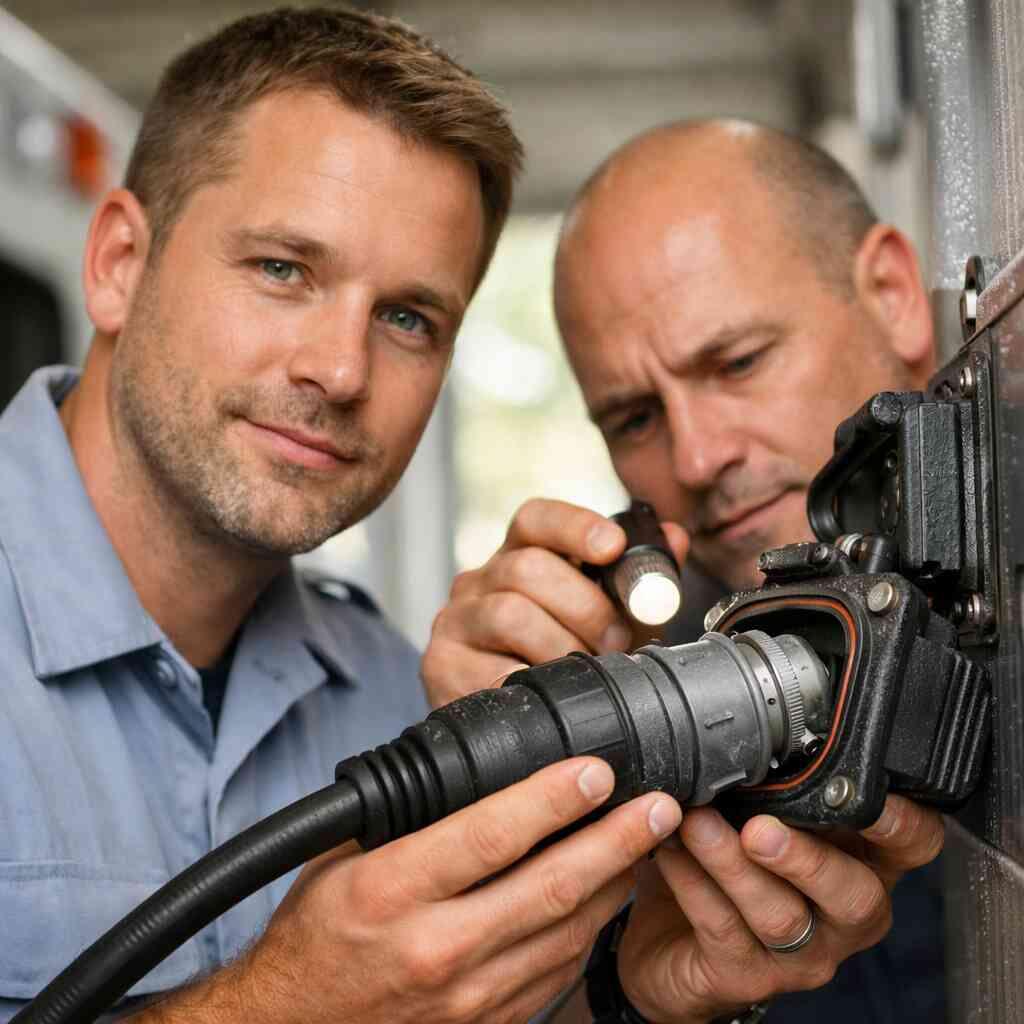
Female pigtails are often the first choice when uptime matters because they create a clean, controlled interface for powered equipment. In fire protection products for DeLand buyers, that matters more than most people realize. A female pigtail can simplify service access while reducing exposed contact points in demanding layouts. On the projects we’ve finished this year, the biggest mistake we see is choosing the lowest-profile option before checking sealing needs.
Why DeLand facilities choose female pigtails first when uptime and hose-down resistance matter
A female pigtail usually gives you a more controlled mating point for field equipment. That helps when crews need fast access without disturbing the rest of the assembly. It also supports workplace fire safety compliance because you can separate service tasks from the active equipment path more cleanly. For many facilities, that means fewer interruptions and fewer improvised fixes.
Here is the part most buyers miss. A connector is not just a connector. It is a maintenance decision, a moisture-management decision, and a wiring-layout decision. If your site uses hose-down cleaning, you need hardware that fits that reality from day one. That is where a rugged pigtail earns attention before anything else.
Where a rugged connector pigtail fits inside fire protection and emergency response equipment layouts
Female pigtails often sit at the transition point between powered devices and the broader system. You may see them in industrial fire equipment with IP68 sealing needs, especially where wiring must remain protected during cleanup. They can support control panels, alarm-adjacent equipment, and other fire readiness essentials that demand stable connections. The point is not glamour. The point is continuity.
One client in a Volusia County light-industrial space had recurring shutdowns after rinse-downs near a service bay. The issue was not the equipment itself. It was the connector placement and the lack of practical access. After the layout was corrected, maintenance became faster and the failure pattern stopped showing up in the same spot. That is the kind of change that matters on a busy floor.
What to verify before specifying an IP68 female connection for workplace fire safety compliance
Before you specify any connector, verify the rating, mating compatibility, and enclosure requirements. Do not assume a label alone solves the problem. You should also confirm cable entry, strain relief, and environmental exposure. If your site is chasing OSHA compliant fire gear for DeLand buyers, those details matter as much as the product name.
A simple checklist helps:
- Confirm the intended mating partner.
- Verify sealing expectations for washdown or dust.
- Match the connector to the cable size.
- Check whether the enclosure supports the connector depth.
- Review service access before final installation.
This is where the wrong assumption costs time. A connector can be technically suitable and still be awkward in the field. That awkwardness becomes downtime later.
How service access, sealing integrity, and installation fit affect long-term reliability in demanding conditions
Long-term reliability starts with fit. If the connector is forced into a cramped panel, the seal gets stressed. If the cable bends too sharply, the strain relief loses value. If the technician cannot reach it easily, maintenance gets delayed. Those are small decisions that become major failures later.
For buyers comparing reliable fire equipment for demanding conditions, the lesson is simple. Choose hardware that supports clean inspection and clean replacement. DeLand weather can be unforgiving, and cleanup routines do not get gentler with time. If you want the connection to last, make the install easy to service, not just easy to sell.
2) Fire Power IP68 Male Pigtails Electrical Connectors Fire Fighting Equipment
Male pigtails solve a different problem. They often make the handoff point cleaner when the system needs a defined output side. In fire protection products for buyers in DeLand, that can help organize power distribution without cluttering the layout. You get a clearer path, and clarity matters when a crew is under pressure.
The practical question is not whether male pigtails are “better.” It is whether they fit the role. For some assemblies, they reduce confusion and make field work faster. For others, they add unnecessary exposure. The best choice depends on how the system is used, cleaned, and maintained.
When a male pigtail becomes the better handoff point in a fire equipment power chain
A male pigtail often works well where the equipment side needs a distinct output or handoff point. That can help in first responder-grade fire products for facilities that require fast, predictable connection management. If crews regularly connect and disconnect equipment, a clear interface reduces mistakes. Mistakes are expensive when the wrong lead gets pulled or the wrong port gets used.
We hear this from clients almost every week. The connection looked straightforward on paper, but the actual workflow was messier. Someone had to crouch, twist, and guess. That is exactly where a male pigtail can help if the layout supports it. It gives the system a more intentional structure.
The practical tradeoff between compact field wiring and dependable connection security
Compact wiring saves space. That is the upside. But compact wiring can also make inspection harder if the layout becomes too dense. When you are dealing with heavy-duty fire protection hardware for cleanup-intensive sites, you need enough room to inspect seals, cords, and entry points without dismantling half the enclosure.
The tradeoff is real. A smaller footprint may look tidy, but tidy is not always maintainable. If the connector is too buried, service takes longer. If it is too exposed, it suffers from unnecessary handling. Good design sits in the middle.
Decision factorCompact field wiringDependable connection securityService speedFaster in tight spacesFaster when access is plannedInspection easeCan be limitedUsually better with clear spacingPhysical exposureLower if protectedLower if routed intentionallyField error riskHigher if crowdedLower with clear labeling### What DeLand buyers should confirm about compatibility before placing male pigtails into a system
Compatibility comes first. Confirm mating geometry, sealing expectations, and cable specification before installation. If you are comparing fire readiness essentials for Florida fleets, do not let the connector format override the system requirement. The wrong mating partner can create a problem that looks like a hardware failure but is really a planning failure.
You should also ask how the connector behaves under repeated service cycles. Does the layout allow clean reconnection? Does the routing place pressure on the joint? Is there room for a technician to work without disturbing nearby components? These questions sound basic. They are not. They are where reliability is won.
How rugged connector selection supports industrial fire equipment that faces heavy use and cleanup
Rugged selection matters most when the environment is not polite. Industrial fire equipment sees vibration, repeated handling, and frequent cleaning. In that setting, durable fire hose equipment and emergency accessories deserve hardware that tolerates more than one ideal scenario. A good male pigtail should support the workflow without becoming the weak point.
One facility manager in central Florida told us the maintenance issue was never the first failure. It was the second and third. The team kept repairing around a connector that was never meant for that abuse pattern. Once the layout changed, the repeat call-outs dropped. That is the hidden cost people forget to count.
3) Fire Power IP68 Male Female Electrical Extensions Fire Fighting Equipment
Extensions solve the distance problem. That sounds simple, but in real facilities, distance is rarely simple. Equipment moves. Walls shift the routing. Access panels end up farther away than planned. A well-chosen extension can keep commercial fire protection solutions in Florida practical instead of awkward.
This category often saves time because it reduces the need for rework. You avoid unnecessary splices. You avoid relocating equipment just to close a gap. Most importantly, you preserve clean routing in spaces already crowded with hoses, cabinets, and service paths.
Why extensions solve the hidden distance problem in commercial fire protection solutions
Distance is the hidden tax in many installs. The panel may be in the right place, but the endpoint sits just far enough away to create stress. A male-female extension bridges that gap cleanly. For workplace fire safety compliance in demanding conditions, that often means a more maintainable and more legible system.
Here is what almost no online guide mentions. A six-foot problem can become a thirty-minute problem if the cable path is wrong. Then it becomes a service ticket. Then it becomes schedule drift. Extensions reduce that chain reaction when they are specified correctly.
When a male female extension is the cleaner choice than relocating equipment or adding splices
A male-female extension is often the cleaner choice when the equipment location itself is sound. If the device belongs where it is, move the connection, not the machine. That approach preserves enclosure integrity and avoids adding more failure points. It also keeps the system closer to the original design intent.
That matters for fire equipment for facilities near DeLand, Florida, where space and access are often at odds. Splices can work, but they add complexity. Relocation can work, but it often adds labor and downtime. A properly selected extension frequently offers the cleaner path.
How to evaluate reach, routing, and strain relief without guessing at the jobsite
Evaluate reach in the actual install path, not on a bench. Measure the real bend radius. Check the pull direction. Look for pinch points at doors, corners, and service openings. Then confirm strain relief under the expected movement pattern. A practical review helps:
- Measure from endpoint to endpoint along the true route.
- Leave slack for maintenance, not excess for clutter.
- Confirm the extension will not cross hot or abrasive surfaces.
- Test whether the connector remains reachable.
- Verify that labels stay visible after routing.
If you are trying to support workplace emergency preparedness with rugged connectors, this step is non-negotiable. Guessing here is how clean jobs become messy ones.
Where extensions can reduce downtime in fire station facilities and emergency response setups
Extensions can cut downtime by making replacement faster and inspection easier. In emergency service operations in DeLand, Florida, that matters because interruptions rarely happen at convenient moments. A cleaner connector path means faster troubleshooting and fewer teardown steps. That is especially valuable where crews need the equipment back online quickly.
On one station-adjacent service bay we reviewed, the extension solved a recurring “dead zone” in the cabling path. The issue was not the power source. It was the awkward reach. Once corrected, the team could service the unit without moving neighboring equipment. Small fix. Big relief.
4) Fire Power Fire Fighting Electrical Equipment Junctions Receptacles and Accessories
Junctions and receptacles are the quiet parts of the system. They do not get the attention, but they often determine whether the layout remains dependable. For industrial fire equipment with IP68 sealing, the junction point is not an afterthought. It is a control point. If it fails, everything downstream feels it.
Accessories matter for the same reason. The wrong cover, bracket, or interface can undermine an otherwise strong setup. Buyers looking for safety and emergency preparedness basics often focus on the visible equipment first, then learn that the support hardware is what makes the system usable.
The junction point that can make or break a dependable fire equipment system
A junction is where the system either becomes organized or becomes vulnerable. Good junction design helps distribute power cleanly, support inspection, and protect the enclosure from routine exposure. Bad junction design turns maintenance into guesswork. That is never a good trade in fire-related applications.
This is why many teams start asking about OSHA-ready fire safety equipment in DeLand only after they have seen one weak junction fail. The failure may not look dramatic. It may just look like corrosion, looseness, or recurring contact trouble. But those small issues add up fast.
Which accessories deserve scrutiny when a facility needs OSHA ready fire safety equipment
You should scrutinize any accessory that affects sealing, retention, or service access. That includes caps, covers, mounts, and mating components. The accessory may seem minor, but minor parts control major outcomes. For commercial fire protection solutions in Florida, that scrutiny is part of responsible specification.
Look closely at:
- Enclosure fit.
- Moisture exposure.
- Fastener quality.
- Label visibility.
- Access for maintenance tools.
If you skip these checks, the panel may look finished while remaining fragile. That is a bad surprise in any facility, and a worse one in a fire readiness context.
How receptacles and junctions support safer maintenance without turning the panel into a weak link
A well-placed receptacle makes maintenance safer because it gives technicians a defined point of interaction. They do not need to disturb unrelated wiring. They do not need to force access through a crowded enclosure. That matters when you want trusted fire safety solutions that can be serviced without drama.
The trick is balance. Too much exposure invites damage. Too much concealment slows service. The best setups make the maintenance path obvious while keeping the hardware protected. That is the sweet spot most facilities are chasing, even if they do not say it that way.
What DeLand buyers should ask about enclosure fit, moisture exposure, and everyday abuse
Ask how the enclosure behaves after repeated opening, cleaning, and closure. Ask whether the fit changes with temperature or vibration. Ask whether the junction can stay secure in humidity and during routine washdowns. DeLand’s climate does not forgive sloppy assumptions.
If your site depends on high-durability fire protection hardware for cleanup-intensive sites, you should also ask who will inspect the parts and how often. The answer does not need to be complicated. It just needs to be real. A well-chosen junction keeps the system serviceable, not delicate.
5) Duraline Fire Power Products
Some buyers start with one connector and end up needing a broader system view. That is normal. Once you look at the whole layout, the wider Fire Power lineup starts to make more sense. Buyers looking for American-made fire safety gear for local businesses often want that broader framework because it helps align reliability, service access, and equipment consistency.
Duraline’s Fire Power products are built for demanding environments, and the value for DeLand buyers is clarity. You can compare categories instead of chasing isolated fixes. That helps when the goal is professional grade fire safety equipment that supports the entire site, not just one point of connection.
Why buyers looking for American made fire safety gear often start with the broader Fire Power lineup
Starting broad helps you match the product family to the job. You may need connectors, extensions, receptacles, or support accessories. Looking at the full lineup can reduce mismatches and unnecessary substitutions. It also makes it easier to build fire safety products for local businesses around one consistent approach.
If you care about long-term serviceability, that consistency matters. Different product families can create different maintenance habits. Consistent hardware often makes training, replacement, and inspection simpler. Simple is good. Simple is faster.
How to compare product families when the goal is durable fire hose equipment and fire readiness essentials
Compare by function first, then by environment. Ask what the hardware does, where it lives, and how often it will be handled. For durable fire hose equipment and emergency accessories, that order matters more than marketing language. The right product is the one that fits the real workflow.
A practical comparison frame looks like this:
Comparison pointAsk yourselfEnvironmentWill it face washdowns, dust, or vibration?AccessCan crews inspect it easily?CompatibilityDoes it mate cleanly with the rest of the system?MaintenanceCan it be serviced without disrupting nearby equipment?That is the decision-making lens many busy facility teams need. Not complicated. Just disciplined.
Which operating conditions call for a full system approach instead of a single connector swap
A full system approach makes sense when the environment is harsh, the layout is crowded, or the maintenance cycle is frequent. If your site sees heat, cleaning, and repeated interaction, one connector swap may only treat a symptom. The larger system may still be poorly matched. That is why first responder-grade fire products for facilities are often reviewed as a set.
We saw this in a small industrial yard where one repair kept failing because the surrounding hardware stayed undersized for the abuse. The fix was not glamorous. It was comprehensive. Once the support pieces matched the connector choice, the repeated breakdowns stopped. That is a good reminder that hardware works best as a system.
The decision frame that helps DeLand businesses match rugged fire protection hardware to real facility demands
Start with the environment. Then match the connector style, routing, and access needs. After that, verify serviceability under real maintenance conditions. If the product cannot survive routine handling, it is not the right choice, no matter how good it looks on the spec sheet. That is the same logic behind fire readiness essentials for Florida fleets and facility buyers alike.
If you are choosing Fire Power hardware for a DeLand facility, do not rush the last mile. Review the layout. Confirm the mating parts. Then choose the category that supports the job instead of fighting it. You do not have to figure it out alone, and you do not have to figure it all out today. Start with one call to Fire Power Products, compare the right fit for your equipment, and build from there.
Frequently Asked Questions
Question: What should DeLand buyers look for when choosing OSHA ready fire safety equipment for washdown-heavy or humid facility environments?
Answer: Buyers should focus on fit, sealing, routing, and service access before they focus on the connector style alone. In humid or washdown-heavy environments, the key is choosing fire protection products for DeLand buyers that support the actual maintenance routine at the facility. That means verifying compatibility with the intended mating partner, checking enclosure depth, confirming cable size, and making sure the connector can be inspected and serviced without awkward disassembly. Fire Power Products offers rugged fire protection hardware designed for demanding conditions, so the right choice starts with matching the product to the environment rather than assuming every connector will perform the same way. For workplace fire safety compliance, the most dependable setup is the one that can be maintained cleanly and consistently over time.
Question: How does Top 5 OSHA Ready Fire Power Products for DeLand Buyers help facilities compare female pigtails, male pigtails, extensions, junctions, and accessories for workplace emergency preparedness?
Answer: The value of Top 5 OSHA Ready Fire Power Products for DeLand Buyers is that it frames each product by function, not just by name. Female pigtails are often useful when crews need a controlled service point, male pigtails can help define the output side of a system, male-female extensions can solve reach issues without relocating equipment, and junctions or receptacles help keep the layout organized and serviceable. Accessories matter because covers, mounts, and related parts can affect sealing and access just as much as the connector itself. Fire Power Products supports buyers who want professional grade fire safety equipment by helping them compare the real-world role of each part in the overall system. That approach makes it easier to choose reliable fire equipment for demanding conditions instead of guessing based on appearance alone.
Question: Can Fire Power Products help DeLand businesses build commercial fire protection solutions without overcomplicating the install?
Answer: Yes, the practical goal is to simplify the install while preserving reliability. In many fire equipment for facilities applications, the best solution is not the most complicated one. It is the one that reduces unnecessary splices, avoids awkward routing, and keeps inspection points accessible. Fire Power Products is a fire safety supply company focused on equipment that supports clear layouts and dependable maintenance habits. For DeLand businesses, that can make a big difference because a clean install is easier to inspect, easier to service, and less likely to turn into repeated downtime. If the site needs fire safety products for local businesses that can handle frequent use, the smartest approach is to choose hardware that matches the route, the enclosure, and the service workflow from the start.
Question: What makes rugged fire protection products a better fit for industrial fire equipment and hose-down resistant fire products?
Answer: Rugged fire protection products are valuable because they are selected with environmental stress in mind. Industrial fire equipment often faces vibration, repeated handling, moisture, dust, and cleaning cycles that expose weak points quickly. Hose-down resistant fire products help reduce the chance that routine maintenance or cleanup will create unnecessary connection problems. Fire Power Products emphasizes durability for demanding conditions, which is especially important when buyers need long lasting fire safety hardware that can stay serviceable over time. The best outcome is not just a product that looks strong on paper, but one that fits the physical realities of the site and supports dependable fire equipment solutions under regular use.
Question: How should a facility decide between a connector swap and a full system approach when choosing fire readiness essentials?
Answer: A connector swap is helpful when the surrounding layout already makes sense, but a full system approach is better when the environment, routing, and access points all contribute to the problem. That is why buyers should look at the entire chain of fire safety equipment instead of focusing on one weak point. If the hardware is repeatedly exposed to heat, cleaning, vibration, or cramped access, then the surrounding parts may need to be reviewed as well. Fire Power Products is well suited to that type of decision because the lineup can support a broader view of safety focused fire equipment rather than a one-off fix. For facilities and emergency response equipment needs, the most dependable choice is usually the one that improves the whole system, not just one connector.
Question: Why should DeLand buyers trust Fire Power Products when looking for American made fire safety gear and first responder grade fire products?
Answer: Buyers should trust Fire Power Products because the brand is positioned around durability, serviceability, and real-world use in demanding conditions. The company information provided describes Duraline’s Fire Power products as engineered in the USA for tough environments, but buyers should still verify product-specific specifications and certifications before purchase. That careful approach is exactly what makes a strong fire protection decision. For DeLand fire protection buyer guide needs, Fire Power Products gives local businesses and facilities a reliable starting point when they want dependable fire equipment solutions, OSHA compliant fire gear, and safety focused fire equipment that can be matched to the job. The result is a more informed buying process and a better chance of selecting hardware that supports workplace fire safety compliance without unnecessary guesswork.