What Are the Lead Time Risks for EMS Buyers in Florida 2026
July 5, 2026
Why an EMS backorder can start long before the truck is sidelined
A backorder rarely begins with a broken ambulance. It usually starts with a missing part, a delayed approval, or a distributor waiting on a replenishment notice. That gap feels small at first. Then the clock starts eating into readiness. If you are trying to keep rigs available in Florida, that slow creep can feel maddening.
We hear this from buyers who thought they had time. They had a purchase plan, a vendor list, and a budget line. Then a routine replacement turned into a waiting game. That is the hard part: lead time risks for EMS buyers often appear long before anyone calls the truck out of service.
The hidden chain reaction between supplier delays, distributor lead times, and municipal EMS purchasing
The first delay may happen upstream, where production or distribution slows. After that, the reseller or distributor adds its own cycle time. Finally, municipal EMS purchasing can add contract review, approval routing, and internal paperwork. Each step seems reasonable on its own. Together, they create EMS procurement lead times that can stretch far beyond the original estimate.
Here is the part most buyers miss. A vendor may say the item is available, yet the distributor may not be able to release it quickly. Then the agency’s procurement process adds another layer. On public safety equipment procurement projects, that chain reaction can matter more than the part itself. That is why separating resale channel inventory risk from true production delay is so important.
One EMS manager in Central Florida told us they had a simple accessory on order for weeks. Nothing was “wrong” with the part. The delay came from a contract sequence that looked harmless on paper. By the time the order cleared, another unit had already borrowed from the same stock. That is how small delays become fleet-wide headaches.
Why just in time inventory becomes a liability when emergency response demand suddenly spikes
Just in time inventory works best when demand stays predictable. EMS never truly behaves that way. Call volume can jump without warning. Weather, special events, and staffing changes can all increase demand fast. Under those conditions, just in time inventory risk becomes a real operational problem.
If you keep only the minimum on hand, you may save space. You also lose flexibility. That is dangerous when a busy shift consumes more emergency medical equipment availability than planned. In practice, the agency with the thinnest buffer is usually the one that feels the pain first.
What we’ve seen in 2026 specifically is that agencies with even modest safety stock planning recover faster from surprise surges. They do not panic-order every time usage climbs. Instead, they protect essential spares and preserve operational continuity planning. That calm looks simple from the outside. It usually comes from discipline, not luck.
How Florida logistics challenges can stretch replenishment windows even when the part itself is available
Florida adds its own friction. Freight routes can tighten. Weather can slow movement. Regional demand can cluster quickly around one supplier or one metro area. Even when the part is available, the replenishment window may not behave like the catalog promised. That is one reason Florida logistics challenges matter so much for EMS buyers.
DeLand buyers know the state is not a one-size-fits-all delivery lane. A shipment that looks straightforward can still face routing delays, warehouse congestion, or last-mile hiccups. If your team serves a wide area, that uncertainty compounds. It is one thing to know a part exists. It is another to know when it will actually arrive.
One field supervisor described a common pattern to us. The order status stayed “open” while the team kept adjusting schedules around it. No one wanted to cannibalize another rig. No one wanted to overbuy either. That tension is real, and it is why Florida EMS procurement lead times for emergency response supply planning deserve more attention than they usually get.
What Florida EMS buyers miss when they assume every vendor delay is the same
Not all delays mean the same thing. Some reflect real production lag. Others come from distributor inventory constraints. Still others stem from contract purchasing delays inside the agency itself. If you treat them all alike, you will fix the wrong problem. That is where many Florida EMS procurement mistakes begin.
The good news is that the categories are manageable once you name them. The bad news is that you need to do it early. If you wait until a shortage hits, everything feels urgent and nothing feels controllable. That is a stressful place to make public safety equipment procurement decisions.
Separating true production lag from reseller inventory risk and contract purchasing delays
A production lag means the item is not being made or assembled quickly enough. Reseller inventory risk means the middle layer has stock problems. Contract purchasing delays mean the agency is ready, but the paperwork is not. Those are three different failures, and each needs a different response.
For example, if production is the issue, diversifying vendors may help less than expected. If reseller inventory risk is the issue, a different distributor may solve it quickly. If contract purchasing delays are the issue, the real fix may be inside your own workflow. That is why municipal EMS purchasing teams need clean internal handoffs.
Below is a simple way to compare the three:
Delay TypeWhere It StartsBest First ResponseProduction lagManufacturer or assemblerConfirm alternate sourcing and production cadenceReseller inventory riskDistributor or resellerCheck availability across channelsContract purchasing delaysAgency procurement processReview approvals and internal routingThis distinction matters because contract purchasing delays can hide in plain sight. The order looks “in progress.” The team thinks the vendor is slow. Meanwhile, the real bottleneck sits in the approval queue.
Why aftermarket equipment availability can look stable until a regional shortage hits
Aftermarket equipment often looks healthy right up until it does not. Catalogs stay live. Searches return results. Quotes still arrive. Then a regional shortage hits, and the market tightens in a few days. That pattern is frustrating because it creates false confidence. You think supply is stable. Then you learn it was only stable locally.
That is especially true for aftermarket equipment availability tied to high-use fleets. When one region buys aggressively, inventory can vanish fast. When storms, heat, or major incidents raise demand, nearby buyers can feel the squeeze together. This is one reason EMS supply chain delays and vendor backorder risk deserve early tracking, not late reaction.
We once saw a fleet assume they could reorder a common accessory later in the month. The item had looked easy to source for months. Then several agencies in the region bought at the same time. The buyer did not do anything wrong. The market simply changed before their next order cycle.
The procurement bottlenecks that appear during hurricane season supply risk and heavy call volume
Florida buyers know seasonal pressure is real. Storm preparation changes ordering behavior. So does heavy call volume. Both can tighten supply faster than a standard purchasing cycle can respond. That is why hurricane season supply risk and normal call surges need to be treated together, not separately.
The bottleneck is not always the warehouse. Sometimes it is receiving, staging, or internal approval speed. Sometimes it is the decision to wait because “we still have a few on the shelf.” The mistake we see most often is assuming the shelf will stay full long enough. It rarely does when everyone else is thinking the same way.
Here is a practical lens for buyers:
- Track high-use items separately from occasional spares.
- Flag items with repeat purchase history.
- Monitor vendor notices weekly during peak demand periods.
- Build a faster approval path for emergency replenishment.
- Keep a backup source for critical accessories.
For agencies working in this pressure zone, emergency medical equipment availability in Florida is not just a catalog issue. It is a readiness issue. And readiness is what your patients, crews, and supervisors actually feel.
The lead time risks that actually threaten fleet readiness in the field
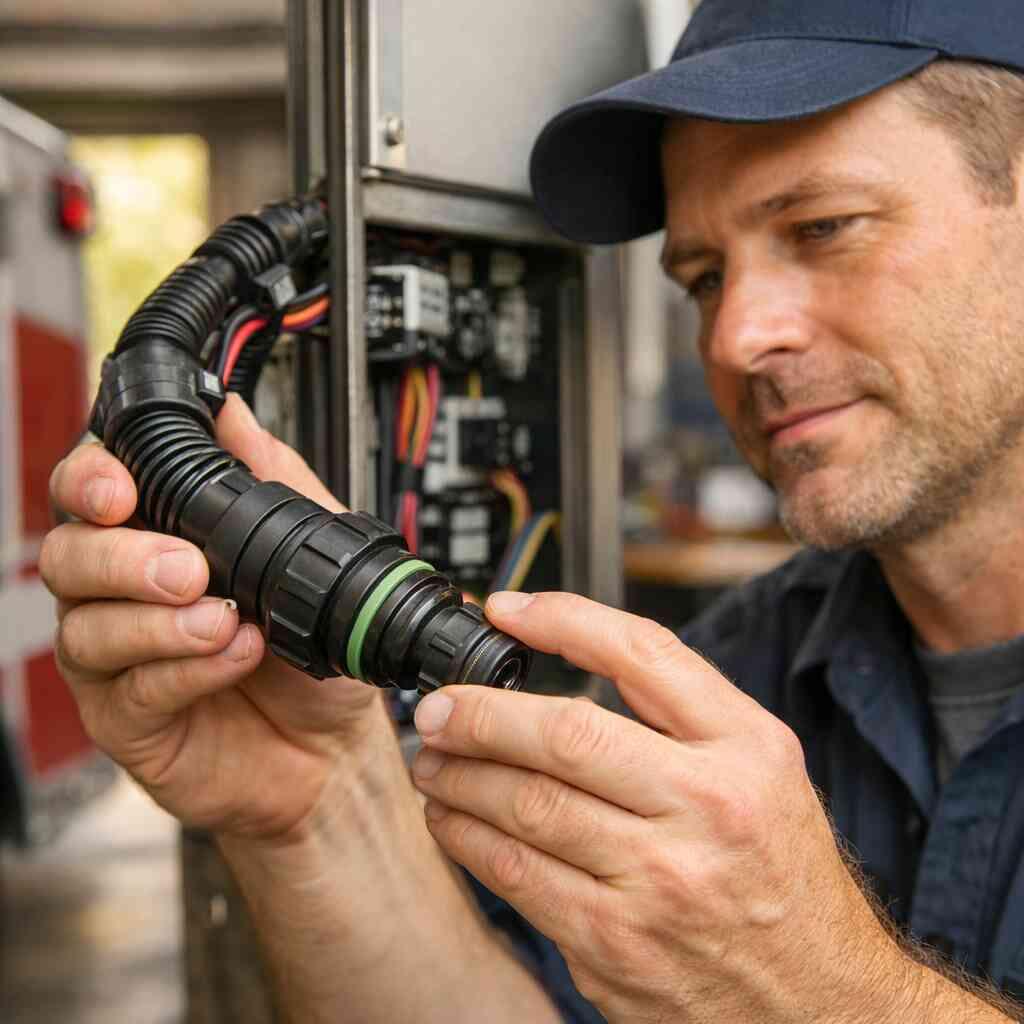
Fleet readiness fails in small increments. A connector is late. A spare is borrowed. A box stays in receiving because the wrong person owns the sign-off. Then one busy shift turns a minor delay into a mission-critical problem. That is why fleet readiness supply planning has to account for ordinary friction, not just worst-case events.
The field does not care why the part is late. The field cares whether the unit can roll. That is a blunt reality, but it is the right one. If you manage ambulance operations, you already know how quickly a small miss can change the day.
When a small accessory delay becomes a mission critical inventory management problem
A small accessory can stop a much larger workflow. That is not exaggeration. It happens when the accessory sits at the center of a chain of use, inspection, or return-to-service tasks. A tiny delay then becomes mission critical inventory management. In EMS, the smallest missing item can create the longest downstream effect. You may not lose a full vehicle. You may lose dispatch confidence, turnaround speed, or the ability to restock correctly. That is a different kind of failure, but it is still failure. Buyers often underestimate it because the part looks insignificant on paper. We have seen crews delay a return-to-service check over one missing piece. The truck was parked, tagged, and ready except for that single item. Nobody was happy, and nobody was confused. They all understood the problem instantly. That is why critical equipment replenishment should be treated like a readiness function, not a clerical one.
How emergency medical equipment availability affects ambulance turnaround and operational continuity planning
Turnaround time depends on more than fuel and cleaning. It depends on whether replacement items are on hand when the crew needs them. If the part is late, the entire sequence slows. That can affect shift handoffs, call coverage, and cross-unit support. In that sense, ambulance fleet readiness and operational continuity planning are deeply connected.
If one unit keeps waiting on the same items, other units begin absorbing the load. That creates ripple effects. The dispatcher may not see the root cause, but they feel the strain. The crew definitely feels it. The agency does too, especially if it has multiple stations or a mixed fleet.
On a recent multi-unit deployment review, the issue was not heroic shortage management. It was ordinary timing. One part arrived after the busiest window had already passed. Nobody broke any rules. Still, the agency lost flexibility it did not expect to lose. That is exactly how emergency medical equipment availability turns into an operational issue.
Why critical equipment replenishment needs a safety stock plan instead of a hope-based reorder point
A hope-based reorder point assumes tomorrow will resemble last week. EMS does not guarantee that. A safety stock plan gives you room to absorb variability without disrupting service. That is the point. It is not hoarding. It is measured protection against uncertainty.
A good plan usually includes three things:
- A usage baseline.
- A trigger point with margin.
- A backup path for urgent replenishment.
That structure reduces panic and protects budget discipline. It also helps procurement teams defend decisions later. If the question is why you carried more inventory, the answer is operational continuity. That is a solid answer.
If you need a starting point, critical equipment replenishment and safety stock planning should be documented alongside your usual reorder logic. The paper trail matters. So does the ability to explain why a thin buffer is riskier than it looks.
Where vendor backorder risk shows up first in high-use fleets and multi-unit deployments
Vendor backorder risk usually appears where usage concentrates. High-use fleets feel it first. So do agencies with multiple units pulling from the same stock. One station drains the shelf. Another station assumes there is still enough. Suddenly the shortage is bigger than anyone budgeted for.
This is also where emergency services purchasing cycle timing can create trouble. A monthly or quarterly cycle may be too slow for fast-moving items. If the reorder process waits for formal review, the shelf can hit zero first. That is why the first sign of trouble is often not a failure notice. It is a quiet pattern of borrowing and deferring.
Here is what almost no online guide mentions: backorder pain often begins with normal success. You use the equipment correctly. You maintain the fleet. You replace parts as needed. Then the system rewards you with higher consumption and no cushion. That is not irony. That is a planning problem.
What a stronger EMS supply plan looks like for Florida agencies trying to stay ahead
A stronger supply plan is not complicated. It is deliberate. It anticipates variability, documents choices, and gives you options when one source stalls. That is what makes procurement contingency planning useful in real life. It turns surprise into process.
Florida agencies do not need perfect forecasting. They need better forecasting. They need a plan that fits budgets, contracts, and the realities of a busy service area. And they need it before the next spike in demand tests the system.
How procurement forecasting for EMS can reduce emergency services purchasing cycle surprises
Good forecasting starts with your own history. What moved fast? What kept getting reordered? What took too long to replace? Once you know that, you can predict risk more accurately. That is the core of procurement forecasting for EMS.
You do not need a huge software stack to begin. You need clean records, honest usage counts, and a habit of checking lead times before they become emergencies. If your team reviews inventory only after an item disappears, your forecasting is already behind. The goal is to make surprises less frequent and less expensive.
A simple monthly review can reveal patterns that a quarterly review misses. That is especially true for small accessories and high-turnover items. The categories are not flashy. They are essential. And essential items are exactly where emergency services purchasing cycle surprises hurt the most.
When supplier diversification strategy makes more sense than relying on a single distributor
Single-source reliance feels tidy. It also concentrates risk. If one distributor stalls, the whole plan stalls with it. A supplier diversification strategy does not mean abandoning preferred vendors. It means building backup options before you need them.
Diversification makes the most sense when the item is high-use, long-lead, or mission critical. It is less about shopping around and more about resilience. If one source handles the normal order and another covers emergencies, you reduce exposure without breaking your process. That is smart public sector procurement resilience.
A buyer in a coastal Florida agency described it well. They did not want ten vendors. They wanted two dependable paths. That was enough to reduce anxiety and protect turnarounds. Sometimes the simplest structure is the strongest one.
The paper trail that supports procurement contingency planning and public sector procurement resilience
Good intentions do not help when auditors, finance, or leadership ask why you acted quickly. You need a clear paper trail. That includes usage history, vendor communication, approval notes, and any documented risk assessment. This is where public sector procurement resilience becomes tangible.
Keep the record simple and usable:
- Record lead time assumptions.
- Note any vendor backorder notices.
- Save approval timestamps.
- Track emergency exceptions separately.
- Review inventory thresholds after major surges.
That paper trail also helps leadership understand why a slightly larger buffer makes sense. If the record shows repeated shortages, the case becomes easier to make. If it does not, you are guessing. Guessing is expensive.
How Florida EMS procurement teams can build emergency preparedness inventory without tying up the budget
This is where discipline matters most. You do not need to stock everything heavily. You need to stock strategically. That means focusing on the items that stop work, not the ones that merely slow it down. It also means using budget logic that matches operational risk.
Florida fleet garages and emergency preparedness inventory should be planned around use patterns, not fear alone. A few targeted spares can protect you better than a large pile of low-value inventory. The goal is balance. Enough cushion to stay ready, not so much that money sits idle.
If you want a practical next step, start with three moves:
- Identify the top five items that create downtime.
- Assign a minimum stock level to each.
- Review vendor lead times before the next purchasing cycle closes.
You do not have to figure this out alone, and you do not have to fix everything today. Start with one phone call, one inventory review, and one honest look at what is most likely to stall your next response.
Frequently Asked Questions
Question: What are the biggest lead time risks for EMS buyers in Florida in 2026, and how can Fire Power Products help with emergency response supply planning?
Answer: The biggest lead time risks for EMS buyers usually come from a mix of EMS supply chain delays, distributor lead times, contract purchasing delays, and regional supplier constraints. In Florida, those risks can be amplified by hurricane season supply risk, weather-related freight disruption, and sudden demand spikes in emergency supplies. Fire Power Products, based in DeLand, Florida, helps buyers think more strategically about emergency response supply planning by focusing on readiness, inventory discipline, and practical ordering habits that reduce avoidable downtime. While no supplier can eliminate lead time variability entirely, a reliable supply partner can help you plan ahead, monitor usage patterns, and reduce the chance that a routine reorder turns into an operational delay.
Question: How can Florida EMS procurement teams reduce vendor backorder risk and improve emergency medical equipment availability?
Answer: A strong way to reduce vendor backorder risk is to separate normal replenishment from urgent replenishment and to build in safety stock planning for high-use items. Florida EMS procurement teams often run into trouble when they rely too heavily on just in time inventory risk and assume the next order will arrive exactly when needed. Fire Power Products supports a more resilient approach by helping customers think through mission critical inventory management, critical equipment replenishment, and procurement disruption mitigation before shortages affect the field. For agencies managing emergency medical equipment availability, the goal is not to overbuy everything, but to keep essential spares on hand so crews can stay operational during peak demand.
Question: How does the blog title What Are the Lead Time Risks for EMS Buyers in Florida 2026 relate to public safety equipment procurement and municipal EMS purchasing?
Answer: The blog title reflects a real issue for agencies handling public safety equipment procurement and municipal EMS purchasing: even a small delay can ripple through the entire fleet. Lead time risks for EMS buyers often start upstream with production or distributor issues and then compound through internal approvals, budget checks, and procurement routing. For agencies trying to maintain fleet readiness supply planning, the solution is to document lead times, track recurring shortages, and use procurement forecasting for EMS to anticipate problems before they affect operations. Fire Power Products is aligned with that approach by emphasizing dependable inventory planning and practical support for agencies that need to keep emergency vehicle equipment sourcing moving without unnecessary friction.
Question: What should EMS agencies do when ambulance supply shortages or aftermarket equipment availability becomes unpredictable?
Answer: When ambulance supply shortages or aftermarket equipment availability become unpredictable, EMS agencies should avoid relying on a single source and should consider a supplier diversification strategy. That means identifying alternate channels, reviewing distributor lead times, and keeping a closer eye on items that are used frequently or are hard to replace quickly. Fire Power Products can be part of that resilience plan by giving buyers a dependable option for fire safety and emergency readiness needs, especially when agencies are trying to reduce exposure to resale channel inventory risk. In practice, the most effective approach is a combination of inventory visibility, backup sourcing, and a clear reorder process that supports operational continuity planning.
Question: How can Fire Power Products support EMS budget planning while still improving emergency preparedness inventory and fleet readiness supply planning?
Answer: Good EMS budget planning is about protecting readiness without locking too much money into slow-moving stock. The best approach is to focus emergency preparedness inventory on the items that create the most downtime if they are missing, then set minimum stock levels based on actual usage and lead time variability. Fire Power Products helps buyers think in that direction by supporting practical, disciplined purchasing decisions rather than reactive ordering. For agencies balancing fleet readiness supply planning with budget limits, a measured inventory buffer can be more effective than repeated rush purchases. That kind of planning also supports procurement contingency planning and public sector procurement resilience, especially during peak periods or hurricane season supply risk.