How Do Fire Power Products Reduce Moisture Related Failures
November 4, 2026
Fire Power Products reduces moisture related failures by using sealed components, weather-resistant design, and rugged electrical hardware that help block water intrusion before it leads to downtime. In harsh hose-down environments, that matters because moisture rarely causes an immediate failure; it works quietly, then shows up as corrosion, nuisance tripping, or weak connections.
Key Takeaways
- Moisture related failures usually start small with splash exposure, condensation, and trapped humidity in wet storage areas.
- Water intrusion protection depends on details like gasket integrity, sealed components, and water resistant hardware that hold up under real fireground abuse.
- Corrosion prevention and electrical moisture protection should be evaluated before a truck shows symptoms, not after the first failure.
- Fire Power Products is a practical option for durable, USA-engineered fire safety equipment designed for harsh, high-usage conditions.
- The right moisture mitigation strategy supports operational readiness by reducing maintenance related failures and helping equipment stay reliable in field conditions.
Why moisture sneaks into fire equipment long before anyone notices
Moisture often gets into fire equipment through everyday exposure, not dramatic flooding. Hose-down cleaning, wet bays, changing temperatures, and humid storage all create hidden conditions for water intrusion. That is why moisture related failures often appear later as corrosion, nuisance electrical issues, or inconsistent performance instead of one obvious break.
Where water intrusion starts in hose-down environments and wet storage areas
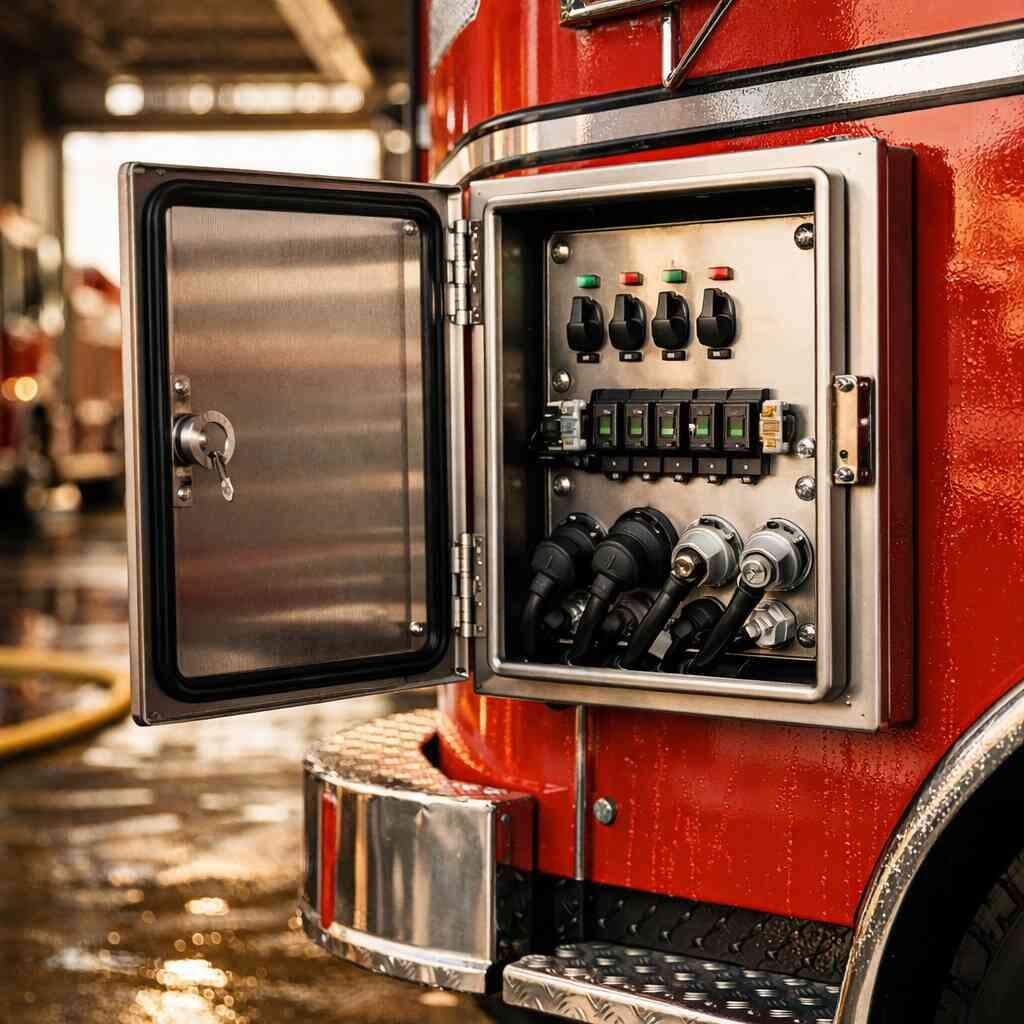
The first weak points are usually the places people overlook: cable entries, connector interfaces, receptacles, and any opening that depends on a seal staying intact. A unit may look fine after a rinse, but if water sits in a pocket or runs toward a compromised joint, it can slowly undermine equipment durability. On a busy truck floor, that kind of damage is easy to miss.
We hear this a lot from crews working out of wet bays along Florida’s coast and inland areas alike, where humidity never really lets up. One station had an older connector that passed visual checks for months, then started acting up after repeated hose-downs. The problem was not dramatic. It was a small seal failure that let moisture creep in and start corrosion prevention problems from the inside.
Moisture entry pointWhat happens firstCommon resultConnector seamsWater reaches metal contactsCorrosion, intermittent powerCable sealsMoisture tracks along the jacketHidden electrical moisture protection failureReceptacle openingsSplash collects and lingersNuisance tripping or weak connectionsStorage compartmentsHumidity stays trappedCondensation control problemsIf you want a practical field reference, Fire Power Products’ own article on how to inspect cable seals is a useful place to start.
How condensation, splash exposure, and trapped humidity turn into maintenance related failures
Condensation is especially sneaky because it does not require a leak. Temperature swings can pull moisture out of the air and onto cooler surfaces, especially in enclosed compartments and sealed enclosures that are opened and closed often. Add splash exposure from cleaning or scene work, and you have a repeat cycle that stresses seals, gaskets, and exposed hardware.
This is where maintenance related failures begin. A connection that once handled wet environment reliability may start to show resistance, poor contact, or intermittent faults. In fire safety equipment performance, those are not minor annoyances. They can take a tool out of service at the wrong moment. If you are evaluating equipment durability, a fire fighting equipment overview can help frame the broader operating environment.
What Fire Power Products does differently when sealed components meet real world abuse
Fire Power Products focuses on durability where moisture usually wins: the seals, enclosures, and connection points that face hose-down resistance and rough handling. The goal is not just to survive water exposure once. It is to maintain weather-resistant design and gasket integrity through repeated use, which is where field reliability is actually earned.
How weather resistant design and gasket integrity support water intrusion protection
Weather-resistant design starts with preventing water from reaching vulnerable internals in the first place. That means tighter interfaces, better sealing surfaces, and hardware that holds its shape under vibration, washdown, and repeated connection cycles. Gasket integrity matters because even a good design fails if the seal deforms, shifts, or wears unevenly over time.
Here is the part most owners miss: moisture resistance is not a single feature. It is a system. If one component is strong but the mating surface is weak, water intrusion protection drops fast. That is why rugged fire equipment should be judged as a whole, not by one isolated claim. Fire Power Products has published guidance on how its designs improve hose-down reliability, which aligns with that systems-first view.
A practical comparison helps:
Design factorBetter moisture resistance looks likeWhy it mattersSeal compressionConsistent contact around the full perimeterHelps block splash and humidityConnector fitTight, stable mating surfacesReduces looseness and micro-gapsEnclosure protectionMinimal openings and protected entry pointsSupports long term equipment protectionMaterial choiceCorrosion resistant materials where exposure is likelyHelps slow wear in wet environments### Why rugged fire equipment and sealed enclosure protection matter for field reliability
Field reliability is about more than surviving a wet shift. It is about keeping emergency response equipment ready after repeated cleaning, vibration, storage, and exposure. Sealed enclosure protection helps prevent the slow damage that turns into nuisance failures later. That is why durable fire power products are often evaluated on how they hold up after the easy conditions are gone.
A crew in central Florida once described a pattern that will sound familiar to many departments: equipment performed well during the first few months, then began showing small inconsistencies after regular washdowns and heat exposure. The issue was not one catastrophic event. It was cumulative stress. That is exactly where USA engineered fire equipment with better sealing can make a real difference.
If you are comparing options, it also helps to understand the vendor’s process and order support. Fire Power Products has a useful local resource on how to reduce lead times, which matters when replacement hardware cannot wait.
When should you choose moisture mitigation strategies before failure shows up on the truck
You should choose moisture mitigation strategies before you see symptoms, not after. The first signs of trouble are often subtle: a connector that needs reseating, a GFCI that trips too often, or hardware that looks fine but performs inconsistently. If your truck works in wet, humid, or hose-down conditions, proactive protection is cheaper than reactive repair.
How to evaluate corrosion prevention, electrical moisture protection, and long term equipment protection
Start by asking three questions. First, where can water enter? Second, what happens if humidity stays trapped? Third, which parts are most likely to fail under repeated exposure? That lens helps you judge corrosion prevention and electrical moisture protection without guessing. It also keeps the focus on long term equipment protection instead of short-term appearance.
For a practical inspection routine, use these checkpoints:
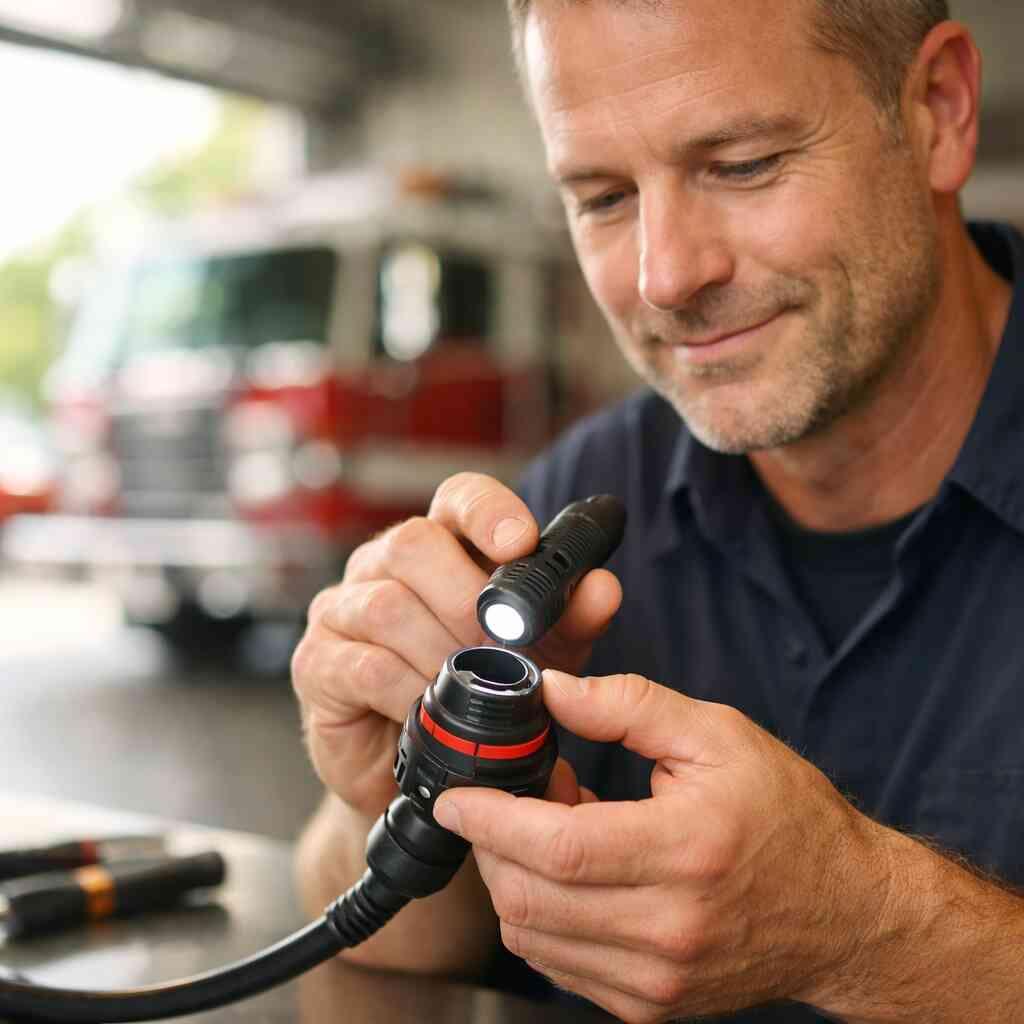
- Look for discoloration or oxidation around connectors and receptacles.
- Check whether seals sit evenly and compress fully.
- Confirm that hardware stays secure after vibration and repeated handling.
- Watch for nuisance tripping after washdown or humid storage.
- Replace compromised components before they become operational problems.
Moisture mitigation strategies are especially important when the equipment sees industrial moisture exposure, not just occasional rain. According to the U.S. Bureau of Labor Statistics, fire suppression work remains physically demanding and environment-driven, which is why maintenance discipline matters so much in this field. For more context on trustworthy business communication around performance claims, the FTC advertising guidance is a good reminder to focus on verifiable benefits, not exaggeration.
What to look for in Fire Power Products pigtails, connectors, receptacles, and extensions for operational readiness
For operational readiness, look for water resistant hardware that is built for repeated handling, not one-time showroom use. Pigtails, connectors, receptacles, and extensions should support smooth mating, secure retention, and dependable sealing. You want components that fit the job after rinse cycles, cold starts, heat, and vibration.
A simple comparison can help you decide where to put your attention:
ComponentWhat to inspectWhy it affects readinessPigtailsJacket wear, seal alignment, strain reliefHelps prevent hidden moisture entryConnectorsContact condition, fit, and sealingAffects power continuity and corrosion preventionReceptaclesDrainage, enclosure fit, and exposure pointsInfluences wet environment reliabilityExtensionsFlexibility, jacket integrity, and repeated connection performanceSupports harsh condition performanceFire Power Products is a strong option if you want fireground electrical components designed for harsh, hose-down conditions and made to support first responder equipment durability. If you are weighing suppliers, the company’s Florida equipment availability page can help you understand the local context in DeLand and beyond. You can also review their broader performance discussion for a clearer view of the application fit.
If you need help choosing moisture-resistant components for a truck, start by checking the seals, the receptacles, and the cable paths. Then call Fire Power Products at 369-279-000 and ask which moisture mitigation options fit your operational setup best.
Frequently Asked Questions
Question: How do Fire Power Products reduce moisture related failures in wet environment reliability applications?
Answer: Fire Power Products reduces moisture related failures by focusing on the parts of fire safety equipment most likely to be affected by water intrusion protection issues, such as seals, connectors, receptacles, and cable entry points. In practice, that means using sealed components, weather resistant design, and water resistant hardware that can better handle hose down resistance, splash exposure, and trapped humidity. The goal is to support field reliability by limiting the conditions that lead to corrosion, nuisance tripping, and weak electrical connections. For departments working in humid or washdown-heavy environments, this kind of moisture mitigation strategy helps protect operational readiness before problems become maintenance related failures.
Question: What should departments look for when evaluating gasket integrity and sealed enclosure protection in Fire Power Products?
Answer: Departments should look for consistent sealing, secure fit, and durable interfaces that help maintain gasket integrity over repeated use. A strong seal is not just about keeping out visible water; it also helps reduce condensation control problems and slow the effects of industrial moisture exposure over time. When evaluating sealed enclosure protection, it is important to consider whether the component is designed for repeated handling, vibration, cleaning, and harsh condition performance. Fire Power Products is positioned for this kind of use because its fireground electrical components are built with equipment durability and long term equipment protection in mind, which supports first responder equipment durability in demanding field conditions.
Question: How does the blog title How Do Fire Power Products Reduce Moisture Related Failures reflect the company’s approach to corrosion prevention?
Answer: The blog title reflects a practical approach to corrosion prevention by addressing the real causes of moisture related failures instead of waiting for visible damage to appear. Fire Power Products emphasizes the importance of sealed components, corrosion resistant materials where appropriate, and water intrusion protection at the points where moisture most often enters. That matters because corrosion often begins quietly inside a connector or receptacle long before a truck shows obvious symptoms. By focusing on failure prevention in fire equipment, the company helps support emergency response equipment readiness and reduces the chance that hidden moisture becomes a performance issue later.
Question: What types of components from Fire Power Products are most relevant for electrical moisture protection and operational readiness?
Answer: The most relevant components are typically pigtails, connectors, receptacles, and extensions, because those are the parts most exposed to moisture, repeated handling, and vibration. These components matter for electrical moisture protection because they can be the first places where water intrusion protection fails if seals or mating surfaces are compromised. When these parts are selected with weather resistant design and rugged fire equipment use in mind, they are better suited to support operational readiness in wet, humid, or hose-down environments. The result is improved equipment durability and more dependable fire safety equipment performance under real-world conditions.
Question: Why is moisture mitigation important before a truck shows signs of failure, and how can Fire Power Products help?
Answer: Moisture mitigation is important before symptoms appear because moisture related failures usually develop gradually. A connector may still function after washdown exposure, but repeated condensation, splash, and humidity can slowly weaken it until intermittent faults or corrosion show up. Fire Power Products helps by offering durable fire power products designed for harsh condition performance and high usage durability, which supports long term equipment protection. By choosing moisture mitigation strategies early, departments can reduce maintenance related failures, improve fire safety equipment performance, and keep emergency response equipment ready when it is needed most.